
5 No-Nonsense Signs of Bilateral Stimulation Fatigue

5 Signs You’re Experiencing Bilateral Stimulation Fatigue
Why Recognizing Bilateral Stimulation Fatigue Changes Everything
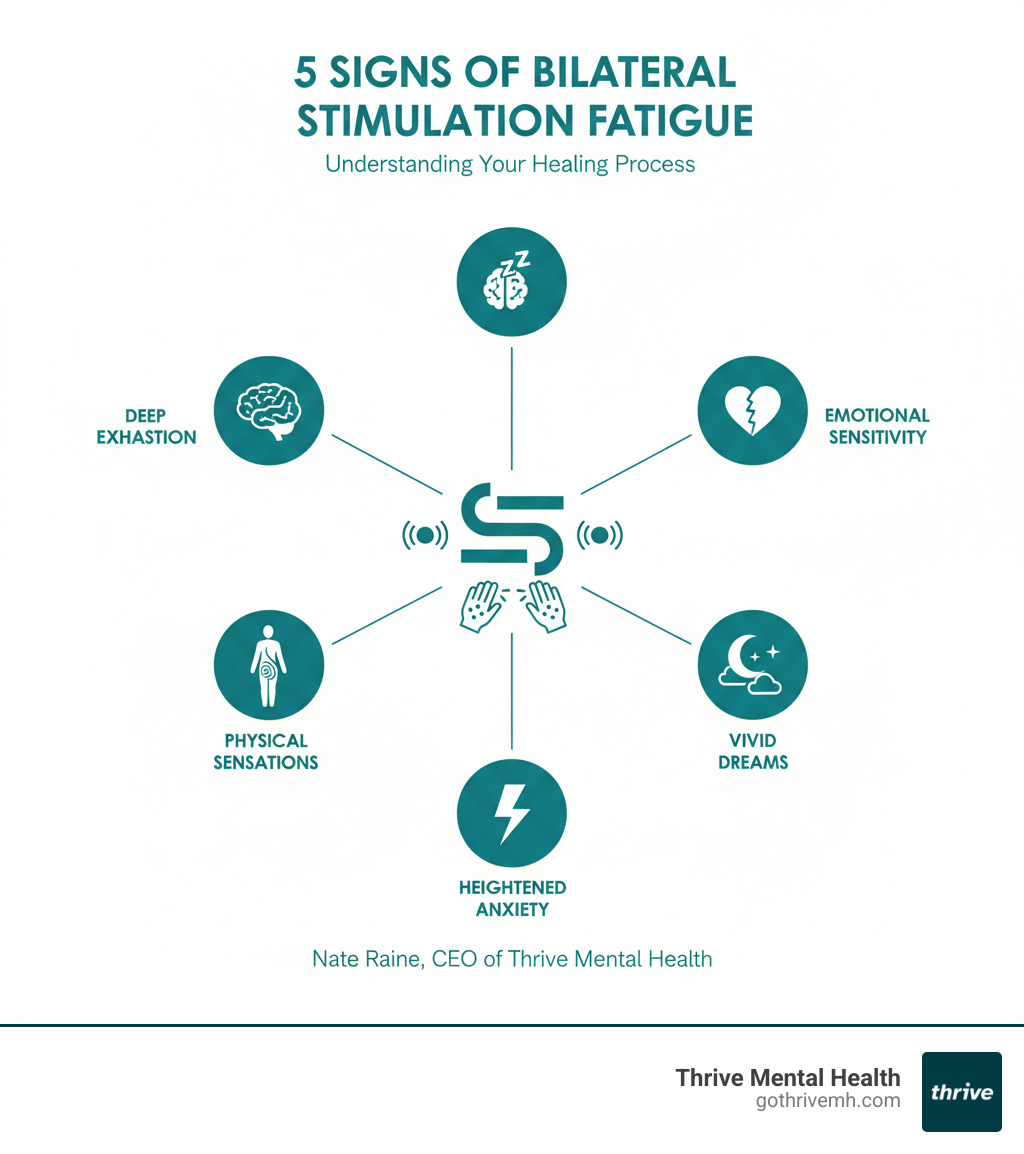
If you’ve felt completely wiped out after EMDR therapy, you might be looking for the 5 Signs You’re Experiencing Bilateral Stimulation Fatigue. Here’s what to watch for:
- Deep mental and physical exhaustion that feels like a post-session “hangover”
- Heightened emotional sensitivity or unexpected irritability
- Unsettling physical sensations like headaches or dizziness
- Vivid dreams or nightmares and unexpected memory intrusions
- A temporary spike in anxiety or feeling constantly “on edge”
This exhaustion is real. Bilateral stimulation—the rhythmic eye movements, tapping, or sounds in trauma therapy—is neurologically intense. Your brain is rewiring itself, processing stuck memories, and building new neural pathways. That takes serious energy.
But here’s the key: fatigue after bilateral stimulation isn’t a side effect. It’s a sign the work is happening.
When you don’t recognize these signs, you might think something is wrong, push through when you need rest, or even quit therapy right before a breakthrough. Understanding this fatigue is critical for anyone using EMDR or similar techniques to heal from trauma or PTSD.
At Thrive Mental Health, we’ve spent over a decade helping people across Florida access evidence-based trauma care without burning out. Recognizing these five signs is the first step.
Know your 5 Signs You’re Experiencing Bilateral Stimulation Fatigue terms:
What is Bilateral Stimulation and Why Does It Feel So Draining?
If you’ve left an EMDR session feeling like your battery is drained, you’re experiencing the effects of bilateral stimulation (BLS). This is the engine of EMDR therapy, and it’s a serious workout for your brain.
BLS is any rhythmic, alternating stimulation that activates both sides of your brain. It can be:
- Visual: Following a light or your therapist’s hand with your eyes.
- Auditory: Listening to tones that alternate between your left and right ears.
- Tactile: Feeling alternating taps on your hands, knees, or shoulders (like the “Butterfly Hug”).
So why does this leave you exhausted? Because your brain is doing intensive work. Trauma can cause memories to get “stuck” in your nervous system with their original emotional charge. BLS helps unstick them by activating your brain’s natural Adaptive Information Processing (AIP) system.
During BLS, your brain is:
- Integrating information between its left and right hemispheres.
- Reducing memory vividness by taxing your working memory, making the memory less emotionally overwhelming. You can learn more in The Science Behind Bilateral Stimulation and Memory Processing.
- Calming your “fight or flight” response by quieting the amygdala (your brain’s alarm) and engaging the prefrontal cortex (the rational part), as shown in research on altered brain activation.
- Building new neural pathways to process difficult emotions and memories more healthily.
This is why recognizing the 5 Signs You’re Experiencing Bilateral Stimulation Fatigue is so important. You’re not just moving your eyes; you’re running a neural renovation project. The exhaustion is proof that your brain is actively healing. Research shows that for many single-trauma victims, this process can lead to becoming PTSD-free, but that level of healing requires energy. Feeling drained isn’t a sign something is wrong—it’s a sign the work is happening.
The 5 Signs You’re Experiencing Bilateral Stimulation Fatigue
Bilateral stimulation fatigue isn’t just regular tiredness; it’s your nervous system actively rewiring itself. If you don’t recognize these signs, you might abandon therapy right when you’re making progress. Here are the 5 Signs You’re Experiencing Bilateral Stimulation Fatigue that show your healing is happening:
1. Deep Mental and Physical Exhaustion
This isn’t just feeling sleepy; it’s a bone-deep fatigue that can feel like a “post-session hangover.” You might experience brain fog, struggle to focus, or find simple tasks overwhelming.
Why it happens: Your brain has been doing intensive neural work, reorganizing how memories are stored. This cognitive load is immense, and the resulting exhaustion is proof that your brain is building new pathways and integrating difficult experiences. It’s a positive sign that the therapy is working, much like muscle soreness after a workout.

2. Heightened Emotional Sensitivity or Irritability
Between sessions, you might feel emotionally raw. This can manifest as crying more easily, feeling quick to anger, or being generally unsettled and irritable over small things.
Why it happens: As your brain reprocesses “stuck” memories, your nervous system releases stored emotions. Think of it like a freezer defrosting—things can get messy as they thaw. This sensitivity is a normal part of emotional reprocessing and a sign your system is recalibrating. Our article on How Bilateral Stimulation Calms the Nervous System explains this further.
3. Unsettling Physical Sensations or Discomfort
You might notice new physical symptoms like headaches, dizziness, muscle twitching, tingling, or even nausea. These sensations can feel strange but are often linked to the therapeutic process.
Why it happens: Trauma is stored not just in the mind but also in the body. As bilateral stimulation helps your brain process memories, your body releases the physical tension it has been holding. These sensations are a form of somatic release and indicate your system is letting go of stored trauma. Learn more about how EMDR addresses this in our article on EMDR for PTSD.
4. Vivid Dreams, Nightmares, or Memory Intrusions
Your dream life may become more intense, with unusually vivid dreams or nightmares. You might also experience unexpected memory intrusions or flashbacks during the day.
Why it happens: Your brain continues processing long after the session ends, especially during sleep. This is a sign of memory reconsolidation, where traumatic memories are being re-stored in a less distressing way, as explained in research on EMDR and memory. These intrusions show that “stuck” memories are becoming unstuck and moving toward integration.
5. A Temporary Spike in Anxiety or Feeling “On Edge”
It can feel confusing, but you might experience a temporary increase in anxiety, hypervigilance, or feeling jumpy and easily startled. This can feel like a step backward, but it’s often a sign of progress.
Why it happens: Your nervous system is recalibrating. After being stuck in a “fight-or-flight” state, it’s learning to adjust its threat response. This temporary hyperarousal is your brain’s alarm system resetting itself. It’s learning it no longer needs to be on high alert. Our article on EMDR for panic attacks explores how this regulation process works over time.
How to Manage BLS Fatigue and Keep Your Healing on Track
You can’t avoid fatigue entirely, but you can manage it. Instead of powering through, think of it as preparing for your brain’s marathon. This requires preparation, pacing, and a solid recovery plan.

Before Your Session: Prepare for the Work
A good therapist will help you prepare. This includes building coping skills like grounding techniques, creating a “safe place” visualization, and openly discussing your readiness for deep processing. You should also create a post-session support plan, like scheduling quiet time to decompress. Our guide on Choosing the Right EMDR Therapist can help you find a professional who prioritizes this preparation.
During Your Session: Communicate and Pace Yourself
You are in control. Establish a “stop” signal with your therapist and use it without hesitation. If emotions or sensations become too much, ask for a break to stay within your “window of tolerance.” Communicate what you’re feeling so your therapist can adjust the pace or type of BLS. This is a collaborative process, not a test of endurance.
After Your Session: Prioritize Rest and Recovery
Your brain is still working after the session ends. Prioritize rest and recovery to allow for integration.
- Plan downtime: Clear your schedule of stressful activities or big decisions.
- Move gently: A short walk or light stretching can help release tension.
- Prioritize sleep: This is when your brain does its most important memory work.
- Practice self-compassion: This is hard work. It’s okay to feel wiped out and need rest.
Here are five simple actions to take after your session:
- Hydrate and eat a nourishing meal.
- Schedule 30 minutes of unplugged downtime.
- Journal your thoughts and feelings.
- Take a gentle walk.
- Use a grounding technique like the 5-4-3-2-1 method.
At Thrive Mental Health, our virtual and hybrid IOP/PHP programs help you build this recovery plan into your treatment. With dedicated services for Florida residents, we also support clients in California, Indiana, Arizona, and South Carolina. We accept major insurance like Cigna, Aetna, Optum, and Florida Blue.
When to Worry: Is It Fatigue or a Red Flag?
While fatigue is a normal part of healing, it shouldn’t derail your life. It’s crucial to know the difference between productive exhaustion and a red flag that requires immediate help.
Differentiating Normal Fatigue from a Deeper Problem
Normal fatigue is temporary, typically resolving within 24-48 hours. You might feel drained, sensitive, and need extra rest.
Red flags require you to contact your therapist. These include:
- Prolonged distress that lasts more than a few days or intensifies.
- Inability to function in daily life (e.g., go to work, care for yourself).
- Feeling retraumatized, as if the session opened wounds without resolution.
- Severe or persistent dissociation (feeling disconnected from reality).
- Suicidal thoughts or urges to self-harm. If you experience this, contact your therapist, call or text the 988 Suicide & Crisis Lifeline, or go to the nearest emergency room immediately. Your safety is the priority.
Why Ignoring Red Flags is a Mistake
Pushing through severe distress can undermine your healing. It risks therapy dropout, retraumatization, and makes the process less effective. Your brain needs rest to integrate the work; without it, the healing process is hindered. At Thrive Mental Health, our Florida IOP and PHP programs are structured to provide the right level of support to prevent this.
When to Call Your Therapist
The rule is simple: when in doubt, reach out. It’s always better to check in. Contact your therapist if symptoms last more than a few days or if you feel overwhelmed, out of control, or unable to cope. This is especially important for individuals with complex trauma or dissociative disorders, who may need a more gradual approach. Your therapist is your partner and can adjust your treatment plan. For those in Florida, our team of specialized therapists is ready to be that partner in your healing journey. Our guide, Discover Top EMDR Therapist: Find Relief Today, can also help you find the right fit.
Frequently Asked Questions about Bilateral Stimulation Fatigue
Is bilateral stimulation fatigue dangerous?
No, the fatigue itself is typically not dangerous. It’s a sign of productive therapeutic work, similar to muscle soreness after a workout. However, it must be managed with your therapist to keep you within your “window of tolerance” and prevent burnout or feeling retraumatized. Open communication is key.
How long does bilateral stimulation fatigue last?
For most people, fatigue symptoms last 24 to 48 hours as your brain integrates the work from the session. If your symptoms are severe, last longer, or disrupt your daily life, contact your therapist. They can adjust your treatment plan. Healing isn’t linear, and recovery time can vary between sessions.
Can I use bilateral stimulation on my own to feel better?
Yes, for regulation. Self-administered techniques like the Butterfly Hug (alternating taps on your shoulders) are excellent for calming anxiety and grounding yourself between sessions.
No, for trauma processing. Using BLS to process traumatic memories should only be done with a trained therapist. A professional, like the specialists on our team serving clients throughout Florida, ensures the process is safe and healing, not retraumatizing. Think of it as using a foam roller at home (good for maintenance) versus performing your own surgery (requires a professional). For safe techniques, see our guide on Top EMDR Bilateral Stimulation Techniques You Can Try at Home Safely.
Don’t Just Endure Fatigue—Use It to Fuel Your Healing
Bilateral stimulation fatigue isn’t an enemy; it’s proof of healing. Recognizing the 5 Signs You’re Experiencing Bilateral Stimulation Fatigue allows you to work with the process, not against it. This exhaustion is a normal, manageable part of your recovery.
You don’t have to steer this alone. At Thrive Mental Health, our IOP and PHP programs provide the structure and expert support to manage the intensity of healing without burning out. We offer flexible virtual and in-person programs across Florida, with services also available in California, Indiana, Arizona, and South Carolina. We accept major insurance providers like Cigna, Aetna, Optum, and Florida Blue.
Ready for support? Thrive offers virtual and hybrid IOP/PHP programs with evening options. Verify your insurance in 2 minutes (no obligation) → Start benefits check or call 561-203-6085. If you’re in crisis, call/text 988.