


Our methods / Art and music
Art and music therapy in virtual IOP
Express what’s hard to put into words.
Art and music therapy use creative expression to explore feelings, lower stress and build insight. No talent or experience is needed. The process matters, not the result.

No skill needed
Guided by trained clinicians
Covered by most commercial plans
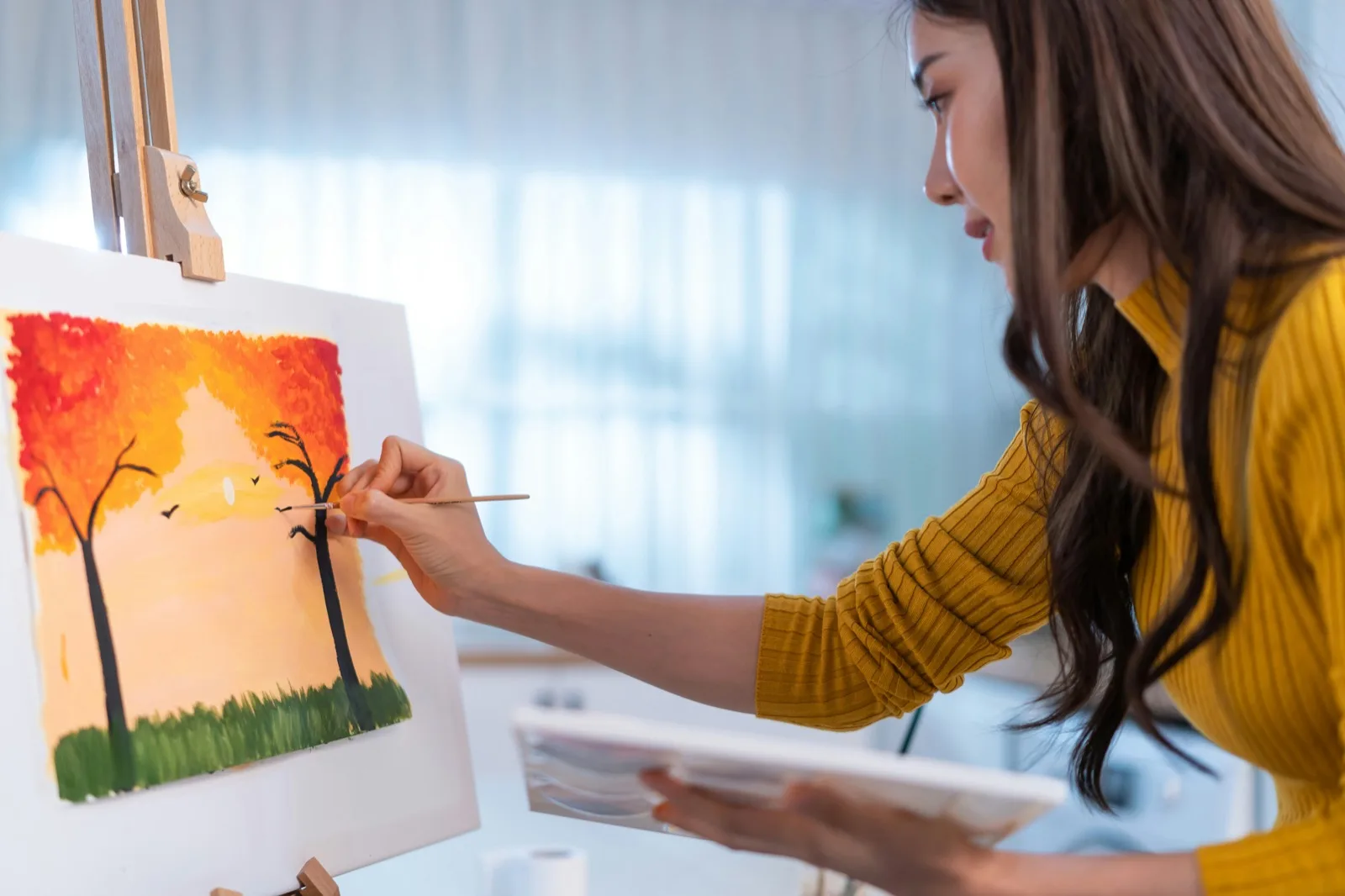
Music session
No musical or artistic skill needed
How art and music therapy works
Creating as a way of healing.
Making something, a drawing, a playlist, a rhythm, can reach emotions that talking does not. Then you reflect on it with your group and clinician.
Sessions use simple materials you have at home, or music you already love.

Art and music therapy at Thrive
Built into every week.

In group
Creative groups where you make, share and reflect together.

One-on-one
Your therapist may use creative exercises to explore something specific.

At home
Simple creative practices to calm down or process a hard day.
The method
What are art and music therapy?
Art therapy and music therapy are creative therapies led by trained clinicians. Art therapy developed as a profession in the mid-20th century, and music therapy grew from work with veterans in the 1940s. Both use the creative process to support emotional health.
Making art or music can reach feelings that are hard to name. It can lower stress, help you express something safely and give you and your clinician a new way into what you are experiencing.
You do not need any talent or experience. There is no right result. The value is in the process and in what you notice while you create.
It may help if you
Find it hard to put feelings into words
Feel overwhelmed and want a calming focus
Connect with music, images or making things
Want a break from talking about problems
Are processing grief or loss
Want new ways to express yourself
Techniques
What sessions include.
Your clinician chooses what fits your goals. These are the ones we use most.

Music listening
Explore feelings through songs that matter to you.
Songwriting and rhythm
Put words and beat to what you are going through.

Drawing and painting
Express emotions with color and shape.

Collage
Assemble images that say something about you.

Reflection
Talk about what the piece brings up.

Mindful making
Use creating as a calming, present-moment practice.
What it helps with
Care for what you’re going through.
At Thrive we use it for these conditions, alongside other methods.
Depression
Reconnecting with pleasure and expression.
Learn more →
Anxiety disorders
A calming, absorbing focus.
Learn more →
Trauma and PTSD
Expressing what words cannot yet say.
Learn more →
Mood disorders
Tracking and expressing emotional shifts.
Learn more →
8days
median from referral to first session
90%
session attendance across our programs
3hours
of live care a day, from home
Art and music therapy questions
Art and music therapy, answered.
Still wondering if it’s right for you? Our admissions team can talk it through, free. Call (561) 203-6085 or book a free call.

What is art therapy?
Art therapy uses creative activities, like drawing, painting or collage, guided by a clinician, to explore emotions and build insight.
What is music therapy?
Music therapy uses listening, rhythm, songwriting and other musical activities to support emotional health.
Do I need to be artistic or musical?
No. There is no right way to do it, and no one grades the result.
What supplies do I need?
Very little: paper, a pen or pencils, and music you already have. We let you know before a session if anything else helps.
Can it be done over video?
Yes. You create in your own space and share on screen if you choose.
What is the difference between art therapy and an art class?
An art class teaches technique. Art therapy uses creating to explore emotions, guided by a clinician, and the focus is on meaning, not skill.
What happens in a music therapy session?
Sessions might include listening to and discussing songs, making a playlist for a mood, simple rhythm work or writing lyrics about what you are going through.
Can art therapy help with trauma?
Creative expression can help people approach experiences that are hard to talk about. At Thrive it is used alongside trauma-focused therapies.
Are art and music therapy covered by insurance?
Art and music therapy is part of our intensive outpatient program, which most commercial plans and TRICARE cover. We check your benefits for free before you start. See the plans we work with.
Our other methods