
7 Amazing Resources for Adolescent IOPs in Charleston, SC

7 Amazing Adolescent IOPs in Charleston, SC
Why Florida Parents Are Searching for Adolescent IOPs Right Now
If you or your teen are in crisis or thinking about self-harm, call or text 988 immediately to connect with the 988 Suicide & Crisis Lifeline. You are not alone.
Can you list some adolescent intensive outpatient programs near me in Florida? If you’re asking this question, you’re not alone. With over 220,000 Florida youth experiencing a major depressive episode in a recent year, many Florida families are realizing that weekly therapy isn’t enough for a teen in crisis.
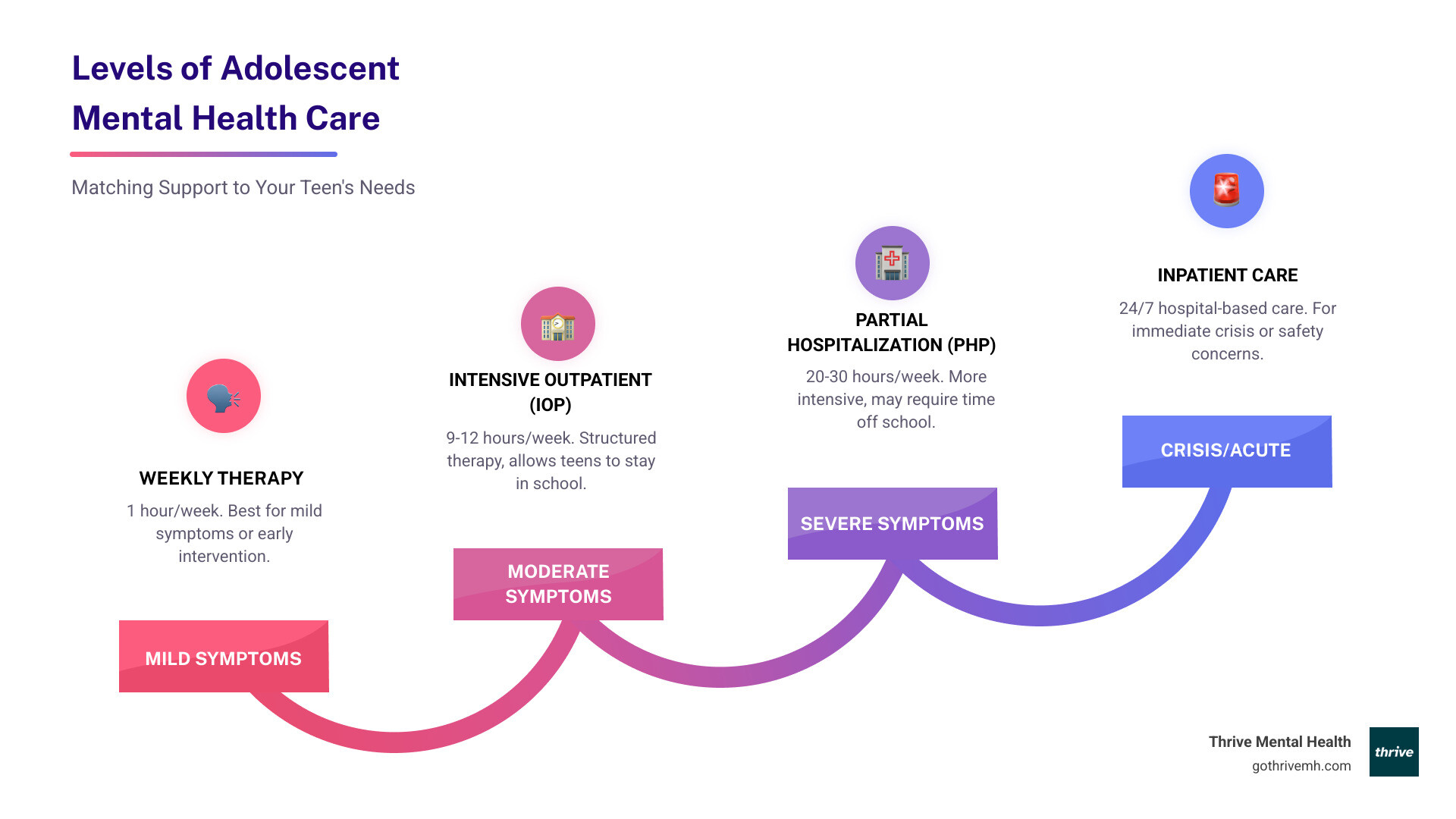
An Intensive Outpatient Program (IOP) offers a powerful solution. It provides 9-12 hours of structured therapy per week—more support than weekly counseling, but flexible enough to let your teen stay in school. These programs typically include group, individual, and family therapy using evidence-based treatments like CBT and DBT.
The biggest hurdle is often knowing where to look. Many families don’t realize that adolescent IOPs in Florida accept major insurance plans like Cigna, Optum, Aetna, Florida Blue, and UnitedHealthcare, and that virtual options eliminate long commutes.
I’m Nate Raine, CEO of Thrive Mental Health. I’ve spent over a decade helping Florida-area families find the right level of support for their teens. In this guide, we’ll break down seven proven resources for adolescent IOPs in the Florida area, explain how virtual and in-person programs work, and show you how to use your insurance so you can get help fast.
If you want to jump straight to program details, you can explore our Intensive Outpatient Programs, Partial Hospitalization Programs, or check your coverage instantly with our fast insurance verification.
Basic Can you list some adolescent intensive outpatient programs near me in Florida? terms:
- Can you show me a list of adolescent intensive outpatient programs in the Los Angeles area?
- I’m looking for an adult intensive outpatient mental health program near me.
- dbt intensive outpatient programs near me
Is Your Teen at the Breaking Point? [Warning Signs You Can’t Ignore]
While some stress is a natural part of the teenage years, certain behaviors can signal a need for more intensive support. Ignoring these red flags can lead to worsening mental health conditions. It’s crucial to recognize when typical adolescent struggles cross into territory requiring an IOP.

Here are 8 red flags that indicate your teen might need a higher level of care, such as an Intensive Outpatient Program (IOP) in Florida:
- Worsening depression or anxiety: Persistent sadness, loss of interest, constant worry, panic attacks, or extreme social avoidance.
- School refusal or plummeting grades: A sudden decline in academic performance, skipping classes, or refusing to attend school due to anxiety or depression.
- Social withdrawal and isolation: Pulling away from friends and family, spending excessive time alone, or expressing feelings of loneliness.
- Self-harm or talk of suicide: Any mention of self-harm or suicidal thoughts. If your teen is in crisis, call or text 988 immediately.
- Outpatient therapy isn’t working: Weekly therapy isn’t leading to improvement, or symptoms are getting worse.
- Family conflict and communication breakdowns: Frequent, intense arguments and an inability to communicate effectively.
- Risky behavior: Engaging in substance use, reckless activities, or other dangerous behaviors that put them or others at risk.
- Frequent conflicts with authority: Persistent defiance, aggression, or rule-breaking at home or school, leading to disciplinary action.
If you recognize several of these warning signs, your teen likely needs more support than traditional therapy can provide. An adolescent IOP offers a structured environment to address these complex issues effectively and can be a critical step before considering a higher level of care like PHP or inpatient treatment.
What Happens in an Adolescent IOP? [Florida]
An Intensive Outpatient Program (IOP) is a structured therapeutic program that bridges the gap between weekly therapy and inpatient care. It provides comprehensive mental health support while allowing teens to live at home and stay in school, offering a lifeline for Florida families.
Typically, adolescent IOPs run for several hours a day, a few days a week. Many virtual IOPs, including our program at Thrive Mental Health, offer evening sessions from 4 pm to 7 pm, three days a week. This schedule allows teens to attend school without disruption. IOPs are built on evidence-based therapies, peer support, and family involvement, creating a safe space for teens to learn coping skills and connect with others.
If you want to see how this compares to other levels of care, you can learn more about our Intensive Outpatient Programs and Partial Hospitalization Programs.

What services do Florida-area adolescent IOPs provide?
Florida-area IOPs offer a comprehensive suite of services to meet the unique needs of teenagers, including:
- Group Therapy: The cornerstone of IOP, where teens share experiences, practice skills, and build a supportive community.
- Individual Counseling: One-on-one sessions with a therapist to address personal challenges and treatment goals.
- Family Therapy: Integrated sessions to improve communication, heal relationships, and equip parents with support strategies. Family involvement is a top predictor of success.
- Psychiatric & Medication Management: Access to psychiatric evaluations and medication management for a holistic approach.
- Academic Support: Coordination with schools to help teens manage academic responsibilities during treatment.
- Skills Training: Practical skills using Cognitive Behavioral Therapy (CBT), Dialectical Behavior Therapy (DBT), and mindfulness to manage emotions and stress.
How do IOPs treat anxiety, depression, trauma?
Adolescent IOPs use proven therapies to equip teens with lasting tools for well-being:
- Cognitive Behavioral Therapy (CBT): Helps teens identify and change negative thought patterns and behaviors contributing to anxiety and depression.
- Dialectical Behavior Therapy (DBT): Effective for emotional regulation, distress tolerance, and interpersonal skills, helping teens manage intense emotions and reduce impulsive behaviors.
- Trauma-Informed Care: Provides a safe environment for teens to process past trauma without being re-traumatized, focusing on healing and resilience.
- Mindfulness and Emotional Regulation: Teaches techniques like meditation and relaxation to reduce stress and control emotional responses.
- Relapse Prevention: Focuses on building resilience and developing strategies to prevent a return of symptoms.
Why is family therapy part of IOP?
Family therapy is a cornerstone of effective adolescent IOPs because a teen’s environment is critical to their recovery. It is often the #1 predictor of success. Family therapy helps to fix broken communication, heal relationships, and provide parent coaching on setting boundaries and validating emotions. The goal is to lower family stress and build a supportive home environment where the teen feels safe and understood, which is essential for lasting change.
For practical tips on starting these conversations at home, see our guide on how to talk to your teen about mental health.
7 Must-Know Adolescent IOP Resources in Florida
Finding the right support for your teen can feel overwhelming, but Florida offers excellent Intensive Outpatient Programs. Whether you need local in-person care or the flexibility of a virtual option, this guide will help you steer the choices, including insurance and specialized programs.
Resource #1: Thrive Mental Health Virtual IOPs (Serving All of Florida)
At Thrive Mental Health, we offer expert-led virtual and hybrid IOP/PHP programs for adolescents across Florida, as well as South Carolina, California, Indiana, and Arizona. Our flexible, evidence-based approach is built on clinical expertise and measurable results, ensuring your teen gets intensive support without disrupting their life.
We prioritize:
- Flexible, expert-led virtual and hybrid IOP/PHP programs: High-quality care from the comfort of home.
- Evening options for school: Our virtual IOPs typically run from 4 pm to 7 pm, so your teen won’t miss school.
- Evidence-based care (CBT, DBT, trauma-focused): Proven therapies for anxiety, depression, trauma, and more.
- Family therapy and academic coordination: A holistic approach that includes family support and coordination with your teen’s school.
- Accepts major insurance: We work with Cigna, Optum, Aetna, Florida Blue, and UnitedHealthcare to make care accessible.
Ready to learn more about how our virtual IOPs can support your teen?
- More about Thrive IOP
- Verify your insurance in 2 minutes
Resource #2: Thrive Mental Health In-Person IOPs (Florida Locations)
For families who prefer a local, in-person environment, Thrive Mental Health offers in-person and hybrid IOP options in select Florida locations, including Boca Raton, West Palm Beach, and Miami.
Our in-person programs provide:
- Small groups, personalized care: We ensure each teen receives individualized attention.
- Structured, supportive environment: A dedicated space for healing, free from distractions.
- Seamless integration with virtual components: Our hybrid model offers maximum flexibility.
Explore our in-person and hybrid options to find the perfect fit for your teen.
- Learn about Thrive PHP/IOP
Resource #3: Virtual IOPs—How They Work & Who They Help
Virtual IOPs are a highly effective and convenient option for adolescents. For Florida families, they remove geographical barriers, allowing access to specialized care from anywhere in Florida, South Carolina, California, Indiana, or Arizona.
Key benefits include:
- Attend from anywhere: Eliminates commutes and makes attendance easier.
- Evening sessions for busy families: Most virtual IOPs offer after-school schedules.
- Private and convenient: Reduces stress and logistical challenges for the whole family.
- Effective and engaging: Uses secure video conferencing to deliver the same high-quality care as in-person programs.
Consider the benefits of virtual versus in-person IOPs:
| Feature | Virtual IOP | In-Person IOP |
|---|---|---|
| Flexibility | High (evening options, no commute) | Moderate (set schedule, travel time) |
| Access | Accessible from anywhere in supported states | Limited to geographic location of facility |
| Peer Support | Strong (virtual group dynamics) | Strong (physical group dynamics) |
| Cost | Potentially lower (no travel, facility overhead) | Varies (may include facility fees) |
| Privacy | High (from home environment) | Moderate (may encounter others at facility) |
| Scheduling | Often more accommodating (evening, weekend slots) | Fixed daily schedule, may conflict with school |
If you’re considering virtual options, learn more about how Thrive Mental Health’s virtual therapy can support your teen.
Resource #4: How to Use Insurance for Adolescent IOPs
The cost of treatment is a major concern, but most adolescent IOPs in Florida work with major insurance providers. It’s smart for parents to look for programs that accept insurance.
Here’s how to steer insurance for your teen’s IOP:
- Check your benefits: Contact your insurance company to ask about mental health coverage for IOPs, including your deductible, co-pays, and out-of-pocket maximum.
- In-network vs. out-of-network: In-network providers usually mean lower costs, but some out-of-network benefits can still cover a significant portion of treatment.
- Major insurance providers: Many programs, including Thrive Mental Health, accept plans from Cigna, Optum, Aetna, Florida Blue, and UnitedHealthcare.
We make it easy to understand your coverage.
- Start your insurance check now
Resource #5: Community Support for Florida Families
While an IOP provides clinical care, a strong community support system is invaluable. These resources can complement formal treatment:
- Local support groups: Organizations like NAMI Florida offer support groups for family members and individuals with mental health challenges.
- Peer support networks: Connecting with others on similar journeys is incredibly empowering for teens.
- School counselors and pediatricians: These professionals can be excellent first points of contact for referrals to specialized programs.
Building a robust support network is key to long-term wellness.
- Related: How to Talk to Your Teen About Mental Health
Resource #6: Academic Coordination During IOP
One of the primary advantages of an IOP is that teens can remain in school. Florida-area IOPs understand this and integrate academic coordination into their programs.
Here’s how IOPs help keep your teen on track:
- Flexible scheduling: Evening or after-school sessions minimize interference with the school day.
- Communication with schools: With parental consent, IOP staff can communicate with teachers to arrange accommodations.
- Academic support: Some programs include dedicated academic time or coordinate with the school to address educational needs.
- 504/IEP support: IOP staff can help families steer the process of obtaining a 504 Plan or IEP.
The goal is to support your teen’s overall development, ensuring mental health treatment improves their educational journey.
Resource #7: Aftercare & Long-Term Support
Completing an IOP is a significant achievement, but it’s one step in a lifelong journey. A high-quality adolescent IOP will emphasize robust aftercare planning to ensure your teen maintains their progress.
Effective aftercare typically includes:
- Step-down to weekly therapy: Transitioning from IOP to traditional outpatient therapy for ongoing support.
- Support groups: Continued participation in peer support groups to reinforce skills.
- Relapse prevention: Identifying triggers and developing proactive strategies to prevent a return of symptoms.
- Ongoing family coaching: Continued family therapy or coaching to maintain a supportive home environment.
FAQs: Adolescent IOPs in Florida
What’s the difference between IOP and PHP for teens?
An Intensive Outpatient Program (IOP) involves 9–12 hours of therapy per week, often after school, allowing teens to stay in school. A Partial Hospitalization Program (PHP) is more intensive (20–30 hours/week) and usually requires time off from school. PHP is a step up from IOP, and IOP is a step up from weekly therapy.
Can my teen stay in school during IOP?
Yes. A key benefit of adolescent IOP is its flexible scheduling. Most programs, including our virtual IOPs at Thrive Mental Health, offer evening sessions (e.g., 4 pm to 7 pm) so teens can continue their education without interruption.
How much does an adolescent IOP cost with insurance?
Costs vary, but most major insurance plans (like Cigna, Optum, Aetna, Florida Blue, and UnitedHealthcare) cover IOPs. Your out-of-pocket expense depends on your plan’s deductible and co-pays. Providers like Thrive Mental Health can help you verify your benefits to get a clear cost estimate using our quick insurance check.
Does Thrive offer virtual IOPs for teens across Florida?
Yes. Thrive provides virtual adolescent IOP and PHP options for families across Florida, as well as South Carolina, California, Indiana, and Arizona through secure online sessions. Learn more about how this works on our virtual therapy page.
What happens after IOP ends?
After completing an IOP, your teen will transition to a “step-down” aftercare plan. This usually includes weekly therapy, support groups, and relapse prevention strategies to maintain progress and support long-term wellness.
How do I know if my teen needs IOP?
Your teen may need an IOP if weekly therapy isn’t enough and their symptoms are worsening or significantly impacting their school, relationships, or daily life. If they struggle with persistent depression, anxiety, self-harm, or school refusal, an IOP provides the necessary structured support. If you are unsure, you can contact Thrive for a no-pressure consultation to discuss whether IOP or PHP is the right fit.
Summary: Don’t Wait—Get Your Teen the Help They Deserve
If your teen is struggling, don’t gamble with their future. Can you list some adolescent intensive outpatient programs near me in Florida? You now have a clear roadmap to the proven, insurance-friendly IOP options available—both virtual and in-person. Thrive Mental Health delivers expert, flexible care that fits your life and gets real results, making a tangible difference for adolescents and their families across Florida, South Carolina, California, Indiana, and Arizona.
Our team can help you compare IOP vs. PHP, understand your Cigna, Optum, Aetna, Florida Blue, or UnitedHealthcare benefits, and build a plan that keeps your teen in school while they heal.
Ready for support? Thrive offers virtual and hybrid IOP/PHP programs with evening options. Verify your insurance in 2 minutes (no obligation) → Start benefits check or call 561-203-6085. If you’re in crisis, call/text 988.