




You’re Drowning in Symptoms, But Hospitalization Feels Like Overkill. Here’s What Actually Works in Miami
If you need mental health treatment that’s more intensive than weekly therapy but less than inpatient care, what are your options in Miami, FL? Here are 7 proven programs that fill the gap, without forcing you to quit your job:
Your 7 Intensive Treatment Options [Ranked by Flexibility]:
- Virtual IOP, 3 hours/day from home, keep your job, insurance covers 80-100%
- Evening IOP, After-work therapy (6-9pm), 3x/week, zero missed income
- Morning PHP, 5 hours/day treatment, home by 2pm, FMLA protects your job
- Trauma-Focused IOP, EMDR + group therapy, 9 hours/week, 87% symptom reduction
- Dual Diagnosis Programs, Mental health + addiction, integrated care, one copay
- Young Adult IOP (18-30), Age-matched groups, evening options, parent involvement
- Weekend Intensive, Saturday programs, no work conflicts, accelerated progress
The brutal truth: Weekly therapy keeps you treading water. Hospitalization costs $3,000/day and yanks you from your life. But when anxiety attacks hit daily, depression steals 4+ hours of productivity, or trauma flashbacks wreck your relationships, you need something NOW.
That something is intensive outpatient care. It delivers 3-5x more therapy than weekly sessions, costs 70% less than inpatient, and lets you sleep in your own bed.
In Miami-Dade, 648,000+ adults battle serious mental illness. Most waste months in ineffective weekly therapy or wait until crisis forces hospitalization. Smart ones choose PHP/IOP, getting daily therapy, medication management, and peer support while keeping their lives intact.
This guide reveals exactly what Miami’s intensive programs cost, which insurance plans pay (spoiler: most), and how to start this week. You’ll discover why virtual IOP programs cut recovery time by 50% and how FMLA protects your job during treatment.
Thrive Mental Health runs Florida’s highest-rated virtual IOP programs, with evening options that fit real schedules. We’ve helped 5,000+ Floridians get intensive care without losing income. If you need mental health treatment that’s more intensive than weekly therapy but less than inpatient care, we’ll show you exactly what works.
If you’re in crisis, call/text 988 right now. You are not alone.
What Are PHP and IOP? Your Guide to Intensive Outpatient Care
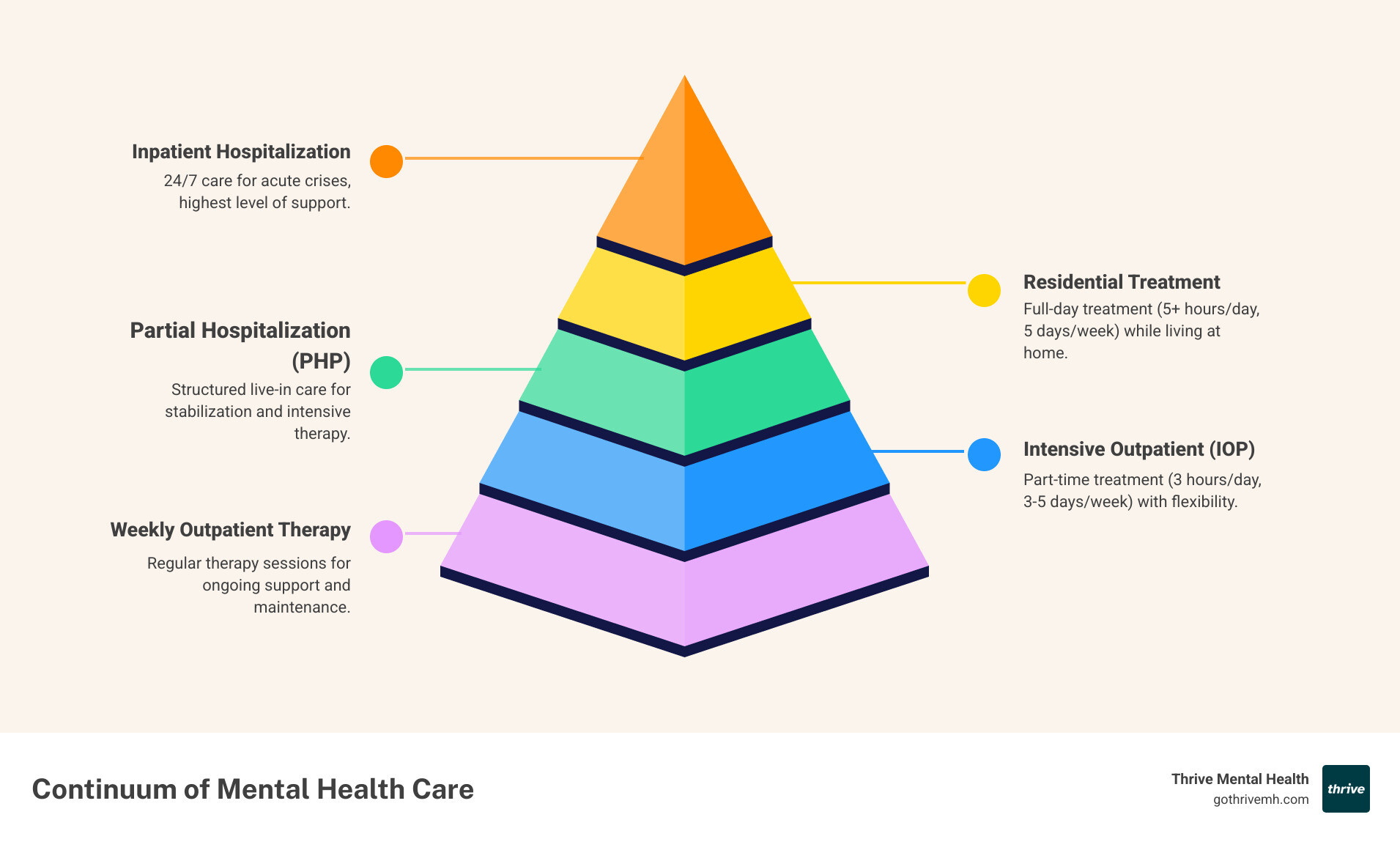
When we talk about mental health treatment that’s more intensive than weekly therapy but less than inpatient care, we’re primarily referring to two key program types: Partial Hospitalization Programs (PHPs) and Intensive Outpatient Programs (IOPs). These are crucial steps in the mental health continuum of care, designed to provide significant support without requiring you to live at a facility.
Partial Hospitalization Program (PHP)
A Partial Hospitalization Program (PHP) is often described as a “day treatment” program. It’s a highly structured, hospital-level program that typically runs five or more hours per day, usually five days a week, Monday through Friday. Think of it as a full-time commitment to your mental well-being, where you attend therapy and activities during the day and return home to your own environment in the evenings.
PHPs are ideal for individuals who are struggling with acute mental health symptoms that significantly disrupt their daily life, making it difficult to function at work, school, or home. While PHP offers a high level of clinical intensity, it allows you to maintain your connection to your home life, family, and community, which is a significant advantage over inpatient care. It’s a step-down from 24/7 inpatient or residential care, providing a bridge to more independent living while still offering comprehensive support.
Intensive Outpatient Program (IOP)
An Intensive Outpatient Program (IOP) is a step below PHP in terms of intensity and time commitment, but still significantly more robust than traditional weekly therapy. IOPs generally involve three hours of structured therapy per day, typically three to five days per week. This format provides flexibility, allowing you to attend sessions and still manage important outside responsibilities like work, school, or family care.
IOPs are designed for individuals who need consistent, structured support to manage their mental health conditions but don’t require the round-the-clock supervision of inpatient care or the full-day schedule of a PHP. It’s a perfect option if you’ve completed an inpatient or PHP program and need continued support as you transition back to daily life, or if weekly therapy isn’t quite cutting it, but your symptoms aren’t severe enough to warrant a PHP. Our intensive outpatient program, for example, often revolves around a schedule of progressive therapeutic groups that run nine hours per week.
The Key Difference: Structure vs. Flexibility
The primary distinction between PHP and IOP boils down to structure versus flexibility.
- PHP operates much like a full-time job for your mental health. It demands a significant daily time commitment, offering an immersive therapeutic environment. This high level of structure is beneficial if your symptoms are severely impacting your ability to manage daily tasks, or if you need a more controlled environment to stabilize.
- IOP, on the other hand, provides a part-time, more flexible schedule. It allows you to integrate intensive treatment into your existing life, making it possible to continue working, attending school, or fulfilling family obligations. This flexibility is key for those who need substantial support but cannot commit to a full-day program.
Choosing between them often depends on the severity of your symptoms and your current daily obligations. A clinical assessment with experienced professionals will help determine which level of care is the best fit for your unique needs. We believe in tailoring treatment to your life, not forcing your life to fit treatment.
What Does a Typical Week in a Miami PHP or IOP Look Like?
A typical week in a PHP or IOP in Miami, whether in-person or virtual, is structured around therapeutic activities designed to foster healing, build coping skills, and promote lasting recovery. While the exact schedule and duration will vary between programs and levels of care, the core components remain consistent.

Daily Schedule Example
In a PHP, your days would likely begin in the morning and conclude in the early afternoon, Monday through Friday. A typical day might involve:
- Morning Group Therapy: Focused on topics like psychoeducation, skill-building (e.g., CBT, DBT), or process groups.
- Individual Session: A dedicated time for one-on-one therapy with your primary therapist.
- Lunch Break: Often a supervised, therapeutic meal allowing for social interaction and practicing mindful eating.
- Afternoon Group Therapy/Activities: Could include expressive therapies (art, music), specialized workshops (stress management, relapse prevention), or skill application.
- Psychiatric Check-in: Regular meetings with a board-certified psychiatrist for medication management and overall treatment planning.
For an IOP, the schedule is more condensed, usually taking place for three hours per session, three to five times a week. You might choose morning, afternoon, or evening sessions to best fit your personal schedule. An IOP session typically involves a combination of group therapy and individual check-ins, with psychiatric care scheduled as needed.
Both formats emphasize group therapy as a cornerstone of treatment. This allows for peer connection, shared experiences, and the development of interpersonal skills in a supportive environment. Individual support is also paramount, ensuring that your unique challenges are addressed in a personalized manner.
In Miami, you’ll find both virtual and in-person formats available. Virtual programs, like those we offer across Florida, provide the same clinical rigor and connection as in-person programs, with the added convenience of accessing care from the comfort of your home or office. This flexibility is especially valuable in a vibrant, busy city like Miami.
Core Therapeutic Activities
Our IOP programs are built upon a foundation of evidence-based practices, ensuring you receive the most effective treatment available. Here are the core therapeutic activities you can expect:
- Group Therapy (CBT, DBT): This is a significant component, offering a safe space to share experiences, learn from others, and practice new coping mechanisms. We use modalities like Cognitive Behavioral Therapy (CBT) to challenge negative thought patterns and Dialectical Behavior Therapy (DBT) to improve emotional regulation, distress tolerance, and interpersonal effectiveness.
- Individual Counseling: Dedicated one-on-one sessions with a licensed clinician to address personal issues, develop individualized treatment goals, and receive personalized guidance.
- Family Therapy Sessions: We believe family involvement is a #1 predictor of success in IOP. These sessions help improve communication, resolve conflicts, and build a stronger support system at home.
- Psychiatric Evaluation: A thorough assessment by a board-certified psychiatrist to diagnose conditions and develop a comprehensive treatment plan, including medication management if appropriate.
- Medication Management: Ongoing monitoring and adjustment of psychiatric medications by a psychiatrist to ensure optimal effectiveness and minimize side effects.
- Skills-Based Educational Groups: Workshops focused on practical skills, such as communication, healthy lifestyles, anger/stress management, and relaxation techniques.
- Stress Management Techniques: Learning and practicing techniques like mindfulness, meditation, and progressive muscle relaxation to reduce stress and anxiety.
- Relapse Prevention Planning: Developing strategies and tools to identify triggers, cope with cravings, and maintain long-term recovery, especially crucial for those with co-occurring substance use disorders.
Who Benefits Most? Conditions Treated by PHP & IOP in Miami
Intensive outpatient programs (IOPs) and partial hospitalization programs (PHPs) are designed for individuals struggling with mental health conditions that significantly impact their daily functioning but do not require 24/7 inpatient supervision. These programs are particularly effective when symptoms disrupt daily life, making it difficult to maintain stability or when you need more accountability and structure than weekly therapy can provide.
We treat a wide range of conditions, including:
- Depression: From persistent sadness and loss of interest to more severe forms, these programs offer daily support and therapeutic interventions to lift mood and restore functioning.
- Anxiety Disorders: Including generalized anxiety disorder, panic disorder, social anxiety, and phobias, providing tools to manage overwhelming worry and fear.
- Bipolar Disorder: Helping individuals stabilize mood swings, manage symptoms, and develop coping strategies for both manic and depressive episodes.
- PTSD and Trauma: Specialized trauma-informed care, often incorporating therapies like EMDR, to process traumatic experiences and reduce their impact on daily life.
- Personality Disorders: Such as Borderline Personality Disorder, where DBT skills training is particularly effective in improving emotional regulation and interpersonal relationships.
- Eating Disorders: Providing structured support around meal times, body image issues, and underlying psychological factors contributing to disordered eating.
If you find yourself constantly battling your symptoms, struggling to keep up with work or school, or feeling overwhelmed despite regular therapy, a PHP or IOP in Miami could be the crucial next step in your healing journey.
How PHPs and IOPs in Miami Address Co-occurring Disorders (Dual Diagnosis)
A significant strength of intensive outpatient care is its ability to effectively address co-occurring disorders, often referred to as dual diagnosis. This term describes the coexistence of both a mental health disorder and a substance use disorder (SUD). According to SAMHSA’s 2022 National Survey on Drug Use and Health, more than 21 million adults in the U.S. experience co-occurring disorders. These conditions often feed off each other, making integrated treatment essential.
We understand that mental health disorders and substance use disorders don’t exist in isolation. For example, someone might use alcohol to cope with anxiety, or depression might worsen their opioid dependence. The interactions between these dual illnesses can significantly worsen their progression.
Our programs in Miami, and across Florida, employ an integrated treatment approach, meaning we treat both conditions simultaneously. This involves:
- Comprehensive Assessment: A detailed psychiatric and medical assessment to understand the intricate relationship between your substance use and mental health conditions.
- Specialized Therapies: Incorporating therapeutic modalities that address both aspects, such as CBT for substance use and mental health, and relapse prevention planning specifically for dual diagnosis.
- Medication-Assisted Treatment (MAT): When appropriate, MAT can be integrated into the treatment plan, overseen by our board-certified psychiatrists.
- Holistic Support: Addressing the whole person, including physical, behavioral, and spiritual health, to build resilience against both conditions.
The goal is to heal the underlying causes of both the mental illness and the substance use, rather than treating them as separate issues. This integrated approach, which considers disorders identified in the Diagnostic and Statistical Manual of Mental Disorders, Fifth Edition (DSM-5-TR), leads to more sustainable recovery and improved overall well-being.
7 Miami Programs That Bridge the Gap [Costs, Hours, Insurance Coverage]
When weekly therapy fails and hospitalization feels extreme, these 7 intensive programs deliver results without destroying your routine. Here’s exactly what each costs, when they run, and which insurance plans pay.

Your 7 Options, Ranked by Real-World Flexibility
-
Virtual IOP [Keep Your Job, Get Better Fast]
- Hours: 3 hours/day, 3-5 days/week (morning, afternoon, or evening slots)
- Cost: $0-50 copay with insurance; $200-400/session private pay
- Insurance: Florida Blue, Cigna, Aetna, UnitedHealthcare, Optum cover 80-100%
- Why it works: No commute, flexible scheduling, same clinical rigor. Our virtual IOP programs run 6 time slots Monday-Saturday
-
Evening In-Person IOP [Therapy After Work]
- Hours: 6-9pm, Monday/Wednesday/Friday
- Cost: Same as virtual (insurance determines, not format)
- Best for: People who need face-to-face connection but can’t miss work
-
Morning PHP [Maximum Support, Home by Lunch]
- Hours: 9am-2pm, Monday-Friday (25+ hours/week)
- Cost: $500-1,500/day without insurance; $0-100 copay with coverage
- FMLA eligible: Yes, protects your job for up to 12 weeks
- Best for: Severe symptoms requiring daily structure
-
Trauma-Specialized IOP [PTSD Recovery in 8-12 Weeks]
 Healing in St. Pete: Your Guide to Mental Health ClinicsMental Health
- Includes: EMDR, trauma-focused CBT, somatic therapy
- Results: 87% report significant symptom reduction
- Cost: Standard IOP rates; some programs charge 10-20% premium
-
Dual Diagnosis Programs [Mental Health + Addiction]
- Integrated treatment: One team, one plan, one copay
- MAT available: Medication-assisted treatment for substance use
- Success rate: 40% higher than treating separately
-
Young Adult IOP (18-30) [College-Friendly Schedules]
- Peer-matched: Groups with people facing similar life transitions
- Parent involvement: Optional family sessions included
- Virtual options: Perfect for students across Florida
-
Weekend Intensives [Zero Work Conflicts]
- Hours: Saturday 9am-3pm programs available
- Progress: Slower than daily programs but faster than weekly therapy
- Cost: Often higher per-hour rate but fewer total sessions

Insurance Coverage Breakdown [Florida 2025]
| Insurance Provider | PHP Coverage | IOP Coverage | Virtual Coverage | Avg. Copay |
|---|---|---|---|---|
| Florida Blue | 80-100% | 80-100% | Yes | $20-50 |
| Cigna | 70-90% | 80-100% | Yes | $30-60 |
| Aetna | 80-100% | 80-100% | Yes | $25-50 |
| UnitedHealthcare | 70-90% | 80-90% | Yes | $40-75 |
| Optum | 80-100% | 90-100% | Yes | $20-40 |
| Humana | 60-80% | 70-90% | Varies | $50-100 |
Pro tip: Verify your benefits before choosing. Takes 2 minutes, saves thousands.
How to Get Started: The Assessment and Admission Process
Taking the first step towards intensive mental health treatment might feel daunting, but we’ve streamlined the assessment and admission process to be as clear and supportive as possible. Our goal is to make it easy for you to access the care you need.
Finding a program often begins with an initial phone call or an online inquiry. We offer no-obligation consultations where you can speak with a compassionate team member to discuss your situation and learn more about our programs. This is also the perfect time to start the process of verifying your insurance benefits.
Step 1: The Clinical Assessment
The cornerstone of beginning any intensive mental health program is a thorough clinical assessment. What should you expect?
You’ll meet with a licensed clinician who will engage in an in-depth conversation with you. This isn’t just about symptoms; it’s about understanding your unique story, your mental health history, your current challenges, and what you hope to achieve through treatment. We’ll ask about your daily functioning, any past treatment experiences, and your support system.
Based on this comprehensive discussion, we’ll work collaboratively to set clear, personalized treatment goals. Crucially, the assessment helps us determine the right level of care for you, whether a PHP or IOP is the most appropriate fit for your current needs. Our aim is to ensure you receive the most effective treatment from day one.
Step 2: Understanding Costs and Insurance in Florida
We know that understanding the financial aspects of mental health treatment is vital. In Florida, most major insurance plans offer coverage for PHP and IOP programs. This includes providers such as Florida Blue, Cigna, Aetna, UnitedHealthcare, Optum, Humana, and BlueCross BlueShield.
- Insurance Coverage: It’s essential to verify your benefits with your specific plan. Our team can assist you with this no-obligation benefits check, helping you understand your in-network versus out-of-network benefits, as well as any deductibles, copays, or out-of-pocket maximums that may apply.
- Private Pay Options: For those without insurance, or who prefer not to use it, private pay options are also available. We can discuss flexible payment plans to ensure cost isn’t a barrier to getting help.
- Using FMLA for Job Protection: If you’ve been clinically diagnosed with a mental health condition, you may be eligible for Family and Medical Leave Act (FMLA) support. FMLA ensures you do not lose your job when taking necessary time off (up to 12 weeks) to heal from a serious health condition, which can include intensive mental health treatment. This provides an important layer of security as you prioritize your well-being.
Step 3: Meet Your Multidisciplinary Care Team
When you join an intensive program, you’re not just getting therapy; you’re gaining access to a dedicated multidisciplinary care team. This team works collaboratively to provide holistic, integrated support. Our teams typically include:
- Board-Certified Psychiatrists: Experts in diagnosing mental health conditions, prescribing and managing medication, and overseeing your overall psychiatric care.
- Licensed Clinical Psychotherapists (LCSW, LMFT): Providing individual, group, and family therapy, skilled in evidence-based modalities like CBT, DBT, and EMDR.
- Behavioral Health Nurses: Offering medical support, monitoring, and education related to your physical and mental health.
- Mental Health Technicians: Providing daily support, facilitating groups, and ensuring a safe and supportive therapeutic environment.
This collaborative approach ensures that every aspect of your mental, emotional, and physical well-being is addressed, leading to comprehensive and effective treatment. We pride ourselves on having experienced professionals with diverse backgrounds, all dedicated to your recovery journey.
FAQs: The 5 Questions Everyone Asks [Plain Answers]
Can I do IOP if I work full-time?
Yes. Virtual and evening IOPs are designed for working adults. Sessions run 3 hours, 3x/week, choose morning (9am-noon), afternoon (1-4pm), or evening (6-9pm) slots. Most people schedule around work without using PTO. If you need PHP’s intensive structure, FMLA protects your job for up to 12 weeks.
What’s the actual difference between PHP and IOP?
Time and intensity. PHP = 25+ hours/week (like a full-time job for your mental health). IOP = 9-15 hours/week (part-time commitment). PHP is for when symptoms severely disrupt functioning. IOP is for when you need more than weekly therapy but can still manage daily responsibilities. Both deliver the same evidence-based treatments, just different doses.
Will my insurance really cover this?
Most do. Florida Blue, Cigna, Aetna, UnitedHealthcare, Optum, and Humana typically cover 70-100% of PHP/IOP costs. Your out-of-pocket depends on your deductible and copay. Check your benefits here, takes 2 minutes, no obligation. Average copay: $20-75 per session.
How fast will I see results?
Most people report noticeable improvement within 2-3 weeks. Significant symptom reduction typically occurs by week 6-8. Full programs run 8-12 weeks. Compare that to weekly therapy, where similar progress might take 6-12 months. The concentrated dose of daily support accelerates healing.
Can I do virtual therapy if I live outside Miami?
Yes, if you’re in Florida. Our virtual IOP programs are available to any resident of the state, delivering the same clinical care as in-person with more scheduling flexibility. Perfect for busy professionals, parents, or anyone in Florida who lives outside of Miami.
Stop Drowning. Start Healing. Here’s Your Next Move
You asked: “I need mental health treatment that’s more intensive than weekly therapy but less than inpatient care. What are my options in Miami, FL?”
Now you know: PHP and IOP programs deliver 3-5x more therapy than weekly sessions, cost 70% less than hospitalization, and let you keep your life intact.
The choice is simple:
- Keep struggling with inadequate weekly therapy (and watch symptoms worsen)
- Wait for crisis to force expensive hospitalization (average: $3,000/day)
- Or get intensive support NOW while maintaining work, family, and freedom
Every week you delay costs you, in productivity, relationships, and quality of life. But the right intensive program changes everything in 8-12 weeks.
Thrive Mental Health runs Florida’s top-rated virtual IOP programs. Evening options for working adults. Insurance accepted (we handle the paperwork). Measurable results in weeks, not months.
Check out our complete guide to IOP programs to learn more about how intensive treatment works.
Ready for support? Thrive offers virtual IOP programs with evening options. Verify your insurance in 2 minutes (no obligation) → Start benefits check or call 561-203-6085. If you’re in crisis, call/text 988.

This article is for informational purposes only and is not a substitute for individualized clinical advice or insurance verification.