
The Best Holistic Partial Hospitalization Programs

Which Partial Hospitalization Programs Offer Holistic Treatment Approaches? [2025 Guide to Faster, Whole-Person Recovery]
Which partial hospitalization programs offer holistic treatment approaches? The ones that don’t just sedate your symptoms for 30 days and send you home to fall apart again.
Holistic PHPs, like those at Thrive Mental Health, combine evidence-based care (CBT, DBT, medication management) with yoga, meditation, art therapy, nutrition, and mindfulness. That mix often means:
- Fewer ER visits and relapses
- Faster stabilization (weeks, not months)
- Real skills you can use at 2 a.m. when your brain won’t shut off
If weekly therapy and meds haven’t been enough, you already know the cost: lost work, strained relationships, scary mood swings, and the constant fear you’ll “end up back where you started.”
A Partial Hospitalization Program (PHP) is the most intensive outpatient level of care—5–7 days per week, 4–8 hours per day—without overnight stays. But here’s what most people don’t realize:
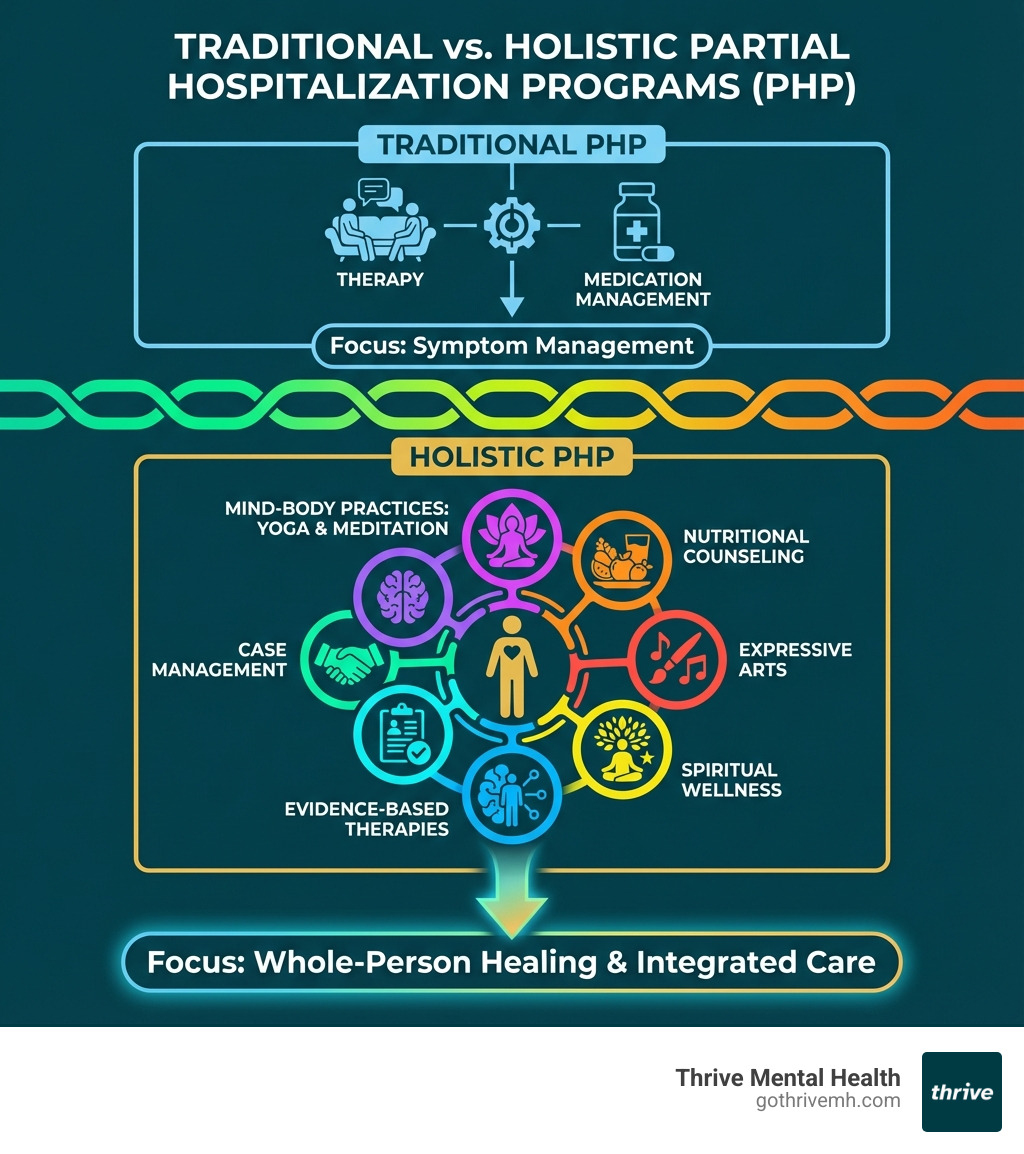
- Traditional PHPs: focus on symptom control and discharge as fast as possible
- Holistic PHPs: treat your mind, body, and nervous system, and prepare you for life after discharge
At Thrive Mental Health, our PHPs are built around one question: Which partial hospitalization programs offer holistic treatment approaches that actually keep people stable once they go home? After a decade building programs, including our extensive network across Florida, we’ve seen the difference when treatment goes beyond talk therapy.
Key Components of a Holistic PHP
- Evidence-Based Therapies: CBT, DBT, trauma-informed care, medication management
- Mind-Body Practices: Yoga, meditation, mindfulness, breathwork for panic and overwhelm
- Expressive Therapies: Art therapy, music therapy, psychodrama for trauma that words can’t reach
- Nutritional Support: Mood-supportive nutrition, simple meal planning, psychoeducation
- Spiritual & Values Work: Grief and loss support, values exploration, optional 12-step or recovery groups
- Structured Support: Daily schedule, psychiatry, case management, relapse-prevention planning
Want to see how PHP compares to other levels of care? Start here:
What “Holistic Treatment” Actually Means in a PHP: Beyond Symptom Management
When we talk about holistic treatment in the context of a Partial Hospitalization Program, we’re talking about something far deeper than just managing symptoms. It’s about recognizing that you are a whole person—not just a collection of symptoms to be treated. Our goal is to treat the whole person: mind, body, and spirit. This integrated care model acknowledges the profound connections between these elements.
For instance, stress isn’t just a mental state; it manifests physically, affecting sleep, digestion, and even immune function. Conversely, physical discomfort or nutritional deficiencies can significantly impact mood and mental clarity. A holistic PHP understands this intricate dance and designs interventions that address all facets of your well-being simultaneously. We believe that true healing comes from nurturing every part of who you are.

The Core Pillars of a Holistic PHP Model: Integrating Evidence and Empathy
At Thrive Mental Health, our holistic PHP model is built on several core pillars, blending proven clinical science with compassionate, person-centered care.
First and foremost, we integrate evidence-based therapies such as Cognitive Behavioral Therapy (CBT) and Dialectical Behavior Therapy (DBT). These are the bedrock of effective mental health treatment, helping you identify and change negative thought patterns and behaviors. However, we don’t stop there.
We also incorporate powerful mind-body practices. Yoga, for example, is not just about physical postures; it’s a practice that combines movement, breathwork, and mindfulness to reduce stress, improve mood, and foster a deeper connection between your physical and mental states. Harvard Health highlights yoga’s profound benefits for mental health. Meditation and deep-breathing exercises are equally effective, helping to reduce stress levels and cultivate awareness that can lessen the impact of daily stressors.
Nutritional counseling is another crucial component. What you eat directly impacts your brain chemistry and energy levels. Our programs provide guidance on dietary choices that support mental well-being, helping you fuel your recovery from the inside out.
Expressive arts therapy, such as art or music therapy, offers a unique avenue for processing emotions and experiences that might be difficult to articulate verbally. These creative outlets can be incredibly therapeutic, allowing for emotional release and self-findy.
Finally, spiritual wellness, while not necessarily religious, is about connecting with your values, purpose, and a sense of meaning. This can involve grief and loss counseling, anger management, or participation in 12-step meetings for those in addiction recovery. It’s about finding inner strength and peace.
How Holistic Therapies Boost Traditional Treatment: Building Resilience from Within
You might wonder how these seemingly “alternative” therapies complement traditional modalities like CBT or DBT. The answer is simple: they amplify their effectiveness and foster deeper, more sustainable healing.
Think of it this way: traditional therapies equip you with tools to manage your thoughts and behaviors. Holistic therapies improve your capacity to use those tools effectively. For instance, mindfulness practices taught in our PHPs, whether through meditation or yoga, help you develop greater self-awareness. This heightened awareness allows you to recognize distressing thoughts or emotions before they escalate, giving you a better chance to apply your CBT or DBT skills.
Holistic approaches also provide significant stress reduction. People in a PHP often face various stressors, and practices like meditation and deep-breathing exercises are effective in reducing stress levels. This cultivation of awareness can significantly reduce the impact of stress on mental health, creating a more stable foundation for therapeutic work.
Furthermore, these approaches address the mind-body connection crucial for processing non-verbal trauma. Trauma often lodges itself in the body, and somatic practices, movement therapies, and expressive arts can help release this stored tension, facilitating a more complete healing process. They help build resilience, not just by teaching coping mechanisms, but by strengthening your internal resources. As research suggests, group therapy itself, a cornerstone of PHPs, can be just as effective as individual therapy for many mental health conditions, and when combined with holistic elements, its power is magnified.
The Real-World Benefits: Why a Holistic PHP Delivers Lasting Recovery and Interconnected Wellness
Choosing a PHP that offers a holistic treatment model isn’t just a trend; it’s a strategic investment in your long-term well-being. The true power of a holistic approach lies in its ability to foster sustainable healing, leading to reduced relapse rates and a significantly improved overall quality of life. By addressing the root causes of distress, rather than just the surface-level symptoms, we help you build practical coping skills and an internal resilience that lasts. We believe this comprehensive approach is key to thriving, not just surviving.

Conditions That Thrive with a Holistic Approach: Healing the Whole You
Certain mental health conditions and recovery goals are particularly well-suited for a holistic PHP approach. This comprehensive model excels at addressing the complex interplay of factors contributing to these challenges:
- Co-occurring Disorders: When mental health issues (like anxiety or depression) and substance use disorders (SUD) occur simultaneously, a holistic PHP offers integrated treatment. It recognizes that treating one without the other is often ineffective, providing dual diagnosis care that combines evidence-based therapies such as CBT, DBT, and trauma-informed care. Our multidisciplinary team at Thrive collaborates closely to ensure coordinated care and medication management when necessary.
- Substance Use Disorder (SUD): Holistic PHPs move beyond abstinence, focusing on the underlying emotional, psychological, and spiritual factors that contribute to addiction. Practices like mindfulness help individuals develop healthier coping mechanisms and reduce stress, which are crucial for relapse prevention.
- Trauma and PTSD: Trauma is often stored in the body, and traditional talk therapy alone may not be sufficient. Holistic modalities like somatic experiencing, yoga, and expressive arts provide avenues for non-verbal processing and release, helping to heal deep-seated wounds.
- Chronic Anxiety and Depression: While medication and traditional therapy are vital, holistic elements offer additional tools for managing persistent symptoms. Mindfulness reduces rumination, nutrition supports mood stability, and physical activity alleviates depressive symptoms.
- Burnout and Stress-Related Conditions: For individuals experiencing chronic stress, a holistic PHP provides a comprehensive toolkit for stress reduction, emotional regulation, and boundary setting, helping to prevent future burnout and promote sustainable well-being.
Which partial hospitalization programs offer holistic treatment approaches for interconnected wellness?
Holistic PHPs intrinsically address the interconnectedness of mental, physical, and spiritual well-being. They understand that a healthy mind resides in a healthy body, and that a sense of purpose and connection can profoundly impact recovery.
- Physical Health Impact: Nutritional support and movement therapies like yoga and guided exercise directly impact physical health. Improved diet can stabilize mood, while regular physical activity reduces symptoms of depression and anxiety. This focus on physical well-being creates a stronger foundation for mental healing.
- Emotional Release Through Movement: Techniques like yoga, dance, or even structured walks can facilitate emotional release, helping individuals process feelings that might be difficult to verbalize. This allows for a deeper emotional catharsis and integration of therapeutic insights.
- Spiritual Grounding: Exploring personal values and finding meaning, whether through contemplative practices or community engagement, provides spiritual grounding. This aspect of care fosters a sense of purpose and belonging, vital for long-term recovery and resilience.
- Building a Balanced Life: Holistic PHPs emphasize skill-building in areas like time management, stress reduction, and healthy relationship dynamics. These practical tools help you integrate recovery into your daily routines, building a balanced life that supports ongoing wellness.
- Integrating Recovery into Daily Routines: The PHP structure, allowing you to return home each day, is ideal for practicing new skills in your real-world environment. Holistic components, from mindful eating to daily meditation, become part of your routine, making recovery a lifestyle, not just a treatment phase.
Your Checklist: How to Find a Genuinely Holistic PHP [10 Fast Questions]
Most programs will tell you they’re “holistic.” Many of them just added a yoga class on Tuesdays.
When you’re comparing which partial hospitalization programs offer holistic treatment approaches, use these 10 questions to separate real whole-person care from marketing fluff.
10 Critical Questions to Ask an Admissions Coordinator
- How is your “holistic” approach built into the daily schedule—not just add-on classes?
Ask them to walk you through a typical day. - What specific mind-body practices (yoga, meditation, breathwork) do you offer, and how many times per week?
- Do you provide individualized nutritional counseling or only general groups?
- Are expressive arts therapies (art, music, psychodrama) a core part of programming or optional extras?
- What training do staff have in holistic modalities?
(Certified yoga instructors? Licensed art therapists? Trauma-informed training?) - How do you address spiritual wellness or values—especially for people who aren’t religious?
- Can I see a sample weekly schedule that shows traditional therapy + holistic practices together?
- What is your patient-to-staff ratio for groups and specialized holistic sessions?
- How does aftercare planning help me keep up holistic practices after discharge?
(Referrals to community yoga, mindfulness groups, support groups, etc.) - How do you involve family or support people in your holistic model?
If they can’t answer clearly, that’s your sign to move on.
Which Partial Hospitalization Programs Offer Holistic Treatment Approaches in Florida?
Thrive Mental Health runs holistic, evidence-based PHP and IOP programs—in-person and virtual—across Florida, including:
- Tampa Bay
- St. Petersburg
- Miami
- Orlando
- Boca Raton
- West Palm Beach
- Jacksonville
- Fort Lauderdale
- Naples
- Sarasota
We design our PHPs to be accessible and insurance-friendly. Many clients use:
- Cigna
- Optum / UnitedHealthcare
- Florida Blue / Blue Cross Blue Shield
- Aetna
You can verify coverage in a couple of minutes here:
- Verify Insurance & Remote Support
- Intensive Outpatient Program (IOP)
- Partial Hospitalization Program (PHP)
Want to go deeper on levels of care before you commit? Read this related guide:
Frequently Asked Questions About Holistic PHPs
How long does a holistic PHP usually last?
Most holistic PHPs run 3–8 weeks, about 5–6 hours per day, 5 days per week. Length depends on your symptoms, safety, and progress. At Thrive, we adjust your stay based on clear goals—not a one-size-fits-all timeline.
Are holistic PHPs covered by insurance?
Yes. PHP is a medical level of care, and most major insurers cover it when clinically needed. Many clients use Cigna, Optum, Aetna, and Florida Blue/BCBS. Coverage and copays vary by plan, so always verify before starting. You can check your benefits online through Thrive in about 2 minutes.
What’s the difference between a holistic PHP and a “regular” PHP?
A regular PHP usually focuses on therapy groups and medication. A holistic PHP includes that plus: yoga or movement, mindfulness, expressive arts, and nutrition support. The goal is not just to stabilize you—but to give you daily tools for sleep, stress, relationships, and relapse prevention.
Can I work while in a PHP?
A full-time, in-person PHP (5–6 hours during the day) makes working regular daytime hours difficult. Some people work evenings or weekends. Thrive also offers virtual PHP/IOP with evening options, which can be easier to combine with work.
Who is a good fit for a holistic PHP?
People who need more than weekly therapy but don’t need 24/7 inpatient care. This often includes severe anxiety or depression, recent hospitalization, intense mood swings, trauma symptoms, or relapse risk with substance use.
Start Your Whole-Person Healing Journey
If you’re reading this, you’re probably tired of quick fixes that don’t stick. A holistic Partial Hospitalization Program can help you stabilize faster, feel safer in your own body, and build routines that actually last when you go home.
At Thrive Mental Health, we combine:
- Evidence-based therapy (CBT, DBT, trauma-informed care)
- Psychiatry and medication management
- Mind-body work (yoga, breathwork, mindfulness)
- Expressive therapies and nutrition support
- Flexible virtual and hybrid IOP/PHP options, including evenings
Summary: If you’re asking which partial hospitalization programs offer holistic treatment approaches, the ones worth your time will treat your whole life, not just your diagnosis—and help you keep getting better after discharge.
Ready for support? Thrive offers virtual and hybrid IOP/PHP programs across Florida, with evening options available. Verify your insurance in 2 minutes (no obligation) → Start benefits check or call 561-203-6085. If you’re in crisis, call/text 988.