






Your Therapy, Your Terms: What Personalized Virtual Care Really Means
Which virtual therapy platforms provide the most personalized care? The platforms that offer the most personalized care combine intelligent onboarding assessments, adaptive treatment plans, robust therapist matching algorithms, real-time progress tracking, and flexible communication options. These features work together to tailor therapy to your specific needs, goals, and lifestyle.
Top features of truly personalized virtual therapy platforms:
- In-depth assessments, Detailed intake questionnaires that go beyond basic symptom checklists to understand your goals, preferences, and life circumstances
- Smart matching algorithms, Systems that pair you with therapists based on specialty, communication style, and your specific challenges
- Custom treatment plans, Therapy modules and exercises that adapt based on your progress and feedback
- Real-time tracking tools, Mood journals, symptom trackers, and progress visualizations you can share with your therapist
- Communication flexibility, Multiple ways to connect (messaging, video, phone, live chat) that fit your schedule and comfort level
- Easy provider switching, The ability to change therapists quickly if the match isn’t right
- HIPAA-compliant security, Encryption and transparent data policies that protect your information
The mental health care landscape is changing fast. A 2023 study in JMIR Mental Health found that 72% of people felt better emotionally after just 8 weeks using teletherapy apps. The WHO predicts that by 2030, 60% of mental health care will be delivered virtually.
But not all virtual therapy platforms are created equal. Many simply match you with a therapist and leave it at that, no clear goals, no progress tracking, no personalization beyond choosing from a list of providers.
True personalized care goes deeper. It means your treatment plan adapts as you grow. It means your therapist uses data from mood trackers or journaling to inform sessions. It means you can message your provider between appointments when you need support, not just during a weekly 50-minute window.
The difference between generic online therapy and genuinely personalized virtual care comes down to one core principle: the platform molds itself around your needs, not the other way around.
I’m Nate Raine, CEO of Thrive Mental Health, where we’ve spent years building evidence-based virtual and hybrid behavioral health programs in Florida. Throughout my career leading digital change in healthcare, I’ve seen how the right technology can help answer which virtual therapy platforms provide the most personalized care by integrating clinical excellence with data-driven insights that actually improve outcomes.
If you’re weighing weekly virtual therapy against higher levels of care, you can also explore how our Intensive Outpatient Programs give people in Florida more structure when “just talking once a week” isn’t enough.
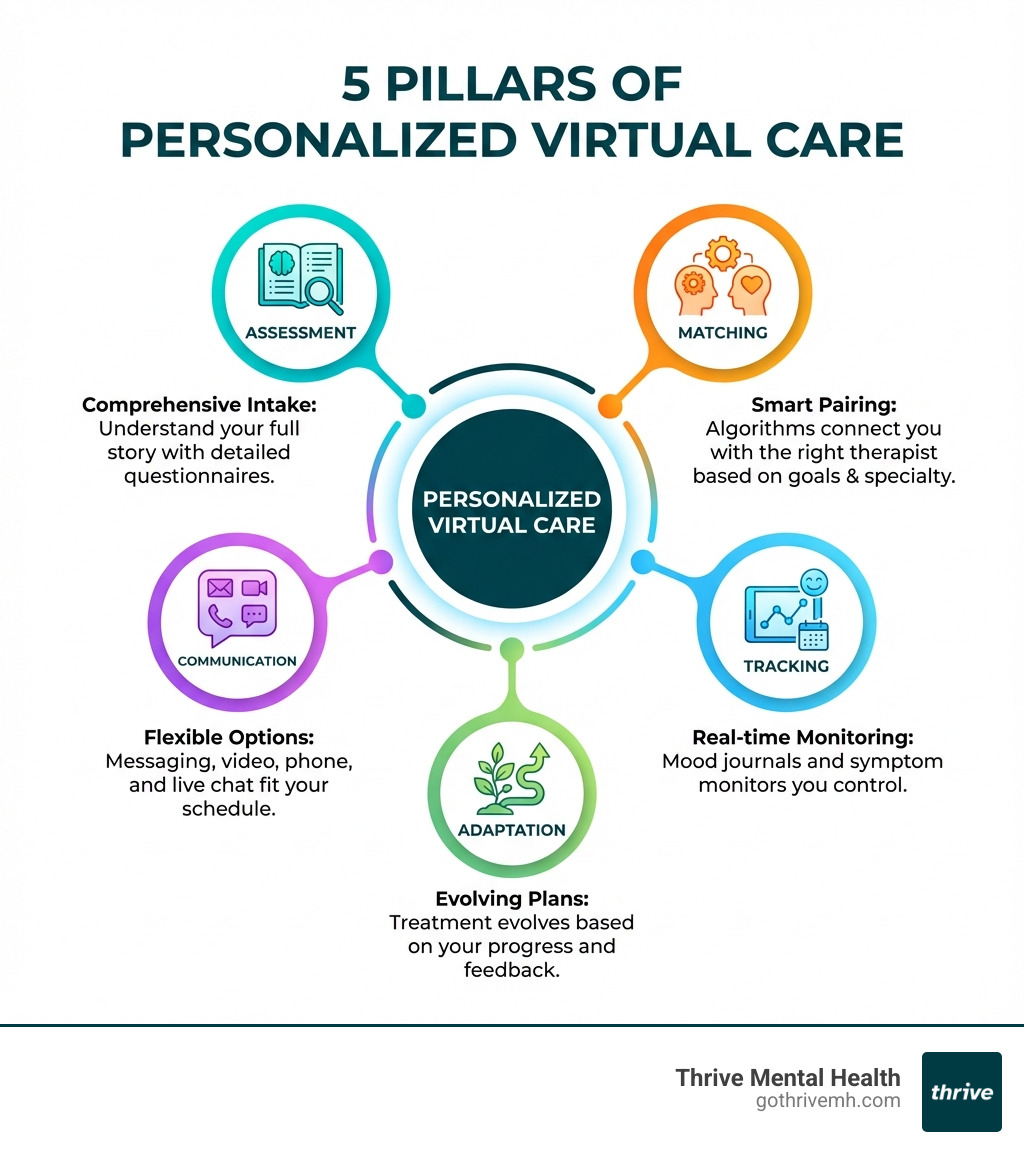
When we talk about personalized care, we’re moving beyond the “one-size-fits-none” problem often found in traditional, less flexible therapy models. Personalized therapy means your treatment plan isn’t a generic one, it’s crafted based on what you’re going through, how you feel, and how you respond to certain methods. This adaptive treatment approach, coupled with collaborative goal-setting and data-driven insights, ensures that your mental health journey is truly your own. It allows us to work together to create a plan for your future, discussing personal challenges and providing support every step of the way. If you want a deeper dive into how telehealth changes the game, this overview of the benefits of telehealth therapy offers additional context for what’s possible.
5 Must-Have Features of a Truly Personalized Therapy Platform
For a virtual therapy platform to genuinely provide personalized care, it must integrate several key features that work in harmony. These aren’t just bells and whistles; they are fundamental components that ensure your treatment is as unique as you are.
1. Onboarding That Actually Understands You
The journey to personalized virtual therapy begins even before your first session: with the onboarding process. For us, this isn’t just about collecting basic demographic information; it’s about understanding your unique story. A truly personalized platform uses in-depth assessments, detailed intake questionnaires that dig into your emotional state, therapy goals, communication preferences, and even your cultural background and life experiences.
This comprehensive approach allows the platform to use algorithmic matching. Instead of simply picking a name off a list, you’re paired with a therapist whose specialty, communication style, and therapeutic approach align with your specific needs. For instance, if you’re seeking support for anxiety and prefer a therapist who uses Cognitive Behavioral Therapy (CBT) and has experience with LGBTQ+ issues, a smart algorithm can identify the best fit. This intelligent matching is crucial for establishing a strong therapeutic alliance from the start.
Moreover, a strong vetting process for therapists is non-negotiable. We ensure our clinicians are licensed, credentialed, and have significant experience, often requiring a relevant academic degree, years of experience, and thousands of hours of hands-on practice. This commitment to quality ensures that when you’re matched, you’re connecting with a highly qualified professional.

2. Treatment Plans That Evolve With You
Once connected with a therapist, personalized virtual care means your treatment plan isn’t set in stone; it’s a living document that adapts and evolves with you. This involves adaptive content and custom therapy modules that are custom to your ongoing needs and progress.
We know that effective therapy often incorporates evidence-based approaches like Cognitive Behavioral Therapy (CBT) or Dialectical Behavior Therapy (DBT). A personalized platform can integrate these techniques through guided exercises, digital worksheets, and interactive tools that are specifically chosen for your situation. For example, if you’re working on managing stress, your plan might include mindfulness exercises or thought records based on CBT principles.
The foundation of this adaptability lies in user feedback loops. Your input on what’s working, what isn’t, and how you’re feeling helps shape the direction of your therapy. We encourage collaborative goal-setting, often using the SMART goal framework (Specific, Measurable, Achievable, Relevant, Time-bound) to ensure clarity and focus. These goals are regularly reviewed and adjusted, typically every 90 days or as new issues arise, to keep your treatment relevant and effective. Platforms may also offer self-guided resources that complement your sessions, allowing you to engage with therapeutic content at your own pace between appointments.
If you reach a point where symptoms in places like Tampa, Miami, or Orlando are too intense for standard weekly sessions, stepping up into a structured Intensive Outpatient Program or Partial Hospitalization Program can extend that same personalized planning into a higher level of care.
3. Real-Time Progress Tracking You Can See and Feel
One of the most powerful aspects of personalized virtual therapy is the ability to track your progress in real time. This isn’t just for your therapist; it empowers you to see and understand your journey. Features like mood journaling and symptom trackers allow you to log your emotional state, anxiety levels, sleep patterns, and other relevant metrics daily or weekly.
Some advanced platforms even integrate with wearable devices, drawing insights from your sleep quality, activity levels, or heart rate to provide a more holistic view of your well-being. This data, when shared with your therapist, can inform discussions, highlight patterns, and help adjust your treatment plan more effectively. Imagine your therapist noticing a correlation between your sleep quality and anxiety levels, leading to a targeted intervention.
Key metrics we often track include:
- Mood scores
- Sleep quality
- Anxiety levels
- Stress indicators
- Session ratings and feedback
- Completion of therapeutic exercises
This continuous feedback loop ensures that your therapy remains responsive to your current state, leading to quicker improvements and more relevant strategies.
4. Communication That Fits Your Life, Not the Other Way Around
Life is busy, and your therapy shouldn’t add to your stress. A hallmark of personalized virtual care is flexible communication options that cater to your lifestyle and preferences. This means offering more than just a weekly video call.
Platforms providing truly personalized care typically offer a range of communication methods:
- Asynchronous messaging: The ability to text, send audio messages, or even short video clips to your therapist at any time, allowing for reflection and responses when convenient.
- Live video sessions: For a more traditional, face-to-face experience from the comfort of your home.
- Phone calls: A great option for those who prefer verbal communication without the visual aspect of video.
- Live chat options: Real-time text-based sessions for quick check-ins or when you need immediate support.
This flexibility extends to scheduling. You should be able to book sessions that fit your schedule, whether it’s evenings, weekends, or during a lunch break. This empowers you to engage with therapy on your terms, making it easier to integrate mental health support into your daily life without long commutes or rigid appointment times.

5. Ironclad Data Privacy and Security
Privacy and security are paramount, especially when it comes to sensitive mental health information. A personalized virtual therapy platform must demonstrate an unwavering commitment to protecting your data. This includes strict adherence to regulations like HIPAA (Health Insurance Portability and Accountability Act) in the United States, which sets the standard for protecting patient data.
Beyond compliance, look for platforms that employ end-to-end encryption for all communications and data storage. This means your messages, video calls, and personal information are scrambled and can only be accessed by you and your authorized therapist. Transparent data policies are also crucial; you should clearly understand how your information is collected, used, and stored, with user control over what is shared and with whom.
When considering virtual therapy, it’s also worth noting that many services allow you to use your Health Savings Account (HSA) or Flexible Spending Account (FSA) for payment. This can make therapy more affordable and accessible. For more details on using these benefits, you can refer to resources like this guide on Using your HSA or FSA for mental health. Prioritizing platforms with robust privacy features ensures that your journey to mental well-being is conducted in a safe and confidential environment.
If you’re exploring care in Florida, you can quickly verify your insurance with Thrive (Cigna, Optum, Florida Blue, and more) before you commit, so you know exactly what’s covered before you start.
Which virtual therapy platforms provide the most personalized care? A Comparison Framework
Understanding which virtual therapy platforms provide the most personalized care can feel overwhelming given the sheer number of options. Instead of focusing on specific brand names, we find it more helpful to evaluate platforms based on their core models and how these models integrate personalization features. This framework will empower you to assess any platform and determine if it aligns with your unique needs.
We can categorize most virtual therapy platforms into three main models:
- Subscription-Based (unlimited messaging focus): These platforms typically offer a flat monthly fee for unlimited messaging with a therapist, often including a certain number of live sessions (video, phone, or chat). The emphasis is on continuous, asynchronous support.
- Per-Session (traditional model online): This model closely mirrors traditional in-person therapy, where you pay for individual live sessions. It offers more flexibility if you don’t need continuous contact between appointments.
- Integrated Care (therapy + psychiatry): These platforms combine talk therapy with medication management, offering a holistic approach under one roof. They often involve a team of therapists and psychiatric providers.
Here’s a comparison framework to help you evaluate platforms:

| Personalization Feature | Subscription-Based (Messaging Focus) | Per-Session (Traditional Online) | Integrated Care (Therapy + Psychiatry) |
|---|---|---|---|
| Assessment Depth | Often robust initial questionnaires to match you with a therapist. | Varies; some have detailed intake, others rely on therapist intake. | Typically comprehensive, covering both mental health and medical history for medication. |
| Matching Control | You usually get a few matches and can switch easily if it’s not a fit. | You often choose your therapist from a directory based on profiles. | Matches based on need for therapy and/or medication, with options to switch. |
| Tracking Tools | Frequently includes in-app mood tracking, journaling, and exercises. | Less common; may rely on therapist-provided tools or external apps. | May include symptom trackers for medication efficacy, mood logs. |
| Communication Options | Core is unlimited messaging; live video/phone/chat often included. | Primarily live video/phone; messaging may be limited to scheduling. | Combines live sessions for therapy and psychiatry, with secure messaging for quick questions. |
| Adaptation & Feedback | Continuous feedback via messaging, allowing for ongoing adjustments. | Primarily during live sessions; less real-time adaptation between. | Coordinated adjustments between therapist and prescriber based on progress. |
| Self-Guided Resources | Often includes extensive libraries of exercises and workshops. | Less common as a core feature; therapist may recommend external resources. | May offer self-help modules for specific conditions. |
| Therapist Switching Ease | Generally very easy and encouraged if the fit isn’t right. | Varies; may require a new intake process or administrative steps. | Can be easier to switch within the same platform’s network. |
By using this framework, you can objectively determine which model and specific platform features best answer which virtual therapy platforms provide the most personalized care for your individual journey.
If you find that you need more structure than any app-based platform can realistically provide, exploring a higher level of care such as Thrive’s Intensive Outpatient Program, can be the next step. If you need even more support, a Partial Hospitalization Program may fit. For a broader look at what remote care can include, you can also read our guide to Remote Mental Health Support.
The Limits of Virtual Therapy: When You Need More Than an App
If you are in immediate distress or thinking about harming yourself or someone else, do not wait.
If you’re in crisis, call/text 988 right now. You are not alone.
While personalized virtual therapy offers incredible benefits, it’s important to understand its limitations. Not every mental health challenge is best addressed through an app or weekly virtual sessions. Knowing when to seek more intensive support is crucial for your well-being.
Who is a good candidate for personalized virtual therapy?
Personalized virtual therapy is a game-changer for many, providing accessible and flexible support. It’s particularly well-suited for individuals dealing with:
- Mild to moderate conditions: This includes common issues like anxiety, depression, and stress, which often respond very well to virtual counseling. A 2023 study in JAMA Psychiatry showed that online CBT works just as well as in-person therapy for treating generalized anxiety disorder (GAD).
- Life transitions: Navigating significant life changes, such as career shifts, relationship issues, or grief, can be effectively supported through virtual platforms.
- Busy schedules: For professionals, parents, or students in locations across Florida, virtual therapy offers the flexibility to fit sessions into demanding routines.
- Geographic barriers: If you live in a rural area or simply prefer the comfort of your home, virtual therapy removes the logistical problems of in-person appointments.
Thrive Mental Health offers virtual programs specifically designed for adults and young professionals across Florida, providing convenient and effective care where you are.
When should you seek more intensive support?
It’s vital to recognize that virtual therapy, even when highly personalized, is not a substitute for all levels of care. When the intensity of your symptoms or the complexity of your situation exceeds what weekly virtual sessions can provide, seeking more intensive support is essential.
If you’re in crisis, call/text 988 right now. You are not alone.
You should seek more comprehensive care if you are experiencing:
- Severe mental illness: Conditions like severe depression, bipolar disorder, or schizophrenia often require more structured and intensive interventions than typical virtual therapy can offer.
- Crisis situations or suicidal ideation: If you are experiencing thoughts of harming yourself or others, or are in an acute mental health crisis, immediate in-person support is necessary. Virtual platforms are not equipped for emergency response.
- Complex trauma: While some virtual therapy can address trauma, complex or dissociative trauma may benefit from the deeper relational dynamics and safety found in an in-person setting.
- When weekly therapy isn’t enough: If you find that weekly sessions aren’t making a significant impact, or you need more frequent and structured support, it’s a clear sign you might benefit from a higher level of care.
- Needing IOP/PHP programs: For individuals who need more than once-a-week therapy but less than inpatient care, Intensive Outpatient Programs (IOP) or Partial Hospitalization Programs (PHP) are designed to provide structured, evidence-based treatment. At Thrive Mental Health, we offer virtual IOP programs that combine clinical expertise, flexible scheduling, and measurable results, custom for these very needs. You can learn more about our Intensive Outpatient Programs here.
- Unsafe home environment: If your home environment is not conducive to healing or poses a risk to your safety, an in-person setting might be necessary.
Frequently Asked Questions about Personalized Virtual Therapy
How much does personalized virtual therapy cost and does it take insurance?
The cost of personalized virtual therapy varies significantly depending on the platform model and the services included. Subscription-based models might range from $280-$400 per month for unlimited messaging and some live sessions, while per-session rates can range from $75-$250+. Integrated care models that include psychiatry might cost more, sometimes $300+ per month.
Many platforms, including Thrive Mental Health, accept a wide range of insurance plans, such as Cigna, Optum, and Florida Blue, among others. This can significantly reduce your out-of-pocket expenses. It’s always best to verify your insurance coverage directly with the platform or your provider. You can easily verify your insurance with us in just a few minutes, with no obligation. Additionally, you can often use your HSA or FSA accounts to pay for virtual therapy services, making it a tax-advantageous way to cover costs.
Can virtual therapists prescribe medication?
This is a common and important question. The short answer is: no, therapists cannot prescribe medication. Therapy involves licensed therapists discussing personal challenges and devising personalized plans. They help individuals understand their feelings, provide support, and create a plan for the future.
Psychiatry, on the other hand, is a medical specialty focused on prescribing and monitoring medication to treat mental health symptoms. Psychiatrists and psychiatric providers are licensed medical providers. Some virtual therapy platforms offer integrated care, meaning they provide both therapy and psychiatric services. In these models, you can have a therapist for talk therapy and a separate psychiatric provider for medication management, often coordinated within the same platform for seamless care.
How do I know if my virtual therapist is a good match?
Finding the right therapist is a deeply personal experience, and it’s a cornerstone of personalized care. You’ll know your virtual therapist is a good match if you feel:
- Heard and respected: You should feel comfortable expressing yourself openly and that your therapist genuinely listens and understands your perspective.
- A collaborative spirit: Your therapist should involve you in setting goals and developing your treatment plan, making it a partnership rather than a one-sided directive.
- Measurable progress: While progress can be subtle, you should eventually start to feel a sense of movement towards your goals, whether it’s improved mood, better coping skills, or a clearer understanding of your challenges.
- Ease of switching: A truly personalized platform understands that the first match isn’t always perfect. It should make it easy for you to switch therapists if you don’t feel a strong connection or if your needs evolve.
The therapeutic alliance, the relationship between you and your therapist, is one of the most significant predictors of successful outcomes in therapy. Don’t hesitate to communicate any concerns or to seek a different therapist if the fit isn’t right.
Do virtual therapy platforms work for people in Florida?
Yes. Many leading platforms, including Thrive, are licensed to serve clients in Florida. Thrive offers virtual care and higher levels of support (IOP) for adults and young professionals throughout Florida, including major cities like Tampa, Miami, Orlando, and Jacksonville.
Is virtual therapy enough if my symptoms are really intense?
Sometimes, but not always. If you’re unsafe, unable to function day-to-day, or feeling stuck despite weekly sessions, you may need a higher level of care. Thrive’s Intensive Outpatient programs provide multiple days per week of evidence-based treatment, while still letting you sleep in your own bed.
Conclusion: Finding the Right Level of Support for You
The quest to answer which virtual therapy platforms provide the most personalized care ultimately leads us back to understanding your unique needs and preferences. Personalized virtual therapy is a powerful tool, leveraging intelligent assessments, adaptive plans, and flexible communication to meet you where you are. It’s a game-changer for accessibility and convenience, offering effective support for a range of mild to moderate mental health conditions.
However, it’s crucial to remember that not all challenges can be met with weekly virtual sessions alone. For those experiencing severe mental illness, crisis situations, complex trauma, or when weekly therapy simply isn’t enough, more intensive support is not just beneficial, it’s necessary. At Thrive Mental Health, we recognize this spectrum of need. That’s why we offer specialized virtual IOP programs, delivering evidence-based treatment with clinical expertise and measurable results for individuals across Florida. Our programs go beyond typical weekly therapy, providing the structured support many need to truly heal and thrive. You can explore more about our approach to Remote Mental Health Support and how it can make a difference in your journey.
Whether you’re in Tampa Bay, Miami, Jacksonville, Orlando, or any of our other service areas in Florida, you don’t have to choose between convenience and real clinical support, you can have both.
Ready for support? Thrive offers virtual IOP programs with evening options. Verify your insurance in 2 minutes (no obligation) → Start benefits check or call 561-203-6085. If you’re in crisis, call/text 988.

This article is for informational purposes only and is not a substitute for individualized clinical advice or insurance verification.