





Why “Patient-Centered” Isn’t Just a Buzzword, It’s a Lifeline
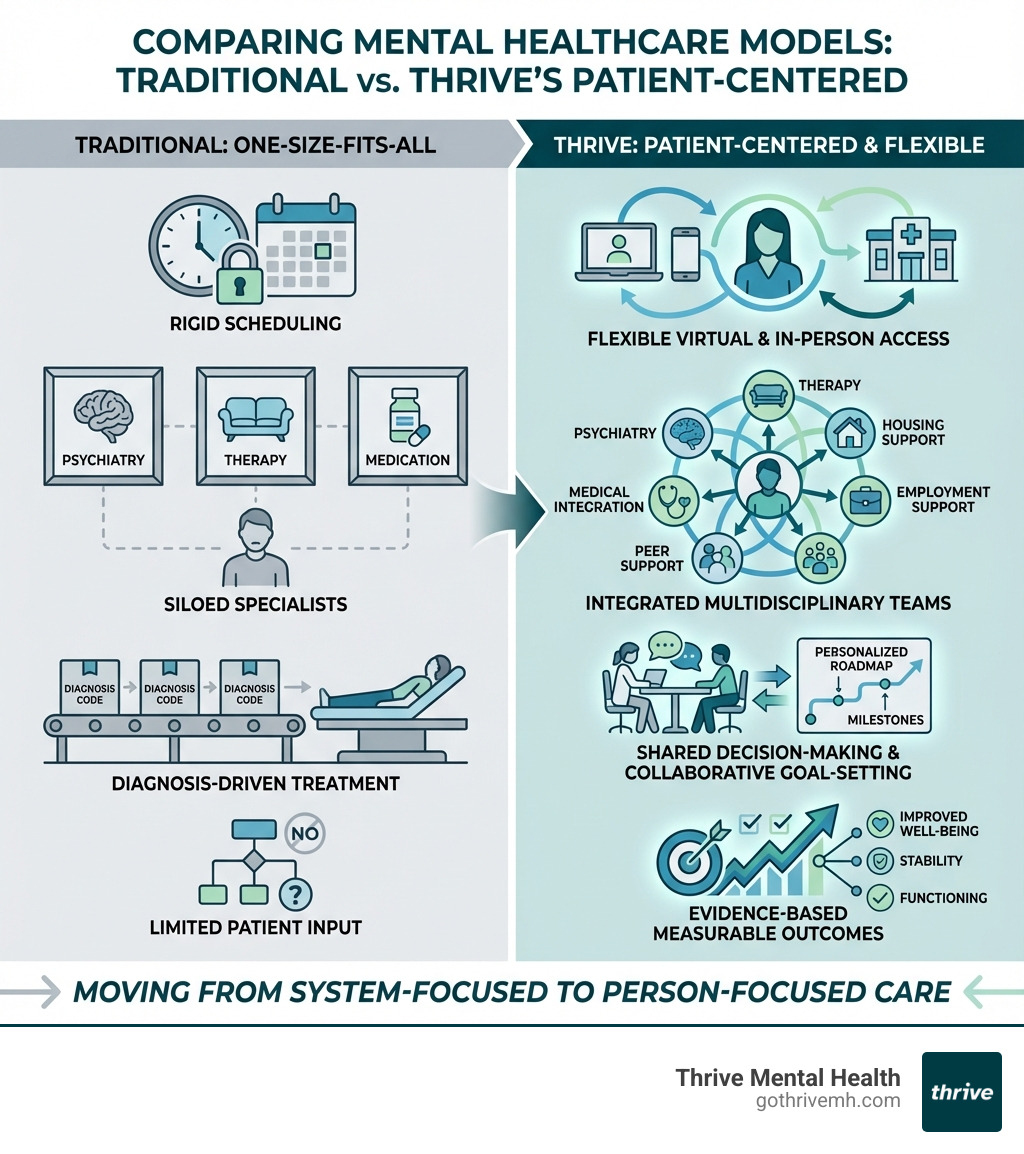
What makes Thrive’s mental health programs more patient-centered? Thrive builds treatment around your unique needs, not a standardized protocol. That means flexible scheduling (including evening sessions), integrated virtual and in-person care, whole-person support that addresses housing and employment alongside therapy, and collaborative goal-setting where you drive your recovery plan.
Core Elements of Thrive’s Patient-Centered Approach:
- Flexible Access, Virtual and in-person IOP/PHP programs with evening options available to all Florida residents
- Whole-Person Integration, Mental health + substance use + employment + housing support under one roof
- Shared Decision-Making, You co-create goals and treatment plans with your clinical team
- Evidence-Based Results, ACT, CBT, and other proven therapies with measurable outcomes
- Care as a Right, Insurance-friendly programs (Cigna, Optum, Florida Blue) to eliminate cost barriers
Most mental health programs still operate like assembly lines, rigid appointment slots, siloed specialists who never talk to each other, and “treatment” that ignores whether you have stable housing or a way to get to work. You end up fighting the system harder than you’re fighting your depression or anxiety.
Patient-centered care flips that script. It starts with a simple question: What do you need to get better? Not what diagnosis code fits. Not what the insurance algorithm approves first. You.
For decades, behavioral health was misunderstood, underfunded, and designed to keep people out rather than pull them in. Conversations about trauma and addiction were whispered. Access to real support? Nearly impossible for those who needed it most. That’s the system too many providers still operate within, and it’s why so many people give up before they even start.
At Thrive, we’ve spent years tearing down those barriers. We’ve built programs that meet you where you are, literally and figuratively. Whether you’re logging into a virtual session from your living room at 7 PM or walking into one of our clinics for face-to-face support, the philosophy is the same: your recovery, your timeline, your voice.
As CEO of Thrive Mental Health, I’ve led initiatives that integrate clinical excellence with data-driven outcomes, with a special focus on our Florida communities, ensuring what makes Thrive’s mental health programs more patient-centered is not just philosophy, it’s measurable, accessible, and built into every program we offer. My background in healthcare innovation and behavioral science has shown me that when patients are treated as partners, not cases, recovery accelerates.
Related content about What makes Thrive’s mental health programs more patient-centered?:
The Thrive Blueprint: How We Demolished Service Silos for Whole-Person Healing
If you’re in crisis or need immediate support, call or text 988 to reach the Suicide & Crisis Lifeline. You are not alone.
At Thrive, we understand that mental health doesn’t exist in a vacuum. It’s deeply intertwined with every aspect of your life, your physical health, your living situation, your job, and your community. This is precisely what makes Thrive’s mental health programs more patient-centered: our commitment to addressing the whole person, not just their symptoms. We’ve revolutionized how we deliver care by actively breaking down silos between services, a core tenet inspired by the Certified Community Behavioral Health Clinic (CCBHC) model.
The CCBHC model, a significant shift in behavioral healthcare, revolutionizes care delivery by focusing on comprehensive services that integrate mental health, substance use treatment, and primary care screening under one roof. This approach ensures that you receive coordinated care that looks at the big picture, rather than sending you to multiple specialists who may not communicate with each other. For us, this means moving beyond just treating the immediate symptoms to addressing the underlying factors that impact your well-being. This whole-person approach is an evidence-based model for expanding access, advancing rights, and improving health and social outcomes. To learn more about how community mental health services can benefit you, see Guidance on community mental health services.
How the CCBHC Model Revolutionizes Treatment
The CCBHC model is not just a fancy acronym; it’s a promise of comprehensive, integrated care. It acknowledges that mental health challenges often come with co-occurring conditions, whether that’s substance use, chronic physical ailments, or social determinants of health like unstable housing or unemployment.
In our programs, this translates to:
- Comprehensive Services: We offer a full spectrum of behavioral health services, from therapy and medication management to crisis intervention and case management. This means you don’t have to steer a fragmented system; everything you need is coordinated within our programs.
- Addressing Root Causes: Instead of merely managing symptoms, we dig deeper. For instance, if anxiety is exacerbated by housing insecurity, we work to connect you with resources for stable housing. If depression is linked to unemployment, we offer employment assistance. This is a crucial part of what makes Thrive’s mental health programs more patient-centered, we tackle the real-life issues impacting your mental state.
- Integrated Care: Our teams work collaboratively, ensuring seamless communication between your mental health therapists, medical providers, and support staff. This integrated approach ensures that all aspects of your health are considered and addressed in a coordinated manner.
Beyond Therapy: Integrating Life’s Critical Needs
We recognize that true healing extends beyond the therapy room. That’s why our patient-centered approach integrates support for life’s fundamental needs, reflecting our commitment to a holistic view of your well-being.
- Integrated Support Services: Our programs in Florida are designed to be comprehensive. This includes:
- Mental Health Counseling: Evidence-based therapies like CBT, DBT, ACT, and EMDR are at the core of our offerings, custom to your specific needs.
- Substance Abuse Programs: For individuals facing co-occurring substance use disorders, we provide integrated treatment that addresses both mental health and addiction simultaneously.
- Employment Coaching: We understand the profound impact meaningful employment has on mental health and self-esteem. Our programs offer support in finding and maintaining employment.
- Housing & Community Support: Stable housing is a cornerstone of recovery. We help connect you with resources and support systems to ensure your basic needs are met.
- Primary Care Coordination: Your physical health impacts your mental health. We facilitate coordination with primary care providers to ensure holistic care.
Our goal is to build a supportive ecosystem around you, reducing the burden of navigating complex systems alone. This focus on affordable housing, employment, and full community integration is a testament to our holistic, patient-centered approach to behavioral health, ensuring that your recovery journey is supported comprehensively. You can explore our Comprehensive Guide to Behavioral Health Services for more details.
Opening up Access [24/7]: How Flexible Care Puts You in Control
Access to mental health care has historically been a significant barrier for many. Rigid schedules, geographic limitations, and the need to take time off work or find childcare often deter individuals from seeking the help they desperately need. This is precisely why what makes Thrive’s mental health programs more patient-centered includes our pioneering integration of virtual care, especially in response to the challenges of recent years.
The COVID-19 pandemic forced a rapid evolution in healthcare, and we accepted this challenge as an opportunity to improve accessibility. We quickly adapted, leveraging new technologies to ensure continuity of care and maintain vital connections with our clients. This meant expanding our virtual Intensive Outpatient (IOP) programs, making high-quality, evidence-based treatment available to adults and young professionals across Florida. Our flexible scheduling, including evening options, means you can engage in intensive treatment without disrupting your work or family life.

Meeting You Where You Are: The Power of Virtual IOP
Our virtual IOP programs are designed to meet you exactly where you are, geographically and emotionally. This approach eliminates the need for travel, offering convenience and privacy, which are crucial for maintaining engagement in treatment. We’ve seen how virtual care can reduce attrition and improve outcomes by making therapy a seamless part of your daily life.
For example, studies on electronic delivery models, such as the eTHRIVE program for veterans, have demonstrated remarkable success. This program effectively enrolled 10-12 veterans per cohort, with a significantly low attrition rate of just 6%. This highlights the power of virtual care to maintain connection and engagement, even in intensive programs. The ability to access expert-led programs from the comfort of your home, without the added stress of commuting or finding parking, is a game-changer. For more information on this flexible approach, check out our page on Virtual Therapy.
Proven Results: The Data Behind Virtual Connection
The effectiveness of virtual programs in improving mental health outcomes is not just anecdotal; it’s backed by robust research. A recent evaluation involving 201 female veteran participants in a THRIVE program demonstrated significant improvements in self-reported mental health outcomes. This included reductions in depression and anxiety, along with improvements in psychological inflexibility, experiential avoidance, life satisfaction, and work pain interference.
These findings underscore the tangible benefits of well-designed virtual mental health programs. They show that online platforms can deliver the same, if not superior, quality of care as traditional in-person models, with the added advantages of accessibility and convenience. This commitment to delivering measurable results through accessible, virtual care is a core aspect of what makes Thrive’s mental health programs more patient-centered. You can dig deeper into this research via this Scientific research on virtual whole health programs.
What makes Thrive’s mental health programs more patient-centered?
At the heart of Thrive’s philosophy is an unwavering emphasis on compassion, flexibility, and meeting clients at their point of need. These aren’t just abstract ideals; they are woven into the fabric of our patient-centered care practices, ensuring that your journey to recovery is guided by understanding and custom support.
 Your Checklist for Mental Health IOP EnrollmentMental Health

How We Empower You: Treating Behavioral Health as a Right, Not a Privilege
We firmly believe that behavioral health care is a fundamental right, not a privilege reserved for a select few. This philosophy profoundly shapes every aspect of our programs and is key to what makes Thrive’s mental health programs more patient-centered. We empower you by:
- Dismantling Stigma: We create a safe, non-judgmental environment where open conversations about mental health, trauma, and addiction are not just encouraged but normalized. This moves away from the historical marginalization of mental health, fostering an atmosphere of acceptance and understanding.
- Co-Creating Treatment Plans: Your voice is paramount. We engage in shared decision-making, where your needs, preferences, and goals are at the forefront of your treatment plan. This collaborative approach ensures that your recovery journey is genuinely yours.
- Valuing Patient Preferences: Whether it’s your preferred therapeutic modality (CBT, DBT, ACT, EMDR), scheduling needs, or comfort level with virtual vs. in-person sessions, we adapt our programs to suit you. This flexibility is critical for sustained engagement and successful outcomes.
What makes Thrive’s mental health programs more patient-centered?
Our commitment to person-centered, evidence-based care ensures that your individual needs and preferences are always at the forefront. We don’t believe in a one-size-fits-all approach because we know that each person’s path to healing is unique.
- Person-Centered Care: We adopt a “needs-led” framework, meaning your mental health needs are defined by you, alongside our professionals, through shared decision-making. This is in contrast to approaches solely based on diagnosis or severity, ensuring a truly personalized experience.
- Evidence-Based Practices: Our programs use therapeutic interventions proven to be effective, such as Acceptance and Commitment Therapy (ACT), Cognitive Behavioral Therapy (CBT), Dialectical Behavior Therapy (DBT), and Eye Movement Desensitization and Reprocessing (EMDR). We integrate these modalities into individualized plans to ensure the most effective treatment for you.
- Ensuring Patient Needs are Met: From your initial assessment to your discharge, we continuously evaluate and adapt your care plan based on your progress and evolving needs. This dynamic approach guarantees that your preferences are respected and your goals are actively pursued.
How Compassion and Flexibility Drive Real-World Recovery
Our emphasis on compassion and flexibility isn’t just about comfort; it’s about achieving real-world recovery. We meet clients at their point of need, adapting our services to their unique circumstances, a practice refined over years of experience in the behavioral health field.
Decades ago, behavioral health was often a marginalized and underfunded system, with limited access and heavy stigma. Our journey reflects a significant shift away from that outdated model. We have continuously evolved, expanding services and adopting innovative approaches like virtual care to address historical barriers. This evolution demonstrates our dedication to increasing patient access and choice, reflecting a deep understanding that recovery is a personal, often winding path that requires unwavering support and adaptability. Our programs are designed for people who need more than once-a-week therapy but less than inpatient care, providing that crucial middle ground for effective recovery.
The Core Principles That Guide Every Patient’s Journey
The unwavering principles and values that guide Thrive’s leadership and staff are the bedrock of our patient-centered behavioral health services. We believe that by adhering to these core tenets, we can create an environment where true healing flourishes. Explore our Intensive Outpatient Programs to see these principles in action.
What are the guiding values behind patient-first treatment?
Our patient-first treatment is built upon a set of guiding principles that define what makes Thrive’s mental health programs more patient-centered:
- Whole-Person, Integrated Care: We address all aspects of your well-being, mental, physical, social, and environmental, ensuring a comprehensive and coordinated approach to your recovery.
- Uncompromising Accessibility & Flexibility: We strive to make high-quality care accessible to all Florida residents through virtual and in-person programs, with flexible scheduling options like evening programs.
- Empowerment Through Shared Decisions: Your voice is central to your treatment. We partner with you to set goals, choose modalities, and shape your recovery journey, treating behavioral health as a right, not a privilege.
- Evidence-Based, Measurable Outcomes: We use proven therapeutic methods (CBT, DBT, ACT, EMDR) and track your progress to ensure the most effective and efficient path to healing.
- Full Community Integration: We connect you with essential community resources, including support for affordable housing and employment, fostering a sense of belonging and stability crucial for long-term well-being.
What makes Thrive’s mental health programs more patient-centered?
The collaborative spirit that defines Thrive extends far beyond our internal teams. We actively engage with community partners, state leaders, and, most importantly, our clients themselves, to continuously shape and refine our patient-centered approach.
- Community Partnerships: We work hand-in-hand with local organizations and leaders across Florida to understand the unique needs of each community and ensure our programs are responsive and relevant.
- Client Feedback Loops: Your experiences and insights are invaluable. We actively solicit and integrate client feedback, ensuring that our services evolve to meet your changing needs and preferences. This direct input is crucial to what makes Thrive’s mental health programs more patient-centered.
- Continuous Improvement: Our commitment to patient-centered care is a dynamic process. We constantly evaluate our programs, guided by feedback and the latest research, to ensure we are delivering the most effective and compassionate care possible.
- Insurance Partnerships: We believe financial barriers should never prevent access to care. We work with most major insurance providers, including Cigna, Optum, Aetna, and Florida Blue, to make our programs affordable and accessible. Understanding your benefits is easy; check your coverage on our Insurance Companies page.
Frequently Asked Questions about Patient-Centered Care
What is a patient-centered mental health program?
It’s a model where treatment revolves around your unique needs, preferences, and goals. Instead of a rigid, one-size-fits-all approach, care is collaborative, flexible, and treats you as a whole person, not just a diagnosis.
How does virtual care improve patient outcomes?
Virtual programs remove major barriers like travel, time off work, and childcare. This increases consistency and access, allowing you to engage in intensive treatment from a safe, comfortable environment, which studies show can lead to better results and lower dropout rates.
Does Thrive accept insurance for its programs?
Yes, accepting insurance is a key part of making care accessible. We are in-network with most major insurance providers, including Cigna, Aetna, Optum, and Florida Blue, to minimize your out-of-pocket costs for IOP programs.
Your Recovery, Your Terms: Take the First Step Today
Patient-centered care is the difference between feeling lost in the system and feeling empowered on your path to recovery. By integrating whole-person support, offering flexible virtual access, and building programs on a foundation of respect and evidence, Thrive Mental Health ensures your needs are always the priority. This comprehensive, empathetic approach is what makes Thrive’s mental health programs more patient-centered and effective.
Ready for support? Thrive offers virtual IOP programs with evening options. Verify your insurance in 2 minutes (no obligation) → Start benefits check or call 561-203-6085. If you’re in crisis, call/text 988.

This article is for informational purposes only and is not a substitute for individualized clinical advice or insurance verification.