
5 Easy Ways to Find Flexible IOP Scheduling Programs

Get Help Without Putting Your Life on Hold
Which intensive outpatient programs offer flexible scheduling? Most IOPs now offer evening sessions, weekend options, and virtual telehealth programs that allow you to attend treatment while maintaining work, school, or family responsibilities. Programs typically require 9-12 hours per week spread across 3-5 days, with sessions available in morning, afternoon, or evening time blocks.
Top flexible scheduling options include:
- Virtual/Telehealth IOPs – Attend from home with no commute time
- Evening programs – Sessions after 5 PM for working professionals
- Weekend availability – Saturday or Sunday options at select centers
- Hybrid models – Mix of in-person and virtual sessions
- Customized schedules – Adjusted frequency based on individual needs
Traditional mental health treatment often asks you to choose: your recovery or your life. But Intensive Outpatient Programs (IOPs) with flexible scheduling let you get the structured support you need without quitting your job, dropping out of school, or stepping away from your family.
The reality is simple. Most people struggling with anxiety, depression, trauma, or burnout can’t afford to disappear for 30 days. They need treatment that fits around their responsibilities—not the other way around. That’s exactly what flexible IOPs deliver.
You get real clinical support (9-12 hours of therapy per week), evidence-based treatment like CBT and DBT, and the accountability of group therapy—all while sleeping in your own bed and showing up to work the next day. Programs now offer morning, evening, and weekend sessions. Many have gone fully virtual, meaning you can attend from anywhere with WiFi.
The catch? Not all IOPs are created equal. Some “flexible” programs still expect you to block out full days. Others lack the clinical rigor to actually help you recover. The key is knowing what to look for and how to assess whether a program truly fits your life and your needs.
As Nate Raine, CEO of Thrive Mental Health, I’ve spent over a decade building scalable, evidence-based behavioral health programs across Florida, California, Arizona, Indiana, and South Carolina—and I’ve seen how which intensive outpatient programs offer flexible scheduling can make or break someone’s ability to commit to recovery. At Thrive, we’ve designed our virtual and hybrid IOPs specifically for driven professionals and college-aged adults who need results without putting their lives on pause.
Which intensive outpatient programs offer flexible scheduling? glossary:
- intensive outpatient mental health program near me
- adult intensive outpatient mental health program near me
- Which intensive outpatient programs in Florida accept BCBS of FL?
What Are the Benefits of a Flexible IOP?
Choosing an Intensive Outpatient Program (IOP) with flexible scheduling isn’t just about convenience; it’s about making recovery sustainable and effective. We understand that life doesn’t stop because you need help. That’s why we champion flexibility as a core component of successful treatment.
The primary benefit is the ability to receive structured support while maintaining your daily responsibilities. Most IOPs offer sessions in the morning, afternoon, or evening, which allows participants to continue with work, school, or family commitments. This balance is crucial. It ensures that healing happens alongside daily life, rather than requiring you to put your entire life on hold.
Flexible IOPs also empower you to apply learned coping skills immediately in real-world situations. This fosters resilience and independence, allowing you to practice new strategies in the very environments where you need them most. Imagine learning a new stress-reduction technique in group therapy and then using it during a challenging work meeting later that day. This direct application accelerates your progress and solidifies your recovery.
Beyond practical integration, flexible IOPs are often more cost-effective than residential programs. They offer intensive treatment without the higher expenses associated with 24/7 care in a facility. For many, this makes quality mental health care accessible when it might otherwise be out of reach. You also benefit from greater privacy and independence, allowing you to manage your treatment discreetly while maintaining your routines. This can significantly reduce the stress often associated with seeking mental health support.
The evidence for Intensive Outpatient Programs suggests that this level of care can be highly effective, especially when designed to meet individuals where they are. It’s about creating a treatment plan that supports your well-being without overwhelming your life.
How IOPs accommodate individuals with work, school, or family commitments
We know that balancing treatment with a busy life can feel like a high-wire act. That’s why IOPs are specifically designed to weave into your existing schedule. The key lies in the variety of scheduling options available.
Many IOPs, including our programs at Thrive Mental Health across Florida, California, Arizona, Indiana, and South Carolina, offer sessions in:
- Morning sessions: Ideal for those who prefer to get their treatment done early, allowing them to proceed with work or other responsibilities for the rest of the day.
- Afternoon sessions: A good middle-ground option for individuals with flexible work schedules or those who manage childcare responsibilities.
- Evening programs: Crucial for working professionals and students. These sessions typically run after standard business hours, ensuring you can maintain your employment or academic progress.
- Weekend availability: Some programs offer Saturday or Sunday sessions, providing an essential option for those with demanding weekday schedules.
The goal is to provide intensive support while enabling participants to practice coping strategies in real-life situations. Programs usually run three to five days a week for several hours per day. This structure allows you to attend treatment during the day or evening and continue to work, go to school, or attend to family responsibilities. It’s about finding a rhythm that works for you, ensuring you don’t have to choose between your commitments and your health. Blended virtual and in-person options further improve this flexibility, allowing you to seamlessly integrate treatment into your daily routines.
How long do IOP sessions typically last, and how does this impact scheduling?
The duration of IOP sessions is a core aspect of their structure and how they fit into a flexible schedule. While specific timings can vary by program and location, a standard Intensive Outpatient Program typically involves:
- 3 hours per day: Sessions are often structured in 3-hour blocks.
- 3 to 5 days a week: This means a total weekly commitment of approximately 9 to 12 hours.
For example, many programs structure their IOP around 3 hours/day, 4 days/week. This concentrated time ensures that you receive sufficient therapeutic engagement while still having significant portions of your day free. This predictable schedule block is a cornerstone of IOP flexibility. Instead of sporadic appointments, you have a consistent treatment routine that you can plan your life around.
Within these sessions, you can expect a combination of individual therapy sessions, group therapy sessions, and educational workshops. Group therapy is a significant component, providing a supportive environment and fostering a sense of community. Individual sessions offer personalized attention and address specific needs. The consistent, yet contained, nature of these sessions means you can commit to your recovery without it consuming your entire week. For us, this balance is paramount to achieving lasting results.
Which intensive outpatient programs offer flexible scheduling? [5 Steps]

Finding an IOP that truly aligns with your life requires a strategic approach. We’ve distilled our expertise into five easy steps to help you steer the options and find a program that prioritizes your recovery without forcing you to compromise your responsibilities.
Step 1: Prioritize Virtual & Telehealth IOPs for Maximum Flexibility
Telehealth has revolutionized access to mental health care, making it possible to receive intensive treatment from virtually anywhere. For individuals seeking maximum flexibility, virtual and telehealth IOPs are often the best choice.
The benefits are clear:
- No commute time: Eliminate travel to and from a physical location, saving hours each week and reducing logistical stress.
- Access from anywhere: Whether you’re at home, on a business trip, or simply prefer the comfort of your own space, virtual IOPs allow you to connect with expert clinicians. This is particularly beneficial for residents in states like Florida, California, Arizona, Indiana, or South Carolina, where our virtual programs make quality care accessible regardless of your specific city.
- Comfort of home: Engaging in therapy from a familiar and private environment can reduce anxiety and improve your ability to focus on treatment.
- HIPAA-compliant platforms: Reputable virtual programs use secure, confidential technology to protect your privacy during sessions.
Telehealth plays a pivotal role in offering flexible IOP scheduling, allowing individuals to maintain their daily lives while receiving crucial support. We believe that geographical location or busy schedules should never be a barrier to high-quality care. Our virtual therapy programs are designed with this philosophy in mind, bringing evidence-based treatment directly to you.
Step 2: Search Specifically for Evening & Weekend Programs
Even with the rise of virtual care, the specific timing of sessions remains a critical factor for flexibility. If your weekdays are packed, actively seek out IOPs that offer evening or weekend sessions. These programs are a lifeline for:
- Working professionals: Allowing you to attend therapy after your workday, preventing the need to take time off or explain absences.
- Parents and caregivers: Providing treatment options when children are at school or other family members can assist with care.
- Students: Ensuring you can continue your studies without interruption.
Outpatient rehab programs are ideal for those who can’t take time away from work, school, or childcare. Sessions are often available during evenings or weekends, making treatment accessible for busy schedules.
When researching, ask these key questions:
- Does the program offer a dedicated evening track?
- Are weekend sessions available, and if so, on which days and times?
- What is the typical schedule for evening or weekend groups?
- Is there flexibility to switch between daytime, evening, or weekend sessions if your schedule changes?
- How many days per week are evening/weekend options offered?
Prioritizing these options will help you find a program that truly supports maintaining employment and avoiding undue stress from taking time off work.
Step 3: Understand the Difference: IOP vs. PHP Scheduling
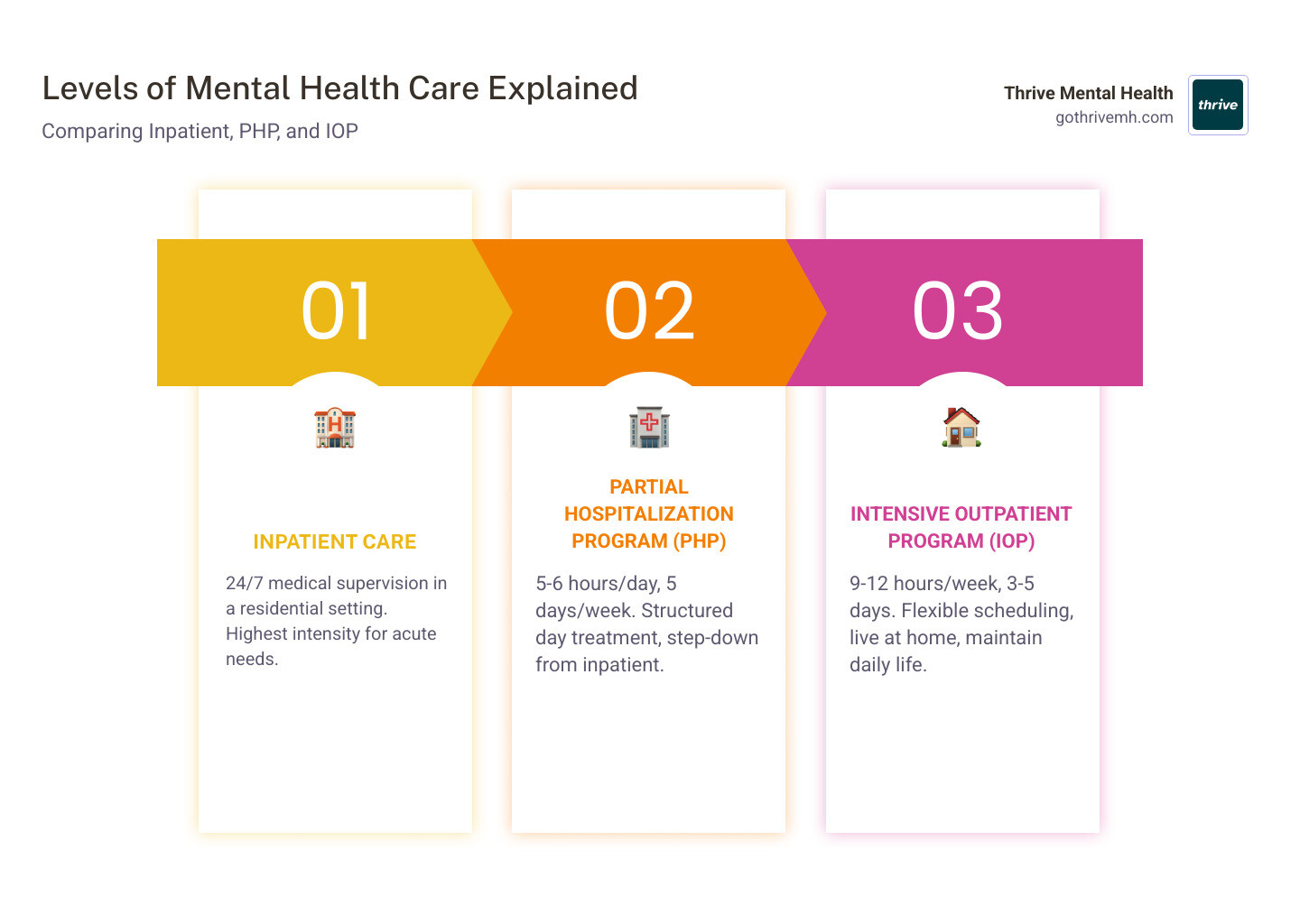
To find the right flexible program, understand the distinction between an Intensive Outpatient Program (IOP) and a Partial Hospitalization Program (PHP). While both offer structured care, their scheduling flexibility differs significantly:
| Feature | Intensive Outpatient Program (IOP) | Partial Hospitalization Program (PHP) |
|---|---|---|
| Time Commitment | Typically 9-12 hours per week, spread across 3-5 days. | More intensive, usually 20-30 hours per week, often 5 days a week for 4-6 hours per day. |
| Treatment Intensity | Moderate. Less extensive than PHP, allowing more daily freedom. | High. More intensive than IOP, focusing on frequent clinical support. |
| Level of Care | Less intensive. Suited for individuals who have some stability and require comprehensive support while maintaining daily respons | |
| Ideal Candidate | Individuals with some stability who need comprehensive support while maintaining daily respons | |
| Ideal for Transition | Yes, ideal for those who have completed a higher level of care but still need support to transition back to daily life. | |
| Medical Supervision | Generally for individuals with stable medical conditions not requiring immediate medical supervision. | |
| Ideal for stepping up from: | Standard outpatient care. | Less intensive outpatient care. |
| For individuals who: | Need structured addiction treatment but can’t take time away from work, school, or childcare. | Require intensive mental health support and daily structure, often after higher levels of care or when facing acute symptoms. |
| Likely Coverage | Most major health plans, like Cigna, Optum, and Florida Blue, generally cover IOP. | Many major health plans, like Cigna, Optum, and Florida Blue, generally cover PHP, but often require prior authorization and may have specific criteria. |
| IOP Specifics | Less intensive. Provides 9-12 hours of weekly treatment. More flexibility for daily life. | More intensive. Provides 20-30 hours of weekly treatment. Less flexible, often a full-day commitment. |
| When to Choose | When you need significant support but want to maintain your daily life. | When you need intensive, structured support and a high level of accountability, particularly after a crisis or inpatient stay. |
| Ideal for stepping up from: | Standard outpatient care. | Less intensive care, or a bridge to longer-term partial hospitalization. |
IOPs offer more flexibility than residential programs. You can attend treatment during the day or evening and continue to work, go to school, or attend to family responsibilities. PHPs, on the other hand, are more intensive, often requiring more hours of therapy per week and potentially including medical supervision. While both are crucial levels of care, the distinction in time commitment is key when seeking flexible options.
Step 4: Ask About Customized Treatment Plans
The idea that treatment must be one-size-fits-all is outdated. Truly flexible IOPs understand that your circumstances are unique and should be reflected in your treatment plan. We believe in providing individualized care.
When exploring programs, ask if they offer:
- Custom schedules: Can they adjust the frequency of sessions to accommodate specific life events or professional demands? While there’s a minimum clinical requirement (typically 9-12 hours per week), some programs might allow for slight variations within that framework.
- Hybrid models: The ability to combine in-person and virtual sessions can provide the best of both worlds, offering the structure of a physical location with the convenience of remote access when needed.
- Adjusting frequency: As you progress, can the intensity or frequency of sessions be gradually reduced, or temporarily increased if you face a challenging period?
This collaborative approach with clinicians ensures that your treatment goals are met effectively, even when managing co-occurring disorders. It’s about working with your life, not against it. We provide more info about IOP services that are designed to be adaptable and responsive to your individual journey.
Step 5: Assess Your Own Needs to Find the Right Fit
Before committing to any program, take a moment to honestly assess your own needs and limitations. This self-assessment is perhaps the most critical step in finding the right flexible IOP.
Consider the following:
- Work schedule analysis: What are your non-negotiable work hours? Are you able to take short breaks for virtual sessions, or do you strictly need evening/weekend options?
- Family obligations: What childcare, eldercare, or other family responsibilities do you have? When are your peak times for these duties?
- Personal energy levels: When are you most alert and able to engage effectively in therapy? Early mornings? Evenings after work?
- Support system evaluation: Do you have a supportive home environment that can facilitate your recovery, or do you need more structure and external accountability?
- Clinical needs vs. lifestyle needs: Be honest about the severity of your symptoms. While flexibility is important, your clinical needs must always come first. The program should be able to address your specific challenges, whether that involves Cognitive Behavioral Therapy (CBT), Dialectical Behavior Therapy (DBT), or other evidence-based approaches.
Matching your lifestyle constraints with the program’s offerings will lead to a more successful and less stressful recovery journey.
How IOPs Balance Structured Treatment with Flexible Scheduling

This is the million-dollar question: How can a program be “intensive” and “flexible” at the same time? The answer lies in a carefully designed therapeutic framework that integrates core treatment components into adaptable schedules. It’s not about sacrificing structure for flexibility, but rather optimizing where and when that structure is delivered.
At the heart of any effective IOP are its core treatment components. These typically include mandatory group therapy, individual counseling requirements, and psychoeducation. These elements are non-negotiable for clinical effectiveness. For example, IOP treatment may include a range of scheduled treatment services—including one-on-one counseling, group therapy, psychoeducation, and case management—for at least 9 hours a week. Sessions are often conducted across several days per week.
The balance is achieved by offering these critical components in varying time slots (morning, afternoon, evening, weekends) and formats (in-person, virtual). The “structured” part comes from the consistent weekly hours and the evidence-based therapies used, such as Cognitive Behavioral Therapy (CBT) and Dialectical Behavior Therapy (DBT). These therapies provide a clear roadmap for skill development, emotional regulation, and relapse prevention. The “flexible” part comes from the program’s ability to offer these essential services in a way that fits into your life, creating a therapeutic container that supports accountability without disrupting your entire routine.
Which intensive outpatient programs offer flexible scheduling without sacrificing quality?
The hallmark of a high-quality flexible IOP is its unwavering commitment to clinical principles, regardless of the schedule. We believe that flexibility should improve, not diminish, the effectiveness of treatment.
Here’s what to look for to ensure quality:
- Non-negotiable treatment hours: While the time of day may vary, the total number of weekly hours dedicated to treatment remains consistent (typically 9-12 hours). This minimum ensures sufficient therapeutic dosage.
- Evidence-based curriculum: Quality programs use proven therapeutic approaches. For instance, Dialectical Behavior Therapy (DBT) is highly effective for emotional regulation and distress tolerance, while CBT helps identify and change unhelpful thought patterns. These are delivered by licensed clinicians regardless of session timing.
- Licensed clinicians: Ensure the program is staffed by experienced, credentialed therapists, psychologists, and psychiatrists.
- Measuring outcomes: Reputable programs track patient progress and outcomes, demonstrating their effectiveness. This commitment to measurable results ensures that even with a flexible schedule, you are receiving impactful care.
- Program accreditation: Look for accreditations from bodies like CARF or The Joint Commission, which signify adherence to rigorous quality and safety standards.
At Thrive Mental Health, we integrate clinical expertise, flexible scheduling, and measurable results. Our programs are designed for people who need more than once-a-week therapy but less than inpatient care, ensuring that flexibility never comes at the expense of effective, evidence-based treatment.
Which intensive outpatient programs offer flexible scheduling for young professionals?
Young professionals often face unique pressures, juggling demanding careers, educational pursuits, and burgeoning personal lives. For this demographic, flexible IOPs are not just a convenience—they’re a necessity. We specifically design our programs with these individuals in mind, understanding their need for solutions that integrate seamlessly into their ambitious lives.
Key features that make IOPs flexible for young professionals include:
- After-work hours: Custom evening sessions allow participation without impacting work performance or career progression.
- Weekend options: Some programs offer Saturday or Sunday sessions, providing alternatives for those with unpredictable weekday schedules.
- Virtual accessibility: As discussed, telehealth is a game-changer, allowing young professionals in our service areas of Florida, California, Arizona, Indiana, and South Carolina to access treatment from their apartments, offices, or while traveling.
- Career-focused support groups: Specialized groups might address workplace stress, imposter syndrome, or work-life balance challenges, making the therapy directly relevant to their lives.
- Stress management skills and burnout prevention: IOPs teach practical strategies to steer the high-pressure environments common in many professional fields, helping prevent burnout and foster long-term mental well-being.
By offering more info about PHP services and IOPs that cater to these specific needs, we empower young professionals to invest in their mental health without derailing their careers. It’s about building resilience and coping mechanisms that support both personal growth and professional success.
Frequently Asked Questions about Flexible IOPs
How many hours a week is a flexible IOP?
A flexible IOP still requires a minimum time commitment for clinical effectiveness, typically 9 to 12 hours per week. This is usually broken into 3-hour sessions held 3 to 4 days a week. The “flexibility” comes from when you attend these sessions (e.g., mornings, evenings, or weekends), allowing you to fit treatment around your work, school, or family commitments.
Can I do an IOP program entirely online?
Yes. Many providers now offer 100% virtual IOPs. These programs use secure video conferencing for all therapy sessions, including group, individual, and family therapy. This is an excellent option for people in states like Arizona, Indiana, or South Carolina who need accessible care without the commute, offering the same level of structured support as in-person programs.
Does insurance cover flexible IOPs?
Most major insurance plans, including Cigna, Optum, and Florida Blue, cover IOPs, whether they are in-person or virtual. The key is medical necessity, not the time of day you attend. We work with a variety of providers across California, Florida, Arizona, Indiana, and South Carolina. It’s always best to verify your benefits with the provider before starting treatment to understand your specific coverage and any out-of-pocket costs.
Your Path to Recovery, On Your Schedule
Finding which intensive outpatient programs offer flexible scheduling can be the turning point in your mental health journey. We’ve seen how access to adaptable, high-quality care can transform lives, allowing individuals to pursue recovery without putting their world on pause. It’s about empowering you to heal, grow, and thrive, on your terms. Taking that first step towards support is a sign of incredible strength, and we’re here to make that step as seamless as possible.
Ready for support? Thrive offers virtual and hybrid IOP/PHP programs with evening options. Verify your insurance in 2 minutes (no obligation). If you’re in crisis, call/text 988.