






Feeling burned out, anxious, or simply stuck as 2026 approaches? If you live in Florida, California, Indiana, Arizona, or South Carolina, you are not alone in facing these challenges. Many adults and young professionals are searching for effective ways to regain balance and build emotional strength.
Setting intentional mental health goals is a powerful way to create lasting transformation and resilience. Whether you are looking to manage stress, improve your mood, or regain motivation, having clear objectives can guide you toward real change.
Intensive Outpatient Programs (IOP) and virtual IOP in California offer structured, flexible care for those who need more support than weekly therapy provides. Virtual IOP makes high-quality care accessible from home, with privacy protected and most insurance accepted. Worried about time, effectiveness, or privacy? These programs are designed to fit busy lives and deliver proven results.
In this guide, you will discover 7 actionable mental health goals to help you thrive in the new year. Ready to take a step forward? Consider checking your eligibility or speaking confidentially with a care coordinator to explore your options.
Understanding Mental Health Goals and Why They Matter in 2026
Feeling overloaded, anxious, or simply stuck is becoming the new normal for many adults and young professionals across California, Florida, Indiana, Arizona, and South Carolina. As 2026 approaches, the demand for mental health support continues to climb. Post-pandemic pressures linger, with more people reporting symptoms of burnout, anxiety, and depression. According to CDC Mental Health Data Highlights, mental health concerns have risen sharply, especially among young adults and those in high-stress jobs. While the stigma around seeking help is fading, barriers like time, privacy, and insurance still prevent many from accessing structured care. This makes proactive planning and clear mental health goals more important than ever.
The Rising Need for Mental Health Support in 2026
Stress, anxiety, and burnout are on the rise, particularly in fast-paced states like California and Florida. Many adults find themselves juggling work, family, and personal demands, often at the expense of their wellbeing. The CDC reports that rates of anxiety and depression have grown, highlighting a critical need for accessible mental health care. Even as more people feel comfortable talking about mental health, obstacles such as finding time, understanding insurance, and worries about privacy remain real. Setting mental health goals is a proactive way to take control and build resilience, even when life feels overwhelming.
What Are Mental Health Goals?
Mental health goals are clear, measurable intentions that support psychological wellbeing. Unlike vague resolutions, they focus on specific outcomes, such as managing anxiety, improving sleep, or building resilience. For example, a mental health goal might be to reduce anxiety attacks from daily to weekly or to practice mindfulness each morning. Setting these goals provides a roadmap for personal growth and accountability. Evidence from leading programs shows that those who set and track mental health goals experience greater progress and satisfaction. For a deeper dive into structured goal setting, see Setting SMART mental health goals, which explores how virtual IOP programs in California and beyond support sustainable change.
The Power of Structure: How IOP and Virtual IOP Fit In
For many, weekly therapy is not enough to address complex challenges. Intensive Outpatient Programs (IOP) offer a higher level of structured support, combining group therapy, individual sessions, and evidence-based practices like CBT and DBT. Virtual IOP in California makes this care accessible from anywhere, fitting therapy into busy schedules. Common concerns include time commitment, effectiveness of telehealth, and privacy. Modern IOPs address these with flexible scheduling, secure platforms, and insurance support. By combining structure with personalized care, IOP and virtual IOP empower individuals to set and achieve meaningful mental health goals for lasting transformation.

How to Set Effective Mental Health Goals for Lasting Change
Feeling overwhelmed by burnout or anxiety as 2026 approaches? If you are in Florida, California, Indiana, Arizona, or South Carolina, you are not alone. Many adults and professionals are searching for practical ways to move forward and regain control. Setting intentional mental health goals is a proven way to foster real change. Whether you are considering a mental health IOP or want to explore virtual IOP options in California, understanding how to set effective goals is the first step. Let’s break down the process so you can start strong and stay motivated.

The SMART Framework for Mental Health Goals
The most effective mental health goals are those you can actually measure, track, and achieve. The SMART framework is a powerful tool that gives your intentions structure and clarity. SMART stands for Specific, Measurable, Achievable, Relevant, and Time-bound. This framework is especially helpful for adults juggling busy schedules or managing stress in high-pressure environments like California’s tech hubs or Florida’s healthcare sector.
Here is how the SMART method can transform your mental health goals:
| SMART Element | Description | Example |
|---|---|---|
| Specific | Define what you want to change | “Reduce daily anxiety attacks” |
| Measurable | Track your progress | “Record anxiety episodes weekly” |
| Achievable | Set realistic steps | “Practice breathing techniques daily” |
| Relevant | Align with your needs | “Focus on stress related to work” |
| Time-bound | Set a clear deadline | “Achieve improvement in 3 months” |
Tracking your progress is vital for success. Many people benefit from using digital tools, journals, or even structured support like a mental health IOP. For those in California, virtual IOP makes it possible to attend therapy and group sessions from home, which fits well into demanding routines. Learn more about tracking mental health progress to see how consistent monitoring leads to better outcomes.
Overcoming Common Barriers
Even the best mental health goals can feel out of reach when life gets busy. Common obstacles include fear of failure, feeling overwhelmed by too many goals, or not having enough support. It is normal to worry about privacy, time commitment, or whether virtual IOP is as effective as in-person care. The good news is, structured programs like Thrive’s virtual IOP in California are designed to address these concerns and offer flexible, confidential care.
Here are simple strategies to overcome barriers:
- Break big goals into daily or weekly steps
- Celebrate small wins along the way
- Enlist a friend, family member, or therapist for accountability
- Adjust goals as your needs change
For example, a young professional in California might set a short-term goal of joining one virtual group session per week, while a long-term goal could be managing work-related anxiety over six months. By connecting with a care coordinator at Thrive, you can create a plan that fits your lifestyle and privacy needs. If you are ready to take the next step, check eligibility or speak confidentially with a care coordinator, there is no obligation, and support is available when you need it.
7 Mental Health Goals to Transform Your Life in 2026
Feeling burned out, anxious, or simply stuck as 2026 approaches? You are not alone. Many adults in Florida, California, Indiana, Arizona, and South Carolina are searching for real solutions, especially as daily stress and uncertainty seem to grow. Setting intentional mental health goals can guide you toward resilience and lasting change.
If you feel like traditional weekly therapy is not enough or you need more structured support, Intensive Outpatient Programs (IOP) and virtual IOP in California offer flexible, evidence-based care. These programs are designed for people who want to make meaningful progress on their mental health goals without putting life on hold.
Let's explore seven actionable mental health goals that can help you thrive this year, with practical steps for each.

1. Prioritize Emotional Self-Care
Daily life in states like California and Florida can be demanding, making emotional self-care more important than ever. Setting mental health goals around self-care means actively nurturing your emotional wellbeing and building habits that protect against burnout.
Start with small, consistent routines. Journaling, mindfulness, and relaxation exercises can help you process emotions and stay centered. Even five minutes a day can make a difference. Many find gratitude journaling each morning lifts their mood and sets a positive tone for the day.
Digital tools can support your mental health goals. Meditation apps or mood trackers provide instant feedback, helping you spot patterns and progress. According to the CDC, those who practice regular self-care experience lower rates of anxiety and depression.
Some people feel guilty or selfish putting themselves first, but self-care is essential for resilience. Consider this: when you refuel emotionally, you have more energy to support others and face life's inevitable challenges.
If your schedule is packed, look for micro-moments. Take a mindful breath before meetings or jot down a quick gratitude note at lunch. Over time, these actions compound, helping your mental health goals become habits.
2. Strengthen Social Connections and Support Networks
Social connection is a powerful buffer against stress and depression. One of the most rewarding mental health goals you can set for 2026 is to invest in your relationships and build new support networks.
Make it a point to reach out to friends or family regularly, even if just for a quick check-in. For those who have relocated or feel isolated, joining local or virtual communities for shared interests can be transformative. Many find that participating in group therapy, a core part of virtual IOP in California, provides a safe space to connect and share experiences.
Support networks do more than lift your mood. Research from the National Institutes of Health shows that strong social ties are linked to better mental health outcomes. Consider setting a goal like having weekly coffee with a trusted friend or joining an online peer group.
Barriers like social anxiety or moving to a new city can make connection difficult. Start small, an encouraging text, a short call, or joining a virtual event. Virtual IOP programs are designed to foster connection, making group therapy accessible from anywhere.
Remember, meaningful relationships are key to your mental health goals. Even one supportive relationship can make a difference.
3. Develop Healthy Coping Strategies for Stress and Anxiety
Stress and anxiety are common experiences, but you can learn to manage them effectively with the right tools. Making this one of your mental health goals can empower you to handle challenges with resilience.
Evidence-based coping strategies, such as those taught in Cognitive Behavioral Therapy (CBT) and Dialectical Behavior Therapy (DBT), are proven to reduce anxiety. Techniques like deep breathing, progressive muscle relaxation, and grounding exercises can be practiced daily. For instance, keeping a stress log helps you identify triggers and track your progress over time.
Building a personal stress management plan is key. List your main stressors, outline healthy responses, and identify early warning signs. Incorporating these skills into your daily routine supports your mental health goals for 2026.
If you want to learn more about CBT techniques specifically for anxiety, this Cognitive behavioral therapy for anxiety guide provides detailed, actionable strategies.
Therapists in IOP and virtual programs offer ongoing support and accountability as you practice these coping tools. Remember, small steps add up, and each technique you master brings you closer to your mental health goals.
4. Improve Sleep Hygiene and Restorative Habits
Sleep is a cornerstone of mental wellness. One of the most impactful mental health goals for 2026 is to improve your sleep hygiene and create restorative routines.
 Exploring the Future of Mental Wellness: Virtual Therapy InnovationsBlog
Start by setting a consistent sleep schedule, even on weekends. A calming bedtime routine, like reading, stretching, or listening to soothing music, signals your body it's time to rest. Limiting screen time and caffeine in the evening can also make a big difference.
Sleep tracking apps can help you monitor patterns and spot trends. If you struggle with insomnia or irregular shifts, discuss these issues as part of your mental health IOP treatment. Poor sleep is closely linked to increased anxiety and depression, so addressing it is vital for your mental health goals.
Common obstacles include busy schedules, parenting, or chronic stress. Tackle these by planning small, realistic changes. For example, aim to go to bed just 15 minutes earlier each week.
IOP programs take a holistic approach, helping you address sleep as part of your overall care plan. Better sleep supports every other aspect of your mental health goals.
5. Foster Physical Wellness to Support Mental Health
Physical health and mental health are deeply connected. Setting mental health goals that include physical wellness can boost your mood, energy, and resilience.
Regular exercise, such as walking, yoga, or team sports, has been shown to reduce depression symptoms by up to 30% according to CDC data. You do not need an intense routine, three 30-minute walks a week is a great starting point.
Balanced nutrition and hydration also play an important role. Limiting alcohol, caffeine, and processed foods supports stable energy and mood. Setting achievable goals, like preparing a healthy meal twice a week, makes a big impact over time.
Barriers such as lack of motivation, chronic illness, or time constraints are real. Work with your care team to set realistic, flexible plans that fit your life. Many virtual IOP programs help you integrate these physical health goals into your broader mental health goals.
Remember, each positive change you make in your physical routine is a step toward stronger mental health goals.
6. Set Boundaries and Practice Assertive Communication
Healthy boundaries are essential for protecting your time, energy, and emotional wellbeing. Making assertive communication one of your mental health goals can transform your relationships and reduce stress.
Learn to say no when needed and express your needs clearly. For many remote workers in California, setting specific work and personal time boundaries helps prevent burnout. Assertive communication skills can be practiced in therapy, group settings, or even with trusted friends.
Data shows that strong boundaries are linked to lower stress and improved relationship satisfaction. Overcoming guilt or fear of disappointing others is a common challenge. Remember, setting boundaries is not selfish, it is a sign of self-respect and care for your mental health goals.
Consider using tools like journals or digital reminders to track your boundaries and reflect on progress. Group therapy in IOP programs often includes role-play and real-life practice to build confidence in communication.
Small, consistent steps to reinforce boundaries can make a lasting impact on your mental health goals.
7. Seek Professional Help When Needed
Sometimes, self-help is not enough. Recognizing when to seek professional support is a vital component of your mental health goals. If you notice persistent mood changes, difficulty functioning, or overwhelming stress, reaching out is a sign of strength.
Intensive Outpatient Programs (IOP) and virtual IOP in California, Florida, Indiana, Arizona, and South Carolina offer structured, evidence-based care tailored to your needs. These programs provide flexibility, allowing you to participate from home and fit therapy around your schedule.
Many people worry about the time commitment, privacy, or whether virtual care is as effective as in-person therapy. IOPs use proven therapies, licensed clinicians, and confidential platforms to ensure you receive quality care. Insurance often covers much of the cost, reducing barriers to entry.
A typical IOP includes several therapy sessions per week, group support, and personalized treatment plans. For example, an adult experiencing ongoing mood struggles may start IOP after realizing self-help strategies are not enough. Data consistently show that IOP participation leads to significant improvements in wellbeing and daily functioning.
If you are considering this step, contact a care coordinator for a confidential, no-obligation eligibility check. Taking action on your mental health goals now can set the foundation for a healthier, more resilient 2026.
Thrive Mental Health: Your Partner in Structured Mental Health Care
If you’re in Florida, California, Indiana, Arizona, or South Carolina and feeling burned out, anxious, or stuck, you are not alone. Many adults and young professionals are searching for structured support to achieve their mental health goals as life’s pressures rise.
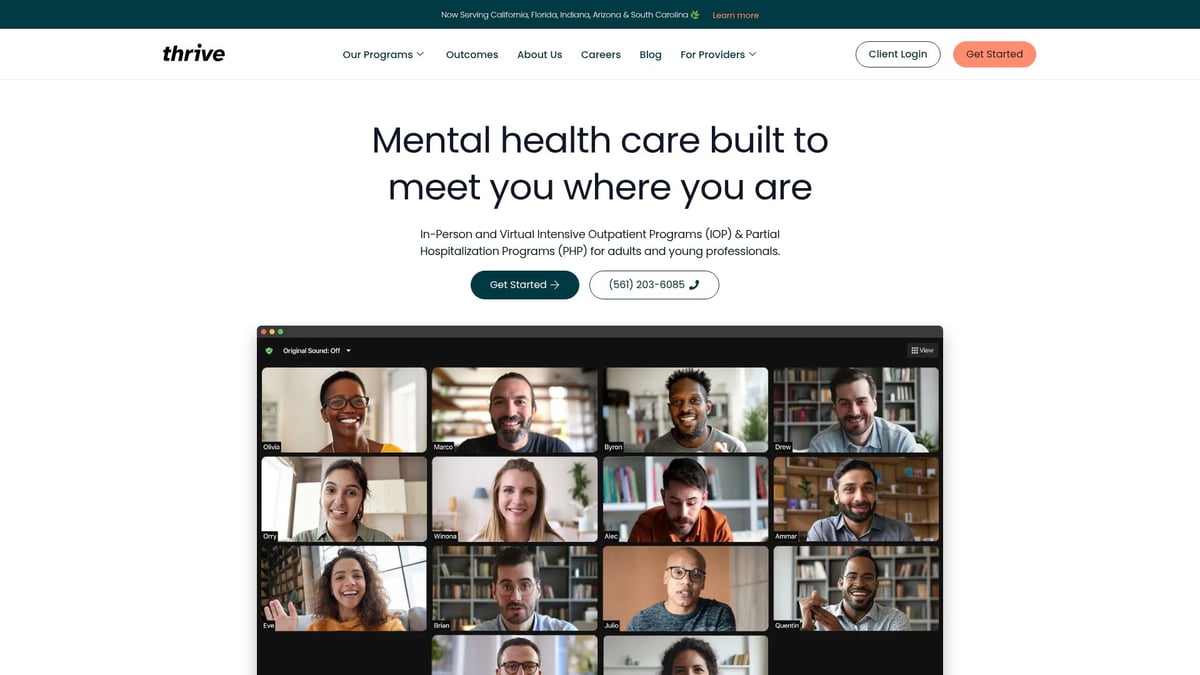
Intensive outpatient programs (IOP) provide a flexible, evidence-based approach for those who need more than weekly therapy but want to maintain daily routines. Thrive Mental Health offers both in-person and virtual IOP in California and across these states, making support accessible wherever you are. Not sure what IOP involves? See this intensive outpatient program overview for a clear explanation of how structured care can help you set and reach your mental health goals.
Virtual IOP allows you to participate in therapy from the comfort of your home, fitting sessions around work, school, or family. Programs are led by licensed clinicians and use proven therapies like CBT and DBT. Your privacy is protected, and most major insurance plans are accepted. Thrive’s team will guide you through eligibility, answer questions about coverage, and help you get started quickly, often within 24 hours after assessment.
If you’re ready to take the next step, check your eligibility or speak with a Thrive care coordinator for confidential, no-obligation support. Lasting change starts with the right structure and a partner you can trust.
Practical Tips for Staying Motivated and Tracking Progress
Feeling burned out, anxious, or stuck as the new year approaches is common, especially in busy states like Florida, California, Indiana, Arizona, and South Carolina. If you are working toward mental health goals, staying motivated and tracking your progress can make a real difference. Support from intensive outpatient programs (IOP) and virtual IOP in California means you do not have to do this alone.
Break Down Your Mental Health Goals
Setting mental health goals is only the first step. Break each goal into daily, weekly, and monthly milestones. For example, if your aim is to reduce anxiety, start with five minutes of mindfulness each morning and track your practice. Use a journal or an app to log your activities and feelings. Tracking your progress helps you see improvement, even when changes feel slow. According to NAMI Mental Health By the Numbers, consistent monitoring can increase your success rate by up to 40 percent.
Helpful tools for tracking progress:
| Tool/App | Best For | Platform |
|---|---|---|
| Daylio | Mood tracking and journaling | iOS, Android |
| Habitica | Building daily habits | iOS, Android |
| Reflectly | Guided self-reflection | iOS, Android |
| Pen & Paper | Simple and accessible | Anywhere |
Celebrate Wins and Build Accountability
Every step forward with your mental health goals is worth celebrating. Acknowledge small victories, such as attending a virtual IOP session or sticking to your sleep routine for a week. Share your progress with an accountability partner, like a friend, family member, or therapist. Group therapy, available in many IOP and virtual IOP programs, can offer encouragement and structure. Regular check-ins, whether monthly with a therapist or weekly with a peer group, keep you motivated and help you adjust your mental health goals as life changes.
Overcome Setbacks and Revisit Your Goals
Everyone faces challenges or setbacks while working toward mental health goals. When progress stalls, practice self-compassion and remember that flexibility is key. If a strategy is not working, adjust your approach or break the goal into smaller steps. Use setbacks as learning opportunities, not reasons to give up. Revisit your mental health goals regularly, making sure they still match your current needs. Helpful resources like mood tracking apps, online support groups, and structured programs such as IOP can provide extra support when you need it most.
As you look ahead to 2026 and consider the mental health goals that can truly transform your life, remember that support is just a step away. Whether you’re feeling overwhelmed, seeking structure, or hoping to build resilience, Thrive Mental Health offers expert-led, accessible care tailored to your unique needs, virtually or in-person across California, Florida, Indiana, Arizona, and South Carolina. You deserve a partner on your journey who understands your challenges and is ready to help you thrive. If you’re ready to take action and start making meaningful changes, Get Started Now.

This article is for informational purposes only and is not a substitute for individualized clinical advice or insurance verification.