


When Weekly Therapy Stops Working: Why Florida’s Partial Hospitalization Programs Matter
Partial hospitalization program Florida options provide intensive day treatment for people who need more than weekly therapy but don’t require 24-hour inpatient care. If you’re struggling to make progress with traditional outpatient sessions, feel like you’re barely holding it together, or worry you might need hospitalization, PHP might be exactly what you need.
Quick Answer: What Is a Florida PHP?
- Structure: 5 days per week, 5-6 hours per day of intensive treatment
- Setting: You return home each evening (not residential)
- Ideal for: Depression, anxiety, PTSD, bipolar disorder, dual diagnosis
- Cost: Less expensive than inpatient, typically covered by major insurance
- Requirements: Medically stable, motivated to recover, safe home environment
- Results: 95% report reduced anxiety, 93% see depression decrease
You’ve been showing up to therapy every week. You’re doing the work. But it’s not enough. The progress is too slow, the struggles too intense, and the gaps between sessions feel impossible to manage. You’re not sick enough for the hospital, but you’re not getting better with once-a-week support.
That’s the gap Partial Hospitalization Programs fill. PHPs offer the intensive, structured care of inpatient treatment with the flexibility to sleep in your own bed, stay connected to your life, and practice real recovery skills in the real world. In Florida, PHPs have become a critical bridge for thousands of people who need more, and deserve better.
As Nate Raine, CEO of Thrive Mental Health, I’ve spent over a decade building behavioral health systems that integrate evidence-based treatment with measurable outcomes across Florida and four other states. At Thrive, we’ve seen how Partial hospitalization program Florida options transform lives by offering the right level of care at the right time, helping people avoid hospitalization, rebuild their lives, and return to work, school, and relationships stronger than before.
Partial hospitalization program Florida terms explained:
- I need more than weekly therapy but don’t want to go to a hospital. What are my options in West Palm Beach?
- Mental wellness centers in Naples, Florida.
- Florida Virtual Therapy
What Is a Partial Hospitalization Program (PHP) in Florida?
A Partial Hospitalization Program in Florida (PHP) is an intensive, structured mental health and substance abuse treatment program designed for individuals who require a higher level of care than traditional outpatient therapy but do not need 24-hour supervision or inpatient hospitalization. Think of it as a comprehensive day program where you receive multiple hours of therapy and support daily, then return home to your own environment each evening.
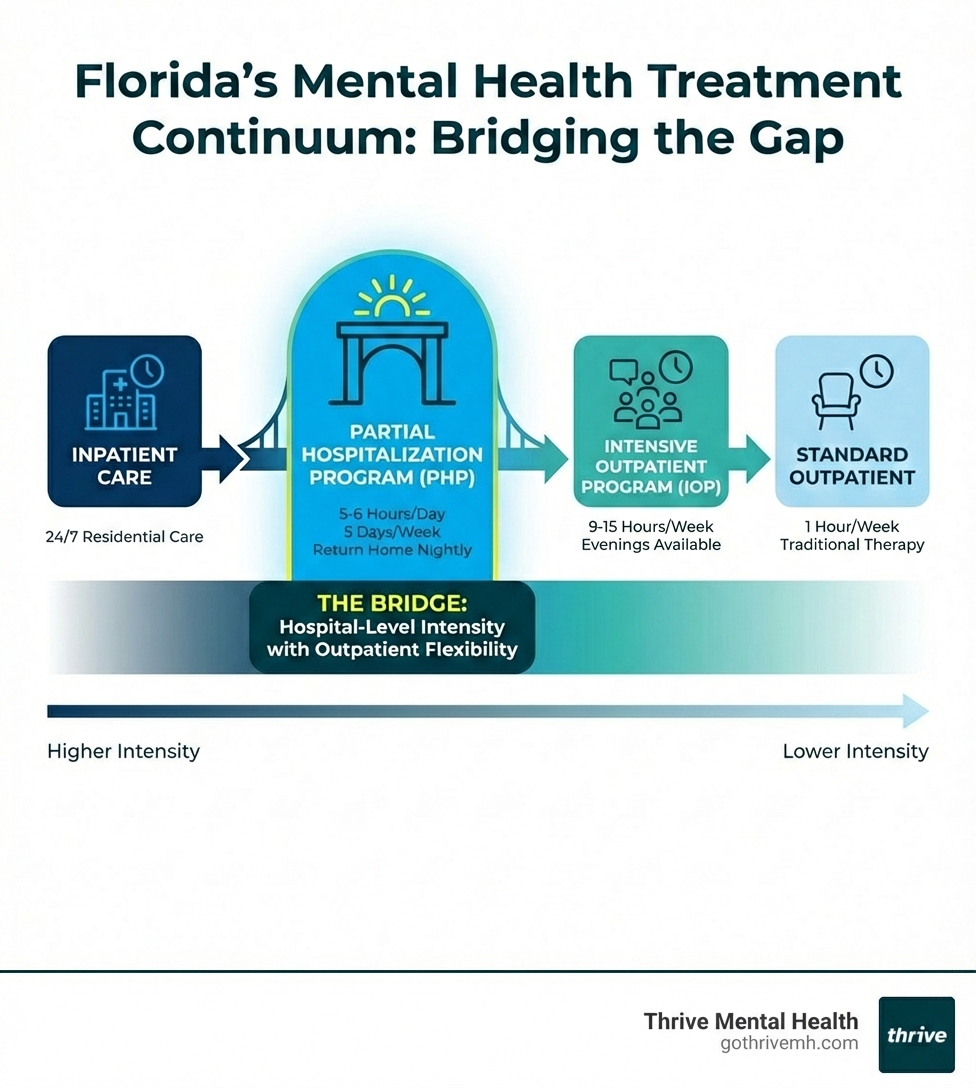
The core idea behind a PHP is to bridge the gap between inpatient care and standard outpatient treatment. It’s often referred to as “the best of both worlds” because it combines the intensive, structured support of a hospital setting with the flexibility and independence of living at home. This allows you to practice new coping skills and strategies in your daily life, maintaining crucial connections with family and community, while still having access to a robust clinical team.
In Florida, PHPs are regulated, ensuring a certain standard of care. For instance, the Agency for Health Care Administration (AHCA) oversees many health care clinics and facilities in the state, and the Department of Children and Families (DCF) regulates substance abuse services. This regulatory oversight helps ensure that programs meet specific requirements for quality and safety. You can find more information about regulated facilities in Florida through resources like quality.healthfinder.fl.gov and the AHCA’s page on Community Mental Health Centers / Partial Hospitalization Programs (CMHC/PHP).
Unlike inpatient programs, which provide temporary housing and full-time care, PHPs allow you to maintain your residence and daily routine outside of treatment hours. This means you can return to your family, your pets, and your familiar surroundings after a full day of therapeutic activities. Compared to standard outpatient treatment, which might involve one or two therapy sessions a week, a PHP provides a much higher intensity of care, typically 5 days a week for 5-6 hours a day.
Here’s a quick comparison of different levels of care:
| Feature | Inpatient Treatment (Residential) | Partial Hospitalization Program (PHP) | Intensive Outpatient Program (IOP) | Standard Outpatient Therapy |
|---|---|---|---|---|
| Time Commitment | 24/7 care, live on-site | 5-6 hours/day, 5 days/week | 3 hours/day, 3-5 days/week | 1 hour/week |
| Living Situation | Live at facility | Live at home | Live at home | Live at home |
| Intensity | Highest | High | Moderate | Low |
| Independence | Lowest | Moderate | High | Highest |
| Ideal for | Acute crisis, severe symptoms | Stabilizing, step-down from inpatient | Moderate symptoms, transition from PHP | Mild symptoms, ongoing support |
| Cost | Highest | High (lower than inpatient) | Moderate | Lowest |
Who Should Choose a Florida PHP?
A Partial Hospitalization Program in Florida is designed for individuals who are medically stable but require substantial mental health or substance abuse treatment. We often recommend PHP for those who:
- Need daily structure and support: If weekly therapy isn’t cutting it and you need more consistent guidance to manage symptoms and build coping skills, PHP offers that intensive structure.
- Are stabilizing after a crisis or hospital stay: PHP serves as an excellent step-down option from inpatient hospitalization. It provides the necessary support to transition back into daily life while solidifying the progress made during inpatient care.
- Have a safe home and support system: Since you return home each evening, having a stable living environment and, ideally, a supportive network of friends or family is crucial for success in a PHP.
- Are dealing with significant mental health challenges or dual diagnosis: This includes conditions like severe depression, anxiety disorders, PTSD, bipolar disorder, obsessive-compulsive disorder (OCD), personality disorders, or co-occurring substance use and mental health disorders.
- Want to avoid another hospitalization: PHP can be a proactive measure to prevent relapse or the escalation of symptoms that might otherwise lead to inpatient care. It provides the tools and support to manage symptoms effectively in a less restrictive environment.
- Are motivated to get better: While the program provides immense support, your active engagement and commitment to the therapeutic process are key to achieving lasting change.
Our IOPs and PHPs in Florida, and across our locations in California, Indiana, Arizona, and South Carolina, are specifically designed for adults and young professionals who need more than once-a-week therapy but less than inpatient care. You can learn more about our Intensive Outpatient Program (IOP) for another flexible, yet structured, option.
How PHPs Fit Into Your Recovery Journey
Partial Hospitalization Programs in Florida play a vital role in the mental health continuum of care, serving as a critical bridge between different treatment levels. For many, a PHP is the ideal next step after completing a detoxification program or residential treatment. It allows for a gradual transition, reinforcing sobriety and mental wellness in a less restrictive environment.
For others, PHP can be the first line of treatment, especially if inpatient care isn’t required but symptoms are severe enough to significantly impact daily functioning. In this scenario, PHP acts as a preventative measure, providing intensive support to avoid the need for future hospitalization.
Key ways PHPs contribute to your continuum of care:
- Prevent Relapse and Re-hospitalization: By offering robust daily support, PHPs significantly reduce the risk of symptom escalation or relapse, helping you maintain stability gained in prior treatment or prevent acute crises.
- Build Real-World Coping Skills: The ability to return home each day is invaluable. It provides immediate opportunities to practice coping mechanisms, emotional regulation, and interpersonal effectiveness in your actual living environment, preparing you for sustained recovery.
- Smooth Transition to Independence: As you progress through a PHP, the goal is to equip you with the tools and confidence to manage your mental health independently. This often involves stepping down to an Intensive Outpatient Program (IOP) or standard outpatient therapy as you gain strength.
- Foundation for Long-Term Recovery: PHP helps you establish healthy routines, build a strong support network, and develop a personalized aftercare plan. This comprehensive approach lays a solid foundation for long-term well-being.
Our programs, including our virtual options, are designed to seamlessly integrate into your life, ensuring continuity of care. We believe that effective treatment should be accessible and adaptable. Explore how Virtual Therapy can further support your progress, offering flexibility without compromising on expert care.
Why Florida PHPs Work: Real Results, Real Recovery
We know you want results, not just promises. Partial Hospitalization Programs in Florida consistently deliver measurable improvements because they strike a unique balance: offering more freedom than inpatient care, yet far more structure and support than weekly therapy. This “best of both worlds” approach is why PHPs are so effective.

Here’s why PHPs are a game-changer:
- More Freedom, More Structure: You get the benefit of intensive, daily therapeutic engagement without being removed from your home environment. This allows you to integrate new skills into your daily life immediately.
- Lower Cost Than Inpatient: PHPs are significantly more affordable than inpatient treatment, making high-quality care more accessible. This cost-effectiveness is a major benefit for many families and is often better covered by insurance.
- Stay Connected to Family and Real Life: Maintaining connections with loved ones and managing personal responsibilities are crucial for recovery. PHPs enable this, fostering a smoother reintegration into your community.
- Evidence-Based Care, Measurable Results: Our programs, and reputable PHPs across Florida, are built on clinically proven therapies. We continuously review and update our services based on the latest evidence and scientific techniques, ensuring you receive the most effective care. Our focus is always on outcomes, helping you achieve tangible improvements in your mental well-being.
What Conditions Do Florida PHPs Treat?
Partial Hospitalization Programs in Florida are equipped to address a wide array of mental health and co-occurring substance abuse disorders. Our experienced clinical teams specialize in providing comprehensive care for individuals struggling with:
- Depression: For those experiencing moderate to severe depression that hasn’t responded to less intensive treatments, PHP offers daily support and therapies to lift mood, improve coping, and restore hope.
- Anxiety Disorders: Including Generalized Anxiety Disorder, Panic Disorder, Social Anxiety, and Phobias. PHPs provide a safe space to learn distress tolerance, emotion regulation, and exposure techniques.
- PTSD & Trauma: Trauma-informed care, often incorporating therapies like EMDR (Eye Movement Desensitization and Reprocessing) or ART (Accelerated Resolution Therapy), helps individuals process traumatic experiences and reduce their impact.
- Bipolar Disorder: PHPs assist in stabilizing mood swings, managing medication, and developing strategies to live successfully with bipolar disorder.
- OCD (Obsessive-Compulsive Disorder): Programs often include ERP (Exposure and Response Prevention) therapy, a highly effective treatment for OCD, delivered with intensive support.
- Substance Use (Dual Diagnosis): Many individuals struggle with both a mental health disorder and a substance use disorder. PHPs are ideal for dual diagnosis treatment, addressing both conditions simultaneously for better, more sustainable outcomes. This integrated approach is crucial, as regulated by the Department of Children and Families in Florida for substance abuse services. You can learn more at myflfamilies.com/services/substance-abuse-and-mental-health.
- Personality Disorders: Such as Borderline Personality Disorder, where therapies like DBT (Dialectical Behavior Therapy) are highly effective in teaching emotional regulation, interpersonal effectiveness, and mindfulness skills.
- Eating Disorders: While some severe eating disorders may require residential care, PHPs can support individuals who are medically stable but need intensive therapeutic intervention for disordered eating patterns and body image issues.
Our holistic approach ensures that we don’t just treat symptoms, but address the whole person, physical, psychological, social, and spiritual aspects, to facilitate true healing and long-term recovery.
PHP Outcomes: The Numbers You Need to Know
We believe in outcomes you can trust. Our approach to Partial Hospitalization Program Florida care is rooted in evidence and validated by the significant improvements our patients experience. The numbers speak for themselves, demonstrating the profound impact of intensive, structured treatment:
- 95% reported reduced anxiety: Imagine feeling 95% less overwhelmed by worry and fear. That’s the measurable relief our patients find.
- 93% experienced decreased depression: For those battling the heavy weight of depression, a nearly universal reduction in symptoms means a brighter, more hopeful future.
- 98% of patients report feeling better after treatment: This isn’t just about symptom reduction; it’s about a fundamental shift towards improved well-being and quality of life.
- Over 80% of safety-sensitive professionals in our care succeeded in recovery and returned to work: For those in demanding fields like healthcare or law, the ability to recover and successfully reintegrate into their careers is a testament to the specialized support and structured approach of PHPs. This figure highlights the program’s effectiveness in preserving careers and livelihoods.
These statistics aren’t just impressive; they represent real people reclaiming their lives. Our commitment to continuous improvement means we develop customized treatment plans and continuously review and update our services based on the most up-to-date evidence and scientific techniques. We don’t settle for “good enough” when it comes to your recovery.
Inside a Florida Partial Hospitalization Program: What to Expect Daily
A typical day in a Partial Hospitalization Program in Florida is structured, engaging, and focused on intensive therapeutic work. While specific schedules may vary between providers and individual treatment plans, you can expect a comprehensive day designed to maximize your growth and healing.
 The Definitive Guide to Dialectical Behavior Therapy (DBT)Mental Health

Here’s a general overview of what a day might look like:
- Morning Check-ins (9:00 AM, 10:00 AM): The day often begins with a group check-in, where participants share their current emotional state, any challenges they faced overnight, and set intentions for the day. This fosters a sense of community and accountability.
- Group Therapy Sessions (10:00 AM, 12:00 PM): The cornerstone of most PHPs, group therapy provides a powerful environment for learning and growth. You’ll participate in multiple group sessions focusing on various topics such as:
- Skills Training: Cognitive Behavioral Therapy (CBT) and Dialectical Behavior Therapy (DBT) are commonly taught, focusing on practical skills for managing thoughts, emotions, and behaviors.
- Process Groups: These groups allow for deeper exploration of personal issues, interpersonal dynamics, and emotional processing in a supportive setting.
- Psychoeducation: Learning about your diagnosis, triggers, coping mechanisms, and the impact of life stressors.
- Specialized Groups: Topics like relapse prevention, anger management, crisis management, grief work, healthy relationships, or vocational skills.
- Lunch and Breaks (12:00 PM, 1:00 PM): A supervised break for lunch and relaxation, allowing you to connect informally with peers and staff.
- Individual Counseling (Scheduled throughout the week): You’ll have dedicated one-on-one sessions with your primary therapist to work on specific goals, process personal challenges, and tailor your treatment plan.
- Medication Management (Weekly or as needed): Regular consultations with a program psychiatrist or medical doctor to monitor medication, adjust dosages, and address any concerns.
- Holistic and Experiential Therapies (Scheduled): Many PHPs integrate complementary therapies like mindfulness exercises, yoga, art therapy, or recreational activities to promote whole-person healing and stress reduction.
- Goal Setting and Wrap-up (3:00 PM, 3:30 PM): The day often concludes with a group wrap-up, reviewing the day’s learnings, planning for the evening, and setting goals for the next session.
Our programs are structured to provide intensive therapeutic engagement five days a week, typically for 5-6 hours daily, ensuring faster and more lasting progress. This intensive schedule means that while you can’t typically hold a full-time job or school schedule during PHP, you have your evenings and weekends free to apply what you’ve learned.
Specialized Tracks & Family Involvement
At Thrive, we understand that “one-size-fits-all” doesn’t work for mental health. That’s why many Partial Hospitalization Programs in Florida offer specialized tracks custom to unique needs, ensuring that your treatment is as relevant and effective as possible.
Some common specialized services you might find include:
- Dual Diagnosis Programs: For individuals dealing with co-occurring mental health and substance use disorders. These programs provide integrated treatment, addressing both conditions simultaneously, which is crucial for lasting recovery.
- Young Professionals Tracks: Designed for individuals navigating early career challenges, stress, and mental health concerns. These tracks often focus on work-life balance, career development, and managing professional pressures.
- Trauma-Focused Care: Utilizing evidence-based modalities like EMDR (Eye Movement Desensitization and Reprocessing) or ART (Accelerated Resolution Therapy) within a safe and supportive environment to help process and heal from past trauma.
- Adolescent/Young Adult Programs: Custom to the developmental needs of younger individuals, focusing on identity formation, social skills, and family dynamics.
- Women’s or Men’s Specific Programs: Addressing gender-specific issues and creating a safe space for shared experiences.
The Role of Family Involvement:
We firmly believe that family plays a crucial role in the recovery process. A strong support system can significantly impact long-term success. Reputable PHPs in Florida often integrate family involvement through:
- Family Therapy Sessions: Facilitated sessions with a therapist to improve communication, address family dynamics, and educate loved ones on how to support the individual’s recovery.
- Family Education Workshops: Providing information about mental health conditions, addiction, and the recovery process, helping family members understand and cope.
- Support Groups: Connecting families with others facing similar challenges, offering peer support and shared strategies.
Encouraging family members to be part of the treatment helps create a cohesive recovery environment at home and strengthens the individual’s support network. We offer resources and guidance for family members to engage meaningfully in the healing journey, often incorporating family sessions that can be attended in-person or virtually. You can learn more about our flexible virtual therapy options that help keep families connected.
Costs, Insurance, and How to Choose the Right Florida PHP
Navigating the costs and choosing the right Partial Hospitalization Program in Florida can feel daunting, but it doesn’t have to be. We’re here to make it clear and accessible.
Understanding Costs and Insurance Coverage
- PHPs Cost Less Than Inpatient: One of the significant advantages of PHP over inpatient treatment is cost-effectiveness. While still an intensive level of care, the absence of overnight stays considerably reduces the overall expense. This makes PHP a more sustainable option for many.
- Most Major Insurance Accepted: We understand that financial barriers shouldn’t prevent access to vital care. Most reputable PHPs, including Thrive Mental Health, accept a wide range of major insurance providers. In Florida, this typically includes:
- Aetna
- Cigna
- Florida Blue (BCBS)
- Optum (UnitedHealthcare)
- Humana
- Medicare
- And many others like American Behavioral, Uprise Health, AmeriHealth Caritas, Guide Health Options, BSN Behavioral Services Network, Compsych, Carisk Partners, Employee Health Network, First Health, Health Smart, Humana Military Tricare, Magellan, Staywell, Pace Palm Beach, USA, and Wellcare.
- Verify Your Insurance in Minutes: We make it easy to understand your benefits. You can verify your insurance in 2 minutes (no obligation) directly on our website. Our dedicated team will work with your provider to clarify your coverage, deductible, and out-of-pocket expenses, ensuring full transparency.
How to Choose the Right PHP in Florida
Finding the perfect PHP is crucial for your recovery. Here’s what we recommend looking for:
- Licensure and Accreditation: Always prioritize programs licensed by the state of Florida (e.g., through AHCA or DCF for substance abuse services) and accredited by reputable national bodies like The Joint Commission. This ensures they meet high standards of care. You can verify facility licenses through the Florida Health Finder portal.
- Staff Credentials: Look for a multidisciplinary team including board-certified psychiatrists, licensed therapists (Master’s level or higher), social workers, and other specialists.
- Evidence-Based Treatment Approach: Ensure the program uses therapies proven to be effective, such as CBT, DBT, EMDR, and motivational interviewing. A one-size-fits-all approach is obsolete; look for customized treatment plans.
- Specialized Services: Does the program offer specialized tracks that align with your needs (e.g., dual diagnosis, trauma, young professionals, specific age groups)?
- Continuum of Care: Inquire about how the PHP integrates into a broader continuum of care. Do they offer step-down options like IOP or aftercare planning to support long-term recovery?
- Family Involvement: If family support is important to you, ask about their family therapy and education programs.
- Location and Environment: Consider if the location is convenient and if the environment feels supportive and conducive to healing. Thrive offers locations across Florida, including Tampa Bay, St. Petersburg, Miami, Orlando, Boca Raton, West Palm Beach, Jacksonville, and Fort Lauderdale, Naples, and Sarasota, as well as in California, Indiana, Arizona, and South Carolina, offering both in-person and virtual options.
- Reviews and Testimonials: While not the sole factor, patient testimonials can offer insights into the program experience and outcomes.
Choosing a Partial Hospitalization Program in Florida is a significant decision. We encourage you to ask questions, do your research, and trust your instincts. We’re here to help guide you through this process.
FAQs: Florida Partial Hospitalization Programs
How long does a PHP last?
Most programs run several weeks to a few months, based on your individual needs, progress, and the severity of your condition. The duration is custom to ensure you achieve stable, lasting recovery.
Can I work or go to school during PHP?
PHPs require 5-6 hours a day, 5 days a week, this intensive schedule means full-time work or school is generally not feasible. However, evenings and weekends are free, allowing you to maintain some personal responsibilities and practice new skills in your daily life.
What’s the difference between PHP and IOP?
PHP (Partial Hospitalization Program) is more intensive than IOP (Intensive Outpatient Program). PHP typically involves 25-30 hours of treatment per week, while IOP usually ranges from 9-15 hours per week. PHP is for individuals who need more daily structure and support, often as a step-down from inpatient care or as an alternative to hospitalization. IOP is a step down from PHP, offering continued support with more flexibility.
Does insurance cover PHP in Florida?
Yes, most major insurance plans, including Aetna, Cigna, Florida Blue (BCBS), Optum, Humana, and Medicare, typically cover Partial Hospitalization Program Florida services. Coverage varies by plan, so we strongly recommend verifying your benefits. Check your benefits now.
How do I start a PHP in Florida?
To begin a PHP, you’ll first undergo a clinical assessment to determine if it’s the right level of care for your needs. Next, verify your insurance coverage. Then, choose a licensed, accredited provider like Thrive Mental Health that offers evidence-based treatment and aligns with your personal goals.
Summary: Don’t Settle for Less, Get the Support You Deserve
If weekly therapy is no longer enough to manage your mental health or substance use challenges, a Partial Hospitalization Program in Florida could be your turning point. It provides the intensive structure, evidence-based therapies, and real-world skill-building that traditional outpatient care simply can’t match. Don’t risk relapse or another crisis when a proven path to lasting recovery is available. Take action now, your mental wellness and a fulfilling life are worth it.
Ready for support? Thrive offers virtual IOP programs with evening options. Verify your insurance in 2 minutes (no obligation) → Start benefits check or call 561-203-6085. If you’re in crisis, call/text 988.
Related: How Virtual IOPs Cut Recovery Time by 50%

This article is for informational purposes only and is not a substitute for individualized clinical advice or insurance verification.