


See Yourself and Others Clearly for the First Time
Mentalization based group therapy teaches you to understand your own mind and the minds of others, a skill often impaired in conditions like Borderline Personality Disorder (BPD) and Complex PTSD. Instead of reacting blindly to emotions or misreading social cues, you learn to pause, reflect, and respond with clarity.
What is Mentalization-Based Group Therapy?
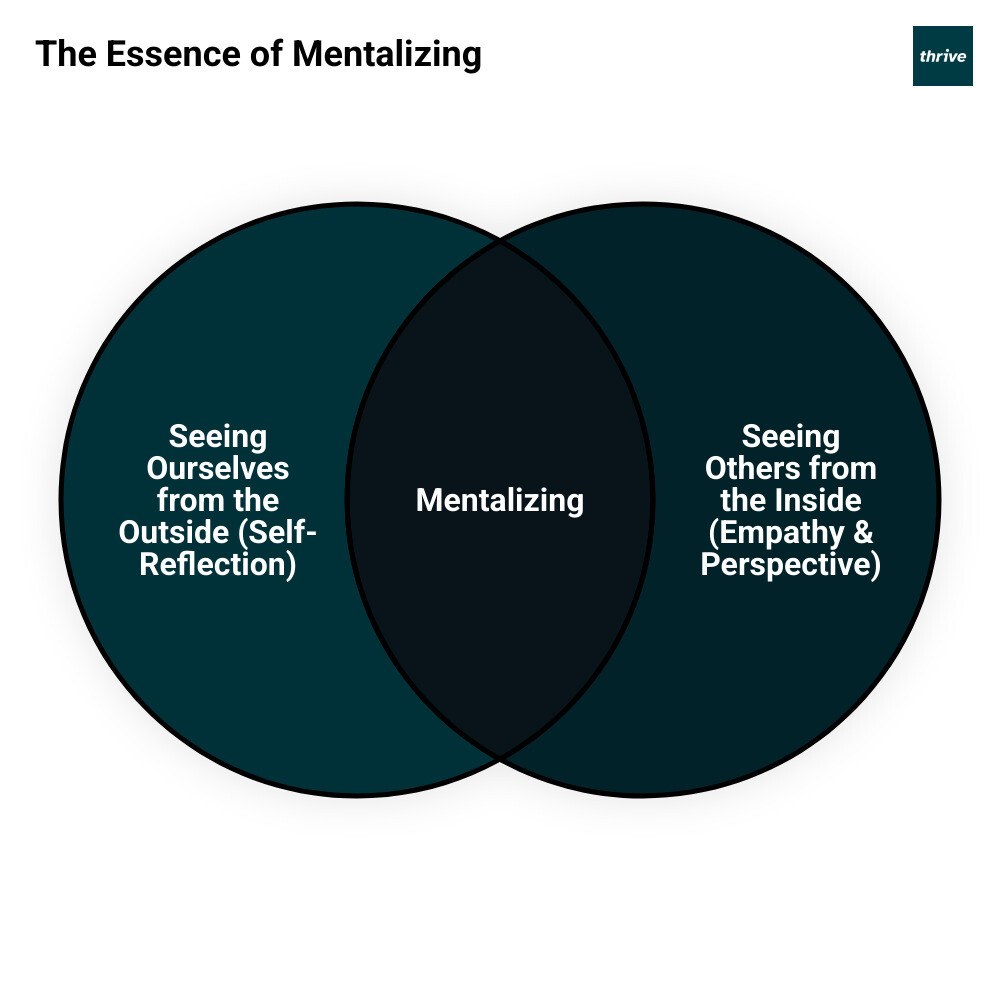
- Mentalizing means understanding behavior through the lens of thoughts, feelings, beliefs, and intentions, both your own and others’.
- MBT-G is a structured therapy using group dynamics to practice this skill in real time.
- Duration: Typically 18 months, with weekly 90-minute group and 50-minute individual sessions.
- Best for: BPD, Complex PTSD, eating disorders, depression, and relationship struggles.
- How it works: Two therapists guide up to 8 members through a 6-week intro, followed by ongoing sessions focused on here-and-now interactions.
If you’ve tried weekly therapy without enough progress or keep hitting the same walls in relationships, MBT-G offers a faster, more immersive path forward. Research shows it reduces self-harm, impulsivity, and emotional instability, and those gains last years after treatment ends.
One client shared: “MBT has been a journey. It was challenging and frustrating at times, but with perseverance and support from my care team, I continued to learn.”
I’m Nate Raine, CEO of Thrive Mental Health. I’ve spent over a decade building evidence-based, tech-enabled behavioral health programs, including mentalization based group therapy as part of our virtual IOP and PHP tracks, because I’ve seen how it transforms the way people connect with themselves and others. This guide will show you exactly how it works, who it helps, and how to access it.
Essential mentalization based group therapy terms:
What Is Mentalization-Based Group Therapy [And How Does It Work]?
Mentalization-Based Treatment (MBT) is an evidence-based therapy from Peter Fonagy and Anthony Bateman. It helps you better understand your own thoughts, feelings, and intentions, as well as those of others. This “mentalizing” process is a fundamental human capacity that underpins our relationships. Integrating psychodynamic, attachment, and cognitive-behavioral insights, MBT starts from the premise that difficulty mentalizing is at the core of conditions like Borderline Personality Disorder (BPD) and Complex PTSD (CPTSD). When we struggle to mentalize, our reactions become rigid, emotions feel overwhelming, and relationships grow chaotic.
The goal of MBT is to strengthen this capacity in a safe environment where you can explore your inner world and others’ perspectives. Our therapists adopt a “not-knowing stance,” approaching your experiences with curiosity, not judgment. This fosters a safe space to become curious about your own mind. Early research, including a randomized controlled trial on partial hospitalization for BPD, demonstrated MBT’s effectiveness for severe personality disorders.
The Core Principles of Mentalization-Based Group Therapy
In mentalization based group therapy, the focus is always on enhancing your ability to mentalize. This isn’t just about thinking about your thoughts; it’s about connecting those thoughts, beliefs, wishes, and feelings to your actions and behaviors. Here’s how we break it down:
- Focus on the Mind: We encourage you to explore what’s going on in your own mind and to consider what might be happening in the minds of others. This helps you link internal states to external behaviors.
- Link Thoughts to Actions: Understanding why you do what you do, and why others might act a certain way, is crucial. This involves making explicit the often-implicit connections between mental states and behavior.
- Curious Stance: Instead of jumping to conclusions, we cultivate a “not-knowing” and curious attitude. This means being open to alternative perspectives and understanding that our initial assumptions might not always be accurate.
- Process Over Content: While discussing life events is important, in MBT-G, we pay close attention to how group members interact and how they discuss their experiences. The “here-and-now” dynamics of the group become a rich ground for practicing mentalizing.
- Emotional Regulation: By improving mentalizing, you gain a better understanding of your emotions, allowing you to regulate them more effectively, even in highly charged situations.
- Relational Context: All mentalizing happens within relationships. The group setting provides a unique and powerful relational context to observe, practice, and refine your mentalizing skills with others.
Typical Program Structure: What to Expect
Our mentalization based group therapy programs are designed for depth and sustained change. They are not quick fixes but rather comprehensive journeys toward a more stable and fulfilling life.
We typically offer programs with a duration of either 6 or 18 months, depending on individual needs and clinical severity. Here’s a breakdown of what you can expect:
- Initial Assessment: Your journey begins with a thorough assessment (2-4 meetings) to understand your unique difficulties, origins, and past treatments. We use questionnaires to set a baseline and monitor your progress.
- Psychoeducational Phase: Programs often start with a psychoeducational phase in the initial weeks to help you understand the core concepts of mentalization and the MBT model.
- 6-Week Introductory Program: Our group therapy starts with a 6-week introductory program. This phase orients new members, builds trust, and introduces fundamental mentalizing concepts in a safe, structured environment.
- Individual Therapy: Alongside group work, you’ll have weekly 50-minute individual therapy sessions. These provide a dedicated space to discuss personal challenges, reflect on group interactions, and deepen your individual mentalizing capacity with your therapist.
- Group Therapy: The heart of MBT-G is the weekly 90-minute group therapy session. With up to eight members and two therapists, you’ll reflect on life difficulties, practice mentalizing, and get real-time feedback in a supportive community.
- Treatment Duration: The full treatment duration is usually 6 or 18 months. This extended period allows for deep integration of mentalizing skills and sustained improvement.
- Crisis Planning: We also work with you to develop a robust crisis plan. This gives you strategies and support to manage intense emotional reactions and prevent destructive behaviors, providing a safety net.
This structured approach ensures that you receive consistent support and ample opportunity to practice and integrate new ways of thinking and relating.
Stop Guessing: Real-World Benefits of MBT-G for BPD & CPTSD

Imagine a life where you no longer feel like you’re constantly guessing what others are thinking or why they act the way they do. Imagine having the tools to steer intense emotions without being overwhelmed. This is the promise of mentalization based group therapy, especially for individuals struggling with conditions like Borderline Personality Disorder (BPD) and Complex Post-Traumatic Stress Disorder (CPTSD).
The benefits are profound and far-reaching:
- Improved Relationships: By better understanding mental states, you can build and maintain healthier, more stable relationships, reducing misunderstandings and responding more adaptively to challenges.
- Reduced Impulsivity: A clearer sense of your internal states and potential consequences helps significantly reduce impulsive behaviors like self-harm or substance use.
- Emotional Stability: MBT-G helps you regulate emotions more effectively by recognizing triggers, understanding feelings, and developing strategies to manage intense distress.
- Clearer Sense of Self: For those with BPD or CPTSD who struggle with a fragmented sense of self, MBT-G fosters a more cohesive and confident identity, leading to greater self-assurance.
- Sustained Improvement: Clinical trials show MBT is effective for BPD, with improvements like reduced self-injury, hospital admissions, and substance use lasting years after treatment.
Many patients describe “aha!” moments during MBT-G, those sudden insights where everything clicks into place. It’s the moment you realize why a particular interaction felt so distressing, or what might have truly been going on in someone else’s mind. As one client reflected, “MBT has been a journey for me. It was challenging and frustrating at times, however with perseverance and support from my care team, I continued to learn.” These moments, fostered in the supportive group environment, are crucial for lasting change. For more in-depth information on how MBT supports individuals with BPD, explore our MBT for BPD Guide.
How MBT-G Differs from Individual MBT and Other Therapies
While individual MBT offers a crucial one-on-one space for mentalizing, mentalization based group therapy provides a unique and powerful dimension. The group itself becomes a “social microcosm,” a living laboratory where you can observe, practice, and receive real-time feedback on your mentalizing skills.
Here’s a comparison to help illustrate the distinctions:
| Feature | Mentalization-Based Group Therapy (MBT-G) | Individual MBT | Dialectical Behavior Therapy (DBT) | Cognitive Behavioral Therapy (CBT) |
|---|---|---|---|---|
| Primary Focus | Enhancing mentalizing in a dynamic interpersonal context; learning from others’ perspectives and reactions. | Enhancing individual mentalizing capacity through reflection with a single therapist. | Skills training (mindfulness, emotion regulation, distress tolerance, interpersonal effectiveness). | Identifying and changing distorted thought patterns and behaviors. |
| Therapeutic Mechanism | Real-time practice of mentalizing with multiple peers, interpersonal feedback, exploring group dynamics, “mentalizing the transference” in a broader context. | Deep, personalized reflection on internal states and relationships, using the therapist-client relationship as a model. | Learning and applying concrete skills to manage emotions, tolerate distress, and improve relationships. | Challenging negative thoughts and developing coping strategies for specific problems. |
| Role of Group | Central to the treatment; group is the primary vehicle for practicing and observing mentalizing. | Supportive, but not the primary focus; often combined with individual MBT. | Skills groups are a core component, focused on teaching new skills. | May involve group work, but typically focused on shared problem-solving or skill reinforcement, not dynamic interpersonal mentalizing. |
| Therapist Stance | Active, curious, guiding group dynamics, modeling mentalizing, ensuring safety within interpersonal exchanges. | Curious, reflective, non-judgmental, acting as a secure base for exploration. | Coaching, validating, balancing acceptance and change. | Collaborative, psychoeducational, guiding clients to identify and modify thoughts/behaviors. |
| Key Benefit | Practicing mentalizing in complex, emotionally charged social situations; diverse perspectives; understanding relational patterns. | Deep individual insight; secure attachment with therapist; personalized exploration of mental states. | Rapid skill acquisition for crisis management and emotional regulation. | Practical strategies for symptom reduction and problem-solving. |
While DBT focuses on skills training and CBT on changing thought patterns, MBT uniquely focuses on enhancing your understanding of your own and others’ mental processes. MBT-G amplifies this by immersing you in a rich, real-time interpersonal environment. This allows for immediate application and feedback, making the learning deeply experiential. For a deeper dive into how these therapies compare, check out our article on CBT vs DBT vs MBT: Key Differences Therapy.
Who Benefits Most from This Approach?
Mentalization based group therapy is particularly effective for individuals who experience persistent difficulties in understanding themselves and others, leading to chronic emotional instability and relational challenges.
The primary beneficiaries include those with:
- Borderline Personality Disorder (BPD): Initially developed for BPD, MBT is highly effective in reducing symptoms like impulsivity, self-harm, and interpersonal difficulties by addressing the core issue of reduced mentalizing.
- Complex Post-Traumatic Stress Disorder (CPTSD): For CPTSD, MBT-G provides a safe space to process trauma-related struggles like a fragmented sense of self and relationship difficulties, helping to rebuild mentalizing capacities.
- Eating Disorders: MBT-G helps with eating disorders by allowing individuals to explore the mental states behind eating behaviors, which often involve preoccupation with others’ perceptions.
- Depression: MBT can be effective for chronic depression, especially when linked to relational patterns, by improving self-understanding and interpersonal functioning.
- Other Personality Disorders: MBT also shows promise for other personality disorders, helping individuals develop more adaptive ways of relating and understanding themselves.
- Interpersonal Hypersensitivity: The therapy helps those with interpersonal hypersensitivity to better manage it by improving their ability to accurately interpret social cues and mental states.
If you’re seeking treatment for complex conditions like personality disorders, our virtual IOP programs are designed to provide comprehensive care. Learn more about our specialized support for Personality Disorders.
Inside the Session: The Therapist’s Role and What to Expect

In mentalization based group therapy, the therapists play a dynamic and crucial role. They are not passive observers but active facilitators, coaches, and models of mentalizing. With two facilitators typically leading a group of up to eight members, the environment is carefully managed to maximize therapeutic benefit.
The therapist’s role involves:

- Facilitating and Maintaining Focus: Therapists guide the group’s conversation to remain focused on mentalizing. They gently redirect when the group drifts into non-mentalizing modes (e.g., purely factual recounting, intellectualizing, or acting out emotions).
- Managing Group Dynamics: Group interactions can be intense. Therapists actively manage these dynamics to ensure a safe, respectful environment where everyone feels heard, paying close attention to alliance ruptures and chaotic emotional mixtures.
- Modeling Mentalizing: Therapists consistently model good mentalizing. They express curiosity about their own reactions, admit when they don’t understand, and show how to pause and reflect before responding, providing a clear example for members.
- Ensuring Safety: A primary responsibility is creating and maintaining a psychologically safe space. This means setting clear boundaries, addressing conflict constructively, and providing support when intense emotions arise.
- Active, Not Silent, Therapist: Unlike some traditional psychodynamic approaches, MBT-G therapists are actively engaged. They intervene to stimulate reflection, challenge assumptions, and explore alternative perspectives to ensure a productive learning environment.
How Therapists Use ‘Mentalizing the Transference’ in a Group
One of the most powerful tools in mentalization based group therapy is “mentalizing the transference.” This is a shorthand term for encouraging patients to think about the relationships they are in at the current moment, particularly with the therapists and other group members.
Here’s how it works:
- Here-and-Now Focus: Instead of solely discussing past relationships, therapists bring the focus to the immediate interactions within the group. How are you feeling about the therapist right now? How do you perceive another group member’s reaction to you?
- Exploring Patient-Therapist Relationship: Therapists comment on and explore with patients how they are relating to the therapist during the session. This might involve noticing subtle shifts in mood, tone, or interaction patterns.
- Understanding Projections: Patients often unconsciously project feelings or expectations onto therapists or other group members, based on past experiences. Mentalizing the transference helps bring these projections into conscious awareness, allowing them to be examined and understood.
- Contrasting Perceptions: Therapists help patients contrast their own perception of themselves or others with how they are perceived by the group. This can be a powerful “aha!” moment, stimulating reflections on alternative perspectives and challenging rigid ways of thinking.
- Corrective Emotional Experiences: By mentalizing these “here-and-now” relational dynamics, patients can experience corrective emotional moments. They learn that their fears or assumptions about relationships might not always hold true, and they can practice new, more adaptive ways of interacting in a safe and supportive setting.
Practical Steps for Implementing Mentalization-Based Group Therapy
Effective implementation of mentalization based group therapy requires a structured yet flexible environment. Our approach at Thrive Mental Health, as outlined in comprehensive manuals like the Mentalization-Based Group Therapy (MBT-G): A theoretical, clinical, and research manual, adheres to these best practices.
- Group Size: Groups are kept to eight members or fewer to foster intimacy and ensure everyone has a voice.
- Two Facilitators: Two trained facilitators are crucial. This allows for dynamic co-leadership and models a healthy working relationship for the group.
- Session Structure: Sessions are 90 minutes, allowing for deep exploration without exhaustion. The structure typically includes a check-in, dynamic interaction, and a wrap-up.
- Turn-Taking: Therapists manage turn-taking to ensure equitable participation and model respectful communication, while still encouraging spontaneous interaction.
- Exploring Emotionally Charged Events: A key component is exploring emotionally charged events in the group. Therapists guide members to pause, reflect, and mentalize what happened, which helps generalize these skills to real life.
These practical considerations create the optimal environment for individuals to improve their mentalizing capacities, leading to profound and lasting therapeutic change.
Does It Actually Work? The Evidence, Risks, and How to Get Help
When it comes to therapy, the question everyone wants answered is: “Does it actually work?” For mentalization based group therapy, the answer is a resounding yes, especially for complex and challenging conditions. MBT is one of the most rigorously researched and evidence-based treatments available today.
Extensive clinical studies and randomized controlled trials have consistently demonstrated the effectiveness of MBT, particularly for Borderline Personality Disorder (BPD). Key findings include:
- Symptom Reduction: Research shows significant reductions in core BPD symptoms, including emotional dysregulation, impulsivity, and interpersonal difficulties.
- Lower Self-Harm Rates: MBT leads to a significant reduction in self-harm behaviors.
- Fewer Hospitalizations: Patients undergoing MBT experience fewer psychiatric hospitalizations, indicating improved crisis management and emotional stability.
- Sustained Improvement: Crucially, the positive effects of MBT are long-lasting. Studies show symptom improvement in BPD is sustained years after treatment ends. For example, a randomized controlled trial of outpatient MBT versus structured clinical management for BPD found superior outcomes for MBT patients.
MDT’s efficacy has also been demonstrated for other conditions, including eating disorders, substance use disorders, depression, and antisocial personality disorder. It helps individuals develop a language for their thoughts and feelings, understand their motivations, regulate emotions, and improve problem-solving, all of which contribute to a reduction in harmful coping mechanisms.
Potential Risks and How They Are Managed
Engaging in any deep psychological work can be challenging, and mentalization based group therapy is no exception. While highly effective, it’s important to be aware of potential risks and how we manage them to ensure your safety and well-being.
- Feeling Worse Before Better: It’s common to feel worse before you feel better. This is a normal part of confronting difficult emotions. We provide consistent support through this phase.
- Emotional Overwhelm: Exploring intense emotions can feel overwhelming. Our therapists are skilled at pacing the work and helping you manage strong reactions so you don’t feel flooded.
- Group Setting Anxiety: The group setting can provoke anxiety. We create a safe, non-judgmental environment, and the introductory phase helps ease you into the dynamic.
- Strong Emotional Reactions: Group discussions can trigger strong emotions. Our two facilitators are trained to steer these moments constructively, helping the group process what’s happening.
- Therapist Support: We are committed to providing unwavering support. We ensure you feel safe, understood, and equipped to handle challenges, fostering a relationship built on trust.
How to Access MBT-G and Verify Insurance
Accessing high-quality mentalization based group therapy can be a life-changing step. At Thrive Mental Health, we are dedicated to making evidence-based treatment accessible to adults and young professionals across Florida.
Finding Qualified Therapists: MBT is a specialized modality, and find therapists who are specifically trained and experienced in delivering it. Our team of expert clinicians are well-versed in MBT principles and practices.
Virtual IOP Programs: We offer virtual Intensive Outpatient Programs (IOP) and Partial Hospitalization Programs (PHP) that often integrate mentalization based group therapy. These programs provide more intensive support than weekly outpatient therapy but are less restrictive than inpatient care. Our virtual format means you can access treatment from the comfort of your home, making it easier to fit into your schedule, whether you’re in Miami, Orlando, Tampa, or anywhere else in Florida. Our Virtual IOP model is designed for flexibility, including evening options.
Insurance Coverage: We understand that the cost of treatment is a significant concern. We work with many insurance providers, including major carriers like Cigna, Florida Blue, and Optum, to make our programs affordable. We encourage you to verify your insurance benefits with us to understand your coverage.
Local Access: While our virtual programs are widely accessible, we also have in-person centers across Florida. This hybrid approach ensures you receive the care that best suits your needs and preferences.
If you’re in crisis, call/text 988 right now. You are not alone.
Frequently Asked Questions about Mentalization-Based Group Therapy
What is the main goal of mentalization therapy?
The primary goal is to improve your ability to ‘mentalize’, to understand your own thoughts, feelings, and intentions, and to accurately interpret the mental states of others. This helps reduce emotional distress and improve relationships.
How is MBT-G different from regular support groups?
MBT-G is a structured, evidence-based treatment led by trained therapists who actively guide the group to focus on the process of mentalizing. Unlike general support groups, it uses specific techniques to build this skill in real-time interpersonal situations, with a clear therapeutic aim of developing mentalizing capacity.
How long does an MBT program usually last?
A comprehensive MBT program, which includes both individual and group therapy, typically lasts for 18 months to ensure the skills are deeply integrated and sustainable, although some programs may be 6 months depending on individual needs.
Your Path to Healthier Relationships Starts Here
Mentalization based group therapy offers a powerful pathway to understanding yourself and others more clearly, leading to a more stable, fulfilling life. At Thrive Mental Health, we combine clinical expertise with flexible scheduling and measurable results to deliver expert-led virtual IOP programs. Our mission is to empower you to build a more secure sense of self, gain control over your emotions, and cultivate healthier relationships.
Ready for support? Thrive offers virtual IOP programs with evening options. Verify your insurance in 2 minutes (no obligation) → Start benefits check or call 561-203-6085. If you’re in crisis, call/text 988.

This article is for informational purposes only and is not a substitute for individualized clinical advice or insurance verification.