


Why Understanding the Difference Between Mental Disorder and Illness Matters for Your Health
Mental disorder illness affects nearly 1 in 7 people worldwide, over 1 billion individuals. Yet confusion around what mental illness is, how it differs from everyday stress, and when to step up to real treatment keeps millions suffering in silence.
Here’s what you need to know right now if you live in Florida and you’re struggling:
- Mental disorder = A diagnosable medical condition with specific criteria (like depression or bipolar disorder).
- Mental illness = Another term for mental disorder; they mean the same thing.
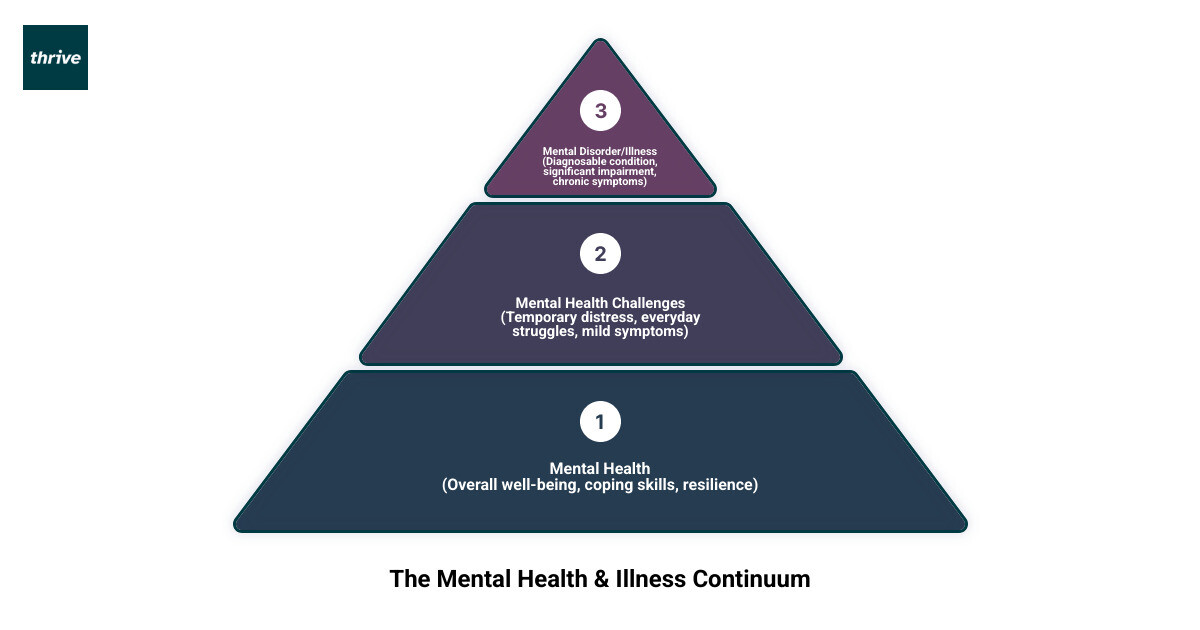
- Mental health = Your overall emotional well-being, which exists on a spectrum.
- When to get help = When symptoms cause distress, last for weeks, and interfere with your work, school, relationships, or daily life.
Mental illness is a leading cause of disability, weakening your immune system and increasing your risk of heart disease. Without treatment, symptoms usually worsen. But here’s the upside: mental disorders are treatable medical conditions, just like diabetes, and most people who get the right level of care can stabilize, recover, and thrive.
This confusion isn’t just semantics, it’s a barrier to care. Stigma and misinformation stop nearly two-thirds of the 47.6 million U.S. adults with mental illness from getting help.
Thrive Mental Health delivers evidence-based Intensive Outpatient (IOP) and Partial Hospitalization (PHP) programs for adults and young professionals who need more than once-a-week therapy but less than inpatient care. Our virtual and in-person programs in Tampa Bay, Miami, and across Florida are built to give you:
- Structured support several days per week
- Flexible scheduling (including evenings) that fits real life
- Measurable results using proven therapies
If you’re unsure where you fall on the mental health spectrum, you don’t have to guess. You can explore our virtual intensive outpatient programs and even verify your insurance in 2 minutes to see what Cigna, Optum, Florida Blue, and other plans may cover.
What Exactly Is a Mental Disorder? The Official Definition
A mental disorder, also called a mental illness, is a health condition causing significant disturbances in a person’s thinking, emotional regulation, or behavior. In simple terms, it’s a medical condition that affects how you think, feel, and act, leading to distress or impairment in your work, social, or family life.
Both the World Health Organization (WHO) and the American Psychiatric Association (APA) define these conditions as health problems involving changes in emotion, thinking, or behavior that cause problems with functioning. It’s crucial to understand these are not character flaws or weaknesses; they are legitimate medical conditions deserving of professional care.
Just as diabetes affects your body’s ability to regulate blood sugar, a mental disorder affects your brain’s ability to regulate mood, thoughts, or behavior. For more, explore the APA’s perspective on What is Mental Illness?.
If symptoms are starting to disrupt your work, school, or relationships in places like Tampa Bay, Miami, or Orlando, that’s often the point where structured care like IOP or PHP, not just weekly therapy, makes the biggest difference. You can see how Thrive’s virtual intensive outpatient programs bridge that gap.
The Critical Difference: Mental Health vs. Mental Illness
Everyone has mental health, just like physical health. It’s your overall state of emotional and psychological well-being. Mental health exists on a spectrum, from thriving to struggling with everyday stress.
A mental illness is a diagnosable condition at one end of that spectrum, where symptoms become so persistent, intense, and disruptive that they impair daily life.
The key distinction is impact and duration:
- Feeling sad after a breakup, job loss, or stressful week = a normal mental health experience.
- Feeling sad, numb, or hopeless for weeks, barely getting out of bed, calling out of work repeatedly, or isolating from friends = may be clinical depression, a mental disorder illness.
As the Mayo Clinic notes, a mental health concern becomes an illness when it causes frequent stress and affects your ability to function. Learn more about this distinction in Mental Health: What’s Normal, What’s Not.
If you’re past the point of “coping” and into “barely holding it together,” that’s often when a higher level of care like IOP or PHP can shorten your recovery time compared to waiting it out with standard weekly sessions.
How Common Are Mental Disorders? [Shocking Statistics]
The prevalence of mental disorder illness is far higher than many realize, affecting people of all ages and backgrounds, from college students in Gainesville to working parents in Orlando and young professionals in Miami.
- Global Prevalence: Nearly 1 in 7 people worldwide (1.1 billion) were living with a mental disorder in 2021. (WHO)
- U.S. Adults: More than 1 in 5 U.S. adults has a diagnosable mental disorder in any given year. (HHS)
- Serious Mental Illness: For 1 in 20 U.S. adults (11.4 million), the illness is serious enough to significantly interfere with major life activities. (SAMHSA)
- Youth & Onset: Half of all chronic mental illness begins by age 14, and 75% begins by age 24.
Because onset is often early, catching symptoms in high school, college, or early career years, and getting beyond once-a-week therapy when needed, can prevent a crisis later. Thrive’s virtual IOP/PHP programs make it possible to access this level of support from anywhere in Florida without pausing school or work.
The 7 Most Common Types of Mental Disorders You Need to Know
Mental disorder illness appears in many forms. While hundreds of disorders exist, a few are far more common. Understanding them is the first step toward recognizing symptoms and seeking the right level of care, not just for mild support, but for structured treatment like IOP or PHP when life is really being derailed.
Here are the most common categories of mental disorders we treat:
Anxiety and Depressive Disorders
These two categories are the most prevalent and often co-occur.
- Anxiety Disorders: Characterized by excessive fear, worry, and related behavioral issues. They affect hundreds of millions of people worldwide each year, yet most don’t get treatment. Symptoms include persistent worry, restlessness, and sleep problems.
- Depressive Disorders: Defined by a persistent depressed mood or loss of interest for at least two weeks. It’s not just “feeling sad”; it’s a debilitating condition that interferes with daily life and affects around 280 million people worldwide.
Treatment for both often involves psychotherapy and/or medication, which provides immense relief for individuals in our programs across Florida, from Miami to Jacksonville.
Bipolar Disorder and Psychotic Disorders
These conditions involve major disruptions in mood, thought, and perception.
- Bipolar Disorder: Involves alternating episodes of depression and mania (lifted mood, high energy, impulsivity). These mood swings can be highly disruptive to a person’s life and relationships.
- Psychotic Disorders (including Schizophrenia): Characterized by distorted thinking and perception, including hallucinations (seeing or hearing things that aren’t there) and delusions (false beliefs). Schizophrenia affects millions of people worldwide and can be profoundly disabling.
Many people with these conditions benefit from a blend of medication, skills-based therapy, and structured support like PHP or IOP, especially during or after a major episode.
Eating Disorders and Substance Use Disorders
These disorders involve harmful behaviors related to consumption that impair health.
- Eating Disorders: Involve abnormal eating patterns and preoccupation with weight, such as anorexia and bulimia. They carry one of the highest risks of premature death of any mental illness.
- Substance Use Disorders (SUDs): Involve a problematic pattern of using substances like alcohol or drugs. One in six U.S. adults has an SUD, often alongside another mental disorder.
Thrive Mental Health frequently supports clients with co-occurring conditions (like depression plus alcohol use), using integrated care plans inside our IOP/PHP services.
Other Common Conditions: OCD, PTSD, and Personality Disorders
- Obsessive-Compulsive Disorder (OCD): Characterized by unwanted, persistent thoughts (obsessions) and repetitive behaviors (compulsions).
- Post-Traumatic Stress Disorder (PTSD): Can develop after a traumatic event, causing flashbacks, nightmares, and severe anxiety. It is a common issue, particularly among veterans and first responders in Florida.
- Personality Disorders: Involve long-term patterns of thinking and behaving that cause distress, such as Borderline Personality Disorder (BPD).
- Neurodevelopmental Disorders: Conditions like ADHD and Autism Spectrum Disorder (ASD) that begin in the developmental period and affect functioning.
Whatever the diagnosis, if your symptoms are hitting your performance at work or school in places like Orlando, Tampa, or St. Petersburg, a higher level of care can help you stabilize faster than going it alone. Our virtual intensive outpatient programs make that possible from home.
What Causes a Mental Disorder Illness and What Are the Warning Signs?
If you or someone you know is in crisis or thinking of suicide, call or text 988 to reach the Suicide & Crisis Lifeline. You are not alone.
Understanding the causes and warning signs of a mental disorder illness is key to early intervention. These conditions rarely have a single cause, instead arising from a complex mix of genetic, biological, and environmental factors.

If you’re in crisis, call/text 988 right now. You are not alone.
The Complex Causes and Risk Factors of a mental disorder illness
Research points to several contributing factors:
- Genetics and Family History: You may have an increased risk if a close blood relative has a mental illness.
- Brain Chemistry and Structure: Imbalances in brain chemicals (neurotransmitters) and differences in brain structure can play a role.
- Environmental Factors and Life Experiences: Severe trauma, chronic stress, abuse, or neglect can trigger or worsen mental illness.
- Substance Use: Alcohol or drug use can trigger or exacerbate mental health conditions. One in six adults has a co-occurring substance use disorder.
- Chronic Medical Conditions: Ongoing physical health problems, like chronic pain, are strongly linked to depression and other mental health challenges.
- Social Isolation: A lack of healthy relationships and social connection is a significant risk factor.
It’s a multifaceted puzzle, and understanding these pieces helps create a comprehensive treatment plan. For more, Harvard Health explains What causes depression.
At Thrive Mental Health, we use this information during your intake and psychiatric assessment to match you with the right level of care, whether that’s virtual IOP from your apartment in Jacksonville, in-person PHP near Tampa Bay, or a hybrid schedule that works around your job.
Early Warning Signs You Can’t Afford to Ignore
Recognizing these signs is the first step toward getting help. Look for persistent or severe changes:
- Changes in Sleep or Appetite: Sleeping or eating too much or too little.
- Mood Swings: Extreme or rapid shifts in mood.
- Social Withdrawal: Pulling away from friends, family, and activities.
- Drop in Functioning: A noticeable decline in performance at work or school.
- Apathy: A pervasive loss of interest or pleasure in life.
- Feeling Disconnected: A sense of unreality or detachment from your surroundings.
- Confused Thinking: Problems with concentration, memory, or logical thought.
- Excessive Fears or Worries: Overwhelming anxiety, sometimes with physical symptoms like a racing heart.
- Problems with Substance Use: Increased use of alcohol or drugs to cope.
- Unexplained Physical Symptoms: Aches, pains, or stomach problems with no clear physical cause.
- Thoughts of Self-Harm or Suicide: This is a critical sign that requires immediate attention.
If you notice these signs in yourself or a loved one in communities like Orlando, Miami, Tampa, or Jacksonville, it’s time to seek professional help. The American Psychiatric Association offers more on Warning Signs of Mental Illnesses.
Many people wait months or years before stepping up care, which often makes symptoms harder to treat. Moving into a structured Intensive Outpatient Program (IOP) or Partial Hospitalization Program (PHP) as soon as daily life is being disrupted can shorten your path back to stability. You can read more about what that looks like in our guide on what to expect in virtual IOP.
How Doctors Diagnose Mental Illness: The Path to a Clear Answer
Diagnosing a mental disorder illness is a comprehensive process performed by a trained professional to ensure an accurate diagnosis and effective treatment plan. It separates clinical conditions from normal life stress, and it also helps determine whether standard weekly therapy is enough or whether you’d benefit more from IOP or PHP.

The Diagnostic Process
A mental health professional will conduct a thorough evaluation, which includes:
- Medical and Personal History: A review of your personal and family health history, major life events, and any substance use.
- Physical Exam and Lab Tests: A primary care provider may run tests to rule out physical conditions (like a thyroid disorder) that can mimic mental illness symptoms.
- Psychological Evaluation: A discussion about your thoughts, feelings, and behaviors, often involving questionnaires and interviews.
- Comparing Symptoms to the DSM-5: Professionals use the Diagnostic and Statistical Manual of Mental Disorders, Fifth Edition (DSM-5) to see if your symptoms meet the specific criteria for a diagnosis. This ensures a consistent and accurate approach.
This careful process is designed to provide a precise diagnosis that leads to the most effective treatment for the mental disorder illness.
At Thrive Mental Health, your diagnostic assessment also guides whether you’re best served by virtual IOP, in-person PHP in locations like Tampa Bay, or another level of care.
Who Can Diagnose a mental disorder illness?
An accurate diagnosis requires a trained professional. Key diagnosticians include:
- Psychiatrists: Medical doctors (MDs) who specialize in mental health and can diagnose, prescribe medication, and provide therapy.
- Psychologists: Professionals with a doctorate (Ph.D. or Psy.D.) who diagnose and provide psychotherapy.
- Licensed Therapists/Counselors: Includes LPCs, LCSWs, and LMFTs who are trained to diagnose and treat mental disorders via therapy.
- Primary Care Providers (PCPs): Can screen for common disorders like depression and anxiety and refer you to a specialist.
Starting with your PCP is often a good first step. For more on finding the right professional, the APA offers a guide on How to Choose a Psychologist.
If you enter a Thrive IOP/PHP program in Florida, you’ll receive a psychiatric evaluation and ongoing monitoring from our clinical team to keep your diagnosis and treatment plan up to date.
The Role of Self-Screening Tools
Self-screening tools can be a valuable first step, but they are not a diagnosis.
Tools like the Patient Health Questionnaire (PHQ-9) for depression or the GAD-7 for anxiety can help you gauge your symptoms and decide if it’s time to see a professional.
Think of them as a conversation starter, not a conclusion. A high score is a strong signal to talk to a doctor or therapist, but only a qualified professional can diagnose a mental disorder illness after a comprehensive evaluation.
You can find initial assessments at the Mental Health Screening Center, then use what you learn to decide whether a structured program like Thrive’s virtual intensive outpatient programs is the right next step.
From Therapy to IOP: What Real Treatment for Mental Illness Looks Like
Once a mental disorder illness is diagnosed, the focus shifts to treatment and recovery. Mental illnesses are treatable, and a personalized, evidence-based approach can lead to significant improvement and a return to a fulfilling life. Recovery is a journey, but with the right support and the right level of care, remission and well-being are achievable.
Core Treatments: Psychotherapy and Medication
The foundation of treatment for most mental disorders involves one or both of these approaches:
- Psychotherapy (Talk Therapy): Involves working with a therapist to explore thoughts and behaviors and learn coping skills. Highly effective forms include Cognitive Behavioral Therapy (CBT), which helps change negative thought patterns, and Dialectical Behavior Therapy (DBT), which focuses on emotional regulation.
- Medications: Prescribed by doctors, medications like antidepressants, mood stabilizers, or antipsychotics can help manage symptoms by adjusting brain chemistry.
Often, a combination of therapy and medication is most effective. For flexible and accessible options, virtual therapy services can be a game-changer, integrating expert care into your life anywhere in Florida, from Orlando to the Panhandle.
When Weekly Therapy Isn’t Enough: Higher Levels of Care
For individuals whose mental disorder illness is too severe for weekly therapy but doesn’t require 24/7 hospitalization, higher levels of care offer structured, intensive support.
- Intensive Outpatient Programs (IOP): IOPs provide several hours of therapy per day, multiple days a week, allowing you to live at home. They blend group therapy, individual therapy, and medication management to build skills and prevent relapse.
- Partial Hospitalization Programs (PHP): PHPs are more intensive than IOPs, running for most of the day, five days a week. They offer a hospital-level of care without an overnight stay.
These programs are ideal for stabilizing acute symptoms or transitioning from inpatient care. Thrive Mental Health delivers virtual and in-person IOP/PHP services across Florida, combining clinical expertise with flexible scheduling.
If you want a deeper dive into how virtual IOP works day-to-day, you can check out our related blog article on what to expect from online intensive outpatient treatment.
Paying for Care: Insurance and Accessibility
Accessing treatment for a mental disorder illness shouldn’t be a financial burden. We prioritize making care accessible.
- Insurance Coverage: Many private insurance providers, including major carriers like Cigna, Optum, and Florida Blue, offer coverage for mental health treatment, including IOP and PHP programs.
- In-Network and Out-of-Network Options: Our team can help you understand whether your plan treats Thrive as in-network or out-of-network and what that means for your costs.
- Accessibility: Thrive Mental Health’s virtual programs remove geographic barriers, while our in-person centers serve communities like Tampa Bay, St. Petersburg, Miami, and Orlando. Our team can help you steer your benefits.
We encourage you to understand your coverage. You can Verify your insurance in 2 minutes (no obligation) to see your options.
If you’re not sure whether IOP or PHP is the right fit, our admissions team will walk you through your symptoms, goals, and schedule to match you with the level of care that gives you the best chance at faster, safer recovery.
Frequently Asked Questions about Mental Disorders
Can a mental disorder be cured?
The goal of treatment is remission and recovery, not necessarily a “cure.” Much like chronic physical conditions such as diabetes, many mental disorders require ongoing management. With effective treatment, including higher levels of care like IOP or PHP when needed, most individuals can live full, functional lives with minimal symptoms.
What is the most severe mental illness?
Severity is subjective, but conditions like schizophrenia and severe bipolar disorder are often considered among the most debilitating due to their impact on daily functioning. Eating disorders also have one of the highest mortality rates of any mental illness. The impact on an individual’s life is the truest measure of severity.
Can you self-diagnose a mental disorder?
No. While online screening tools can be a helpful first step, only a qualified professional like a psychiatrist, psychologist, or licensed therapist can provide an accurate diagnosis of a mental disorder illness. They use a comprehensive evaluation and established diagnostic criteria (from the DSM-5) to ensure accuracy.
How do I help a family member with a mental illness?
Helping a family member with a mental disorder illness requires empathy and practical support. Here are four key steps:
- Talk Openly: Have an honest, non-judgmental conversation about your concerns.
- Encourage Professional Help: Gently encourage them to see a professional and offer to help them find one.
- Educate Yourself: Learn about their specific condition to better understand their experience.
- Act in a Crisis: If they are in immediate danger, call 911 or the 988 Suicide & Crisis Lifeline right away.
If their symptoms are affecting work, school, or relationships in places like Jacksonville, Tampa, or Miami, consider whether a structured program like Thrive’s virtual intensive outpatient programs might give them more support than standard weekly therapy.
Is IOP or PHP covered by insurance in my state?
In many cases, yes. Carriers like Cigna, Optum, Florida Blue, and others often provide coverage for IOP and PHP, especially when symptoms significantly impair functioning. Coverage varies by plan, so the fastest way to find out your benefits in Florida is to verify your insurance online in about 2 minutes through our IOP/PHP page.
Conclusion: Taking the First Step Toward Recovery
The journey to managing a mental disorder illness can feel overwhelming, but the most important takeaway is this: mental illness is treatable, and recovery is possible. Seeking help is not a sign of weakness but an intentional decision to stop white-knuckling life on your own.
If your symptoms are starting to cost you sleep, relationships, grades, or your job in places like Tampa Bay, Miami, or Orlando, waiting rarely makes things easier. The right level of care, often IOP or PHP when weekly therapy isn’t enough, can shorten your recovery time and give you real tools that last.
At Thrive Mental Health, we see individuals reclaim their lives through our virtual and in-person Intensive Outpatient (IOP) and Partial Hospitalization (PHP) programs. Our approach is designed for those who need more than weekly therapy, combining clinical expertise with flexible scheduling to deliver measurable results.
Don’t let confusion or stigma prevent you or a loved one from accessing the support you deserve. Your mental well-being is an investment that enables you to thrive in all aspects of life.
Ready for support? Thrive offers virtual IOP programs with evening options. Verify your insurance in 2 minutes (no obligation) → Start benefits check or call 561-203-6085. If you’re in crisis, call/text 988.

This article is for informational purposes only and is not a substitute for individualized clinical advice or insurance verification.