


Your Private Path to Healing Starts Here
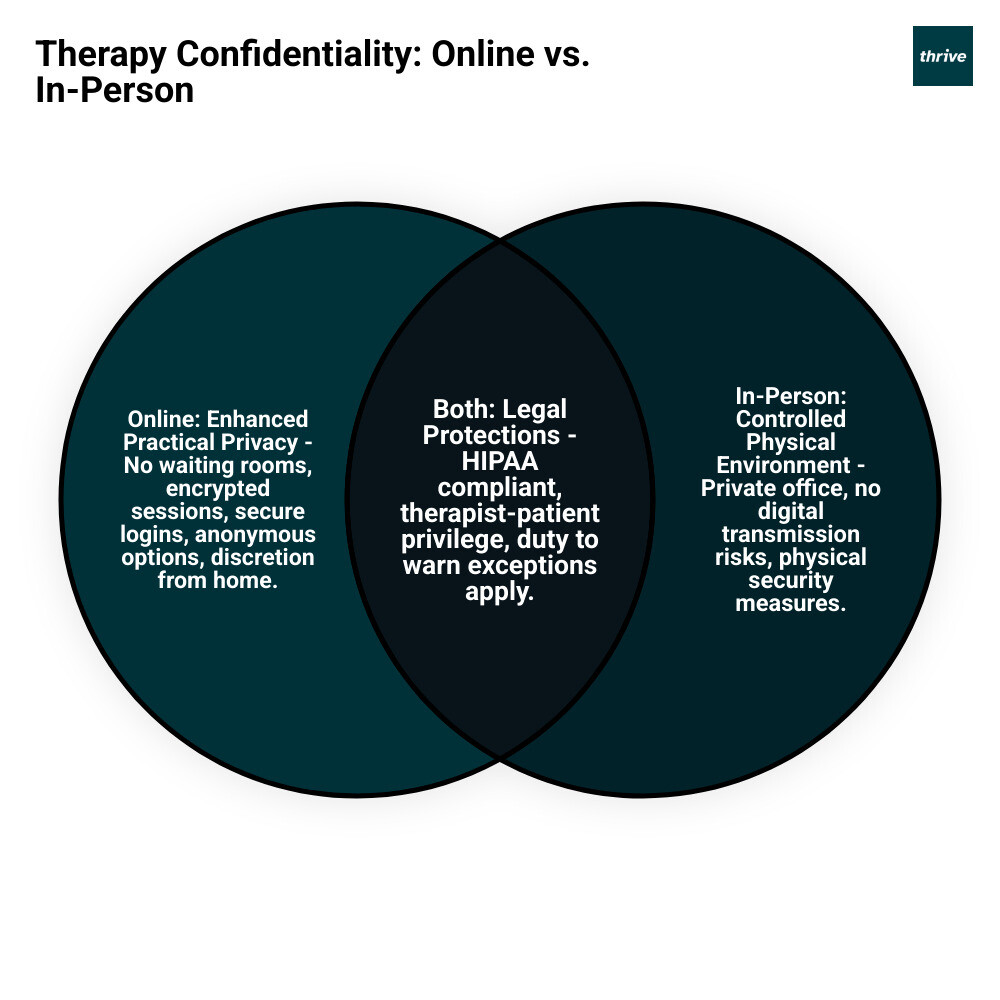
Confidential online therapy delivers the same legal protections as in-person care, but with stronger practical privacy. You don’t sit in a waiting room. No one sees you walk into a clinic. Your sessions happen in your own space, on your schedule, behind encrypted walls.
Quick Answer: Is Online Therapy Really Confidential?
| Privacy Feature | How It Works |
|---|---|
| HIPAA Compliance | All reputable platforms must follow the same federal privacy laws as traditional clinics |
| Encryption | End-to-end encrypted messaging, video, and audio, readable only by you and your therapist |
| No Waiting Rooms | Zero chance of running into someone you know; you control your environment |
| Secure Logins | Two-factor authentication and optional passcodes protect your account |
| Anonymous Options | Many platforms let you use a nickname instead of your real name |
Yes, confidential online therapy is as legally protected as in-person care, and often more private in practice.
If you’ve been stuck in the “I need help, but I can’t risk anyone finding out” loop, you’re not alone. Maybe you’re worried about your employer, your family, or just the stigma. The good news: modern teletherapy platforms are built to eliminate those risks. The technology exists. The laws back it up. And the results speak for themselves, studies show online therapy is just as effective as face-to-face sessions for depression, anxiety, and trauma.
I’m Nate Raine, CEO of Thrive Mental Health, where we’ve spent over a decade building tech-enabled, evidence-based confidential online therapy programs that integrate data science with compassionate care. Specializing in Florida, we know how secure virtual care removes barriers for our communities while delivering measurable outcomes.
Essential confidential online therapy terms:
- What makes Thrive different from other online mental health treatment providers?
- individualized mental health care
- What are the top flexible mental health treatment options for working professionals?
What Is Confidential Online Therapy? (And Is It Really Private?)
Confidential online therapy, also known as teletherapy or virtual counseling, is the delivery of mental health services remotely through secure digital platforms. It leverages technology like video conferencing, secure messaging, and phone calls to connect clients with licensed therapists, all while maintaining the highest standards of privacy. Our goal at Thrive Mental Health is to make professional mental health care accessible, convenient, and discreet for residents across Florida, bridging the gap between needing support and getting it without compromise.
The core principle of therapist-patient privilege, which legally protects the conversations you have with your therapist, applies just as strongly to online sessions as it does to in-person ones. This means your therapist is ethically and legally bound to keep your information private, with very few, specific exceptions (which we’ll discuss later).
Think of it this way: when you engage in confidential online therapy, you’re entering a virtual therapeutic space that is designed with privacy at its forefront. This digital environment is built with layers of security to protect your sensitive information, allowing you to open up and work through challenges without fear of exposure. For a deeper dive into this innovative approach, explore our guide on Virtual Therapy: A Convenient and Effective Approach to Counseling.
How Online Therapy Protects Your Privacy Better Than an Office
While both online and in-person therapy are legally confidential, virtual care often offers stronger practical privacy advantages that many clients find invaluable:
- No Waiting Rooms: One of the most common concerns about traditional therapy is the waiting room. Who might you see? A colleague, a friend, a neighbor? With online therapy, this concern vanishes. You log in from your chosen private space, eliminating any chance of awkward or unwanted encounters.
- No Travel, No Trace: Attending in-person sessions means commuting to an office, which can be seen by others. Confidential online therapy removes the need for travel, meaning no one observes you entering or leaving a clinic. This discretion can be a huge relief, especially for those who prefer to keep their mental health journey private.
- Discretion from Home: Your home, or any other private space you choose, becomes your therapy room. This allows for unparalleled discretion, as you control who knows about your sessions. It means you can fit therapy into your life seamlessly, without drawing attention.
- Control Over Your Environment: You can create a comfortable, safe, and private setting that helps you feel more at ease during sessions. This level of control over your surroundings can improve your ability to open up and engage with your therapist.
- Reduced Social Stigma: Despite growing awareness, a stigma around mental health care still exists for some. Online therapy offers a way to bypass this by providing support that is virtually invisible to outsiders. You get the care you need without the perceived judgment.
These practical benefits contribute to a more private and often more comfortable therapeutic experience, allowing you to focus entirely on your healing journey.
What to Expect from Confidential Online Therapy
When you start on a journey with confidential online therapy at Thrive, you can expect a structured yet flexible process designed for your well-being. It’s built on the same clinical foundations as our in-person care, but adapted for the digital age:
- Initial Assessment: Your journey typically begins with a thorough evaluation, often a 40-minute initial session. This is where we get to know you, understand your goals, challenges, and background. It’s also an opportunity for you to ask questions and discuss any emotional concerns.
- Personalized Treatment Plan: Based on your assessment, our expert team will collaborate with you to create a personalized care plan. This plan is dynamic, evolving with your progress and needs, ensuring you’re always on the most effective path forward.
- Secure Messaging: Between your scheduled live sessions, you’ll have access to secure messaging with your care team. This allows you to communicate thoughts, feelings, or urgent concerns as they arise, ensuring continuous support. Responses are typically provided within one working day, during business hours.
- Live Video Sessions: The cornerstone of our online therapy is weekly 45-minute video sessions with your licensed therapist. These sessions are conducted via secure, encrypted platforms, providing a real-time, face-to-face interaction from the comfort of your chosen private space.
- Progress Tracking: We incorporate regular progress assessments, often monthly, to monitor your development and adjust your treatment plan as needed. This ensures our evidence-based approach is yielding measurable results for your mental health.
The effectiveness of this model is well-documented. Studies show that structured online therapy sessions can achieve the same outcome as traditional therapy sessions. This means you’re not sacrificing quality or results for the sake of convenience and privacy.
Your Digital Fortress: How Reputable Platforms Guarantee Confidential Online Therapy
Ensuring the privacy and security of your personal health information is paramount in confidential online therapy. At Thrive Mental Health, we don’t just promise confidentiality; we build a digital fortress around your data. This involves a combination of legal mandates and cutting-edge technical safeguards.

The HIPAA Mandate: Your Legal Right to Privacy
The Health Insurance Portability and Accountability Act (HIPAA) is a federal law that sets stringent standards for protecting sensitive patient health information (PHI). For us, HIPAA compliance isn’t just a checkbox; it’s the foundation of our commitment to your privacy.
- Protected Health Information (PHI): HIPAA governs any information about your health status, provision of healthcare, or payment for healthcare that can be linked to you. This includes your therapy notes, diagnoses, treatment plans, and even the fact that you are receiving therapy.
- HIPAA Rules for Telehealth: The law explicitly extends its protections to telehealth services. This means that platforms like ours must adhere to the same strict privacy and security rules as traditional in-person clinics.
- Business Associate Agreements (BAAs): Any third-party service provider that handles PHI on our behalf (such as the secure video platform we use) must sign a Business Associate Agreement. This legally binds them to protect your data in accordance with HIPAA standards.
- Patient Consent: We ensure you are fully informed about how your information is used and shared, and we obtain your explicit consent for specific actions, giving you control over your health data.
Understanding HIPAA is crucial for anyone seeking confidential online therapy. We’ve provided a comprehensive guide on HIPAA Compliant Online Therapy to help you steer these important protections.
Beyond the Law: Technical Safeguards That Keep You Safe
While HIPAA provides the legal framework, robust technical measures are what truly build your digital fortress:
- End-to-End Encryption: All communications, whether it’s text messages, audio calls, or live video sessions, are secured with end-to-end encryption. This means your data is scrambled from the moment it leaves your device until it reaches your therapist’s, making it unreadable to anyone else.
- Secure Servers: Your data is stored on highly secure, compliant servers that are protected by advanced firewalls, intrusion detection systems, and regular vulnerability scans. These servers are often housed in facilities with strict physical security measures.
- Anonymous Usernames: Some platforms allow or require the use of unique nicknames or usernames that you share only with your therapist. This adds an extra layer of privacy, particularly in the initial stages of engagement.
- Data Storage Policies: Reputable platforms have clear policies on how long your data is stored, who can access it, and under what circumstances. This ensures that your information is managed responsibly throughout its lifecycle.
- Regular Security Testing and Audits: Our platforms undergo frequent security audits and penetration testing by independent experts. This proactive approach helps identify and fix any potential vulnerabilities before they can be exploited, continuously strengthening your digital protection.
- Two-Factor Authentication (2FA) and App Passcodes: To prevent unauthorized access to your account, we implement features like two-factor authentication for login. Additionally, some online therapy apps offer optional passcodes, adding another layer of security to your therapy portal on your device.
These technical safeguards work in concert with HIPAA regulations to ensure that your journey through confidential online therapy is not only effective but also incredibly secure.
The Real-World Benefits of Secure Virtual Therapy
Beyond the peace of mind that comes with guaranteed confidentiality, secure virtual therapy open ups a multitude of practical benefits that improve the therapeutic experience and make mental health support more accessible than ever before.

Issues You Can Tackle with Confidential Online Therapy
The scope of issues that can be effectively addressed through confidential online therapy is vast, covering many of the same concerns as traditional in-person care. Our virtual and hybrid programs at Thrive Mental Health are designed to support individuals dealing with a wide range of mental health challenges, including:
- Anxiety Disorders: From generalized anxiety to panic disorders and social anxiety, online CBT and other modalities are highly effective.
- Depression: Online therapy provides crucial support for managing symptoms, improving mood, and developing coping strategies.
- Trauma and PTSD: Specialized trauma-informed approaches can be delivered effectively in a secure virtual environment.
- Relationship Issues: Individual or couples therapy can help steer communication breakdowns, conflict, and intimacy concerns.
- Stress Management: Learn techniques and strategies to cope with everyday stressors, work-related pressure, or significant life changes.
- Grief and Loss: Find support and guidance through the complex emotions of bereavement.
- Addictions: For those needing more than once-a-week therapy, our IOP/PHP programs offer structured support for substance use and behavioral addictions.
- Eating Disorders: Our specialized programs provide comprehensive care, integrating therapy, nutrition, and medical monitoring.
Research consistently supports the efficacy of online modalities. For instance, online cognitive therapy can be just as effective as in-person sessions when handling certain mental health issues such as depression, anxiety, and panic disorders. This means you can find effective treatment for a broad spectrum of concerns through a secure virtual setting.

Is It As Effective As In-Person Sessions?
This is a common and important question, and the answer, backed by a growing body of scientific evidence, is a resounding yes for many conditions.
- Research Findings: Numerous studies have demonstrated that online therapy can be as effective as traditional face-to-face therapy. One study highlighted that online cognitive therapy can be just as effective as in-person sessions when handling certain mental health issues such as depression, anxiety, and panic disorders.
- Patient Outcomes: For many clients, the outcomes achieved through confidential online therapy are comparable to those in traditional settings. The consistency, accessibility, and comfort of virtual care can even lead to higher engagement and better adherence to treatment plans.
- Therapeutic Modalities: Evidence-based approaches like Cognitive Behavioral Therapy (CBT), Dialectical Behavior Therapy (DBT), and psychodynamic therapy, which are core to our programs at Thrive Mental Health, adapt exceptionally well to the online format. Therapists are trained to deliver these interventions effectively through video, audio, and messaging.
- Reduced Barriers, Increased Engagement: The convenience of online therapy often reduces barriers that might prevent someone from seeking or continuing care. Fewer missed appointments due to travel, scheduling conflicts, or social anxiety can lead to more consistent engagement and, consequently, better results.
Our programs at Thrive Mental Health, including our virtual Intensive Outpatient (IOP) and Partial Hospitalization (PHP) options, are designed to leverage these benefits, providing comprehensive care that delivers measurable results. For more detailed information on how virtual care can benefit you, refer to our Online Therapy for Adults Guide.
Choosing Your Provider: A 5-Step Checklist for Vetting Confidentiality
Selecting the right provider for confidential online therapy is a critical step in your mental health journey. It’s not just about finding a good therapist, but also a secure and trustworthy platform. Here’s our 5-step checklist to help you vet providers with confidence:
- Verify Therapist Credentials and Licensing: Always ensure your therapist is fully licensed in your state. This includes verifying their specific credentials (e.g., Psychologist (PhD/PsyD), Licensed Marriage and Family Therapist (LMFT), Licensed Clinical Social Worker (LCSW), Licensed Professional Counselor (LPC), Licensed Mental Health Counselor (LMHC)). Reputable platforms will clearly state these qualifications and often require their therapists to have extensive experience, such as several years of practice and thousands of hours of hands-on work, in addition to state board licensure.
- Scrutinize Platform Security Features: Look for clear statements about HIPAA compliance, end-to-end encryption for all communications (video, audio, text), secure servers, and regular security audits. Features like two-factor authentication (2FA) and optional app passcodes are strong indicators of a platform’s commitment to data protection.
- Read the Privacy Policy with a Fine-Tooth Comb: A transparent privacy policy should clearly outline how your data is collected, stored, used, and shared. It should specify if and how anonymized data might be used (e.g., for research or platform improvement) and your rights regarding your data.
- Understand Insurance Coverage and Costs: Many reputable online therapy platforms are in-network with a variety of insurance plans, including major providers like Cigna, Optum, and Florida Blue. They often accept HSA/FSA funds too. Always verify your benefits directly with your insurance provider. Look for platforms that offer clear, tiered plans and provide upfront cost estimates. For guidance on navigating coverage, check out our insights on Insurance Covered Online Therapy.
- Evaluate Communication Options and Flexibility: Consider what communication methods suit you best, secure messaging, live chat, phone calls, or video conferencing. Reputable platforms offer a range of options, allowing you to choose what feels most comfortable and effective for your therapy journey.
Finding Confidential Online Therapy in Florida
The landscape of online therapy is governed by state-specific licensing laws, meaning your therapist must be licensed in the state where you reside. This ensures they are familiar with local regulations, resources, and ethical guidelines. At Thrive Mental Health, we are proud to offer our comprehensive virtual and hybrid programs specifically for Florida residents. Our licensed therapists provide accessible and discreet mental health support across the Sunshine State, from Miami to Jacksonville and everywhere in between. This localized approach ensures that you receive care from professionals who are not only highly qualified but also compliant with Florida’s specific requirements, guaranteeing truly confidential online therapy.
Red Flags: When to Question a Provider’s Privacy Practices
While most online therapy providers prioritize confidentiality, it’s essential to be aware of potential red flags:
- Vague or Non-Existent Privacy Policy: If a platform’s privacy policy is hard to find, unclear, or doesn’t explicitly mention HIPAA compliance and data encryption, proceed with extreme caution.
- Use of Unsecured Platforms: Avoid any provider suggesting therapy sessions via consumer-grade platforms like FaceTime, Skype, Zoom (without proper BAA and security settings), or WhatsApp. These are generally not HIPAA-compliant for healthcare purposes.
- No Mention of HIPAA Compliance: If a platform or therapist doesn’t explicitly state their adherence to HIPAA or other relevant privacy laws, it’s a major warning sign.
- Pressure to Share Unnecessary Data: Be wary if a platform asks for more personal information than seems necessary for your treatment or billing. Your data should be collected with purpose and transparency.
- Lack of Clear Security Measures: If you can’t find information about encryption, secure servers, or two-factor authentication, their security practices may be inadequate.
Your privacy is your right. Always feel empowered to ask questions and seek clarification if you have any concerns about a provider’s confidentiality practices.
Are There Limits to Confidentiality? (What You MUST Know)
While confidential online therapy is rigorously protected, there are legally mandated exceptions to confidentiality that every client should be aware of. These exceptions are in place to ensure safety and are consistent across both online and in-person therapy. Your therapist will discuss these with you during your initial sessions.
The primary limits to confidentiality include:
- Duty to Warn/Protect: If your therapist believes you are an immediate danger to yourself or others, they are legally and ethically obligated to take action to ensure safety. This might involve contacting emergency services or relevant authorities.
- Child or Elder Abuse Reporting: Therapists are mandated reporters. If they suspect child abuse, elder abuse, or abuse of a vulnerable adult, they are legally required to report it to the appropriate protective services.
- Court Orders: In rare circumstances, a court can subpoena therapy records. While therapists and platforms will often fight such requests to protect your privacy, a valid court order can compel the release of information.
- Medical Emergencies: In a medical emergency, limited information might be shared with emergency personnel to ensure your immediate safety and care. Reputable online platforms collect emergency contact information specifically for such situations.
- Supervision and Consultation: Therapists often consult with supervisors or colleagues to ensure they are providing the best possible care. In these cases, your identity is typically anonymized, and only relevant clinical details are discussed.
These exceptions are not taken lightly. Therapists are trained to steer these situations carefully, always prioritizing your well-being while adhering to their legal and ethical obligations.
What Happens if I Suspect a Privacy Breach?
If you ever have concerns or suspect a privacy breach related to your confidential online therapy, it’s crucial to act promptly. Here’s what you should do:
- Contact the Platform Directly: The first step is to immediately reach out to the online therapy platform’s support or privacy officer. They have a legal obligation to investigate your concerns.
- Speak with Your Therapist: Discuss your concerns with your therapist. They can provide clarification, explain the platform’s security measures, or guide you on the next steps.
- File a HIPAA Complaint: If your concerns are not adequately addressed by the platform or therapist, you have the right to file a complaint with the U.S. Department of Health and Human Services (HHS) Office for Civil Rights (OCR). This is the federal agency responsible for enforcing HIPAA rules.
- Understand Your Rights: Familiarize yourself with your rights under HIPAA, including the right to access your medical records, request amendments, and receive a notice of privacy practices.
At Thrive Mental Health, we are committed to upholding the highest standards of privacy and security. If you ever have questions or concerns, we encourage you to reach out to us directly.
Frequently Asked Questions about Confidential Online Therapy
Can my employer find out I’m using online therapy?
No, your therapy is protected by HIPAA. Unless you use an Employee Assistance Program (EAP) where they might receive anonymized, aggregated data on usage, your employer has no access to your personal health information.
Is texting with a therapist truly confidential?
Yes, on a HIPAA-compliant platform. All communications, including text, audio, and video messages, are encrypted to ensure only you and your therapist can access them.
What’s more confidential: online or in-person therapy?
Both are legally bound by the same confidentiality laws (HIPAA). Online therapy can offer additional layers of privacy by eliminating the need to be seen at a physical office, but it’s crucial to use a secure, compliant platform.
Take the Next Step with Guaranteed Confidentiality
You deserve mental health support that is not only effective but also completely secure and private. At Thrive Mental Health, we are dedicated to providing confidential online therapy to residents throughout Florida. Our virtual and hybrid Intensive Outpatient (IOP) and Partial Hospitalization (PHP) programs are designed specifically for Floridians who need more than once-a-week therapy but less than inpatient care. Our programs combine clinical expertise with flexible scheduling, including evening options, to deliver measurable results and ensure your path to healing is clear and supported.
Ready for support? Thrive offers virtual IOP programs with evening options. Verify your insurance in 2 minutes (no obligation) → Start benefits check or call 561-203-6085. If you’re in crisis, call/text 988.

This article is for informational purposes only and is not a substitute for individualized clinical advice or insurance verification.