

Is an Adolescent PHP Program Right for Your Teen? [What Waiting Will Cost You]
If your teen is spiraling, withdrawn, failing school, or talking about feeling hopeless, every day you wait puts their future at risk.
1 in 5 teens faces a mental health disorder. Most parents feel stuck between two bad options: weekly therapy that clearly isn’t enough, and inpatient hospitalization that feels too extreme.
Adolescent PHP programs are the missing middle, intensive, structured care that can turn things around before crisis hits.
Here’s what you need to know right now:
- What it is: Day treatment where teens receive 4-6 hours of therapy daily, 5 days a week, then return home each evening.
- Who needs it: Teens with depression, anxiety, trauma, self-harm, eating disorders, or substance use who can’t function at school or home.
- What to expect: Individual therapy, group sessions, family work, medication management, and academic support in one coordinated program.
- Insurance: Most major plans (Cigna, Optum, Florida Blue, and others) cover PHP under the Affordable Care Act.
- Timeline: Programs typically last 4-8 weeks, then step down to less intensive care like IOP.
The reality: 50% of all mental health conditions begin by age 14, yet most families don’t know where to turn when standard outpatient therapy stops working.
If your teen is withdrawing from friends, failing classes, self-harming, or showing signs they can’t cope, adolescent PHP programs bridge the critical gap between weekly therapy and inpatient hospitalization.
I’m Nate Raine, CEO of Thrive Mental Health. Our PHP programs and IOP programs across Florida are built on one goal: the right level of care, at the right time, with measurable results. Over the past decade, I’ve seen how getting into PHP quickly can change a teen’s trajectory, and how waiting can turn a solvable problem into a crisis.
In this guide, you’ll learn exactly how adolescent PHP programs work, when your teen needs one, how insurance (Cigna, Optum, Florida Blue, and more) can help cover costs, and how to get your teen admitted fast in Florida.
What Is an Adolescent PHP Program? [And When Does Your Teen Need One?]

When we talk about an adolescent PHP program, we’re describing a Partial Hospitalization Program. Don’t let the word “hospitalization” mislead you, it’s not an inpatient facility where your teen stays overnight.
Instead, PHP is intensive day treatment:
- Your teen attends 4-6 hours per day, 5 days per week.
- They receive therapy, psychiatric support, and school help in one place.
- They sleep at home and stay connected to family and community.
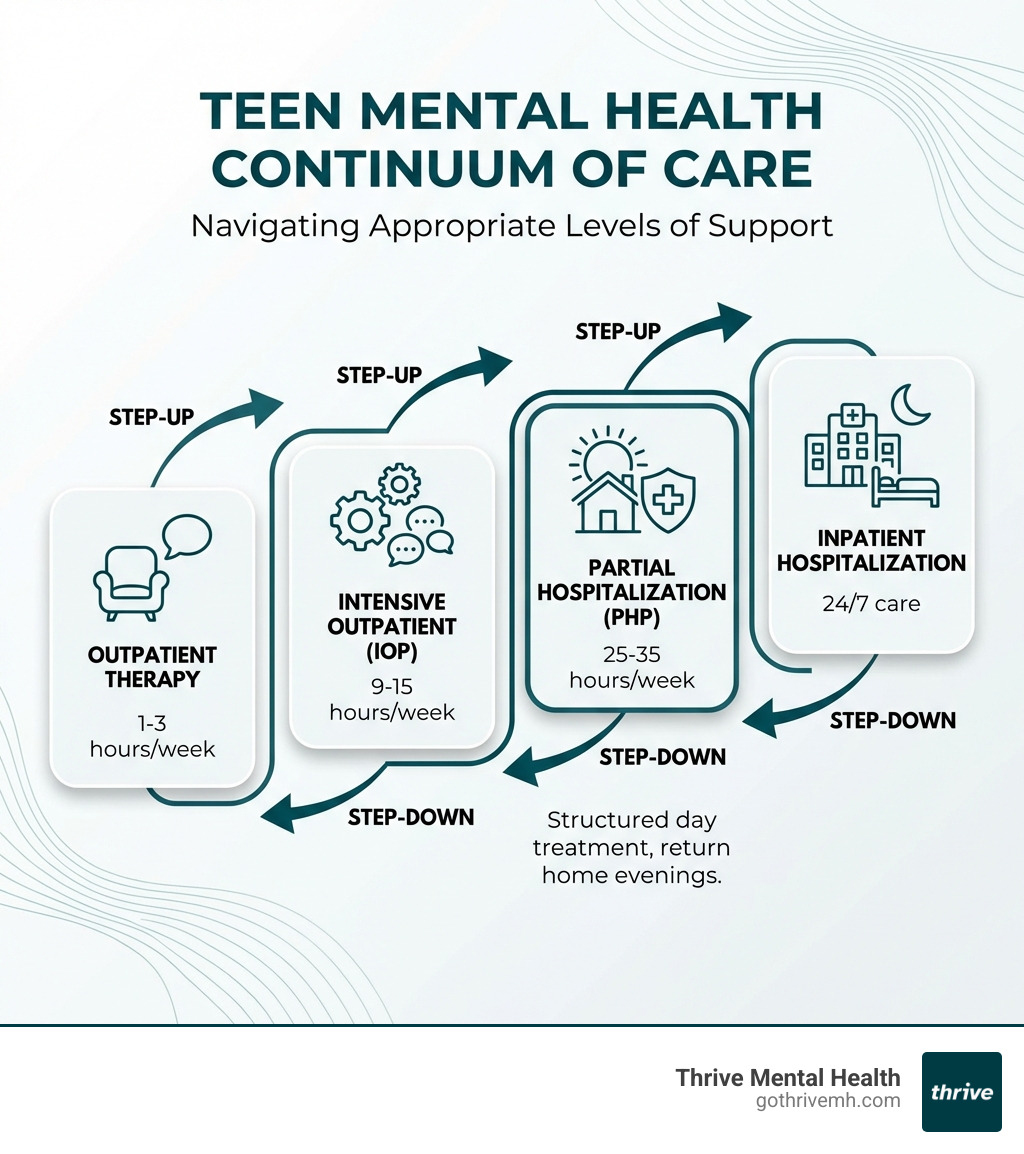
Think of a PHP as a bridge: more structure and clinical support than weekly therapy or even an Intensive Outpatient Program (IOP), but less restrictive than residential treatment or inpatient psychiatric hospitalization. It’s built for teens who need a higher level of care to stabilize, but who don’t require 24/7 monitoring.
Typically, adolescent PHP programs serve teens and young adults, often from about 10-12 up to 18 (and sometimes into young adulthood). Exact age ranges vary by program, but the focus is always on the unique developmental needs of adolescents and young people.
15 Warning Signs Your Teen Needs a PHP
If you or your teen are in crisis or have thoughts of self-harm, call or text the 988 Suicide & Crisis Lifeline right now. You are not alone.
It can be hard to tell where “normal teen behavior” ends and something more serious begins. If you’re seeing several of these signs consistently, and they’re disrupting school, relationships, or basic functioning, an adolescent PHP program may be the right next step:
- Persistent sadness, irritability, or extreme mood swings that last for weeks, not just days. According to the National Alliance on Mental Illness (NAMI), 1 in 6 children and adolescents aged 6 to 17 experience at least one mental health disorder each year, and 50% of all lifetime illness begin by age 14.
- Social withdrawal from friends, family, or activities they once enjoyed.
- Sudden, significant drop in grades or school refusal, impacting their academic future.
- Major changes in sleep patterns (insomnia, excessive fatigue, or sleeping all the time) or eating habits (loss of appetite, disordered eating habits).
- Panic attacks or overwhelming anxiety that interferes with daily tasks.
- Risky behaviors, including substance use (drugs or alcohol), aggression, or reckless decision-making.
- Self-harm or talk of suicide. Roughly 13% of young adults aged 18-25 and 22% of high school students have serious thoughts of suicide. These are urgent warning signs.
- Trouble coping with typical life stressors, feeling constantly overwhelmed, or an inability to manage minor setbacks.
- Inability to function at home or school, struggling with basic responsibilities like hygiene or chores.
- Frequent and intense emotional outbursts that are disproportionate to the situation.
- Loss of interest in hobbies and activities they previously loved.
- Significant decline in self-care, neglecting personal hygiene or appearance.
- Increased physical complaints (headaches, stomach aches) with no clear medical cause.
- Difficulty maintaining healthy relationships with friends or romantic partners, leading to isolation.
- Expressing feelings of hopelessness, worthlessness, or excessive guilt.
If these signs sound familiar, early intervention is almost always easier, faster, and less expensive than waiting for a full-blown crisis.
What Conditions Do Adolescent PHP Programs Treat?
Adolescent PHP programs are designed to handle complex, overlapping issues, not just one diagnosis at a time. Programs like ours at Thrive Mental Health typically treat:
- Major Depression: Persistent sadness, loss of pleasure, changes in sleep/appetite, and feelings of hopelessness.
- Anxiety Disorders: Generalized anxiety, social anxiety, panic disorder, and phobias that significantly impair daily life.
- Trauma and PTSD: Helping teens process past traumatic events and develop healthy coping mechanisms to manage symptoms like flashbacks, nightmares, and avoidance. Many programs, including ours, focus on addressing the underlying trauma and emotional wounds.
- Eating Disorders: Including Anorexia Nervosa, Bulimia Nervosa, Binge Eating Disorder, and Avoidant/Restrictive Food Intake Disorder (ARFID). A study published in the International Journal of Eating Disorders found that PHPs are effective in treating children and adolescents with ARFID, showing significant improvements.
- Bipolar Disorder: Managing mood swings, from depressive lows to manic highs, through therapy and medication.
- Dual Diagnosis: When a teen experiences both a mental health condition and a co-occurring substance use disorder. Programs address both issues simultaneously for integrated recovery.
- Self-harm and Suicidal Thoughts: Providing immediate stabilization, safety planning, and intensive therapy to address the root causes of these behaviors and reduce suicide risk. PHPs have shown significant success in helping patients decrease the number of post-discharge hospitalizations as well as the total suicide risk for youth after discharge from a PHP, according to a study published in the Journal of the American Academy of Child & Adolescent Psychiatry.
At Thrive, we tailor PHP treatment plans to your teen’s specific symptoms and goals, whether you’re in Florida, and we coordinate with your insurance (Cigna, Optum, Florida Blue, and others) so you’re not navigating it alone.
Inside a Teen PHP: What Happens Each Day?

When considering an adolescent PHP program, many parents picture a sterile, hospital-like environment. In reality, quality PHPs are structured, warm, and built around active healing and skill-building, not just “babysitting” your teen for the day.
At Thrive Mental Health, our centers and virtual programs are designed to be safe, engaging spaces where teens can speak honestly, practice new skills, and still return home each night to the people who matter most.
A typical day in an adolescent PHP program is highly structured, blending therapeutic interventions with academic support and life skills development. Teens participate in a full schedule of activities during the day and then return home in the evening, allowing them to practice new skills in their home environment.
Sample Daily Schedule
Every program is a little different, but a day in an adolescent PHP program often looks like this:
- Morning Check-in & Goal Setting (8:30 AM): Group check-in, mood rating, and setting specific goals for the day.
- Group Therapy (9:00 AM): Core clinical work using evidence-based approaches like Cognitive Behavioral Therapy (CBT), Dialectical Behavior Therapy (DBT), and Acceptance and Commitment Therapy (ACT). Teens learn about their conditions, coping strategies, and relationship skills.
- Academic Block (10:30 AM): Dedicated time for schoolwork, often with certified teachers or tutors. Teens can work on assignments, credit recovery, or individualized education plans so treatment doesn’t derail their education.
- Supervised Lunch (12:00 PM): A communal meal to support healthy social interaction and, when relevant, reinforce balanced eating for teens with eating disorders.
- Skills Group (1:00 PM): Focus on practical tools: stress management, emotional regulation, mindfulness, problem-solving, and executive functioning. Many skills are drawn from Thrive’s executive functioning skills framework.
- Experiential Therapy (2:00 PM): Creative arts, music, movement, or other experiential activities that help teens express themselves, build confidence, and practice regulation skills.
- Individual or Family Therapy (3:00 PM): One-on-one sessions with a licensed therapist, plus regular family therapy to strengthen communication and support at home.
- End-of-Day Wrap-up (4:00 PM): Teens reflect on what they learned, how they used skills, and what they’ll practice at home that evening.
Core Treatment Components
At Thrive Mental Health, our adolescent PHP programs integrate a comprehensive suite of therapeutic components to support long-term change, not just short-term crisis control:
- Individual Therapy: One-on-one sessions to process emotions, trauma, and triggers, and to create a personalized plan for change.
- Group Therapy: The backbone of PHP, offering peer support, accountability, and real-time practice of new skills, led by master-level clinicians.
- Family Therapy: Essential for adolescent treatment. Families participate in sessions to improve communication, reduce conflict, and build a more supportive home environment.
- Psychiatric Evaluation & Medication Management: Ongoing access to psychiatric providers for evaluation, diagnosis, and medication management when needed.
- Evidence-Based Modalities: Including CBT, DBT, Solution-Focused Therapy, Motivational Interviewing, Cognitive Processing Therapy, Rational Emotive Behavior Therapy, and Trauma-Informed Care.
- Building Healthy Coping Skills: A core focus is equipping teens with practical strategies to manage stress, regulate emotions, and face setbacks without turning to self-harm or substances.
If in-person attendance is difficult, many of these components are also available through Thrive’s expert-led virtual PHP/IOP options, making high-level care accessible anywhere in Florida.
School Support in PHP
One of the biggest fears parents have is: “Will PHP wreck my teen’s school year?” Done right, it’s often the opposite, PHP can save a collapsing school situation.
- Dedicated Academic Time: As in the sample schedule, teens have specific blocks for classwork, homework, and studying.
- Coordination with Your Teen’s School: Treatment teams often communicate directly with schools to organize independent study, manage workload, and support IEP/504 plans. Credits typically transfer back to their home school.
- Credit Recovery and Transfer: For teens who have fallen behind due to mental health, PHP can help them recover credits and get back on track academically.
- Executive Functioning Skill-Building: Beyond assignments, we focus on organization, time management, planning, and task initiation, skills that drive success long after PHP ends.
For many families in areas like Tampa, Miami, Orlando, and Jacksonville, this combination of treatment plus academic support is what finally stops the downward spiral.
PHP vs. IOP: Which Is Right for Your Teen?
Choosing the right level of care can feel overwhelming. Adolescent PHP programs and Intensive Outpatient Programs (IOPs) sit in the middle of the mental health spectrum: more support than once-a-week therapy, less restrictive than inpatient or residential care.
Here’s how they compare:
| Level of Care | Hours/Week | Living Situation | Supervision | Best For | Cost/Insurance |
|---|---|---|---|---|---|
| Outpatient | 1-3 | Home | Low | Mild | $ |
| IOP | 9-15 | Home | Moderate | Moderate | $$ |
| PHP | 25-35 | Home | High | Severe | $$$ (covered) |
PHP gives your teen intensive support, without removing them from home.
 Click, Connect, Heal—The Ultimate Guide to Online Intensive Outpatient TherapyMental Health
- More structure than IOP: PHP usually runs 5 days per week for 4-6 hours a day, with more medical oversight and rapid response to crises. IOP is typically 3-5 days per week for 2-4 hours, ideal for teens who are safer and more stable but still need more than weekly therapy.
- Strong family involvement: Both PHP and IOP involve families, but PHP often includes more frequent family sessions, parent education, and contact with the treatment team, critical when symptoms are severe.
PHP is generally recommended when a teen needs daily, hands-on support to stabilize symptoms, prevent hospitalization, or step down safely from inpatient care. IOP is often the next step after PHP, or the right choice when outpatient therapy isn’t enough but your teen can still function in school and at home with support.
For details on program structures and schedules, you can compare Thrive’s PHP programs and IOP programs.
Why PHP Works: Real Results for Teens
The research on adolescent PHP programs is clear: the right level of intensity, for the right length of time, can dramatically change outcomes.
- Intensive therapy + real-world practice at home: Teens spend the day learning and practicing skills, then go home at night and test those skills in real life. The treatment team can quickly adjust strategies based on what does and doesn’t work.
- Prevents crisis and hospitalizations: For teens with escalating symptoms or risky behaviors, PHP can stabilize them before a hospital stay is needed, or provide a safe, structured step-down from inpatient care. Studies show PHPs significantly reduce post-discharge hospitalizations.
- Family healing and education: Family therapy and psychoeducation help parents understand what’s really going on, what helps (and hurts), and how to support their teen without burning out.
- Research-backed outcomes: A study in the Journal of the American Academy of Child & Adolescent Psychiatry found that PHPs improve mental health and functioning after discharge and reduce overall suicide risk for youth. Another study in the International Journal of Eating Disorders found PHP effective for children and adolescents with ARFID.
- Covered by most insurance: Most major plans, including Cigna, Optum, Florida Blue, and many employer-sponsored policies, cover adolescent PHP programs as an essential mental health service under the Affordable Care Act. Thrive’s insurance verification tool makes it easy to see your estimated coverage in minutes.
If you’re unsure whether your teen needs PHP or IOP, Thrive can complete a fast, confidential assessment and recommend the safest, most effective level of care.
How to Get Your Teen Into a PHP, Fast [Admissions, Insurance, Aftercare]
We know that when your teen is struggling, time is your most valuable asset. Delaying treatment by weeks or months can turn a manageable problem into a crisis.
Thrive Mental Health’s adolescent PHP programs are available in Florida through in-person and virtual options, with admissions designed to move quickly, often within days, not weeks.
What’s the Admissions Process?
Getting your teen into an adolescent PHP program with Thrive Mental Health is a clear, step-by-step process:
- Call or fill out a quick form: Reach out by phone or through our website contact form. Our admissions team will listen, answer questions, and walk you through next steps.
- Free, confidential assessment: We schedule a complimentary mental health assessment with a licensed clinician to understand your teen’s symptoms, safety, and level-of-care needs.
- Insurance check: Our team verifies your benefits and explains what your plan (Cigna, Optum, Florida Blue, and others) will likely cover, including deductibles and copays.
- Clinical evaluation: If PHP is appropriate, we complete a more in-depth medical and psychological evaluation to build a precise treatment plan.
- Custom treatment plan: Our multidisciplinary team (therapists, psychiatrists, case managers, academic support) creates a plan custom to your teen’s mental health, school needs, and family situation.
You can learn more about our PHP structure here: Thrive PHP Programs.
Does Insurance Cover Adolescent PHP?
In most cases, yes, health insurance policies are required to cover mental health treatment at the same level as medical care.
- Most plans cover PHP: Major providers like Cigna, Optum, Florida Blue, and others typically include PHP as a covered service under the Affordable Care Act.
- In-network and out-of-network options: Thrive works with a wide range of plans across Florida. Even when we’re not in-network, families can often use out-of-network benefits.
- Costs with and without insurance: Without insurance, PHP can cost $350, $450 per day. With coverage, families often pay only a portion of that through deductibles and copays.
- Start your benefits check: You can use our fast, confidential tool here: Verify Insurance.
Our admissions team will help you understand your specific coverage before you commit to anything.
What Happens After PHP?
PHP is not the end of the journey, it’s the stabilization and reset point. A strong aftercare plan keeps your teen moving forward instead of sliding backward.
- Step-down to IOP: Many teens move into a less intensive level of care like IOP, often 3-5 days per week for fewer hours, to maintain gains while returning more fully to school and activities.
- Coordination with outpatient therapists/psychiatrists: We collaborate with your teen’s existing or new outpatient providers so there’s no gap between PHP and ongoing care. Thrive also offers virtual counseling options to bridge transitions.
- Relapse prevention and alumni support: Teens leave with a written safety and relapse-prevention plan: triggers, warning signs, who to call, and what skills to use. Some programs provide alumni check-ins and resources to support long-term recovery.
- Ongoing family resources: We equip parents and caregivers with education and tools so the home remains a supportive, stable environment.
For more on how skills learned in PHP translate to everyday success, see our related guide: Executive Functioning Skills for Teens.
FAQs: Adolescent PHP Programs
How long does a teen stay in PHP?
Most teens complete PHP in 4-8 weeks, then step down to IOP or outpatient care. The exact length depends on symptoms, safety, school needs, and progress.
Can my teen see friends during PHP?
Yes. Teens go home every evening and have weekends free. The treatment team helps you decide what social contact is healthy, and may recommend limits with peers who encourage self-harm or substance use.
What’s the family’s role in PHP?
Family involvement is essential. Expect weekly family therapy, parent education, and regular updates so you know how to respond at home and support treatment goals.
Is PHP available virtually?
Yes. Thrive offers virtual and hybrid PHP/IOP with evening options in Florida, especially helpful if you’re far from a center or have transportation or scheduling barriers.
How do I know if PHP is right for my teen?
If weekly therapy isn’t working, your teen is missing school, struggling to function, or showing unsafe behaviors (self-harm, suicidal thoughts, substance use), PHP is often the safest, most effective next step. Contact Thrive for a free assessment.
Does insurance cover PHP for teens?
Most plans, including Cigna, Optum, Florida Blue, and many employer-based policies, cover adolescent PHP as a medically necessary mental health service. You can confirm your benefits quickly here: Verify Insurance.
Your Teen Deserves a Future, Don’t Wait
Adolescent PHP programs are often the fastest way to pull a teen out of a downward spiral, before grades collapse, relationships fracture, or a hospital visit becomes unavoidable.
PHP gives your teen:
- Daily, evidence-based therapy and psychiatric support.
- Structured school time and executive functioning help.
- Real practice using skills at home each night.
- A path to step down to IOP and outpatient care instead of bouncing between crises.
Thrive Mental Health delivers in-person and virtual PHP programs and IOP programs across Florida, working with major insurers like Cigna, Optum, and Florida Blue to keep care accessible.
If you’re a parent in Tampa, Miami, Orlando, Jacksonville, or anywhere else in Florida, you don’t have to wait months for real help.
If you’re in crisis, call/text 988 right now. You are not alone.
Ready for support? Thrive offers virtual IOP programs with evening options. Verify your insurance in 2 minutes (no obligation) → Start benefits check or call 561-203-6085. If you’re in crisis, call/text 988.

This article is for informational purposes only and is not a substitute for individualized clinical advice or insurance verification.