
Building Bridges to Recovery: Your Blueprint for Starting an IOP

Why Most IOPs Fail—And How Yours Can Succeed
Are you ready to meet the exploding demand for mental health care? The question of how to start an intensive outpatient program is urgent for entrepreneurs and clinicians who see the system failing. Traditional therapy can’t keep up, and patients are left stranded between weekly sessions and disruptive hospitalization. IOPs are the answer, bridging the critical gap with intensive support that doesn’t derail daily life.
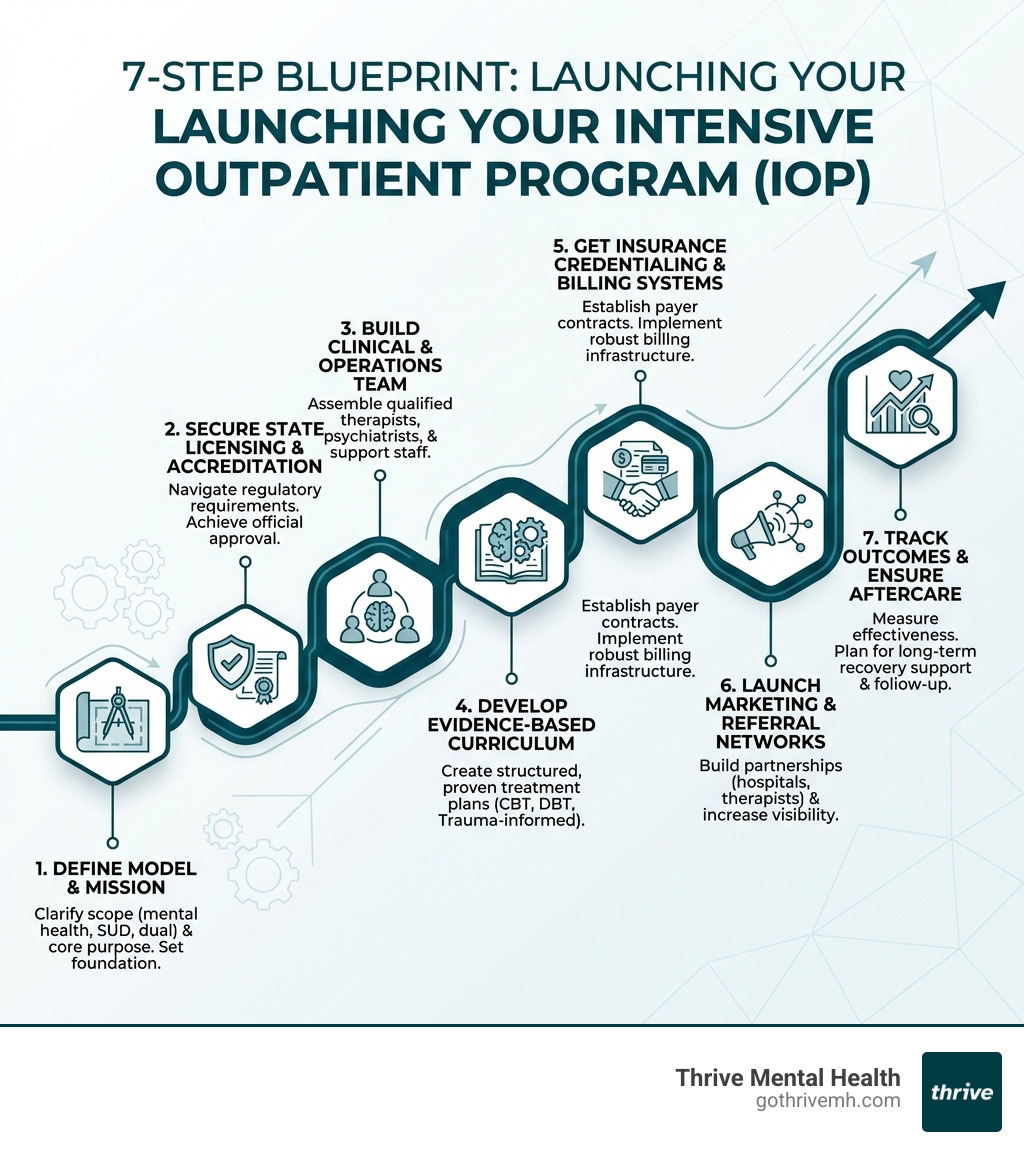
Here’s how to start an intensive outpatient program in 7 steps:
- Define your IOP model (substance use, mental health, or dual diagnosis)
- Secure state licensing (Florida DCF, California DHCS, etc.)
- Build your clinical team (therapists, psychiatrists, case managers)
- Develop an evidence-based curriculum (CBT, DBT, trauma-informed care)
- Get insurance credentialing (Cigna, Optum, Florida Blue, Aetna)
- Launch marketing and referral networks (hospitals, therapists, EAPs)
- Track outcomes and retention (measure what matters)
The need is dire. In Florida, where Thrive operates, waitlists for quality care stretch for months. ERs have nowhere to send patients in crisis. Weekly therapy is a drop in the bucket for those struggling, while inpatient care is often too costly and restrictive.
IOPs solve this problem. They deliver 9–15 hours of structured care per week—group therapy, individual counseling, and medication management—while patients live at home, work, and care for their families. Research shows IOPs can match inpatient outcomes at a fraction of the cost.
But most IOPs crash and burn within two years. Why? Rushed planning, flawed insurance strategies, no referrals, and crippling licensing delays.
This guide is your blueprint to avoid those traps.
I’m Nate Raine, CEO of Thrive Mental Health. We’ve successfully scaled evidence-based IOP and PHP programs in Florida by mastering virtual care, data-driven outcomes, and powerful partnerships. I know exactly how to start an intensive outpatient program that not only survives but delivers measurable, life-changing results.
How to start an intensive outpatient program basics:
The Foundation: Define Your IOP Model and Mission—Don’t Build Blind
Before you even think about licensing or staffing, you need a crystal-clear vision for your Intensive Outpatient Program (IOP). This isn’t just about launching a service; it’s about building a lifeline for individuals struggling with mental health challenges. Our experience at Thrive Mental Health has shown us that a well-defined model is the bedrock of success.
First, consider your program’s focus: Will it be solely for substance use disorders, mental health conditions, or will you offer dual diagnosis treatment, addressing both simultaneously? A substantial percentage of clients with substance use disorders also have co-occurring psychiatric conditions, making integrated dual diagnosis programs highly effective.
Next, identify your target demographic. Will you serve adolescents, young adults, adults, or offer specialized programs for families? Each population has unique needs that will shape your curriculum, staffing, and facility design. For example, adolescents may require slightly fewer treatment hours per week (around 6 hours) compared to adults (9-15 hours).
IOPs are a powerful solution because they offer a structured, therapeutic environment without requiring individuals to live at the facility. This flexibility allows patients to continue with their daily responsibilities—work, school, family care—while receiving intensive support. In fact, studies indicate that IOPs can be as effective as inpatient treatment programs for many people with alcohol or drug use disorders, yet they are generally less costly and disruptive. This makes them an ideal step-down from inpatient care or a step-up from standard outpatient therapy for those who need more support than weekly sessions can provide.
| Level of Care | Hours/Week (Adults) | Structure | Ideal Patient |
|---|---|---|---|
| Standard Outpatient | 1-3 hours | Weekly individual or group sessions | Stable, needs minimal support, maintenance care. |
| IOP | 9-15 hours | Structured group, individual, family therapy | Needs more than weekly therapy, stable enough to live at home, can manage daily responsibilities, transitioning from higher care, moderate symptoms. |
| PHP | 20+ hours | Daily structured therapy, medical supervision | Needs intensive daily support, step-down from inpatient, higher acuity than IOP but doesn’t require 24/7 medical supervision. |
| Inpatient/Residential | 24/7 care | Live-in facility, constant supervision | High-risk, needs detox, unstable, requires removal from triggers, severe symptoms, needs 24/7 medical and psychiatric care. |
Learn more about Thrive’s IOP services and how we tailor programs to meet diverse needs. IOPs can be as effective as inpatient care—without the cost or disruption.
What Makes an IOP Work?
An effective IOP is a carefully constructed ecosystem of support and healing. It’s not just about meeting a minimum number of hours; it’s about delivering comprehensive, impactful services. Based on consensus panels and best practices, every IOP should offer a robust suite of components:
- Group Therapy Sessions: This is often the cornerstone of an IOP, providing peer support, shared experiences, and a safe space to practice new coping skills. Group sessions might cover topics like mindfulness, anxiety management, anger management, and problem-solving.
- Individual Counseling: One-on-one sessions with a licensed therapist allow for personalized attention, deeper exploration of issues, and custom treatment plan adjustments.
- Family Therapy: Engaging families, employers, and significant others is critical. The therapeutic involvement of families throughout the recovery process is associated with improved treatment outcomes.
- Medication Management: For many clients, especially those with co-occurring mental health conditions, psychiatric evaluation and medication management by a qualified psychiatrist are essential. Patients should see a program psychiatrist at least once a month.
- Psychoeducation: Educating clients about their condition, recovery principles, and relapse prevention strategies empowers them to take an active role in their healing journey.
- Relapse Prevention Strategies: Equipping clients with tools and techniques to identify triggers and manage cravings is vital for long-term success.
- Case Management: This involves assessing client needs, coordinating services, making referrals, monitoring progress, and advocating for clients. It’s about connecting individuals to necessary resources like housing, vocational support, and medical care.
These essential services ensure a holistic approach, addressing not just symptoms but the underlying biopsychosocial factors contributing to a client’s challenges.
How Does an IOP Schedule Work?
The “intensive” in Intensive Outpatient Program refers to the significant time commitment compared to traditional outpatient therapy. For adults, this typically means 9 to 15 hours of structured treatment per week, usually divided into 3 to 5 sessions. Each session might last around three hours. Adolescents usually require at least 6 hours per week.
Most IOPs run for a duration of 8 to 12 weeks, though this can vary based on individual needs and progress. The beauty of this model is its flexibility. Many programs offer morning, afternoon, or evening options, allowing working adults, students, and those with family responsibilities to integrate treatment into their daily lives. This is a core benefit: individuals can practice new skills and strategies in their real-world environment, reinforcing their learning in real-time.
At Thrive Mental Health, we understand the importance of flexible scheduling, which is why we offer virtual IOP options that provide structured care while accommodating busy lives. Explore Thrive’s virtual IOP options to see how this model can work for your patients.
The 7-Step Blueprint: How to Start an Intensive Outpatient Program That Lasts
Your blueprint begins with a comprehensive business plan. Don’t skip the numbers—financial modeling will reveal your break-even point, projected revenue, and operational costs. This includes everything from facility rent and utilities to staff salaries, curriculum development, and marketing. Securing adequate funding, whether through grants, loans, or private investors, is crucial for initial setup and sustaining operations until insurance reimbursements stabilize.
Consider your facility: Will it be entirely in-person, virtual, or a hybrid model? Virtual IOPs have seen a boom, offering increased accessibility for patients across Florida. If you opt for virtual, ensure you select a HIPAA-compliant platform.
Program development should be evidence-based and outcome-driven. This means integrating proven therapeutic modalities and tracking client progress to continually refine your services. Finally, marketing and building robust referral networks are essential to reaching patients in need. Hospitals, individual therapists, employee assistance programs (EAPs), and community organizations are vital partners.
Step 1: Master State Licensing and Accreditation—No Shortcuts
Navigating the regulatory landscape is perhaps the most critical and often complex step in how to start an intensive outpatient program. Licensing requirements are specific and non-negotiable for legal operation, patient safety, and securing insurance contracts.
In Florida, any facility offering chemical dependency treatment, which includes substance abuse IOPs, must be licensed by the Florida Department of Children and Families (DCF) under their Substance Abuse and Mental Health (SAMH) Program Office.
Beyond state licensing, accreditation by national organizations like CARF (Commission on Accreditation of Rehabilitation Facilities) or The Joint Commission is highly recommended. Accreditation signifies a commitment to quality and best practices, which is often a prerequisite for securing contracts with major insurance providers. For example, CARF accreditation is a mark of excellence that tells payers and patients your program meets rigorous standards. Compliance with these standards not only builds patient trust but also smooths the path to insurance reimbursement.
Delays in the admission process significantly contribute to premature dropout from treatment. Having your licensing and accreditation in order from the start ensures a straightforward and welcoming entry for clients. We also encourage partners to refer high-acuity patients safely, ensuring they land in programs that are fully compliant and equipped to meet their needs.
Step 2: Build a Rockstar Clinical and Operations Team
The heart of any successful IOP is its people. Even the best curriculum won’t yield results without a dedicated, qualified, and compassionate team. When considering how to start an intensive outpatient program, staffing is paramount.
Your clinical team should comprise:
- Licensed Therapists: This includes Licensed Clinical Social Workers (LCSW), Licensed Marriage and Family Therapists (LMFT), and Licensed Professional Counselors (LPC). They are the backbone of individual and group therapy, delivering evidence-based interventions.
- Psychiatrist or Medical Director: Essential for medication management, psychiatric evaluations, and overseeing the clinical integrity of the program. Patients should see the program psychiatrist at least once a month for medication management.
- Case Managers: These professionals are crucial for coordinating care, connecting clients to community resources, and assisting with practical needs like housing, employment, and transportation. They ensure a holistic approach to recovery.
Beyond clinical roles, you’ll need competent administrative staff to manage scheduling, billing, admissions, and facility operations.
Crucially, focus on fostering a strong therapeutic alliance within your team and between staff and clients. Research repeatedly finds this to be particularly important in influencing positive outcomes. A strong alliance means trust, empathy, and a shared understanding of treatment goals. When clients feel understood and supported, retention rates improve, and outcomes are significantly better.
Step 3: Develop an Evidence-Based Treatment Curriculum—No Guesswork
The effectiveness of your IOP hinges on the quality and scientific backing of its treatment curriculum. This isn’t a place for guesswork; it’s where evidence-based practices (EBPs) shine. When planning how to start an intensive outpatient program, ensure your curriculum integrates modalities proven to work.
Key therapeutic modalities to incorporate include:
- Cognitive Behavioral Therapy (CBT): Helps clients identify and change negative thought patterns and behaviors.
- Dialectical Behavior Therapy (DBT): Focuses on emotional regulation, distress tolerance, interpersonal effectiveness, and mindfulness.
- Motivational Interviewing (MI): A client-centered approach that helps individuals resolve ambivalence about change and build intrinsic motivation.
- Trauma-Informed Care: Recognizes the widespread impact of trauma and integrates knowledge about trauma into policies, procedures, and practices.
- Relapse Prevention: Teaches clients skills to anticipate, cope with, and avoid relapse.
- 12-Step Facilitation: Encourages participation in mutual-help groups like Alcoholics Anonymous (AA) or Narcotics Anonymous (NA), which are associated with better outcomes.
Your curriculum must also emphasize individualized treatment plans. Each client presents with a unique set of needs, strengths, and challenges. Programs that match individual treatment needs to specific services show improved outcomes. This means conducting thorough assessments and tailoring interventions accordingly.
Finally, embed outcome tracking into your program design. Regularly monitor client progress using standardized assessments. This data is invaluable for refining your curriculum, demonstrating efficacy to payers, and most importantly, ensuring your clients are receiving the best possible care. At Thrive, we’re dedicated to measurable results. You can see Thrive’s treatment approaches to understand how we integrate these principles.
Financial Survival: Insurance, Billing, and Revenue—Don’t Leave Money on the Table
Understanding the financial intricacies is paramount for the long-term viability of your IOP. This is often where many well-intentioned programs falter. Mastering insurance reimbursement is a complex but essential step in how to start an intensive outpatient program that can sustain its mission.
- Insurance Credentialing: This is the process of getting your program and clinicians approved to bill major insurance carriers like Cigna, Optum, Florida Blue, Aetna, and others. This can be a lengthy process (months, even a year), so start early.
- Pre-authorization and Medical Necessity: Almost all insurers require a pre-authorization or continued stay authorization for IOP services. Your clinical documentation must clearly demonstrate “medical necessity”—meaning the patient’s condition is severe enough to require IOP but not so severe that inpatient care is needed, and they are medically stable for outpatient treatment.
- Billing Codes: Familiarize yourself with common IOP billing codes, such as H0015 for group therapy sessions and S9480 for IOP services. Be aware that some payers, particularly Medicaid, may not accept “S” codes. Coding errors are a common cause of claim denials.
- Handling Denials: Denials are inevitable. Develop a robust system for tracking and appealing them. This includes strong clinical documentation, requesting peer-to-peer reviews with the insurance company’s medical director, and understanding the appeal process.
- Self-Pay Rates: For uninsured clients or those whose plans don’t cover IOP, establish clear self-pay rates and payment plans. This can help diversify your revenue streams and ensure accessibility.
We understand these complexities. That’s why we invite you to check IOP insurance coverage at Thrive to see how we streamline this process for our clients.
How to Beat Common Insurance Denials for IOPs
Insurance denials can be frustrating, but they don’t have to be a death knell for your program. With the right strategies, you can significantly improve your reimbursement rates. Here are the most common reasons for denial and how to combat them:
- “Service Not Medically Necessary”: This is a frequent denial. To fight it, submit a comprehensive appeal with strong clinical documentation. Include detailed progress notes, risk assessments, and letters from the IOP clinician or medical director explaining why the patient required IOP (e.g., risk of relapse, deterioration, or inability to function at a lower level of care).
- “Level of Care Not Covered”: Some plans might exclude IOP or claim it’s experimental. Verify the plan’s benefits before admission. If IOP is genuinely not a covered benefit, you might need to explore self-pay options or, if applicable, leverage Mental Health Parity laws.
- Coding Errors: Incorrect billing codes, missing authorization numbers, or inaccurate units billed are common culprits. Correct the errors and resubmit the claim promptly. Ensure your billing staff are well-trained and stay updated on payer-specific guidelines.
- Max Days Exceeded: Many insurers consider IOP short-term and may only approve a certain number of days (e.g., 20 program days per calendar year). If a patient needs more, appeal with documentation showing continued progress and the necessity of ongoing treatment, or propose stepping down to a less intensive level of care.
- Appeal with Strong Documentation: This is your best defense. Detailed, objective, and timely clinical notes are your most powerful tool.
- Patient Advocacy Wins: Encourage patients (or their families) to contact their insurance company to advocate for themselves. Their testimony, combined with your clinical documentation, can often tip the scales.
Long-Term Success: Client Engagement and Aftercare—Retention Is Everything
Building an IOP is one thing; ensuring its long-term success and impact is another. Client retention and effective aftercare are crucial for positive outcomes and the sustained growth of your program. When we consider how to start an intensive outpatient program that truly changes lives, we prioritize keeping clients engaged and supported throughout their recovery journey.
- Client Retention Strategies: Make retention a priority from day one. This includes easing entry into the program, building on existing client motivation, and fostering a strong therapeutic alliance. Delays in the admission process contribute significantly to premature dropout. Consistent communication, a welcoming environment, and actively addressing individual needs are key.
- Build a Real Community: Group therapy is a core component for a reason. It creates a sense of belonging, reduces isolation, and provides a powerful source of peer support. This community can extend beyond therapy sessions, fostering connections that last long after the program ends.
- Family Involvement: The involvement of families, as defined by the client, is associated with improved treatment outcomes. Offer family therapy, psychoeducation, and support groups to help families understand the recovery process and provide a healthier home environment.
- Aftercare Planning: Recovery is a lifelong journey, not a destination. A robust aftercare plan is essential for sustained success. This includes developing a clear step-down plan to less intensive levels of care, connecting clients to alumni networks, and providing resources for ongoing support like virtual check-ins or booster sessions. At Thrive, we believe in comprehensive support, which is why we offer wraparound care to ensure continuity.
Mutual-help groups are an invaluable component of aftercare and ongoing support. They provide a community-based, free resource for individuals to maintain sobriety and mental wellness. Your IOP should actively facilitate client integration into these groups.
- Alcoholics Anonymous (AA)
- Narcotics Anonymous (NA)
- Al-Anon/Alateen (for family members)
- Nar-Anon (for family members of those with addiction)
- Rational Recovery
- SMART Recovery
- Women for Sobriety
FAQs: How to Start an Intensive Outpatient Program—What People Ask Most
How much does it cost to start an IOP?
Startup costs for an Intensive Outpatient Program can range significantly, typically from $50,000 to $250,000 or more. This budget needs to cover essential expenses like state licensing fees, facility rent (if in-person), payroll for qualified staff, electronic health record (EHR) systems, curriculum development, and initial marketing efforts.
How long does IOP licensing take?
The licensing timeline for an IOP varies, but in Florida, you can generally expect the process from application submission to final approval to take anywhere from 6 to 12 months. It’s crucial to start this process early and be prepared for potential delays.
Can I launch a virtual-only IOP?
Yes, virtual IOPs are a rapidly growing and effective model, significantly expanding access to care across Florida. To launch a virtual-only IOP, you must ensure your program and clinicians are licensed in Florida. Additionally, you must use a secure, HIPAA-compliant telehealth platform to protect patient privacy.
Which insurances cover IOP?
Most major commercial insurance plans, such as Cigna, Optum, Florida Blue, and Aetna, typically cover Intensive Outpatient Programs, provided the treatment is deemed medically necessary. However, coverage can vary widely based on the specific plan and individual benefits. Always verify a patient’s insurance benefits and obtain pre-authorization before starting treatment.
What’s the difference between IOP and PHP?
An Intensive Outpatient Program (IOP) typically involves 9–15 hours of structured therapy per week. A Partial Hospitalization Program (PHP) is a more intensive level of care, usually requiring 20 or more hours of treatment per week. PHPs are often considered a step-down from inpatient hospitalization but more intensive than an IOP.
Summary: How to Start an Intensive Outpatient Program—Your Fastest Path to Impact
Learning how to start an intensive outpatient program is more than a business venture; it’s an opportunity to create profound, lasting change in your community. By following a strategic blueprint that prioritizes meticulous planning, stringent licensing, a top-tier clinical team, evidence-based practices, and robust financial management, you can build a program that thrives. The demand for accessible, effective mental health care is undeniable, particularly in Florida. With the right approach, your IOP can bridge critical gaps, deliver measurable results, and become a vital lifeline for countless individuals on their path to recovery.
Learn more about Thrive’s IOP and PHP programs | Explore virtual therapy options | Verify your insurance in 2 minutes
Ready for support? Thrive offers virtual and hybrid IOP/PHP programs with evening options. Verify your insurance in 2 minutes (no obligation) -> Start benefits check or call 561-203-6085. If you’re in crisis, call/text 988.
If you’re in crisis, call/text 988 right now. You are not alone.