


Why You’re Here: The Gap Between “Not Enough” and “Too Much”
What happens in a partial hospitalization program is something thousands of people search every month, because they’re stuck in limbo. Weekly therapy isn’t making a dent. But checking into a hospital feels like too much, too fast, or simply not an option.
Here’s what you need to know right now:
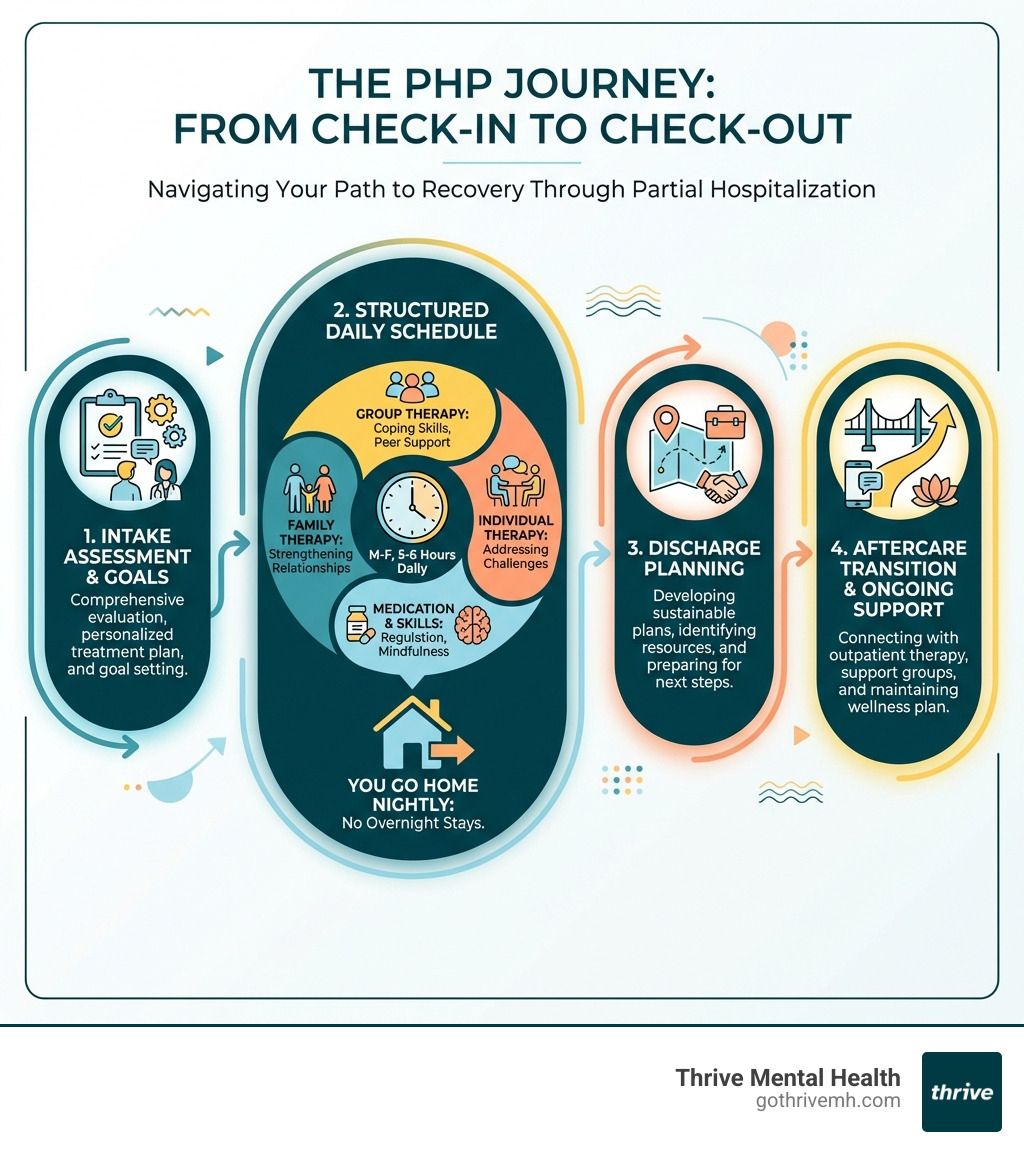
What Happens in a PHP:
- 5-6 hours of structured treatment per day, Monday through Friday
- Group therapy focused on building coping skills and peer support
- Individual therapy sessions to address your specific challenges
- Medication management with a psychiatrist or nurse practitioner
- Family therapy to repair and strengthen relationships
- Skills training in areas like emotion regulation, distress tolerance, and mindfulness
- You go home every night, no overnight stays required
- Average program length: 3-6 weeks, depending on your progress
A PHP is the middle ground: more intensive than outpatient therapy, less restrictive than inpatient care. It’s designed for people experiencing acute mental health symptoms, depression, anxiety, trauma, or substance use, who need serious help but have a stable place to sleep at night.
I’m Nate Raine, CEO of Thrive Mental Health. Over the past decade, I’ve worked at the intersection of mental health, technology, and data-driven care to build programs that actually help people recover. Understanding what happens in a partial hospitalization program has been central to scaling access to high-quality treatment across Florida. This guide will walk you through the entire PHP experience, from your first call to your last day, so you can make an informed decision about your care.
Simple what happens in a partial hospitalization program word guide:
- partial hospitalization program
- how long is a partial hospitalization program
- are partial hospitalization programs effective
Is a PHP Your Fastest Path to Stability? [Who It’s For]
A PHP isn’t for everyone, but for the right person, it’s a game-changer. It’s designed for those who need intensive support to manage acute symptoms of depression, anxiety, trauma, or substance use but have a stable home environment to return to each night. It’s a powerful step-down from inpatient care or a way to prevent hospitalization altogether.
Partial Hospitalization Programs (PHPs) are uniquely positioned as a midpoint along the treatment intensity continuum between inpatient and outpatient services. This means we offer a level of care that is more structured and intensive than traditional weekly therapy, but less restrictive than 24/7 inpatient hospitalization.
Who is a good candidate for a PHP?
We find PHPs are ideal for individuals who:
- Are experiencing acute symptoms: This could include severe depression, anxiety, bipolar disorder, trauma-related symptoms, or eating disorders that significantly impact daily life.
- Need a step-down from inpatient care: If you’ve recently completed an inpatient or residential program, a PHP provides a crucial bridge back to daily life, allowing for a gradual decrease in supervision while maintaining intensive therapy. This transition helps reduce the risk of hospital readmission, as PHPs have been shown to provide superior or equivalent recovery-based care with greater patient satisfaction compared to inpatient treatment.
- Are looking to prevent hospitalization: For those whose symptoms are severe enough to warrant inpatient care but who are not an immediate danger to themselves or others, a PHP can serve as an effective alternative, providing crisis stabilization without requiring a full hospital stay.
- Have a stable home environment: A key requirement for PHP success is having a safe and supportive place to return to each evening, where you can practice the skills learned during the day.
- Are motivated for change: Active engagement and a willingness to participate in intensive therapy are essential for benefiting from a PHP.
While PHPs are incredibly effective for many, they are not suitable for individuals who are actively suicidal, homicidal, or experiencing gross psychosis or acute mania that requires 24-hour supervision. For those needing a slightly less intensive, but still highly structured, program, an Intensive Outpatient Program (IOP) might be a better fit. You can learn more about the differences here: PHP vs. IOP: What’s the Difference?
| Factor | PHP (Partial Hospitalization Program) | Inpatient Care | IOP (Intensive Outpatient Program) |
|---|---|---|---|
| Time Commitment | 20-30+ hours/week | 24/7 supervision | 9-15 hours/week |
| Living Situation | At home (commute to facility) | At facility (24/7 residence) | At home (commute to facility) |
| Best For | Acute symptom stabilization | Crisis & immediate safety risk | Integrating skills into daily life |
| Independence | Moderate | Low | High |
| Medical Oversight | Regular psychiatric/NP visits | Constant medical & psychiatric supervision | Less frequent medical oversight |
| Cost | More cost-effective than inpatient | Most expensive | More cost-effective than PHP |
Getting Started: The PHP Admission and Insurance Approval Process
The first step is a confidential assessment to confirm a PHP is the right level of care. A clinician will discuss your symptoms, challenges, and goals. From there, the focus shifts to making treatment accessible. Most major insurance plans, including Cigna, Optum, and Florida Blue, cover PHP. In Florida, our team helps steer the authorization process to ensure your focus stays on recovery, not paperwork.

When you reach out to us, here’s what happens in a partial hospitalization program’s admission process:
- Initial Assessment: We’ll conduct a thorough clinical evaluation to understand your current mental health status, history, and treatment needs. This helps us determine if a PHP is the most appropriate and beneficial level of care for you. Medical necessity is a key factor here; we’re looking for individuals who require structured, intensive care but can safely return home each night.
- Treatment Plan Development: If a PHP is a good fit, we’ll work with you to create an individualized treatment plan. This plan will outline your specific goals, the therapies you’ll engage in, and how we’ll measure your progress.
- Insurance Verification & Authorization: Navigating insurance can feel like a maze, but we’re here to help. Our team will verify your benefits and handle the pre-authorization process with your insurance provider. We work with many major insurance companies, including Cigna, Optum, Aetna, Anthem, Blue Cross Blue Shield, and, specifically in Florida, we’re well-versed in local plans like Florida Blue. We aim to make this as seamless as possible so you can focus on healing, not administrative burdens. Many insurance plans recognize the value of PHPs, often covering more days in a PHP compared to inpatient care, making it a cost-effective alternative.
Our goal is to make the process of accessing care as smooth and stress-free as possible. For a deeper dive into making treatment accessible, explore our guide: Mental Health Partial Hospitalization Programs Made Simple.
What Happens in a Partial Hospitalization Program? [A Day in the Life]
Forget sitting in a sterile hospital room. A PHP is an active, engaging experience. Your day is highly structured to build routine and momentum. Programs typically run 5-6 hours a day, 5 days a week, for an average of 3-6 weeks. While schedules vary, you can expect a blend of group sessions, individual therapy, and skills-based training. Thrive Mental Health offers both in-person and virtual PHP programs to fit your life, with services available throughout Florida.
A typical day in our PHP is carefully organized to provide comprehensive care and foster a structured environment conducive to recovery. Patients typically spend several hours a day in treatment, engaging in a rigorous schedule designed to equip them with lasting coping strategies.
Here’s a glimpse into what happens in a partial hospitalization program on a typical day:
- Morning Check-in: The day often begins with a group session focused on checking in, setting intentions, and reviewing progress or challenges from the previous day or night. This helps foster a sense of community and accountability.
- Group Therapy Sessions (Core Component): This is where much of the magic happens. We’ll engage in multiple group therapy sessions throughout the day, each focusing on different therapeutic modalities and topics. These sessions facilitate peer support, allowing you to share experiences and learn from others in a safe, confidential environment.
- Individual Therapy Session: Each patient has dedicated one-on-one time with their primary therapist. These sessions focus on personal goals, developing specific coping strategies, and addressing individual challenges in a private setting.
- Skills Groups: These psychoeducational groups are designed to teach concrete, actionable skills. You’ll learn techniques for emotion regulation, distress tolerance, mindfulness, and interpersonal effectiveness, essential tools for managing symptoms and navigating daily life.
- Lunch/Breaks: We include scheduled breaks, including a lunch period, to allow for rest, reflection, and informal social interaction, ensuring you stay energized and engaged throughout the day.
- Medication Management: For those who need it, medication management is an integral part of the program. You’ll have regular access to a psychiatrist or nurse practitioner for assessments, adjustments, and education regarding your medication.
- End-of-Day Wrap-up: The day typically concludes with a final group session to process the day’s learnings, address any emerging concerns, and set intentions for the evening and the next day.

While the exact duration can vary based on individual needs, our general PHPs often last 10-15 days, while specialized programs, such as those for eating disorders, can extend to 4-6 weeks or more. This duration allows for significant progress in symptom stabilization and skill development.
A Typical Week in a PHP
Your week is a comprehensive dive into healing. Beyond daily groups, you’ll meet with a psychiatrist or nurse practitioner for medication management and have dedicated family therapy sessions to repair relationships. The goal is to provide wraparound support that addresses your mental health from all angles, giving you the tools and stability to practice new coping skills over the weekend.
Our PHP runs typically five days a week, ensuring consistent and intensive support. Throughout the week, you can expect:
- Consistent Therapeutic Schedule: Daily engagement in the structured program outlined above.
- Medication Management: Regular visits with a psychiatrist or nurse practitioner are scheduled at least once weekly, and sometimes more frequently depending on your needs. This ensures your pharmacological support is optimized for your recovery.
- Family Therapy: We believe in a holistic approach, which often includes involving loved ones in the recovery journey. Family therapy sessions are a core component, helping to improve communication, address relational dynamics, and build a supportive home environment.
- Psychoeducational Groups: These groups provide valuable education on mental health conditions, coping mechanisms, and strategies for maintaining well-being.
- Experiential Therapies: Depending on the program, you might engage in various alternative or complementary therapies such as art therapy, mindfulness practices, or movement-based activities to explore emotions and build coping skills in creative ways.
- Weekend Independence: A crucial aspect of our PHP is that you return home each evening and for the weekends. This allows you to integrate the skills you’re learning into your real-world environment, practice independence, and maintain important ties to your community and family. We encourage you to use your weekends to apply new coping strategies and engage in healthy activities, preparing you for a successful transition post-PHP.
What happens in a partial hospitalization program for substance use?
For those battling substance use, a PHP adds a critical layer of focus. The structured environment helps manage cravings and triggers while you’re not in session. Therapy zeroes in on relapse prevention, building sober coping mechanisms, and addressing the underlying issues driving the addiction. It’s an intensive, real-world approach to building a life in recovery.
When you enroll in a PHP for substance use disorder (SUD), the program is specifically custom to address the unique challenges of addiction recovery. Here’s what happens in a partial hospitalization program when SUD is the primary focus:
- Relapse Prevention Strategies: A significant portion of therapy is dedicated to identifying triggers, developing healthy coping mechanisms, and building robust relapse prevention plans. This includes learning to manage cravings, steer high-risk situations, and develop a strong support system.
- Psychoeducation on Addiction: We provide in-depth education on the nature of addiction, its impact on the brain and body, and the stages of recovery. Understanding the disease is a powerful step toward overcoming it.
- Addressing Underlying Issues: Addiction often co-occurs with other mental health conditions like depression, anxiety, or trauma. Our PHP integrates dual diagnosis treatment, addressing these co-occurring disorders simultaneously to promote comprehensive healing.
- Skills for Sober Living: You’ll learn practical skills for building a life in recovery, including stress management, healthy communication, emotional regulation, and developing constructive hobbies and routines.
- Peer Support and Group Dynamics: Group therapy is particularly impactful in SUD treatment, providing a sense of community, reducing isolation, and allowing individuals to share their experiences and receive encouragement from peers facing similar struggles.
- Medication-Assisted Treatment (MAT) Integration: For some, MAT, combined with therapy, can be highly effective in managing withdrawal symptoms and reducing cravings. Our programs can integrate MAT under medical supervision when appropriate.
- Family Involvement: Addiction impacts the entire family system. Family therapy helps to heal relationships, educates loved ones on addiction, and builds a supportive home environment crucial for long-term recovery.
PHPs for substance use are designed to provide the intensive support needed to establish sobriety and build a foundation for lasting recovery, all while allowing you to remain connected to your home and community. For more information, check out our resource on PHP Rehab. We also have a detailed Review of PHPs for SUD available.

Your Toolkit for Recovery: What Therapies Are Used in a PHP?
A PHP is led by a multidisciplinary team of therapists, psychiatrists, and counselors. Treatment is grounded in evidence-based modalities proven to get results. While group therapy is the cornerstone, offering peer support and a safe space to practice new behaviors, you’ll also have individual sessions to work on personal goals and family therapy to heal relational dynamics.
Our multidisciplinary team includes licensed therapists, psychiatrists, nurse practitioners, and other mental health professionals, all working collaboratively under the direction of a physician. Together, we provide a holistic and person-centered treatment experience. Here’s a closer look at the therapeutic modalities you’ll encounter and what happens in a partial hospitalization program regarding therapy:
- Individual Therapy: These one-on-one sessions are custom to your specific needs. You’ll work with your primary therapist to explore personal challenges, process past experiences, develop individualized coping strategies, and track your progress toward your treatment goals. This focused attention ensures that your unique journey is supported.
- Group Therapy: The cornerstone of most PHPs, group therapy offers a powerful space for healing and growth. Here, you’ll connect with peers who are facing similar struggles, reducing feelings of isolation and fostering a sense of community. Group sessions provide opportunities to:
- Practice new communication skills in a safe environment.
- Receive support and constructive feedback from others.
- Learn from diverse perspectives and experiences.
- Build interpersonal effectiveness and social skills.
Group therapy has been shown to be as effective as individual therapy for many mental health conditions, including depression, anxiety, and substance use disorders.
- Family Therapy: Mental health challenges often impact the entire family system. Family therapy sessions involve your loved ones in the recovery process, helping to:
- Improve communication and understanding.
- Address family dynamics that may contribute to distress.
- Build a stronger, more supportive home environment.
- Educate family members on how to best support your recovery.
- Psychoeducation: These sessions provide valuable information about mental health conditions, symptom management, medication, and healthy lifestyle choices. Knowledge is power, and understanding your condition is a vital step toward long-term recovery.
- Activity Therapies: Depending on the program, you might engage in various therapeutic activities such as art therapy, music therapy, or mindfulness-based practices. These creative outlets can help you express emotions, reduce stress, and develop new coping mechanisms.
For a comprehensive overview of the services we offer, visit our PHP Mental Health Services page.
What happens in a partial hospitalization program using DBT and CBT?
Most PHPs use a combination of Cognitive Behavioral Therapy (CBT) and Dialectical Behavior Therapy (DBT). With CBT, you’ll learn to identify and challenge negative thought patterns. With DBT, you’ll build concrete skills in four key areas:
- Mindfulness: Staying present and grounded.
- Distress Tolerance: Getting through crises without making things worse.
- Emotion Regulation: Understanding and managing intense feelings.
- Interpersonal Effectiveness: Communicating your needs and setting boundaries.
These evidence-based therapies are highly effective in treating a wide range of mental health conditions. Here’s how they are integrated into what happens in a partial hospitalization program:
- Cognitive Behavioral Therapy (CBT): This approach focuses on the connection between your thoughts, feelings, and behaviors. Through CBT, you’ll learn to identify and challenge negative or distorted thought patterns that contribute to your distress. By reframing these thoughts, you can change your emotional responses and behaviors. We use CBT to help you develop healthier cognitive habits and problem-solving skills.
- Dialectical Behavior Therapy (DBT): Originally developed for Borderline Personality Disorder, DBT is now widely used for various conditions involving intense emotional dysregulation. It combines CBT techniques with mindfulness strategies and emphasizes acceptance and change. In our PHP, you’ll learn and practice DBT skills across four core modules:
- Mindfulness: Learning to be fully present and aware of the moment without judgment. This helps reduce rumination and worry about the past or future.
- Distress Tolerance: Developing strategies to cope with intense, painful emotions and difficult situations without resorting to maladaptive behaviors. This is crucial for navigating crises.
- Emotion Regulation: Understanding, identifying, and managing your emotions more effectively. You’ll learn to reduce emotional vulnerability and increase positive emotional experiences.
- Interpersonal Effectiveness: Improving your communication skills, learning how to ask for what you need, say no effectively, and maintain self-respect in relationships.
By integrating CBT and DBT, our PHPs equip you with a robust toolkit to manage your symptoms, build resilience, and thrive in your daily life.
Beyond Survival: The Goals of a PHP and Your Path to Thriving
The ultimate goal of a PHP is to move you from just surviving to truly thriving. It’s about stabilizing the immediate crisis, reducing your symptoms, and equipping you with the coping skills to handle life’s challenges. By the end of the program, you’ll not only feel better but also have the confidence and tools to maintain your progress long-term. The final phase involves creating a detailed aftercare plan to ensure a smooth transition back to your daily life.
Our PHPs are designed with clear objectives to guide your recovery journey. Here are the primary goals of what happens in a partial hospitalization program:
- Achieve crisis stabilization and safety: For many, the PHP begins during a period of acute distress. Our immediate goal is to stabilize your symptoms, ensure your safety, and provide a secure environment where healing can begin.
- Reduce the severity of mental health symptoms: Through intensive therapy and medication management, we work to significantly decrease the intensity and frequency of your symptoms, whether they be related to depression, anxiety, trauma, or substance use.
- Develop and practice healthy coping skills: A core component of the program is teaching you practical, evidence-based coping mechanisms. You’ll learn how to manage stress, regulate emotions, steer difficult interpersonal situations, and prevent relapse.
- Improve daily functioning at home, work, or school: The skills learned in a PHP are designed to be applied to your real life. We aim to help you regain your ability to manage daily responsibilities, engage in healthy relationships, and participate meaningfully in your community.
- Prepare for a successful transition to a lower level of care (like IOP): As you progress, we’ll help you prepare for the next step in your recovery journey. This often involves transitioning to an Intensive Outpatient Program (IOP) or traditional outpatient therapy, ensuring a smooth continuation of care.
We’re proud that PHPs have been shown to provide superior or equivalent recovery-based care with greater patient satisfaction compared to inpatient treatment. Patients and families reported more satisfaction with PHP care one year after discharge compared to inpatient discharge, highlighting the lasting impact of this model. This rigorous schedule fosters a structured environment conducive to recovery, empowering you to build a meaningful life.
Upon completion of your PHP, we focus heavily on aftercare planning. This involves creating a comprehensive roadmap for your continued well-being, which may include:
- Connecting you with individual therapists and psychiatrists for ongoing outpatient care.
- Recommending support groups or community resources.
- Developing a personalized relapse prevention plan.
This meticulous planning ensures that the progress you make in our PHP is sustained long after you leave our direct care. For more insights into the effectiveness of these programs, explore Beyond the Hype: How Effective Are Partial Hospitalization Programs?
Frequently Asked Questions about the PHP Experience
How long does a partial hospitalization program last?
Most PHPs last between 3 to 6 weeks, depending on your individual needs and progress. Our clinical team will work closely with you and your insurance provider to determine the appropriate length of stay, ensuring you receive the optimal amount of support. Some general PHPs can be shorter, around 10-15 days, while specialized programs like those for eating disorders may last 4-6 weeks or even longer.
Can I still work or go to school during a PHP?
It can be challenging. PHPs require a significant time commitment (typically 5-6 hours per day, Monday-Friday). Many patients find it beneficial to take a short-term leave from work or school to fully focus on their recovery during this intensive period. However, we understand that this isn’t always possible. Thrive Mental Health offers virtual PHP programs with flexible scheduling, including evening options, which may be a viable solution for those who need to maintain some daytime commitments.
Is a virtual PHP as effective as an in-person one?
Yes, absolutely. Research shows that structured virtual programs deliver comparable outcomes to in-person care. Virtual PHPs offer the same evidence-based therapies, intensive support, and experienced clinical teams as in-person programs. By eliminating barriers like commute time and travel costs, virtual options make high-quality mental health treatment more accessible, especially for individuals in Florida who might not have an in-person facility nearby. This means you can get the intensive care you need from the comfort and privacy of your own home.
Your Path to Healing Starts Here
Navigating a mental health crisis is tough, but you don’t have to do it alone. A Partial Hospitalization Program offers the structure, support, and skills you need to get back on your feet while staying connected to your life. It’s an investment in your long-term well-being, providing a clear path from crisis to stability. We believe in providing accessible, effective care that helps you not just survive, but truly thrive.
Ready for support? Thrive offers virtual IOP programs in Florida with evening options. Verify your insurance in 2 minutes (no obligation) → Start benefits check or call 561-203-6085. If you’re in crisis, call/text 988.

This article is for informational purposes only and is not a substitute for individualized clinical advice or insurance verification.