
What is Mindfulness-Based Art Therapy Examples and Benefits Explained
Introduction: Find Calm When Words Aren’t Enough
Mindfulness based art therapy (MBAT) is a therapeutic approach that combines mindfulness practices—like meditation and present-moment awareness—with creative art-making to help you process emotions, reduce stress, and improve mental health without relying solely on words.
Quick Answer: What You Need to Know About Mindfulness Based Art Therapy
- What it is: A structured therapy that blends mindfulness techniques (body scans, breathwork, meditation) with guided art activities like drawing, painting, or clay work.
- How it helps: Reduces anxiety, depression, and stress by calming your nervous system and helping you express feelings that are hard to verbalize.
- Who it’s for: Anyone struggling with anxiety, PTSD, chronic stress, or burnout—no artistic skill required.
- Where to access it: Clinical settings (IOP/PHP programs), schools, virtual therapy, or self-guided at home.
- The science: Research shows MBAT can lower cortisol levels, increase blood flow to emotion-regulating brain regions, and improve quality of life.
If you’ve ever felt like traditional talk therapy left you struggling to find the right words—or if you’re dealing with anxiety, trauma, or burnout that feels stuck in your body—mindfulness based art therapy offers a different path forward. It’s not about creating “good” art. It’s about using simple creative processes to ground yourself in the present moment, release what’s weighing you down, and reconnect with your inner calm.
As Nate Raine, CEO of Thrive Mental Health, I’ve seen how integrating evidence-based modalities like mindfulness based art therapy into our virtual and hybrid IOP/PHP programs helps clients break through emotional barriers faster than traditional methods alone. Our approach centers on accessible, tech-enabled care that meets you where you are, with specialized programs available throughout Florida.
Mindfulness based art therapy terms you need:
- art therapy for relaxation
- art therapy for self awareness
- therapeutic art activities
- virtual IOP program
- verify your insurance in 2 minutes
What Is Mindfulness-Based Art Therapy (MBAT) and How Is It Different?
You’ve likely heard of mindfulness and art therapy as separate concepts, but when you bring them together, something truly transformative happens. Mindfulness based art therapy (MBAT) is a therapeutic treatment that integrates mindfulness practices with the creative process of making art. It invites you to engage with art materials and your inner world in a present-moment, non-judgmental way.
At its core, MBAT is about exploring yourself through creativity while cultivating a gentle awareness of your emotions, physical sensations, and thoughts. It’s not about producing a masterpiece; it’s about the journey of creation itself. This focus on “process over product” is a foundational distinction.
The Core of MBAT: Fusing Presence with Process
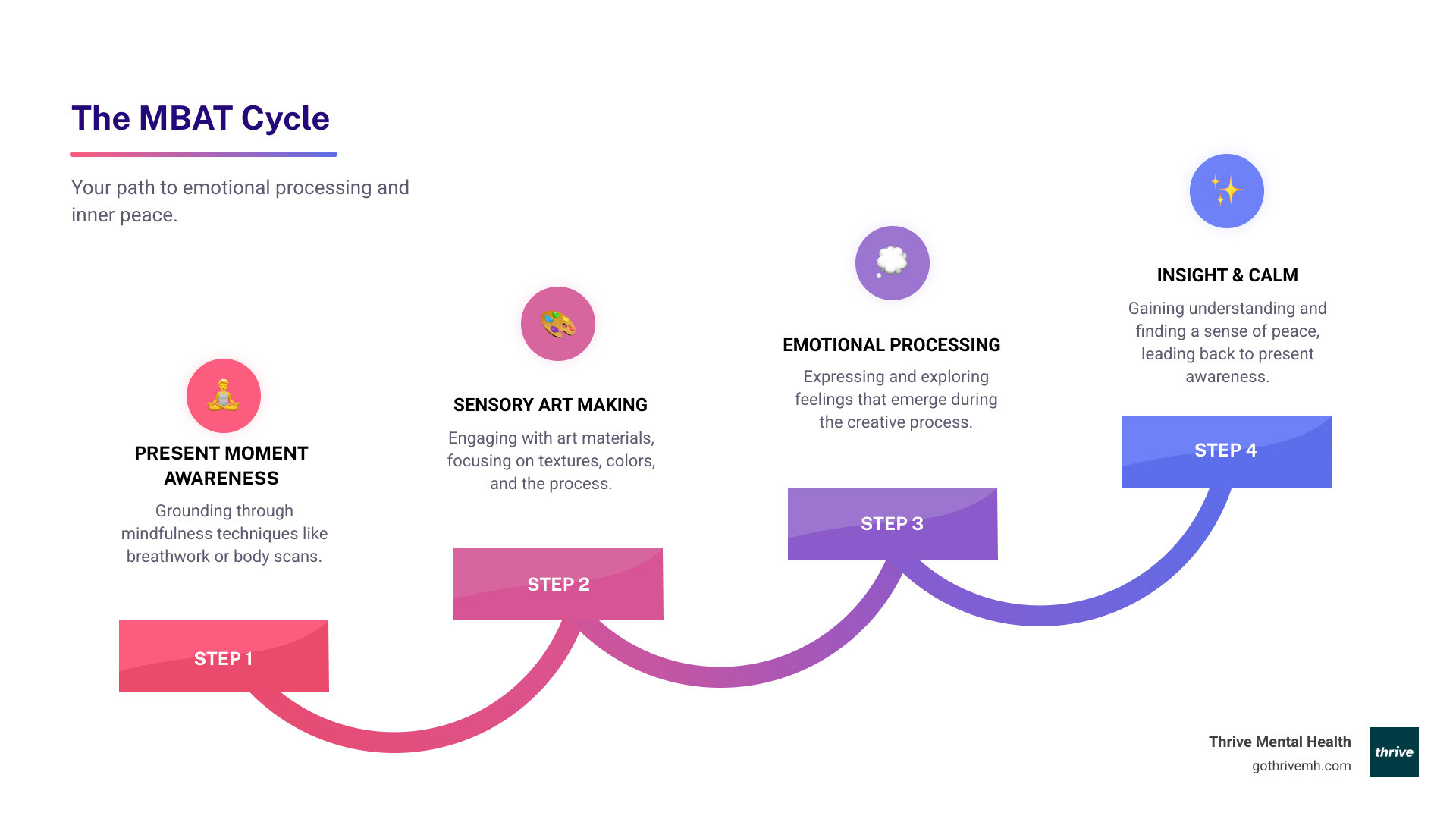
The essence of MBAT lies in its dual approach: the deliberate practice of mindfulness combined with the expressive power of art. We learn to bring our full attention to the artistic process, noticing the textures, colors, and movements involved without judgment. This deep sensory engagement helps us cultivate what we call “present-moment focus.”
This mindful approach fosters a creative flow state, allowing for genuine emotional release and a stronger body-mind connection. We’re not just drawing; we’re mindfully experiencing the sensation of the crayon on paper, the fluidity of paint, or the pliability of clay. This sensory experience is a direct, embodied way to experience mindful qualities and the here-and-now. As we engage our senses—touch, movement, and play—we naturally support presence and awareness, making MBAT an accessible alternative to traditional meditation for those with wandering thoughts.
MBAT vs. Adult Coloring Books: What’s the Real Difference?
It’s a common question: “Isn’t MBAT just like coloring books for adults?” While coloring can certainly be relaxing, MBAT offers a much deeper, more intentional, and therapeutically guided experience.
Think of it this way: coloring books can provide a temporary distraction and some relaxation. They can calm the nervous system and offer a pleasant, low-stakes activity. However, mindfulness based art therapy goes beyond simple distraction. It’s a structured therapeutic intervention, often guided by a trained professional, that helps you:
- Process difficult emotions: MBAT provides a safe container to explore and express feelings that might be too complex or overwhelming to verbalize.
- Gain self-awareness: Through guided reflection on your artwork and the creative process, you gain deeper insights into your thoughts, emotions, and behaviors.
- Develop coping skills: You learn to identify and manage emotions, practice self-compassion, and build resilience.
- Experience psychological safety: In a therapeutic setting, there’s an intentional focus on creating a non-judgmental space, which is crucial for healing and personal growth.
In MBAT, the intentionality behind the art-making, combined with mindful awareness, transforms a simple creative act into a powerful tool for healing and self-findy.
How Is MBAT Different from Traditional Art Therapy?
While both approaches use art for healing, their primary focus and methodology differ.
| Feature | Mindfulness-Based Art Therapy (MBAT) | Traditional Art Therapy |
|---|---|---|
| Primary Goal | Cultivate present-moment awareness, emotional regulation, and self-compassion through mindful art-making. | Use art as a means of expression and communication to explore psychological issues, conflicts, and personal history. |
| Focus | The process of creating art, sensory experience, and non-judgmental observation. | The product (artwork) as a reflection of inner states, often interpreted by the therapist. |
| Mindfulness | Explicitly integrates mindfulness techniques (meditation, body scans, breathwork) into art activities. | May or may not incorporate mindfulness; often more focused on traditional psychotherapeutic theories. |
| Therapist Role | Guides mindful engagement, facilitates self-reflection on the experience, supports inner wisdom. | Interprets artwork, provides insights, guides verbal processing of unconscious material. |
| Interpretation | Less emphasis on interpreting the meaning of the art; more on the experience of creation. | Artwork is often analyzed for symbolism, themes, and diagnostic insights. |
| Outcome | Increased self-awareness, stress reduction, improved emotional stability, acceptance. | Resolution of conflicts, insight into past experiences, behavioral change. |
To see how MBAT is integrated into structured levels of care, you can explore Thrive’s Intensive Outpatient Program (IOP) and Partial Hospitalization Program (PHP), which often combine mindfulness, creative work, and skills-based therapy.
The Science-Backed Benefits: How MBAT Rewires Your Brain for Calm
The benefits of mindfulness based art therapy aren’t just anecdotal; they’re increasingly supported by scientific research, demonstrating its profound impact on our mental and physical well-being. It’s like a workout for your brain, teaching it to respond to stress in healthier ways.
The Neurobiology of Healing: What Happens in Your Brain During mindfulness based art therapy?
Our brains are incredibly adaptable, and MBAT taps into this neuroplasticity to foster healing. Studies have shown that MBAT can literally rewire your brain for calm. For example, MBAT-receiving participants have shown increases in blood flow in several limbic brain regions, including the insular cortex, amygdala, hippocampus, and the striatum. These areas are crucial for emotion regulation, memory, and reward processing. This suggests that MBAT actively engages and potentially reorganizes neural circuits involved in stress and anxiety regulation.
Art making itself is a powerful neurobiological tool. Engaging in creative activities, such as coloring, doodling, or free drawing, can activate prefrontal cortical regions. This area of the brain is responsible for executive functions like planning, decision-making, and emotional control. When the prefrontal cortex is more active, it can help regulate the more primitive, reactive parts of the brain, like the amygdala, which is involved in fear and stress responses.
Furthermore, research indicates that mindfulness practices can lead to tangible changes in brain structure, such as increased gray matter thickness and the development of new neural pathways. These changes contribute to improved attention, emotional regulation, and overall cognitive function. We’ve also observed significant decreases in anxiety symptoms and salivary cortisol in anxious but healthy college students receiving MBAT. This points to a direct physiological impact on the body’s stress response system, helping to attenuate stress hormone and inflammatory marker responses.
Want to dive deeper into the science? Explore the neurobiology of MBAT in this research. For more on how MBAT affects brain blood flow, see this study.
Documented Mental Health Improvements [Backed by Data]
The integration of mindfulness and art in therapy yields a wide array of documented mental health benefits:
- Reduced Psychological Distress: MBAT has shown promise in improving psychological stability, quality of life, and reducing cognitive avoidance. This includes significant decreases in anxiety symptoms and salivary cortisol levels, as demonstrated in studies with anxious college students.
- Improved Quality of Life (QoL): For individuals facing severe illnesses, MBAT has been examined in randomized controlled trials and found to improve QoL.
- Lowered Anxiety and Depression: MBAT can be very beneficial for individuals experiencing anxiety, PTSD, or trauma-related symptoms by grounding them in the present. It has shown promise in improving psychological stability, quality of life, and reducing cognitive avoidance. In fact, mindfulness-based interventions are at least as efficacious as cognitive behavioral therapy (CBT) for managing these conditions.
- Better Management of Chronic Illness Symptoms: Studies indicate MBAT’s effectiveness in managing symptoms associated with severe illnesses. For instance, it has been shown to improve psychological symptoms in patients with coronary artery disease and to alleviate psychological distress and improve spiritual well-being in breast cancer patients undergoing chemotherapy. A pilot study also highlighted its positive effect on psychological symptoms and happiness levels in migraine patients.
These findings underscore MBAT’s potential as a robust, evidence-based intervention for a wide range of mental and physical health challenges.
Who Benefits from MBAT and Where Is It Used? [Real-World Examples]
One of the most remarkable aspects of mindfulness based art therapy is its broad applicability. It’s designed for everyone, regardless of artistic ability or experience, making it a highly accessible and inclusive therapeutic modality. From clinical settings to the comfort of your own home, MBAT can offer profound benefits.

Specific Conditions That Respond Best to mindfulness based art therapy
MBAT has proven particularly effective for certain populations and conditions where verbal expression might be challenging or insufficient:
- Anxiety Disorders: By grounding individuals in the present moment, MBAT helps reduce overwhelming anxious thoughts and physical sensations. It encourages emotional awareness and provides a non-verbal outlet for stress.
- PTSD and Trauma: For individuals experiencing PTSD, MBAT provides a safe and contained way to process difficult emotions without needing to verbally recount traumatic events. The focus on sensory experiences during art-making can act as a grounding technique, helping individuals stay connected to the present and regulate their nervous system.
- Chronic Illness: Living with a chronic illness can be emotionally and physically taxing. MBAT helps patients cope with the psychological distress, improve quality of life, and manage symptoms. This includes conditions like cancer, where MBAT has been shown to improve spiritual well-being, and coronary artery disease, where it can reduce depression and anxiety. Even for conditions like migraines, MBAT has demonstrated positive effects on psychological symptoms and happiness.
- Depression: MBAT offers a gentle way to explore and express emotions associated with depression, fostering self-compassion and a sense of accomplishment through creative engagement.
- Burnout and Chronic Stress: For overwhelmed professionals and caregivers, MBAT can become a structured reset—helping you discharge tension, reconnect with your body, and rebuild resilience.
- Children: Mindfulness based art therapy can be a fantastic tool for children, helping them process their feelings without needing to verbalize them. Activities like mindful coloring, finger painting, or clay modeling help children focus on the present, develop self-awareness, and build resilience. This is especially beneficial for children experiencing trauma or who are going through physical illness and are hospitalized.
Simple At-Home MBAT Exercises:
- Mindful Doodling: Let your pen wander on paper without a specific goal. Pay attention to the lines, shapes, and the movement of your hand.
- Sensory Scavenger Hunt & Collage: Gather natural objects (leaves, pebbles, twigs) or household items. Mindfully observe their textures, colors, and forms, then arrange them into a collage, focusing on the sensory experience.
- Body Scan Drawing: Lie down and bring awareness to different parts of your body. As you notice sensations, use colors, lines, or shapes to represent them on paper. No need for anatomical accuracy, just expressive marks.
- Mandala Coloring: Use pre-drawn mandalas or create your own. Focus on the repetitive motions and colors, allowing yourself to enter a meditative state.
- Clay or Playdough Exploration: Simply mold and shape clay or playdough, focusing on the tactile sensations, the pressure in your hands, and the evolving forms without judgment or a specific outcome in mind.
Practical Applications: From Clinical Programs to Your Living Room
MBAT is highly adaptable and can be implemented in various settings to meet diverse needs:
- Clinical Practice: In structured therapeutic environments, such as Intensive Outpatient Programs (IOP) and Partial Hospitalization Programs (PHP), MBAT is integrated into comprehensive treatment plans. At Thrive Mental Health, our expert-led virtual and in-person IOP/PHP programs across Florida leverage MBAT to provide deeper emotional processing and coping skills for adults and young professionals.
- Schools: MBAT can be introduced in educational settings to help students manage stress, improve focus, and develop emotional intelligence. It offers a creative outlet for self-expression and can support children dealing with anxiety or attention issues.
- Self-Care at Home: MBAT can absolutely be practiced at home without a therapist. Starting with simple activities, focusing on the experience with curiosity and openness, creates a personalized, soothing space for self-care. It’s a cost-efficient way to combat stress and manage psychological difficulties in daily life.
- Corporate Wellness: Businesses are increasingly recognizing the value of mindfulness and creative outlets for employee well-being. MBAT workshops can help reduce workplace stress and foster creativity.
To see how MBAT and other evidence-based tools fit into a flexible schedule, explore Thrive’s virtual IOP program and learn how we support clients across Florida, including in major cities like Tampa, Miami, Orlando, and Jacksonville.
Getting Started with Mindfulness-Based Art Therapy: A Practical Guide
Starting on your mindfulness based art therapy journey doesn’t require artistic talent or a studio full of expensive supplies. What it does require is an open mind and a willingness to engage with your inner experience. Our goal is to make this powerful modality accessible and understandable.
Silencing the ‘Inner Critic’ & Expressing the Unspoken
One of the most profound aspects of MBAT is its ability to help us steer the ‘inner critic’—that harsh voice that tells us we’re not good enough, especially when it comes to creativity. MBAT explicitly encourages a non-judgmental approach, emphasizing that the process is more important than the final product. By focusing on present-moment awareness during art-making, we can observe critical thoughts without getting entangled in them, much like watching clouds pass by.
This therapeutic space also provides a powerful avenue for emotional expression beyond words. When we’re overwhelmed by feelings like anxiety, trauma, or grief, verbalizing them can feel impossible. Art offers a different language. Through colors, shapes, lines, and textures, we can externalize complex internal states. This non-verbal expression allows for emotional release and can lead to insights that words alone might not open up. The grounding techniques inherent in MBAT, using sensory experiences from the art materials, help individuals stay connected to the present, providing a safe way to process emotions without reliving painful memories.
What to Expect in a Session (and What You’ll Need)
A typical mindfulness based art therapy session, whether in-person or virtually, is structured to maximize the therapeutic benefits:
- Guided Meditation/Mindfulness Practice: Sessions often begin with a brief guided meditation, body scan, or breath awareness exercise. This helps ground you in the present moment and cultivate the mindful state necessary for the art-making process.
- Mindful Art-Making: You’ll be invited to engage with art materials (often simple ones like paper, crayons, markers, clay, or watercolors) with a specific prompt or theme. The emphasis is on observing your internal experience—thoughts, feelings, and sensations—as you create, rather than focusing on how the art “should” look.
- Reflective Journaling (Optional): After creating, you might be encouraged to reflect on your experience through journaling, noting any insights, emotions, or physical sensations that arose during the process.
- Group Sharing (Optional): In group settings, there’s often an opportunity to share your artwork and reflections with others. This is a chance to witness and be witnessed, fostering connection and reducing feelings of isolation, but there’s never pressure to share if you’re not ready.
Therapist Qualifications: A qualified MBAT practitioner is typically a licensed art therapist who has also received specialized training in mindfulness-based interventions. They combine clinical expertise with an understanding of both art processes and mindfulness principles to guide you safely and effectively. At Thrive Mental Health, our expert-led programs ensure you’re in capable hands.
Simple Materials You’ll Need: The beauty of MBAT is its accessibility. You don’t need fancy art supplies. We encourage starting with whatever feels accessible and enjoyable.
- Paper or a sketchbook
- Pencils, crayons, colored pencils, or markers
- Basic watercolors or tempera paints
- Clay or playdough (for tactile, grounding experiences)
If you are considering MBAT as part of a higher level of care, you can explore Thrive’s IOP program, PHP program, or start a fast insurance benefits check to see what Cigna, Optum, Florida Blue, and other plans may cover.
Frequently Asked Questions about Mindfulness-Based Art Therapy
We know you have questions, and we’re here to provide clear, straightforward answers about mindfulness based art therapy.
Do I need to be an artist to benefit from MBAT?
Absolutely not. MBAT is about the creative process, not the final product. The focus is on your internal experience and expressing feelings, not on artistic skill. Simple materials like crayons and clay are often used, making it accessible to everyone. In fact, many techniques, like mindful doodling or coloring, require no formal artistic skills at all. The beauty of MBAT is that it’s designed for everyone, regardless of artistic ability or experience.
How is MBAT different from just coloring for relaxation?
While coloring can be relaxing, MBAT is a therapeutic intervention guided by a trained professional. It integrates specific mindfulness techniques with art-making to help you process difficult emotions, gain self-awareness, and develop coping skills, rather than just providing a temporary distraction. It involves intentional presence, self-compassion, and often reflection, making it a much deeper and more transformative experience than casual coloring.
Can I do mindfulness-based art therapy online?
Yes. Many therapists and mental health centers offer MBAT through virtual programs. This makes it a highly accessible option for individuals throughout Florida who may prefer receiving support from the comfort of their home. Thrive offers virtual IOP options that can incorporate mindfulness, art-based work, and skills training.
Does insurance cover mindfulness-based art therapy?
Coverage depends on your specific plan and the treatment setting. When MBAT is part of a structured, evidence-based program like an Intensive Outpatient (IOP) or Partial Hospitalization (PHP) program, it is more likely to be covered by major insurance providers like Cigna, Optum, and Florida Blue. We encourage you to verify your benefits to understand your coverage using Thrive’s quick insurance verification tool.
Is mindfulness-based art therapy available near me?
MBAT can be accessed virtually from anywhere in Florida through Thrive’s online programs. For those who prefer in-person or hybrid options, Thrive serves major metro areas across the state, including Tampa Bay, Miami, Orlando, and Jacksonville.
Conclusion: Your Path to Healing Beyond Words
Mindfulness based art therapy offers a powerful and unique path to healing, especially when words fall short. It’s a journey of self-findy that blends the calming power of mindfulness with the expressive freedom of art, helping you find calm, reduce stress, and gain deeper insights into your emotional landscape. It’s not about being an artist; it’s about being present, open, and willing to explore.
At Thrive Mental Health, we believe in making evidence-based treatments accessible. Our expert-led virtual and in-person IOP/PHP programs across Florida are designed to support you on your path to wellness, integrating innovative modalities like MBAT, CBT, and trauma-informed care to achieve measurable results. To see how creative approaches fit alongside other therapies, you can also read our related guide on therapeutic art activities.
Ready for support? Thrive offers virtual and hybrid IOP/PHP programs with evening options. Verify your insurance in 2 minutes (no obligation) → Start benefits check or call 561-203-6085. If you’re in crisis, call/text 988.