


Why Art Therapy Coloring Pages Can Transform Your Mental Health
[CALLOUT BOX] If you’re in crisis or need immediate support, call or text the 988 Suicide & Crisis Lifeline at 988. You are not alone.
Art Therapy Coloring Pages: Calm Your Mind Fast with Mindful Coloring
Art therapy coloring pages help lower stress, ease anxiety, and improve mindfulness through focused, repetitive patterns and intentional creative practice. With designs like mandalas, Zentangles, and nature scenes, they offer accessible, research-backed calm for busy minds.
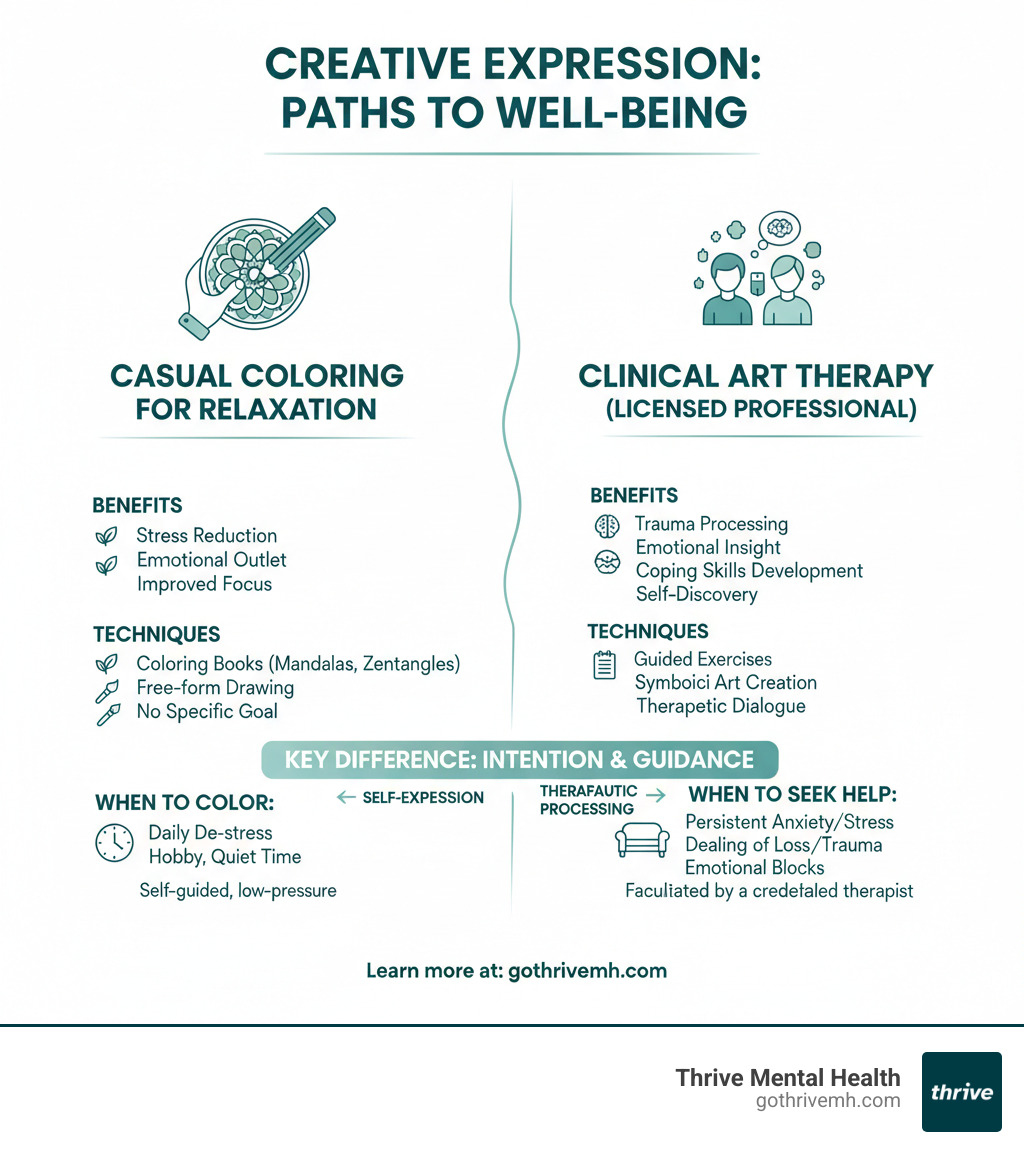
Unlike casual coloring, therapeutic coloring emphasizes intention and reflection. Guided by a credentialed professional, formal art therapy helps you process emotions and gain insight. Used mindfully at home, coloring pages can be a powerful daily self-care tool.
As Anna Green, LMHC, LPC, and founder of Thrive Mental Health, I’ve seen how even simple coloring can open space for emotional healing.
Easy art therapy coloring pages glossary:
- art therapy activities for anxiety
- art therapy for elementary students
- art therapy activities for adults
The Science of Calm: How Coloring Reduces Stress and Anxiety
Coloring engages the brain much like meditation. Psychologist Carl Jung used mandalas to support balance and inner focus, and modern research echoes those benefits. In studies, drawing and coloring reduce cortisol and calm the amygdala (the brain’s fear center), helping slow your heart rate and quiet racing thoughts.
[CALLOUT BOX] If you’re in crisis or need immediate support, call or text the 988 Suicide & Crisis Lifeline at 988. You are not alone.
How Coloring Acts as a Mindfulness Practice
Mindful coloring anchors you in the present through sensory focus: the pencil’s feel, paper texture, and color unfolding on the page. Repetitive motions encourage steady breathing and a calm, rhythmic state.
The Difference Between Adult and Child Coloring for Therapy
Adults benefit from intricate designs that promote focus and self-reflection. Children use simpler pages to build motor skills and express feelings they may not yet have words for. For more, see Art Therapy for Elementary Students.
Your Art Therapy Toolkit: Supplies and Techniques for Mindful Creation
Creating a therapeutic experience with art therapy coloring pages is less about expensive supplies and more about finding tools that feel good to you. Building a simple toolkit can improve your journey toward calm and self-expression.
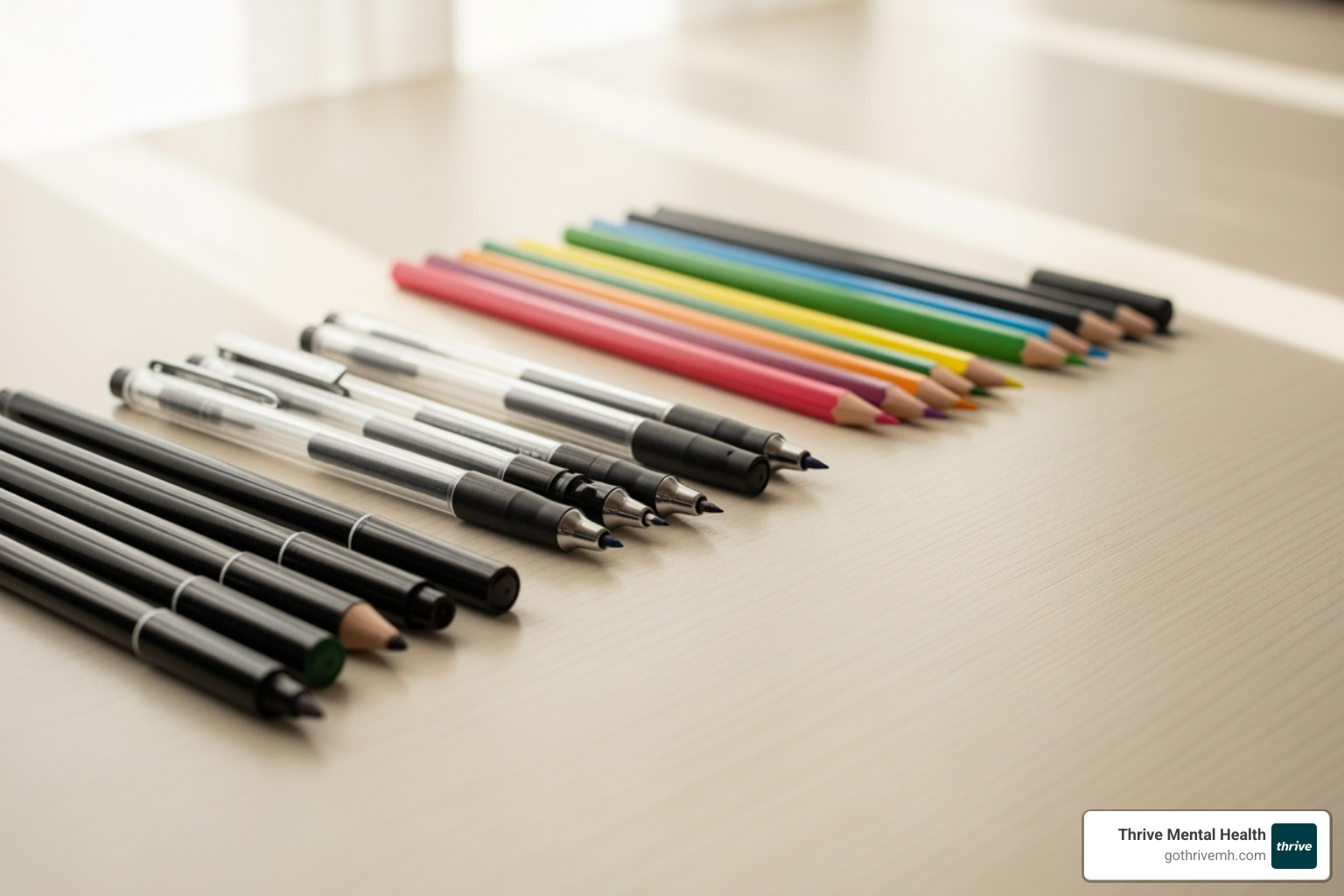
Recommended Supplies:
- Colored Pencils: The gold standard for control and blending. They allow for gentle pressure and rich color.
- Fine-Tip Markers: Perfect for crisp lines and vibrant, bold colors that can energize your mood.
- Gel Pens: Add a touch of magic with smooth, often glittery or metallic ink, great for highlights.
- Pastels: Offer soft, dreamy blending capabilities, though they can be messy (which can be liberating!).
- Quality Paper: Use cardstock or heavier paper when printing pages to prevent bleed-through.
Before you start, create a quiet, distraction-free space. Setting a simple intention, like coloring to process your day or to simply find a moment of peace, can transform the activity into a meaningful therapeutic practice.
Coloring Techniques to Improve Therapeutic Benefits
How you color can be just as important as what you color. These techniques deepen your connection to the present moment:
- Shading & Blending: Varying your pressure (shading) and layering colors to flow into one another (blending) requires focus and can be incredibly meditative.
- Color Theory: Trust your instincts. Warm colors (reds, yellows) often energize, while cool colors (blues, greens) tend to calm. Choose what your mind needs.
- Repetitive Motions: Using small lines (cross-hatching) or dots (stippling) to build color creates a soothing rhythm that can quiet racing thoughts.
Each stroke is an opportunity for self-expression. For more ideas, explore these Art Therapy Techniques You Can Try at Home for Emotional Well Being.
A World of Color: 10+ Types of Art Therapy Coloring Pages
The beauty of art therapy coloring pages is their variety. Different designs speak to different emotional needs, allowing you to choose what best suits your mood.
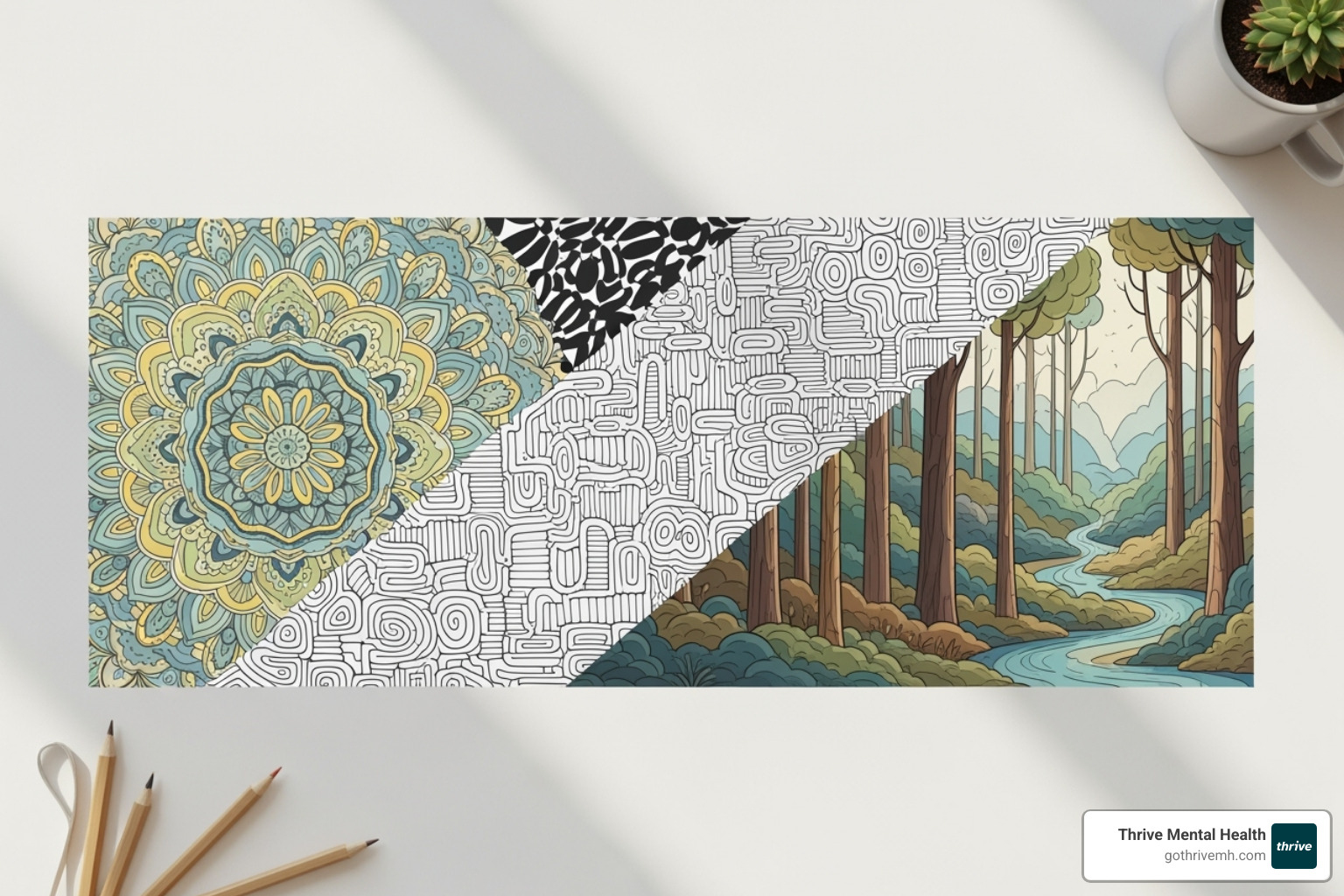
Popular Coloring Page Styles:
- Mandalas: Circular designs that promote focus and reduce anxiety.
- Zentangles: Repetitive, structured patterns that quiet racing thoughts.
- Nature Scenes: Connect you with the calming energy of the natural world.
- Abstract Patterns: Allow for free emotional expression without the pressure of “coloring correctly.”
- Inspirational Quotes: Combine positive affirmations with creativity.
- Geometric Designs: Appeal to logical minds that find comfort in order and structure.
- Animal & Floral Patterns: Evoke feelings of connection, growth, and comfort.
- Fantasy & Sugar Skulls: Provide an escape into imagination or a way to process memory and remembrance.
Finding the Right Page for Your Mood
Choosing a page is an intuitive act of self-care. Here’s a simple guide:
- For Anxiety Relief: The intricate, repetitive patterns of mandalas and zentangles demand focus, interrupting anxious thought loops.
- For Emotional Expression: Abstract patterns offer a blank canvas for your feelings, letting you choose colors and strokes based purely on intuition.
- For Positive Affirmations: Coloring pages with uplifting quotes can help reinforce a positive mindset.
Using Printable Coloring Pages for Self-Care
Printable art therapy coloring pages make this practice incredibly accessible. With countless free resources online, you can start your journey with just a printer.
- Create a Coloring Journal: Keep your finished pages in a binder. This creates a visual record of your emotional journey and can be a powerful tool for self-reflection.
- Schedule Coloring Time: Treat it like any other important self-care appointment. Even 15 minutes of mindful coloring can shift your entire day.
Is It Really Art Therapy? Understanding the Professional Difference
While art therapy coloring pages are therapeutic, using them on your own is different from formal art therapy. Think of it as the difference between a relaxing walk and working with a physical therapist, both are beneficial, but one involves professional guidance for specific goals.
Art therapy is a distinct mental health profession. The American Art Therapy Association defines it as using “active art-making, creative process, applied psychological theory, and human experience within a psychotherapeutic relationship” to enrich lives.
The key is the “psychotherapeutic relationship.” A credentialed art therapist is trained to help you process emotions, understand the symbolic language of your art, and work toward specific healing objectives.
| Feature | Self-Guided Coloring (Therapeutic) | Clinical Art Therapy (Professional) |
|---|---|---|
| Guidance | Self-directed, intuitive choices | Led by credentialed art therapist |
| Purpose | Stress relief, relaxation, mindfulness | Processing emotions, trauma recovery, gaining insight |
| Setting | Home, personal space | Clinical setting with therapeutic framework |
| Processing | Personal reflection | Guided exploration of artwork’s meaning |
| Goals | General well-being, self-care | Specific therapeutic objectives |
When to Seek Professional Art Therapy
Self-guided coloring is a wonderful tool, but sometimes professional support is necessary. Consider seeking an art therapist if you are:
- Dealing with persistent anxiety or trauma.
- Finding it difficult to verbalize your feelings.
- Seeking deeper self-understanding and want to work through complex emotional issues.
At Thrive Mental Health, we understand that healing takes many forms. Our programs in Florida accept insurance from providers like Cigna, Optum, and Florida Blue, making professional support more accessible. While coloring is a great start, our Virtual IOP programs provide the structured, expert-led care needed for deeper healing.

For a closer look at the clinical approach, read our Understanding Art Therapy Comprehensive Overview.
If you’re in crisis or need immediate support, call or text the 988 Suicide & Crisis Lifeline at 988. You are not alone.
Frequently Asked Questions about Art Therapy Coloring Pages
What is the difference between art therapy and just coloring?
Coloring is a relaxing activity that can reduce stress and promote mindfulness. Art therapy is a mental health profession where a trained therapist uses the creative process to help clients explore feelings, resolve emotional conflicts, and improve well-being. The key difference is the guidance and therapeutic relationship with a credentialed professional.
Can coloring pages replace therapy?
No. While art therapy coloring pages are a valuable tool for self-care and stress management, they do not replace the professional guidance provided by a licensed therapist. They can, however, be an excellent complement to formal treatment, such as an Intensive Outpatient Program (IOP).
What kind of coloring is best for anxiety?
Designs with repetitive, intricate patterns like mandalas and zentangles are often recommended for anxiety. They require just enough focus to quiet anxious thoughts and encourage a meditative state. The “best” type is subjective and depends on what you personally find most calming and engaging.
Suggested FAQ Schema (JSON-LD):
{
  "@context": "https://schema.org",
  "@type": "FAQPage",
  "mainEntity": [
    {
      "@type": "Question",
      "name": "What is the difference between art therapy and just coloring?",
      "acceptedAnswer": {
        "@type": "Answer",
        "text": "Coloring can reduce stress and support mindfulness. Art therapy is facilitated by a credentialed therapist who uses creative processes to help you explore emotions, resolve conflicts, and improve well-being. The key difference is professional guidance."
      }
    },
    {
      "@type": "Question",
      "name": "Can coloring pages replace therapy?",
      "acceptedAnswer": {
        "@type": "Answer",
        "text": "No. Coloring pages support self-care and stress reduction but do not replace professional therapy. They can complement structured care like Intensive Outpatient Programs (IOP)."
      }
    },
    {
      "@type": "Question",
      "name": "What kind of coloring is best for anxiety?",
      "acceptedAnswer": {
        "@type": "Answer",
        "text": "Mandalas and Zentangles are often helpful for anxiety due to their repetitive, intricate patterns that encourage focus and a meditative state. Choose what feels most calming to you."
      }
    }
  ]
}
A World of Color: 10+ Types of Art Therapy Coloring Pages
The beauty of art therapy coloring pages lies in their diversity. To reduce repetition, see the full list and guidance earlier in this article under “A World of Color: 10+ Types of Art Therapy Coloring Pages” for detailed descriptions and use-cases. Use that section as your primary reference when choosing designs.
Is It Really Art Therapy? Understanding the Professional Difference
Self-guided coloring can be profoundly therapeutic, but formal art therapy involves a psychotherapeutic relationship with a credentialed professional. See the earlier comparison table in this article for a quick side-by-side.
Art therapy is defined by The American Art Therapy Association as a mental health profession using creative processes within a therapeutic relationship.
When self-care isn’t enough, persistent anxiety, trauma, or difficulty verbalizing feelings, consider professional help. Thrive supports access to expert-led care for Florida residents and can guide you to resources. For a deeper dive, read our Understanding Art Therapy Comprehensive Overview.
If you’re in crisis or need immediate support, call or text the 988 Suicide & Crisis Lifeline at 988. You are not alone.
Your Art Therapy Toolkit: Supplies and Techniques for Mindful Creation
Prefer a shorter recap? Choose tools that feel good and support presence: colored pencils (control, blending), fine-tip markers (clarity, vibrance), gel pens (highlights), pastels (soothing, tactile), and thicker paper for printables. Physical coloring offers grounding sensory input; digital coloring reduces perfection pressure. Set an intention and protect a quiet space.
For more step-by-step techniques (shading, blending, color theory, layering, cross-hatching, stippling), see our full guide: Art Therapy Techniques You Can Try at Home for Emotional Well Being.
A World of Color: 10+ Types of Art Therapy Coloring Pages
For a concise reference, start with: Mandalas and Zentangles (focus and anxiety relief), Nature scenes (grounding), Abstract patterns (free expression), and Inspirational quotes (positive reframing). For the complete list with tips, see the earlier detailed section “A World of Color: 10+ Types of Art Therapy Coloring Pages.”
Is It Really Art Therapy? Understanding the Professional Difference
Short answer: self-guided coloring = therapeutic self-care; clinical art therapy = guided healing within a psychotherapeutic relationship. Learn the formal definition at The American Art Therapy Association. If symptoms persist, consider structured care like our Intensive Outpatient Program (IOP). For more context, see our Understanding Art Therapy Comprehensive Overview.
If you’re in crisis or need immediate support, call or text the 988 Suicide & Crisis Lifeline at 988. You are not alone.
Your Art Therapy Toolkit: Supplies and Techniques for Mindful Creation
Keep it simple and sensory: colored pencils for control, markers for bold color, gel pens for accents, pastels for soft blending, and heavier paper for printables. Set a calm intention and minimize distractions. For techniques that deepen mindfulness (shading, blending, layering, texture work), explore Art Therapy Techniques You Can Try at Home for Emotional Well Being.
A World of Color: 10+ Types of Art Therapy Coloring Pages
Choose designs that match your mood, Mandalas/Zentangles for anxiety relief, Geometrics and detailed Nature scenes for focus, Abstracts for emotional expression, and Quote pages for positive affirmations. For the full breakdown and how to use each style, refer to the earlier comprehensive section on coloring page types.
Is It Really Art Therapy? Understanding the Professional Difference
Coloring at home is excellent self-care. Clinical art therapy adds a trained therapist who helps you process emotions and gain insight within a therapeutic relationship (see The American Art Therapy Association). When you’re ready for deeper support, our Florida-based team can help you explore options and next steps. More here: Understanding Art Therapy Comprehensive Overview.
If you’re in crisis or need immediate support, call or text the 988 Suicide & Crisis Lifeline at 988. You are not alone.
Conclusion
Art therapy coloring pages are a practical way to quiet anxiety, express emotions, and practice daily mindfulness. If stress or symptoms persist, professional support can help you go further, faster.
Ready for support in Florida? Thrive offers virtual IOP with evening options. Verify your insurance in 2 minutes (no obligation) → Start benefits check or call 561-203-6085. If you’re in crisis, call/text 988.

This article is for informational purposes only and is not a substitute for individualized clinical advice or insurance verification.