





Virtual Group Therapy Sessions: 5 Transformative Benefits
The Rise of Virtual Connection for Mental Wellness
Virtual group therapy sessions have transformed mental health support, blending professional guidance with peer connection from the comfort of home. These structured, therapist-led sessions bring together small groups (3-15 people) on secure video platforms to share experiences, learn coping strategies, and support one another.
Key features of virtual group therapy sessions:
- Licensed therapist facilitation with training in group dynamics
- Small group sizes (capped at 12 for optimal attention)
- Flexible scheduling with evening and weekend options
- Evidence-based approaches like CBT, DBT, and trauma-informed care
- Cost-effective alternative to individual therapy ($50-100 per session)
- Insurance coverage from most major plans like Cigna, Aetna, and UnitedHealthcare
The move to virtual care has made group therapy more accessible than ever. Research shows 70% of participants feel significantly better within 8 weeks, achieving similar outcomes to in-person sessions with greater convenience and less stigma. The power of virtual groups lies in the shared experience. Connecting with others who understand your struggles with anxiety, depression, or trauma creates a unique healing environment that individual therapy can’t replicate.
Quick virtual group therapy sessions definitions:
Virtual behavioral health has expanded access to mental health services and reduced the stigma of seeking care. Joining a group from home makes the first step less daunting. This sense of community is a cornerstone of effective group therapy, which the American Psychiatric Association notes fosters peer support, shared learning, and real-time feedback for healing and growth.
5 Transformative Benefits of Virtual Group Therapy Sessions
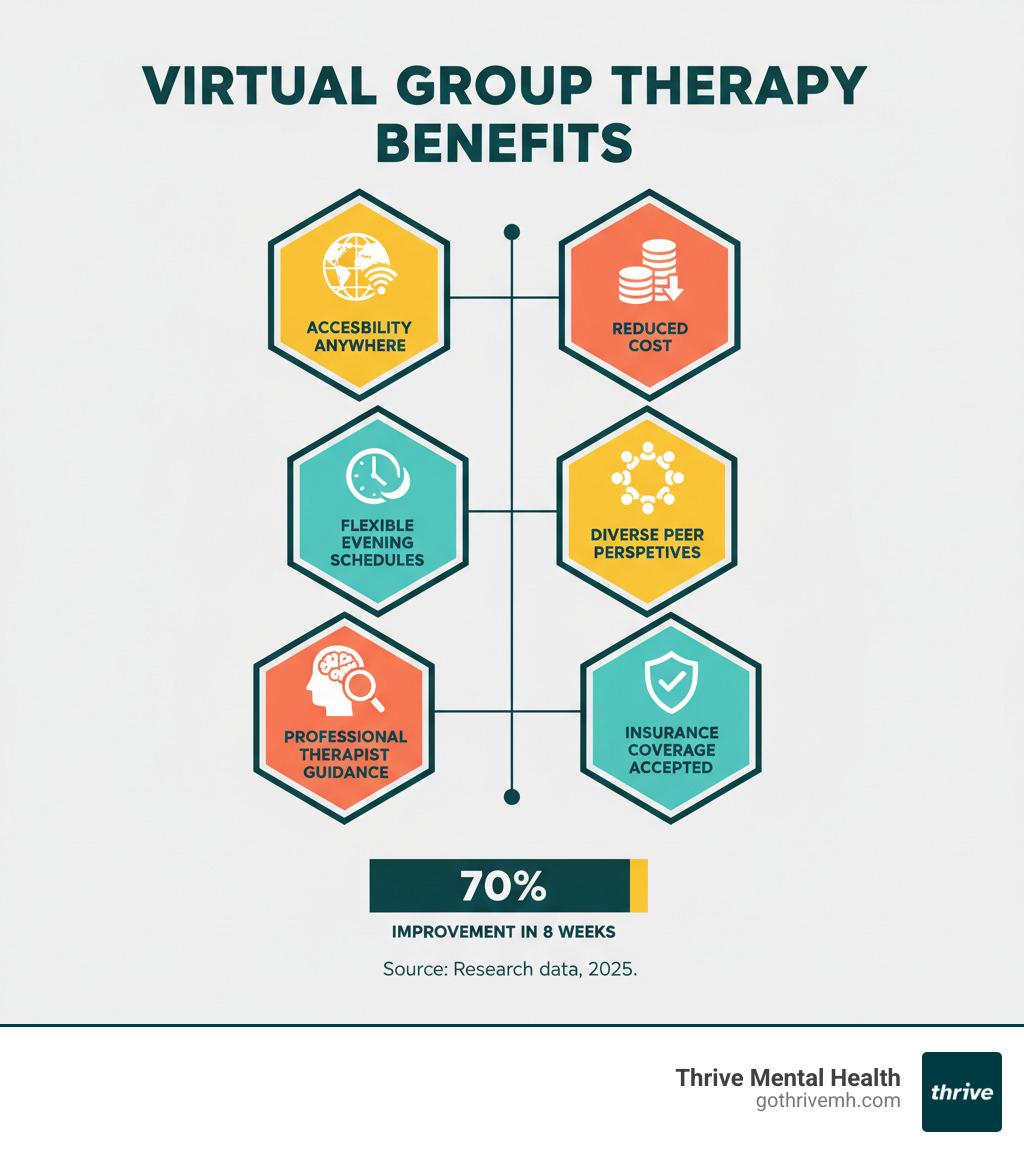
When considering your mental health options, virtual group therapy sessions offer compelling advantages. Here are five of the most transformative benefits our participants experience.
- Convenience: No commute, no traffic, and no need for childcare. You can join from home or your office, making it easier to attend sessions consistently, a key factor for progress.
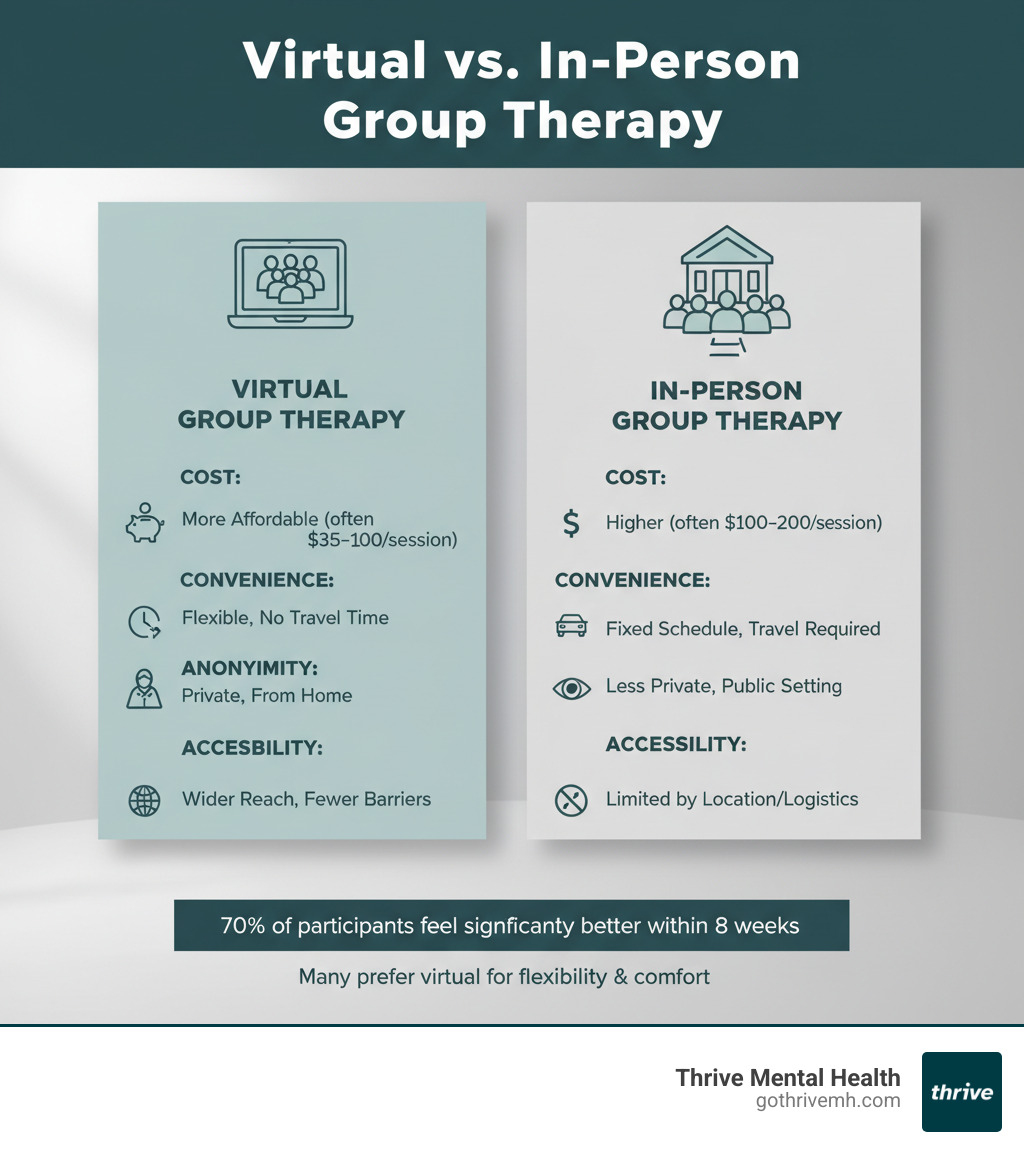
- Affordability: Group sessions typically cost $50 to $100, compared to $100-$200 for individual therapy. With no travel costs and coverage from most major insurance plans (like Cigna, Aetna, and UnitedHealthcare), it’s a budget-friendly option.
- Accessibility: Expert-led care is just a click away, whether you’re in a busy city like Miami or a more remote part of the Florida Panhandle. It overcomes physical limitations, transportation issues, and a lack of local specialists.
- Diverse Perspectives: Virtual groups bring together people from various backgrounds. This diversity provides a rich environment for learning new strategies and gaining insights you might not have considered.
- Peer Support: There’s immense power in hearing someone else voice your exact feelings. This validation reduces feelings of isolation. The American Psychiatric Association highlights this shared learning and feedback as a unique benefit of group therapy.
How Virtual Groups Foster Connection and Support
Skeptical about forming connections through a screen? It’s a common concern, but virtual spaces can foster surprisingly strong bonds. Here’s how:
- Shared Experience: Being vulnerable with others who truly “get it” creates an immediate sense of belonging and reduces isolation.
- Real-Time Feedback: You receive immediate support and validation from peers and the therapist, helping you process feelings in the moment.
- Building Community: Seeing the same faces each week transforms a group of strangers into a supportive community. This consistency is a core part of our Wraparound Care model, building a network that extends beyond the session itself.
Is It as Effective as In-Person Therapy?
The research is clear: virtual therapy is just as effective as in-person treatment for most conditions.
- Proven Results: 70% of participants feel significantly better within 8 weeks, and 50% achieve remission-level symptom improvement.
- High Satisfaction: 80% of people report virtual therapy is as effective or more effective than face-to-face sessions, partly because convenience leads to better attendance and, therefore, better outcomes.
- Substance Use Disorders: Studies show virtual group therapy achieves the same long-term abstinence rates as in-person formats.
The most effective therapy is the one you can commit to. By removing barriers to attendance, virtual therapy allows your commitment to flourish.
What Conditions Are Best for Virtual Group Therapy?

Virtual group therapy sessions can effectively support a wide range of mental health conditions, especially where feeling understood makes all the difference.
- Anxiety Disorders: Groups often use Cognitive Behavioral Therapy (CBT) and mindfulness to provide practical tools and reassurance from peers who understand racing thoughts and worry.
- Depression: The group connection combats the profound isolation of depression, creating a safe space to share experiences and challenge negative thought patterns.
- PTSD and Trauma: Sharing experiences in a specialized, therapist-led group can be profoundly healing for survivors, helping them reclaim a sense of safety and control.
- Obsessive-Compulsive Disorder (OCD): The group setting provides accountability and peer support for practicing new responses to obsessive thoughts and compulsions.
- Substance Use Disorders: Virtual groups offer vital peer support for maintaining sobriety. The convenience of virtual access boosts consistency, which is crucial for recovery.
- Personality Disorders: Groups using Dialectical Behavior Therapy (DBT) are effective for conditions like Borderline Personality Disorder, teaching skills for emotional regulation and healthier relationships.
- Grief and Loss: Connecting with others who understand the complex emotions of grief provides comfort and practical coping strategies during life’s most difficult transitions.
Common therapy models used in these groups include CBT, DBT, and Mentalization-Based Treatment (MBT).
Crisis Support: If you or someone you know is in crisis or having thoughts of suicide, please call or text 988 to reach the Suicide & Crisis Lifeline. You are not alone.
How Do Virtual Group Therapy Sessions Work? [A Step-by-Step Guide]
Getting started with virtual group therapy sessions is a straightforward process designed to make you feel comfortable. Here’s what to expect:
- Find a Provider: Look for organizations with licensed therapists, evidence-based practices, and secure, HIPAA-compliant platforms.
- Initial Screening: You’ll have a brief consultation with a clinician to discuss your needs and ensure a group is the right fit.
- Booking and Scheduling: Choose a group that matches your goals (e.g., anxiety, trauma, DBT skills) and schedule, with many providers offering flexible evening and weekend slots.
- Prepare Your Tech: All you need is a device with a camera/microphone (laptop, tablet, or phone), a reliable internet connection, and a private, quiet space.
- Understand the Structure: Sessions are therapist-led, meet weekly for 1-2 hours, and are often “closed” (same members each week) to build trust.
- Know the Rules: You’ll review group guidelines on confidentiality, active listening, and respect. These rules create the safety needed for vulnerability.
- Trust in Confidentiality: Reputable providers use HIPAA-compliant platforms, and all participants agree to strict confidentiality. What’s shared in the group stays in the group.
For those who need more comprehensive support, our Virtual Intensive Outpatient Programs incorporate group therapy as a core component.
 The 7 Best Intensive Outpatient Programs for Anxiety ComparedMental Health
Key Components of a Successful Session
- A Licensed Therapist: A skilled clinician who manages group dynamics and creates psychological safety.
- Small Group Size: Groups are typically capped at 12 participants to ensure personal attention and foster connection.
- Clear Structure and Goals: Sessions follow a roadmap, whether it’s learning DBT skills or processing trauma, to ensure tangible progress.
- Group Guidelines: Agreements on confidentiality and respect create a safe container for sharing.
- A Non-Judgmental Environment: The therapist and group members cultivate an atmosphere of empathy and support.
- Active Participation: Engaging in the way that feels authentic to you, whether talking or listening, yields the best results.
Potential Challenges and How to Mitigate Them
- Technical Difficulties: Mitigation: Test your equipment beforehand and have a backup plan, like a number to call in.
- Privacy Concerns: Mitigation: Use headphones and choose a private, quiet room where you won’t be interrupted or overheard.
- Distractions at Home: Mitigation: Set boundaries with your household, letting them know your session time is protected.
- Group Dynamic: Mitigation: The initial screening helps find a good match, but don’t hesitate to speak with your provider if a group doesn’t feel right.
- Building Rapport: Mitigation: Trust the process. Skilled facilitation and consistent attendance build strong, authentic connections over time, even through a screen.
Navigating Costs, Insurance, and Finding the Right Program
Understanding the financial side of virtual group therapy sessions is easier than you think. Group therapy is a budget-friendly option, with sessions typically costing $50-$100, compared to $100-$200 for individual therapy.
Insurance coverage is a key factor. Most major health plans, including Aetna, Cigna, Florida Blue, and UnitedHealthcare, provide solid coverage for virtual mental health services. The Mental Health Parity and Addiction Equity Act (MHPAEA) ensures that mental health benefits are comparable to medical benefits. To understand your specific plan, call the number on your insurance card or check your online portal.

If you don’t have or don’t want to use insurance, out-of-pocket options are available. Check if your employer offers an Employee Assistance Program (EAP), which may cover several sessions at no cost.
Insurance Coverage in Florida
As a provider focused on Florida, we ensure residents across the state have excellent access to virtual mental health coverage. Major plans like Florida Blue, Cigna, Aetna, and UnitedHealthcare offer comprehensive telehealth benefits for Floridians. Our team is experienced in working with these providers to help you understand and maximize your coverage.
When verifying your benefits, ask: Is virtual group therapy covered? What is my copay or deductible? Do I need a referral? Our guide to Navigating Mental Health Support with Aetna and UnitedHealthcare can help. Our team can also assist in clarifying your coverage to remove financial barriers to care.
Frequently Asked Questions about Virtual Group Therapy
It’s natural to have questions when considering virtual group therapy sessions. Here are clear, honest answers to some common concerns.
{
  "@context": "https://schema.org",
  "@type": "FAQPage",
  "mainEntity": [{
    "@type": "Question",
    "name": "How long does virtual group therapy last?",
    "acceptedAnswer": {
      "@type": "Answer",
      "text": "The duration of virtual group therapy varies. Many programs are structured as 8-week courses with weekly sessions lasting 1-2 hours. However, some groups are ongoing, allowing members to participate as long as they find it beneficial. The specific format depends on the provider and the group's goals."
    }
  },{
    "@type": "Question",
    "name": "Is virtual group therapy confidential?",
    "acceptedAnswer": {
      "@type": "Answer",
      "text": "Yes, confidentiality is a cornerstone of all therapy, including virtual groups. Reputable providers use HIPAA-compliant video platforms to protect your privacy. All participants are required to agree to strict confidentiality rules, meaning what is shared in the group stays in the group."
    }
  },{
    "@type": "Question",
    "name": "What technology do I need for virtual group therapy?",
    "acceptedAnswer": {
      "@type": "Answer",
      "text": "You will need a reliable internet connection and a device with a camera and microphone, such as a smartphone, tablet, or computer. It's also essential to have a private, quiet space where you can participate without interruptions to ensure confidentiality for yourself and other group members."
    }
  }]
}
How long does virtual group therapy last?
The duration is flexible. Many skill-based programs (like CBT or DBT) are structured as 8-week courses with weekly 1-2 hour sessions. Other support groups for grief or trauma may be ongoing, allowing you to participate as long as you find it helpful.
Is virtual group therapy confidential?
Yes, confidentiality is sacred. We use secure, HIPAA-compliant platforms, and all participants sign a strict confidentiality agreement. What’s shared in the group stays in the group, protected by both technology and mutual respect.
What technology do I need for virtual group therapy?
It’s simple. You need a reliable internet connection, a device with a camera and microphone (like a smartphone or laptop), and a private, quiet space. Headphones are recommended for added privacy.
Take the Next Step Toward Healing and Connection
You don’t have to steer mental health challenges alone. Virtual group therapy sessions offer a transformative approach to healing, combining professional expertise with the power of peer support. The true magic lies in the empowerment through shared experience, realizing you’re not the only one feeling this way and learning from others who truly get it.
The evidence is compelling: 70% of participants feel significantly better within 8 weeks, with outcomes matching or exceeding in-person therapy. The convenience, affordability, and reduced stigma of virtual care create an environment where real healing can happen. At Thrive Mental Health, our expert-led, evidence-based groups provide a safe space to connect, learn, and grow.
Taking control of your mental health is a courageous step toward the life you deserve. Virtual group therapy sessions make that step more accessible than ever.
Ready for support? Thrive offers virtual IOP with evening options for Florida residents. Verify your insurance in 2 minutes (no obligation) or call 561-203-6085. If you’re in crisis, call/text 988.

This article is for informational purposes only and is not a substitute for individualized clinical advice or insurance verification.