





Online IOP Program: Ultimate Healing 2025
Why Finding the Right Online IOP Program Can Transform Your Recovery Journey
An online iop program offers intensive mental health support from the comfort of your home, providing structured care that fits around your work, school, and family commitments. Here are your key options at a glance:
Top Online IOP Program Features to Look For:
- 9-12 hours of weekly programming (group, individual, and family therapy)
- Flexible scheduling (morning, afternoon, or evening sessions)
- Evidence-based treatments (CBT, DBT, trauma-informed care)
- Insurance coverage accepted by most major providers
- Duration: Typically 9-12 weeks with personalized progression
- Technology: Secure, HIPAA-compliant video platforms
Struggling with mental health challenges that disrupt your daily life? When weekly therapy isn’t enough, but residential treatment feels impossible due to work, school, or family, there’s a powerful alternative.
Virtual Intensive Outpatient Programs (IOPs) bridge this gap perfectly. They provide the structured, comprehensive support you need, including group therapy, individual sessions, and family involvement, while allowing you to sleep in your own bed and keep up with your responsibilities.
Research shows impressive results: 93% of clients report improvements in depression symptoms and 90% see anxiety improvements through virtual IOP programs. Studies confirm that online IOPs deliver outcomes comparable to in-person treatment, with added benefits of convenience, privacy, and reduced barriers like transportation or childcare needs.
As Anna Green, LMHC, LPC, Chief Clinical Officer at Thrive Mental Health, I’ve led virtual IOP programs that earned accreditation from The Joint Commission for Behavioral Health Care and Human Services. My experience shows that online iop program delivery is just as effective as traditional models when designed with the right clinical framework and a human-centered approach.
Handy online iop program terms:
What is a Virtual IOP? Your Guide to Structure, Schedule, and Duration
Think of an online iop program as the Goldilocks of mental health care, not too little, not too much, but just right for many people who need more than weekly therapy sessions.
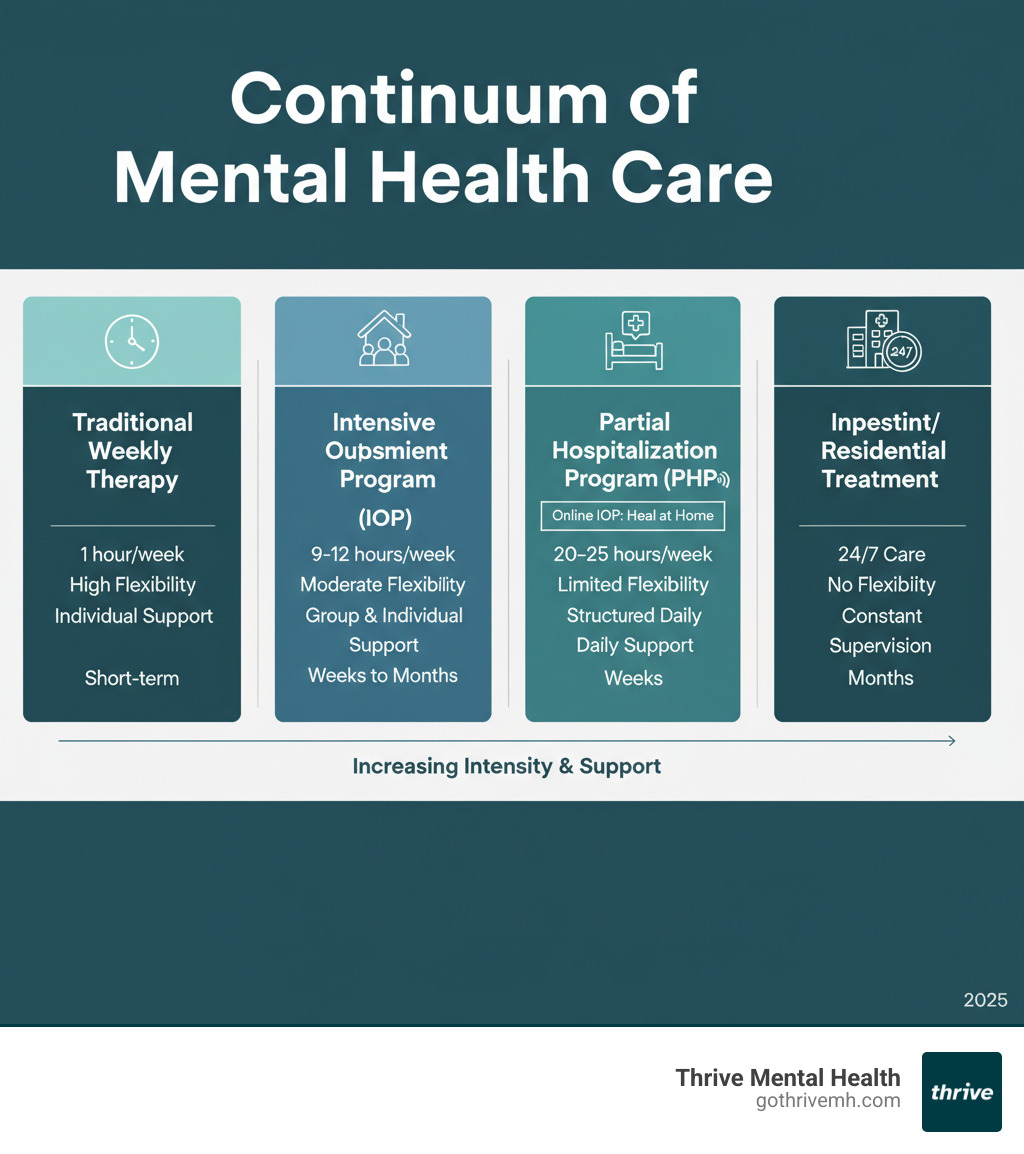
An Intensive Outpatient Program sits perfectly in the middle of the treatment spectrum. It’s more structured and comprehensive than your typical once-a-week therapy appointment, but you still get to sleep in your own bed every night. Unlike inpatient treatment or Partial Hospitalization Programs that can feel like putting your entire life on hold, virtual IOPs work around your existing commitments.
For some people, an online IOP serves as a gentle step-down from more intensive care. Maybe you’ve completed residential treatment or a PHP program, and you need continued support as you ease back into your regular routine. For others, it’s a necessary step-up when traditional outpatient therapy just isn’t cutting it anymore, when you’re still struggling despite weekly sessions and need more comprehensive support.
The Weekly Structure That Actually Works
Here’s what you can expect: most online IOP programs require 9 to 12 hours per week of your time. Before you panic about fitting this into your already packed schedule, this time is strategically divided across different types of sessions throughout the week.
You’ll participate in group therapy sessions where you connect with others facing similar challenges, individual counseling sessions custom specifically to your needs, and often family therapy sessions that help repair and strengthen your support system at home.
The flexibility is honestly a game-changer. Many programs offer morning sessions for early birds, afternoon options for those with evening commitments, and evening sessions for people managing work or school during the day. This isn’t just convenient, it’s essential for making treatment actually accessible.
Your Journey Through the Program
Most people spend between 9 to 12 weeks in an online IOP program, though your exact timeline depends entirely on your individual progress and needs. This isn’t a one-size-fits-all situation.
Program progression is highly personalized, you’ll work closely with your primary therapist to adjust your treatment plan as you develop new coping skills and gain stability. In the beginning, you might need more intensive support and frequent check-ins. As you build confidence and demonstrate progress, your schedule might become more flexible, preparing you for the eventual transition to standard outpatient care.
Your treatment plan evolves with you because healing isn’t linear. Some weeks you’ll feel like you’re making huge strides, and others might feel more challenging. The beauty of a well-designed virtual IOP is that it adapts to meet you exactly where you are in your recovery journey.
The goal isn’t just to get you through a set number of weeks, it’s to equip you with practical tools and strategies you can use long after the program ends. By the time you’re ready to graduate, you’ll have a solid foundation for managing life’s inevitable ups and downs independently.
The Core Components of a High-Quality Online IOP Program
When you’re searching for an online iop program, you want to know you’re getting real, evidence-based care, not just therapy sessions moved to a computer screen. The best programs create a comprehensive therapeutic environment that feels personal and supportive, even through virtual connection.

Evidence-Based Therapies Delivered to Your Home
Quality online iop program treatment starts with proven therapeutic approaches that actually work. You deserve care that’s backed by research, not just good intentions.
Individual therapy gives you that crucial one-on-one time with your licensed therapist. This is your safe space to dig deep into personal challenges, process difficult emotions, and develop coping strategies that fit your unique situation. It’s completely confidential and custom just for you.
Group therapy often becomes the heart of your IOP experience. There’s something powerful about connecting with others who truly understand what you’re going through. You’ll share experiences, learn from each other’s journeys, and practice new skills in a supportive environment. Common group topics include mindfulness, emotion regulation, distress tolerance, and motivational interviewing.
Family therapy recognizes that mental health challenges ripple through entire family systems. These sessions focus on improving communication, resolving longstanding conflicts, and building stronger support networks at home. Your therapist will provide practical resources and insights to help your whole family heal together.
Cognitive Behavioral Therapy (CBT) helps you identify and challenge those negative thought patterns that keep you stuck. Instead of being trapped by automatic thoughts like “I always mess things up,” you’ll learn to recognize these patterns and respond in healthier ways.
Dialectical Behavior Therapy (DBT) is particularly effective if you struggle with intense emotions, relationship difficulties, or self-harm behaviors. You’ll learn practical skills in four key areas: mindfulness, distress tolerance, emotion regulation, and interpersonal effectiveness.
Trauma-informed care acknowledges that past experiences significantly impact your current mental health. Our approach creates a safe, empathetic environment where trauma is addressed without causing re-traumatization. Every interaction is designed with trauma sensitivity in mind.
Even virtually, experiential therapies can be incredibly powerful. You might participate in guided virtual art therapy, yoga sessions, or mindfulness exercises that help you connect with emotions in non-verbal ways. These activities foster deeper engagement in the therapeutic process and bring awareness to feelings and interactions you might not otherwise notice.
For more detailed information about our comprehensive therapeutic approach, explore our IOP services.
Conditions Treated: Who Can Benefit from an online IOP program?
If you or a loved one are in crisis or thinking about self-harm, please call or text the 988 Suicide & Crisis Lifeline. You are not alone.
An online iop program serves people who need more support than weekly therapy can provide, but don’t require 24/7 supervision. It’s ideal if you have a stable home environment and feel motivated to engage in treatment while managing daily responsibilities like work, school, or family care.
Depression and mood disorders respond well to IOP treatment. Whether you’re dealing with major depression, persistent low mood, or bipolar disorder, our programs help improve your outlook, develop effective coping skills, and find relief from symptoms that feel overwhelming. Research shows 93% of clients report improvements in depression symptoms through virtual IOP settings.
Anxiety and panic disorders, from generalized anxiety to social phobia, panic attacks, or OCD, can significantly improve with intensive support. Our approach helps you manage fears, reduce daily distress, and regain control over your life. Studies indicate 90% of clients see improvements in anxiety symptoms.
Substance use disorders require specialized, ongoing support whether you’re struggling with alcohol, cannabis, opioids, or other substances. An online iop program provides critical tools for relapse prevention, healthy coping strategies, and establishing sustainable routines.
Eating disorders need comprehensive care that addresses both the behaviors and underlying emotions. Our programs offer nutrition-inclusive support and therapeutic interventions specifically designed for disordered eating patterns and body image challenges.
Trauma and PTSD treatment focuses on processing past experiences safely while managing current symptoms. Our trauma-informed approach helps build resilience and develop healthy ways to cope with triggers and flashbacks.
Self-harm and suicidal ideation require intensive, compassionate support. Our programs provide coping skills, safety planning, and crisis management strategies. Research shows 89% of clients report improvements in self-harm behaviors through virtual IOPs. If you’re in immediate crisis, calling 988 is always the right first step.
Co-occurring disorders, when you’re dealing with both substance use and mental health challenges simultaneously, require integrated treatment. We address both conditions together because successful recovery depends on treating the whole person, not just individual symptoms.
Managing daily stress while in treatment is crucial for success. Check out these 9 Therapist-Approved Ways to Manage Stress at Work for additional support strategies.
Building Connection: Peer and Family Support Systems
One concern many people have about virtual treatment is feeling isolated or disconnected. The reality is that quality online iop program experiences are designed to foster deep, meaningful connections.
Peer support happens through carefully curated groups where you connect with others facing similar challenges. This isn’t random matching, we thoughtfully create group environments that foster understanding, validation, and mutual support. There’s something incredibly healing about realizing you’re not alone in your struggles and hearing from others who truly “get it.”
Building a virtual community extends beyond scheduled therapy sessions. Participants often form strong bonds that create ongoing support and encouragement. You might be surprised by how connected you feel to people you’ve only met through a screen. This community aspect becomes a source of motivation and hope throughout your recovery journey.
Family therapy plays a critical role in IOP success. Family involvement is actually one of the strongest predictors of positive outcomes. These sessions focus on healing family dynamics, improving communication patterns, and equipping your loved ones with effective ways to support you. The goal is extending healing into your home environment.
Effective communication skills become a focus in both individual and family sessions. You’ll learn to express needs clearly, resolve conflicts constructively, and build stronger, more resilient relationships. These skills benefit every area of your life.
Resources and support for loved ones recognize that family members need support too. We provide educational materials, caregiver resources, and sometimes dedicated family support groups. When your family feels equipped and supported, your entire recovery foundation becomes stronger.
 Mental Health Coverage Made Simple (and Why Your Insurance Should Have It)Mental Health
Virtual vs. In-Person IOP: Is Online Treatment as Effective?
If you’re considering an online iop program, you’re probably wondering whether virtual treatment can truly match the effectiveness of sitting in a therapist’s office. It’s a fair question, after all, you’re investing your time, energy, and hope in this process.
The good news? Research consistently shows that virtual IOPs deliver outcomes that match traditional in-person programs. A comprehensive 2022 study published in the International Journal of Eating Disorders directly compared virtual and in-person PHP and IOP programs for young adults with eating disorders. The results were clear: both formats showed equivalent effectiveness in helping participants recover.
What makes these results even more compelling is that participants in virtual programs often experience additional benefits that can actually improve their healing journey. The convenience factor alone can be life-changing. You’re no longer spending hours commuting to appointments or scrambling to find childcare. Instead, you can focus that energy on your recovery.
Privacy and comfort play huge roles in therapeutic success. Many people find they open up more readily when they’re in their own space, maybe it’s your favorite chair, your pet nearby, or simply the security of familiar surroundings. This comfort can lead to deeper therapeutic breakthroughs and more honest conversations with your treatment team.
From a practical standpoint, online iop programs are often more cost-effective than their in-person counterparts. You’re saving on gas, parking, childcare, and potentially lost wages from time off work. These savings can make the difference between accessing intensive care or going without the support you need.
The research backs up what we see clinically. Our data shows 93% of participants report significant improvements in depression symptoms and 90% see meaningful reductions in anxiety through virtual IOP programming. These aren’t just small improvements, they’re life-changing shifts that help people reclaim their daily functioning and relationships.
Here’s an honest look at the trade-offs:
Virtual IOP Advantages:
- Flexible scheduling around work and family
- No geographical barriers to accessing specialized care
- Improved privacy from the comfort of home
- Significant cost savings on travel and childcare
- Consistent routine maintenance
- Proven effectiveness matching in-person outcomes
Potential Challenges:
- Technology requirements like reliable internet and a private space
- Self-motivation to stay engaged without physical presence cues
- Home distractions that need management
- Crisis limitations for those needing immediate 24/7 support
- Modified experiential activities that work differently in virtual formats
The key is finding the right fit for your specific situation. Some people thrive with the flexibility and privacy of virtual care, while others benefit from the structure of leaving home for treatment. The most important factor isn’t the format, it’s finding a program that offers evidence-based treatment with skilled clinicians who understand your unique needs.
What we’ve learned through years of delivering virtual care is that the therapeutic relationship transcends the screen. When you work with experienced clinicians who know how to create connection and safety in a virtual environment, the healing happens just as powerfully as it does in person.
The Practical Guide: Insurance, Costs, and Technology in Florida
Let’s be honest, figuring out how to pay for mental health treatment can feel just as overwhelming as the symptoms you’re trying to address. The good news? Most online iop program services are covered by insurance, and the technology requirements are simpler than you might think.

How to Pay for Your online IOP program
Here’s something that might surprise you: insurance coverage for telehealth has expanded dramatically in recent years. What once felt like an uphill battle to get virtual care covered is now standard practice for most major providers. This shift means you can access intensive treatment without the financial stress that often comes with mental health care.
The difference between in-network and out-of-network providers can significantly impact your wallet. When we’re in-network with your insurance (which we are with most major plans), you’ll typically pay much less out of pocket. Think of it as the difference between paying a $30 copay versus potentially hundreds of dollars per session.
Verifying your benefits doesn’t have to be a headache. We’ve streamlined this process because we know insurance paperwork is the last thing you want to deal with when you’re seeking help. Our team can check your specific coverage in just a few minutes, giving you clarity on what you’ll owe before you even start treatment.
We work with major providers including Cigna, Aetna, Blue Cross Blue Shield, Optum, and Florida Blue. If you’re in Florida, you’re in luck, the state has robust laws supporting telehealth, ensuring broad access to virtual mental health services. With providers like Florida Blue offering extensive coverage and strong state-level support for telehealth, accessing care is more straightforward than ever. Thrive accepts commercial insurance only and does not accept Medicaid or Medicare.
The reality is that every insurance plan is different, even within the same company. That’s why our Admissions Team takes the time to understand your specific situation and explain exactly what your plan covers for virtual IOP treatment.
Technology and Privacy Requirements
Don’t worry, you don’t need to be a tech wizard to participate in an online iop program. The basic equipment needed is probably already sitting in your home right now. A computer, tablet, or smartphone with a working camera and microphone, plus reliable internet, is all you need to get started.
We take HIPAA compliance seriously because your privacy matters. Every virtual session happens on secure, encrypted platforms that meet federal healthcare privacy standards. This isn’t just about following rules, it’s about creating a space where you feel safe to be vulnerable and do the hard work of healing.
Secure video platforms protect your confidentiality through multiple layers of security. Your sessions are encrypted, meaning even if someone intercepted the data (which is extremely unlikely), they couldn’t understand it. We use strict access controls, secure logins, and regular security updates to ensure your personal health information stays exactly where it belongs, private.
The technology piece really is that simple. If you can video chat with family or attend a work meeting online, you have the skills needed for virtual therapy. Our team is always available to help with any technical questions, so you can focus on what matters most, your recovery.
Frequently Asked Questions about Online IOPs
How do I know if an online IOP is the right level of care for me?
Choose an online iop program when weekly therapy isn’t enough but you don’t need 24/7 care. It’s a fit if you have a safe home, can attend video sessions, and feel motivated to engage while managing work, school, or family. If symptoms disrupt daily life (depression, anxiety, trauma, substance use) yet you’re still functioning, IOP often hits the sweet spot. The best way to confirm is a clinical assessment. Our Admissions Team will review symptoms, goals, and safety to recommend the right level of care.
How long does an online IOP last?
Most online iop programs run 9-12 weeks. Duration is personalized with your primary therapist based on your progress, clinical needs, and goals. Some step down at 9 weeks; others benefit from the full 12 or a brief extension to solidify skills and routines.
What happens after I complete an online IOP?
You leave with a custom aftercare plan: step down to weekly outpatient therapy, referrals to psychiatry for medication management if needed, and access to alumni or peer support. The goal is continuity of care, maintain gains, prevent relapse, and know where to turn if stressors spike.
Take the First Step Toward Healing Today
You’ve made it this far, and that tells us something important about you, you’re ready to prioritize your mental health. An online iop program represents more than just a treatment option; it’s your bridge to healing without having to put your entire life on hold.
Think about it: you can receive the same intensive, evidence-based care that’s traditionally only available in residential settings, but you’ll sleep in your own bed tonight. You’ll attend that important work meeting tomorrow. You’ll be there for your family when they need you. This isn’t about choosing between recovery and responsibility, it’s about having both.

The structure and support you need for real healing is available right from your home. Whether you’re struggling with depression, anxiety, trauma, or substance use, an online iop program offers the intensive support that weekly therapy simply can’t match. With 9-12 hours of programming each week, including group therapy, individual sessions, and family involvement, you’re getting comprehensive care that addresses every aspect of your recovery.
What makes this even more encouraging? The research backs it up. Those impressive statistics we shared earlier, 93% improvement in depression symptoms and 90% improvement in anxiety, aren’t just numbers. They represent real people who found their way back to themselves through virtual care.
Your healing journey doesn’t have to wait for the “perfect” time, because let’s be honest, there rarely is one. Life keeps moving, responsibilities keep piling up, and your mental health deserves attention now. An online iop program meets you where you are, both literally and figuratively.
Ready for support? Thrive Mental Health offers virtual IOP with evening options. Verify your insurance in 2 minutes (no obligation) → Start benefits check or call 561-203-6085. If you’re in crisis, call/text 988.

This article is for informational purposes only and is not a substitute for individualized clinical advice or insurance verification.