

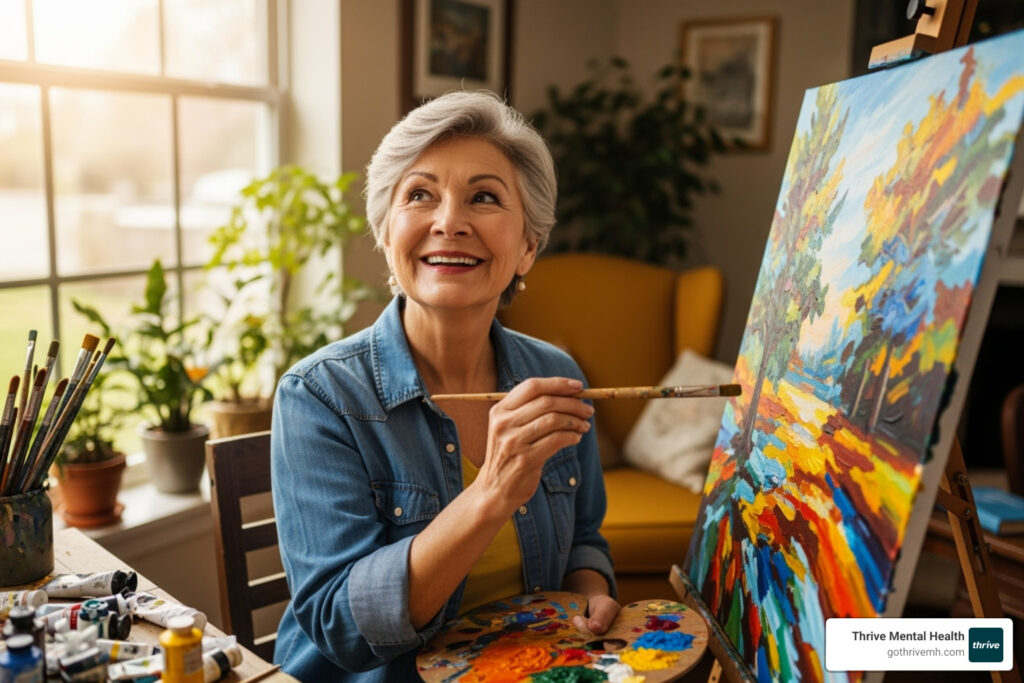
Why Seniors Can’t Afford to Ignore Art Therapy for Mental Health
If you or a loved one are in immediate crisis or danger, please call or text 988 to connect with the Suicide & Crisis Lifeline. You are not alone.
If you’re in crisis, call/text 988 right now. You are not alone.
Art Therapy for Seniors: Reduce Anxiety and Depression up to 60%, Strengthen Memory and Connection
Art therapy for seniors is a powerful mental health intervention combining creative expression with therapeutic healing. With the US population over 65 projected to nearly double by 2050, addressing the mental health needs of older adults is critical.
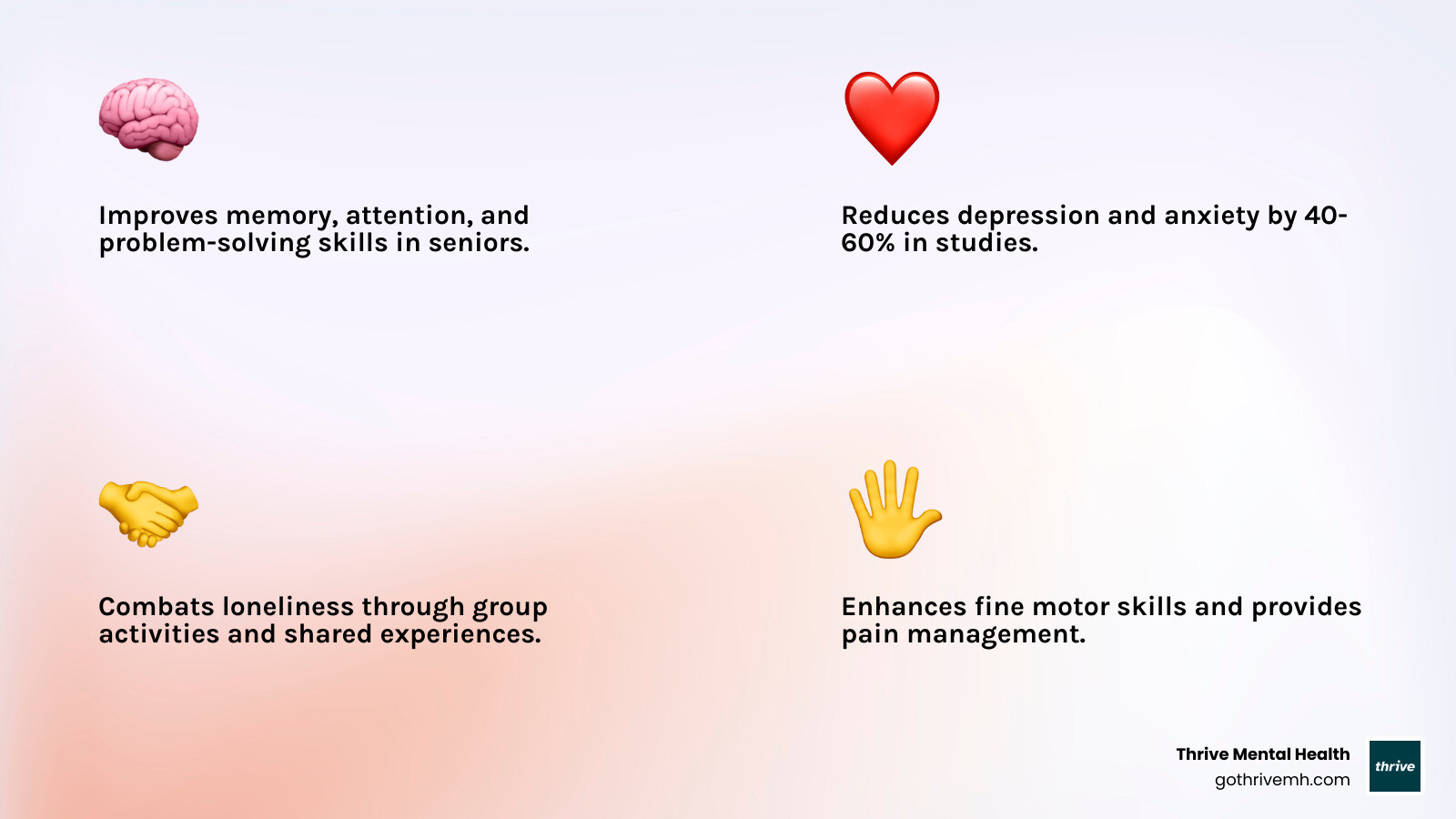
Key Benefits of Art Therapy for Seniors:
- Cognitive: Improves memory, attention, and problem-solving skills
- Emotional: Reduces depression and anxiety by 40-60% in studies
- Social: Combats loneliness through group activities and shared experiences
- Physical: Improves fine motor skills and provides pain management
Depression affects 1 in 8 older adults, but many don’t receive treatment. Talk therapy can be a barrier for seniors struggling to verbalize complex emotions related to grief, cognitive decline, or life transitions.
Art therapy offers an alternative. It uses the creative process, like painting, drawing, or sculpting, to help seniors process emotions, support cognitive function, and build connections, no artistic talent required. The American Art Therapy Association defines it as “a mental health profession that enriches lives through active art-making and the creative process within a psychotherapeutic relationship.”
I’m Anna Green, LMHC, LPC, Chief Clinical Officer at Thrive Mental Health. With specialized training in art therapy, I’ve seen how integrating creative expression into treatment transforms mental health outcomes for older adults.
Art therapy for seniors terms you need:
- art therapy activities for adults
- art therapy activities for anxiety
- art therapy activities for grief
The Science: How Art Therapy Rewires the Aging Brain & Lifts Mood
The aging brain can form new neural connections throughout life, a process called neuroplasticity. Art therapy for seniors leverages this ability, helping to rewire the brain for better mental health. When a senior creates art, they stimulate multiple brain regions, strengthening neural pathways and building “cognitive reserve”, a buffer against age-related mental decline.
This isn’t a community art class; it’s a structured therapeutic intervention. The American Art Therapy Association defines it as a mental health profession using art-making and psychological theory within a therapeutic relationship.
Scientific research shows that art therapy leads to measurable improvements in cognitive function, emotional regulation, and social connection. The creative process can trigger a meditative “flow state,” which lowers stress-inducing cortisol levels. Creating art also changes brain wave patterns, which can improve mood and reduce symptoms of anxiety and depression by 40-60% according to some studies.
The healing is in the process, not the product. Simple acts like mixing colors or feeling textures stimulate brain areas for memory and problem-solving, providing a safe outlet for complex emotions without needing artistic talent.
To explore more about how this therapeutic process works, check out our guide on Exploring the Healing Power of Art Therapy.
Sharpen Memory & Focus, Even with Cognitive Decline
Art therapy directly targets cognitive challenges by engaging multiple brain systems. Following instructions for a painting technique exercises attention skills, remembering color mixes strengthens memory recall, and solving a composition problem builds problem-solving abilities.
Research from the World Health Organization shows that seniors in arts programs have measurable gains in memory, attention, and executive function. Art-making integrates visual processing, motor coordination, and creative thinking, which builds cognitive reserve. This multi-sensory process is a non-pharmaceutical way to support brain health, even for those with early cognitive decline.
Crush Anxiety & Depression, No Artistic Talent Needed
Depression affects 1 in 8 older adults, but traditional talk therapy isn’t always the right fit.
Art therapy offers a gentle path to healing by providing non-verbal expression for feelings that are hard to put into words. Emotions like sadness, loss, and fear can find a voice through color, texture, and form.
The value is in the process, not the product, no artistic talent is needed. During creation, the brain enters a flow state where cortisol levels drop and positive emotions emerge. Creating something meaningful provides a sense of purpose and emotional release, helping seniors refind their capacity for growth.
For a deeper dive into this therapeutic approach, explore our Understanding Art Therapy: Comprehensive Overview.
Rebuild Social Connections & End Loneliness
Social isolation is a public health emergency for seniors, with a mortality risk comparable to smoking 15 cigarettes daily.
Group art therapy offers a solution by creating community and shared experiences. Recent research confirms that group art interventions reduce anxiety and depression, with the social component being key. These sessions build new social networks and provide peer support, reducing isolation and its negative health effects. The shared creative process is uniquely bonding.
Improve Fine Motor Skills & Physical Health
Art therapy also offers physical benefits. The act of creating provides gentle exercise for hands and fingers, improving fine motor skills and hand-eye coordination. Activities like painting and sculpting can feel more like a hobby than physical therapy.
The varied textures of materials stimulate the sensorimotor system, which is helpful for those with neuropathy. The focus required for creative work can also serve as a form of pain management by redirecting attention from chronic pain. For stroke survivors, it supports rehabilitation by encouraging motor skill recovery.
Find more specific techniques in our guide to Art Therapy Activities for Adults.
Real Relief: How Art Therapy Helps Seniors Overcome Life’s Hardest Moments
Aging brings challenges like retirement, health issues, and the loss of loved ones, which can trigger depression and anxiety. When words fail, art therapy for seniors provides a gentle, creative way to process these difficult moments. It offers a safe space to explore grief, cope with cognitive changes, and rebuild a sense of purpose.
Through creative expression, seniors can work through feelings about aging and loss, building resilience. Art-based life review helps them reflect on their journey, creating a cohesive life narrative that affirms their value. For more on this topic, visit the NIA’s page on Depression in older adults.
How Does Art Therapy for Seniors Fight Loneliness and Depression?
Group art therapy sessions break through barriers like stigma by creating instant connections. As noted in a Nature Mental Health study, this approach can reduce anxiety and depression as effectively as traditional treatments.
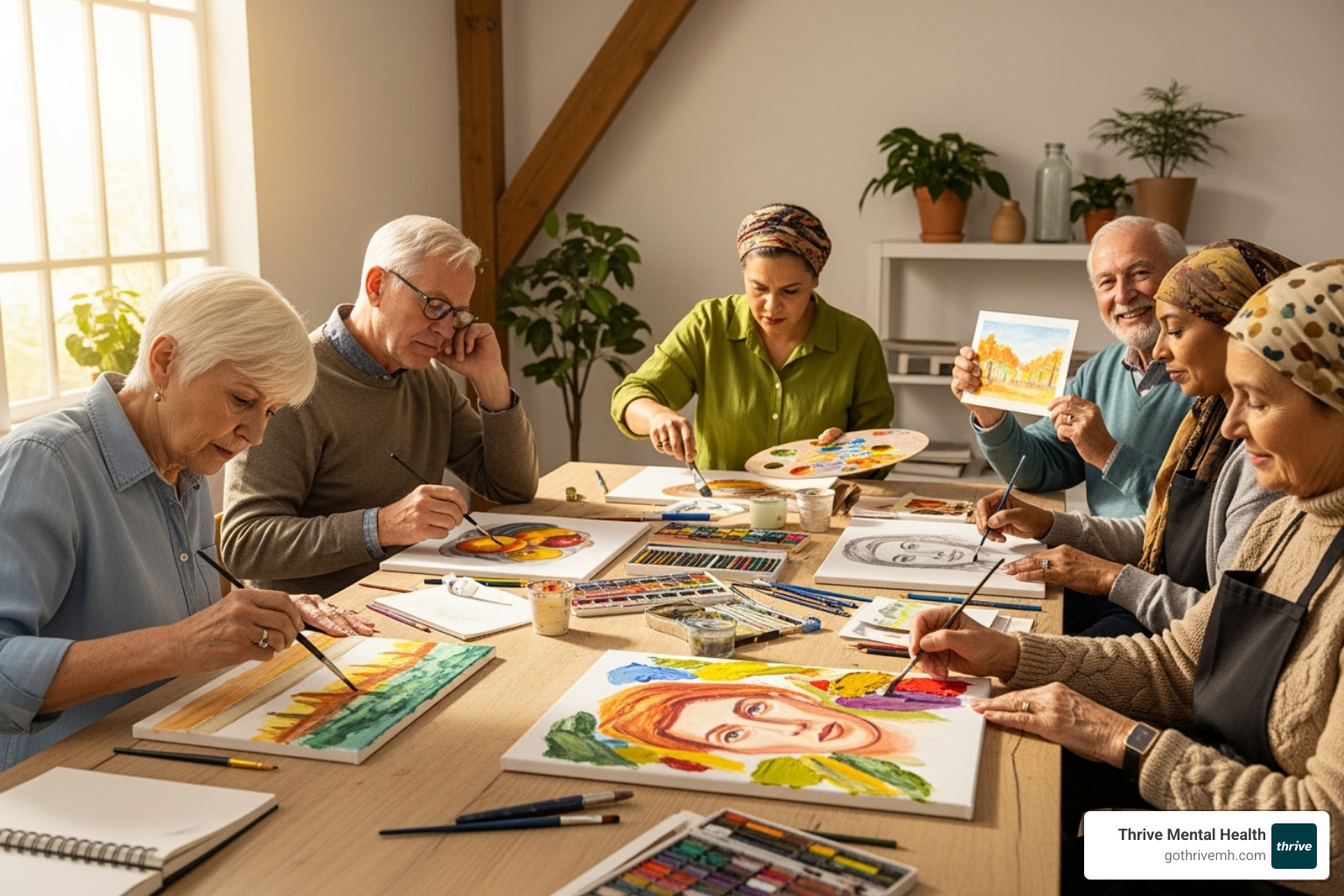
Seniors can express feelings through colors and shapes instead of words. The shared activity sparks conversation and builds friendships, creating vital support networks. This is especially crucial in residential care settings, where art can transform internal pain into external expression and renewed hope.
Processing Grief & Refinding Purpose After Loss
Grief in later life is complex, encompassing the loss of loved ones, abilities, and roles. Art therapy offers a compassionate way to steer this sorrow.
Creating memorial pieces, like a collage or painting, allows seniors to honor loved ones and make abstract grief tangible. It provides a space to express the full spectrum of loss without judgment. Life review through art, such as creating digital collages, helps seniors reflect on their experiences and build a new sense of purpose. This process, sometimes called “gerotranscendence,” helps them find meaning for the future while carrying love for the past forward.
Supporting Seniors with Cognitive Decline & Dementia
For the 5.4 million Americans with Alzheimer’s and dementia, art therapy offers a powerful non-pharmacological intervention. It shifts the focus from what’s lost to what’s still possible, engaging abilities that often remain intact as memory fades.
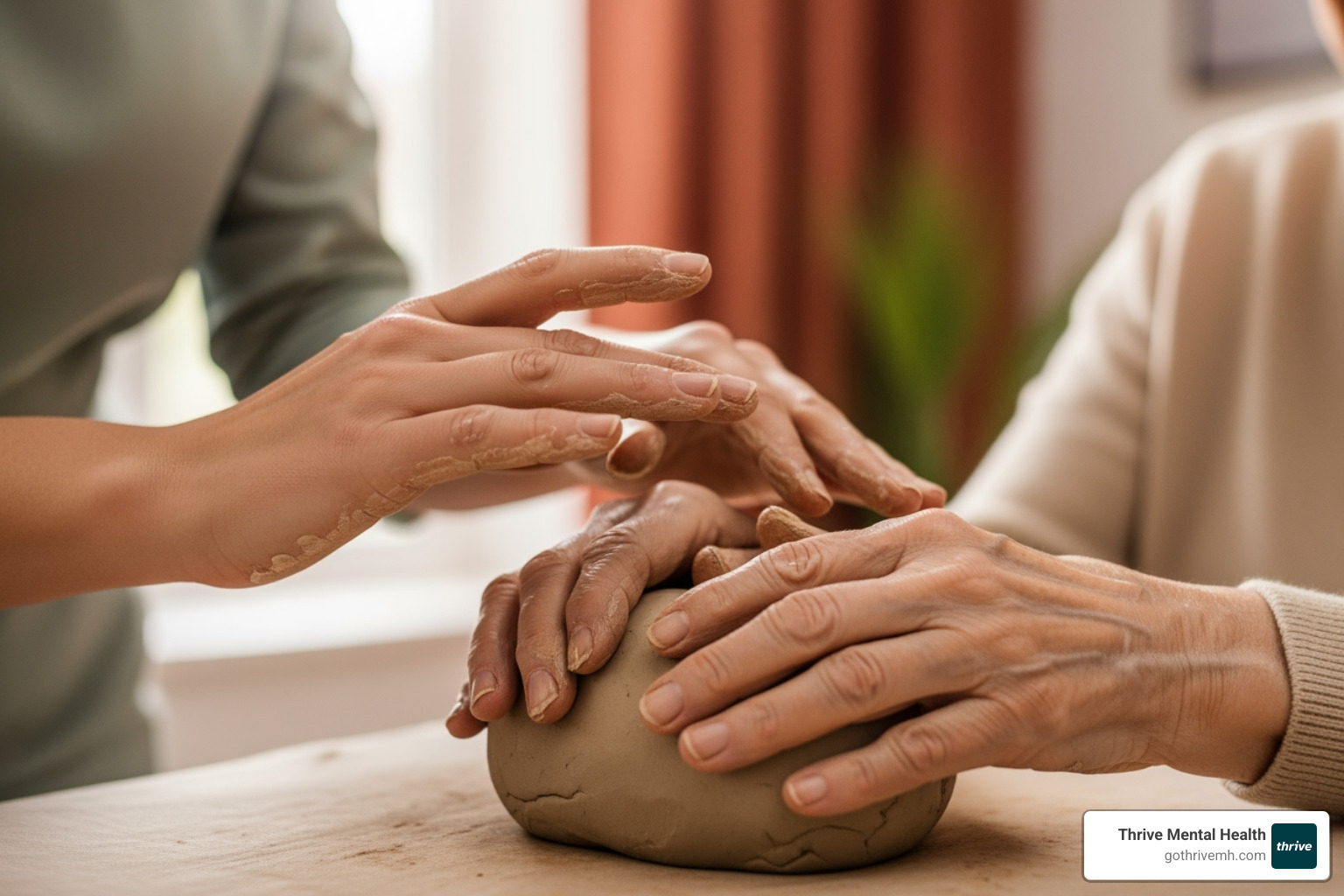
The sensory experience of creating art is grounding and can evoke positive emotions. When words become difficult, art serves as an alternative communication tool, reducing frustration and preserving dignity. The process is more important than the product; these creative moments help maintain identity and self-worth. As detailed in this art therapy for dementia review, this approach can provide valuable insights for care planning.
Get Started: Simple Art Therapy Activities & How to Find Support
The beauty of art therapy for seniors lies in its simplicity. You don’t need a studio to begin, as the magic happens in the creative process itself. Successful programs often use an “open studio” model, giving participants the freedom to choose materials and fostering a sense of autonomy.

Activities are always adapted to individual preferences and abilities. For example, someone with arthritis might prefer clay sculpting over detailed drawing. The goal is engagement and expression, not perfection.
What Are the Best Art Therapy Activities for Seniors?
The best activities vary by individual preference and ability. Here are some popular options:
- Collage and memory boxes: Creating visual stories with photos, clippings, and mementos is a powerful way to process grief or celebrate life milestones.
- Painting and drawing: These offer great flexibility. Watercolors are forgiving for beginners, while acrylics offer vibrant color. Even finger painting can be a freeing sensory experience.
- Clay modeling: The tactile experience of working with clay is grounding and improves fine motor skills. Sculpting abstract forms or small figures can be a meditative process.
- Digital storytelling: Creating digital collages or video narratives is an accessible option for those with mobility challenges, allowing them to tell their story in a modern format.
- Other ideas: Creating mandalas promotes mindfulness, using grief journals helps process loss, and exploring abstract painting allows for pure emotional expression.
For more detailed instructions and additional creative ideas, explore our comprehensive guide to Therapeutic Art Activities.
How to Find a Qualified Art Therapist
Finding a qualified art therapist is crucial. Unlike a recreational art class, art therapy is a mental health profession. A qualified therapist holds a master’s degree and credentials like ATR or ATR-BC. They follow strict ethical guidelines for your safety.
To find a professional, use the American Art Therapy Association’s online locator tool. Also, check with local community centers and senior living facilities, which often host programs.
For those who prefer staying home, online art therapy is a highly effective and accessible option. When interviewing therapists, ask about their experience working with older adults to ensure they can meet your specific needs.
Insurance Coverage for Art Therapy in Florida
Navigating insurance coverage for mental health services doesn’t have to be overwhelming. At Thrive Mental Health, we’re committed to making our evidence-based programs as accessible as possible for seniors throughout Florida, including our art therapy for seniors components.
We work with a wide range of insurance providers to help cover our Intensive Outpatient Programs (IOP) and Partial Hospitalization Programs (PHP), which integrate art therapy alongside other therapeutic modalities. Common providers we work with include Cigna, Optum, Aetna, and Florida Blue, among many others.
For our Florida service areas, we understand the unique needs of these communities. Our team is ready to help you understand your benefits and access the care you need, no matter where you are in the state.
The easiest way to determine your coverage is through our quick, confidential online verification tool. You can verify your insurance in just 2 minutes with no obligation. Our knowledgeable team is also available by phone to walk you through the process, answer questions about your specific benefits, and explain how art therapy fits into your overall treatment plan.
We believe that cost shouldn’t be a barrier to healing. That’s why we work diligently with insurance companies and offer various payment options to make our comprehensive programs accessible to seniors who can benefit from this transformative approach to mental health care.
To get started, visit our Verify Insurance page or call us directly. We’re here to help you steer this process with compassion and clarity.
Frequently Asked Questions about Art Therapy for Seniors
We hear these questions all the time from seniors and their families who are curious about art therapy for seniors. Let me address the most common concerns with straightforward, honest answers.
Do I need to be “good at art” to benefit from art therapy?
Absolutely not. You don’t need any artistic talent. Art therapy focuses on the creative process and self-findy, not the final product. A qualified therapist provides a judgment-free space where the act of creating is what matters for healing.
How is art therapy different from a regular art class?
An art class teaches artistic techniques with the goal of creating a specific product. Art therapy is a mental health profession where a trained therapist uses the creative process to help you achieve therapeutic goals, like processing grief or managing anxiety. The focus is on healing and self-exploration, not just skill-building.
Can art therapy be done virtually for seniors?
Yes. Research shows that online art therapy is highly effective, making it an excellent option for seniors with mobility challenges or who prefer the comfort of home. Virtual sessions remove barriers to care, and many seniors feel more relaxed in their own environment. The therapeutic connection remains just as powerful through a screen.
Does Thrive Mental Health offer art therapy as part of IOP/PHP?
Absolutely! We’re proud to integrate art therapy for seniors into our comprehensive Intensive Outpatient Programs (IOP) and Partial Hospitalization Programs (PHP). We believe in treating the whole person, and creative expression is a powerful piece of that puzzle.
Our expert-led programs are custom to individual needs, and art therapy serves as one of many evidence-based approaches we use. Whether you’re dealing with depression, anxiety, grief, or life transitions, art therapy within our structured programs provides a unique way to process emotions and build coping skills alongside other therapeutic modalities.
You can learn more about our IOP programs and PHP programs to see how art therapy might fit into your personalized treatment plan. We offer both virtual and hybrid options with flexible evening scheduling.
How do I verify my insurance for art therapy at Thrive?
We’ve made this as simple as possible because we know insurance questions can feel overwhelming. You can verify your insurance coverage in just 2 minutes through our secure online tool, it’s completely free and there’s no obligation.
If you prefer talking to a real person (and many of our seniors do!), you can call our compassionate team at 561-203-6085. They’ll walk you through your benefits, explain what’s covered, and answer any questions about accessing art therapy through our IOP or PHP programs.
We work with major insurance providers including Cigna, Optum, Aetna, and Florida Blue, among others. Our goal is making quality mental health care, including art therapy for seniors, as accessible as possible. Don’t let insurance confusion keep you from getting the support you deserve.
FAQ Schema (JSON-LD) Suggestion:
{
  "@context": "https://schema.org",
  "@type": "FAQPage",
  "mainEntity": [
    {
      "@type": "Question",
      "name": "Do I need to be good at art to benefit from art therapy?",
      "acceptedAnswer": {
        "@type": "Answer",
        "text": "No. Art therapy focuses on the creative process, not the final product. All skill levels are welcome."
      }
    },
    {
      "@type": "Question",
      "name": "How is art therapy different from a regular art class?",
      "acceptedAnswer": {
        "@type": "Answer",
        "text": "Art therapy is led by a trained therapist and focuses on mental health goals, not just artistic skills."
      }
    },
    {
      "@type": "Question",
      "name": "Can art therapy be done virtually for seniors?",
      "acceptedAnswer": {
        "@type": "Answer",
        "text": "Yes. Online art therapy is effective and accessible for seniors who prefer care from home."
      }
    },
    {
      "@type": "Question",
      "name": "Does Thrive Mental Health offer art therapy as part of IOP/PHP?",
      "acceptedAnswer": {
        "@type": "Answer",
        "text": "Yes. Thrive includes art therapy in our IOP and PHP programs for adults and seniors."
      }
    },
    {
      "@type": "Question",
      "name": "How do I verify my insurance for art therapy at Thrive?",
      "acceptedAnswer": {
        "@type": "Answer",
        "text": "You can verify your insurance online or call Thrive for a free, no-obligation benefits check."
      }
    }
  ]
}
Summary: Why Art Therapy for Seniors Is a Game-Changer
Art therapy for seniors is a powerful tool for navigating the challenges of aging. It leverages neuroplasticity to sharpen memory, provides a non-verbal outlet to ease depression and anxiety, and combats the loneliness epidemic by building social connections.
The benefits are physical, too, improving fine motor skills and offering a creative form of pain management. The key to art therapy is its accessibility: the focus is on the creative process, not the final product, so no artistic skill is required.
Qualified support is available through certified art therapists, with virtual options making care accessible to everyone. At Thrive Mental Health, we integrate art therapy into our virtual IOP programs because we know creative expression is essential for healthy aging. It allows seniors to add bold strokes of connection and purpose to their lives, declaring that their story is still being written.
If you’re in crisis, call/text 988 right now. You are not alone.
Ready for support? Thrive offers virtual IOP with evening options. Verify your insurance in 2 minutes (no obligation) -> Start benefits check or call 561-203-6085. If you’re in crisis, call/text 988.

This article is for informational purposes only and is not a substitute for individualized clinical advice or insurance verification.