





Is cognitive behavioral therapy effective? 1 Proven Relief
Is Cognitive Behavioral Therapy Effective? The Data You Need to See
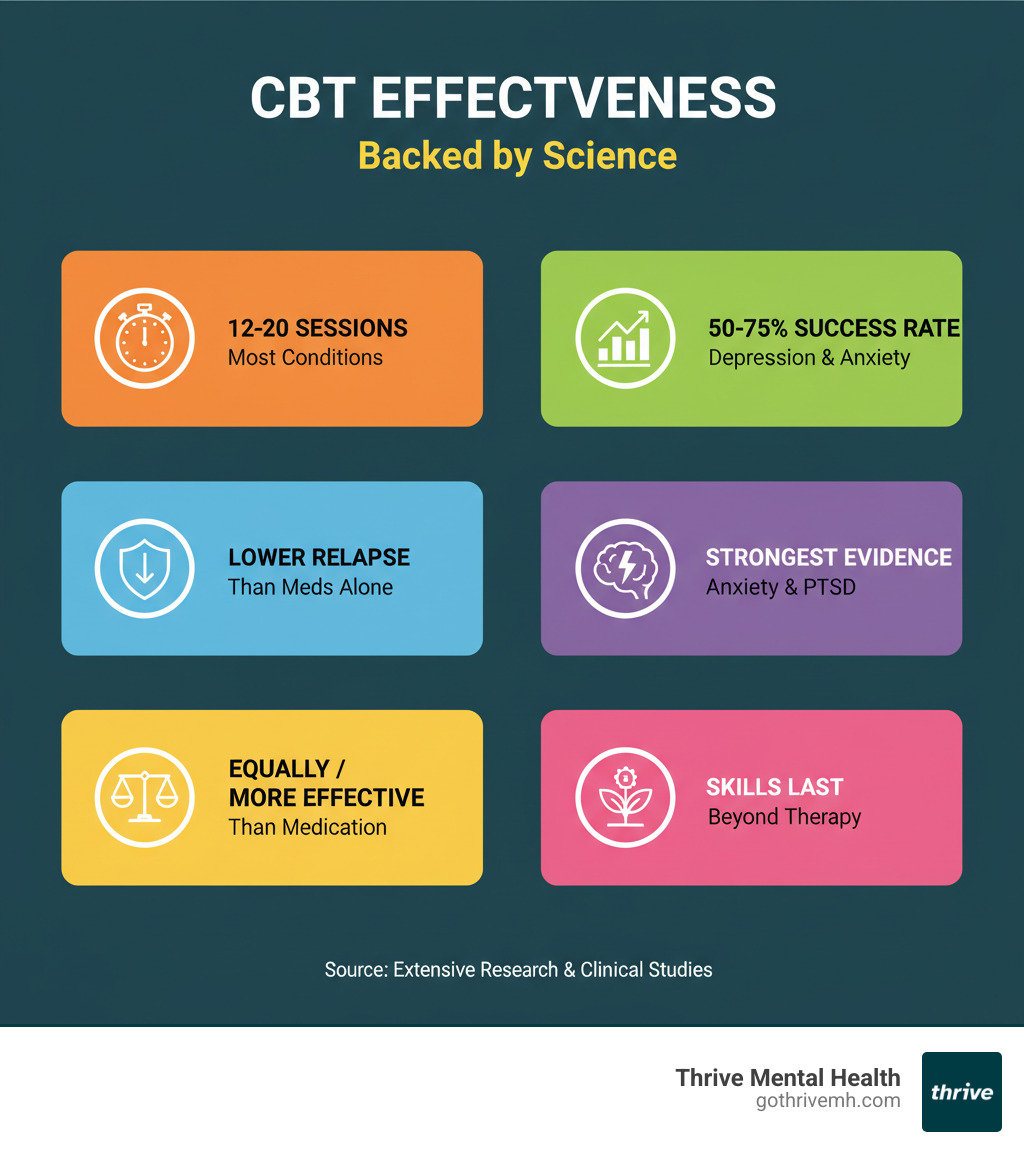
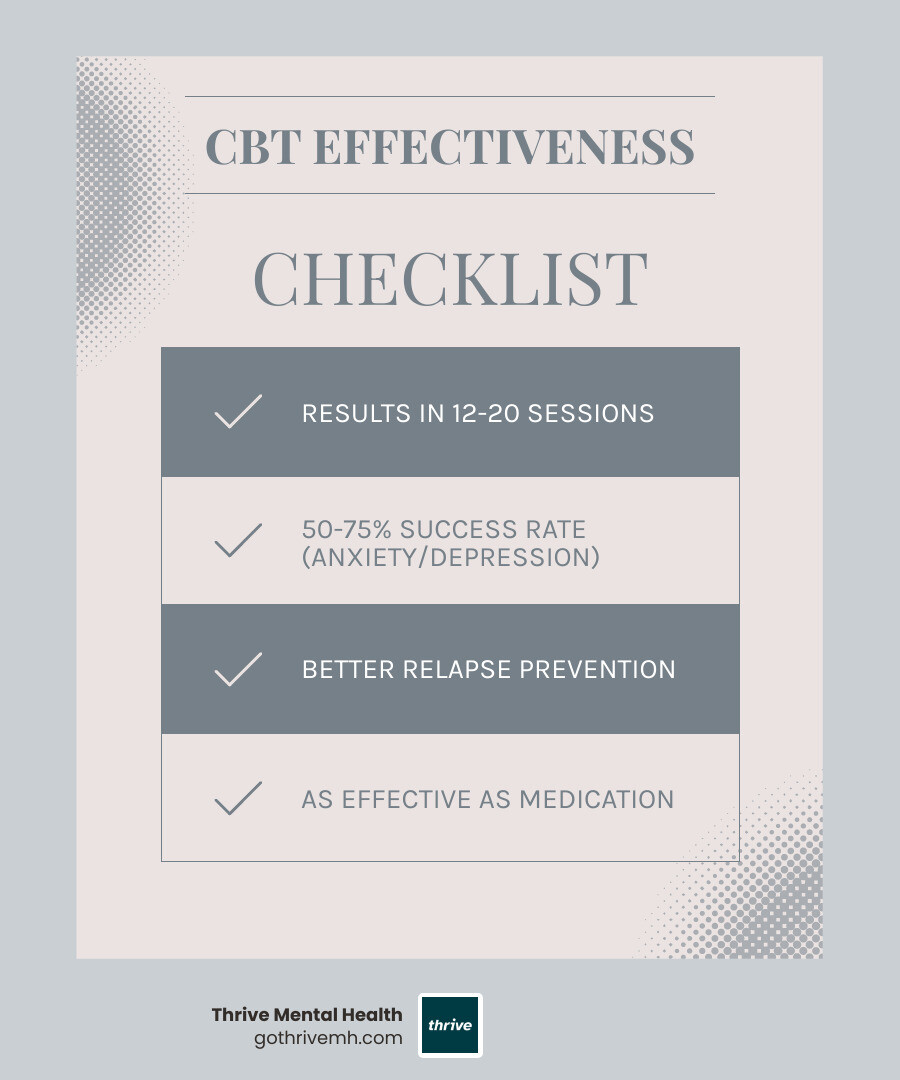
Is cognitive behavioral therapy effective? Yes, the evidence is overwhelming. CBT is the most researched form of psychotherapy, with hundreds of studies showing it works for depression, anxiety, PTSD, and more. Most people see significant improvement in 12-20 sessions, often matching or outperforming medication. Response rates range from 50-75% for common conditions, with lower relapse rates than medication alone. It’s called the “gold standard” because no other therapy has been proven systematically superior.
Quick Answer: Does CBT Work?
| Question | Answer |
|---|---|
| Is it proven? | Yes, most researched therapy, backed by 250+ meta-analyses |
| What does it treat? | Depression, anxiety, PTSD, OCD, eating disorders, chronic pain, insomnia |
| How fast? | Most see results in 12-20 weekly sessions |
| Success rate? | 50-75% for anxiety and depression; as effective as medication |
| Long-term? | Better relapse prevention than medication alone |
| Who benefits most? | People ready to actively practice skills between sessions |
If you’re tired of wondering if therapy actually changes anything, you need to know that CBT isn’t about endless reflection. It’s a structured, goal-focused approach that teaches you to rewire the patterns keeping you stuck. It’s not magic, it’s a learnable skill set. And the research is clear: when you work with a trained therapist and practice between sessions, CBT delivers measurable results fast.
However, effectiveness isn’t one-size-fits-all. Some people thrive in 8 weeks, while others need longer. And yes, it requires homework, because change happens between sessions, not just during them.
This guide breaks down what actually works, for whom, and why. We’ll cover the science, the process, and how to know if CBT is the right fit for you.
As Chief Clinical Officer at Thrive Mental Health, I’ve seen that when CBT is done right, with the right support, it works.
Explore more about is cognitive behavioral therapy effective:
Introduction: What Is CBT and Why Should You Care?
Cognitive Behavioral Therapy (CBT) is a powerful, evidence-based psychotherapy that helps people develop skills to become and stay healthy. At its core, CBT operates on the principle that our thoughts, feelings, and behaviors are interconnected. By changing unhelpful thinking patterns and learned behaviors, we can improve our emotional well-being.
This means psychological issues are often rooted in problematic core beliefs, and we can learn better ways of coping. CBT is a structured, goal-oriented approach where you work collaboratively with a therapist. Instead of dwelling on the past, it focuses on the “here-and-now” to understand how your current perceptions influence your feelings and actions.
The beauty of CBT lies in its practical, short-term nature. It helps you identify, question, and change the thoughts and beliefs that contribute to your difficulties. By understanding this cognitive model, the interplay between thoughts, feelings, and behaviors, you can begin to rewire the patterns that keep you stuck.
Why CBT Is the Top Choice for Fast Anxiety & Depression Relief
When you’re struggling with anxiety or depression, you need a solution that works. Cognitive Behavioral Therapy is the most researched form of psychotherapy in existence, backed by over 250 meta-analyses. This massive body of evidence is why mental health experts consistently call CBT the “gold standard” of psychotherapy.
The Proof: What Science Says About CBT’s Results
The numbers tell a compelling story. A review of meta-analyses on CBT efficacy examined decades of research and found that CBT consistently delivers strong results, particularly for anxiety disorders and depression. We’re not talking about marginal changes, but measurable, life-changing results.
The strongest scientific support for CBT exists for anxiety disorders, including social anxiety, panic disorder, PTSD, and OCD. It also shows robust effectiveness for somatoform disorders (when emotional distress appears as physical symptoms), bulimia, anger control problems, and general stress. Study after study confirms that is cognitive behavioral therapy effective for creating lasting change. Scientific research on CBT’s effectiveness demonstrates why this approach has earned its reputation, it works reliably.
How Does CBT Stack Up Against Other Approaches?
How does CBT compare to other treatments? The answer might surprise you.
When compared to medication, CBT holds its own remarkably well. For severe depression, studies show CBT is as effective as medication. For anxiety disorders, it’s often recommended as the first-line treatment. The biggest advantage is relapse prevention. With CBT, you learn skills that become part of your mental toolkit forever. The skills stick with you long after therapy ends.
Compared to other forms of psychotherapy, no other therapy has been systematically proven superior. When researchers find differences between CBT and other approaches, those differences typically favor CBT. This doesn’t mean other therapies don’t work, but CBT’s combination of structure, skill-building, and research support makes it stand out.
| Therapy Type | Structure & Duration | Primary Focus | Typical Results |
|---|---|---|---|
| Cognitive Behavioral Therapy (CBT) | Structured, short-term (6-20 sessions) | Present-focused thoughts, feelings, behaviors | Rapid symptom reduction, long-term coping skills |
| Psychodynamic Therapy | Less structured, longer-term (months-years) | Past experiences, unconscious patterns, relationships | Deeper self-understanding, resolution of underlying conflicts |
| Interpersonal Therapy (IPT) | Structured, short-term (12-16 sessions) | Current interpersonal relationships | Improved relationships, symptom reduction in depression |
| Dialectical Behavior Therapy (DBT) | Structured, longer-term, group & individual | Emotion regulation, distress tolerance, mindfulness | Reduced self-harm, improved emotional regulation |
CBT is often recommended first because it’s practical and empowering. You become an active participant in your own recovery. It works well alone or combined with medication, offering flexibility for your needs. At Thrive Mental Health, our Virtual IOP programs integrate CBT principles to provide evidence-based treatment that fits your life.
What Can CBT Help With? Conditions and Challenges Treated

Is cognitive behavioral therapy effective for just one or two things? Not at all. CBT has proven itself across a wide range of mental, emotional, and even physical health challenges. Its versatility is why it’s a go-to approach for therapists and treatment programs worldwide.
Most Common Mental Health Conditions Treated with CBT
- Depression: CBT was originally developed for depression and remains a powerful tool. For moderate to severe depression, it’s as effective as medication but with better long-term relapse prevention.
- Anxiety Disorders: This is where CBT’s evidence is strongest. It’s highly effective for panic disorder, phobias, social anxiety, and Generalized Anxiety Disorder (GAD), teaching you to manage worry and face fears. Read more on managing anxiety to see how these techniques work in practice.
- PTSD and OCD: For Post-Traumatic Stress Disorder (PTSD), CBT helps process traumatic memories without being overwhelmed. For Obsessive-Compulsive Disorder (OCD), a specific type of CBT called Exposure and Response Prevention (ERP) is the gold standard treatment.
- Eating Disorders: CBT helps address distorted thinking around body image and break dysfunctional eating patterns in conditions like bulimia and binge-eating disorder.
- Bipolar Disorder & Schizophrenia: While not a standalone treatment, CBT is an effective part of a comprehensive plan with medication to help manage symptoms and prevent relapses.
Other Life Problems CBT Can Help You Overcome
You don’t need a formal diagnosis to benefit from CBT. It’s also effective for:
- Substance Use Disorders: Helps identify triggers and build a relapse prevention plan.
- Relationship Stress: Improves communication and conflict resolution skills.
- Insomnia: Cognitive Behavioral Therapy for Insomnia (CBT-I) is more effective long-term than sleeping pills.
- Chronic Pain and Fatigue: Changes how you perceive and cope with pain, improving quality of life for conditions like fibromyalgia and migraines.
- Anger Management: Teaches you to identify triggers and develop healthier responses.
- General Stress: Equips you with practical tools to manage the pressures of modern life.
How CBT Works: What to Expect in Your Therapy Journey
CBT is an active, collaborative process. Think of it as working with a coach. You and your therapist are partners focused on equipping you with practical skills so you can eventually become your own therapist.
The approach is structured and present-focused. We concentrate on what’s happening in your life right now and how to develop more effective ways of coping. Every session has a purpose, and homework assignments help you practice new skills in the real world. CBT is empowering, you’re not waiting for a fix, you’re learning tools for life.
Inside a Typical CBT Session
Your first session is an assessment to gather information, understand your goals, and ensure it’s a good fit. From there, you’ll establish clear, measurable treatment goals to keep therapy focused.
A typical 60-minute weekly session includes:
- Check-in: A quick mood check and review of your week.
- Agenda Setting: Collaboratively deciding what to focus on.
- Homework Review: Discussing what you practiced and learned.
- Skill Building: Applying CBT techniques to current problems.
- New Homework: Assigning new practice exercises.
- Summary & Feedback: Wrapping up and getting your feedback on the session.
Homework is the secret sauce of CBT. Change happens when you practice new ways of thinking and behaving in your actual life. For most people, CBT involves 12 to 20 sessions, but some see improvement much faster, especially with active engagement. If you’re looking for a more intensive approach, you can find more info about Virtual IOP programs that provide more frequent support.
CBT Tools and Techniques You’ll Learn
CBT gives you a toolkit of concrete strategies you can use anytime.
 From Cisgender to Queer: Navigating LGBTQIA+ Terms with EaseMental Health

- Cognitive Restructuring: This is the core of CBT. You learn to identify, challenge, and reframe distorted thinking patterns like catastrophizing (jumping to the worst conclusion) or mind-reading (assuming you know what others think).
- Socratic Questioning: Your therapist asks questions to help you examine the evidence for your thoughts and find new perspectives on your own.
- Behavioral Activation: Especially helpful for depression, this involves scheduling positive activities to improve your mood, even when you don’t feel like it.
- Exposure Therapy: A game-changer for anxiety. You gradually face feared situations in a safe, controlled way until the fear loses its power.
- Journaling: Keeping a thought record helps you track situations, thoughts, and feelings to build self-awareness and spot patterns.
- Relaxation Skills: Techniques like deep breathing and mindfulness help calm your mind and body, managing the physical symptoms of stress and anxiety.
These aren’t just therapy techniques, they’re skills for life.
Is CBT Right for You? How to Decide and Find a Qualified Therapist
Is cognitive behavioral therapy effective for you specifically? The answer often comes down to fit. CBT thrives on active participation. If you’re motivated to learn practical strategies and practice them between sessions, CBT is likely a great match.
It’s particularly appealing if you prefer a structured, goal-oriented approach with a clear roadmap. While many people see results in 12-20 sessions, it requires commitment. Engaging with difficult feelings can cause temporary discomfort, but a skilled therapist guides you through it. The payoff is long-term improvement and a reduced risk of relapse.
Who Might Not Be the Best Fit for CBT?
CBT is not universally suitable. It may not be the best fit if you:
- Are experiencing severe mental illness that needs stabilization first, like acute psychosis.
- Are not ready for homework, as practice between sessions is crucial for success.
- Prefer unstructured, past-focused therapy to explore childhood experiences without specific problem-solving goals.
- Have complex trauma, as you may need therapies that prioritize safety and stabilization first.
How to Find a Qualified CBT Therapist and Get Started
Finding the right therapist is key. Look for proper credentials, such as a Psychologist (Ph.D./Psy.D.), LCSW, LMFT, or LPC. Specialized certifications in CBT are also a good sign.
Don’t be shy about asking questions about their experience with your specific concerns. Most importantly, the therapeutic alliance, your sense of trust and collaboration with the therapist, is one of the strongest predictors of success. Trust your gut during an initial consultation.
We believe in providing custom, evidence-based care. If you need a higher level of care such as PHP, our team can help you find the right program.
Paying for CBT: Insurance Coverage in Florida
Many insurance plans offer benefits for mental health services, including CBT. In-network providers have lower out-of-pocket costs. Out-of-network plans may still cover a portion, but you’ll likely pay more upfront.
To check your coverage, contact your insurance company about your deductible, co-pays, and any session limits. In markets like Florida (including Miami, Orlando, Tampa, and Jacksonville), common providers include Cigna, Optum, Florida Blue, and Aetna. Many other plans also provide robust coverage.
Thrive Mental Health works with various insurance providers. You can Verify your insurance coverage through our quick, no-obligation benefits check to get a clear picture of your costs.
Frequently Asked Questions about CBT’s Effectiveness
Here are straightforward answers to the most common questions about whether cognitive behavioral therapy is effective.
How long does it take for CBT to work?
Most people see significant results within 12-20 weekly sessions (roughly 3-5 months), especially for anxiety and depression. However, positive changes can often be noticed within just a few weeks. Progress is fastest for those who actively participate and practice the skills between sessions.
What is the success rate of CBT?
The success rate is impressive. Research shows 50-75% of people experience significant improvement with CBT for depression and anxiety. It is as effective as medication for many conditions and often more effective long-term due to its focus on skill-building, which leads to lower relapse rates.
What are the downsides of CBT?
CBT requires real commitment and homework. It can also be emotionally challenging at times, as it involves confronting uncomfortable thoughts and situations. Its focus is on the present, not the past, so it may not be a fit for those seeking deep exploration of childhood experiences. Finally, finding a truly skilled CBT therapist can take effort.
Can I do CBT on my own?
For mild issues, self-help resources like books and apps can be helpful. However, for moderate to severe conditions, working with a qualified therapist provides the best results. A therapist offers personalized guidance, accountability, and expertise that you can’t get on your own, ensuring the techniques are applied correctly to your specific situation.
Take the Next Step: Get Evidence-Based Care That Works
You’ve learned that is cognitive behavioral therapy effective, the science is clear and the results are measurable. Now, what’s your next move?
If you’re ready to stop wondering and start changing, you don’t have to do it alone. At Thrive Mental Health, we specialize in evidence-based care that fits your life. Our virtual and in-person intensive outpatient (IOP) programs are designed for adults and young professionals who need flexible, structured support.
We offer evening sessions so you don’t have to choose between treatment and your responsibilities. Our programs are built on the same goal-focused, skill-building CBT principles that create lasting change.
Ready to talk to someone today?
Ready for support? Thrive offers virtual IOP with evening options. Verify your insurance in 2 minutes (no obligation) or call 561-203-6085. If you’re in crisis, call/text 988.
If you’re in crisis, call/text 988 right now. You are not alone.

This article is for informational purposes only and is not a substitute for individualized clinical advice or insurance verification.