






post traumatic stress disorder treatment: Top 3 Hope
Understanding the Path from Trauma to Healing
Important: If you or someone you know is in crisis or having thoughts of suicide, call or text the 988 Suicide and Crisis Lifeline at 988 or chat at https://988lifeline.org/. In life-threatening situations, call 911.
If you’re in crisis, call/text 988 right now. You are not alone.
Post traumatic stress disorder treatment is not just possible, it’s highly effective. If you’re experiencing symptoms after a traumatic event, recovery is within reach. Here are the most proven treatment options available today.
Quick Answer: Evidence-Based PTSD Treatment Options
| Treatment Type | What It Does | Typical Duration |
|---|---|---|
| Cognitive Processing Therapy (CPT) | Helps you challenge unhelpful beliefs about trauma | 12 weekly sessions |
| Prolonged Exposure (PE) | Safely face trauma memories and avoided situations | 8-15 weekly sessions |
| Eye Movement Desensitization (EMDR) | Reprocess traumatic memories through bilateral stimulation | 3+ months of weekly sessions |
| Medication (SSRIs) | Reduces anxiety and depression symptoms | Ongoing, typically 12+ months |
About 6% of people will experience PTSD in their lifetime, with women being twice as likely as men. While trauma itself is common, affecting half of all adults, less than 10% develop PTSD. For those who do, recovery is the norm, not the exception.
When trauma occurs, your brain’s fight-or-flight response is activated. For most, symptoms like anxiety and flashbacks fade within weeks. If they persist for over a month and disrupt your life, PTSD may be present. The good news is that trauma-focused psychotherapy, the gold standard approach, helps most people significantly reduce or eliminate their symptoms. With the right support, you can move beyond the pain.
As a clinical team trained in EMDR, psychodynamic therapy, and trauma-informed care, we’ve spent our careers helping people access effective post traumatic stress disorder treatment through evidence-based programs that fit into real life.
Post traumatic stress disorder treatment vocabulary:
What is PTSD? Symptoms, Diagnosis, and When to Seek Help
Post-Traumatic Stress Disorder (PTSD) is what happens when your brain’s alarm system stays on long after danger has passed. After a terrifying event, it’s normal to feel shaken and on edge. But when those reactions don’t fade and the trauma keeps replaying for months, it may be PTSD.
PTSD is not a character flaw or a sign of weakness. It is a treatable medical condition with a biological basis. Your brain changed to protect you; post traumatic stress disorder treatment helps it change again toward healing. We dig deeper into understanding trauma here.
What are the Diagnostic Criteria for PTSD?
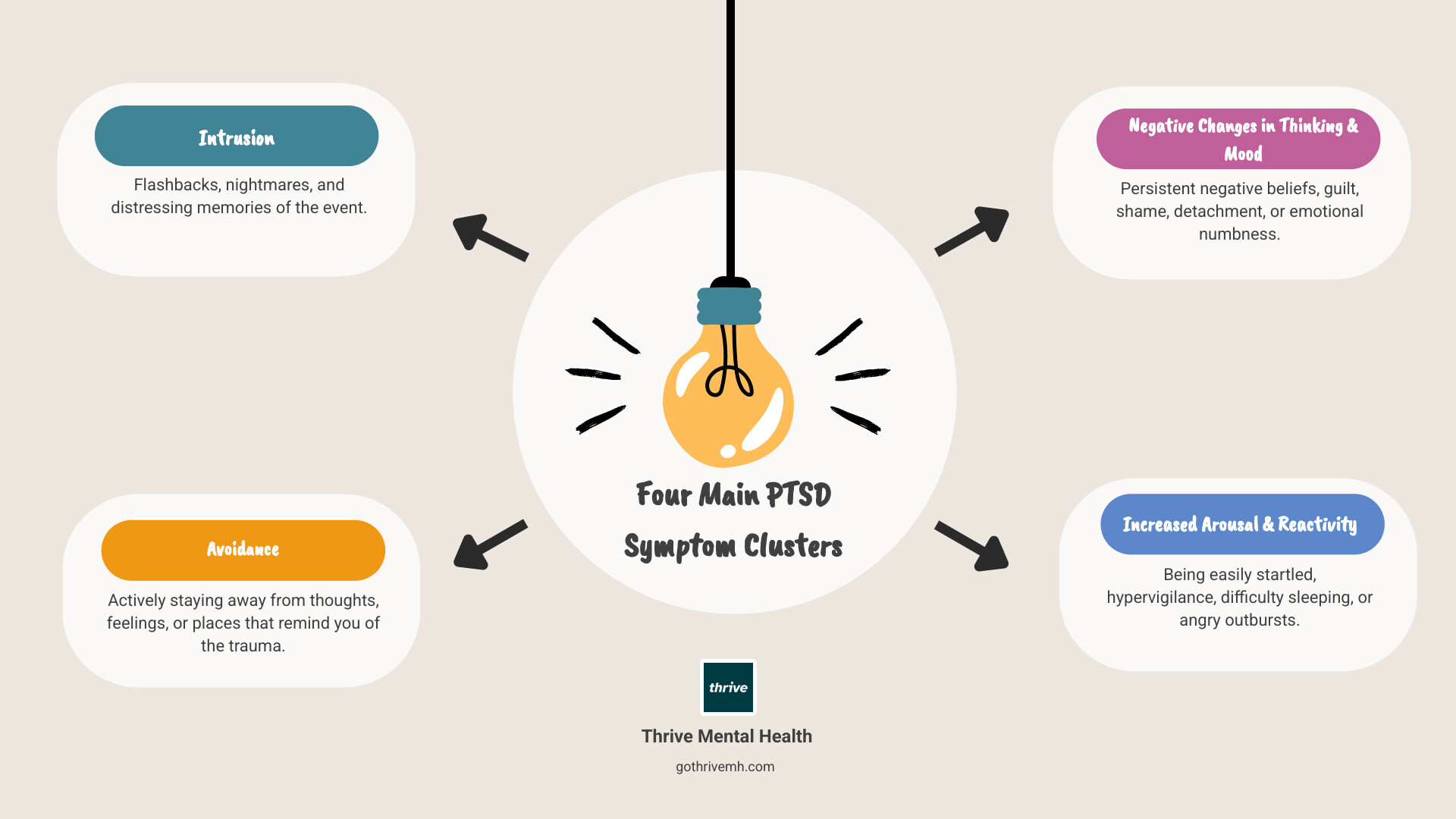
According to the DSM-5-TR, a PTSD diagnosis requires exposure to a traumatic event and experiencing symptoms from four distinct clusters for more than one month, causing significant distress or impairment in your daily life.
- Re-experiencing/Intrusion: Unwanted intrusive memories, distressing nightmares, or flashbacks where it feels like the trauma is happening again.
- Avoidance: Actively avoiding thoughts, feelings, people, or places connected to the trauma, which can shrink your world.
- Negative Changes in Thinking and Mood: Persistent negative beliefs (e.g., “I’m broken”), emotional numbness, guilt, shame, and an inability to feel joy or hope.
- Changes in Arousal and Reactivity: Being easily startled, feeling constantly on guard (hypervigilance), angry outbursts, trouble concentrating, or sleep problems.
Acute Stress Disorder vs. PTSD
Acute Stress Disorder (ASD) has nearly identical symptoms to PTSD, but the timing is different. ASD is diagnosed when symptoms last from three days to one month after the trauma. If they persist beyond one month, the diagnosis often shifts to PTSD. Early monitoring is crucial, as about half of those with ASD go on to develop PTSD.
Challenges in Diagnosis and Assessment Tools
Diagnosing PTSD can be complex because its symptoms overlap with depression, anxiety, and even physical conditions like chronic pain or digestive issues. A trained mental health professional is essential for an accurate diagnosis. Clinicians use structured interviews like the Clinician-Administered PTSD Scale for DSM-5 (CAPS-5) and self-report questionnaires like the PTSD Checklist for DSM-5 (PCL-5) to ensure diagnostic accuracy, which is the foundation for effective treatment.
Can PTSD Be Prevented After a Traumatic Event?
While we can’t prevent trauma, we can influence whether it becomes PTSD. Most people exposed to trauma do not develop the disorder. For those with mild symptoms, “watchful waiting” with a provider is often recommended, as two-thirds improve naturally. However, if symptoms are severe or last beyond four weeks, don’t wait. Evidence-based post traumatic stress disorder treatment should begin. Early, appropriate intervention can prevent acute stress from becoming chronic PTSD. Outdated single-session “debriefings” immediately after trauma can be harmful.
First-Line Psychotherapies for Post-Traumatic Stress Disorder Treatment
When you’re ready to heal, trauma-focused psychotherapy is the gold standard for post traumatic stress disorder treatment. The American Psychological Association strongly recommends these therapies because they work. Typically, treatment involves weekly 60-90 minute sessions for about 8-15 weeks. The key is finding a therapist specifically trained in these evidence-based methods.
These therapies are “trauma-focused,” meaning they help you directly process the traumatic experience rather than just talking around it. You can explore more info about overcoming trauma to understand the journey.
Cognitive Behavioral Therapy (CBT) for PTSD
CBT helps you identify and challenge the unhelpful thinking patterns that keep you stuck after trauma, such as believing you are always in danger. It’s not about pretending everything is fine; it’s about seeing your experience more clearly and accurately. You’ll also learn concrete stress management skills, like breathing techniques, to calm your nervous system. Many find that a combination of CBT and EMDR would be an effective treatment for their needs.
Prolonged Exposure (PE) Therapy
PE therapy operates on the principle that avoidance fuels fear. It helps you break this cycle by gradually and safely facing the memories and situations you’ve been avoiding. Through imaginal exposure (recounting the memory) and in-vivo exposure (real-life situations), you learn that these trauma reminders are not dangerous. This process helps you reclaim your life from the control of trauma.
Cognitive Processing Therapy (CPT)
CPT focuses on the distorted beliefs, or “stuck points,” that trauma creates about safety, trust, control, esteem, and intimacy. In a structured 12-session format, you’ll use writing exercises and guided questions to examine the trauma’s impact on your beliefs. You and your therapist work to challenge these stuck points and develop more balanced, accurate perspectives, fundamentally shifting how you understand what happened.
Eye Movement Desensitization and Reprocessing (EMDR)
EMDR is a highly researched, 8-phase therapy that helps your brain reprocess traumatic memories. While recalling a memory, you’ll engage in bilateral stimulation (like following a therapist’s finger with your eyes). This process helps shift the memory from a raw, emotionally charged state to a more manageable one. The goal isn’t to forget what happened, but to remember it without being overwhelmed by fear, shame, or panic. For a deeper dive, see our EMDR Complete Guide.
Medications and Second-Line Treatments for PTSD

While therapy is the gold standard for post traumatic stress disorder treatment, medication can be a vital support. It can calm severe symptoms like panic and anxiety, creating the stability needed to engage fully in therapy. Medication is not a standalone cure but a tool to manage debilitating symptoms so you can do the deeper work of healing.
FDA-Approved Medications for Post Traumatic Stress Disorder Treatment
The FDA has approved specific antidepressants that balance brain chemicals to ease PTSD symptoms.
- SSRIs (Selective Serotonin Reuptake Inhibitors): Sertraline (Zoloft) and paroxetine (Paxil) are the two FDA-approved SSRIs for PTSD. Sertraline is often tried first due to a milder side-effect profile. Fluoxetine (Prozac) is also commonly used.
- SNRIs (Serotonin-Norepinephrine Reuptake Inhibitors): Venlafaxine (Effexor XR) is another effective, recommended option.
If medication is effective, it’s typically continued for at least 12 months. You can find the latest information on the FDA website.
Other Medications and Managing Specific Symptoms
Targeted medications can address specific issues. Prazosin can reduce or eliminate trauma-related nightmares. For chronic insomnia, Cognitive Behavior Therapy for Insomnia (CBT-I) is more effective long-term than sleeping pills. It’s also important to screen for co-occurring conditions. Up to half of people with PTSD also have depression, and many struggle with substance use; treating these conditions simultaneously is critical for recovery and safety.
Emerging Treatments: The Potential of Psilocybin
Psychedelic-assisted therapy using psilocybin (from “magic mushrooms”) is a promising area of research for trauma treatment. Early studies, like a 2013 University of South Florida study, suggest it may help stimulate nerve cell regrowth and reduce conditioned fear. However, this treatment is still experimental and carries risks. It should only be explored in controlled, professional medical settings under strict supervision.

Navigating Recovery: Support, Self-Care, and Finding Help

Recovery from PTSD is a journey with ups and downs, but healing is absolutely possible. It requires professional treatment, a strong support system, and dedicated self-care. You don’t have to walk this path alone.
How to Find Professional Help for PTSD
Starting your search for post traumatic stress disorder treatment can feel overwhelming. Here are a few first steps:
- Talk to your primary care doctor. They can provide referrals and rule out physical issues.
- Use an online directory. SAMHSA’s online treatment locator can help you find services in your area.
- Ask the right questions. When contacting a therapist, ask about their training in evidence-based trauma therapies (CPT, PE, EMDR), their fees, and what treatment will look like. Finding the right fit is key.
Accessing Care in Indiana & California and Using Your Insurance
Geography and cost shouldn’t be barriers to care. Thrive Mental Health offers a virtual Intensive Outpatient (IOP) program accessible from anywhere, including evening options. We provide expert-led care to residents across multiple states including Indiana (Indianapolis, Fort Wayne), California (Sacramento, Los Angeles, San Diego), Florida (Tampa Bay, St. Petersburg, Miami, Orlando), South Carolina (Charleston, Columbia), and Arizona (Phoenix, Tucson). Learn more about our Virtual IOP for Trauma.
We work with major insurance providers like Cigna, Optum, and Florida Blue. You can verify your insurance benefits in about two minutes with zero obligation.
Self-Care Strategies to Support Your Post Traumatic Stress Disorder Treatment
What you do between sessions is crucial for healing. Focus on habits that regulate your nervous system.
- Physical Activity: Regular movement helps regulate the body’s stress response.
- Mindfulness: Grounding techniques and meditation can keep you in the present moment.
- Journaling: Writing can help process difficult thoughts and feelings.
- Routine: Consistent schedules for sleep and meals provide stability.
- Healthy Habits: A balanced diet, proper hydration, and limiting alcohol and drugs are critical for mental well-being.
- Connection: Combat isolation by connecting with trusted friends, family, or support groups.
How Loved Ones Can Support Someone with PTSD
Your support can make a huge difference. Here’s how to help:
- Educate yourself about PTSD to build empathy.
- Be patient and understanding. Recovery takes time.
- Listen without judgment or trying to “fix” the problem.
- Gently encourage treatment and offer practical help, like finding a therapist.
- Help create a safe environment by being mindful of triggers.
- Take care of yourself. Supporting someone with PTSD is demanding; your well-being matters too.
If you or someone you know is in crisis or having thoughts of suicide, call or text the 988 Suicide and Crisis Lifeline at 988 or chat at 988lifeline.org. In life-threatening situations, call 911.
Treating PTSD in Children and Teens
PTSD in young people can look different, sometimes appearing as disruptive behavior, clinginess, or reenacting trauma through play. Trauma-Focused CBT is the first-line treatment, adapted for different age groups with creative methods like art or play therapy. Family involvement is essential for creating a supportive home environment and is a core part of the healing process. Our guide on overcoming childhood trauma healing into adulthood offers more insight.
Frequently Asked Questions about PTSD Treatment
If you’re researching post traumatic stress disorder treatment, you probably have questions. Here are concise answers to the most common ones.
What is the most effective treatment for PTSD?
Trauma-focused psychotherapies are the most effective treatments. These include Cognitive Processing Therapy (CPT), Prolonged Exposure (PE), and Eye Movement Desensitization and Reprocessing (EMDR). They work by helping you process the traumatic memory directly in a safe, therapeutic setting.
How long does PTSD treatment take?
Most evidence-based therapies are designed for 8 to 15 weekly sessions, but the timeline varies. Treatment length depends on symptom severity, co-occurring conditions, and your individual pace. Progress isn’t always linear, and that’s okay.
Can PTSD be cured completely?
While there isn’t a “cure” that erases the memory, full recovery is absolutely possible. The goal of treatment is to process the trauma so it no longer controls your life. Many people who complete treatment find their symptoms are eliminated or significantly reduced, allowing them to live full, meaningful lives.
What are the first signs of PTSD?
Early signs usually appear within a month of the trauma and fall into four categories:
- Intrusive memories (flashbacks, nightmares)
- Avoidance of trauma reminders
- Negative changes in mood and thinking (guilt, numbness, fear)
- Increased arousal (being jumpy, irritable, having trouble sleeping)
Is medication or therapy better for PTSD?
Therapy is the recommended first-line treatment for PTSD, according to major guidelines. Medication (specifically SSRIs like Zoloft and Paxil) is also a first-line option and is often used to manage severe symptoms, making it possible to engage in therapy, or for those who prefer it over therapy.
<script type="application/ld+json">
{
  "@context": "https://schema.org",
  "@type": "FAQPage",
  "mainEntity": [
    {
      "@type": "Question",
      "name": "What is the most effective treatment for PTSD?",
      "acceptedAnswer": {
        "@type": "Answer",
        "text": "Trauma-focused psychotherapies (CPT, PE, EMDR) have the strongest evidence. They help you process the traumatic memory safely and directly."
      }
    },
    {
      "@type": "Question",
      "name": "How long does PTSD treatment take?",
      "acceptedAnswer": {
        "@type": "Answer",
        "text": "Most evidence-based therapies take 8-15 weekly sessions, but timelines vary based on severity, co-occurring issues, and your pace."
      }
    },
    {
      "@type": "Question",
      "name": "Can PTSD be cured completely?",
      "acceptedAnswer": {
        "@type": "Answer",
        "text": "There isn’t an eraser for memories, but full recovery is possible. Effective treatment can reduce or eliminate symptoms so trauma no longer controls your life."
      }
    },
    {
      "@type": "Question",
      "name": "What are the first signs of PTSD?",
      "acceptedAnswer": {
        "@type": "Answer",
        "text": "Intrusions (flashbacks, nightmares), avoidance, negative mood/thinking (guilt, numbness), and hyperarousal (startle, irritability, sleep problems)."
      }
    },
    {
      "@type": "Question",
      "name": "Is medication or therapy better for PTSD?",
      "acceptedAnswer": {
        "@type": "Answer",
        "text": "Therapy is first-line. SSRIs (like sertraline and paroxetine) are also first-line options, often used to manage severe symptoms or alongside therapy."
      }
    }
  ]
}
</script>
Conclusion: Your Path to a Thriving Life Beyond Trauma

If you’re reading this, you’ve already taken a brave step. Recovery from PTSD is not a straight line, but what research and clinical experience show is that healing is probable with the right support. The evidence-based treatments we’ve discussed, CPT, PE, EMDR, and medication, offer a real, tangible path toward a life that isn’t defined by trauma.
At Thrive Mental Health, we believe healing shouldn’t have to wait. Our virtual Intensive Outpatient (IOP) program offers flexible, expert-led post traumatic stress disorder treatment that fits into your life, with evening options available. We serve clients in Indiana, California, and beyond, working with major insurers like Cigna, Optum, and Florida Blue to make care accessible.
Your story doesn’t end with trauma. It continues toward healing and growth. We’re here when you’re ready to take the next step. Learn more about our Virtual IOP for Trauma and find out how we can support your journey.
Ready for support? Thrive offers virtual IOP with evening options. Verify your insurance in 2 minutes (no obligation) → Start benefits check or call 561-203-6085. If you’re in crisis, call/text 988.

This article is for informational purposes only and is not a substitute for individualized clinical advice or insurance verification.