
Your Compass: Locating a Therapist for Active and Passive Suicidality

Find a therapist who understands active vs passive suicidality: Crucial 2025 Hope
Why Finding the Right Therapist for Suicidal Thoughts Can Save Your Life
If you’re in crisis, call or text 988 right now. You are not alone and help is available 24/7.
When you’re dealing with suicidal thoughts, getting help isn’t enough. You need the right help. You need to find a therapist who understands active vs passive suicidality, because that distinction can be the difference between life and death.
Here’s the critical difference:
- Passive Suicidal Ideation: Wishing you were dead without a plan (e.g., “I wish I wouldn’t wake up”).
- Active Suicidal Ideation: Having thoughts of suicide with a plan or intent to act.
Both are serious. Passive thoughts often escalate to active ones, and research shows they are a significant risk factor for suicide attempts. An experienced therapist can accurately assess your risk, create a personalized safety plan, and use evidence-based therapies like CBT or DBT to help you steer the crisis and address the underlying pain.
At Thrive Mental Health, we specialize in connecting people to this life-saving care. Our virtual and in-person IOP/PHP programs across Florida are designed for this exact purpose. If you or a loved one is struggling, you’ve already taken the first step by seeking information. Let’s get you the right support.
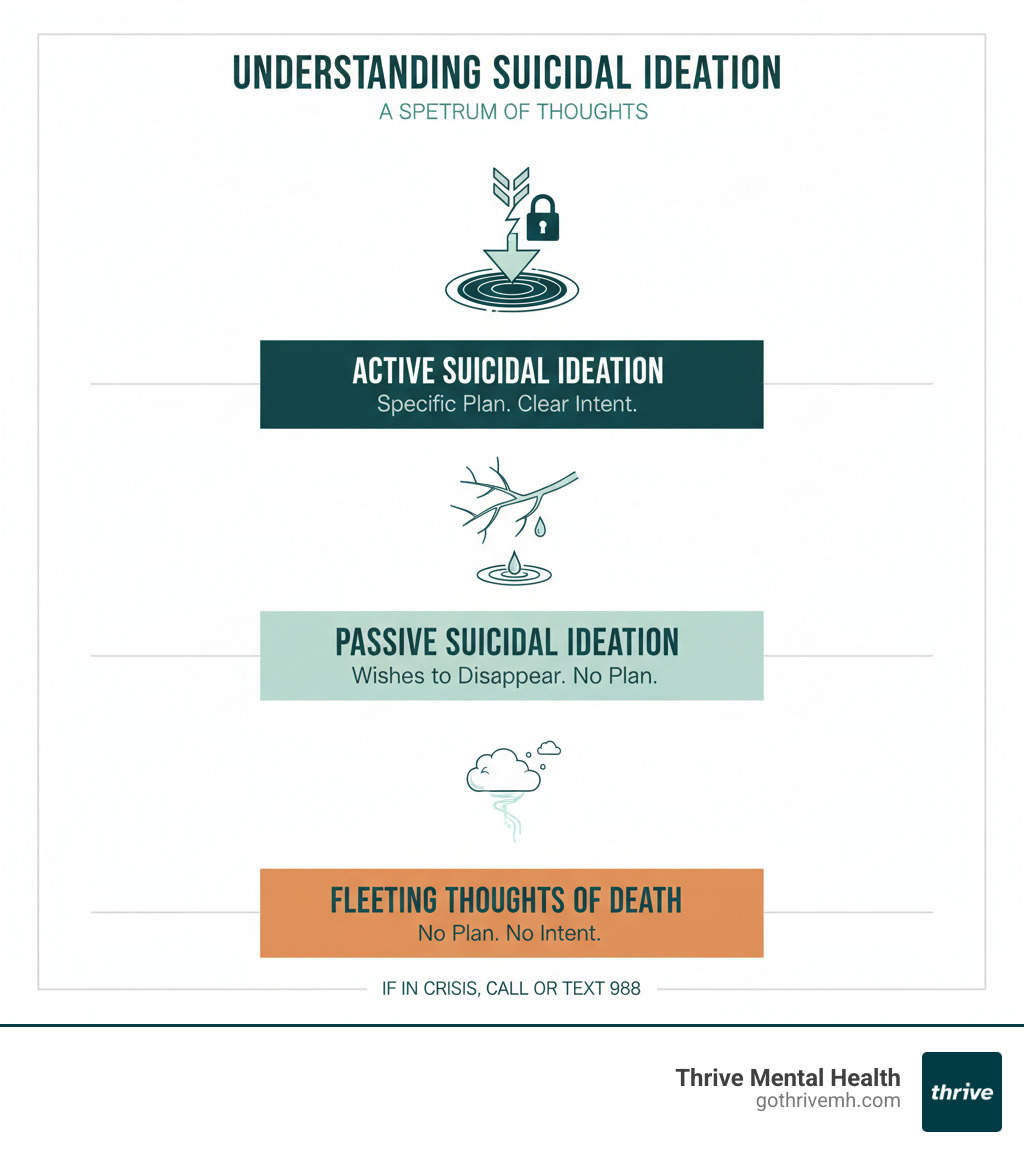
Active vs. Passive Suicidality: What You Must Know Now
To find a therapist who understands active vs passive suicidality, you must first know the difference. Suicidal ideation isn’t one single thing; it’s a spectrum of thoughts about ending your life, driven by overwhelming psychological pain and hopelessness.
The key difference is intent and planning. While both are serious, active suicidal ideation is a psychiatric emergency requiring immediate intervention Scientific research on suicidal ideation.
What are examples of passive suicidal thoughts?
Passive suicidal ideation is having thoughts of death or wishing you were dead without a specific plan or intent to act. It’s a dangerous warning sign that is often dismissed but is strongly associated with future suicide attempts. These thoughts sound like:
- “I wish I wouldn’t wake up.”
- “I just want to disappear.”
- “I wish something would happen to me so this pain would stop.”
- “My life isn’t worth living.”
These thoughts express a desire for suffering to end, not necessarily a decision to end it yourself.
What are examples of active suicidal thoughts?
Active suicidal ideation involves clear thoughts of suicide combined with a specific plan and the intent to act. This is a psychiatric emergency. Signs include:
- Saying “I am going to kill myself.”
- Researching suicide methods online.
- Acquiring means (e.g., buying a weapon, collecting pills).
- Setting a specific time or place for an attempt.
- Writing a suicide note or giving away possessions.
Here’s a direct comparison:
| Feature | Passive Suicidal Ideation | Active Suicidal Ideation |
|---|---|---|
| Definition | Thoughts of death or not wanting to exist, without a specific plan or intent to act. | Thoughts of suicide with a clear intent and often a specific plan to end one’s life. |
| Examples | “I wish I could go to sleep and not wake up.” “I wish I could just disappear.” | “I am going to kill myself.” “I have a plan to use [method] on [date].” |
| Level of Intent | Low to none; a desire for suffering to end, but no active steps toward self-harm. | High; a clear decision and intention to carry out a suicide attempt. |
| Urgency | Serious, requires professional help and ongoing monitoring to prevent escalation. | Immediate psychiatric emergency, requires urgent intervention and safety measures. |
If you or someone you know is experiencing active suicidal ideation, call or text 988 immediately. Thrive Mental Health’s Intensive Outpatient Program and Partial Hospitalization Program provide the urgent, structured care needed to manage these crises.
Why Ignoring Passive Suicidality Is Dangerous
Thinking passive suicidal thoughts aren’t a “real” danger because there’s no plan is a fatal mistake. Passive ideation is a critical warning sign of profound psychological pain. Research confirms that even without a plan, passive suicidal ideation significantly increases the risk of future suicide attempts.
The danger is escalation. Without intervention, passive wishes can become active plans. Psychology Today reports many who attempt suicide move directly from passive thoughts to impulsive action. This is often fueled by untreated conditions like depression, anxiety, or PTSD.
Thrive Mental Health’s Intensive Outpatient Program (IOP) provides structured treatment to address these root causes and prevent escalation before it’s too late.
What are the top risk factors and warning signs?
Recognizing risk factors and warning signs is key to intervention. Be aware of:
- Risk Factors: Previous suicide attempts, diagnosed mental health disorders (depression, bipolar disorder), substance use, chronic pain or illness, major relationship problems, and social isolation.
- Warning Signs: Talking about being a burden, withdrawing from activities, dramatic mood swings (especially a sudden calm after depression), reckless behavior, giving away possessions, and expressing hopelessness or having no reason to live.
If you see these signs, it’s time to act.
How is this different from intrusive thoughts or ADHD?
It’s crucial to distinguish suicidal ideation from other types of thoughts:
- Intrusive Thoughts: These are unwanted and distressing thoughts that clash with your values (ego-dystonic). For example, a fleeting, horrifying thought of jumping off a bridge that you have no desire to act on. The thought itself causes fear.
- Suicidal Ideation: These thoughts feel aligned with your current state of suffering (ego-syntonic). The idea of death feels like a potential escape from unbearable pain, even if you’re conflicted.
- ADHD’s Role: ADHD doesn’t cause suicidal thoughts, but its symptoms—impulsivity and emotional dysregulation—dramatically increase the risk of acting on them. The combination of ADHD with depression or anxiety is particularly dangerous, as confirmed by research in Frontiers in Psychiatry.
A skilled therapist can differentiate these issues and ensure you get the right treatment, whether it’s for OCD, ADHD, or suicidal ideation.
What to Do When Suicidal Thoughts Hit: Your 5-Step Action Plan
When suicidal thoughts feel overwhelming, taking action is a sign of courage, not weakness. Having a plan can be the difference between surviving a crisis and not. Our Partial Hospitalization (PHP) programs at Thrive Mental Health provide intensive daily support to stabilize you during a crisis.

Here are five concrete steps you can take right now.
What steps should I take right now?
- Tell Someone You Trust: Say the words out loud to a friend or family member: “I’m having thoughts about dying.” Speaking about it reduces its power and is the first step to getting help.
- Call a Crisis Line: If you feel unsafe or overwhelmed, call or text the 988 Suicide and Crisis Lifeline. It’s free, confidential, and available 24/7. You don’t need to be “bad enough” to call.
- Remove Lethal Means: Make your environment safer. Ask someone to hold onto medications, lock up firearms, or remove other items that could be used for self-harm. Creating distance saves lives.
- Create a Safety Plan: Work with a professional or trusted friend to write down your triggers, coping strategies, support contacts, and professional resources. This is your roadmap for a crisis.
- Seek Professional Help: Find a therapist trained in suicidality. Look for experts in CBT or DBT who can help you build long-term skills to manage these thoughts.
If you’re in crisis, call or text 988 right now. You are not alone and help is available 24/7.
How can I support a teen with passive suicidal thoughts?
Supporting a teen with passive suicidal thoughts requires empathy and immediate action. Don’t panic, but don’t dismiss it.
- Listen Without Judgment: Don’t try to “fix” it. Just listen. Create a safe space for them to share their pain.
- Validate Their Feelings: Say, “It sounds like you’re in a lot of pain.” Acknowledging their struggle is powerful.
- Take It Seriously: Passive thoughts are not “attention-seeking.” They are a serious cry for help. Act now.
- Get Professional Help: Remove barriers to therapy. Offer to find a therapist, make the call, and drive them. Thrive’s Virtual Therapy Programs can connect teens to care quickly.
- Secure Your Home: Lock up medications and firearms. Reduce risk during this vulnerable period.
- Learn Coping Skills Together: Explore DBT skills like mindfulness and distress tolerance. Make it a shared journey. This guide for teaching teens coping skills is a great place to start.
How to Find a Therapist in Florida Who Gets Active vs Passive Suicidality
Finding a therapist who understands active vs passive suicidality is about connecting with a specialist who knows how to keep you safe. Not all therapists have this deep experience.

At Thrive Mental Health, our therapists specialize in treating suicidal ideation. We offer Virtual Therapy Programs and in-person care across Florida, with locations in Tampa Bay, St. Petersburg, Miami, Orlando, Boca Raton, West Palm Beach, Jacksonville, Fort Lauderdale, Naples, and Sarasota.
What should I look for in a therapist?
Look for these non-negotiable qualities:
- Direct Experience with Suicidality: They should specialize in this area, not just general mental health.
- Expertise in Safety Planning: They must be skilled at creating collaborative, detailed safety plans.
- Training in Evidence-Based Practices: Look for certifications in Dialectical Behavior Therapy (DBT) and Cognitive Behavioral Therapy (CBT).
- A Collaborative, Non-Judgmental Approach: You should feel like a partner in your treatment, free to be honest without fear of judgment.
Ask potential therapists: “What is your process for creating a safety plan?” and “What therapeutic approaches do you use specifically for suicidal thoughts?” Their answers will reveal their expertise.
How can I find the right therapist for active vs passive suicidality?
- Start with a Specialized Provider: Thrive’s Virtual Therapy Programs are designed for this. Our team is trained in risk assessment and crisis management.
- Verify Your Insurance: Most major plans like Cigna, Optum, and Florida Blue cover this care. We can help you verify your benefits in about 2 minutes.
- Consider Virtual vs. In-Person: Our virtual programs offer effective, accessible care from home, removing barriers when you need help most.
What can I expect during the first therapy sessions?
Your first few sessions are about building a foundation of safety and trust. Expect a comprehensive assessment of your thoughts, history, and stressors. This is a judgment-free process to understand your risk level. A key early goal will be to create or refine your safety plan. You should feel heard and respected. According to the American Psychological Association, the therapeutic relationship is a powerful factor in healing. If you are in an acute crisis, the therapist will focus immediately on stabilization, which may include recommending a higher level of care like our Intensive Outpatient Program.
What Happens in Therapy? [Safety Plans, Treatment, and Medication]
Therapy for suicidal ideation is a structured process focused on safety, skills, and addressing root causes. At Thrive Mental Health, our Intensive Outpatient (IOP) and Partial Hospitalization (PHP) programs use evidence-based therapies like Cognitive Behavioral Therapy (CBT) and Dialectical Behavior Therapy (DBT) to move you from crisis to stability.

How does a therapist develop a safety plan?
A safety plan is your personalized roadmap for a crisis, built collaboratively with your therapist. It’s not a generic form; it’s a step-by-step guide you create together. Key components include:
- Identifying Triggers: What situations or feelings lead to suicidal thoughts?
- Personal Coping Strategies: Distractions and self-soothing techniques (e.g., music, walking).
- Support Contacts: Names and numbers of trusted people to call.
- Professional Resources: Your therapist’s number and crisis lines like 988.
- Securing Your Environment (Means Restriction): Limiting access to lethal means is a proven life-saving strategy.
- Emergency Steps: When to call 911 or go to an ER.
This is a living document that you will update as you build new skills.
When is medication part of the treatment plan?
Medication can be a life-changing tool, especially when underlying conditions like severe depression or bipolar disorder fuel suicidal thoughts. It is never a standalone solution but works best alongside therapy. A psychiatrist will determine if medication is appropriate to help stabilize your brain chemistry, allowing you to engage more fully in therapeutic work. At Thrive, we integrate medication management with therapy for comprehensive care.
How does intervention differ for active vs. passive suicidality?
The right intervention depends entirely on the type of ideation:
- For Active Suicidality: This is a psychiatric emergency. The focus is immediate safety, which may involve emergency services (911/988), hospitalization, and means restriction. Following the crisis, a higher level of care like an Intensive Outpatient (IOP) or Partial Hospitalization (PHP) program is essential for stabilization and relapse prevention.
- For Passive Suicidality: While still serious, the intervention focuses on preventing escalation. This typically involves outpatient therapy to build skills in emotion regulation and distress tolerance (often using DBT), address root causes, and develop a safety plan focused on early warning signs.
FAQs: Find a Therapist for Suicidal Thoughts
What’s the difference between active and passive suicidal thoughts?
Active thoughts include a plan and intent to end one’s life. Passive thoughts are a wish to die or not exist without a concrete plan. Both are serious and require professional attention.
Can passive suicidal thoughts turn into active ones?
Yes, absolutely. Passive ideation is a major risk factor for active ideation and suicide attempts. That’s why we emphasize taking all suicidal thoughts seriously and seeking help to prevent escalation.
Is it safe to ask someone if they’re thinking about suicide?
Yes. Asking directly and compassionately can open up a conversation and potentially save lives. Research indicates that talking about suicide does not “plant” the idea; instead, it can provide relief and validate the person’s feelings.
Does insurance cover therapy for suicidality?
Most major insurance plans, including Cigna, Optum, Florida Blue, and many others, cover mental health services, including therapy for suicidality. We recommend checking your specific policy for details. Verify your insurance in 2 minutes to understand your coverage with Thrive Mental Health.
How fast can I start therapy with Thrive?
Thrive Mental Health offers efficient intake processes and virtual options, often allowing you to start therapy within days. Our goal is to make life-saving support accessible when you need it most. Start now by reaching out to our admissions team.
Summary: Don’t Wait—Find a Therapist Who Understands Active vs Passive Suicidality
When you’re struggling with suicidal thoughts, the most critical step is to find a therapist who understands active vs passive suicidality. This specialized knowledge ensures you get the right level of care at the right time, which can be life-saving. Don’t settle for a generalist; your life is worth a specialist who can create an effective safety plan and use proven therapies like DBT and CBT to guide you toward recovery.
Thrive Mental Health provides this specialized care. Our teams are experts in suicide assessment and intervention. We offer virtual and in-person programs across Florida, with locations in Tampa Bay, St. Petersburg, Miami, Orlando, Boca Raton, West Palm Beach, Jacksonville, Fort Lauderdale, Naples, and Sarasota.
We accept most major insurance plans, including Cigna, Optum, and Florida Blue. You don’t have to figure this out alone. Recovery is possible, and it starts with reaching out for the right help. Learn more about our approach to suicide safety planning.
Ready for support? Thrive offers virtual and hybrid IOP/PHP programs with evening options. Verify your insurance in 2 minutes (no obligation) → Start benefits check or call 561-203-6085. If you’re in crisis, call/text 988.