





Outpatient programs for adults with flexible scheduling for working professionals: Ultimate 2025 Solution
Outpatient Programs for Adults with Flexible Scheduling: The Professional’s Guide

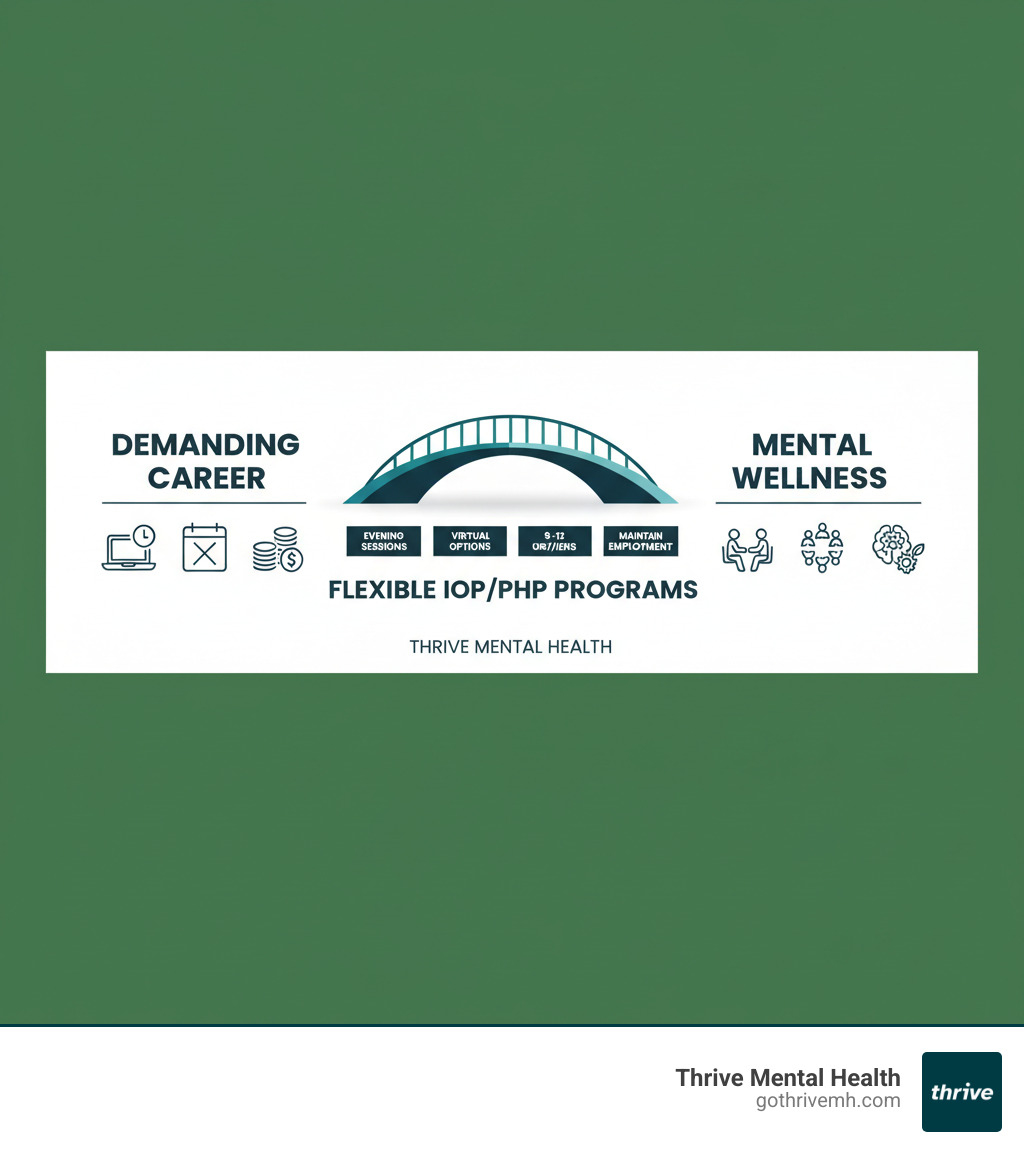
Outpatient programs for adults with flexible scheduling for working professionals offer structured mental health treatment through evening, weekend, and virtual sessions, allowing you to get help without pausing your career. These programs typically involve 9-12 hours of therapy per week, including individual and group sessions using evidence-based methods like CBT and DBT.
Quick Answer: What Are Flexible Outpatient Programs?
- Who they’re for: Working adults needing more support than weekly therapy but can’t take extended leave.
- Schedule options: Evening sessions (typically 5-9 PM), weekend programs, or virtual attendance from home.
- Time commitment: 9-12 hours per week, usually 3-4 sessions.
- What you get: Individual therapy, group support, skills training, and psychiatric care when needed.
- Cost: Often covered by major insurance (Cigna, Aetna, Optum, Florida Blue).
You shouldn’t have to choose between your mental health and your paycheck. Yet 57% of workers report negative mental health symptoms from work stress, and many delay treatment for fear of professional consequences. Anxiety, depression, and burnout don’t wait for a convenient time; they impact your work and well-being now.
Flexible outpatient programs solve this dilemma. Intensive Outpatient Programs (IOPs) and Partial Hospitalization Programs (PHPs) provide structured, evidence-based care on a schedule that fits your professional life. Whether through virtual sessions or evening programs, you can access comprehensive treatment without sacrificing your income or career momentum.
As Anna Green, LMHC, LPC, Chief Clinical Officer and founder of Thrive Mental Health, I’ve seen how the right program structure removes barriers and empowers professionals to heal. In this guide, we’ll cover how flexible outpatient care works, what to expect, your legal rights, and how to find the right program for you.
What Are Intensive Outpatient Programs (IOPs)?
An Intensive Outpatient Program (IOP) is a structured form of mental health treatment that provides more support than traditional weekly therapy but is less restrictive than residential care. It’s an ideal middle ground for individuals who need a higher level of support to manage symptoms of depression, anxiety, or trauma, but must also maintain their daily responsibilities like work and family.
IOPs are designed to provide consistent, effective counseling and group support without removing you from your life. This is especially beneficial for working professionals, as it allows you to apply new coping skills in real-time. To learn more about the general advantages of this model, explore our guide on Understanding the Benefits of an Outpatient Program.
How IOPs Differ from Traditional Therapy
While traditional therapy is typically a one-hour session per week, IOPs offer a more intensive and comprehensive approach. This is a key distinction for professionals who need significant support but cannot step away from their jobs for inpatient care. For a deeper comparison, see our guide on IOP vs. PHP: Understanding the Differences.
| Feature | Traditional Therapy | Intensive Outpatient Program (IOP), |
|---|---|---|
| Time Commitment | 1 hour per week | 9-12 hours per week (3-4 sessions), |
| Structure | Typically one-on-one sessions | Individual therapy, group therapy, and skills training, |
| Intensity | Low | High, with a focus on rapid skill-building and stabilization, |
The Rise of Virtual IOPs: Ultimate Flexibility for Professionals
The digital age has revolutionized mental healthcare, and virtual IOPs are at the forefront of this change. For working professionals, virtual IOPs offer unparalleled flexibility, removing many traditional barriers to treatment.
Imagine attending therapy sessions from your home office, eliminating commute time and the stress of being seen at a clinic. Our Virtual IOP Program provides this benefit, making high-quality care accessible from anywhere. All sessions are conducted on secure, HIPAA Compliant Online Therapy platforms, ensuring your privacy and allowing you to focus on your healing.

Key Benefits of Outpatient Programs for Adults with Flexible Scheduling for Working Professionals
When you’re balancing a demanding career with mental health challenges, taking time off for treatment can feel impossible. That’s why outpatient programs for adults with flexible scheduling for working professionals are designed to integrate with your life, not disrupt it.

Key benefits include:
- Maintain Your Career: Continue working and earning an income without a gap in your resume or explaining a leave of absence.
- Apply Skills Immediately: Use coping strategies learned in therapy to steer real-world work challenges the very next day, reinforcing your progress.
- Confidentiality and Privacy: Virtual and evening sessions offer discretion, allowing you to attend from home without colleagues knowing.
- Peer Support: Connect with other professionals who understand the unique pressures of balancing a career with mental health needs, reducing feelings of isolation.
- Cost-Effective: IOPs provide intensive care without the high cost of residential treatment and are often covered by major insurance plans.
Our programs have a proven track record: 93% of clients report improvements in depression symptoms, and 90% see reductions in anxiety.
Conditions Treated in Flexible IOPs
Crisis Support: If you are in crisis or having thoughts of self-harm, call or text 988 to reach the Suicide & Crisis Lifeline. You are not alone.
Flexible outpatient programs are equipped to treat a range of conditions that commonly affect professionals:
- Anxiety Disorders: For managing generalized anxiety, social anxiety, or panic attacks that interfere with work performance.
- Depression: To combat loss of motivation, difficulty concentrating, and feelings of hopelessness.
- Trauma and PTSD: To process past or recent traumatic events that impact your ability to function at work.
- Burnout: For addressing the emotional, physical, and mental exhaustion caused by prolonged workplace stress.
- Substance Use: Support for those using alcohol or other substances to cope with stress.
- Dual Diagnosis: Integrated treatment for co-occurring mental health and substance use disorders.
- Self-Harming Behaviors: Specialized support to develop healthier coping mechanisms.
Evidence-Based Therapies That Drive Results
Our programs use proven therapeutic approaches to ensure effective, lasting change:
- Cognitive Behavioral Therapy (CBT): Helps you identify and reframe negative thought patterns that fuel anxiety and depression. Our CBT for Stress Management is custom for workplace challenges.
- Dialectical Behavioral Therapy (DBT): Teaches skills in mindfulness, distress tolerance, emotion regulation, and interpersonal effectiveness, all crucial for high-pressure environments.
- EMDR Therapy: A specialized therapy to help process and heal from traumatic memories.
- Mindfulness-Based Stress Reduction (MBSR): Teaches you to stay grounded in the present, reducing stress and improving focus.
- Somatic Therapy: Addresses the physical manifestations of stress and trauma, helping to release tension stored in the body.
Each treatment plan is customized, combining these therapies to meet your specific needs and goals.
Making It Work: How to Balance Your Career and an IOP
Adding 9-12 hours of therapy to a busy schedule can seem daunting, but outpatient programs for adults with flexible scheduling for working professionals are designed for this reality. Here’s how to make it work:

- Treat Therapy as a Priority: Schedule your IOP sessions in your calendar as non-negotiable appointments. Protecting this time is an investment in your well-being and long-term career success.
- Leverage Flexibility: Choose a program with evening or weekend sessions. A Virtual Intensive Outpatient Program eliminates commuting, saving you valuable time.
- Set Boundaries at Work: You don’t need to disclose your reasons. Simply state your availability, such as, “I have a recurring commitment and am unavailable after 5 PM on Tuesdays and Thursdays.” Learning to set boundaries is a key skill for managing stress.
- Integrate What You Learn: Practice mindfulness or breathing exercises before a big meeting. Use the communication skills from group therapy with your team. Your daily work life becomes a training ground for your new skills.
By prioritizing your mental health now, you are safeguarding your future productivity, resilience, and career longevity.
Understanding Your Legal Protections
Fear of professional repercussions should not stop you from seeking help. Federal laws provide significant protections for employees.
 Body Talk: The Real Evidence Behind Somatic TherapyMental Health
- The Family and Medical Leave Act (FMLA): Allows eligible employees to take up to 12 weeks of unpaid, job-protected leave for serious health conditions, including mental health treatment. This leave can be taken intermittently, meaning you can use it for your therapy sessions without taking a full day off.
- The Americans with Disabilities Act (ADA): Requires employers to provide “reasonable accommodations” for employees with disabilities, which can include mental health conditions. This could mean a flexible schedule to attend IOP, the ability to work from home, or a quieter workspace.
- HIPAA: The Health Insurance Portability and Accountability Act ensures your medical information, including mental health treatment, is kept confidential. Your employer cannot access these details without your explicit consent.
You control what you share. For many, attending a virtual or evening IOP requires no disclosure at all. If you do need to request an accommodation, our team can provide the necessary documentation while protecting your privacy.
Finding Outpatient Programs for Adults with Flexible Scheduling for Working Professionals in Florida
Virtual care has removed geographic barriers to quality mental health treatment. For professionals across Florida, from the bustling streets of Miami and Orlando to the quieter communities in the Panhandle, accessing consistent care while managing a career can be challenging. A Virtual IOP in Florida offers a practical solution. It allows you to receive high-quality, confidential treatment from your home or office, eliminating the stress of commuting on I-95 or I-4 and fitting seamlessly into your demanding schedule.
It’s crucial that your care provider is licensed in Florida. Thrive Mental Health provides care with clinicians licensed in Florida, offering treatment that is both convenient and compliant.
How to Choose the Right Flexible Outpatient Program
Finding the right outpatient program for adults with flexible scheduling for working professionals is crucial. It’s about more than just a convenient time slot; it’s about finding quality care that understands your unique needs.

What to Look For in a Program
Use this checklist to evaluate your options:
- Accreditation: Look for programs accredited by The Joint Commission. This is a mark of high-quality, safe, and effective care. Thrive Mental Health holds one of the nation’s first Joint Commission accreditations for telehealth IOP.
- Flexible Scheduling: Does the program offer evening, weekend, or virtual options? This is non-negotiable for a working professional.
- Evidence-Based Therapies: The program should use proven methods like CBT, DBT, and EMDR. Ask how these are applied to workplace-related stress.
- Qualified Staff: Are the therapists licensed and experienced in treating conditions like anxiety, depression, and burnout in professionals?
- Individualized Treatment Plans: A one-size-fits-all approach doesn’t work. The program should create a personalized plan based on your specific goals and challenges.
- Comprehensive Care: Does the program offer integrated services like medication management or case management if needed?
For a more detailed checklist, see our guide on Finding Quality IOP Programs Near Me.
Verifying Your Insurance Coverage
Cost should not be a barrier to getting help. Most flexible IOPs are covered by major insurance plans.
- Check for In-Network Providers: This will significantly lower your out-of-pocket costs. Thrive Mental Health is in-network with many major insurers.
- Understand Your Benefits: Log into your insurance provider’s portal to check your deductible, copays, and coinsurance for behavioral health services.
- Confirm Virtual Care Coverage: Most plans now cover Virtual IOP Insurance at the same rate as in-person care, but it’s always best to confirm.
At Thrive, we can verify your benefits for you quickly and with no obligation. We work with major providers like Cigna, Aetna, Optum, and Florida Blue to make the process as simple as possible. You can start your benefits check on our website.
Frequently Asked Questions about Flexible IOPs
It’s normal to have questions before committing to a program. Here are answers to some of the most common concerns we hear from working professionals.
Note for developers: Please consider adding JSON-LD structured data for this FAQ section to improve search engine visibility.
Can you work full-time while in an IOP?
Yes, absolutely. That is the primary purpose of outpatient programs for adults with flexible scheduling. With evening, weekend, and virtual options, you can attend treatment without disrupting your work schedule. Many of our clients maintain demanding careers while in our program, applying the skills they learn to become more effective and resilient at work.
How many hours a week is an IOP?
An Intensive Outpatient Program (IOP) typically requires 9 to 12 hours of participation per week. This is usually structured as three-hour sessions, three to four times per week. This level of intensity is designed to provide significant support and facilitate rapid progress.
Will my employer find out I’m in treatment?
Your privacy is protected by law. Under HIPAA, we cannot share your information with your employer without your explicit written consent. You are not required to tell your employer you are in treatment. If you need to request a schedule accommodation under the FMLA or ADA, you only need to provide minimal information to HR, and your specific diagnosis remains confidential.
You Don’t Have to Choose: Start Your Healing Journey Today
Taking care of your mental health isn’t a career detour, it’s an investment in your long-term success. You don’t have to choose between your well-being and your paycheck.
Outpatient programs for adults with flexible scheduling for working professionals are designed to fit your life. Through evening, weekend, and virtual sessions, you can get the intensive support you need while maintaining your career. You’ll learn practical skills to manage stress, anxiety, and burnout in the real-world situations you face every day.
At Thrive Mental Health, our Joint Commission-accredited programs are built for professionals. We use evidence-based therapies like CBT and DBT to help you build resilience and thrive, not just survive. We’ve seen countless clients transform their lives without putting their careers on hold.
Ready for support? Thrive offers virtual IOP with evening options. Verify your insurance in 2 minutes (no obligation) → Start your benefits check or call 561-203-6085. If you’re in crisis, call/text 988.

This article is for informational purposes only and is not a substitute for individualized clinical advice or insurance verification.