





Art and Mental Health: Best Medicine 2025
Why Art and Mental Health Are More Connected Than You Think
Art and mental health share a profound, scientifically-proven connection. If you’re wondering whether creative expression can truly impact your well-being, the evidence is clear: art is a powerful tool for healing.
Quick Answer: The Art and Mental Health Connection
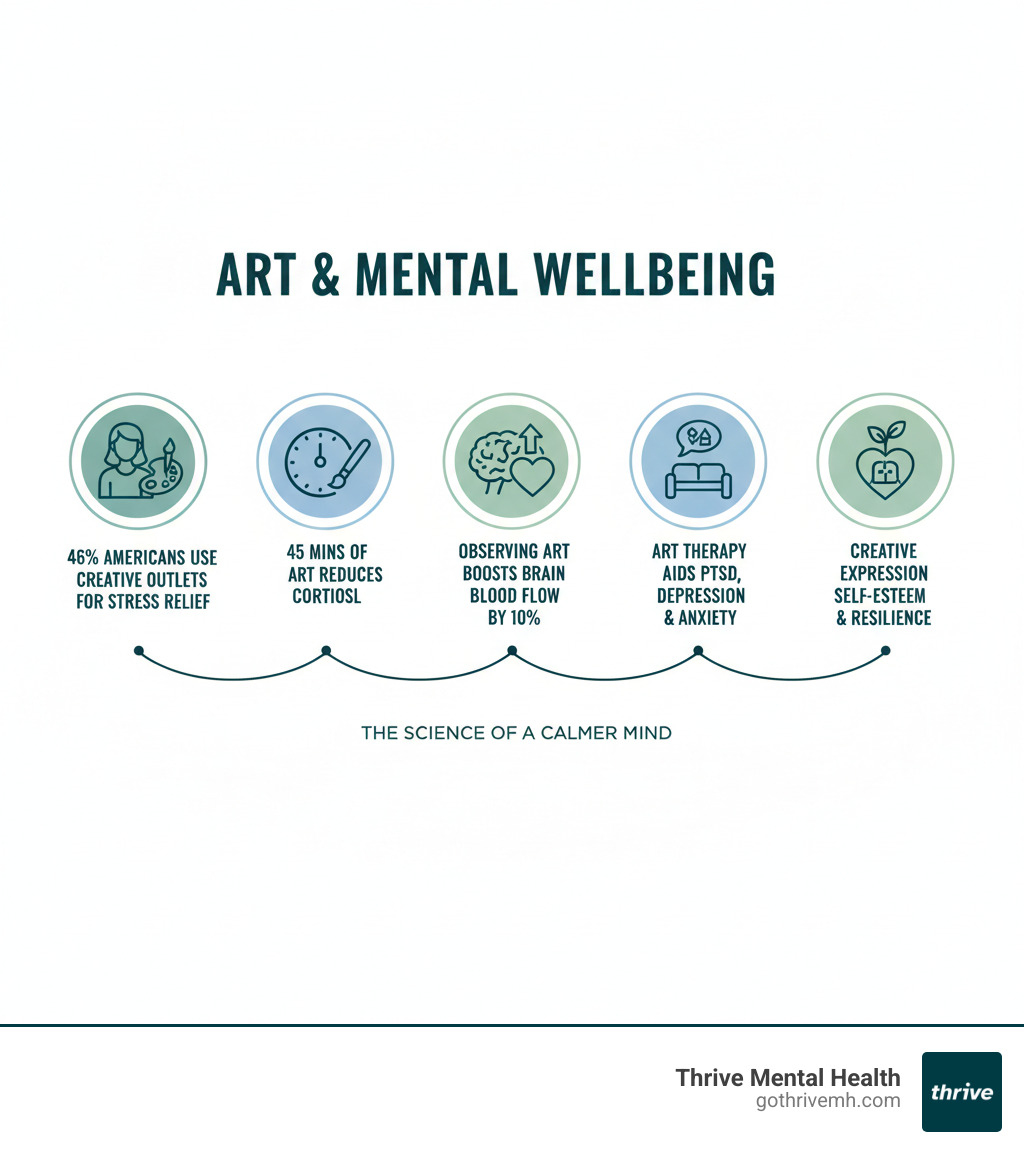
- Reduces stress hormones: 45 minutes of creative activity lowers cortisol levels.
- Boosts mood chemicals: Creating or observing art increases serotonin.
- Provides emotional release: Art offers a safe, non-verbal outlet for difficult feelings.
- Improves cognitive function: Creative engagement strengthens neural pathways.
- Accessible to everyone: No artistic skill is required, the process matters more than the product.
Nearly half of Americans (46%) already use creative activities to manage stress. Whether you’re dealing with anxiety, burnout, or trauma, understanding how art impacts your brain can open new pathways to recovery. From ancient traditions to modern neuroscience, creative expression has always been medicine for the mind.
As CEO of Thrive Mental Health, I’ve seen how integrating creative modalities into our Florida-based treatment programs transforms outcomes. The measurable impact of art and mental health interventions on recovery and resilience is compelling, and the real-world results speak for themselves.
The Science Behind the Canvas: How Art Rewires Your Brain for Wellness
When you engage with art, something remarkable happens in your brain. This isn’t just a feeling; it’s backed by the science of neuroaesthetics, which studies how art impacts brain function.
Looking at art you find beautiful can boost serotonin (a key mood-regulator) and increase blood flow to your brain’s pleasure centers. Even more impressive, just 45 minutes of creating art can measurably lower levels of cortisol, your body’s main stress hormone. At Thrive Mental Health, we see this science come to life in our programs across Florida. The connection between art and mental health is powerful. For more, see the American Congress of Rehabilitation Medicine’s findings on how art affects the brain.
The Science of Art and Mental Health: What Happens in Your Brain
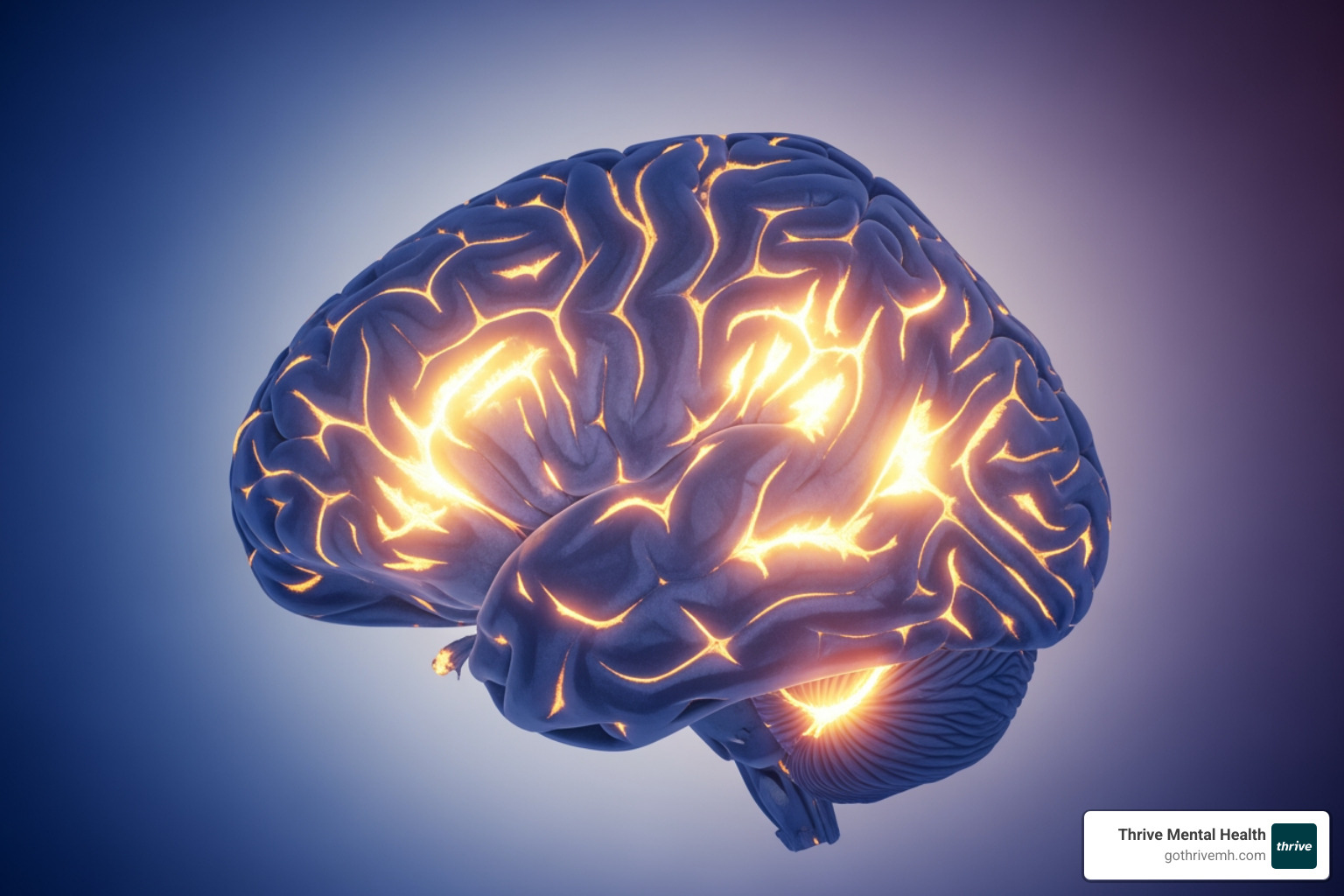
Viewing a painting you love can increase blood flow to your brain’s pleasure centers by up to 10%, triggering a release of dopamine, the chemical tied to reward and motivation. Art also activates your prefrontal cortex (for focus and planning) while calming the amygdala (your brain’s fear center). This dual action is incredibly therapeutic for anxiety and trauma.
Crucially, this process improves neuroplasticity, your brain’s ability to form new pathways. Art doesn’t just make you feel better; it helps your brain become more flexible and resilient over time.
Art for Mindfulness and Presence
In a world of constant distraction, art invites you to be here now. When you’re mixing paint or sketching, you anchor yourself in the present moment. This sensory engagement naturally quiets mental chatter and pulls you out of the anxiety loop. This is the “flow state”, where you’re completely absorbed, and your inner critic goes silent.
The beauty of using art for mindfulness is that the process is the point, not the product. This aligns with the therapeutic art activities we use to help clients find peace amid chaos.
A Canvas for Your Feelings: Emotional Processing Through Art
Sometimes, feelings are too big for words. Art offers a non-verbal language to externalize what’s churning inside. You don’t need to explain your feelings to a canvas; you can splash them across it in color and texture.
This creative emotional release creates distance between you and your pain, allowing you to look at it with new perspective. This builds self-awareness, which is especially powerful for processing trauma. You control the narrative, approaching difficult experiences at your own pace. Our guide on grief art therapy activities offers gentle ways to process loss through creativity.
How Creating Art Reduces Stress and Anxiety
Art provides measurable, biological stress reduction. The repetitive, rhythmic motions of many art forms, like coloring or sculpting, have a calming effect on the nervous system, helping to lower cortisol levels.
Art also provides a healthy distraction, giving your worry circuits a rest. Most importantly, it gives you a sense of control. In a life that can feel chaotic, you have complete authority over your creative choices. This feeling of agency is incredibly empowering against anxiety. Just 45 minutes a day can make a real difference. For practical ideas, explore our art therapy activities for anxiety.
From Hobby to Healing: The Role of Creative Arts Therapy
There’s a difference between doodling for stress relief and working with a trained art therapist. Creative arts therapy transforms the art and mental health connection into a structured, evidence-based treatment for depression, anxiety, and trauma.
Art therapy isn’t about making beautiful art. It’s about using the creative process to heal, guided by a professional who understands both art and psychology.

A registered art therapist creates a safe space to explore difficult emotions without words. According to the American Art Therapy Association, this therapy addresses emotional, cognitive, and physical needs, often complementing traditional talk therapy. At Thrive Mental Health, we integrate art therapy into our IOP program because it accelerates healing by open uping emotions that words can’t reach.
How Does Art Therapy Work?
Art therapy sessions are structured yet feel natural. The therapist builds trust, and you choose materials that resonate with you emotionally, like soft pastels or tactile clay. The focus is on expression, not skill. Afterward, you and your therapist reflect on what you made, uncovering symbolism and meaning that you might not have recognized consciously. This process builds self-awareness and helps resolve internal conflicts. Learn more by exploring our guide on understanding art therapy in-depth.
Common Techniques and Modalities
Art therapists use various techniques to facilitate healing:
- Creating Mandalas: Symmetrical, circular designs that bring a meditative calm.
- Scribble Drawing: Finding images in random scribbles to reveal unconscious thoughts.
- Emotional Color Wheel: Assigning colors to feelings to visualize your emotional landscape.
- Working with Clay: A grounding, physical way to externalize and shape difficult emotions.
- Collage Work: Using images and words to explore identity and piece together your story.
These techniques can be woven into your personalized treatment plan at Thrive.
Insurance Coverage for Art Therapy in Florida
Cost shouldn’t be a barrier to care. When art therapy is part of a comprehensive program like our Intensive Outpatient (IOP) program, it’s often covered by major insurance providers.
We work with carriers like Cigna, Optum, and Florida Blue in our Florida service areas. Our team can verify your benefits in just 2 minutes with no obligation. Insurance companies recognize integrated art therapy as a legitimate, evidence-based intervention, not a luxury. We handle the insurance complexity so you can focus on healing.
The Powerful Connection Between Art and Mental Health for All Ages
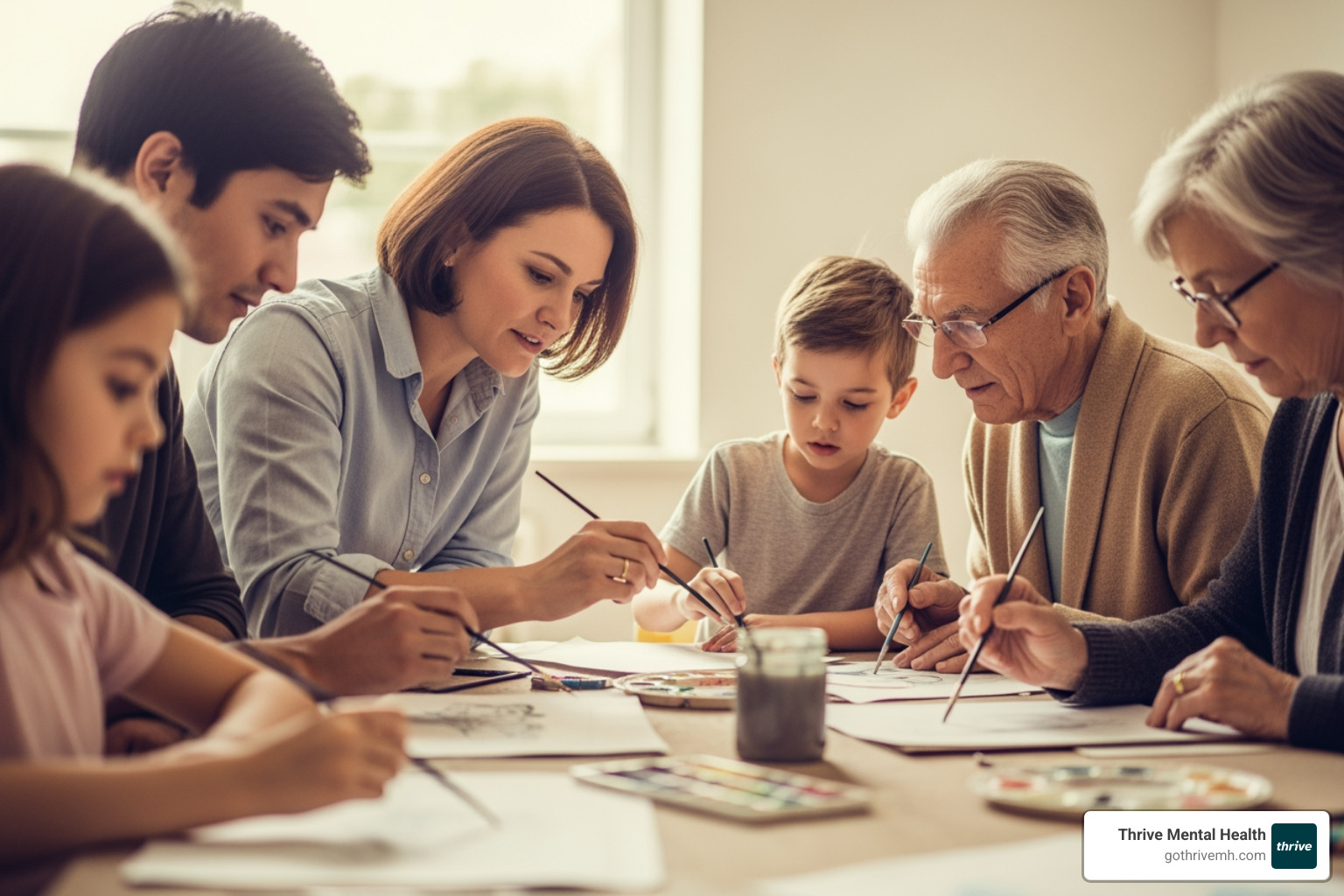
The healing power of art and mental health is universal. It works whether you’re five or seventy-five, a skilled artist or a beginner. This accessibility makes art a powerful tool across the lifespan, something we see daily in our Thrive Mental Health programs across Florida.
 The Easiest Way to Use Bilateral Stimulation for Daily RegulationMental Health
Art Therapy for Children and Teens
For children, especially those who have experienced trauma, art is a language. It allows them to tell their story when words fail. Drawing or sculpting helps them externalize what’s happening inside, making art and mental health interventions invaluable for kids still developing their emotional vocabulary.
Teens use art to steer identity, social anxiety, and pressure. Art therapy provides a safe, non-judgmental space to process their world. As the National Endowment for the Arts has shown, arts education helps students build resilience and cope with difficult emotions. Explore our guide on art therapy activities for teens for targeted approaches.
Benefits for Adults and Seniors
For adults juggling modern life, art offers a pause. Focusing on a creative task provides a break from mental chatter and serves as healthy emotional regulation. It can also combat loneliness and provide a sense of accomplishment.
For seniors, art has profound benefits. It stimulates cognitive function and can slow the progression of dementia. Reminiscence therapy using art and music has shown significant improvements in memory. Art also supports perinatal mental health, with music and singing therapy proven to reduce anxiety and depression in pregnant and postpartum women.
Research Supporting Art and Mental Health Outcomes
The link between art and mental health is backed by robust research. Studies show creative arts therapies reduce symptoms of depression and PTSD and improve quality of life. The data is especially compelling for trauma recovery, as art helps individuals process experiences in a non-threatening way.
Community arts programs also strengthen social cohesion and health equity. As documented by the National Endowment for the Arts, creating together builds connections that foster community well-being. To learn more, explore the research on community arts and trauma recovery. This research confirms what we know instinctively: creativity heals.
Your Daily Dose of Creativity: Simple Ways to Boost Your Well-being
You don’t need a studio or expensive supplies to benefit from creative expression. The power of art and mental health practices lies in consistency, not perfection. Even 15 minutes of daily creative activity can shift your mood and lower stress.
Treat art like any other self-care practice. Block it on your calendar. Designate a small corner or a basket of supplies as your creative space. Most importantly, ignore the inner critic. The therapeutic value of art has nothing to do with skill. The process matters more than the product. You’re creating to process emotions and quiet your mind, not to impress anyone.
Letting go of the pressure to be “good” makes creativity liberating. For more guidance, check out our simple art for mental health tips.
Easy Art Activities to Try Today
Ready to start? These five-minute activities require minimal supplies and no training. We see clients across our Florida programs use these techniques to manage stress.
- Mindful Coloring: The repetitive motion of coloring activates the same parts of your brain as meditation. Focus on the sensation and watch your thoughts slow down.
- Journaling and Doodling: Combine writing with drawing. Let your pen wander after you write, your hand might reveal emotions your words couldn’t capture.
- Nature Sketching: Get outside and draw a single natural object, like a leaf or a rock. This simple act practices presence and observation.
- Photography Walk: Use your phone to capture interesting textures, shadows, or patterns. This trains your brain to look for beauty in the ordinary.
- Creating a Vision Board: Cut out images, words, and colors that resonate with how you want to feel. This clarifies your values and goals visually.
Frequently Asked Questions about Art and Mental Health
Here are straight answers to common questions we hear from people considering our programs in Florida.
Do I need to be “good” at art to get mental health benefits?
Not at all. The healing power of art and mental health comes from the creative process, not the product. The goal is expression and exploration, not a masterpiece. The benefits are in the doing, regardless of skill.
What’s the difference between doing art on my own and art therapy?
Doing art on your own is a great self-care practice for stress relief. Art therapy is a formal mental health treatment guided by a credentialed therapist. It uses the creative process to address specific clinical goals, like processing trauma or developing coping skills, within a therapeutic relationship.
How much time do I need to spend on art to see a difference?
You don’t need hours. Research shows just 45 minutes of creative activity can reduce stress hormones. However, consistency matters more than duration. Short, regular creative breaks (5-10 minutes) add up to significant benefits.
Can viewing art also improve my mental health?
Absolutely. You don’t have to create art to benefit. Research shows that observing art you enjoy can increase blood flow to your brain’s pleasure centers, boost serotonin, and reduce stress. Visiting a museum or even browsing art online is a simple, effective form of self-care.
Start Your Healing Journey Through Creative Expression
The connection between art and mental health is a real pathway to lasting change. You’ve seen the science: creative expression can rewire your brain, reduce stress, and help you process emotions that words can’t capture.
Art is more than a hobby; it’s a science-backed tool for healing. Whether you’re doodling in a notebook or joining a structured art therapy program, you are taking a powerful step toward better mental health. The beauty of this approach is that it meets you where you are, no artistic talent required.
At Thrive Mental Health, we integrate evidence-based modalities like art therapy into our flexible IOP program across Florida. We help adults and young professionals build coping skills and process trauma with comprehensive treatment that fits real life.
Ready for support? Thrive offers virtual IOP programs with evening options. Verify your insurance in 2 minutes (no obligation) → Start benefits check or call 561-203-6085. If you’re in crisis, call/text 988 right now. You are not alone.

This article is for informational purposes only and is not a substitute for individualized clinical advice or insurance verification.