





ADHD in adults medication: Take Back Control 2025
ADHD in Adults Medication [2025]: Fast Focus, Fewer Missed Deadlines, What Works and How to Start
If you’re in crisis, call/text 988 right now. You are not alone.
ADHD in adults medication can turn chaos into momentum. If you’re tired of missed deadlines, lost keys, and conversations that slip away, this guide shows you what works, how fast, and how to start, today.
Summary: ADHD in adults medication improves focus and impulse control fast (stimulants: 30-60 minutes) or steadily (non-stimulants: 4-8 weeks). Best results come when medication is paired with skills-based therapy. Thrive offers medication management and virtual care covered by many plans (Cigna, Optum, Florida Blue) for residents throughout Florida.
Quick Answer: What You Need to Know About ADHD Medication for Adults
- First-line treatment: Stimulants (methylphenidate, amphetamines) work in ~80% of adults.
- Second-line: Non-stimulants (atomoxetine, guanfacine, viloxazine) if stimulants don’t fit.
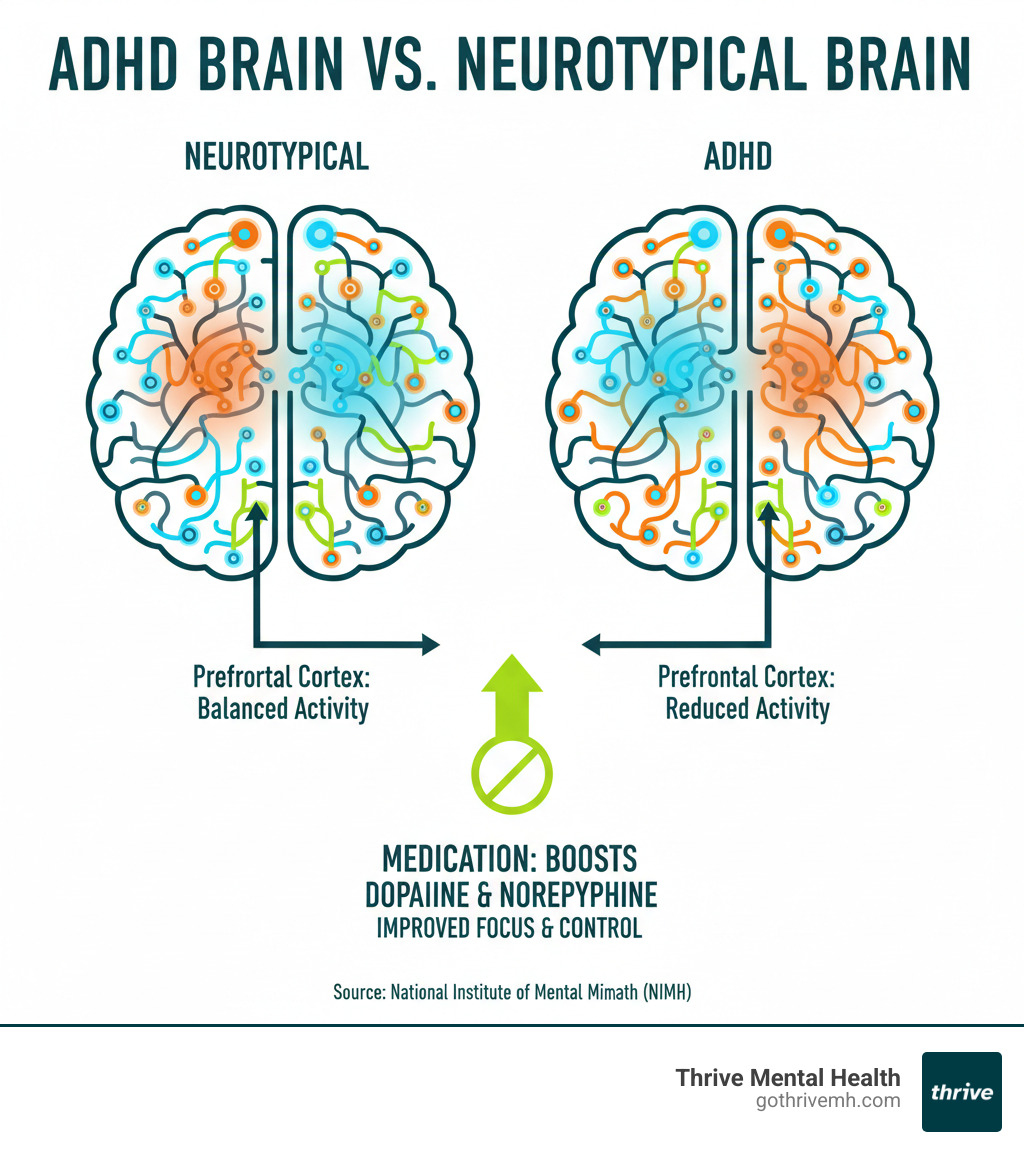
- How they work: Boost dopamine/norepinephrine for focus and impulse control.
- Timeline: Stimulants 30-60 minutes; non-stimulants 4-8 weeks to full effect.
- Side effects: Appetite loss (common), sleep issues, mild BP/HR increases.
- Long-term: Safe when monitored; not considered habit-forming at therapeutic doses.
Medication isn’t a cure, it’s a lever. It helps you finish what you start and show up on time, without feeling like a different person.
At Thrive Mental Health, our Psychiatry, Medication Management team combines meds with skills work like Mindfulness and structured virtual programs so you get results that last. Want more practical tips? See the latest on the Thrive Blog.
Stimulants vs. Non-Stimulants: Which ADHD Medication Is Right for You?
When considering ADHD in adults medication, you’ll encounter two main paths: stimulants and non-stimulants. The right choice depends on your individual needs, medical history, and any co-existing conditions like anxiety or a history of substance use.
For most adults, clinical guidelines point to stimulants as the first-line treatment because they work for about 80% of people. However, if stimulants are ineffective, cause difficult side effects, or pose a risk due to other health issues, non-stimulants are an excellent second-line option. They aren’t “second-best”, they’re a different tool for a different situation. At Thrive Mental Health, we assess the whole picture to find a medication that supports your overall well-being.
For a deeper dive into how these medications work, the Cleveland Clinic offers a helpful guide: ADHD Medications: How They Work & Side Effects.
Stimulant Medications: The Fast Track to Focus
Stimulants are the most common ADHD in adults medication for a reason: they work fast and effectively. The two main types are methylphenidate-based (Ritalin, Concerta) and amphetamine-based (Adderall, Vyvanse). They work by increasing levels of dopamine and norepinephrine, the brain’s “air traffic controllers” for attention and impulse control. This doesn’t speed you up; it helps your brain communicate with itself more clearly.
Common side effects include decreased appetite (affecting ~80% of users), difficulty sleeping, anxiety, headaches, and a slight increase in heart rate and blood pressure. You might also experience a rebound effect, where ADHD symptoms temporarily worsen as the medication wears off.
Stimulants come in two forms: immediate-release (IR), which lasts 3-6 hours, and extended-release (ER), which provides 8-16 hours of coverage with a single dose. ER formulations offer smoother, all-day symptom control.
Non-Stimulant Medications: The Slow and Steady Approach
If stimulants aren’t a good fit, non-stimulant medications are a highly effective alternative. Key options include atomoxetine (Strattera), guanfacine (Intuniv ER), clonidine (Kapvay ER), and viloxazine (Qelbree).
Unlike stimulants, non-stimulants take a more gradual approach, primarily increasing norepinephrine. The trade-off is that they don’t provide an immediate effect; it can take 4 to 8 weeks to reach full effectiveness. However, once they’re working, they offer consistent, 24-hour symptom coverage with no crash or rebound.
A major advantage is that non-stimulants are not controlled substances, meaning there is no risk of abuse or dependence. This makes them a safer choice for individuals with a history of substance use disorder, intolerable stimulant side effects, or co-occurring conditions like anxiety.
TABLE: Stimulant vs. Non-Stimulant ADHD Medications
| Feature | Stimulant Medications (e.g., Adderall, Ritalin) | Non-Stimulant Medications (e.g., Strattera, Intuniv) |
|---|---|---|
| Key Drug Examples | Amphetamines (Adderall, Vyvanse, Dexedrine); Methylphenidates (Ritalin, Concerta, Focalin, Metadate) | Atomoxetine (Strattera), Guanfacine (Intuniv ER), Clonidine (Kapvay ER), Viloxazine (Qelbree) |
| How They Work | Increase dopamine and norepinephrine levels by blocking reuptake and/or promoting release | Primarily increase norepinephrine (Atomoxetine, Viloxazine); Act on alpha-2 adrenergic receptors (Guanfacine, Clonidine) |
| How Quickly They Work | Rapid onset (30-60 minutes) | Gradual onset (typically 2-4 weeks, full effect 4-8 weeks) |
| How Long They Last | Short-acting (3-6 hours); Long-acting (8-16 hours) | 24-hour coverage |
| Common Side Effects | Decreased appetite, insomnia, headache, anxiety, increased heart rate/blood pressure, rebound effect | Nausea, stomach upset, fatigue, dizziness, dry mouth, increased heart rate/blood pressure (less common than stimulants) |
| Abuse Potential | Yes (Controlled substances, Schedule II); Potential for misuse and diversion | No (Not controlled substances) |
| FDA Approved for Adults | Yes | Yes (Atomoxetine, Viloxazine); Guanfacine/Clonidine often used off-label or for specific symptoms |
How Do Doctors Find the Right ADHD Medication and Dose?
Starting ADHD in adults medication is a process. Finding the right medication and dose rarely happens on the first try, and that’s normal. The process, called titration, involves starting with a low dose and gradually increasing it over weeks to find the sweet spot: maximum symptom improvement with minimal side effects.
This requires patience and honest communication with your doctor. It’s also important to know that the brand of medication can matter, especially with extended-release formulas. Different manufacturers use different delivery systems, so if you find a brand that works, try to stick with it.
Regular check-ins are essential. At Thrive Mental Health, we emphasize ongoing monitoring and adjustment, offering both virtual care throughout Florida and in-person services at our centers. This ensures you receive consistent, personalized support no matter where you are in the state.

What to Expect When You Start ADHD in Adults Medication
The timeline depends entirely on the type of medication.
Stimulants work fast, often within 30-60 minutes. You might suddenly find it easier to focus, but this initial effect doesn’t mean you’ve found the optimal dose. Fine-tuning can take several weeks.
Non-stimulants require patience. It can take 2 to 4 weeks to notice any improvement, with the full therapeutic effect taking 4 to 8 weeks. These medications need time to build up in your system, but they provide consistent, all-day coverage once they do.
During this phase, tracking your symptoms is crucial. A simple daily log of focus levels, side effects, and timing provides your doctor with the data needed to make informed adjustments. Your medication schedule should fit your life, whether you need coverage for a 9-to-5 job or evening classes. This is the personalized approach we take in our virtual therapy options, which are accessible to clients with insurance like Cigna, Optum, or Florida Blue.
Managing Side Effects and Withdrawal Symptoms
Side effects are common, but most are manageable. Here’s a quick guide:
- Decreased appetite: The most frequent side effect (80% of users). Take your medication after a protein-rich breakfast and plan snacks.
- Insomnia: Often caused by taking medication too late. Adjusting your dosing schedule can help.
- Headaches: Usually mild and temporary. Ensure you’re drinking enough water.
- Anxiety: Can be a sign the dose is too high or the medication isn’t the right fit. Discuss this with your doctor.
- Increased heart rate/blood pressure: Changes are typically small, but your doctor will monitor your vitals.
- Rebound effect: A temporary worsening of symptoms as a stimulant wears off. A longer-acting formula can smooth this out.
When should you call your doctor? Contact them immediately for severe side effects like chest pain, severe anxiety, thoughts of self-harm, or hallucinations.
Regarding withdrawal, this is critical: never stop taking stimulant medication abruptly. Doing so can trigger a “crash” with extreme fatigue, depression, and irritability. If you and your doctor decide to stop or change your medication, you will taper the dose down gradually. For more on this, the Clinical Guidelines for Withdrawal Management is a comprehensive resource. Our intensive outpatient programs provide the support needed to steer these challenges safely.
 How Mental Health Services Provide Culturally Responsive Care: A Complete GuideMental Health
Beyond the Pill: Your Toughest Questions About ADHD Medication Answered
ADHD in adults medication works best when it’s not working alone. Think of medication as the foundation; it’s essential, but you still need skills to build a functional life. There’s a saying in our field: “Pills do not substitute for skills.”
Medication helps your brain function more effectively, but therapy teaches you what to do with that improved function. Cognitive Behavioral Therapy (CBT), for example, helps you build systems for organization, manage relationships, and challenge negative thought patterns. It’s the difference between having a powerful tool and knowing how to use it.
At Thrive Mental Health, we pair medication with therapy in our flexible virtual Intensive Outpatient (IOP) program. We serve clients throughout Florida, working with insurance providers like Cigna, Optum, and Florida Blue to make comprehensive ADHD treatment accessible. You can learn more info about our Florida-based virtual therapy options on our site.
Can I Take ADHD Medication Long-Term Without Getting Addicted?
This is a common and valid fear. While stimulants are controlled substances, research is clear: when taken as prescribed under medical supervision, they are not considered habit-forming.
In fact, treating ADHD with medication often reduces the risk of substance use disorders. Many people with untreated ADHD self-medicate with other substances to manage their symptoms. Effective treatment removes that need.
The benefits, improved focus, better relationships, and higher quality of life, typically far outweigh the managed risks. Since ADHD is a lifelong condition, long-term use is common and safe, similar to how someone with diabetes manages their blood sugar.
What About Antidepressants or OTC Supplements for ADHD?
Sometimes, other medications are used. Bupropion (Wellbutrin), an antidepressant, is often prescribed “off-label” for ADHD, especially when co-occurring depression or anxiety is present. It can be a good option if stimulants are not well-tolerated.
As for over-the-counter (OTC) supplements marketed for “focus,” be direct: there are no FDA-approved OTC supplements that can effectively treat adult ADHD. While some, like Omega-3 fatty acids, have shown modest promise in limited studies, they are not a substitute for prescription medication. Always consult your doctor before taking any supplements, as they can interact with your medication or cause their own side effects.
How is ADHD in Adults Medication Different from Kids’ Meds?
The medications are largely the same, but how they’re used is different.
- Dosage: Adults typically require higher doses due to differences in metabolism and body mass.
- Side Effects: Concerns like growth suppression in children are not an issue for adults. However, adults may be more prone to cardiovascular or anxiety-related side effects.
- Complexity: Adults often have co-occurring conditions (depression, anxiety) and take other medications, requiring more careful management.
- Treatment Goals: For adults, goals extend beyond school to managing work, finances, and complex relationships. This requires a more nuanced approach, as outlined by the National Institute of Mental Health’s guide on ADHD in Adults: 4 Things to Know. Our programs at Thrive Mental Health are specifically designed to address these adult complexities.
Frequently Asked Questions about Adult ADHD Medication
How do I know if my ADHD medication is working?
You’ll see it in small wins: writing that email, finishing a task, following a full conversation. You should feel like yourself, just less scattered. Track daily changes for 1-2 weeks.
What is the most common side effect of stimulant ADHD medication?
Decreased appetite. Eat a protein-rich breakfast, plan snacks, and consider earlier dosing to protect sleep. Most side effects improve with dose or timing tweaks.
Can you take a break from ADHD medication?
Sometimes, with your doctor’s guidance. Never stop abruptly, especially stimulants. Planned “holidays” can help reassess dose or side effects.
How much do ADHD meds cost with insurance?
With Cigna, Optum, Florida Blue, and many plans: generics are often $0, $20/month. Without insurance: generics ~$15, $60; brand ER can exceed $200. Verify your exact benefits → Start benefits check.
Can I drink coffee or alcohol on ADHD meds?
Coffee: small amounts are usually fine but can raise heart rate/anxiety, avoid late-day caffeine. Alcohol: can blunt effects and increase risks; avoid mixing, especially with extended-release meds. Ask your prescriber.
Ready to Take Back Control of Your Focus and Your Life?

Here’s the bottom line: ADHD in adults medication is a powerful tool, and it works best alongside therapy. Thrive builds real plans for real life, with medication management plus flexible virtual IOP available to residents across Florida.
Ready for support? Thrive offers virtual IOP programs with evening options. Verify your insurance in 2 minutes (no obligation) → [Start benefits check] or call 561-203-6085. If you’re in crisis, call/text 988.

This article is for informational purposes only and is not a substitute for individualized clinical advice or insurance verification.