


Tucson, AZ mental health clinics: Complete Guide 2025
Finding the Right Mental Health Support in Tucson Starts Here
Tucson, AZ mental health clinics offer a wide range of servicesfrom free psychiatric care to intensive outpatient programsbut navigating your options can feel overwhelming, especially when you’re already struggling.
Here’s what you need to know right now:
Quick Guide to Tucson Mental Health Services:
- Crisis Support (24/7): Call 988 or the Community-Wide Crisis Line at (520) 622-6000
- Free/Low-Cost Care: University-affiliated clinics offer care for uninsured individuals
- Intensive Programs: IOP/PHP for structured care while maintaining daily life
- Veterans: Call 988 and press 1 for the Veterans Crisis Line, or the Arizona Veteran Resource Line at 1 (866) 4AZ-VETS
- LGBTQ+ Support: Find affirming care through national hotlines and local providers
- Child/Teen Services: Specialized clinics offer dedicated youth programs
- Insurance Help: Call 2-1-1 Arizona for referrals and benefit verification
The reality? Over 1 million Arizonans have a mental health condition, and 41% report anxiety symptoms. You’re not aloneand you don’t have to figure this out by yourself.
This guide breaks down every major mental health resource in Tucson: crisis lines, low-cost clinics, specialized programs for veterans and LGBTQ+ individuals, insurance navigation, and virtual therapy options. You’ll learn the difference between IOP, PHP, and weekly therapyand how to access the level of care you actually need.
I’m Nate Raine, CEO of Thrive Mental Health, and I’ve spent over a decade building mental health programs that integrate data, technology, and compassionate care across multiple states, including Arizona. I’ve seen how confusing it can be to steer Tucson, AZ mental health clinicsand how critical it is to get the right support fast.
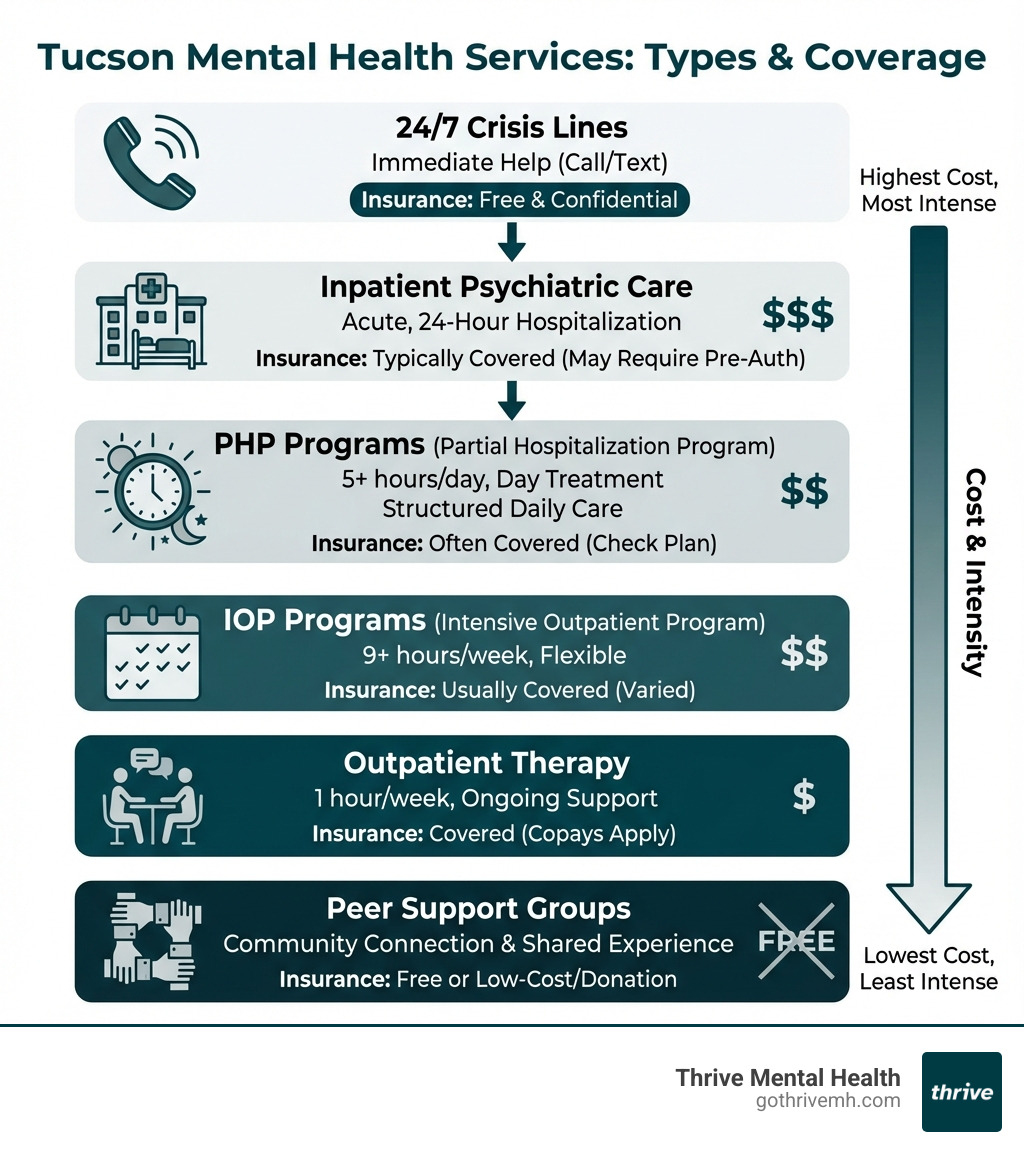
What Are Your Real Mental Health Treatment Options in Tucson? [Stop Guessing, Start Healing]
When you’re seeking help for your mental health, understanding the spectrum of available care is the first step toward getting the right support. Tucson, AZ mental health clinics offer a diverse range of services designed to meet varying needs, from weekly check-ins to intensive, structured programs.
Intensive Outpatient Programs (IOP)
Intensive Outpatient Programs (IOPs) offer a higher level of care than traditional weekly therapy but allow you to continue living at home and maintaining daily responsibilities. These programs typically involve 9-12 hours of therapy per week, combining individual, group, and family therapy sessions. For instance, Thrive Mental Health provides virtual IOPs that integrate clinical expertise with flexible scheduling, including evening options, making it easier to fit treatment into your life. IOPs are ideal if you need significant support to manage symptoms but don’t require 24/7 supervision.
Partial Hospitalization Programs (PHP)
Partial Hospitalization Programs (PHPs) are a step up from IOPs in terms of intensity. Often called “day treatment,” PHPs provide structured therapy for about 5-6 hours a day, five days a week. It’s an effective option if you need comprehensive support, similar to inpatient care, but can safely return home each evening. PHPs can also serve as a step-down from inpatient treatment. Thrive Mental Health offers both virtual IOP programs for adults and young professionals, combining clinical excellence with accessible formats.
Outpatient Therapy
This is the most common form of mental health support, involving regular, typically weekly, one-hour sessions with a therapist. Outpatient therapy is suitable for individuals managing mild to moderate mental health concerns, seeking personal growth, or looking for ongoing support after completing more intensive programs. Many Tucson, AZ mental health clinics and private practices offer outpatient therapy.
Medication Management
Often, mental health treatment involves a combination of therapy and medication. Psychiatrists and other prescribing professionals in Tucson offer medication management services, which include evaluating your symptoms, prescribing appropriate psychiatric medications, and monitoring their effectiveness. This is a common component of comprehensive care plans.
Peer Support
Peer support services connect individuals with others who have lived experience navigating mental health challenges. These services provide invaluable empathy, understanding, and encouragement. Local and national organizations offer peer support groups and educational programs, fostering a sense of community and shared recovery.
IOP vs. PHP vs. Outpatient: Which Is Right for You in Tucson? [A Quick Guide]
Choosing the right level of care can feel daunting. Here’s a quick comparison to help you decide which treatment option best fits your needs:
| Feature | Weekly Counseling (Outpatient) | Intensive Outpatient Program (IOP) | Partial Hospitalization Program (PHP) |
|---|---|---|---|
| Time Commitment | 1 hour/week | 9-12 hours/week | 25-30 hours/week |
| Intensity | Low | Medium | High |
| Who It’s For | Mild to moderate symptoms, ongoing support, personal growth | Significant symptoms, needing more than weekly therapy, maintaining daily life | Severe symptoms, needing intensive daily support, step-down from inpatient |
| Typical Cost | Varies, often covered by insurance | Moderate, often covered by insurance | Higher, often covered by insurance |
| Thrive Offering | Not directly offered, but a good step-down | Yes, virtual and hybrid options | Yes, virtual and hybrid options |
The best choice depends on the severity of your symptoms, your daily functioning, and your support system. We can help you determine if our IOP or PHP programs are the right fit for your journey towards healing.
How to Find Specialized Tucson, AZ Mental Health Clinics [Targeted Care for Specific Needs]
Sometimes, mental health challenges require a specialized approach. Tucson, AZ mental health clinics offer focused treatment for a variety of conditions and demographics.
Trauma and PTSD
For individuals struggling with the effects of trauma, specialized services are crucial. Local centers offer crisis assistance, therapy referrals, and support for survivors of assault or harassment. You can find providers offering evidence-based approaches like Eye Movement Desensitization Reprocessing (EMDR) and Trauma-Focused Cognitive Behavioral Therapy (TF-CBT) for trauma treatment.
Child and Adolescent Services
Supporting the mental health of children and adolescents is a priority in Tucson. Several clinics and behavioral health hospitals specialize in younger populations, providing services such as:
- Counseling and family therapy
- Case management and skills training
- Psychological and psychiatric evaluations
- Inpatient and Intensive Outpatient Programs (IOP) for adolescents
- Specialized programs for early childhood trauma and teen substance use
Co-Occurring Disorders
Many individuals face both mental health and substance use challenges simultaneously, known as co-occurring disorders. Several Tucson, AZ mental health clinics are equipped to address both by offering integrated behavioral health, primary care, and wellness services for adults. These facilities provide a variety of treatment options for individuals using drugs or alcohol, often in an outpatient or residential setting.
Anxiety, Depression, OCD, Bipolar, Schizophrenia
Most mental health clinics in Tucson address common conditions like anxiety and depression. For more complex diagnoses, some psychiatric hospitals and outpatient clinics provide specialized assessment and management for conditions like OCD, bipolar disorder, and schizophrenia. These programs are vital for individuals who may be experiencing psychosis or expressing suicidal thoughts and require intensive support.
Integrated Care: Why Mental and Physical Health Must Work Together [The Whole-Person Approach]
We know that mental and physical health are deeply interconnected. Integrated care models recognize this, offering holistic treatment that addresses the “whole person” rather than just isolated symptoms. This approach is gaining traction in Tucson, AZ mental health clinics to provide more comprehensive and effective care.
Whole-Person Wellness
Integrated care emphasizes that optimal health involves balancing physical, mental, emotional, and behavioral well-being. This often means having primary care and behavioral health services under one roof or through closely coordinated teams.
Primary Care Integration
Several organizations in Tucson are leading the way in integrating primary care with mental health services. These clinics offer access to professional and supportive integrated behavioral health, primary care, and wellness services. They focus on health education, disease prevention, and management, giving patients a voice in their treatment plans. Services often include primary care, care coordination, counseling, peer support, nutritional education, and health screenings.
Behavioral Health Services
Within integrated models, behavioral health services encompass therapy, psychiatric care, and peer support, all coordinated with physical health. This ensures that mental health conditions are not treated in isolation but as part of a person’s overall health picture.
Chronic Disease Management
For individuals with chronic physical health conditions, integrated care can be particularly beneficial. Mental health challenges often co-occur with chronic illnesses, and addressing both simultaneously can lead to better outcomes. These clinics provide coordinated care plans to manage both physical and mental health needs effectively.
How to Get Low-Cost or Free Mental Health Care in Tucson [Don’t Let Cost Stop You]
Worried about cost? Uninsured? Here’s how to get help without breaking the bank.
We understand that financial barriers can often prevent people from accessing the care they need. Thankfully, several options for low-cost or free mental health services exist in Tucson.
Sliding Scale Fees
Many community mental health centers and some private practices offer services on a sliding scale, meaning the cost of treatment is adjusted based on your income and ability to pay. This makes therapy and other mental health services more accessible.
State Insurance (AHCCCS)
Arizona Health Care Cost Containment System (AHCCCS) is Arizona’s Medicaid program. It provides healthcare coverage, including mental health services, to eligible low-income individuals and families. Many major community mental health providers in Tucson accept AHCCCS.
Eligibility Requirements
To access these services, you typically need to meet certain criteria, which may include:
- Pima County Residency: Many local programs require you to be a resident of Pima County.
- Insurance Status: Some free clinics specifically target uninsured individuals.
- Proof of Income: For sliding scale fees or AHCCCS, you’ll need to provide documentation of your income to determine eligibility.
- Age Requirements: Specific programs may be custom for children, adolescents, or adults.
University & Student-Run Clinics for the Uninsured
University-affiliated, student-run clinics in Tucson may offer free or low-cost psychiatric assessment and therapy for uninsured adults. Availability and services can change during the academic year. For current options and eligibility, call 2-1-1 Arizona to get referrals to active clinics.
Accessing Care with State Insurance (AHCCCS)
If you have AHCCCS, you have a solid pathway to mental health support in Tucson. Most large community behavioral health centers accept AHCCCS and offer a broad range of services from therapy and medication management to substance abuse treatment. We recommend contacting them directly to confirm their services and acceptance of AHCCCS.
What Are the General Eligibility Requirements?
Eligibility requirements vary slightly by program and provider, but generally include:

- Pima County Residency: Most local and state-funded programs require proof of residency in Pima County.
- Insurance Status: Some programs are specifically for uninsured individuals, while others accept private insurance, AHCCCS, or both.
- Proof of Income: For programs with sliding scale fees or AHCCCS, your income level will determine your eligibility and potential co-pays.
- Age Requirements: Certain clinics or programs are designed for specific age groups, such as children, adolescents, or adults. Always check with the provider regarding age restrictions.
Crisis? Get Immediate Mental Health Help in Tucson [Don’t Wait, Act Now]
If you or someone you love is in immediate danger or considering self-harm, call or text 988 for the Suicide & Crisis Lifeline or call 561-203-6085. You are not alone.
When a mental health crisis strikes, immediate access to support is paramount. Tucson, AZ mental health clinics and services have robust systems in place to provide urgent care.
24/7 Crisis Hotlines and Walk-In Centers
For immediate assistance, these resources are available around the clock:
- Community-Wide Crisis Line: Call (520) 622-6000 or (866) 495-6735. This line provides crisis support for people experiencing severe mental illness, emotional distress, or substance abuse. They can also dispatch a mobile team for assessment if someone is suicidal, homicidal, or in a mental health crisis.
- Crisis Response Centers: Tucson has psychiatric emergency rooms that provide 24/7 mental health and substance abuse services, including psychiatric evaluation, short-term stabilization, and observation for someone in crisis.
- Crisis Text Line: Text TALK to 741741. This free, 24/7 service connects people in crisis with trained crisis counselors via text, offering discreet support and referrals.
Warm Lines: When You Need to Talk (But It’s Not an Emergency)
Sometimes you need to talk through feelings or challenges before they escalate into a full-blown crisis. That’s where warm lines come in.
- Local peer warm lines operate daily to offer a listening ear in a non-crisis setting. For the most up-to-date warm line numbers and hours in Pima County, dial 2-1-1 Arizona or visit the Pima Helpline for current options.
Psychiatric Hospitals for Acute Stabilization
For severe cases requiring inpatient care and stabilization, Tucson has dedicated psychiatric hospitals. These facilities provide inpatient hospitalization for short-term crisis stabilization for people experiencing psychoses or expressing suicidal or homicidal thoughts. They offer a safe environment for assessment, stabilization, and initial treatment for acute mental health crises.
Support for Tucsons Diverse Communities [Care That Understands You]
Mental health care is most effective when its culturally sensitive and addresses the unique experiences of diverse communities. Tucson, AZ mental health clinics are working to provide inclusive and specialized support.

Mental Health Resources for Tucsons Veterans
Our veterans deserve dedicated support for their mental health needs.
- Veterans Crisis Line: Call 988 and Press 1, available 24/7, for crisis intervention, information, support, and resources for veterans in distress.
- Veteran Resource Line: Call 1 (866) 4AZ-VETS (429-8387) M-F 8 a.m. 5 p.m. to connect military service members with information, support, and resources, including mental health services.
Affirming Mental Health Support for the LGBTQ+ Community
Finding care from providers who understand and affirm LGBTQ+ identities is vital.
- LGBT National Hotline: Call (888) 843-4564 for confidential peer support, information, and resources for LGBTQUIA people.
- Trans Lifeline: Call (877) 565-8860 for a crisis hotline providing peer support and resources for people who are transgender or questioning.
- The Trevor Project Lifeline: Call (866) 488-7386 or text TREVOR to (202) 304-1200, a 24/7 crisis hotline providing intervention and suicide prevention services to lesbian, gay, bisexual, transgender, queer & questioning young people.
- Questions to ask a therapist to ensure LGBTQ+ affirmation: When seeking a therapist, don’t hesitate to ask about their experience with LGBTQ+ clients, their understanding of specific challenges faced by the community, and their approach to gender-affirming care.
Specialized Tucson, AZ Mental Health Clinics for Children, Teens, and Families
As detailed earlier, numerous organizations in Tucson are dedicated to the mental well-being of young people and their families. These clinics offer services ranging from individual and family therapy to case management and specialized programs for trauma or substance use, ensuring that children, teens, and their families receive the comprehensive support they need.
How to Choose the Right Clinic and Use Your Insurance [Your Guide to Smart Care]
Navigating insurance and finding a clinic that fits your needs can be a puzzle. We’re here to simplify it.
How to Find a Clinic That Takes Your Insurance [Cigna, Aetna, BCBS, Optum, AHCCCS]
Understanding your insurance coverage is a critical step in accessing affordable mental health care. Most major plans, including Cigna, Aetna, Blue Cross Blue Shield (BCBS), Optum, and AHCCCS, offer mental health benefits.
- Check your plan’s network: Start by looking at your insurance provider’s website or calling their member services number. They will have a directory of in-network providers and facilities.
- Call clinic intake departments: Once you have a few clinics in mind, call their intake or admissions departments directly. They can confirm if they accept your specific insurance plan and often offer free insurance verification.
- Use online verification tools: Many providers, including us at Thrive Mental Health, offer online tools to quickly check your benefits. You can verify your insurance with Thrive in just two minutes, with no obligation.
- Questions to ask your insurance provider:
- What are my mental health benefits?
- Do I have coverage for outpatient, IOP, or PHP services?
- What is my deductible, and has it been met?
- What is my co-pay or co-insurance for mental health services?
- Do I need a referral from my primary care physician?
- Are there any limitations on the number of sessions or days of treatment?
Using Local Directories and Referral Services
If you’re unsure where to start, several local resources can help you find a mental health provider or clinic in Tucson:
- 2-1-1 Arizona: This service provides information and referral services for mental health care, counseling, and other social services. You can dial 2-1-1, Ext. 9, or call (877) 211-8661. They can even dispatch a mobile team for assessment in severe crisis situations.
- Pima Helpline: Offers lists of mental health and substance abuse treatment providers in Pima County. Visit pimahelpline.org for 24/7 hotlines and crisis lines.
- NAMI Southern Arizona: The local chapter of the National Alliance on Mental Illness offers support groups and educational programs for people diagnosed with mental illness and their families. While not a direct referral service, they can connect you with resources and support networks.
Is Virtual Therapy Right for You? [IOP/PHP from Home]
Accessing mental health care doesn’t always mean traveling to a physical clinic. Virtual therapy, including Intensive Outpatient Programs (IOP) and Partial Hospitalization Programs (PHP), offers a flexible and effective solution for many.
- Telehealth services: Many Tucson, AZ mental health clinics now offer telehealth options, allowing you to connect with therapists and psychiatrists from the comfort of your home. This can reduce barriers like transportation, childcare, or scheduling conflicts.
- Virtual IOP/PHP: Thrive Mental Health specializes in expert-led virtual IOP programs. These programs provide the same comprehensive, evidence-based treatment as in-person care, but with the added convenience of remote access. We offer flexible scheduling, including evening options, making it easier for adults and young professionals to prioritize their mental health without disrupting their daily lives. You can learn about Thrive’s virtual therapy options to see if this innovative approach is right for you.
- Flexible scheduling: Virtual programs, like ours, often provide morning, afternoon, and evening options, Monday through Saturday, to accommodate diverse schedules. This means you can get the intensive support you need without sacrificing work, school, or family commitments.
Tucson, AZ Mental Health Clinics: FAQs
How do I get a mental health diagnosis in Tucson?
Schedule an intake with a licensed provider at a community clinic, hospital, or private practice. They’ll assess and recommend a plan.
Are there Tucson mental health clinics that don’t require insurance?
Yes. University-affiliated clinics like The MIND Clinic and many community health centers offer free or sliding-scale care. Call 2-1-1 Arizona for referrals.
Does insurance cover virtual IOP or PHP in Arizona?
Most major plans (Cigna, Aetna, BCBS, Optum, AHCCCS) cover virtual IOP/PHP. Check your benefits with Thrive.
Can I get evening or remote therapy in Tucson?
Yes. Thrive offers virtual IOP with evening options. See Thrive’s IOP/PHP programs.
Summary: Tucson, AZ Mental Health Clinics, Get Help Now, Not Later
Tucson, AZ mental health clinics offer everything from crisis lines and no-cost clinics to specialized programs for families and veterans. Don’t wait, every day you delay is a day lost to suffering. Whether you need weekly therapy or intensive support, Thrive Mental Health’s virtual IOP and PHP programs give you expert care, fast, from home. Most insurance accepted, including Cigna, Aetna, BCBS, Optum, and AHCCCS.
Ready for support? Thrive offers virtual IOP programs with evening options. Verify your insurance in 2 minutes (no obligation) → Start benefits check or call 561-203-6085. If you’re in crisis, call/text 988.

This article is for informational purposes only and is not a substitute for individualized clinical advice or insurance verification.