
Anxiety’s Masterpiece: Creative Ways to Find Peace Through Art
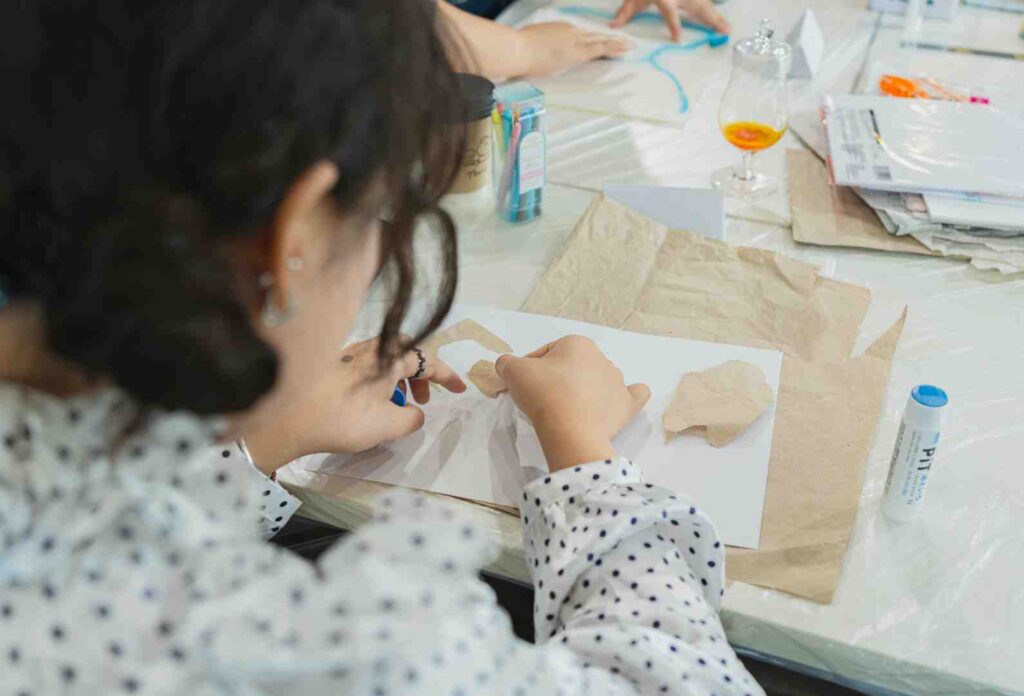
Why Creative Expression Is Your Secret Weapon Against Anxiety
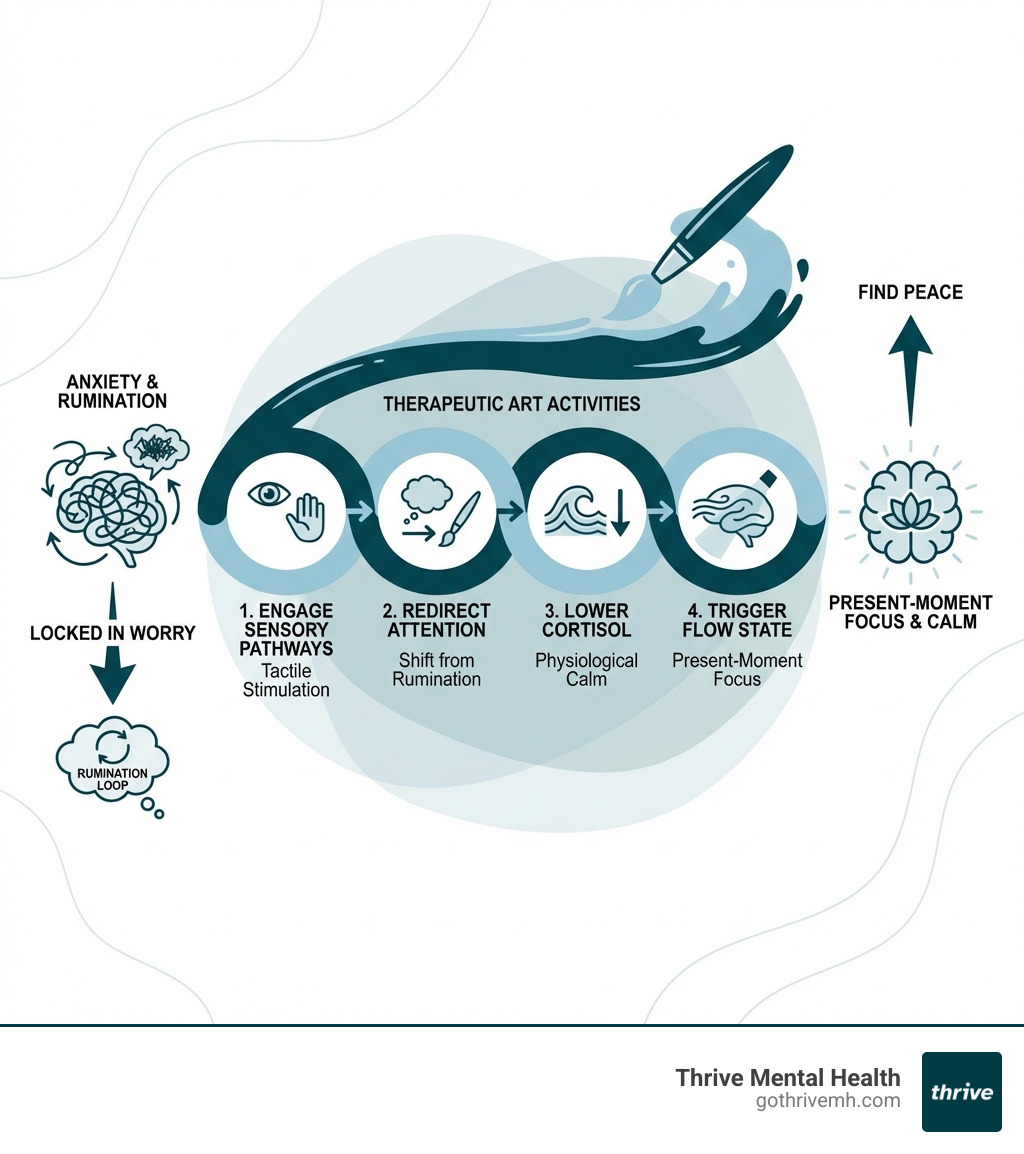
Therapeutic art activities for anxiety work because they bypass the part of your brain that’s stuck on repeat. When anxiety takes over, your thoughts loop. Your chest tightens. Your body screams danger even when you’re safe. Talk therapy helps—but sometimes words aren’t enough.
Quick Answer: Best Therapeutic Art Activities for Anxiety
- Draw Your Anxiety Monster – Turn worries into a visual form you can control
- Safe Place Collage – Build a visual sanctuary using magazine cutouts
- Mindful Mandala Coloring – Structured patterns trigger calm focus
- Panic Book – Pocket-sized DIY tool with calming images and affirmations
- Zentangle Drawing – Repetitive patterns reduce self-judgment and stress
- Color Your Feelings – Map emotions on a body outline to boost self-awareness
- Clay Sculpting – Mold your support system or emotional state into physical form
Art therapy shifts your attention away from rumination and into the present moment. It calms your nervous system through tactile stimulation. It gives you a way to express what feels impossible to say out loud. And the best part? You don’t need to be “good at art” for it to work.
More than 40 million adults in the U.S. struggle with anxiety disorders each year. Research shows that art therapy significantly reduces anxiety symptoms in both teens and adults—with measurable results including lower cortisol levels and improved emotional regulation. One meta-analysis found that art therapy reduced anxiety in children and adolescents with a Standardized Mean Difference of -1.42 (that’s a big deal in clinical research).
This isn’t about making pretty pictures. It’s about giving your mind a new pathway when the old one is jammed with worry.
As CEO of Thrive Mental Health, I’ve spent over a decade building evidence-based behavioral health programs that integrate creative modalities like therapeutic art activities for anxiety into intensive outpatient and virtual care. I’ve seen how powerful art becomes when it’s paired with clinical expertise—and how accessible it can be when you know where to start.
Explore more ways art can help you heal:
- Find Your Zen: Art Therapy for Ultimate Relaxation
- Uncover Your Inner World: Art Therapy for Self-Awareness
Why Art Therapy Works for Anxiety: The Science You Need to Know
Anxiety hits 40 million U.S. adults yearly. It’s not just stress—it’s a mental hijacking that loops your thoughts, tightens your chest, and floods your body with false alarms.
What is anxiety? (Physical and mental symptoms, rumination, nervous system overload)
Anxiety manifests in brutal ways:
Mental symptoms:
- Rumination: Your brain runs the same worry on repeat, solving nothing
- Catastrophizing: Every situation becomes worst-case scenario
- Cognitive fog: Can’t focus, can’t remember, can’t think straight
Physical symptoms:
- Racing heart and blood pressure spikes
- Muscle tension that won’t release
- Breathing problems and stomach issues
- Exhaustion from constant “fight or flight” mode
This creates a vicious feedback loop. Mental tension triggers physical symptoms. Physical symptoms fuel mental panic. Art therapy breaks this cycle.
How art interrupts anxious thought loops
Art hijacks your attention away from worry spirals. When you’re creating, your brain can’t simultaneously ruminate. Kelly Lynch, licensed mental health counselor and registered art therapist, explains: “When we’re focused on creating, our attention shifts away from worrisome ruminations.”
A 2007 study proved it: 20 minutes of drawing beat just looking at art for improving negative mood.
Non-verbal expression: Why it matters when words fail
Sometimes anxiety steals your words. Art gives them back—through colors, shapes, and textures instead of sentences. This visual language creates crucial distance between you and your problems, making them easier to process.
Tactile stimulation and the calming power of hands-on creation
Your hands are anxiety’s off-switch. Clay between fingers. Paper’s texture. Paint’s glide. These sensations ground you in the present moment.
A 2016 study found 45 minutes of art-making (sculpting, drawing, collaging) lowered cortisol levels and increased relaxation in adults.
Flow state: How art pulls you out of panic and into the present
Flow state is complete immersion—where time disappears and anxiety can’t follow. Art activities trigger this state naturally. You’re not fighting anxiety; you’re channeling its energy into creation.
7 Fast Therapeutic Art Activities for Anxiety (No Experience Needed)
You don’t need to be Picasso to open up the healing power of art. The beauty of these therapeutic art activities for anxiety is that the process, not the product, is what matters. Grab some paper, markers, clay, old magazines, or glue – whatever you have on hand – and let’s get started.
1. Draw Your Anxiety Monster
This activity helps you externalize your worries, giving them a form you can observe and interact with. If anxiety had a body and personality, what would it look like? How would it talk? What would it care about?
- Action: Use any art materials to draw or sculpt what your anxiety looks like. Don’t censor yourself; let it be as abstract or as concrete as it feels. You can even try using your non-dominant hand to bypass self-judgment.
- Benefit: By giving your anxiety a visual form, you create distance from it. You can see it as something separate from yourself, rather than an overwhelming internal experience. This can help you understand its motives and develop strategies to deal with it appropriately, as this activity demonstrates.
2. Make a “Safe Place” Collage
When anxiety flares, having a mental (and visual) sanctuary can be incredibly soothing. This activity helps you create a tangible reminder of peace.
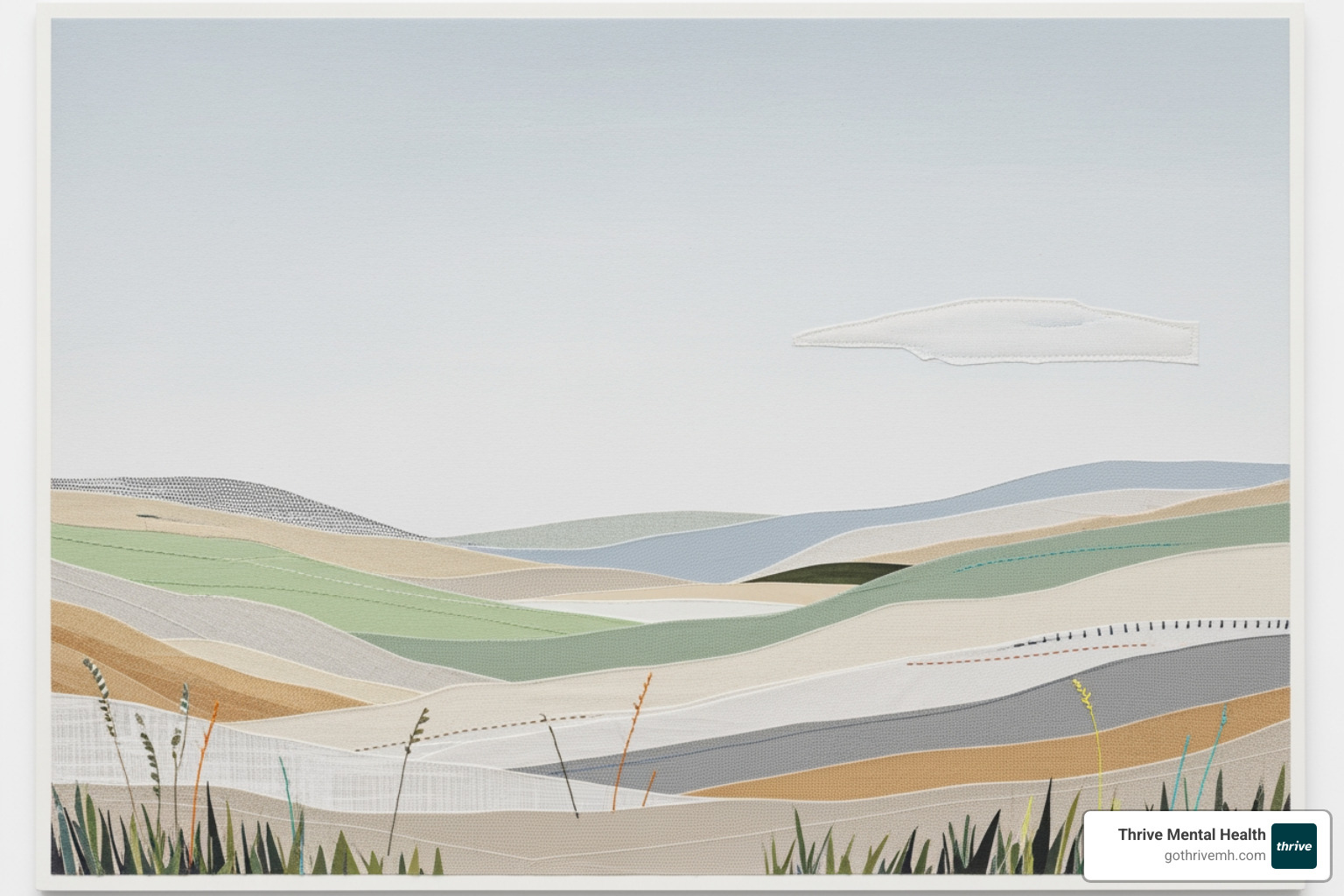
- Action: Gather old magazines, newspapers, or photos. Cut out images, words, and textures that evoke feelings of calm, safety, ease, or pleasure. Arrange and glue them onto a piece of paper or cardboard to create your ideal “safe place.”
- Benefit: This collage becomes a visual anchor, a reminder that you can access feelings of serenity. Looking at it, or even just the process of creating it, can soothe fear and vigilance. You can keep it in a visible spot as a prompt to recall those calming memories.
3. Color a Mindful Mandala
Mandalas are geometric patterns that have been used for centuries in various cultures for meditation and spiritual practices. Their structured, repetitive nature makes them ideal for focusing the mind.
- Action: Find a mandala coloring page online or draw your own by starting with a central point and expanding outward with symmetrical patterns. Use colored pencils, markers, or crayons to fill it in, focusing on the rhythmic motion and the colors you choose.
- Benefit: Research suggests that structured coloring of a reasonably complex geometric pattern, like a mandala, can induce a meditative state that benefits individuals suffering from anxiety Can Coloring Mandalas Reduce Anxiety?. This helps quiet a racing mind and brings you into the present moment.

4. Build Your Own “Panic Book”
This is a personalized, portable tool designed to help you regain composure during moments of high anxiety or panic.
- Action: Take a small notebook or create a mini-book from folded paper. Fill it with images, words, affirmations, or drawings that bring you comfort, joy, or a sense of calm. These could be photos of loved ones, inspiring quotes, doodles, or abstract patterns.
- Benefit: The panic book activity encourages participants to create a resource full of positive images and words that help them keep calm during stressful situations and refocus their mind, a core goal of the panic book activity. It’s a tangible, beautiful object you can carry with you and refer to when you need a quick dose of calm.
5. Sculpt Your Support System
Anxiety often makes us feel isolated, but visualizing our connections can remind us we’re not alone.
- Action: Using air-dry clay, play-doh, or even modeling dough, sculpt abstract or literal representations of the people, pets, or even personal strengths that support you. You might sculpt a figure for your best friend, a symbol for your resilience, or a shape that represents your therapist.
- Benefit: This activity helps you visualize and acknowledge your support network. It can be incredibly grounding to see who’s in your corner, providing a sense of security and connection. It also allows for a tactile expression of gratitude and appreciation for these vital connections.
6. Try Zentangle: Structured Doodling for Calm
Zentangle is an accessible, meditative art form created by drawing structured, repetitive patterns. It requires no artistic skill and focuses entirely on the process.
- Action: Grab a pen and paper. Start with a small section and fill it with a simple, repeating pattern (e.g., lines, dots, curves, circles). Continue adding different patterns to adjacent sections, letting the design grow organically.
- Benefit: Zentangle drawing induces a peaceful flow state, redirecting your attention away from anxious thoughts and into the present moment. The repetitive motions are inherently calming, reducing self-judgment and fostering focus, a key benefit of the Zentangle method.
7. Color Your Feelings
Our emotions often manifest physically. This activity helps you connect your internal emotional landscape with your external body, increasing self-awareness.
- Action: Draw a simple outline of a human body on a piece of paper. Close your eyes, take a few deep breaths, and scan your body for any sensations or emotions. Use different colors to represent where you feel these emotions in your body (e.g., red for anger in your chest, blue for sadness in your throat).
- Benefit: This exercise helps you visualize and acknowledge your emotions, rather than suppressing them. By connecting your mind and body, you gain insight into how anxiety impacts you physically, which is an essential step in regulating your nervous system and developing coping strategies, which is the goal of exercises like this.
When DIY Art Isn’t Enough: How to Get Professional Art Therapy for Anxiety
Self-guided therapeutic art activities for anxiety work—but sometimes you need more firepower.
Self-guided vs. therapist-led: What’s the difference?
DIY art = immediate relief and daily coping. Professional art therapy = clinical expertise that uncovers root causes. An art therapist guides interpretation, reveals patterns you miss alone, and accelerates healing through structured interventions.
When to seek more support (trauma, severe anxiety, co-occurring conditions)
Get professional help if you have:
- Severe anxiety disrupting work, relationships, or daily life
- Trauma that’s hard to verbalize
- Co-occurring conditions like depression, PTSD, or eating disorders
- No progress with self-guided methods after consistent effort
Thrive’s Art Therapy programs: Virtual and in-person options
Thrive Mental Health integrates therapeutic art activities for anxiety into evidence-based IOP and PHP programs across Florida. We offer both virtual and in-person options to fit your needs.
- Intensive Outpatient (IOP): Structured therapy while maintaining daily responsibilities
- Partial Hospitalization (PHP): Higher-level support without inpatient restrictions
Our services are available to residents throughout Florida, with virtual care accessible from anywhere in the state. We serve major areas including Tampa Bay, Miami, Orlando, Boca Raton, West Palm Beach, Jacksonville, Fort Lauderdale, Naples, Sarasota, and St. Petersburg.
Insurance accepted: Cigna, Aetna, Florida Blue, Optum, and more
Thrive accepts major insurance including Cigna, Aetna, Florida Blue, and Optum. Verify your benefits in 2 minutes with no obligation.
The Proof: Science Behind Therapeutic Art Activities for Anxiety
Evidence for adults and teens: Lower anxiety, better coping, more self-reflection
Multiple studies confirm art therapy improves mood and psychological well-being. Mindfulness-based art therapy reduced anxiety, BMI, and blood pressure in cardiac patients.
For teens: A meta-analysis of 422 participants found massive anxiety reduction.
Standardized Mean Difference (SMD): What the numbers say
SMD of -1.42 = huge clinical impact. Translation: Art therapy crushes anxiety symptoms measurably. Twice-weekly sessions (SMD = -1.78) beat once-weekly (SMD = -0.59).
Art therapy = measurable results, not just “feel good” advice
This is evidence-based treatment that complements CBT and traditional therapy. At Thrive, we integrate proven therapeutic art activities for anxiety into comprehensive care. See our virtual therapy options.
How to Find a Qualified Art Therapist (and Why It Matters)
Credentials to look for (ATR-BC, ATCB)
- ATR-BC: Board-Certified Art Therapist (highest credential)
- ATCB certification: Find credentialed therapists at Art Therapy Credentials Board
- Master’s degree in art therapy or related field
How to verify your therapist’s background
- Ask about their therapeutic approach
- Verify state licensing through professional boards
- Check Psychology Today or IEATA directories
Thrive’s licensed art therapists: Virtual and in-person care
Thrive’s art therapists meet highest standards, combining artistic expertise with clinical training. Access expert support virtually or in-person across Florida. Learn how Virtual IOPs cut recovery time by 50%.
FAQs: Art Therapy for Anxiety—What People Ask Most
Do I need to be “artistic” for art therapy to work?
No. It’s about expressing, not impressing. The process—not the product—matters. The core of art therapy is about self-exploration and emotional processing, not creating a masterpiece. Many people who say they have “no artistic talent” benefit just as much, if not more, because they are less inhibited by perfectionism.
Can coloring books really help my anxiety?
Yes. Coloring complex patterns like mandalas can lower anxiety and trigger a meditative state. It’s a proven, accessible self-soothing tool. While not considered the same as formal art therapy in a research context, structured coloring can significantly reduce anxiety symptoms by promoting focus and mindfulness.
How fast can I feel relief with art activities?
Many people notice calmer breathing and fewer racing thoughts within 10–15 minutes of engaging in a focused art activity. This initial relief comes from the cognitive disruption and sensory engagement that pull your mind away from rumination. Consistency over days and weeks brings bigger, more sustainable results.
Is art therapy covered by insurance?
Often, yes. Art therapy, when provided by a licensed professional as part of a therapeutic program, is typically covered by insurance. Thrive Mental Health accepts major providers like Cigna, Aetna, Florida Blue, Optum, and many more. You can verify your insurance in 2 minutes with no obligation to see what your plan covers.
Where can I find art therapy near me?
Thrive Mental Health offers virtual and in-person art therapy programs throughout Florida. Our virtual IOP and PHP programs allow you to access expert care from anywhere in the state, including major cities like Tampa Bay, Miami, Orlando, Boca Raton, West Palm Beach, Jacksonville, Fort Lauderdale, Naples, Sarasota, and St. Petersburg.
Summary: Take Back Control with Therapeutic Art Activities for Anxiety
Therapeutic art activities for anxiety offer fast, drug-free relief—no experience needed. Art calms your mind, lowers stress hormones, and gives you a new way to process tough feelings. It’s an evidence-based approach that helps interrupt rumination, regulate your nervous system, and foster deeper self-awareness.
Whether you start with simple DIY activities at home or step into a higher level of care like Intensive Outpatient Programs (IOP) or Partial Hospitalization Programs (PHP), you don’t have to steer anxiety alone. Thrive Mental Health builds art therapy into comprehensive, outcomes-focused care across Florida, with insurance-friendly options through Cigna, Aetna, Florida Blue, Optum, and more.
Want to learn how comprehensive programs can accelerate your healing journey and fit into a busy life? Read our guide to How Virtual IOPs Cut Recovery Time by 50%.
Ready to see what your insurance covers? Start benefits check in under 2 minutes.
Ready for support? Thrive offers virtual and hybrid IOP/PHP programs with evening options. Verify your insurance in 2 minutes (no obligation) → Start benefits check or call 561-203-6085. If you’re in crisis, call/text 988.