
5 Tips to Find IOP Art Therapy for OC Adolescents

5 Best IOP Art Therapy for OC Teens: Unlock Healing
Why Finding the Right IOP for Your Teen Matters More Than Ever
Are there any IOP programs that incorporate art therapy activities for adolescents in Orange County? Yes, and finding the right one could be the turning point your family needs.
Quick Answer: Yes. The best IOPs in Orange County for teens (ages 12-18) integrate art therapy with evidence-based clinical care like DBT and CBT. These programs typically run for 8-12 weeks, meet 3-5 days per week for a few hours after school, and accept major private insurance.
If your teen is withdrawing, struggling in school, or showing signs of anxiety or depression, you’re not alone. Adolescent mental health crises are on the rise, and once-a-week therapy often isn’t enough.
Intensive Outpatient Programs (IOPs) bridge the gap. They offer structured, daily support without requiring your teen to leave home or school. When combined with art therapy, IOPs give teens a powerful outlet to process emotions they can’t put into words.
Art therapy isn’t just drawing; it’s a clinically proven way to regulate emotions, process trauma, and rebuild self-esteem, especially for teens who shut down in talk therapy.
I’m Nate Raine, CEO of Thrive Mental Health. I’ve spent over a decade building behavioral health programs, and my experience has shown me how critical it is to match teens with the right level of care. Finding a quality IOP that uses art therapy effectively is a question that keeps many parents up at night, and this guide is here to provide answers.
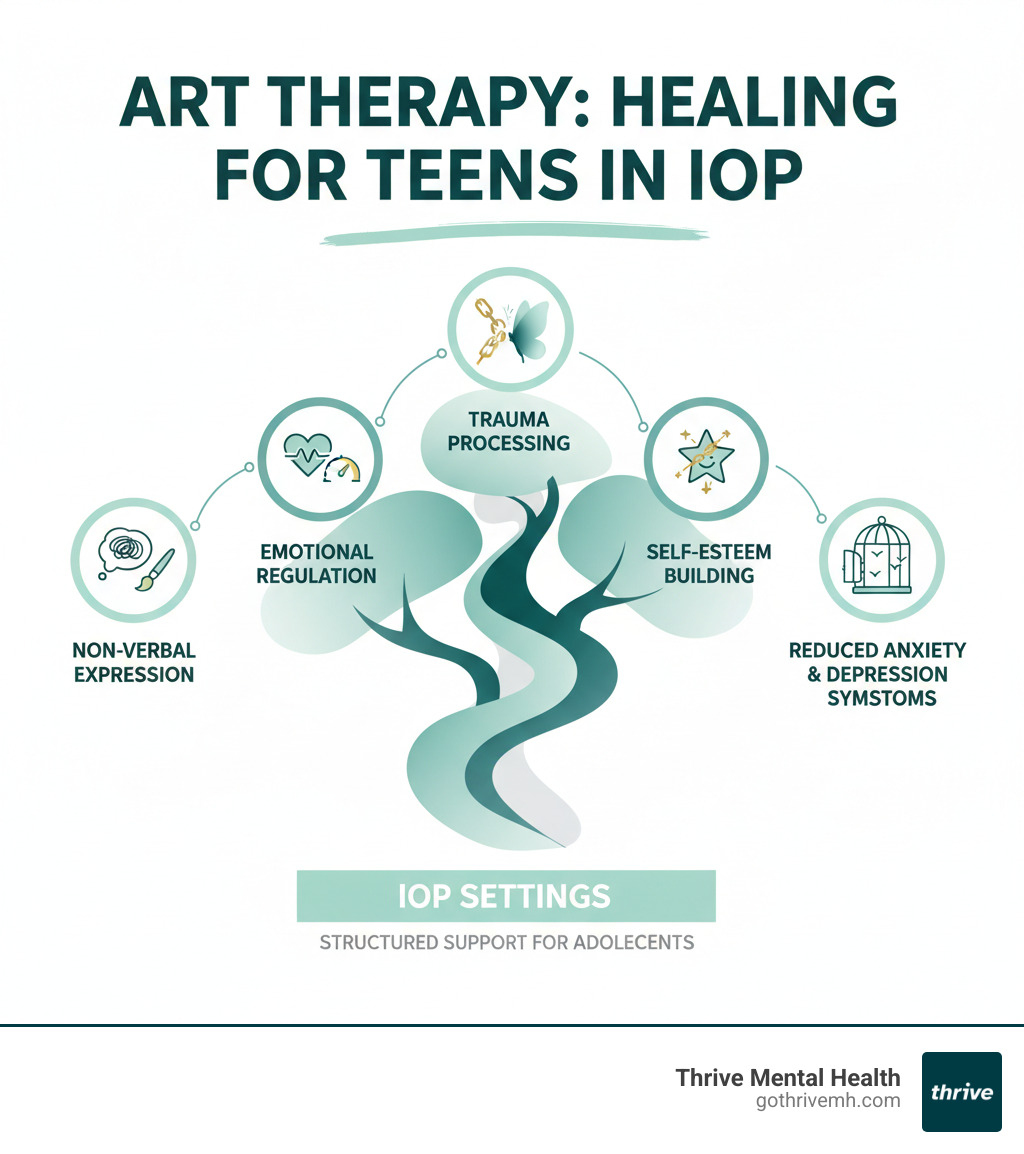
Why Art Therapy Isn’t Just “Arts & Crafts”: The Science of Healing
In a clinical setting, art therapy is an evidence-based approach that combines the creative process with psychological theory. A trained therapist guides the session, focusing not on the final product, but on the emotions and patterns that emerge during the act of creation.

For teens who struggle to verbalize their feelings, art therapy offers another path forward. Here’s how it works:
- It enables non-verbal expression. A teen who can’t describe their anger can paint it. The art becomes a voice when words fail.
- It improves emotional regulation. The rhythmic act of drawing or shaping clay can activate the body’s natural calming system, teaching teens a tangible coping skill.
- It processes trauma safely. Art allows teens to externalize traumatic memories symbolically, which research shows can be highly effective for PTSD without the distress of reliving the event verbally.
- It builds self-esteem. Completing a project provides a sense of accomplishment, reinforcing the message “I am capable” when depression says otherwise.
- It opens up communication. A therapist can use the teen’s artwork as a bridge to start a conversation, recognizing symbols and emotional content that the teen couldn’t articulate.
Unlike talk therapy, which relies on verbal processing, art therapy bypasses these barriers, meeting teens exactly where they are.
What can art therapy in an IOP address?
Art therapy integrated into an IOP can effectively treat a range of conditions, including:
- Anxiety, depression, and mood disorders
- Post-Traumatic Stress Disorder (PTSD)
- Eating disorders and body image issues
- Self-harm behaviors and suicidal ideation
- Emotional dysregulation and impulsivity (ADHD)
- Social skills deficits and substance use
What art therapy techniques are used?
Techniques are custom to the teen’s needs and can include mandala creation for focus, collage for exploring identity, sculpture for making feelings tangible, and guided drawing to visualize concepts like anxiety or safety. No artistic skill is ever required. The focus is always on the process of healing, not the product.
Is an IOP the Right Next Step? [5 Red Flags to Watch For]
If you or your teen are in crisis or considering self-harm, call or text 988 immediately. You are not alone.
As a parent, you know when something is wrong. If you’re wondering whether weekly therapy is enough, you’re already paying attention. That’s the first step.
Intensive Outpatient Programs (IOPs) exist for this exact moment—when your teen needs more support than once-a-week sessions but doesn’t require hospitalization. IOPs are designed for adolescents, typically ages 12-18.
Here are five patterns that signal your teen may need a higher level of care:
- Weekly therapy isn’t working. Your teen attends sessions, but their symptoms are getting worse or have stalled. Their therapist may even recommend a step up in care. This isn’t failure; it’s clarity.
- School is falling apart. This isn’t just a bad test. It’s a sustained drop in grades, chronic absences, or an inability to focus. Teachers are concerned, and your teen is overwhelmed.
- They are withdrawing. Activities they once loved are abandoned. Friends are ignored. They spend hours alone, shutting you out. This level of withdrawal is a serious red flag.
- Hopelessness is their new normal. Persistent sadness, irritability, or comments like “I don’t care anymore” are more than teen angst. If your teen mentions death or feeling like a burden, it’s a signal to act immediately.
- You’ve seen signs of self-harm. Any form of self-injury, like cutting or burning, is a sign of overwhelming emotional pain and must be taken seriously, even if your teen dismisses it.
Early intervention changes outcomes. If you recognize these red flags, it’s time to explore IOP options. You’re not overreacting; you’re being a proactive parent.
Are there any IOP programs that incorporate art therapy activities for adolescents in Orange County? [5 Steps to Find the Best Fit]
Finding the right IOP with art therapy in Orange County requires looking past the marketing fluff. Here’s how to find a program that will actually help your teen heal.

Tip 1: Verify the Clinical Framework
Art therapy is most effective when paired with evidence-based treatments like Dialectical Behavior Therapy (DBT) and Cognitive Behavioral Therapy (CBT). DBT is especially powerful for teens with intense emotions, teaching skills for distress tolerance and emotional regulation. Also, ensure the program is trauma-informed, meaning it provides a safe way to process painful events without re-traumatization. Ask them directly: “How does art therapy integrate with your core clinical model?” If they don’t have a clear answer, move on.
Tip 2: Inquire About Specific Art Therapy Activities
A good program offers a variety of experiential groups beyond just drawing, such as collage, sculpture, or art journaling. The most important question to ask is whether they emphasize process over product. The goal is expression, not creating a masterpiece. Your teen doesn’t need to be “good at art” to benefit. The therapy is in the act of creating, not the final result.
Tip 3: Confirm Therapist Credentials
The person leading the sessions is crucial. Look for licensed therapists (LMFT, LCSW) with specific experience working with adolescents. Ideally, the program should have a Board-Certified Registered Art Therapist (ATR-BC) on staff. This credential signifies specialized graduate-level training. A multidisciplinary team approach, where therapists, psychiatrists, and group facilitators collaborate, is another sign of a high-quality program.
Tip 4: Understand the Role of Family
Your teen’s recovery involves the whole family. The best IOPs include family therapy sessions and parent skills groups. These sessions help improve communication, set healthy boundaries, and create a supportive home environment. You should be treated as a key part of the treatment team, with regular updates on your teen’s progress.
Tip 5: Clarify Logistics and Insurance Coverage
A program only works if it’s accessible. Confirm the location and schedule (many offer after-school hours). Most IOPs last 8-12 weeks. Most importantly, clarify the cost. At Thrive Mental Health, we work with major insurance providers like Cigna, Aetna, Optum, and Blue Cross Blue Shield. Don’t assume you can’t afford it. Ask for a free insurance verification to understand your out-of-pocket costs upfront. You deserve transparency. You can verify your insurance coverage here in minutes, with no obligation.
IOP vs. PHP in Orange County: Decoding the Levels of Care
When you’re searching for intensive mental health support for your teen, you’ll quickly encounter two acronyms: IOP and PHP. They sound similar, and both offer more structure than weekly therapy—but they’re not the same. Understanding the difference can help you choose the right level of care for your teen’s specific needs.
What is the difference between a Partial Hospitalization Program (PHP) and an Intensive Outpatient Program (IOP) in Orange County?
Both programs allow your teen to live at home, attend treatment during the day, and maintain some connection to their normal life. That’s where the similarities end. The real difference comes down to time commitment and clinical intensity.
Intensive Outpatient Programs (IOPs) typically run 3-4 hours per day, 3-5 days a week. They’re designed for teens who need consistent, structured support but can still manage some school, social activities, and home responsibilities. IOPs work well as a step-up from traditional weekly therapy when symptoms are worsening, or as a step-down from a higher level of care like inpatient treatment or PHP. Many programs in Orange County offer after-school hours specifically so teens don’t have to miss their entire school day.
Partial Hospitalization Programs (PHPs) offer a significantly higher level of care. Teens attend treatment most of the day—usually 5-6 hours, five days a week. PHPs provide comprehensive clinical support through individual therapy, multiple group therapy sessions, psychiatric care, and experiential therapies like art therapy. Many programs also include academic support so teens don’t fall behind in school. PHPs are appropriate for teens with more severe symptoms who need daily structure and close monitoring but don’t require 24/7 inpatient supervision.
Here’s a side-by-side comparison to help clarify:
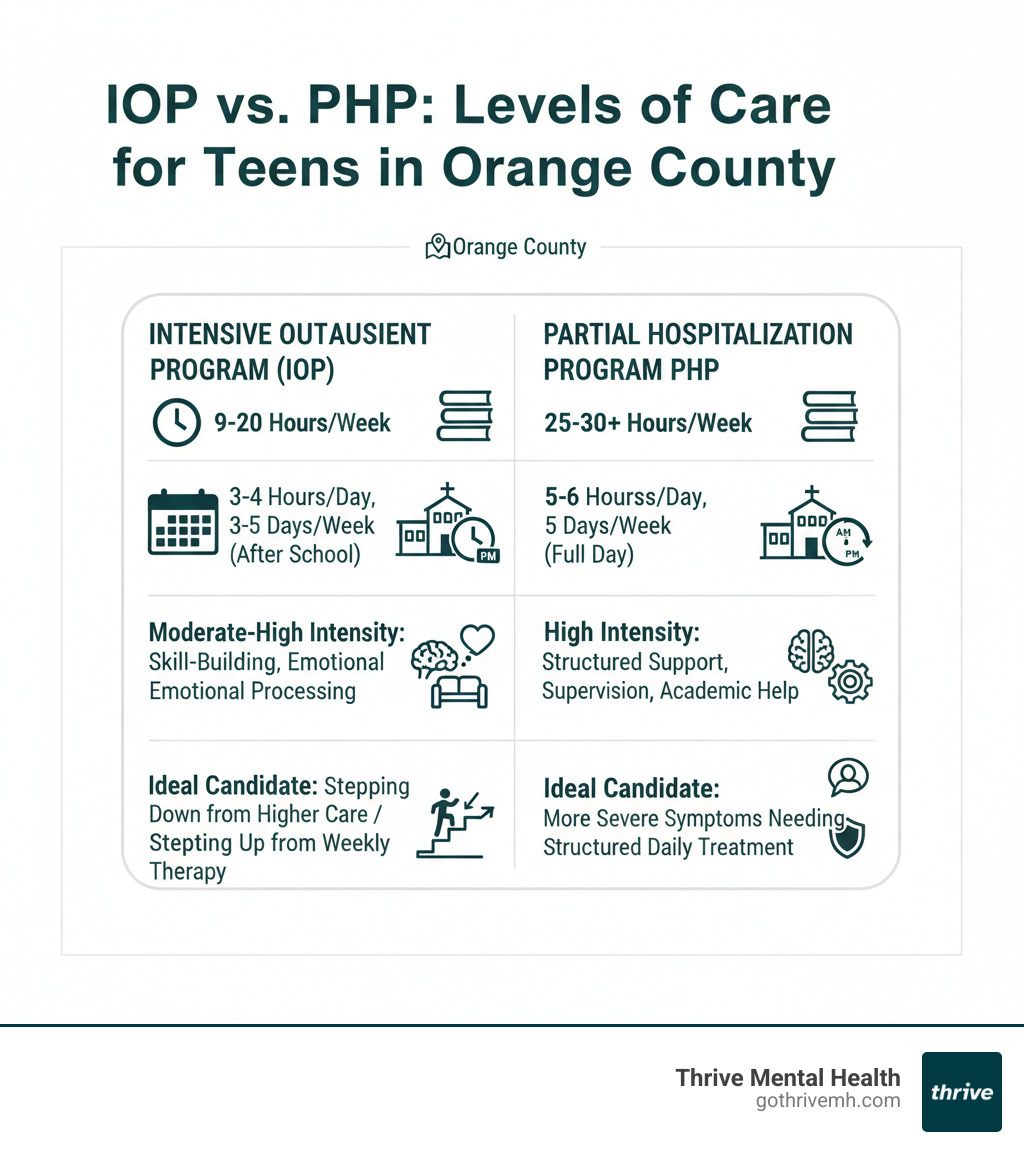
| Feature | Intensive Outpatient Program (IOP) | Partial Hospitalization Program (PHP) |
|---|---|---|
| Hours per Week | 9-20 hours | 25-30+ hours |
| Daily Schedule | Typically 3-4 hours per day, 3-5 days/week (often after school) | Most of the day (e.g., 5-6 hours), 5 days/week |
| Clinical Intensity | Moderate to high; focus on skill-building, processing emotions, and maintaining daily life | High; more intensive supervision, structured environment, often includes academic support |
| Ideal Candidate | Teens needing significant support while maintaining school/home; step-down from PHP; step-up from weekly therapy | Teens with more severe symptoms; needs daily structure; step-down from inpatient; prevents hospitalization |
Think of it this way: if your teen is struggling but can still get through a school day with support, an IOP might be the right fit. If they’re in crisis, unable to function in school, or at risk of hospitalization, a PHP provides the intensive daily structure they need to stabilize.
The good news? These levels of care work together. Many teens start in a PHP when symptoms are most severe, then transition to an IOP as they gain skills and stability. This “step-down” approach ensures continuous support while gradually returning to normal life.
At Thrive Mental Health, we offer both IOP and PHP programs with flexible scheduling, including evening options. Our programs in Florida combine evidence-based clinical care with experiential therapies—designed to meet teens where they are and help them build the skills they need to thrive long-term.
Frequently Asked Questions about Adolescent IOP and Art Therapy
How long do adolescent IOP programs typically last?
Most adolescent IOPs run for 8 to 12 weeks. However, the exact length depends on your teen’s individual needs and progress. The goal is to build sustainable skills for long-term stability, not just to complete a program on a fixed timeline.
What if my teen says they “can’t do art”?
No artistic skill is required. Art therapy is about the process of expression, not the final product. A trained art therapist creates a safe, non-judgmental space for your teen to explore feelings through creative materials, free from any pressure to perform or be “good at it.”
How much does an IOP with art therapy cost in Orange County?
The cost varies, but the key factor is your insurance coverage. Many plans from carriers like Cigna, Aetna, Optum, and Blue Cross Blue Shield cover a significant portion of IOP treatment when it’s medically necessary. The best first step is to get a free benefits check. At Thrive Mental Health, we provide a no-obligation insurance verification so you know your exact costs upfront. You can verify your insurance in 2 minutes here or call us at 561-203-6085.
Conclusion: Give Your Teen the Tools to Thrive
When your teen is struggling, every day can feel like a battle—for them and for you. But here’s what I want you to know: Are there any IOP programs that incorporate art therapy activities for adolescents in Orange County? Yes. And the right program can change everything.
Throughout this guide, we’ve explored how Intensive Outpatient Programs that integrate art therapy offer something truly unique. They provide the structured, evidence-based clinical care teens need—like DBT and CBT—while giving them a creative outlet to express what words can’t capture. This isn’t just about managing symptoms. It’s about empowering your teen with real coping skills they’ll carry into adulthood.
Art therapy helps teens regulate their emotions, process trauma, and rebuild self-esteem in ways that traditional talk therapy alone might miss. Combined with the daily support of an IOP, it addresses anxiety, depression, PTSD, self-harm behaviors, and emotional dysregulation with compassion and clinical precision. It meets teens where they are—even when they can’t articulate what they’re feeling.
At Thrive Mental Health, we’ve built our programs around this integrated approach. Whether your teen needs virtual flexibility or the structure of in-person care, we offer IOP and PHP programs designed to fit their life—not disrupt it. Evening sessions. Insurance-friendly. Expert-led. And most importantly, focused on helping adolescents not just get through the day, but truly thrive.
Your teen deserves more than just survival. They deserve tools, support, and hope.
Ready for support? Thrive offers virtual and hybrid IOP/PHP programs with evening options. Verify your insurance in 2 minutes (no obligation) → Start benefits check or call 561-203-6085. If you’re in crisis, call/text 988.