
Beyond the Acronym: Unpacking What PHP Treatment Really Means

Weekly Therapy Not Enough? Why PHP Treatment Is the Fastest Way to Real Recovery
What is PHP treatment? PHP (Partial Hospitalization Program) is an intensive mental health program where you attend structured therapy and support 5–6 hours per day, 5 days a week—but go home every night. It’s designed for people who need more help than weekly therapy can provide, but don’t require 24/7 inpatient hospitalization.
Quick Answer:
- What it is: Day treatment for mental health—intensive, structured care without overnight stays
- Time commitment: 25–30 hours per week (5–6 hours/day, 5 days/week)
- Who it’s for: People stepping down from inpatient care, at risk of hospitalization, or stuck despite weekly therapy
- What you get: Individual therapy, group therapy, medication management, skills training, and psychiatric support
- Goal: Rapid symptom relief, relapse prevention, and real-world coping skills
If you’ve been grinding through weekly therapy sessions without real progress, you know the frustration. You’re struggling—maybe with anxiety, depression, or trauma—but you’re functional enough that full hospitalization feels extreme. You need more support, faster results, and a plan that fits your life.
That’s where PHP treatment comes in.
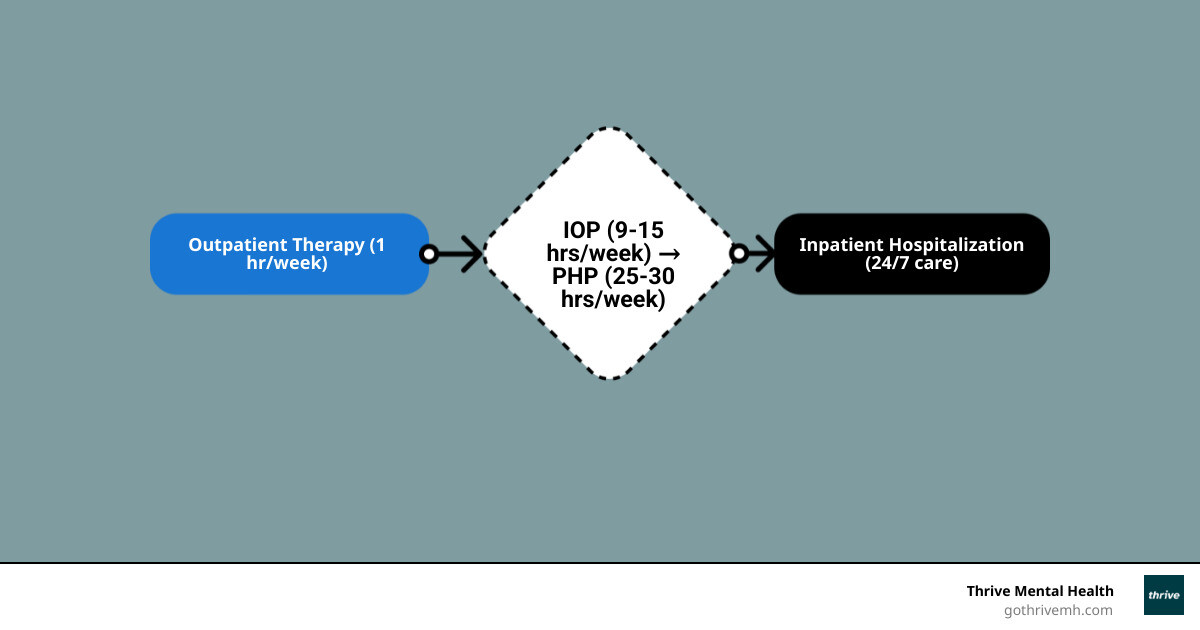
PHP bridges the gap between once-a-week therapy and round-the-clock inpatient care. It’s intensive enough to create real change—fast—but flexible enough to let you sleep in your own bed and keep your life moving forward. Research shows PHPs reduce symptoms of depression and anxiety, lower relapse risk, and deliver patient satisfaction higher than traditional inpatient programs.
As Nate Raine, CEO of Thrive Mental Health, I’ve spent over a decade building evidence-based behavioral health programs that deliver measurable outcomes. I’ve seen how what is PHP treatment can transform lives—especially for driven professionals and adults who need structure, accountability, and results without putting their entire lives on pause. At Thrive, we’ve designed our PHP programs to integrate data-driven care with compassionate, personalized support for clients throughout Florida.
What is php treatment glossary:
- how long is a partial hospitalization program
- iop vs php
- does your insurance cover a partial hospitalization program
What Is a Partial Hospitalization Program (PHP)? [Clear, No-Fluff Definition]
A Partial Hospitalization Program (PHP) is a structured, intensive mental health program designed to provide comprehensive treatment during the day, allowing you to return home in the evenings. Think of it as “day treatment” for mental health conditions or substance use disorders. It’s a crucial step for individuals who need more support than traditional weekly therapy but don’t require the 24-hour supervision of an inpatient facility.
At Thrive Mental Health, our Florida-based PHP programs typically involve 5–6 hours of therapy and support per day, 5 days a week. This structured environment is ideal for rapid stabilization, significant symptom relief, and building practical, real-world coping skills that you can immediately apply to your daily life. It’s an opportunity to immerse yourself in healing without completely disrupting your home life.
To learn more about this level of care, explore our Guide to Partial Hospitalization Programs.
Top 5 Reasons to Choose PHP
Choosing the right level of care is a critical decision in your mental health journey. Here’s why PHP treatment stands out as a powerful and effective option for many:
- Fast Symptom Relief – Avoid Full Hospitalization: PHP is specifically designed for crisis stabilization and the amelioration of acute symptoms. For individuals who are not imminently suicidal or homicidal, it can serve as an alternative to inpatient hospitalization, providing intensive care during the day to prevent a full hospital stay. Research consistently shows PHPs have a significant influence on reducing symptoms of depression and anxiety over short periods.
- Build Coping Skills Quickly: The intensive nature of PHP means you’re actively engaging in therapy and skill-building for several hours each day. This concentrated effort allows for rapid acquisition and practice of coping mechanisms, communication skills, and problem-solving strategies, preparing you for real-world challenges.
- Lower Risk of Relapse: For individuals at high risk, PHP treatment helps to significantly lower the risk of relapse. By providing a structured, supportive environment and equipping you with robust coping tools, it strengthens your resilience against future triggers and stressors.
- Step Down from Inpatient or Step Up from Outpatient: PHP acts as a vital bridge in the continuum of care. It’s an excellent “step-down” option for those transitioning from inpatient care, offering continued support as you reintegrate into daily life. Conversely, it’s a powerful “step-up” for individuals who find weekly therapy insufficient and need a more intensive approach to manage their symptoms effectively. Studies have found PHPs to be superior or equivalent to inpatient treatment in recovery-based care, with patients and families reporting greater satisfaction a year after discharge compared to inpatient discharge. Read more about this research on PubMed.
- Maintain Daily Life and Relationships: Unlike inpatient care, PHP allows you to return home each evening. This means you can maintain connections with family and friends, practice newly learned skills in your home environment, and keep your life moving forward while receiving comprehensive care. This balance is often cited as a key factor in higher patient satisfaction and sustainable recovery.
PHP vs. Other Mental Health Programs: Which Level of Care Fits You?

Understanding the different levels of mental health care is crucial for choosing the path that best suits your needs. PHP occupies a unique and highly effective position on this spectrum.
PHP vs. Inpatient Hospitalization: What’s the Real Difference?
When comparing PHP to inpatient hospitalization, the primary distinction lies in the level of supervision and the living arrangement.
-
Inpatient Hospitalization: This is the most intensive level of care, offering 24/7 medical supervision and support. It’s reserved for acute psychiatric crises or severe symptoms that pose an immediate danger to oneself or others, such as active suicidal ideation or severe psychosis. Patients reside within the hospital facility around the clock. You can learn more about this intense level of care in our Comprehensive Guide to Local Mental Health Facilities and Inpatient Care.
-
PHP Treatment: While highly intensive, PHP is a day-treatment model. It provides comprehensive, structured care for several hours a day, multiple days a week, but you return to your own home each night. This means you benefit from a structured therapeutic environment, psychiatric care, and skill-building without the need for constant, overnight medical supervision. It’s an ideal choice if you need crisis stabilization and symptom amelioration but are not imminently homicidal or suicidal. PHPs are proven to provide superior or equivalent recovery-based care with greater patient satisfaction compared to inpatient treatment, particularly one year post-discharge. This allows you to practice new coping skills in your real-world environment, which can be invaluable for long-term recovery.
PHP vs. IOP: Which Is More Intensive?
Both Partial Hospitalization Programs (PHPs) and Intensive Outpatient Programs (IOPs) offer more support than traditional weekly therapy. However, PHPs are the more intensive option between the two.
| Program | Hours/Week | Days/Week | Best For | Main Goal |
|---|---|---|---|---|
| PHP | 25–30 | 5 | Acute symptoms, step-down from inpatient | Stabilize, prevent relapse |
| IOP | 9–15 | 3–5 | Moderate symptoms, step-up from outpatient | Build skills, maintain progress |
- PHP: As you can see, PHP programs are a significant time commitment, typically involving at least six hours of therapy activity five days a week. This higher intensity makes them suitable for individuals with more acute symptoms or those stepping down from inpatient care. PHP treatment offers more services than typical outpatient programs, focusing on short-term, intensive care with less acuity than inpatient ones.
- IOP: Intensive Outpatient Programs, while still robust, require a lower time commitment, usually 9-15 hours per week across 3-5 days. IOPs are ideal for individuals with moderate symptoms, those stepping up from traditional outpatient therapy, or those transitioning down from a PHP.
At Thrive Mental Health, we offer both levels of care to our clients in Florida, allowing for a seamless transition as your needs evolve. Our team works with you to determine the most appropriate level of care based on your unique situation. For a deeper dive into the distinctions, read our article on PHP vs IOP and explore our Florida Intensive Outpatient Program (IOP) offerings.
What Happens in a PHP Program? [Day-by-Day Breakdown]

A typical day in a PHP treatment program is structured and dynamic, offering a blend of therapeutic activities designed to foster healing and skill development. It’s a comprehensive approach that addresses various aspects of your mental well-being.
What Therapies Are Used in PHP?
Our Florida PHP programs at Thrive Mental Health integrate a variety of evidence-based therapies, custom to meet your individual needs. These modalities are chosen for their proven effectiveness in treating a wide range of mental health conditions:
- Individual Therapy: This is your dedicated time with a licensed therapist to explore personal challenges, process emotions, develop individualized coping strategies, and work towards your specific treatment goals.
- Group Therapy: A cornerstone of PHP, group therapy provides a supportive and validating environment where you can connect with peers facing similar struggles. You’ll gain new perspectives, practice social skills, and learn from shared experiences. Daily programming typically includes two hours of process groups and two hours of skills/psychoeducation groups.
- Family Counseling: When appropriate, family sessions are included to improve communication, address family dynamics, and build a stronger support system at home.
- Experiential Therapies: We often incorporate creative and holistic approaches like Art Therapy, mindfulness practices, and other activities that promote self-expression, emotional regulation, and stress reduction.
- Cognitive Behavioral Therapy (CBT): This widely-used therapy helps you identify and change negative thought patterns and behaviors that contribute to mental health challenges. Learn more in our Cognitive Behavioral Therapy (CBT) guide.
- Dialectical Behavior Therapy (DBT): DBT focuses on teaching skills in mindfulness, distress tolerance, emotion regulation, and interpersonal effectiveness, particularly beneficial for individuals struggling with intense emotions or relationship difficulties. Explore our Dialectical Behavior Therapy (DBT) resources.
- Eye Movement Desensitization and Reprocessing (EMDR): For those dealing with trauma, EMDR is an effective therapy that helps process distressing memories and reduce their emotional impact. Find more about EMDR.
Medication Management & Psychiatric Support
Medication management is a crucial component of our PHP programs, ensuring that any psychiatric medications are effectively supporting your recovery.
- Psychiatrist-Led Care: You will be under the care of a psychiatrist or psychiatric nurse practitioner who specializes in mental health conditions. They oversee your medication regimen, making adjustments as needed based on your progress and symptom presentation.
- Medication Adjustments as Needed: Patients typically meet with a provider twice weekly for monitoring and adjustments. This frequent contact allows for careful titration of medications, ensuring optimal efficacy and minimal side effects.
- Ongoing Symptom Monitoring: Our clinical team continuously monitors your symptoms, mood, and overall well-being. This integrated approach ensures that your medication is working synergistically with your therapy to achieve the best possible outcomes. These are Vital Mental Health Services that provide comprehensive support.
Typical PHP Day: What to Expect
While schedules can vary slightly by program and individual needs, a typical day in a Thrive Mental Health PHP in Florida is structured to maximize therapeutic engagement:
- Morning Check-in: The day often begins with a group check-in, where you can share your current mood, any challenges, and set intentions for the day.
- Group Therapy: Several hours are dedicated to various forms of group therapy, focusing on topics like coping skills, emotional regulation, relapse prevention, and interpersonal effectiveness.
- Skills Training: Practical workshops teach you concrete skills, such as stress management, mindfulness techniques, communication strategies, and problem-solving.
- Lunch Break: A supervised break provides time for nutritious meals and informal social interaction with peers.
- Individual Session: You’ll have scheduled one-on-one time with your primary therapist for personalized support.
- Psychoeducation: Educational sessions help you understand your mental health condition, treatment options, and strategies for long-term wellness.
- Peer Support: Throughout the day, you’ll have opportunities for informal peer support, fostering a sense of community and shared understanding.
Patients are seen by a provider within 24 hours of admission and are typically able to join a group on their first day, ensuring immediate engagement in the healing process.
Is PHP Treatment Right for You? [Who Qualifies & What’s Treated]
Deciding if PHP is the right step for your mental health journey can feel overwhelming, but we’re here to help clarify. PHP is a powerful tool for specific needs.
If you’re in crisis, call/text 988 right now. You are not alone.
Who Should Consider PHP?
PHP treatment is ideal for individuals who meet certain criteria, balancing the need for intensive support with the ability to function outside of a 24/7 supervised environment. You might be a good candidate if you are:
- Stepping Down from Inpatient Care: If you’ve recently completed an inpatient stay for a mental health crisis, PHP offers a structured transition back to daily life, reinforcing skills and providing continued support.
- At Risk of Hospitalization: If your symptoms are severe enough that you’re at risk of needing inpatient care, but you are not imminently suicidal or homicidal, PHP can provide the intensive intervention needed to stabilize your condition and prevent a hospital admission. Common symptoms indicating this need include persistent and severe depression leading to an inability to function, frequent panic attacks, or struggles with self-harm that can be safely managed in an outpatient setting.
- Struggling with Daily Life, Despite Weekly Therapy: If traditional once-a-week therapy isn’t yielding sufficient progress, and your mental health challenges are significantly impacting your work, relationships, or overall functioning, PHP offers the higher level of support required for meaningful change.
- Managing Co-Occurring Disorders: Many individuals face both mental health and substance use disorders. PHP settings are equipped to treat these complex Dual Diagnosis conditions simultaneously.
- Have a Stable Home Environment: Since you return home each night, a supportive and safe home environment is crucial for PHP success. This allows you to integrate learned skills into your daily routine.
Our Mental Health Recovery Program in Florida emphasizes personalized care, ensuring PHP is the right fit for your unique path to wellness.
What Conditions Does PHP Treat?
PHP treatment programs are designed to address a wide array of mental health and substance use disorders that require intensive, structured intervention. At Thrive Mental Health, our Florida programs specialize in treating conditions such as:
- Depression: Including major depressive disorder and chronic depression, offering strategies for mood regulation and restoring function.
- Anxiety Disorders: Such as generalized anxiety disorder, panic disorder, social anxiety, and OCD, providing tools to manage anxious thoughts and behaviors.
- Bipolar Disorder: Helping individuals manage mood swings, stabilize their emotional state, and develop coping mechanisms for both manic and depressive episodes.
- PTSD and Trauma: Providing specialized therapies like EMDR and trauma-informed care to process traumatic experiences and reduce their impact.
- Substance Use Disorders: Offering comprehensive treatment for addiction, often including medical detox referrals, medication management, and relapse prevention strategies.
- Eating Disorders: Providing structured support for individuals struggling with anorexia, bulimia, or binge eating disorder, focusing on healthy relationships with food and body image.
- Personality Disorders: Such as Borderline Personality Disorder, utilizing therapies like DBT to improve emotional regulation, interpersonal relationships, and self-image.
PHP Treatment Logistics in Florida: Duration, Cost, and Insurance
When considering what is PHP treatment, practical questions about duration, cost, and insurance coverage are often top of mind. We aim to make this process as transparent as possible for our clients across Florida.
- Duration: The typical length of a PHP program can vary significantly based on individual needs and progress. Most programs range from 2–4 weeks, though some may extend from 10-30 days. The focus is always on achieving stabilization and developing sustainable coping skills. As you make progress, your treatment team will collaboratively determine the appropriate time to transition to a less intensive level of care, such as an IOP or traditional outpatient therapy. Our PHP Program is designed with this flexibility in mind.
Does Insurance Cover PHP? [Cigna, Optum, Florida Blue, More]
We understand that navigating insurance can be complex, but rest assured, most major insurance providers do cover PHP treatment as it is recognized as a medically necessary level of care.
- Major Plans Accepted: At Thrive Mental Health, we work with a wide range of insurance providers, including Aetna, Cigna, Florida Blue, UnitedHealthcare, Optum, and many others.
- In-Network and Out-of-Network Options: We strive to be in-network with as many providers as possible to minimize your out-of-pocket costs. If we are out-of-network with your specific plan, our team can help you understand your benefits and explore potential reimbursement options.
- Understanding Your Benefits: We encourage you to understand your specific mental health insurance benefits. Our guide on How to Read Mental Health Insurance Benefits can be a valuable resource.
- Quick and Easy Verification: To simplify the process, you can easily Verify your insurance in 2 minutes through our website, with no obligation. Our team is here to assist you every step of the way in understanding your coverage.
FAQs: People Also Ask About PHP Treatment
Can I work while in PHP?
No—PHP is a full-time commitment, typically requiring 25–30 hours per week of dedicated engagement. Most people take a leave of absence from work or school to fully immerse themselves in the recovery process and maximize the benefits of the intensive program.
Is virtual PHP as effective as in-person?
Yes. Virtual PHP programs use the same evidence-based therapies, structured schedules, and expert clinical teams as in-person programs. They offer the added flexibility and accessibility that can be particularly beneficial for individuals with a safe and supportive home environment, geographic limitations, or scheduling challenges.
What’s the success rate of PHP?
Research indicates that PHPs are highly effective. They have been shown to be as effective as inpatient care for many conditions, with studies reporting high patient satisfaction and lower relapse rates. PHPs significantly reduce symptoms of depression and anxiety and improve overall quality of life.
How do I know if PHP is right for me?
If you find that weekly therapy isn’t providing the level of support you need to manage your symptoms or improve your daily functioning, but you don’t require 24/7 supervision due to immediate safety concerns, PHP likely bridges that crucial gap. It’s for those who need intensive, structured care while maintaining their home life. Contact Thrive for a free assessment to determine the best fit for your needs.
Does Thrive offer PHP in my state?
Yes—Thrive Mental Health proudly offers virtual and hybrid PHP options to clients throughout Florida. We serve major communities including Tampa Bay, St. Petersburg, Miami, Orlando, Boca Raton, West Palm Beach, Jacksonville, Fort Lauderdale, Naples, and Sarasota, ensuring accessible care across the state.
Summary: What Is PHP Treatment?
What is PHP treatment? It is an intensive, structured mental health program that delivers rapid results for people who need more than weekly therapy but don’t require 24/7 hospitalization. Covered by most insurance, PHP helps you stabilize, build skills, and return to daily life stronger—without putting your life on hold. It’s a powerful, flexible, and effective path to lasting recovery.
Ready for support in Florida? Thrive offers virtual and hybrid IOP/PHP programs with evening options. Verify your insurance in 2 minutes (no obligation) → Start benefits check or call 561-203-6085. If you’re in crisis, call/text 988.