
Beyond the Hype: How Effective Are Partial Hospitalization Programs?
Are Partial Hospitalization Programs (PHPs) Effective? The Data Says Yes.
When weekly therapy isn’t enough and inpatient care feels like too much, Partial Hospitalization Programs (PHPs) offer a powerful middle ground. But do they actually work? The research is clear: yes, PHPs are highly effective.
For many struggling with significant mental health challenges, these structured, intensive programs deliver results comparable to inpatient care but with less disruption to your daily life. You get the focused treatment you need during the day and return to the comfort of your own home at night.
Here’s the bottom line on PHP effectiveness:
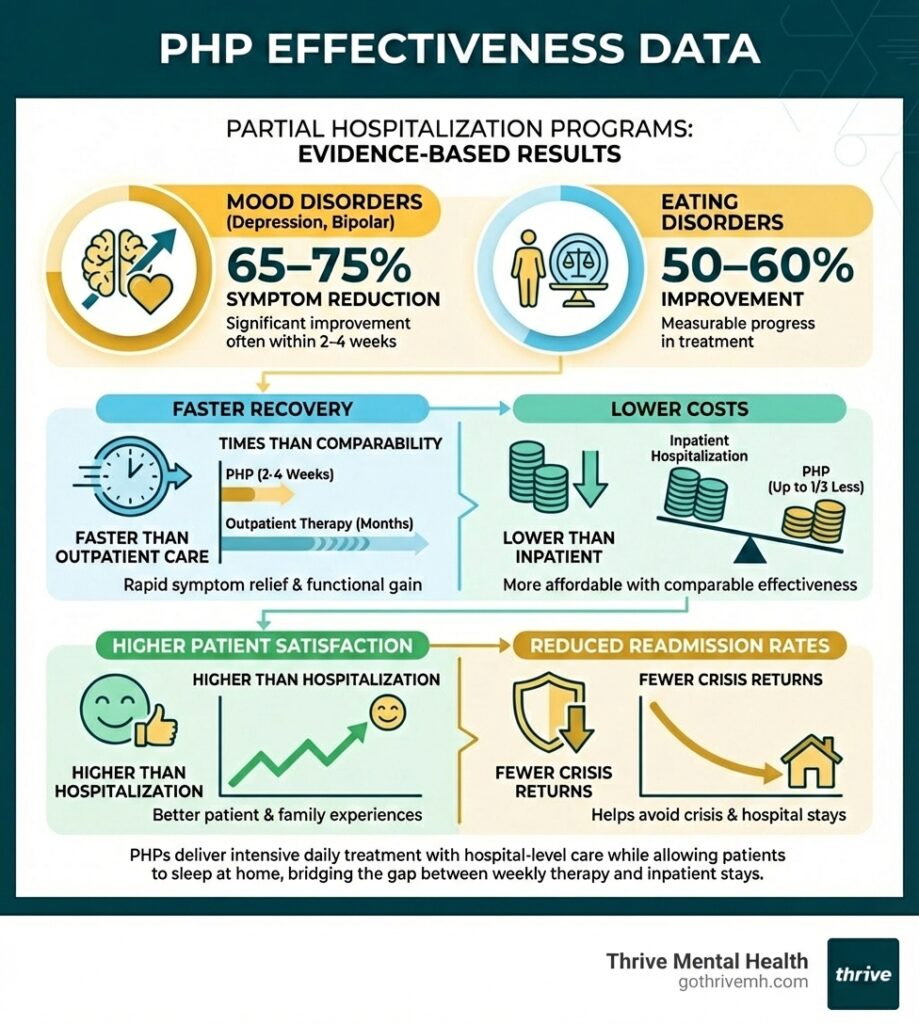
- High Success Rates: Studies show 65-75% of individuals with mood disorders (like depression and bipolar disorder) see significant symptom reduction. For eating disorders and substance use, the improvement rate is a strong 50-60%.
- Faster Results: Unlike traditional therapy, which can take months, most PHP clients see noticeable improvement in just 2-4 weeks.
- Lower Relapse & Rehospitalization: By providing a structured step-down from inpatient care or a step-up from outpatient, PHPs are proven to reduce hospital readmissions by at least 23%.
- Cost-Effective: PHPs can be up to one-third less expensive than inpatient hospitalization, making intensive care more accessible.
- High Patient Satisfaction: Patients and families consistently report higher satisfaction with PHPs compared to inpatient care, largely due to the ability to maintain home and community connections.
These findings are supported by decades of research on day treatment and partial hospitalization programs, including outcomes summarized by the American Psychiatric Association and studies indexed on PubMed.
At Thrive Mental Health, we’ve built our PHP programs on these evidence-based principles. We focus on delivering real, measurable results for adults and young professionals across Florida. Let’s explore how.
How PHPs Achieve Rapid, Lasting Results
The effectiveness of a Partial Hospitalization Program lies in its intensive and structured nature. Unlike weekly therapy, a PHP immerses you in a therapeutic environment for several hours a day, multiple days a week. This consistency is the engine for rapid, sustainable change.
Key components that drive results include:
- Intensive Daily Therapy: PHPs use evidence-based therapies to address core issues. This includes:
- Cognitive Behavioral Therapy (CBT): To identify and reframe negative thought patterns.
- Dialectical Behavior Therapy (DBT): To build skills in emotional regulation, distress tolerance, and interpersonal effectiveness.
- Group Therapy: To foster connection, share experiences, and learn from peers in a safe, professionally-moderated setting.
- Immediate Application: The PHP model allows you to learn new coping skills in a clinical setting and immediately apply them in your real-world environment each evening and weekend. This reinforces learning and builds confidence.
- Structured Support: The daily schedule provides a routine and sense of purpose that can be lost during a mental health crisis. This structure is crucial for stabilization and recovery.
Research confirms this approach works. One study of acute partial hospitalization found that even a short-term PHP (averaging just 5.3 days) led to significant improvements in symptoms and cognitive functioning, with gains maintained at follow-up. Broader reviews of partial hospitalization and day treatment programs show similar positive outcomes across mood, anxiety, and substance use disorders.
You can learn more about our approach to PHP for substance use here.
PHP vs. Other Levels of Care: Finding the Right Fit
Understanding the different levels of mental health care is key to finding the right support for your needs. A PHP is a specific level of care designed for a particular set of circumstances.
Here’s how a PHP compares to other common treatment options:
-
Inpatient/Residential Treatment: This is the highest level of care, providing 24/7 medical supervision in a hospital or residential facility. It’s designed for individuals in acute crisis who may be a danger to themselves or others. While essential for stabilization, it’s highly restrictive and the most expensive option.
-
Partial Hospitalization Program (PHP): This is a step down from inpatient care. It offers intensive, structured therapy for several hours a day, 5 days a week, but you return home each evening. It’s ideal for those who need more support than traditional therapy but don’t require 24/7 supervision.
-
Intensive Outpatient Program (IOP): An IOP is a step down from a PHP. It typically involves therapy sessions 3-5 days a week for about 3 hours per day. This option provides more flexibility than a PHP and is suitable for those who are more stable but still need consistent support. Learn more about the differences between IOP and PHP.
-
Outpatient Therapy: This is the most common form of mental health care, usually involving weekly or bi-weekly one-hour sessions with a therapist. It’s best for managing ongoing mental health concerns, but may not be sufficient for acute crises.
| Feature | Inpatient Care | Partial Hospitalization (PHP) | Intensive Outpatient (IOP) | Outpatient Therapy |
|---|---|---|---|---|
| Time Commitment | 24/7 | 5-6 hours/day, 5 days/week | 3 hours/day, 3-5 days/week | 1 hour/week |
| Living Situation | In a hospital or facility | At home | At home | At home |
| Best For | Acute crisis, severe symptoms, risk of harm | Significant symptoms needing structure, but stable enough to be at home | Transitioning from PHP, or needing more than weekly therapy | Ongoing maintenance and support |
| Cost | Highest | Moderate | Moderate | Lowest |
If you want a deeper dive into how PHPs are defined across levels of care, the Substance Abuse and Mental Health Services Administration (SAMHSA) provides a national overview of treatment options, including day programs like PHPs.
Is a PHP Right for You? Who Benefits Most
Deciding on the right level of care is a critical step in your recovery journey. A Partial Hospitalization Program is not for everyone, but for the right person, it can be life-changing.
A PHP is often a great fit if you:
- Are experiencing significant mental health symptoms (like severe depression, anxiety, or trauma-related issues) that interfere with your daily life, but you are not an immediate danger to yourself or others.
- Feel that traditional weekly therapy isn’t providing enough support to manage your symptoms.
- Are transitioning out of an inpatient or residential program and need a structured step-down to continue your progress.
- Need a structured, supportive environment to build coping skills and establish healthy routines.
- Have a stable and supportive living situation to return to each evening.
PHPs are particularly effective for adults and young adults who need to maintain some connection to their work, school, or family life while undergoing intensive treatment. Research has also shown that PHPs are a highly effective intervention for adolescents struggling with mental health challenges.
What Does a Typical Day in a PHP Look Like?
A day in a PHP is structured to provide a comprehensive, multi-faceted approach to treatment. While programs vary, a typical day often includes:
- Group Therapy: Sessions focused on topics like Cognitive Behavioral Therapy (CBT), Dialectical Behavior Therapy (DBT), and processing emotions with peers.
- Individual Therapy: One-on-one time with a dedicated therapist to work on personal goals and challenges.
- Skills-Building Workshops: Practical training in areas like stress management, communication, and mindfulness.
- Medication Management: Meetings with a psychiatrist or psychiatric nurse practitioner to manage and adjust medications as needed.
- Holistic Therapies: Activities like art therapy, yoga, or mindfulness exercises to support overall well-being.
This combination of therapies ensures that you are not only addressing your immediate symptoms but also building the long-term skills needed for sustained recovery. Explore our PHP Program details to learn more.
How to Pay for a PHP: Insurance and Affordability
Cost should not be a barrier to getting the help you need. Fortunately, most major insurance plans recognize the effectiveness of Partial Hospitalization Programs and provide coverage for them. PHPs are also a significantly more cost-effective alternative to inpatient hospitalization, often costing up to a third less.
Does Insurance Cover PHP?
Yes, most major insurance providers cover PHP when it is deemed medically necessary. This includes, but is not limited to:
- Cigna
- Aetna
- Florida Blue
- United Healthcare / Optum
At Thrive, we are in-network with these and many other providers across Florida. The best way to understand your specific coverage is to verify your insurance. Our team can do this for you quickly and confidentially, with no obligation.
For more background on how mental health parity and coverage work in the United States, you can review guidance from the National Alliance on Mental Illness (NAMI).
How to Choose the Right PHP for You
When selecting a PHP, consider the following factors to ensure you find a program that fits your needs:
- Accreditation: Look for programs accredited by reputable organizations like The Joint Commission, which signifies a high standard of care.
- Staff Credentials: Ensure the clinical team consists of licensed and experienced professionals, including therapists, psychiatrists, and counselors.
- Treatment Specializations: Does the program specialize in your specific challenges, such as depression, anxiety, trauma, or substance use disorders?
- Location and Format: Decide if an in-person program or a Virtual PHP is a better fit for your lifestyle and location. Thrive offers services throughout Florida.
- Reviews and Outcomes: Look for testimonials and data that demonstrate the program’s effectiveness.
Click Here to Verify Your Insurance in Minutes
Frequently Asked Questions About PHP Effectiveness
How successful are partial hospitalization programs?
Research shows PHPs are highly successful, with 65-75% of individuals experiencing significant symptom reduction for mood disorders. They are often as effective as inpatient programs for many conditions but allow for greater independence and are more cost-effective.
How long do you stay in a PHP?
The average length of stay in a PHP is typically 2 to 4 weeks, but this can vary based on individual needs, progress, and insurance coverage. The goal is to stabilize your symptoms and equip you with the skills for long-term recovery.
What is the main goal of a PHP?
The primary goal is to provide intensive, structured treatment to help you manage acute mental health symptoms without requiring a full hospital stay. It acts as a bridge, either preventing hospitalization or helping you transition smoothly back into your daily life after an inpatient stay.
Does insurance cover PHP?
Yes, most major insurance plans, including Cigna, Aetna, Florida Blue, and United Healthcare, cover PHP as a medical necessity. It’s always best to verify your specific benefits with the provider.
Is a virtual PHP as effective as an in-person one?
Yes, studies and clinical outcomes show that virtual PHPs can be just as effective as in-person programs. They offer the same level of intensive, structured care while providing greater flexibility and accessibility, which can be a significant benefit for many individuals.
The Bottom Line: PHPs Are a Powerful Path to Recovery
So, are partial hospitalization programs effective? The evidence overwhelmingly says yes. For individuals needing more than weekly therapy but not requiring 24/7 supervision, PHPs offer a structured, evidence-based, and cost-effective solution.
By providing intensive daily therapy in a supportive environment, PHPs help you stabilize quickly, learn crucial coping skills, and build a foundation for lasting recovery—all while allowing you to stay connected to your home and community. For those in Florida, programs like those at Thrive Mental Health are making this high level of care more accessible than ever.
Independent research, including analyses published in peer-reviewed journals indexed on PubMed, consistently shows that PHPs reduce symptoms, improve functioning, and lower hospital readmissions for many people compared to standard outpatient care.
Ready for Support?
Thrive offers virtual and hybrid IOP/PHP programs with flexible scheduling. Verify your insurance in minutes with no obligation.
Ready for support? Thrive offers virtual and hybrid IOP/PHP programs with evening options. Verify your insurance in 2 minutes (no obligation) → Start benefits check or call 561-203-6085. If you’re in crisis, call/text 988.