
Beyond the Pain: A Definitive Guide to the Best Trauma Therapies

Why Finding the Best Therapy for Trauma Changes Everything
If you’re in crisis, call/text 988 right now. You are not alone.
Best therapy for trauma isn’t just about feeling better—it’s about taking back your life from flashbacks, hypervigilance, and the constant weight of what happened.
Quick Answer: Top 3 Trauma Therapies Backed by Science
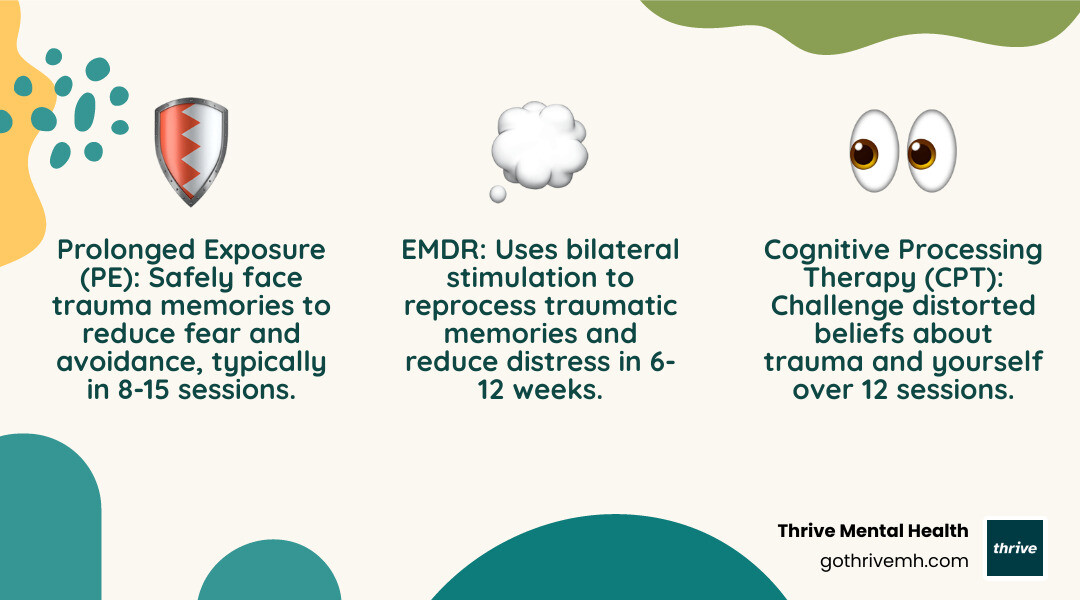
- Prolonged Exposure (PE) – Face trauma memories safely to reduce fear and avoidance (8-15 sessions)
- Cognitive Processing Therapy (CPT) – Challenge distorted beliefs about trauma and yourself (12 sessions)
- Eye Movement Desensitization and Reprocessing (EMDR) – Use bilateral stimulation to reprocess traumatic memories (6-12 weeks)
All three are strongly recommended by the American Psychological Association (APA) and Department of Veterans Affairs/Department of Defense (VA/DoD).
Trauma doesn’t just live in your mind. It rewires your brain’s fear center (the amygdala), keeps your body in fight-or-flight mode, and makes everyday life feel dangerous even when you’re safe. Up to 10% of people will experience PTSD at some point in their lives—and rates are even higher for combat veterans, sexual assault survivors, and first responders.
The good news? Research shows trauma-focused psychotherapy works faster and lasts longer than medication alone. Treatments like PE, CPT, and EMDR help 41-95% of participants lose their PTSD diagnosis entirely.
But here’s the problem: most people wait years before getting the right help. They cycle through weekly therapy that doesn’t touch the trauma directly, or they try to power through alone. Meanwhile, trauma compounds—affecting relationships, work performance, physical health, and the ability to feel safe in your own body.
You don’t have to live like this.
This guide breaks down the best therapy for trauma based on the latest clinical research, not marketing hype. You’ll learn how each approach works, who it helps most, and how to find qualified care that fits your life—whether that’s virtual therapy from home or intensive programs when you need faster results.
I’m Nate Raine, CEO of Thrive Mental Health, and over the past decade I’ve built systems that connect people to evidence-based trauma care across Florida. At Thrive, we’ve seen how the best therapy for trauma transforms lives when it’s delivered with the right intensity, clinical skill, and compassion.
Best therapy for trauma helpful reading:
- Somatic Therapy vs. EMDR: Which is Right For You?
- Is EMDR Right for Everyone? The Science Behind the Debate
- how somatic therapy works
Stop the Spiral: Why Trauma Therapy Can’t Wait
Trauma is a deeply distressing or disturbing experience that has lasting effects on an individual, often leading them to feel overwhelmed or helpless. It’s not just a memory; it’s a physiological imprint. Our brains are designed to protect us, and when faced with a traumatic event, our amygdala—the brain’s fear center—kicks into overdrive. This can lead to persistent feelings of threat, even when we are safe, keeping us in a constant state of “fight, flight, or freeze.”
This dysregulation can manifest as Posttraumatic Stress Disorder (PTSD), affecting up to 10% of individuals in their lifetime, with higher rates among veterans and survivors of sexual assault. Symptoms can be debilitating, including flashbacks, nightmares, hypervigilance, and avoidance of anything that reminds us of the trauma.
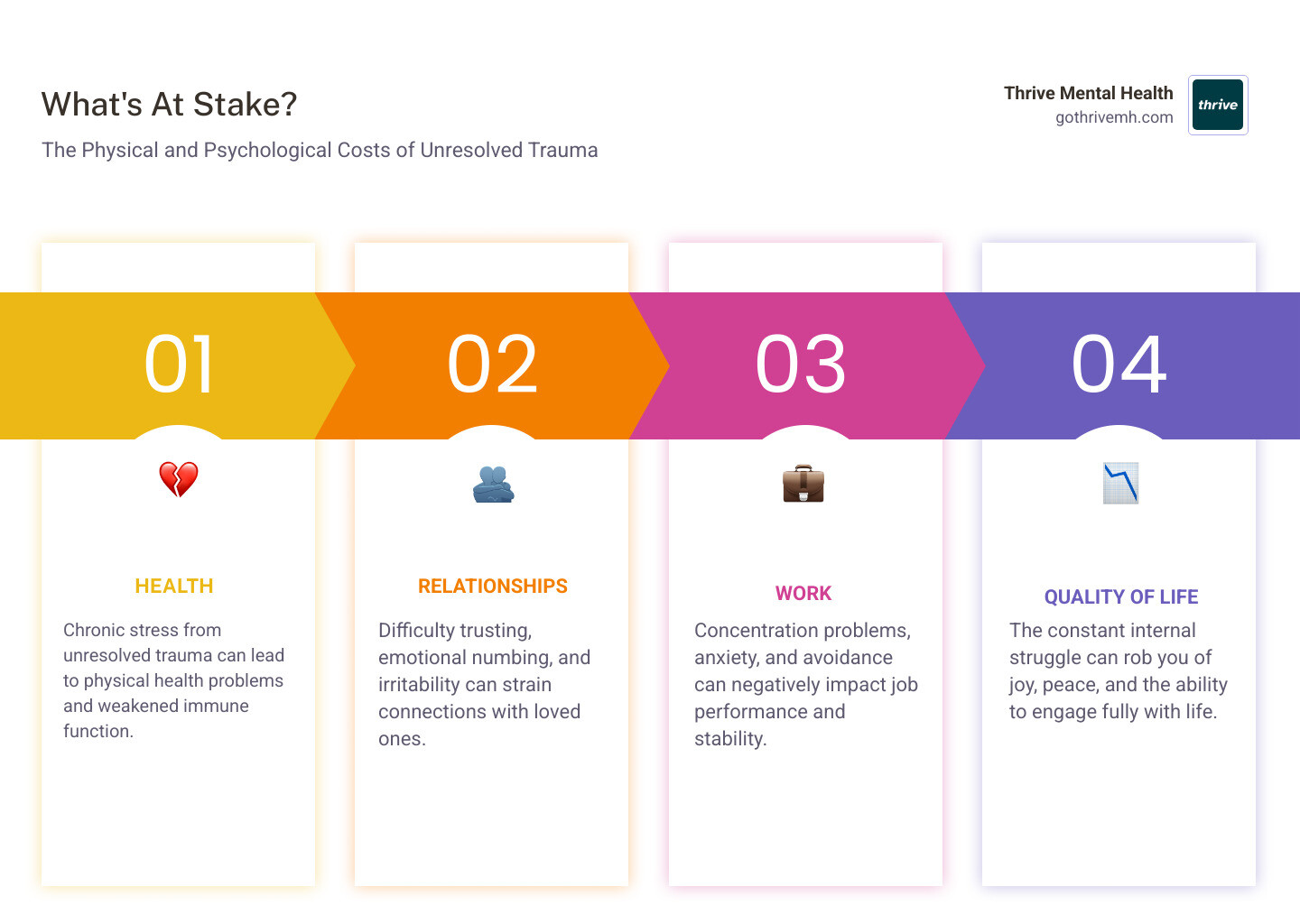
Why waiting costs you more:
- Health: Chronic stress from unresolved trauma can lead to physical health problems like chronic pain, digestive issues, and weakened immune function.
- Relationships: Difficulty trusting others, emotional numbing, and irritability can strain relationships with loved ones.
- Work: Concentration problems, anxiety, and avoidance can impact job performance and stability.
- Quality of Life: The constant internal struggle can rob you of joy, peace, and the ability to engage fully with life.
The good news is that healing is possible. The best therapy for trauma can help you process these experiences, regulate your emotions, and reclaim your life.
What Actually Works? The Best Therapy for Trauma Backed by Science
When it comes to treating trauma, evidence matters. We don’t believe in guesswork. Our approach is rooted in interventions strongly recommended by leading organizations like the American Psychological Association (APA) and the Department of Veterans Affairs/Department of Defense (VA/DoD). These guidelines are based on rigorous research and clinical trials, ensuring you receive the most effective care.
Both the APA and VA/DoD clinical practice guidelines emphasize individual trauma-focused psychotherapy over medication alone for treating PTSD. Research shows that these psychotherapies lead to greater and longer-lasting improvements in PTSD symptoms than medications. While medication can play a supportive role in managing symptoms, it’s the therapeutic processing that addresses the root causes of trauma.
Here’s a look at the top trauma therapies we use, all with strong evidence bases:
Top Trauma Therapies Compared:
| Therapy | Session Length | Focus | Who It’s For |
|---|---|---|---|
| Cognitive Processing Therapy (CPT) | 12 weekly sessions | Challenges distorted beliefs and thoughts related to the trauma. | Individuals struggling with negative thoughts and beliefs about themselves, others, or the world after trauma. |
| Prolonged Exposure (PE) | 8-15 weekly sessions | Gradually confronts trauma memories and avoided situations to reduce fear. | Individuals who actively avoid situations, thoughts, or feelings related to their trauma. |
| Eye Movement Desensitization and Reprocessing (EMDR) | 6-12 weeks (twice-weekly) | Uses bilateral stimulation (e.g., eye movements) to help the brain reprocess traumatic memories. | Individuals experiencing flashbacks, nightmares, and strong emotional reactions to traumatic memories. |
Cognitive Processing Therapy (CPT): Change the Story, Change Your Life
CPT is a specific type of Cognitive Behavioral Therapy (CBT) that helps you break free from the negative thoughts and beliefs that keep you stuck after a traumatic event. It operates on the principle that trauma often leads to distorted cognitions about ourselves, the world, and others. For example, someone might think, “It was my fault,” or “I can’t trust anyone.” CPT helps you identify and challenge these unhelpful beliefs.
This structured therapy typically involves 12 sessions. You’ll work with a therapist to:
- Understand your trauma: Learn about how trauma impacts your thoughts and feelings.
- Identify “stuck points”: Pinpoint specific thoughts or beliefs that are preventing you from recovering.
- Challenge distorted thinking: Through written accounts of the trauma and guided discussions, you’ll learn to evaluate and modify these thoughts.
- Develop new perspectives: Reframe your understanding of the traumatic event and its impact, leading to healthier ways of coping.
CPT is highly recommended by the APA for treating trauma and has shown significant results, with many participants losing their PTSD diagnosis. It’s particularly effective for individuals who find themselves constantly replaying the event or struggling with profound guilt, shame, or anger. You can find more details in the APA’s clinical practice guidelines for CPT.
Prolonged Exposure (PE): Face Fear, Take Back Control
Trauma often leads to avoidance. We might avoid places, people, or even thoughts and memories associated with the traumatic event. While this offers temporary relief, it prevents us from processing the trauma and reinforces the idea that these things are dangerous. Prolonged Exposure (PE) therapy helps you gradually and safely confront these avoided situations and memories, so you can take back control.
PE involves two main components:
- Imaginal Exposure: Repeatedly revisiting and recounting the traumatic memory in a safe environment with your therapist. This helps you process the emotions and thoughts connected to the event until the memory no longer causes intense distress.
- In-Vivo Exposure: Gradually confronting situations, places, or things in real life that you’ve been avoiding because they remind you of the trauma, but are objectively safe. This helps you realize that these triggers are no longer a threat.
Along with exposure, PE often includes breathing retraining to help manage anxiety during the process. The goal is “habituation”—as you repeatedly engage with the feared stimuli, your anxiety naturally decreases. The APA highly recommends PE, and studies show it’s a powerful tool for reducing anxiety related to trauma.
EMDR: Rewire Trauma Fast with Eye Movements
Eye Movement Desensitization and Reprocessing (EMDR) therapy is a unique and highly effective approach that helps your brain “reprocess” traumatic memories. Developed by Francine Shapiro, PhD, it’s recognized as a “best practice” by the US Department of Veterans Affairs and Department of Defense for treating PTSD.
So, what is EMDR? It involves recalling distressing memories while simultaneously focusing on external stimuli, such as eye movements or taps (bilateral stimulation). This process helps your brain move traumatic memories from a “stuck” or improperly stored state to a more adaptive resolution. Think of it like your brain’s natural healing process getting a jumpstart.
The therapy follows an 8-phase process, guided by a specifically trained therapist, and typically involves twice-weekly sessions over 6-12 weeks. EMDR has been shown to reduce symptoms of PTSD, anxiety, and depression by helping to alleviate symptoms and reduce triggers. While the exact mechanism of why it works is still debated, its effectiveness is supported by dozens of clinical trials. For a deeper dive, you can explore this overview of EMDR from the Cleveland Clinic.
More Ways to Heal: Trauma Therapy Options at Thrive
While CPT, PE, and EMDR are gold standards for trauma treatment, we recognize that healing isn’t one-size-fits-all. Some individuals experience complex trauma (repeated, prolonged trauma), childhood trauma, or benefit from more holistic approaches that address the mind-body connection. At Thrive Mental Health, we customize care to meet your unique needs, integrating various evidence-based modalities.

Somatic Therapy: Release Trauma Trapped in Your Body
Traumatic memories don’t just reside in our minds; they’re often held in our bodies. This can manifest as chronic pain, tension, digestive issues, or a constant feeling of unease. Somatic therapies address this body-mind connection, guiding you to understand and release intense emotions and physical sensations related to trauma.
Through practices like developing body awareness, grounding techniques, and “titration” (processing small, manageable doses of difficult emotions), you can begin to process and “release” the trauma stored in your body. This approach can improve mental health and relieve chronic physical symptoms. As the renowned book The Body Keeps the Score highlights, understanding how trauma affects the body is crucial for true healing.
Trauma-Focused CBT (TF-CBT): Best for Kids, Teens, and Families
For younger individuals who have experienced trauma, Trauma-Focused Cognitive Behavioral Therapy (TF-CBT) is often the best therapy for trauma. This cognitive behavioral treatment is specifically designed for children and adolescents, and it frequently involves parents or caregivers.
TF-CBT helps young people identify and correct false beliefs related to their trauma, develop healthy coping mechanisms, and learn to express emotions in a safe and constructive way. A key component is the development of a trauma narrative, where the child can safely recount their experience. This therapy also considers the role a threatening social environment or care system can play in keeping a young person in a dysregulated state, as explored in research on Trauma Systems Therapy.
Internal Family Systems (IFS): Heal Your Inner Parts
Internal Family Systems (IFS) therapy offers a compassionate approach to healing trauma by understanding our internal world as comprising different “parts.” Developed by Richard Schwartz, Ph.D., this model suggests that our personality is made up of various sub-personalities or “parts,” each with its own characteristics, feelings, and beliefs. The “Self,” or your core consciousness, is seen as the leader, capable of compassion, curiosity, and calm.
In IFS, trauma can cause certain parts to become “exiled” or “burdened” with pain, fear, or shame. The therapist helps you connect with your Self to compassionately understand and unburden these hurting parts. This process fosters self-compassion and allows for deep, lasting healing from past wounds. You can learn more about this innovative approach from the IFS Institute.
How to Choose: Your Roadmap to the Best Trauma Therapy
Choosing the best therapy for trauma is a personal journey. There’s no single “magic bullet” that works for everyone. The most effective treatment is often the one you feel most comfortable with, and that aligns with your personal goals and needs. We believe in shared decision-making, where you and your therapist collaborate to find the right path forward.
Consider your personal goals for therapy: What do you want to achieve? Reduce flashbacks? Improve relationships? Feel safer in your body? Your answers will help guide the choice of therapy. Therapist fit is also crucial; you need to feel safe, heard, and understood. Finally, think about treatment intensity. Do you need weekly sessions, or would a more intensive program like an IOP or PHP be a better fit for faster progress? At Thrive, we offer a range of treatment options to meet diverse needs.
What to Consider Before You Start
- Type of trauma (single vs. complex): Single-incident traumas (e.g., a car accident) might respond well to shorter-term, focused therapies. Complex or developmental trauma (e.g., childhood abuse) may require longer-term, more integrative approaches.
- Your main symptoms (flashbacks, avoidance, etc.): If flashbacks and nightmares are prominent, EMDR or PE might be primary considerations. If distorted beliefs are central, CPT could be highly effective.
- Comfort with talk vs. body-based therapy: Some individuals prefer verbally processing their experiences, while others find body-oriented approaches (like somatic therapy) more accessible or effective.
- In-person, virtual, or hybrid care: Your location and preference for how you receive care will influence your options. Thrive offers both virtual and in-person options across Florida.
Medication: When Is It Needed for Trauma?
Medication, particularly Selective Serotonin Reuptake Inhibitors (SSRIs) and Serotonin and Norepinephrine Reuptake Inhibitors (SNRIs), can be helpful for managing severe symptoms of PTSD like anxiety, depression, and sleep disturbances. However, it’s important to understand that medication alone is not a cure for trauma. It can help regulate mood and reduce symptom intensity, making it easier to engage in therapy.
We often see the best therapy for trauma when medication is used in conjunction with psychotherapy. Always consult with a psychiatrist or medical professional to discuss if medication is appropriate for you. At Thrive, we can help coordinate medication management as part of a comprehensive treatment plan.
How to Find a Qualified Trauma Therapist in Florida
Finding the right therapist is paramount. Look for professionals with specific licensure and trauma certifications. It’s not enough for a therapist to simply “treat trauma”; they should have specialized training in evidence-based modalities like CPT, PE, or EMDR.
When searching for a therapist in Florida, consider:
- Specialization: Does the therapist specialize in the type of trauma you’ve experienced (e.g., childhood trauma, combat trauma)?
- Insurance Accepted: Verify that the therapist or program accepts your insurance (e.g., Cigna, Aetna, Optum, Florida Blue, and many more). We make it easy to Verify your insurance with Thrive in just a few minutes.
- Modality: Do they offer the specific therapies you’re interested in (e.g., EMDR, CPT, Somatic)?
- Format: Do they offer in-person, virtual, or hybrid care? Thrive Mental Health provides secure, HIPAA-compliant Virtual IOP options, expanding access to quality care across Florida.
At Thrive, we have locations in major Florida cities, including Tampa Bay, Miami, Orlando, and Jacksonville, among others. Our network ensures you can find expert, compassionate care close to home, or virtually, anywhere in Florida.
FAQs: Best Therapy for Trauma—What People Ask Most
How long does trauma therapy take?
The duration of trauma therapy varies. Shorter-term, focused models like CPT and PE can often be completed in 12–15 weeks. EMDR might take 6-12 weeks of twice-weekly sessions. For complex trauma or multiple traumatic experiences, therapy may take longer, often several months to a year or more. Progress is personal and depends on many factors, including the nature of the trauma and your engagement in the process.
Can trauma ever be fully “cured”?
While we can’t erase past events, you can absolutely heal and thrive. The goal of trauma therapy isn’t to forget what happened, but to process it so that it no longer controls your life. You can achieve freedom from debilitating symptoms, develop healthy coping mechanisms, and build a fulfilling life, moving beyond merely surviving to truly thriving.
What if I need more than weekly therapy?
For individuals who need more intensive support than once-a-week therapy but don’t require inpatient hospitalization, programs like Intensive Outpatient (IOP) and Partial Hospitalization (PHP) can be invaluable. Thrive offers both virtual and in-person IOP/PHP programs that provide multi-day support, combining individual therapy, group therapy, and other therapeutic modalities. This level of care can accelerate progress and provide a stronger foundation for healing. Learn more about our Partial Hospitalization Program (PHP).
Does insurance cover trauma therapy?
Yes, most major insurance plans, including Cigna, Aetna, Optum, Florida Blue, and many others, cover evidence-based trauma therapies, including IOP/PHP and virtual therapy. We understand that navigating insurance can be complex, which is why we offer a quick and easy way to check your benefits now.
Can I get trauma therapy online?
Absolutely. Thrive Mental Health offers secure, HIPAA-compliant virtual therapy options across Florida. Virtual therapy provides flexibility and accessibility, allowing you to receive high-quality, evidence-based trauma treatment from the comfort and privacy of your own home. See our virtual therapy options to learn more.
Summary: The Best Therapy for Trauma—Act Now, Heal Faster
Don’t wait—trauma steals time, health, and joy. The best therapy for trauma is the one you start now. It’s a journey, but with the right, evidence-based support, healing is not just possible, it’s within reach. At Thrive Mental Health, we are dedicated to providing expert-led, compassionate care custom to your needs. We offer evidence-based, insurance-friendly IOP/PHP and virtual programs in Florida, designed to help you reclaim your life.
Related: “Virtual IOP vs. In-Person: Which Is Right for You?”
Ready for support? Thrive offers virtual and hybrid IOP/PHP programs with evening options. Verify your insurance in 2 minutes (no obligation) → Start benefits check or call 561-203-6085. If you’re in crisis, call/text 988.