
Buyer’s Guide: Best Adolescent IOPs in Charleston, SC

Urgent Guide: List of Adolescent IOPs Charleston, SC 2025
Why Finding the Right Adolescent IOP Could Save Your Teen’s Life
If you’re searching for a list of adolescent intensive outpatient programs near me in Florida, you’re not alone—and you’re already ahead. Most parents wait too long. They watch grades drop, friends disappear, and hope fade before realizing weekly therapy isn’t cutting it.
Here’s what you need to know right now:
When to act:
- Grades suddenly dropping
- Social withdrawal or isolation
- Risky or impulsive behavior
- Substance use (even “just weed”)
- Self-harm or suicidal thoughts
If your teen is in immediate danger, call or text 988 now. You are not alone.
The data is clear: 93% of teens in quality IOP programs show measurable improvement in depression symptoms. Most see real progress in 4-6 weeks. But only if you choose the right program—and only if you act fast.
Intensive Outpatient Programs (IOPs) bridge the gap between weekly therapy and inpatient care. Your teen gets 9-12 hours per week of structured support—group therapy, individual sessions, family therapy—while staying home, attending school, and keeping their routine intact.
Florida has options. Some are excellent. Some aren’t. This guide will show you how to tell the difference.
I’m Nate Raine, CEO of Thrive Mental Health, and over the past decade I’ve built behavioral health programs across five states, integrating evidence-based care with flexible, tech-enabled delivery. I’ve helped hundreds of Florida families find the right list of adolescent intensive outpatient programs near me in Florida—and I’ll help you cut through the noise to get your teen real help, fast.

Find more about List of adolescent intensive outpatient programs near me in Florida.:
- I’m looking for an adult intensive outpatient mental health program near me.
- dbt intensive outpatient programs near me
- Which intensive outpatient programs in Florida accept BCBS of FL?
Is Your Teen at Risk? [5 Red Flags Florida Parents Can’t Ignore]
If your teen is in immediate danger, call or text 988 now. You are not alone.
When your teenager is struggling, it can feel overwhelming. You might be asking, “What is an Intensive Outpatient Program (IOP) for adolescents, and how does it differ from other treatment levels?” An IOP is a structured mental health or substance use treatment program designed for individuals who need more support than traditional weekly therapy but don’t require 24/7 supervision like inpatient or residential care. For adolescents, this means they can receive comprehensive therapy several days a week, typically after school, while still living at home and attending school.
We often see parents in Florida wrestling with the decision of when to step up from weekly therapy. If your teen is attending therapy sessions regularly but their symptoms aren’t improving, or are even worsening, it’s a clear sign that a higher level of care, like an IOP, is needed. IOPs provide a more intensive treatment environment with multiple hours of therapy per week, including group, individual, and family sessions, offering a crucial bridge to recovery.
Here are 5 critical warning signs that indicate your teen might benefit from an IOP:
- Grades dropping: A sudden and significant decline in academic performance, lack of motivation, or truancy can signal underlying mental health or substance use issues.
- Social withdrawal: Isolation from friends and family, loss of interest in activities they once enjoyed, or spending excessive time alone.
- Risky or impulsive behavior: Engaging in actions that put themselves or others in danger, like reckless driving, promiscuity, or defiance of rules.
- Substance use: Any use of alcohol, cannabis, opioids, or other illicit substances. Even seemingly “minor” substance use can quickly escalate and indicate deeper problems.
- Self-harm or suicidal thoughts: Any mention of self-harm, suicidal ideation, or engaging in behaviors like cutting, burning, or extreme risk-taking. This is an immediate crisis and requires urgent intervention.
These signs indicate that your teen needs more than just a weekly check-in. They need a structured, supportive environment that an IOP can provide to develop coping skills and address underlying issues.
Here’s a quick comparison to help you understand the differences in care levels:
| Feature | Outpatient Therapy (Weekly) | Intensive Outpatient Program (IOP) | Residential Treatment (RTC) |
|---|---|---|---|
| Intensity | 1-2 hours/week | 9-12 hours/week (3-5 days) | 24/7 supervision and therapy |
| Location | Therapist’s office, virtual | Treatment center, virtual | Live-in facility |
| Supervision | Minimal, self-managed | Structured, supervised during program hours | Constant supervision |
| Disruption | Minimal disruption to daily life | Moderate disruption, allows school/home life | Significant disruption, removed from home/school |
| Ideal For | Mild to moderate issues, initial support, maintenance | Moderate to severe issues, step-down from RTC, step-up from weekly | Severe, acute issues, safety concerns, lack of home support |
| Family Role | Varies, often limited | Actively involved in family therapy | Involved in family therapy and visits |
7-Point Checklist: How to Choose the Best Adolescent IOP in Florida
Choosing the right list of adolescent intensive outpatient programs near me in Florida, for your teenager is one of the most critical decisions you’ll make. It’s not about guessing; it’s about informed choices. We understand the urgency and the need for clarity.

Here’s how we help Florida parents vet programs and what to ask on your first call to ensure you find a program that truly meets your teen’s needs:
Program Structure, Schedule, and Academic Support
A key benefit of an adolescent IOP is its ability to integrate treatment into a teen’s existing life. We know you’re concerned about your teen’s education. What is the typical duration and schedule of an adolescent IOP? Most adolescent IOPs run for 9-12 weeks, with sessions typically held 3-5 days a week for 3 hours a day. This schedule is often designed to occur after school hours, allowing your teen to maintain their academic commitments.
- Typical IOP schedule: We prioritize flexible scheduling, often with evening and after-school options. This allows your teen to continue attending school and participate in extracurricular activities while receiving intensive support. Our programs typically involve multiple group, individual, and family sessions per week, totaling 9-12 hours of therapy.
- Academic coordination: A high-quality IOP will have a clear plan for academic support. We understand the importance of education and work with families and schools to ensure treatment doesn’t cause your teen to fall behind. Ask about tutoring, homework help, or communication protocols with school counselors.
- Family therapy: Family involvement is a leading predictor of success in IOP. We believe in healing the whole family system. Ask if family therapy is a required component of the program or merely an optional add-on. Our programs include dedicated family therapy sessions to help improve communication and coping skills for everyone involved.
Learn more about Thrive’s IOP structure and how we integrate seamlessly into your teen’s life.
Therapy Methods and Staff Credentials: What Actually Works?
The effectiveness of an IOP hinges on the therapeutic approaches used and the qualifications of the staff. What should parents look for in terms of therapeutic approaches and staff qualifications?
- Evidence-based therapies: We only use approaches proven to work. Look for programs that incorporate Cognitive Behavioral Therapy (CBT), Dialectical Behavior Therapy (DBT), and trauma-informed care. These therapies equip teens with practical skills to manage emotions, challenge negative thoughts, and cope with past experiences.
- Who’s on staff? Ensure the program employs licensed therapists (LCSWs, LMFTs, LPCs), psychiatrists, and other mental health professionals with specific experience working with adolescents. Ask about staff-to-client ratios to ensure personalized attention.
- Specialized tracks: Does the program offer specialized tracks for issues like trauma, anxiety, depression, substance use, or eating disorders? Custom treatment plans are crucial for addressing specific mental health and substance use issues.
Here are 5 must-ask questions about therapy models:
- What specific evidence-based therapies (e.g., CBT, DBT, ACT) are used in the program?
- How is trauma addressed within the treatment framework?
- What are the qualifications and experience of the therapists working with adolescents?
- Is there a psychiatrist on staff for medication management, if needed?
- How does the program individualize treatment plans based on my teen’s specific needs and diagnoses?
Cost & Insurance: What Will You Really Pay for Adolescent IOP in Florida?
Concerns about cost should never be a barrier to getting your teen the help they need. What are the costs associated with adolescent IOPs, and what insurance or financial assistance options are available in Florida?
- In-network vs. out-of-network: Understand your insurance plan. In-network providers have agreements with your insurance company for negotiated rates, which typically means lower out-of-pocket costs for you. Out-of-network providers may still be covered, but often at a lower percentage or after a higher deductible.
- Insurance accepted: We work with most major insurance providers to make treatment accessible. This includes plans like Cigna, Optum, Blue Cross Blue Shield, UnitedHealthcare, and TRICARE. Always verify your specific benefits.
- Sliding scale and payment plans: If insurance coverage is limited, ask about sliding scale fees based on income or flexible payment plans. Some programs offer financial assistance to ensure no teen is turned away due to inability to pay.
Don’t let financial uncertainty delay treatment. Verify your insurance in 2 minutes with us (no obligation). You can also explore general information on Aetna mental health coverage to understand your benefits.
Finding the Right Adolescent IOP in Florida [2025]
Finding a high-quality program when you search for a list of adolescent intensive outpatient programs near me in Florida, is crucial. At Thrive Mental Health, we are committed to making evidence-based treatment accessible to families in Florida, from Miami to Jacksonville.
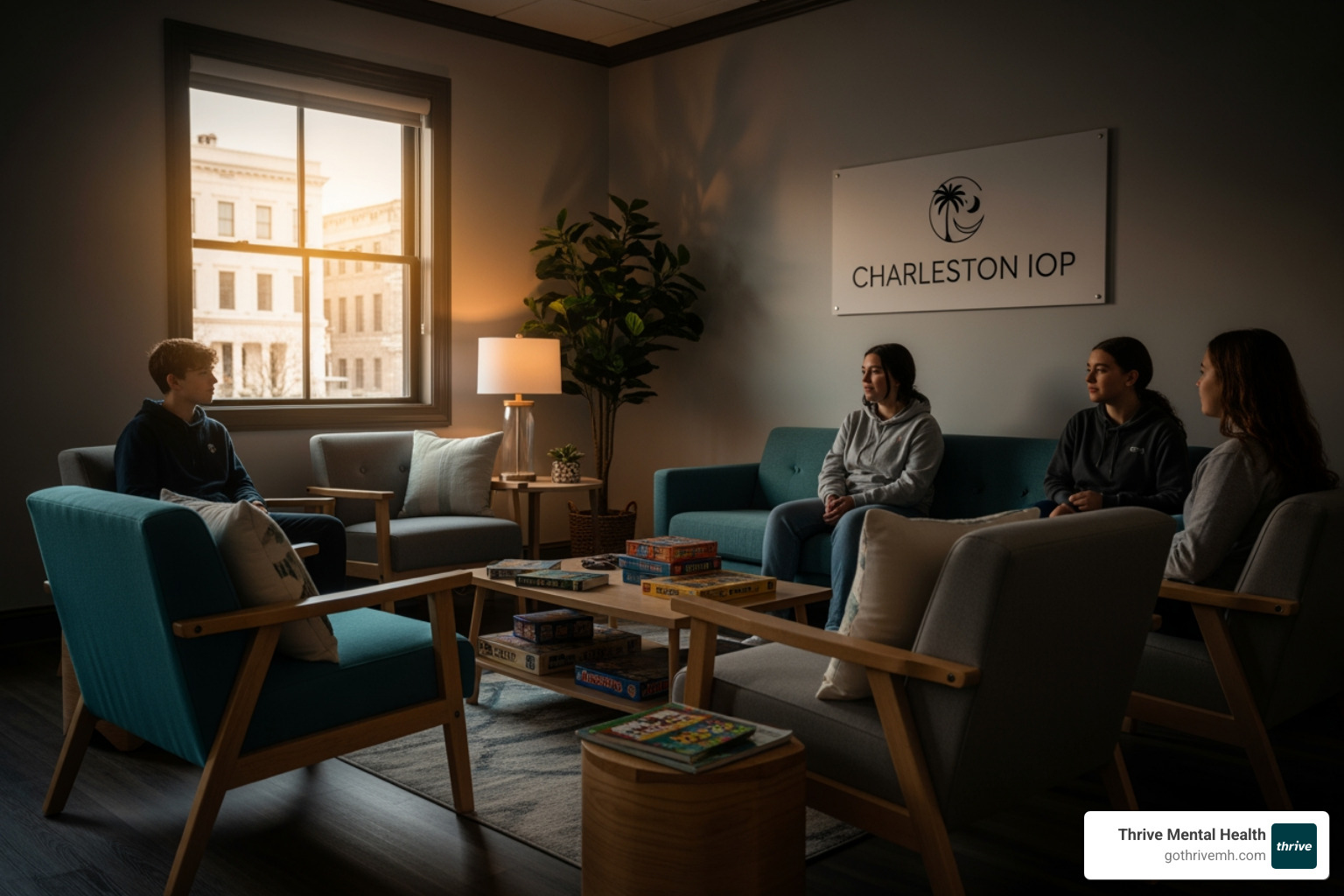
Thrive Mental Health offers virtual and hybrid IOP options for adolescents and young adults across Florida, integrating clinical expertise with flexible scheduling. Our programs are designed to provide intensive support without disrupting academic or family life, bringing expert care directly to you.
Why Virtual IOPs Are Changing the Game for Florida Teens [2025]
The landscape of mental health treatment is evolving, and virtual IOPs are at the forefront of this change, especially for families in Florida, from major cities to rural communities.
- Flexible scheduling: Virtual programs mean your teen can access treatment from the comfort of home, fitting sessions around school, sports, or other commitments. We offer evening and after-school options, making it easier for teens to get help without sacrificing their daily routines.
- No commute—get help from home: Eliminate travel time and logistics. This is particularly beneficial for families in spread-out areas or those with busy schedules. Your teen can connect with their therapists and peers from anywhere with an internet connection.
- State-licensed, secure, evidence-based: Just like in-person programs, reputable virtual IOPs are state-licensed and adhere to strict privacy and security standards. We ensure that our virtual programs deliver the same high-quality, evidence-based therapies (like CBT and DBT) as our in-person options.
- Broader access to specialists: Virtual care can connect your teen with highly specialized therapists who might not be available locally in your part of Florida, expanding the range of expertise accessible to your family.
See Thrive’s virtual IOP options and find how we’re making effective treatment more accessible.
How to Vet Your Florida IOP List—Don’t Get Burned
Once you have a potential list of adolescent intensive outpatient programs in Florida, the next step is careful vetting. Don’t fall for slick marketing; ask the tough questions.
- What to ask on your first call: Beyond the basics, inquire about the program’s philosophy, success rates (if they track them), and how they measure progress. Ask for a sample schedule and what a typical day looks like for a teen.
- Staff-to-client ratio: A lower ratio generally means more personalized attention. Ask about the average group size and how many individual sessions per week your teen will receive.
- How progress is measured: A good program will have clear benchmarks and regular assessments to track your teen’s improvement. They should be able to articulate how they adapt treatment plans based on this data.
- Family involvement: We cannot stress this enough – family involvement is critical. Ask what role parents play, how often family therapy sessions occur, and what resources are available for parents.
- Academic support: Reconfirm how the program supports continued schooling, including coordination with your teen’s school and resources for academic success.
Don’t hesitate to ask these questions. Your teen’s future depends on it. Contact Thrive for a free assessment to discuss your teen’s needs and how our programs can help.
What Happens After IOP? [Your Teen’s Recovery Roadmap]
Completing an IOP is a significant milestone, but it’s not the end of the journey. What happens after an adolescent completes an IOP program in Florida? We view IOP as a crucial step in a longer recovery roadmap, and effective aftercare planning is essential for sustained well-being.
- Discharge planning: Before your teen completes their IOP, we work closely with them and your family to create a comprehensive discharge plan. This plan outlines continued support, identifies potential triggers, and reinforces the coping skills learned during treatment. It’s about setting your teen up for long-term success.
- Step-down care: Often, teens transition from an IOP to a less intensive level of care, such as weekly individual therapy or specialized group therapy. This “step-down” approach provides ongoing support as they reintegrate fully into their daily lives, ensuring a smooth and stable transition. Our virtual therapy options are an excellent way to maintain this continuity of care.
- Aftercare: Support groups, alumni programs, relapse prevention: We emphasize the importance of ongoing support. This can include participation in local support groups (like local NAMI Florida chapters, which offer support groups for families and individuals), alumni programs offered by the IOP, and continued practice of relapse prevention strategies. The goal is to build a robust support network and equip your teen with the tools to steer challenges independently.
Explore Thrive’s virtual therapy options for continued support after IOP, ensuring your teen maintains their progress and thrives.
FAQs: Adolescent IOPs in Florida
How much does an adolescent IOP cost in Florida?
Costs for adolescent IOPs in Florida can vary widely. Without insurance, intensive outpatient treatment can average around $3,953 per month. However, most families use health insurance, which can cover 50-100% of costs, due to mental health parity laws. We accept most major insurance providers, including Cigna, Optum, Blue Cross Blue Shield, UnitedHealthcare, and TRICARE. Additionally, some programs offer sliding scale fees or payment plans. Verify your insurance here.
Can my teen stay in school during IOP?
Yes, absolutely. Most adolescent IOPs, including ours, are specifically designed to accommodate a teen’s academic schedule. Sessions are typically held after school or in the evenings, allowing your teen to continue attending classes and maintain their education. Programs should also offer academic support or coordinate with schools to ensure your teen doesn’t fall behind.
How fast will we see results?
While individual progress varies, most teens in quality IOPs begin to show measurable improvement in symptoms within 4–6 weeks. Consistency in attendance, active participation in therapy, and strong family involvement are key factors that significantly impact the speed and sustainability of positive results.
Is virtual IOP as effective as in-person?
Yes, when delivered by licensed, evidence-based providers, virtual IOPs are proven to be as effective as in-person programs. They offer the same structured, intensive therapy (individual, group, and family sessions) but with added benefits like increased flexibility, no commute, and access to specialized care from the comfort and privacy of your home. Our virtual IOPs leverage technology to deliver high-quality, engaging treatment.
Summary: Don’t Wait—Get Your Teen the Right IOP Support in Florida
If your teen is struggling with mental health or substance use issues, relying solely on weekly therapy might not be enough. The right adolescent IOP can be a game-changer, offering the intensive, structured support needed for faster recovery, improved academic performance, and renewed hope. Our goal is to connect you with the list of adolescent intensive outpatient programs near me in Florida, that truly fit your family’s needs.
We understand the unique challenges faced by Florida teens and their families. Thrive Mental Health is a leading provider of virtual and hybrid IOP programs for teens and young adults in Florida, with services also available in South Carolina, California, Indiana, and Arizona. Our programs combine clinical expertise, flexible scheduling, and measurable results, designed for people who need more than once-a-week therapy but less than inpatient care. Don’t let uncertainty delay access to life-changing care.
Learn more about Thrive’s IOPs | Verify your insurance | Read: “How Virtual IOPs Cut Recovery Time by 50%”
Ready for support? Thrive offers virtual and hybrid IOP programs with evening options. Verify your insurance in 2 minutes (no obligation) → Start benefits check or call 561-203-6085. If you’re in crisis, call/text 988.