
Choosing Wisely: Comparing Intensive Outpatient Programs for Adults in Phoenix

Is Your Recovery Stuck? Why Comparing IOP Programs in Florida Could Change Everything
When you compare IOP programs for adults in Florida, you’re not just shopping for therapy—you’re choosing between staying stuck and finally getting traction. If weekly therapy isn’t cutting it and inpatient feels like too much, Intensive Outpatient Programs (IOPs) offer the structure and support you need without putting your life on hold.
Quick Answer: What to Compare When Choosing an IOP in Florida
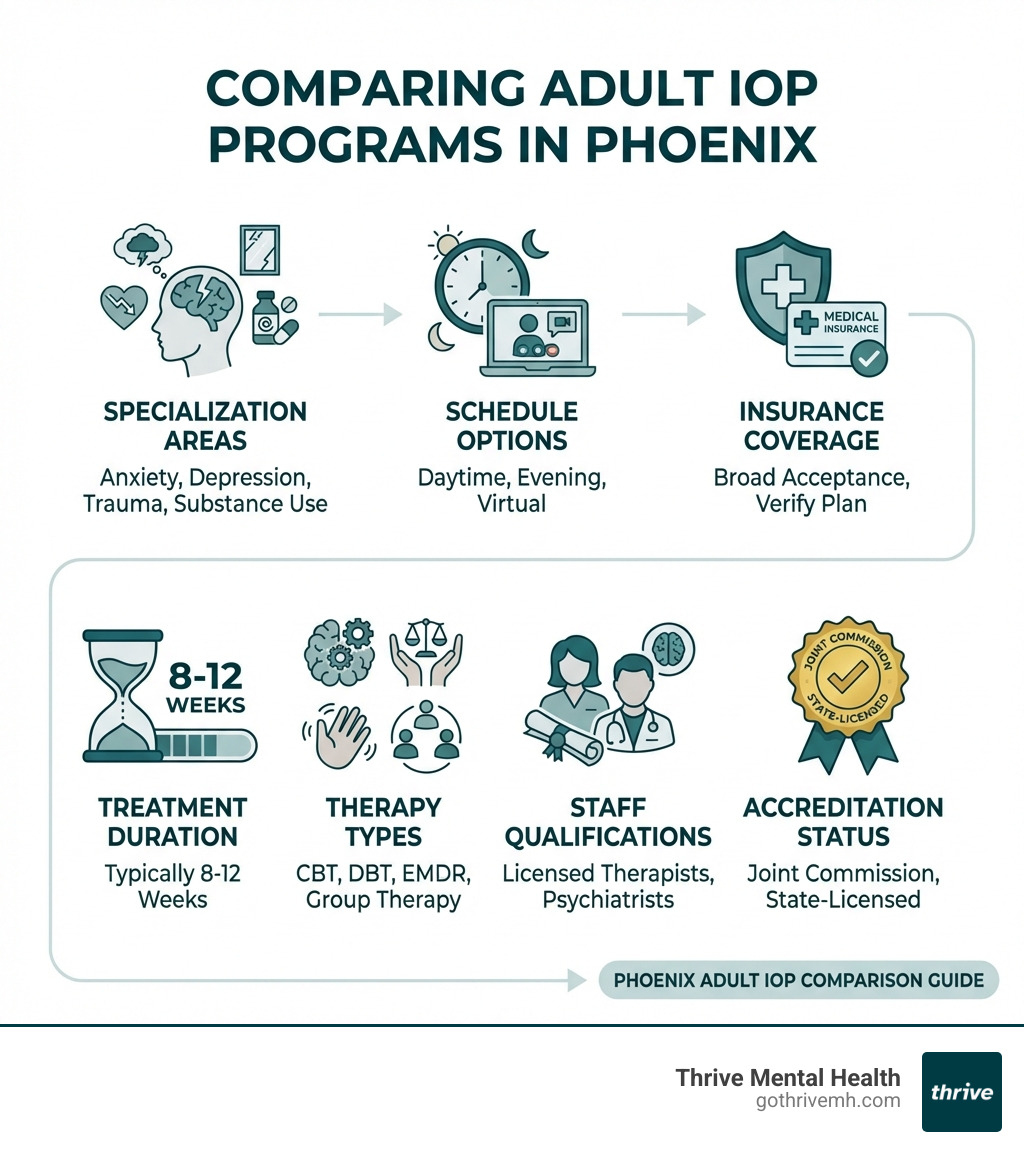
| Factor | What to Look For |
|---|---|
| Specialization | Depression, anxiety, trauma, dual diagnosis, substance use |
| Staff Credentials | Master’s-level therapists, board-certified psychiatrists |
| Schedule Flexibility | Evening/weekend options, virtual availability |
| Insurance Accepted | Cigna, Optum, Aetna, Florida Blue, others |
| Treatment Models | CBT, DBT, EMDR, trauma-informed care |
| Accreditation | Joint Commission, state-licensed facilities |
| Program Length | Typically 8–12 weeks, 3–5 days/week |
IOPs bridge the gap between traditional outpatient therapy and residential treatment. Most programs in Florida require 3–5 sessions per week, lasting 3–4 hours each, over 8–12 weeks. You attend treatment, then go home to practice what you’ve learned in real life. It’s recovery that fits your schedule—not the other way around.
The stakes are high. Choosing the wrong program wastes time, money, and hope. The right one can deliver faster results, better support, and the skills you need to actually get better—not just cope.
I’m Nate Raine, CEO of Thrive Mental Health, and I’ve spent over a decade building scalable, evidence-based behavioral health programs that integrate virtual and in-person care. When you compare IOP programs for adults in Florida, you need clarity on what actually moves the needle—and that’s what this guide delivers.
Know your compare IOP programs adults Florida terms:
- What are the best IOP programs in Florida?
- Can I do a virtual IOP from anywhere in Florida?
- What is the difference between IOP and PHP in Florida?
What Is an Intensive Outpatient Program (IOP) in Florida?
An Intensive Outpatient Program (IOP) is a structured, evidence-based treatment approach designed for individuals who need more support than traditional weekly therapy but don’t require the 24/7 supervision of inpatient or residential care. Think of it as the sweet spot in the continuum of care, offering a higher level of clinical intervention while allowing you to maintain your daily life, work, and family commitments.
In Florida, IOPs are custom to provide significant therapeutic benefit without disrupting your routine. Unlike inpatient care where you live at the facility, an IOP allows you to live at home, attending treatment sessions multiple times a week. This “real-world recovery” model is incredibly powerful because it lets you immediately apply coping strategies and skills learned in therapy to your everyday challenges.
The core components of an IOP commonly found in Florida include a blend of individual therapy, group therapy, and sometimes family counseling. These programs often incorporate educational components focusing on understanding your condition, developing coping mechanisms, and strategies for relapse prevention. Most IOPs require participants to attend sessions 3-5 times a week, for 3-4 hours per session. The program duration can vary, but typically lasts between 8-12 weeks, allowing for meaningful progress in addressing symptoms and building resilience.
Compared to inpatient treatment, IOPs are generally more affordable, offering a high level of care at a fraction of the cost of residential programs. This cost-effectiveness, combined with the flexibility to continue living at home and maintaining responsibilities, makes IOPs a highly attractive option for many adults in Florida seeking comprehensive mental health or substance abuse treatment. Our Intensive Outpatient Program, for example, is carefully structured to provide maximum therapeutic benefit while respecting your time and commitments, with an 8-week duration allowing for meaningful progress.
Who Needs an IOP in Florida?
If you’re an adult in Florida struggling with mental health or substance abuse issues, and weekly therapy isn’t quite enough to make lasting changes, an IOP might be your next best step. IOPs are designed for individuals who have persistent or severe symptoms that haven’t been adequately addressed by less intensive treatments.
If you’re struggling with thoughts of self-harm or suicide, call/text 988 now.

>
If you’re in crisis, call/text 988 right now. You are not alone.
IOPs in Florida typically address a wide range of mental health conditions and substance abuse issues. These include:
- Depression: For those experiencing moderate to severe depressive symptoms that impact daily functioning.
- Anxiety Disorders: Including generalized anxiety, panic disorder, social anxiety, and phobias, especially when symptoms are overwhelming.
- Bipolar Disorder: To help manage mood swings, develop coping strategies, and maintain stability.
- Post-Traumatic Stress Disorder (PTSD) and Trauma: Programs often incorporate trauma-focused therapies to process past experiences and build resilience.
- Obsessive-Compulsive Disorder (OCD): For individuals needing intensive behavioral therapy to manage compulsions and obsessions.
- Substance Use Disorders: For those who need structured support to overcome addiction, especially after completing inpatient rehab or when traditional outpatient care isn’t sufficient. This includes alcohol addiction, drug addiction (opioids, stimulants, cannabis), and process disorders that have become addictive.
- Dual Diagnosis (Co-occurring Disorders): When mental health conditions and substance use issues occur together, IOPs provide integrated treatment, recognizing that these issues often precipitate each other.
- Eating Disorders: Some IOPs specialize in providing structured support for disordered eating patterns.
- Personality Disorders: Such as Borderline Personality Disorder, where Dialectical Behavior Therapy (DBT) is often a core component.
- Grief and Relationship Challenges: When these issues become debilitating and affect daily life.
An adult intensive outpatient program offers a higher level of care and structure compared to traditional therapy alone, making it well-suited for adults who have persistent or severe symptoms. It’s also an excellent option for individuals transitioning from inpatient care, providing a crucial step-down level of support to solidify recovery in a real-world setting. Our Florida IOP offers personalized mental health care that provides intensive support and helps adults learn the skills necessary for long-term mental wellness.
Conditions treated in IOPs:
- Anxiety
- Depression
- Bipolar Disorder
- PTSD and Trauma
- Substance Use Disorders (Alcohol, Drugs, Process Addictions)
- Dual Diagnosis (Co-occurring Mental Health and Substance Use)
- OCD
- Personality Disorders
- Grief
- Relationship Issues
The Florida IOP Comparison Checklist: What to Look For (and What to Avoid)
Choosing an Intensive Outpatient Program is a significant decision. The wrong choice can lead to wasted time, money, and emotional energy. To protect your recovery and ensure you find the best fit, we’ve developed a comprehensive checklist. This isn’t just about finding an IOP; it’s about finding the right IOP for your unique needs.

Key Factors to Compare IOP Programs for Adults in Florida
When you compare IOP programs for adults in Florida, these are the critical elements to scrutinize:
- Specializations (depression, trauma, dual diagnosis, etc.): Does the program specifically cater to your primary challenges? Some IOPs are general mental health programs, while others specialize in areas like trauma, substance abuse, eating disorders, or specific conditions like OCD. For example, some programs might focus on individuals with anxiety, depression, bipolar, personality, or OCD diagnoses, while others might have specialized tracks for women’s issues or dual diagnosis.
- Treatment Philosophy (evidence-based, holistic, trauma-informed): Look for programs that use evidence-based practices (EBPs) such as Cognitive Behavioral Therapy (CBT) and Dialectical Behavior Therapy (DBT). A trauma-informed approach is crucial for many, recognizing the widespread impact of trauma. Holistic programs might integrate wellness services like yoga or nutrition. Our programs, for instance, feature a customized array of evidence-based, research-backed services.
- Staff Credentials (master’s-level therapists, psychiatrists): The quality of care often hinges on the expertise of the team. Ensure the program employs licensed mental health professionals, including master’s-level therapists (LCSW, LPC, LMFT) and board-certified psychiatrists for medication management.
- Accreditations (Joint Commission, state-licensed): Accreditation by bodies like The Joint Commission signifies a commitment to high standards of patient care and safety. State licensure is also a fundamental requirement.
- Program Environment (in-person, virtual, hybrid): Consider what works best for you. In-person programs offer a dedicated space and direct interaction, while virtual IOPs provide flexibility and accessibility. Many programs, including ours, offer both virtual and in-person treatment options in Florida.
- More about Thrive’s Virtual IOP
- Insurance Accepted (Cigna, Optum, Aetna, Florida Blue, more): Financial accessibility is a major factor. Verify that the IOP is in-network with your insurance provider. Most IOPs work with major insurance plans, and our team can help you verify your benefits to understand coverage.
- Treatment Plan Structure and Duration: While typical IOPs run 8-12 weeks, with sessions 3-5 times a week for 3-4 hours, ensure the program offers a personalized treatment plan. This means a comprehensive assessment to tailor the program to your unique needs, rather than a one-size-fits-all approach.
- Continuum of Care: Does the program offer a clear path for step-down care (e.g., from PHP to IOP to traditional outpatient)? This ensures seamless transitions and ongoing support as your needs evolve. Some providers guide clients through a full continuum, including detox, inpatient residential, PHP, and IOP.
How IOPs Work: Structure, Schedule, and Therapies
Understanding the typical structure, schedule, and therapeutic approaches of IOPs can help you better compare IOP programs for adults in Florida and choose one that aligns with your recovery goals.
Program Length and Frequency:
Most IOPs in Florida are designed to be completed within 8-12 weeks, though individual progress and clinical needs can adjust this duration. Our 8-week duration, for example, allows for meaningful progress. Participants typically attend sessions 3-5 days a week, with each session lasting 3-4 hours. This intensive schedule provides consistent support and therapeutic engagement. Some programs offer flexible scheduling options, including morning, evening, and weekend sessions, to accommodate busy adults, students, and professionals.
Mix of Individual, Group, and Family Therapy:
A hallmark of effective IOPs is the integration of various therapeutic modalities:
- Group Therapy: This is often the cornerstone of IOPs, providing a safe and supportive environment where you can connect with peers facing similar challenges. Group sessions foster a sense of community, reduce isolation, and allow for shared learning and mutual support. Topics often include coping skills, emotion regulation, relapse prevention, communication, and healthy relationships. Many individuals find that the group dynamic becomes a transformative and empowering aspect of their healing journey.
- Individual Therapy: Weekly individual sessions with a licensed therapist provide a confidential space to explore personal issues, develop coping strategies, and receive one-on-one guidance custom to your specific needs. This allows for deeper exploration of root causes and personalized skill development.
- Family Therapy: Many IOPs recognize the vital role of family in the recovery process. Family sessions can help improve communication, address relational dynamics, and build a stronger support system at home. For adolescents, some programs involve parents in group therapy.
Evidence-Based Models:
Effective IOPs use a range of evidence-based therapies that have been scientifically proven to be effective for mental health and substance abuse treatment. These include:
- Cognitive Behavioral Therapy (CBT): Helps individuals identify and change negative thought patterns and behaviors that contribute to their struggles.
- Dialectical Behavior Therapy (DBT): Focuses on teaching skills in mindfulness, emotion regulation, distress tolerance, and interpersonal effectiveness. DBT combines acceptance with the need for change, helping you manage emotions and improve relationships.
- Eye Movement Desensitization and Reprocessing (EMDR): A powerful therapy for processing traumatic memories and reducing their emotional impact.
- Somatic Experiencing (SE): A body-oriented therapeutic model for healing trauma and other stress-related disorders.
- Motivational Interviewing (MI): Helps individuals explore and resolve ambivalence about change, fostering intrinsic motivation for recovery.
- Trauma-Focused Therapy: Integrates various techniques to specifically address and heal from traumatic experiences.
- Mindfulness and Meditation: Practices that improve present-moment awareness, reduce stress, and improve emotional regulation.
- Art Therapy and Creative Expression: Uses creative processes to explore emotions, reduce stress, and promote self-findy.
Some programs integrate five components of care: weekly group therapy, weekly individual therapy, case management/coaching services, wellness services (i.e., yoga, nutrition), and psychiatric/medical services, differentiating them through a holistic approach.
Compare therapy types and benefits:
| Therapy Type | Focus | Key Benefits |
|---|---|---|
| CBT | Thoughts & Behaviors | Challenges negative thinking, develops coping skills |
| DBT | Emotion Regulation | Manages intense emotions, improves relationships |
| EMDR | Trauma Processing | Reduces impact of traumatic memories |
| Somatic Experiencing | Body & Trauma | Releases stored trauma from the body, reduces stress |
| Motivational Interviewing | Ambivalence to Change | Boosts intrinsic motivation for recovery |
| Mindfulness | Present Moment Awareness | Reduces stress, improves focus, improves self-awareness |
| Group Therapy | Peer Support & Interaction | Reduces isolation, builds community, shared learning |
| Individual Therapy | Personalized Guidance | Custom strategies, deep personal exploration |
Virtual IOPs in Florida: Cut Commute, Keep Results
In today’s world, finding time for intensive treatment can be a challenge. This is where virtual IOPs in Florida step in, offering a powerful alternative that delivers the same high-quality clinical care without the logistical problems. Imagine getting the support you need from the comfort and privacy of your own home, office, or any quiet space in Florida.
Why Choose a Virtual IOP in Florida?
Virtual IOPs have emerged as a viable and often preferred option for many adults, especially for those across Florida, from Miami to Jacksonville, due to their unique benefits:
- No Commute – Join from Anywhere in Florida: This is perhaps the most obvious advantage. You save significant time and stress by eliminating travel to and from a physical facility. For residents across Florida, this means access to expert care regardless of your exact location within the state, whether you’re in Miami, Orlando, or a more remote area.
- Greater Privacy and Comfort: Participating in therapy from a familiar environment can reduce anxiety and increase comfort levels, making it easier to engage openly in sessions. The privacy of your own space can also be a significant factor for those concerned about stigma. Many individuals find that virtual treatment reduces anxiety about attending in-person groups while still providing the structure and accountability needed for successful recovery.
- Flexible Scheduling (Evenings, Weekends): Virtual platforms often allow for a wider range of session times, including evening and weekend options. This flexibility is crucial for adults balancing work, family responsibilities, or academic commitments. Our adult intensive outpatient program offers flexible scheduling options, including after-work hours to accommodate the busy lives of adults.
- Lower Anxiety, Higher Engagement: For some, the thought of in-person group therapy can be daunting. Virtual settings can lower this initial barrier, allowing individuals to ease into the therapeutic process more comfortably and engage more readily.
- Continuity of Care: Virtual IOPs make it easier to maintain consistent attendance, especially if you travel or have fluctuating schedules. This continuity is vital for sustained progress in recovery.
Thrive Mental Health delivers virtual IOP programs designed for people who need more than once-a-week therapy but less than inpatient care. Our programs combine clinical expertise, flexible scheduling, and measurable results.
Virtual vs. In-Person IOP: Which Is Right for You?
While virtual IOPs offer incredible advantages, the choice between virtual and in-person depends on your individual needs, preferences, and circumstances.
Considerations for Virtual IOP:
- Technology Needs: You’ll need a reliable internet connection, a laptop or tablet, and a private space for sessions.
- Self-Discipline: While structured, virtual programs require a degree of self-discipline to log in consistently and engage fully without the physical presence of a facility.
- Peer Connection: While virtual platforms facilitate strong peer connections, some individuals prefer the in-person dynamic for group interactions.
- Hands-on Therapies: Certain therapeutic modalities, such as some forms of art therapy or experiential therapies, are often best delivered in an in-person setting.
- Personal Preference and Lifestyle: If you thrive on routine, enjoy a change of scenery, or prefer direct, face-to-face interaction, an in-person program might be more appealing. Conversely, if flexibility, privacy, and convenience are paramount, virtual could be ideal.
Both virtual and in-person IOPs are designed to provide comprehensive, evidence-based care. The “best” option is the one that you can commit to fully and that aligns with your lifestyle, ensuring you receive the maximum therapeutic benefit. Our intensive outpatient programs in Florida offer clients a comprehensive treatment option, while our virtual IOP options provide a viable alternative.
Insurance, Cost, and Getting Started: Don’t Let Money Stop Your Recovery
One of the most common concerns when considering mental health or substance abuse treatment is the cost. It’s a valid worry, but it’s crucial to understand that Intensive Outpatient Programs are often far more accessible than many people realize, especially compared to inpatient options. Don’t let financial concerns be a barrier to getting the help you need.
Paying for IOP in Florida: What You Need to Know
When you compare IOP programs for adults in Florida, understanding the financial aspects is a key part of the process.
- IOP vs. Inpatient: Save Thousands: Inpatient or residential treatment centers can cost tens of thousands of dollars for a typical stay, often requiring you to take extended time away from work or family. IOPs, by contrast, are significantly more affordable. They offer a high level of structured care and therapeutic intensity at a fraction of the cost, making quality treatment accessible without the immense financial burden of a residential program.
- In-Network with Major Insurance Providers: Most intensive outpatient mental health treatment is typically covered by insurance when medically necessary. Our programs in Florida are in-network with many major insurance plans, such as Cigna, Optum, Aetna, and Florida Blue. Our billing team is dedicated to working with providers to verify benefits and maximize your coverage, minimizing your out-of-pocket expenses.
- Fast Insurance Verification: We understand that navigating insurance can be complex and time-consuming. That’s why we offer a quick and easy way to verify your benefits. You can check your benefits now in just a couple of minutes, with no obligation. This step provides clarity on what your plan covers and any potential costs upfront.
- Payment Plans Available: Even with insurance, there might be co-pays, deductibles, or out-of-pocket maximums to consider. Many IOPs, including ours, offer flexible payment plans or sliding scale fees to make treatment more manageable. Our goal is to ensure that financial constraints don’t prevent you from accessing life-changing care.
How to Start: From Assessment to Admission
Starting an IOP in Florida is a straightforward process designed to get you the support you need quickly and efficiently.
- Free, No-Obligation Assessment: The first step is typically a confidential, no-cost assessment. This initial conversation allows our admissions team to understand your current challenges, discuss your treatment history, and determine if an IOP is the appropriate level of care for you. You can call us or make an appointment online to schedule this.
- Clinical Evaluation and Personalized Plan: If an IOP seems like a good fit, you’ll undergo a more comprehensive clinical evaluation. This assessment by our clinical team helps us develop a personalized treatment plan custom to your unique needs, goals, and challenges. This plan will outline the specific therapies, group sessions, and individual support you’ll receive.
- Simple Intake Process – Get Started in Days, Not Weeks: We strive to make the intake process as smooth as possible. Once your personalized plan is in place and insurance is verified, you can often begin your program in a matter of days, not weeks. This rapid access to care is crucial when you’re ready to make a change.
- Ongoing Support and Progress Tracking: Throughout your IOP, your progress will be continuously monitored. Our team will work with you to adjust your treatment plan as needed, ensuring you’re always receiving the most effective care. We measure success through completion of individualized treatment goals, improved scores on assessment tools, and a successful transition to lower levels of care.
FAQs: Compare IOP Programs for Adults in Florida
How long does an IOP last in Florida?
Most IOPs run 8–12 weeks, with sessions typically held 3–5 days per week for 3–4 hours per session. Your specific duration will depend on your personalized treatment plan and progress.
Can I keep my job while in an IOP?
Yes, absolutely. IOPs are designed for flexibility. Many programs, especially virtual options, offer evening and flexible schedules to accommodate working adults, students, and those with family responsibilities.
What’s the difference between IOP and PHP?
Partial Hospitalization Programs (PHP) are more intensive, typically requiring 5–6 hours of treatment per day, 5 days a week. Intensive Outpatient Programs (IOP) are less time-intensive (3–4 hours per session, 3–5 days a week) but still provide structured, comprehensive care. PHP is often a step-down from inpatient care, while IOP is a step-down from PHP or a step-up from traditional outpatient therapy. Learn about PHP at Thrive.
Does insurance cover IOP in Florida?
Yes, most major insurance plans, including Cigna, Optum, and Aetna, typically cover Intensive Outpatient Programs when medically necessary. We recommend verifying your benefits directly. You can verify your insurance in 2 minutes through our website.
How do I choose the best IOP for me?
To choose the best IOP, compare IOP programs for adults in Florida based on their specializations (e.g., trauma, dual diagnosis), staff qualifications, treatment philosophy (evidence-based, holistic), schedule flexibility, insurance acceptance, and the types of therapies offered. Consider if a virtual, in-person, or hybrid program best suits your lifestyle. See Thrive’s IOP options.
Summary: Compare IOP Programs for Adults in Florida—Get Results, Not Regret
When it’s time to compare IOP programs for adults in Florida, the goal is clear: find a program that delivers real results without forcing you to put your life on hold. Intensive Outpatient Programs offer a crucial middle ground between weekly therapy and inpatient care, providing structured, evidence-based treatment for mental health and substance abuse issues. By carefully evaluating factors like specialization, staff expertise, treatment philosophy, insurance coverage, and scheduling flexibility, you can make an informed choice that truly supports your recovery journey.
Thrive Mental Health offers in-person and virtual IOPs for adults and young professionals in Florida. Our programs are evidence-based, insurance-friendly, and built to integrate seamlessly with your life, ensuring you receive comprehensive care that leads to lasting wellness.
Ready for support? Thrive offers virtual and hybrid IOP/PHP programs with evening options. Verify your insurance in 2 minutes (no obligation) → Start benefits check. If you’re in crisis, call/text 988.