
Free & Confidential: Where to Find a Valid Depression Test Online

Depression Test [Free, 3 Minutes]: Spot Symptoms Early, Avoid Months of Suffering, Get Help Today
IMPORTANT: If youre in crisis, call/text 988 right now. You are not alone.
Summary: A depression test is a quick, private screening you can take in under 3 minutes to check symptoms, understand severity, and learn next steps.
A depression test is a self-screening questionnaire that asks about your thoughts, feelings, and behaviors over a recent period (typically the last 2 weeks) to identify potential symptoms of depression. If you’re looking for immediate resources, here’s what you need to know:
Quick Access to Depression Tests:
- PHQ-9 (Patient Health Questionnaire-9) – Most widely used, 9 questions, free, measures severity from minimal to severe.
- K10 (Kessler Scale) – 10 questions, commonly used by Australian GPs, measures psychological distress.
- Edinburgh Postnatal Depression Scale – Specialized for postpartum depression screening.
- Where to find them: Mental health organizations, primary care offices, and reputable health websites offer these tests for free.
- Important: These are screening tools, not diagnostic instruments. Share results with a healthcare professional.
What happens next: If your test indicates symptoms, reach out to a licensed therapist or doctor for a clinical evaluation. Depression affects over 17 million adults in the United States, including many here in Florida, and is highly treatable with the right support.
While sadness is a normal part of life, persistent low mood that interferes with your daily life may be clinical depression. A depression test can help you understand if your feelings warrant professional attention. These confidential screening tools give you a structured way to assess your symptoms in just a few minutes and decide whether it’s time to reach out for support.
If you’re in crisis or having thoughts of self-harm, call or text 988 immediately to connect with the 988 Suicide & Crisis Lifeline. You are not alone.
As a licensed therapist and Chief Clinical Officer at Thrive Mental Health, I’ve guided thousands of people in using tools like the depression test as a first step toward understanding their mental health and finding the right level of care, especially for those in our Florida communities.
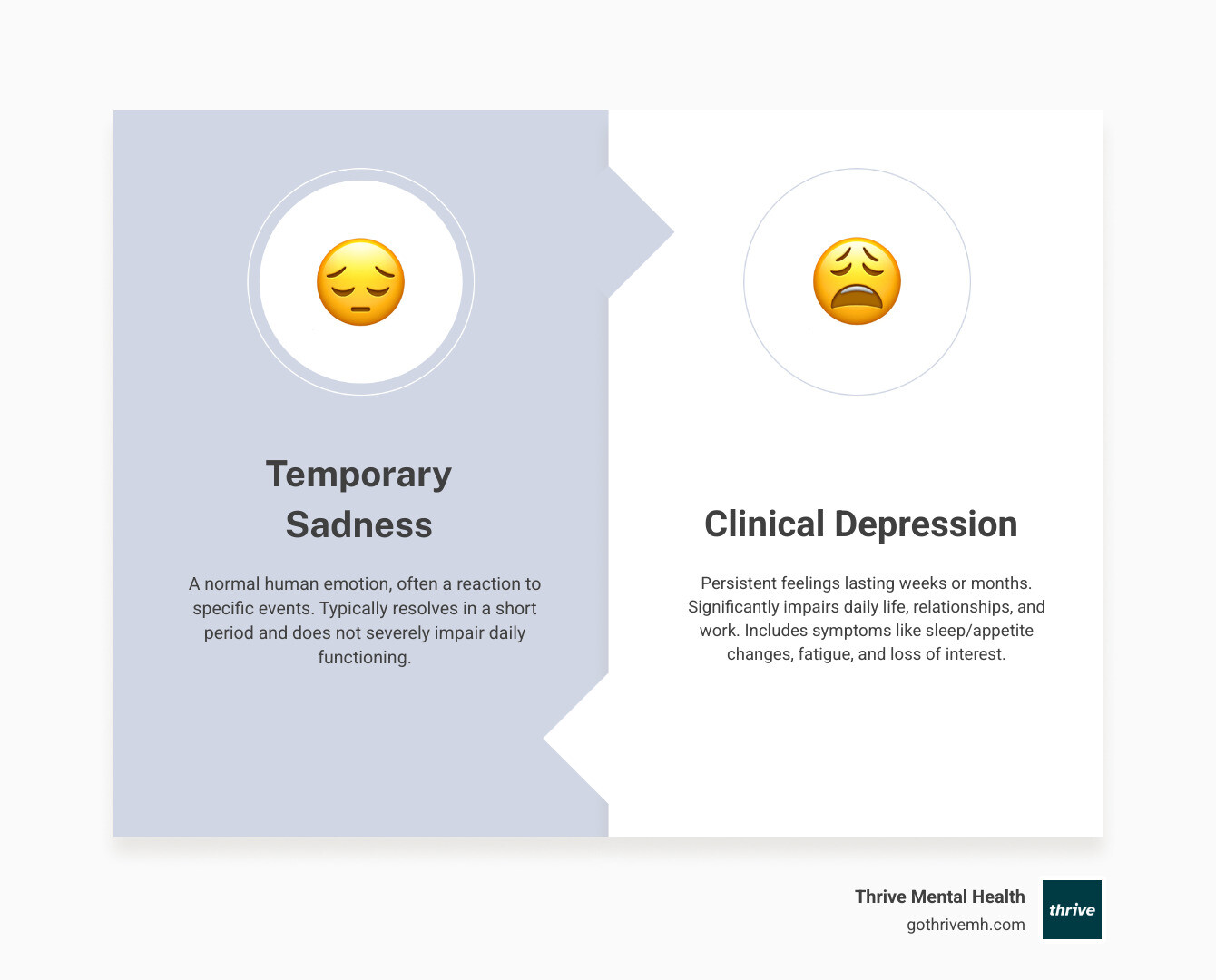
Depression test terms to learn:
What Is a Depression Test? (And What It’s Not)
A depression test is a valuable first step in understanding your mental health, but it’s a screening tool—not a diagnostic one. It alerts you that something might be wrong, but only a trained professional can determine the cause and make a diagnosis. The primary purpose is to identify potential symptoms and measure their severity, helping you see if what you’re experiencing aligns with common signs of depression.
These self-assessments are an empowering first step—a structured way to gain insight and decide whether it’s time to seek professional help. When you take a test, you’re starting an important conversation, first with yourself, and then ideally with a healthcare provider who can guide you toward the right support. Learn more about what depression is and how it’s diagnosed.
The Purpose of a Depression Screening
Depression screenings help identify specific symptoms—the feelings, thoughts, and behaviors characteristic of depression. You might recognize patterns you hadn’t noticed, like loss of interest in hobbies or changes in sleep.
These tests also measure severity, providing a score that indicates whether your symptoms are minimal, mild, moderate, or severe. This gives you a clearer picture of where you stand.
Another function is tracking changes over time. Taking the same test periodically helps monitor whether symptoms are improving or worsening, which is valuable information to share with a therapist or doctor.
For many, taking an anonymous online test is an empowering first step that feels less intimidating than scheduling an appointment. When you do talk to a professional, the results facilitate communication by giving you concrete data to share.
Benefits and Limitations of Taking a Test
While a depression test is helpful, it’s important to understand its strengths and weaknesses.
Benefits include accessibility (available 24/7), privacy (often anonymous), immediate feedback, and being free of cost. They also help reduce stigma and are educational, teaching you about common depression symptoms.
However, the limitations are significant. These tests cannot diagnose you. They rely on self-reporting, which is subjective, and they lack clinical context about your medical history or life situation. The results come with no professional interpretation, creating a risk of misinterpretation. Most importantly, they cannot replace professional care—they don’t offer treatment, therapy, or medication.
| Benefits of Online Depression Tests | Limitations of Online Depression Tests |
|---|---|
| Accessibility: Available 24/7 from anywhere with an internet connection. | Not a Diagnosis: Cannot definitively diagnose a mental health condition. |
| Privacy: Often anonymous, allowing you to explore concerns without immediate judgment. | Potential Inaccuracy: Self-reporting can be subjective; may not capture full clinical picture. |
| Immediate Feedback: Provides quick results and often suggests next steps. | Lacks Clinical Context: Doesn’t consider medical history, other conditions, or life circumstances. |
| Cost-Effective: Most reputable online tests are free, removing financial barriers to a first step. | No Professional Interpretation: Results are raw data; a professional is needed to interpret them fully. |
| Reduces Stigma: Offers a low-pressure way to acknowledge and address mental health concerns. | Risk of Misinterpretation: Users may misinterpret scores or panic unnecessarily. |
| Educational: Helps you learn about common depression symptoms. | Does Not Replace Professional Care: Cannot offer treatment, therapy, or medication. |
The bottom line: A depression test is a helpful starting point, not the finish line. It’s a tool to help you decide if professional evaluation is your next step.
Finding a Reliable Online Depression Test
Not all online tests are created equal. When searching for a depression test, focus on clinically validated tools developed by mental health professionals or reputable health organizations. This means researchers have confirmed they accurately screen for depression symptoms. A clear privacy policy should also be non-negotiable—you need to know how your information will be used and protected.
Common Types of Depression Screening Tools
The most trusted screening tools are used by doctors and therapists worldwide. Here’s what you’ll likely encounter:
PHQ-9 (Patient Health Questionnaire-9) is the most widely used depression screening tool in the United States. It consists of nine questions about how you’ve felt over the past two weeks, generating a score that indicates symptom severity from mild to severe. Developed with rigorous research, you can find examples of the PHQ-9 Nine Symptom Checklist or the Patient Health Questionnaire (PHQ-9) online.
K10 (Kessler Psychological Distress Scale) uses 10 questions to measure broader psychological distress, including anxiety and depression symptoms, over the past four weeks. It’s commonly used by Australian GPs and is helpful for determining what level of support you might need. You can explore a K10 test through Beyond Blue or their Anxiety and Depression Test K10 page.
Specialized tests exist for specific situations. Because the symptoms and circumstances are unique, a specialized test like the Edinburgh Postnatal Depression Scale is crucial for accurate screening for new parents. Postpartum depression affects 10-15% of women and can appear during pregnancy or up to a year after birth.
When you take any depression test, expect questions about: Little interest or pleasure in doing things? Feeling down, depressed, or hopeless? Trouble with sleep? Feeling tired or having little energy? Changes in appetite? Feeling bad about yourself? Trouble concentrating? Some tests also ask about changes in movement or speech and, most seriously, thoughts that you would be better off dead or of hurting yourself. These questions are designed to capture the full range of symptoms so you can get the help you need.
How Reputable Sites Protect Your Privacy
Taking an online depression test requires vulnerability, and trustworthy websites take concrete steps to protect your privacy.
Most reputable sites offer complete anonymity—they don’t ask for your name, email, or other personally identifiable information (PII). Your responses are processed without being linked back to you. While some sites collect aggregated, anonymous data for research, your specific answers remain confidential.
Secure connections are also essential. Look for “https://” in the web address, which indicates that data transmitted between your device and the website is encrypted.
Always review the privacy policy before starting a test. A trustworthy site will clearly explain how your data is collected, used, and protected in straightforward terms. Responsible platforms have built these protections so you can take this important first step with peace of mind.
I Took a Test. What Do My Results Mean and What’s Next?

After completing a depression test, you might feel relieved, worried, or unsure what to do next. All of these reactions are normal.
If you are in crisis or having thoughts of self-harm, call or text 988 immediately to connect with the 988 Suicide & Crisis Lifeline. You are not alone.
Your test result is a guide, not a verdict. It’s a signpost suggesting it’s worth investigating further. Scores typically indicate mild, moderate, or severe symptoms, but these categories are meant to help you understand symptom severitythey don’t define you. Context matters; a test can’t know your life circumstances, which is why talking to a professional is the crucial next step.
Your Action Plan After Taking a Depression Test
If your depression test suggests you’re experiencing symptoms, you’ve taken a brave and proactive step. The most important thing is not to panic.
Share your results with a professional. Schedule an appointment with your primary care provider, a licensed therapist, or a psychiatrist. Your test results provide a concrete starting point for the conversation.
A professional will conduct a clinical interview, which goes deeper than any online test. They’ll ask about your symptoms, daily life, medical history, and family history to get a complete picture of your health. Your doctor might also recommend lab tests to rule out physical causes like thyroid problems or vitamin deficiencies that can mimic depression symptoms.
Only a licensed healthcare professional can provide a formal diagnosis based on the criteria in the Diagnostic and Statistical Manual of Mental Disorders (DSM-5). This diagnosis is the foundation for creating an effective, personalized treatment plan.
Once you have a diagnosis, you and your provider can explore treatment options. Therapy (psychotherapy) is incredibly effective for learning strategies to change negative thought patterns. Medication can also play an important role, especially for moderate to severe depression. Often, a combination of both works best. Virtual Therapy for Depression is a convenient and effective option for accessing care from your home in Florida.
Finding Professional Support and Verifying Insurance
Getting a professional diagnosis is your next step toward creating a custom treatment plan. We know navigating mental health care can feel overwhelming, but support is often more accessible than you might think.
In Florida, many insurance plans—including Cigna, Optum, and Florida Blue—offer solid coverage for mental health services. At Thrive, we can help you verify your benefits quickly and without obligation, so you know your options upfront. Explore higher levels of care like our Intensive Outpatient Program (IOP) or Partial Hospitalization Program (PHP), and you can Verify Insurance in about 2 minutes.
A qualified professional can help you explore treatment options like therapy or medication. For comprehensive information about different approaches, you can read more about Treatment for Major Depression and Anxiety.
The Substance Abuse and Mental Health Services Administration (SAMHSA) is another valuable resource. You can visit SAMHSA to locate mental health services in your area.
Depression affects over 17 million adults in the United States, and many of them are right here in Florida. You are far from alone. With the right support, recovery is absolutely possible, as depression is highly treatable.
Frequently Asked Questions about Depression Tests
You’ve likely got questions about taking a depression test. Here are concise answers to common “People Also Ask” questions.
Can I test myself for depression?
Yes. Tools like the PHQ-9 are designed for self-screening. Use results as a starting point and share them with a clinician for a full evaluation.
What are the 5 main symptoms of depression?
Persistent low mood, loss of interest (anhedonia), sleep changes, fatigue/low energy, and feelings of worthlessness or guilt.
How do doctors test for depression?
Through a clinical interview, validated screeners (e.g., PHQ-9), and sometimes lab tests to rule out medical causes (e.g., thyroid, B12).
What PHQ-9 score means I should see a doctor?
A score of 10+ suggests moderate symptoms and a need for professional evaluation. Any score with thoughts of self-harm requires immediate help (call/text 988).
Are online depression tests accurate and private?
Validated tools (PHQ-9, K10) are reliable for screening, not diagnosis. Use reputable sites with HTTPS and clear privacy policies for anonymity.
Suggested FAQ schema (JSON-LD):
{
“@context”: “https://schema.org”,
“@type”: “FAQPage”,
“mainEntity”: [
{
“@type”: “Question”,
“name”: “Can I test myself for depression?”,
“acceptedAnswer”: {“@type”: “Answer”, “text”: “Yes. Tools like the PHQ-9 are designed for self-screening. Use results as a starting point and share them with a clinician for a full evaluation.”}
},
{
“@type”: “Question”,
“name”: “What are the 5 main symptoms of depression?”,
“acceptedAnswer”: {“@type”: “Answer”, “text”: “Persistent low mood, loss of interest (anhedonia), sleep changes, fatigue/low energy, and feelings of worthlessness or guilt.”}
},
{
“@type”: “Question”,
“name”: “How do doctors test for depression?”,
“acceptedAnswer”: {“@type”: “Answer”, “text”: “Through a clinical interview, validated screeners (e.g., PHQ-9), and sometimes lab tests to rule out medical causes (e.g., thyroid, B12).”}
},
{
“@type”: “Question”,
“name”: “What PHQ-9 score means I should see a doctor?”,
“acceptedAnswer”: {“@type”: “Answer”, “text”: “A score of 10+ suggests moderate symptoms and a need for professional evaluation. Any score with thoughts of self-harm requires immediate help (call/text 988).”}
},
{
“@type”: “Question”,
“name”: “Are online depression tests accurate and private?”,
“acceptedAnswer”: {“@type”: “Answer”, “text”: “Validated tools (PHQ-9, K10) are reliable for screening, not diagnosis. Use reputable sites with HTTPS and clear privacy policies for anonymity.”}
}
]
}
Your Path Forward Starts with a Single Step
Taking a depression test is an important, courageous step. It’s not a diagnosis, but it provides clarity, helping you see patterns in your feelings and giving you concrete information to share with a professional. The results are a starting pointan invitation to take the next step, whether that’s scheduling an appointment with your doctor or reaching out to a therapist.
Depression affects over 17 million adults in the United States, including many in Florida, and it’s one of the most treatable mental health conditions when people get the right support.
Ready for support in Florida? Thrive offers virtual and hybrid IOP/PHP with evening options for Florida residents. Verify your insurance in 2 minutes (no obligation) Start benefits check or call our Florida-based team at 561-203-6085. If you’re in crisis, call/text 988.