
Detailed Reviews of the Top 10 Best IOPs in California

Struggling to Find the Right IOP in Florida? Get Results—Fast, Without the Guesswork
Best IOP in Florida programs combine evidence-based care, flexible scheduling, and real results—without the guesswork or insurance surprises that waste your time and money.
Quick Answer: What Makes an IOP the “Best” in Florida?
| Must-Have | Why It Matters |
|---|---|
| State licensure + JCAHO/CARF accreditation | Ensures safety, quality, and insurance coverage |
| Evidence-based therapies (CBT, DBT, EMDR) | Proven methods that actually work |
| Dual diagnosis expertise | Treats mental health + addiction together |
| Flexible scheduling (virtual, in-person, hybrid) | Fits your life—work, school, family |
| 9+ hours/week structured programming | Meets ASAM criteria for intensive care |
| Transparent insurance coverage | No surprise bills, verified benefits |
If you’re a driven professional or college-aged adult who’s tried weekly therapy without enough progress, you already know the frustration. You need more than a 50-minute session once a week, but you can’t put your life on hold for inpatient care. That’s where an Intensive Outpatient Program (IOP) comes in.
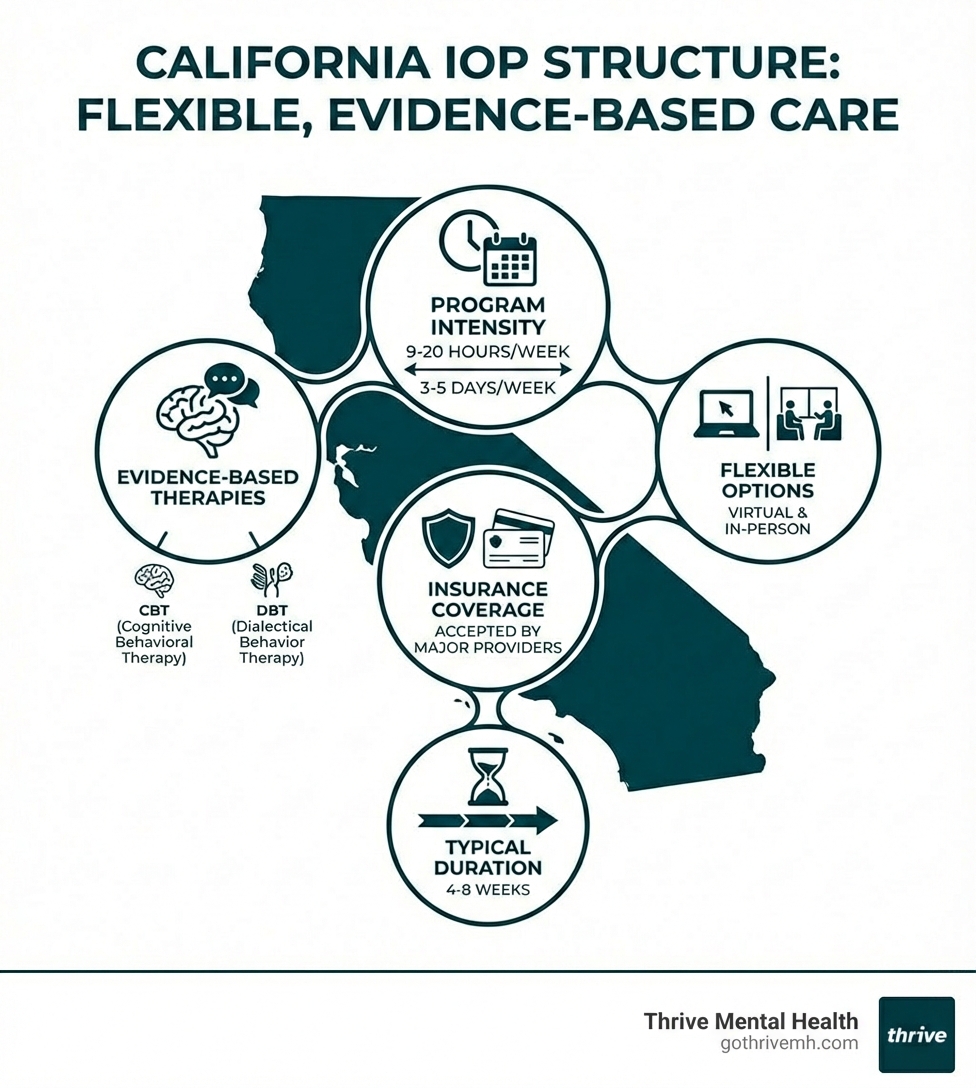
IOPs deliver 9–20 hours of therapy per week—typically 3–5 days—while you still live at home, work, or attend school. You get the structure and intensity you need without 24/7 supervision. In Florida, where hundreds of IOPs exist statewide, choosing the right one can feel overwhelming. Some are backed by decades of research and accreditation. Others? Not so much.
The stakes are high. 80% of people with PTSD have a co-occurring condition like depression or substance use disorder. If your IOP doesn’t treat both at once, you’re setting yourself up to fail. If it’s not covered by your insurance, you could face thousands in out-of-pocket costs. And if the program doesn’t fit your schedule, you won’t stick with it long enough to see results.
That’s why we reviewed hundreds of programs across Florida to identify what actually works. This guide breaks down the 10 non-negotiables for choosing the Best IOP in Florida—from state licensure and evidence-based therapies to flexible scheduling and insurance transparency. We’ll also show you the red flags to avoid and the questions to ask before you commit.
I’m Nate Raine, CEO of Thrive Mental Health, where we’ve spent over a decade building IOP and PHP programs that integrate data science, clinical excellence, and flexible care models across five states, including Florida. Our research on the Best IOP in Florida draws from real-world outcomes, industry standards, and what actually helps people recover faster.
What is an IOP? (Intensive Outpatient Program explained in plain English)
An Intensive Outpatient Program (IOP) is a structured treatment option that provides robust support and therapy for individuals battling mental health disorders, substance use disorders, or both. Think of it as a middle ground between traditional weekly therapy and inpatient hospitalization. You get more intensive care than a once-a-week session, but you don’t have to put your life on hold or live at a facility.
IOPs typically involve 9 to 20 hours of therapy per week, often spread across 3 to 5 days. This allows you to live at home, attend work or school, and practice newly learned coping skills in real-world situations, integrating your recovery into your daily life. It’s an ideal solution for those who need significant support but value their independence and daily routine.
IOP vs. PHP: Which is right for you? (Quick comparison table)
When considering intensive treatment, you’ll often hear about IOPs and Partial Hospitalization Programs (PHPs). Both offer more support than traditional outpatient therapy, but they differ in intensity and time commitment.
| Feature | Intensive Outpatient Program (IOP) | Partial Hospitalization Program (PHP) – Time Commitment: 9-20 hours per week, typically 3-5 days a week. – Structure: Highly structured therapy sessions, including group therapy, individual counseling, and skill-building workshops. – Living Arrangement: Patients live at home and commute to the treatment center for scheduled sessions. – Best For: Individuals who need more support than weekly therapy but do not require 24/7 supervision. Ideal for those transitioning from inpatient care or needing to maintain work/school commitments. | Time Commitment: 20+ hours per week, typically 5-7 days a week. – Structure: A more intensive, full-day program that provides a highly structured environment, often including medical supervision and a wider range of therapeutic activities. – Living Arrangement: Similar to IOP, patients live at home, but the daily time commitment is much greater, resembling a full-time job. – Best For: Individuals who need a higher level of care than IOP but do not require 24/7 inpatient supervision. It’s often a step-down from residential treatment or a step-up from IOP. |
5 Signs You Need an IOP in Florida—Don’t Wait Until It’s Worse
If you’re in crisis or having thoughts of self-harm, call/text the Suicide Prevention Lifeline at 988. You are not alone.
Sometimes, recognizing you need a higher level of care is the first and hardest step. If you’re experiencing any of these signs, an Intensive Outpatient Program in Florida might be the crucial next step in your healing journey.
Weekly therapy isn’t enough
You’ve been consistent with your therapist, but the progress feels slow, or your symptoms are still overwhelming. You might find yourself needing more than an hour a week to voice all your concerns or to address the full range of your symptoms. If you’re feeling stuck or your mental health challenges are more complex than traditional therapy can manage, an IOP offers the increased frequency and intensity needed to break through.
You need more structure, but not 24/7 care
Your daily life feels chaotic, and you crave structure, but the idea of residential treatment or full hospitalization is daunting or impossible. An IOP provides that much-needed routine and intensive support during scheduled hours, allowing you to return home each day. It’s the perfect balance for maintaining your independence while receiving comprehensive care.
Symptoms are wrecking your daily life
Are your mental health symptoms—be it anxiety, depression, substance cravings, or trauma responses—making it hard to hold down a job, maintain relationships, or even get through daily tasks? When your symptoms cause significant functional impairment, an IOP can help you stabilize, learn coping skills, and regain control over your life. This is especially true for trauma survivors, where symptoms often interfere with work, school, and social interactions.
You’re stepping down from inpatient or PHP
Completing a residential or Partial Hospitalization Program (PHP) is a huge achievement, but the transition back to everyday life can be challenging. An IOP serves as a vital step-down, providing continued structured support to solidify your gains and prevent relapse. It’s a bridge from a higher level of care back to full independence, ensuring a smoother, more sustainable recovery.
You want a real support community
Feeling isolated in your struggles is common, but it doesn’t have to be your reality. Group therapy is a cornerstone of IOPs, offering a safe space to connect with others who understand what you’re going through. This peer support can be incredibly validating and empowering, building a sense of community that research has shown is extremely beneficial for recovery.
![Person looking out window, alt=”Contemplating IOP mental health Florida”]
10 Must-Haves for the Best IOP in Florida [Checklist]
Finding the Best IOP in Florida isn’t about picking the first program you see. It’s about due diligence, asking the right questions, and understanding what truly matters for effective, lasting recovery. Here’s our checklist of 10 non-negotiables:
1. State Licensure & Gold-Standard Accreditation
The foundation of any reputable IOP is proper licensure and accreditation. In Florida, this means licensure by the Department of Children and Families (DCF). This ensures the facility meets state-mandated standards for safety, quality of care, and ethical practice. Beyond state requirements, look for gold-standard accreditations from organizations like The Joint Commission (JCAHO) or CARF. These independent bodies evaluate programs against rigorous national and international benchmarks, signifying a commitment to excellence and continuous improvement. Why do these matter? For your safety, the quality of your treatment, and often, for your insurance to cover the costs. We strongly recommend checking a facility’s licensure to confirm its legitimacy and standing.
- Florida DCF licensure: Essential for legal operation.
- Joint Commission (JCAHO) Gold Seal, CARF: Indicators of exceptional quality and safety.
- Why these matter for your safety: They ensure adherence to best practices and patient protection.
- Check a facility’s licensure here
2. Evidence-Based Therapies That Actually Work
Your time and effort are precious; invest them in therapies proven to yield results. The Best IOP in Florida will offer a range of evidence-based modalities custom to your needs. These include:
- Cognitive Behavioral Therapy (CBT): Helps identify and change negative thought patterns and behaviors.
- Dialectical Behavior Therapy (DBT): Focuses on emotional regulation, distress tolerance, interpersonal effectiveness, and mindfulness.
- Eye Movement Desensitization and Reprocessing (EMDR): Particularly effective for trauma and PTSD.
- Somatic Therapy: Addresses the physical manifestations of psychological stress and trauma.
- Trauma-Informed Care: An approach that recognizes and responds to the impact of trauma.
A balanced program will integrate both individual and group therapy, providing personalized attention alongside the powerful benefits of peer support. At Thrive, our IOPs use these proven methods, ensuring you receive the most effective care available.
3. Dual Diagnosis Expertise (Mental Health + Addiction)
It’s a stark reality: addiction and mental health conditions often go hand-in-hand. In fact, it’s estimated that 80% of people with PTSD also have an additional diagnosis, such as depression, anxiety, or substance use disorder. Treating one without addressing the other is like trying to fix half a problem. The Best IOP in Florida will offer integrated dual diagnosis treatment, meaning both your addiction and co-occurring mental health conditions are treated simultaneously. This holistic approach is non-negotiable for lasting recovery, as it addresses the complex interplay between these conditions. Our integrated approach at Thrive is designed to provide lasting results by tackling the root causes of both issues.
- Why treating both at once is non-negotiable: Interconnected conditions require integrated solutions.
- 80% of PTSD patients have a co-occurring condition: Research highlights the prevalence of dual diagnosis.
- Thrive’s integrated approach for lasting results: We ensure comprehensive care for complex needs.
4. Flexible Schedules—Virtual, In-Person, Hybrid
Life doesn’t stop for treatment, and the Best IOP in Florida understands that. Flexibility is key, especially for working professionals, students, and those with family responsibilities.
- Virtual IOPs: Get high-quality, evidence-based help from the comfort and privacy of your home, on a schedule that works for you. This is a game-changer for accessibility, removing geographical barriers.
- In-person: For those who thrive in a physical group setting, face-to-face support offers direct interaction and a dedicated therapeutic environment.
- Hybrid: Combine the best of both worlds, blending virtual convenience with in-person connection.
- Evening/weekend options: Many top programs, including ours, offer evening and weekend sessions specifically designed to accommodate demanding schedules, ensuring you don’t have to choose between recovery and your daily commitments.
See Thrive’s flexible IOP programs that fit your life, not the other way around.
5. Clear, Structured Program (No Guesswork)
Effective treatment isn’t haphazard; it’s structured and intentional. The American Society of Addiction Medicine (ASAM) criteria recommend at least nine (9) hours of therapy per week during the initial treatment stage for IOPs. The Best IOP in Florida will clearly outline its program, typically ranging from 4 to 8 weeks, though some specialized programs can be longer.
A typical week might involve 3 hours of treatment, 3 to 5 times a week, with a mix of:
- Group counseling sessions: Lasting 30 to 90 minutes, these are a core component, fostering peer support and shared learning.
- Individual therapy: One-on-one sessions with a therapist for personalized guidance.
- Psychoeducational groups: Teaching about mental health conditions, coping strategies, and relapse prevention.
- Skills workshops: Focusing on practical tools like emotion regulation, distress tolerance, and communication.
This structured approach ensures consistent progress and helps you build a solid foundation for long-term recovery. Learn more about Thrive’s IOP structure and how we empower you with clear, actionable steps.
6. Questions to Ask Before You Commit
Choosing an IOP is a significant decision. Before you commit, arm yourself with these critical questions to ensure you find the right fit:
- What’s your staff-to-client ratio?: A lower ratio often means more personalized attention.
- How do you measure success?: Look for programs that track outcomes like symptom reduction, improved functioning, and sustained recovery.
- What’s your aftercare plan?: A good IOP prepares you for life after the program.
- How is family involved?: Family support can be crucial for recovery.
- What are the qualifications of your clinical staff?: Ensure licensed and experienced professionals.
- What specific conditions do you specialize in?: Match the program’s expertise to your needs.
- What happens if I have an emergency outside of program hours?: Understand their crisis protocols.
For a comprehensive guide, check out our full list: What to ask any IOP.
7. Transparent Insurance & Payment (No Surprises)
The cost of mental health care can be a major barrier, but it doesn’t have to be. The Best IOP in Florida will be transparent about its costs and work with major insurance providers. Most Florida insurance plans typically cover IOP treatment, as it’s often deemed medically necessary. We understand the importance of clear financial planning. We work with many major insurance providers, including:
- Cigna
- Aetna
- Blue Shield
- Optum
- UnitedHealthcare
- Magellan
- TRICARE
Always verify your specific plan’s coverage. Understand the difference between in-network and out-of-network benefits, and inquire about private pay options or payment plans if needed. Don’t let financial uncertainty delay your healing. You can verify your insurance in 2 minutes with us, obligation-free.
8. Real Community & Peer Support
One of the most powerful aspects of an IOP is the community it fosters. Group therapy, a cornerstone of most IOPs, provides a unique environment for healing:
- End isolation: Share experiences with others who truly understand, reducing feelings of loneliness and shame.
- Build real connections: Develop supportive relationships that can extend beyond the program.
- Gain new perspectives: Learn from peers’ insights and coping strategies.
- Practice social skills: Safely steer interpersonal dynamics within a supportive setting.
Research has consistently shown that social support is extremely beneficial during PTSD recovery and can even be key in predicting better treatment outcomes. This sense of belonging is vital for long-term mental wellness.
9. Aftercare & Relapse Prevention—What Happens Next?
Completing an IOP is a milestone, not the end of your journey. The Best IOP in Florida will provide a robust aftercare plan to ensure your continued success and prevent relapse. This includes:
- Step-down care: Transitioning to less intensive levels of support, such as individual therapy or weekly support groups.
- Alumni programs: Staying connected with your treatment community for ongoing encouragement.
- Relapse prevention planning: Developing personalized strategies to identify triggers and cope with challenges.
- Community resource connections: Linking you to local support groups, vocational services, or other essential resources.
Your IOP should equip you with the tools and support system needed to steer life’s challenges long after the program ends.
![Person walking forward, alt=”IOP aftercare Florida”]
10. Qualified, Compassionate Experts
The quality of your care hinges on the expertise and empathy of your treatment team. The Best IOP in Florida will employ a multidisciplinary team of highly qualified professionals, including:
- Licensed Clinical Social Workers (LCSW)
- Licensed Marriage and Family Therapists (LMFT)
- Psychiatrists (MD) for medication management and psychiatric evaluations.
- Psychologists (PhD/PsyD)
- Certified addiction counselors
This diverse team ensures a comprehensive approach to your care, addressing all facets of your mental health. Look for programs that emphasize trauma-informed, patient-first care, where compassion and respect are paramount. Your team should not only be credentialed but also genuinely invested in your recovery.
What Results Can You Expect from a Top IOP in Florida?
When you commit to a high-quality IOP, you’re investing in tangible, life-changing results. While individual experiences vary, a top-tier program aims to help you achieve:
- Better coping skills—fast: You’ll learn and practice effective strategies to manage stress, regulate emotions, and steer triggers, equipping you for real-world challenges.
- Fewer symptoms, more stability: Through intensive therapy and support, you’ll experience a significant reduction in the severity and frequency of your symptoms, leading to greater emotional and psychological stability.
- Stay sober, stay on track: For substance use disorders, IOPs provide the critical tools and accountability needed for sustained sobriety and relapse prevention.
- Return to work or school: With improved functioning and mental clarity, you’ll be better equipped to meet your professional or academic commitments.
- Stronger relationships: By developing healthier communication and interpersonal skills, you’ll foster more fulfilling connections with loved ones.
![Person journaling, alt=”IOP progress self-reflection Florida”]
FAQs: Best IOP in Florida—What People Ask Most
How long does an IOP last in Florida?
Most IOPs run 4–8 weeks, with programming typically ranging from 9–20 hours per week, spread across 3–5 days. Thrive customizes your plan to ensure it meets your specific needs and goals.
Does insurance cover IOP in Florida?
Yes—most major insurance plans, including Cigna, Aetna, Blue Shield, and Optum, cover IOP as a medically necessary treatment. We recommend checking your benefits to understand your specific coverage. Check your benefits now.
What’s the difference between IOP and PHP?
A Partial Hospitalization Program (PHP) is generally more intensive, often requiring 20–30 hours of treatment per week. An IOP is slightly less intensive, typically involving 9–20 hours per week, offering more flexibility so you can maintain work, school, or family commitments while receiving care.
Can I do IOP virtually in Florida?
Yes—Thrive offers virtual and hybrid IOPs statewide across Florida, with flexible evening options designed to fit your schedule. This allows you to access high-quality care from the convenience of your home.
What if I need help right now?
If you’re in crisis, call/text 988. You are not alone.
Summary: Don’t Wait—The Best IOP in Florida Gets You Back to Life, Fast
Choosing the Best IOP in Florida means faster recovery, real support, and no insurance surprises. Thrive’s virtual and hybrid IOP/PHP programs are built for your life—flexible, evidence-based, and covered by most insurance. Don’t risk your health on guesswork. Act now for a proven path forward.
Ready for support? Thrive offers virtual and hybrid IOP/PHP programs with evening options. Verify your insurance in 2 minutes (no obligation) → Start benefits check. If you’re in crisis, call/text 988.
Related reading: How Virtual IOPs Work in Florida: What to Expect