






Understanding the Potential Risks of EMDR Therapy
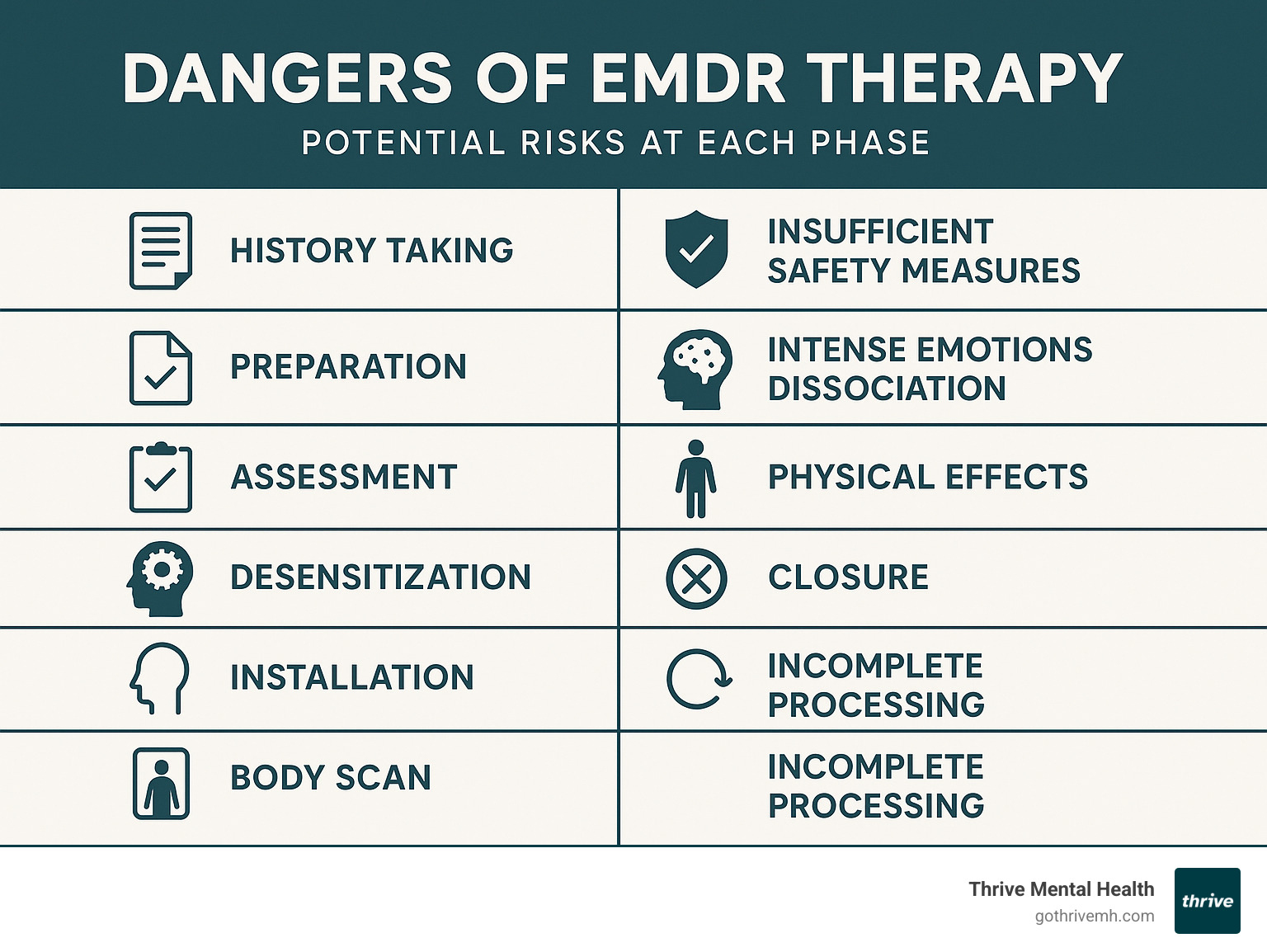
Dangers of EMDR therapy exist, but they’re often misunderstood. While EMDR is generally safe with trained professionals, potential risks include:
- Temporary emotional distress: heightened anxiety, vivid dreams, or resurfacing memories
- Physical side effects: headaches, fatigue, lightheadedness, or nausea
- Retraumatization: if therapy moves too quickly or lacks proper preparation
- Dissociation: feeling disconnected from yourself during or after sessions
- Incomplete processing: leaving you in a heightened state between sessions
Most side effects are temporary and indicate your brain is processing trauma. However, working with an unqualified therapist or rushing the process can lead to more serious complications.
EMDR (Eye Movement Desensitization and Reprocessing) has helped millions process trauma since Dr. Francine Shapiro developed it in the 1980s. The World Health Organization and American Psychiatric Association recommend it as a first-line treatment for PTSD. But like any powerful therapy, it has risks you should understand before starting.
The key isn’t avoiding EMDR because of these risks, it’s knowing how to minimize them through proper preparation and qualified therapists. When done right, EMDR can be life-changing. When done wrong, it can cause harm.
As CEO of Thrive Mental Health, I’ve seen across our Florida-based programs that successful treatment occurs when clients understand both benefits and risks. Knowing the potential dangers of EMDR therapy helps you make an informed decision about your healing journey.
Basic dangers of emdr therapy glossary:
Potential Side Effects and Risks of EMDR Therapy
When considering EMDR, it’s normal to wonder what you might experience. While EMDR is highly effective for trauma, understanding the full picture helps you prepare. The good news is that most side effects are signs your brain is doing the hard work of healing.
Common Emotional and Mental Side Effects
As your brain processes traumatic memories, you’ll likely notice emotional shifts that typically last from a few hours to a couple of days.
- Heightened emotions are common. You might feel more anxious, sad, or angry as suppressed feelings surface. While this can be overwhelming, it’s a positive sign the therapy is working.
- Increased anxiety can occur in the short term. This is a natural part of the desensitization process. Our therapists at Thrive Mental Health help you manage these temporary spikes.
- Vivid dreams or nightmares often increase as your brain continues processing material while you sleep. Discussing these with your therapist can reduce any related anxiety.
- New or forgotten memories can surface as your brain reorganizes information. You might also gain new perspectives on old memories.
- Emotional sensitivity to situations that wouldn’t normally affect you is also common. This heightened awareness is temporary.
- Discomfort is a typical sign of progress, as you’re facing issues that may have been avoided for years.
For more guidance, check out our resource: More info about the emotional landscape of PTSD.
Potential Physical Side Effects
Your body often responds to the intense work of EMDR with physical sensations. These are normal reactions to deep processing.

Common physical side effects include:
- Fatigue or exhaustion: Processing deep-seated trauma is hard work for your brain and body, so rest is important.
- Headaches: These can result from intense cognitive effort. Staying hydrated can help.
- Lightheadedness or dizziness: If this happens, sit or lie down until it passes.
- Nausea or unexplained crying: These are natural ways your body releases pent-up emotions.
- Muscle tension, sweating, or shaking: These can occur as your body releases stored stress. Gentle stretching can provide relief.
These sensations are typically temporary. Always communicate with your therapist about any physical symptoms you experience.
Understanding the More Serious Dangers of EMDR Therapy
While most side effects are manageable, significant dangers of EMDR therapy can occur if it’s administered improperly, highlighting the need for a qualified professional.
- Retraumatization: This is the most concerning risk. It can happen if a person relives trauma in an overwhelming way, causing intense distress. This typically occurs if a therapist moves too quickly or without proper preparation. At Thrive Mental Health, we prioritize your safety by ensuring you have solid coping skills before starting trauma processing.
- Dissociation: For those with pre-existing dissociative tendencies, EMDR can increase these feelings if not carefully managed. Skilled therapists use grounding techniques to keep you connected to the present.
- Incomplete processing: This risk occurs if sessions end prematurely, leaving you in a heightened state of distress with memories activated but not resolved. This can worsen symptoms between sessions.
- Heightened distress between sessions: While some distress is normal, overwhelming distress without coping strategies is a concern. Our therapists, available to clients throughout Florida, help you develop an “aftercare toolkit” to manage difficult moments.
Research in the European Journal of Psychotraumatology has found EMDR to be safe and effective. For more insights, you can learn about Desensitization and explore this Research on EMDR safety for depression.
Debunking Myths: What Are the Real Dangers of EMDR Therapy?
Misinformation online can create unnecessary fear about EMDR. Let’s clarify common misconceptions and look at the real dangers of EMDR therapy, which are far more manageable than myths suggest.
Myth: EMDR Implants False Memories
A common myth is that EMDR implants false memories. This is not how the therapy works.
- Memory accuracy is protected because EMDR helps your brain reprocess existing memories, not create new ones. It simply helps organize what’s already there.
- Working with existing memories is the foundation of EMDR. Forgotten memories may surface, but they are not fabricated. Your brain is making sense of what really happened.
- The therapist’s role is to be a guide, not a director. A qualified therapist creates a safe space for your natural healing process to unfold without suggesting what you should remember.
- Client’s active participation means you remain aware and in control throughout the session, fully present to notice your own thoughts and feelings.
This process is key when working through complex issues like betrayal trauma. Learn more here: More info on Betrayal Trauma.
Myth: EMDR Is a Form of Hypnosis or Mind Control
EMDR is not a form of hypnosis or mind control. Understanding the difference can ease fears about the dangers of EMDR therapy.

- Client consciousness is maintained throughout every moment. Unlike hypnosis, you are completely awake, alert, and can stop the process at any time.
- Client control is central to EMDR. Your therapist guides the bilateral stimulation (like eye movements, tapping, or auditory tones), but you do all the internal work.
- The structured protocol of EMDR’s eight phases makes it safer, ensuring you are prepared, supported, and able to integrate what comes up.
- Bilateral stimulation is a tool that helps your brain process information more effectively, similar to what happens during REM sleep. It’s a natural process, not a controlling one.
If you’re curious about how this works, we have detailed information here: More info on Bilateral Stimulation.
Myth: The Side Effects Mean the Therapy Is Making Things Worse
While EMDR can bring up difficult feelings, this emotional turbulence is often a sign of healing, not harm.
- Reprocessing vs. worsening is a key distinction. Feeling stirred up after a session means your brain is working to reorganize traumatic memories, not breaking down. The process can be messy, but the result is worth it.
- Your brain’s healing process naturally involves some discomfort, much like a physical wound aching as it heals. Emotional healing works similarly.
- Temporary discomfort is just that, temporary. Vivid dreams or emotional sensitivity typically last only a day or two. They are signs your brain is working on something important.
- Signs of progress can feel uncomfortable. The key is having proper support. At Thrive Mental Health, our Florida-certified therapists ensure you have coping tools and know what to expect before starting trauma processing.
For more insights into the healing journey, check out our guide: More info on Healing From PTSD.
How to Ensure Safety and Minimize Risks in EMDR
Most dangers of EMDR therapy are preventable with the right approach. Like learning to drive, the risks are manageable with a qualified instructor and proper preparation.
The Crucial Role of a Certified EMDR Therapist
A therapist’s training and expertise are crucial for a safe and transformative EMDR experience.
 EMDR Side Effects: What to Expect Between SessionsEMDR
- EMDRIA certification is essential. The EMDR International Association requires extensive training and clinical experience, ensuring therapists can manage complications effectively.
- A skilled therapist will not rush you. They spend ample time in the preparation phase, building your coping skills before addressing traumatic memories.
- Resourcing and grounding techniques are your toolkit for managing intense emotions. Our therapists at Thrive Mental Health prioritize teaching you calming techniques like the 5-4-3-2-1 method.
- The pacing of therapy is vital. A competent therapist adjusts the pace based on your responses and comfort level. Open communication is key to your safety.

At Thrive Mental Health, our virtual and in-person programs offer expert-led care to adults and young professionals across Florida. From Tampa Bay to Central Florida, you can access qualified EMDR therapists who prioritize your safety.
For help choosing a professional, see our guide: Choosing the Right EMDR Therapist: Tips and Considerations.
Who Might Not Be a Good Candidate for EMDR?
EMDR is not right for everyone. Certain conditions can increase risks, so honesty with your provider is key for your wellbeing.
- Active psychosis or severe dissociative disorders require specialized approaches, as EMDR needs a stable connection to reality to work safely.
- Current substance use issues can interfere with the brain’s ability to process memories effectively.
- Lack of emotional stability or coping skills means the preparation phase is even more critical before starting trauma processing.
- Certain neurological conditions like uncontrolled epilepsy may interfere with eye movements, but alternative bilateral stimulation (tapping or tones) can be used.
- Severe depression with active suicidal thoughts requires immediate stabilization before trauma work can begin safely.
An honest conversation with a professional is the best way to determine if EMDR is right for you. Thrive Mental Health offers free consultations to help you explore your options.
Preparing Yourself for EMDR Sessions
Your preparation significantly impacts the safety and effectiveness of EMDR.
- Build a solid support system of trusted friends, family, or other professionals for emotional backup.
- Practice consistent self-care. Adequate sleep, nutrition, and relaxation techniques build resilience.
- Journaling helps you track and process thoughts and feelings between sessions, providing valuable information for your therapist.
- Maintain open communication with your therapist. Speak up if something feels too intense. They rely on your feedback to adjust the pace.
- Set realistic expectations. EMDR can be remarkably effective, but it’s not magic. Healing takes time, and temporary discomfort is often part of the journey.
For additional strategies, explore our guide: Effective Strategies for Managing Trauma and Its Triggers.
Frequently Asked Questions about EMDR Risks
Here are straightforward answers to common concerns about the dangers of EMDR therapy.
How long do EMDR side effects typically last?
Most EMDR side effects are temporary and short-lived, often lasting 24-48 hours after a session. This is your brain’s way of continuing the processing work.
For some, especially those with complex trauma, effects might linger for a few weeks. This simply means your brain needs more time to integrate the work.
Close communication with your therapist is key. They can help you determine what’s normal and adjust the pace if needed. Consistent self-care can also significantly reduce the duration of these effects.
Can EMDR cause long-term problems?
True long-term negative problems from EMDR are rare, especially when working with a qualified therapist. The vast majority of people report significant, lasting improvement.
However, research shows a risk of relapse for those who don’t complete all phases of treatment or maintain self-care. This highlights the importance of finishing the full course of therapy.
Completing all eight phases of EMDR is crucial. It’s tempting to stop when you feel better, but a therapist must help you solidify your gains for long-term success.
The Cleveland Clinic on EMDR effectiveness confirms its strong track record for creating lasting change when properly administered.
Is EMDR more dangerous than other trauma therapies?
All effective trauma therapies involve some temporary discomfort because healing requires facing painful emotions. The key is not whether one is more dangerous, but how risks are managed and if the approach fits you.
Here’s how EMDR compares to Prolonged Exposure (PE), another common trauma therapy:
| EMDR | Prolonged Exposure |
|---|---|
| Uses bilateral stimulation to help reprocess memories | Requires repeatedly talking through trauma in detail |
| You stay fully conscious and in control | You actively confront memories and situations |
| Minimal detailed talking about trauma is often required | Requires extensive verbal recounting of trauma |
| Structured containment through an eight-phase protocol | High tolerance for distress is needed during exposure |
EMDR’s structured approach often provides more containment for intense emotions. Many people also find the minimal talking requirement less retraumatizing. You maintain complete client control and can pause at any time, which helps people feel safer. The choice between therapies should be a collaborative decision with your therapist. At Thrive Mental Health, our Florida-based team can help you explore which approach is best for your unique needs.
Conclusion: Making an Informed Decision About Your Healing Journey
Your healing journey deserves both hope and honesty. EMDR therapy has transformed millions of lives, offering proven relief from trauma, PTSD, and anxiety. It is recommended by the World Health Organization and American Psychiatric Association for its power to help people heal.
Understanding the potential dangers of EMDR therapy is not about fear, but about empowering you to make an informed decision with realistic expectations. Most side effects are temporary signs of progress, not problems. Serious risks like retraumatization are significantly reduced when you work with a qualified, EMDRIA-certified therapist who paces your sessions thoughtfully.
Think of it like physical therapy after an injury: some soreness is expected as you rebuild strength, but with the right guidance, you are getting stronger.
At Thrive Mental Health, our approach is built on this understanding. Our team of skilled professionals knows that EMDR effectiveness depends on thorough preparation, proper pacing, and ongoing support. We build your emotional toolkit first, teaching you grounding techniques and ensuring you feel safe every step of the way.
Our flexible intensive outpatient programs (IOP) are available virtually across Florida and in-person at our locations. We understand that healing looks different for everyone.
Safety through qualification is our practice. We’ve seen how life-changing EMDR can be when done right, and we’re committed to ensuring your experience reflects that potential.
If you’re ready to learn more about how we approach this powerful therapy, we invite you to explore our EMDR program: Learn more about our approach to Eye Movement Desensitization and Reprocessing (EMDR).
Choosing therapy takes courage. You’re already taking an important step toward the life you want to live.

This article is for informational purposes only and is not a substitute for individualized clinical advice or insurance verification.