
5 Painless Ways to Find Art Therapists for Elementary Students

Find a therapist who uses art therapy for elementary students: 5 Painless Ways
Find a Therapist Who Uses Art Therapy for Elementary Students [2025]: 5 Fast Ways, Costs, Insurance, Results
Summary: If you need to find a therapist who uses art therapy for elementary students, this guide shows you how to get 3+ qualified options fast, what it costs ($100–$200), which plans often cover it (Cigna, Optum, Florida Blue), and what to expect in session—so your child can open up sooner and you avoid months of trial-and-error.
If your child is melting down, shutting down, or stuck after big changes, talk therapy alone can stall. Art therapy gives kids a safe, nonverbal way to say what words can’t—often boosting engagement and emotional regulation faster than talk-only care.
Here’s how to find an art therapist for your elementary student:
- Search vetted online directories like Psychology Today with filters for “art therapy” and “children.”
- Ask your child’s pediatrician or school counselor for referrals to qualified local art therapists.
- Check your insurance provider’s network for in-network creative arts therapists.
- Visit local art therapy centers by searching “art therapy for kids near me.”
- Contact university training clinics for affordable, supervised services.
Art therapy isn’t an art class. A licensed art therapist (with credentials like ATR-BC, LCAT, or LMFT) uses creative expression as a clinical tool to help children process trauma, regulate emotions, and build self-esteem. It offers a natural, non-threatening way for kids to heal—especially when words fail.
At Thrive Mental Health, we’ve spent over a decade helping families in Florida access evidence-based care. If you’re looking to find a therapist who uses art therapy for elementary students, the right support can change your child’s trajectory. This guide will show you how.

Why Art Therapy Opens Up Your Child’s Feelings When Words Fail
When elementary-aged children face emotional challenges, they often can’t articulate their feelings, making talk therapy a frustrating puzzle. Art therapy offers a creative, non-verbal path to expression and healing.
Art therapy blends visual arts and psychotherapy, focusing on the creative process rather than the final product. Through drawing, painting, or sculpting, children explore their inner world and communicate emotions they may not consciously understand. It’s a non-threatening way for kids to express themselves when talk therapy is difficult.
For many children, visual expression is more comfortable than words. Art becomes their natural language to process thoughts and feelings in an emotionally safe, judgment-free space. This builds self-esteem, reduces anxiety, and hones problem-solving skills. Children often express themselves better through pictures, which helps them build self-awareness and cope with their feelings. Art therapy can also uncover hidden emotions behind unexplained physical symptoms like headaches or stomachaches, which may indicate an underlying anxiety disorder.
What Specific Challenges Can Art Therapy Help With?
Art therapy is a versatile tool for helping children explore feelings and build self-awareness. It effectively addresses:
- Anxiety: Provides a safe outlet for anxious thoughts and teaches emotional regulation to cope with stress.
- Depression: Offers a way to express sadness and process difficult emotions, boosting self-esteem.
- Trauma: Helps children express complex feelings related to trauma, building resilience and motivation for change.
- Childhood PTSD from divorce: Helps children process the emotional impact of family separation, a leading cause of childhood PTSD.
- Behavioral Issues: Externalizing behaviors through art helps children gain insight and develop better emotional communication skills.
- Low Self-Esteem: Creating in a non-judgmental space boosts confidence and self-worth.
- Grief and Loss: Offers a gentle way to process grief and develop healthy coping mechanisms.
- Social Skills: Improves interpersonal skills like patience and helps children explore relationship challenges.
- School Stress: Provides an outlet for stress from academics, bullying, or learning disabilities.
- Emotional Dysregulation: Teaches children to identify and manage intense emotions for greater emotional control.
Through art, children can re-examine actions and emotions affecting their mental health. It’s a unique way to explore their difficulties and strengths, fostering a sense of safety and well-being.
The Non-Negotiable Credentials of a Qualified Child Art Therapist
When you find a therapist who uses art therapy for elementary students, you need a highly trained mental health professional, not just someone good with kids and paintbrushes. They must understand child development and the clinical science of using art for healing. Not everyone calling themselves an “art therapist” is qualified; your child’s emotional health deserves professional expertise.
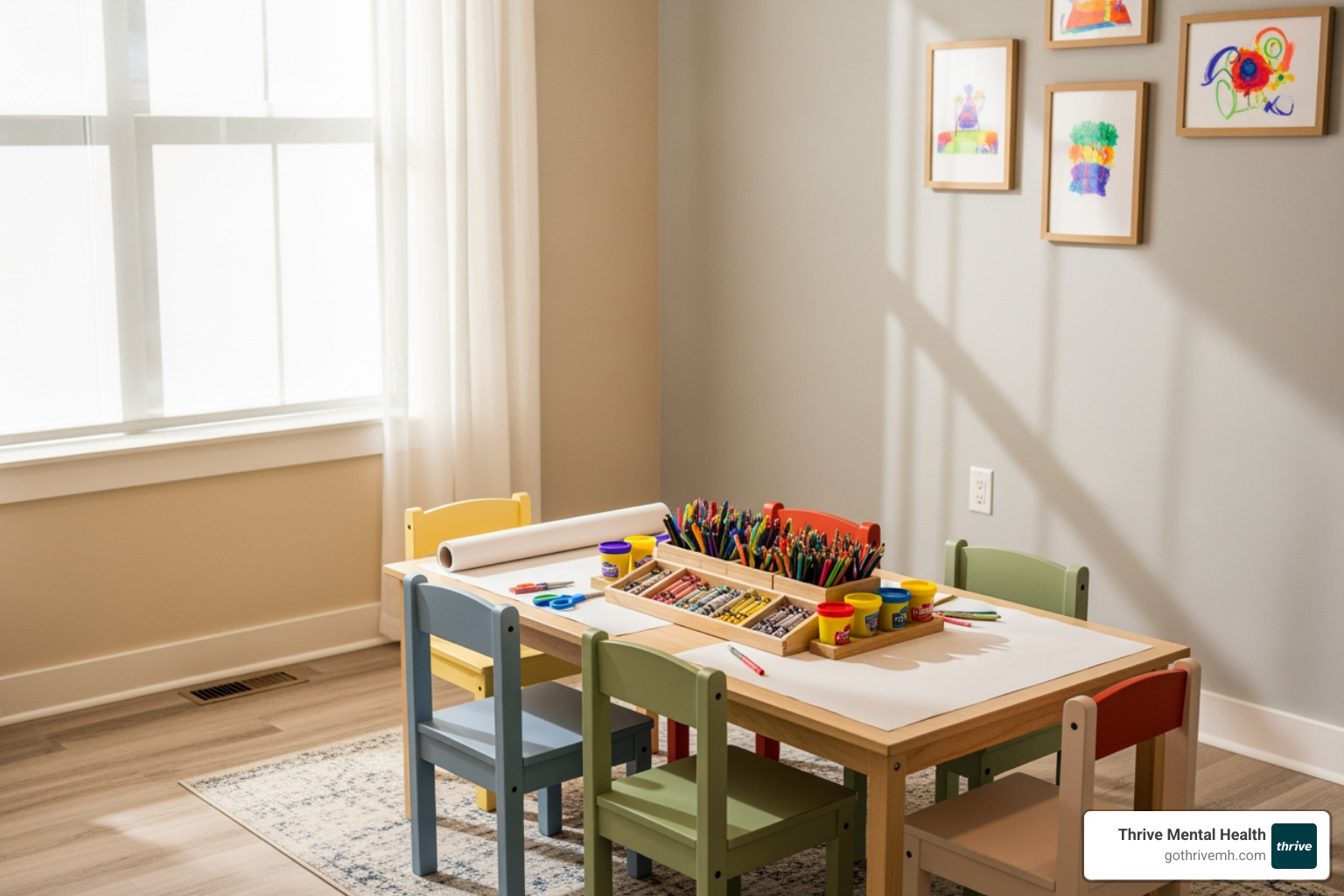
Here are the key credentials to look for:
- Master’s Degree: A graduate degree in art therapy or a related field is the first checkpoint. This education combines psychology, child development, and art practices.
- Board Certification (ATR-BC): This is the gold standard. It means the therapist has met national standards for education, supervised clinical experience, and ethics. Look for professionals from recognized art therapy programs.
- State Licensure: Credentials like LPC (Licensed Professional Counselor), LMFT (Licensed Marriage and Family Therapist), or LCSW (Licensed Clinical Social Worker) mean they are legally authorized to provide psychotherapy in your state. This is not optional in Florida.
- Supervised Clinical Experience: Therapists must complete thousands of hours of supervised work with clients to turn academic knowledge into real-world skill.
- Specialization with Children: A therapist specializing in elementary students understands their unique developmental needs, knows how to build trust, and uses age-appropriate materials.
- Trauma-Informed Care: This training is invaluable, as many children in therapy have experienced trauma. These therapists create a safe environment for healing without retraumatization.
Don’t be afraid to ask potential therapists about their credentials. A qualified professional will be proud to share their background.
Art Class vs. Art Therapy: What’s the Difference?
Understanding the distinction between an art class and art therapy is crucial when seeking real therapeutic support.
| Feature | Art Class | Art Therapy |
|---|---|---|
| Goal | Learning artistic technique | Emotional healing and growth |
| Focus | The final product | The creative process |
| Facilitator | Art teacher (expert in instruction) | Licensed therapist (expert in mental health) |
| Setting | Public classroom | Private, confidential clinical space |
| Materials | Used to teach skills | Chosen for sensory and symbolic qualities |
| Skill Level | Skill development is the aim | No artistic skill is required |
| Confidentiality | Work is often public | Strictly confidential (like any therapy) |
When you find an art therapist, you’re choosing healing over performance—the difference between learning to paint a sunset and learning to express a sadness you can’t put into words.
5 Fast Ways to Find an Art Therapist for Your Elementary Student [Near You + Online]
Finding the right art therapist for your child doesn’t have to be overwhelming. Here are five steps to connect with qualified professionals in Florida.

1. Use Vetted Online Therapist Directories
Online directories like Psychology Today, GoodTherapy, and the American Art Therapy Association’s directory are the fastest way to find a therapist who uses art therapy for elementary students. Use their filters to search by “art therapy,” age group (6–10), location (e.g., Tampa Bay, Orlando), and insurance (e.g., Cigna, Optum, Florida Blue). Read profiles carefully, noting their approach with children and specializations. Before booking, verify their credentials (ATR-BC, LPC, LMFT) on your state’s licensing board website. online counseling is effective for children, so consider teletherapy if it fits your schedule.
2. Ask for Professional Referrals You Can Trust
The professionals who already know your child are great resources for referrals.
- Your pediatrician understands your child’s health history and can recommend trusted mental health professionals.
- Your child’s school counselor or psychologist deals with similar challenges daily and often has a list of community resources.
- Your child’s teacher can connect you with school resources or parent networks.
Always vet referrals by researching their qualifications and approach to ensure they’re a good fit for your family.
3. Check Your Insurance Provider’s Network
Navigating insurance is key to making art therapy affordable. Many plans from providers like Cigna, Optum, and Florida Blue cover it when provided by a licensed therapist. Log into your insurance portal and search for specialists under “art therapy” or “psychotherapy.” If a therapist you like is out-of-network, ask your insurer about reimbursement benefits. Before your first session, call the therapist’s office to verify your insurance and ask about costs. To simplify this, Thrive Mental Health offers a free two-minute insurance verification.
4. Explore Local Art Therapy Centers and Group Practices
A local search can uncover specialized centers focused on children’s creative therapies. Use search terms like “art therapy for kids near me” or “child art therapy [your city].” Local searches are especially effective in Florida’s major metro areas, including Miami, Orlando, Tampa, and Jacksonville. Group practices often have detailed websites and offer flexible scheduling, including evening or weekend appointments.
5. Contact University Training Clinics for Affordable Options
If cost is a barrier, university training clinics are a great source for affordable, high-quality care. Universities with art therapy graduate programs often have community clinics where students provide supervised care. The therapists are students, but they are closely supervised by licensed faculty, ensuring your child receives current and well-reviewed care. These clinics usually offer reduced-cost or sliding-scale services. Search for “university art therapy clinic [your state]” to find local options.
Prefer structured support alongside weekly therapy? Explore Thrive’s programs:
- Intensive Outpatient (IOP) → https://gothrivemh.com/intensive-outpatient-program/
- Partial Hospitalization (PHP) → https://gothrivemh.com/partial-hospitalization-program/
- Virtual options + fast insurance check → https://gothrivemh.com/remote-mental-health-support/
Related reading: 10 simple art therapy activities to calm anxious kids → https://gothrivemh.com/blog/art-therapy-activities-for-kids/
Your Child’s First Session: What to Expect from Art Therapy
The first art therapy session can feel unknown, but knowing what to expect can ease anxiety for you and your child.
Most therapists begin with a parent-only consultation. This is your chance to share concerns, discuss your child’s history, and ask the therapist about their experience, process, and how they’ll involve you.
Your child’s first session will be in a safe, inviting space. Sessions are typically 30-60 minutes, often shorter for younger children to match their attention span. The therapist provides various art materials and may offer a prompt (e.g., “Draw a safe place”) or let your child create freely. This is the core art-making process.
No artistic skill is needed. The focus is on expression, not a perfect product. The therapist observes your child’s process—their choices, challenges, and responses—to understand their inner world.
After creating, a reflective discussion follows. The therapist asks open-ended questions (“Tell me about this part”) to help your child connect their art to their emotions, building self-awareness.
The therapist acts as a guide and witness, creating a non-judgmental space. They often blend art therapy with other approaches like play therapy or CBT, tailoring sessions to your child’s needs.
Parent involvement is key. While sessions are confidential, the therapist will have regular check-ins with you to discuss progress and how you can support the work at home. You are part of the healing team.
Regarding cost, in-person sessions typically range from $100-$200 per hour. Virtual sessions may be more affordable. Check your insurance benefits (Cigna, Optum, Florida Blue) and ask about sliding scale fees. Thrive’s virtual and hybrid IOP/PHP programs include these activities, and we can quickly verify your insurance.
For simple at-home warmups between sessions, try these kid-friendly ideas → https://gothrivemh.com/blog/art-therapy-activities-for-kids/
Frequently Asked Questions about Art Therapy for Children
How much does child art therapy cost?
Usually $100–$200 per session, depending on location and licensure. Many providers offer sliding-scale fees. Plans like Cigna, Optum, and Florida Blue often cover sessions with a licensed therapist. Confirm with your insurer and the provider. Quick check → https://gothrivemh.com/remote-mental-health-support/
How long does art therapy take for kids?
Expect an initial 6–12 weeks, then reassess goals. Shorter for a specific stressor (e.g., divorce), longer for trauma or skill building. Your therapist will review progress with you regularly.
Is online art therapy effective for elementary students?
Yes. With basic supplies at home and a quiet space, virtual sessions can match in-person results for many kids. It’s convenient if you have limited local options or a tight schedule.
How do I verify a therapist’s credentials?
Look for ATR-BC plus a state license (LPC, LMFT, LCSW). Confirm on your state licensing board site and the American Art Therapy Association directory. Ask about supervised hours and child-specialty training.
Ready for support? Thrive offers virtual and hybrid IOP/PHP programs with evening options. Verify your insurance in 2 minutes (no obligation) or call 561-203-6085. If you’re in crisis, call/text 988.
Conclusion
You now have five proven ways to find a therapist who uses art therapy for elementary students. Searching for the right support is challenging, but taking this step is a powerful act of love.
Art therapy is a lifeline for kids who struggle to verbalize their feelings. It gives them a language, a safe space, and a creative path to healing that can reshape their future.
At Thrive Mental Health, we help families across Florida access the care they deserve. We offer flexible virtual and in-person options, including Intensive Outpatient (IOP) and Partial Hospitalization (PHP) programs, because we know one size doesn’t fit all. Your child’s well-being is what matters. You don’t have to steer this path alone.
Ready for support? Thrive offers virtual and hybrid IOP/PHP programs with evening options. Verify your insurance in 2 minutes (no obligation) → Start benefits check or call 561-203-6085. If you’re in crisis, call/text 988.