
Finding Your Path: A Guide to Mental Health Recovery

What is Mental Health Recovery (And What It Isn’t)
Mental health recovery is not about being “cured” or erasing a diagnosis. It’s an active, personal process of change where you improve your health, live a self-directed life, and work toward your full potential—even if symptoms persist. Recovery means reclaiming control, building resilience, and creating a life that feels meaningful to you.
At Thrive Mental Health, we accept the official definition from the Substance Abuse and Mental Health Services Administration, which frames recovery as “a process of change through which individuals improve their health and wellness, live self-directed lives, and strive to reach their full potential.”
This journey isn’t a straight line. You will have good days and hard days. Progress can feel like two steps forward, one step back. That’s normal. The goal isn’t perfection; it’s building a life that feels rich and meaningful, even with ongoing challenges.
What Does Successful Mental Health Recovery Look Like?
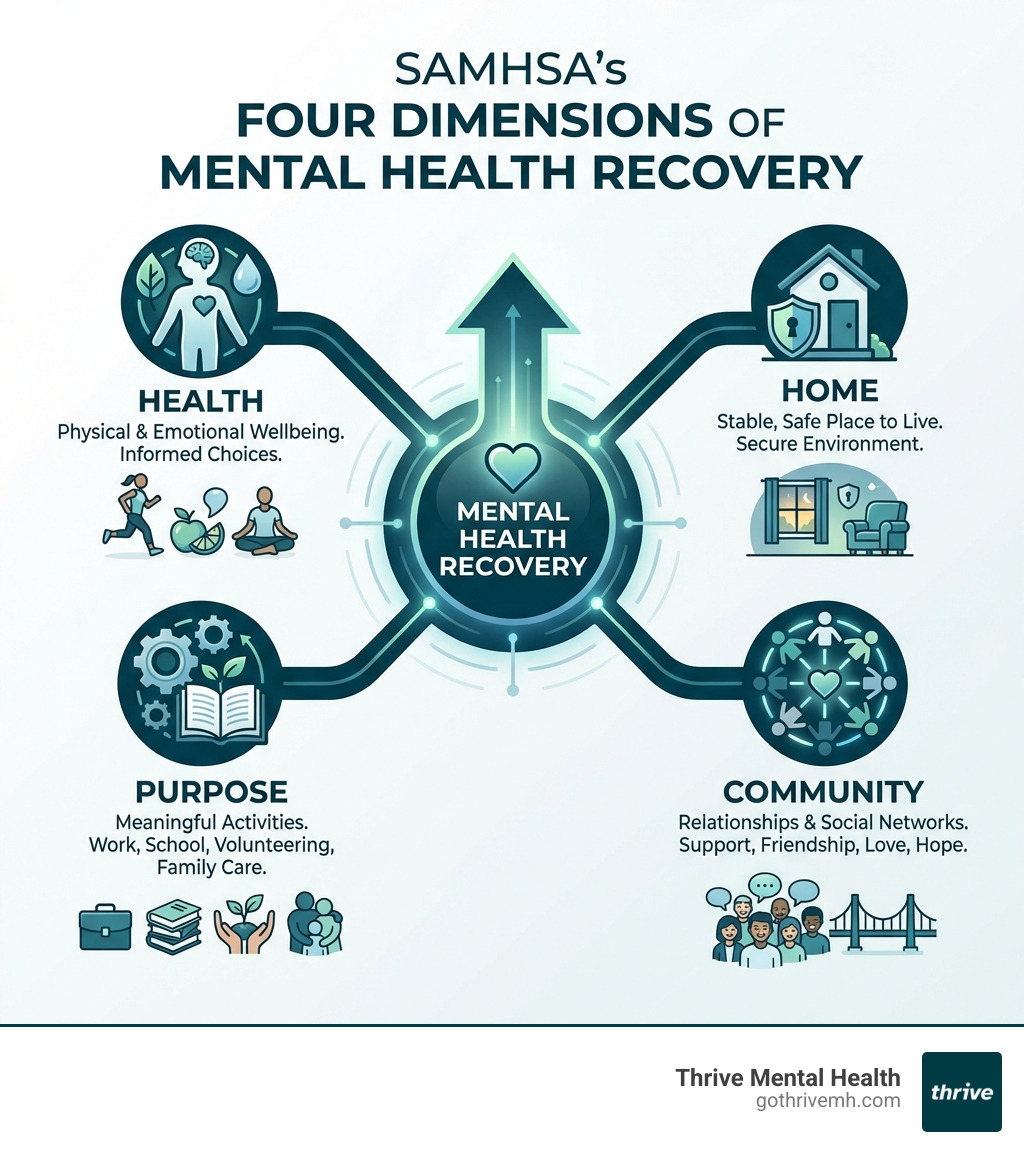
Successful recovery is holistic, focusing on more than just symptoms. It’s built on several key areas, including SAMHSA’s four major dimensions:
- Health: Making informed, healthy choices that support your physical and emotional well-being. This includes everything from nutrition and exercise to engaging in evidence based therapy.
- Home: Having a stable and safe place to live, which provides a foundation for security and peace of mind.
- Purpose: Engaging in meaningful daily activities, whether through work, school, volunteering, or caring for family. This fosters a sense of contribution and self-worth.
- Community: Building supportive relationships and social networks that offer friendship, love, hope, and a sense of belonging. This can include family, friends, and communities for emotional support online.
In practice, this means:
- Managing symptoms effectively so they don’t control your life, sometimes with the help of medication management online.
- Developing resilience to steer life’s inevitable obstacles and learn from setbacks.
- Making your own choices and taking an active role in your care.
Hope: The Fuel for Your Recovery Journey
Hope is the cornerstone of mental health recovery. It’s the belief that a better future is possible and that your efforts will lead to a more fulfilling life. Hope can be kindled by:
- Support from loved ones who believe in your ability to grow.
- Seeing others succeed by learning about their recovery journeys.
- Peer support, which connects you with people who have shared experiences and offer a unique sense of understanding and acceptance.
Hope empowers you to seek help and persist through difficult times. Mental illnesses affect one in five Americans, but research shows that up to 65% of people with serious mental illness (SMI) experience partial to full recovery over time. You are not alone, and recovery is real.
Your Roadmap to Mental Health Recovery [The 5 Stages]

Thinking of mental health recovery as a series of stages can provide a helpful roadmap, giving structure to what often feels like an unpredictable journey. However, it’s crucial to remember that these stages aren’t rigid, linear steps you complete and then move on from forever. Instead, they serve as a guide, and it’s perfectly normal to move back and forth between them, or even experience elements of multiple stages simultaneously. Everyone’s path is unique, shaped by their individual experiences, challenges, and strengths.
Let’s explore these five key stages:
Stage 1: Acceptance
The first, and often most challenging, step in mental health recovery is acceptance. This involves moving past denial—a common defense mechanism—and acknowledging the reality of your mental health challenges. It’s not about giving up or resigning yourself to an illness; rather, it’s about confronting reality with courage. Acceptance means acknowledging that you have a condition, understanding its impact on your life, and realizing that change is necessary and possible. This brave step opens the door to healing and proactive engagement with your well-being.
Stage 2: Insight
Once acceptance begins to take root, the journey moves into insight. This stage is about connecting the dots: understanding how your past experiences, current behaviors, and feelings are intertwined with your mental health condition. It involves deep self-reflection, recognizing your triggers, and identifying patterns that contribute to your struggles. Working with a therapist can be particularly beneficial here, as they can offer valuable perspectives, help you understand your condition more deeply, and guide you in developing coping strategies. This stage is about gaining knowledge, not just about your diagnosis, but about yourself.
Stage 3: Action
With acceptance and insight as your foundation, Stage 3 is all about taking concrete action. This is where you actively engage in your treatment plan and make tangible lifestyle changes to support your mental health recovery. This could involve:
- Engaging in Treatment: Consistently attending therapy sessions, participating in programs like Thrive Mental Health’s Intensive Outpatient (IOP) or Partial Hospitalization (PHP) programs, or adhering to medication protocols. For residents throughout Florida, our accessible virtual programs and in-person services are designed to provide structured support for this critical stage.
- Making Lifestyle Changes: Prioritizing a balanced diet, incorporating regular exercise, ensuring adequate sleep, and building a routine that supports your well-being.
- Building Coping Skills: Learning and practicing techniques like mindfulness, relaxation exercises, and emotional regulation strategies. Many find tools like the Wellness Recovery Action Plan (WRAP) incredibly helpful for proactively managing their well-being.
Stage 4: Healing
Healing is a profound stage where you begin to develop deeper resilience and learn to steer setbacks more effectively. It’s about understanding that challenges are opportunities for growth, not failures. In this stage, you start integrating your coping skills and insights into your daily life, turning obstacles into stepping stones. Celebrating small wins—no matter how seemingly insignificant—becomes crucial, reinforcing your progress and fostering a sense of accomplishment. Healing is a testament to your growing strength and your ability to adapt.
Stage 5: Commitment
The final stage, commitment, is an ongoing process of maintaining the gains you’ve made and planning for future growth. It’s about embedding self-care into your routine, staying connected to your support systems, and continuously striving for a life that is not just stable, but truly thriving. This stage acknowledges that mental health recovery is a lifelong journey requiring continuous nurturing and support. It means setting new goals, building upon your foundation of recovery, and embracing a future where you actively shape your well-being.
Building Your Recovery Toolkit: 3 Essential Pillars
Just like any significant journey, mental health recovery requires the right tools to steer its terrain. Building a robust “recovery toolkit” means establishing strong support systems, setting realistic goals, and developing effective strategies for coping with external challenges like stigma. These three pillars provide stability and guidance throughout your unique path.
Pillar 1: Your Support System
You don’t have to walk the path of mental health recovery alone. A strong support system is vital, providing comfort, guidance, and encouragement. This system often comprises a mix of professional, personal, and peer support.
| Support Type | Who They Are | What They Provide | How They Help |
|---|---|---|---|
| Professional | Therapists, Psychiatrists, Counselors, Case Managers | Clinical expertise, diagnosis, evidence-based therapies, medication management, structured treatment plans | Offer expert guidance, teach coping skills, provide objective perspectives, manage symptoms effectively |
| Personal | Family, Friends, Partners, Mentors | Emotional support, practical assistance, understanding, encouragement, a sense of belonging | Provide a safe space to share feelings, help with daily tasks, offer comfort, celebrate successes |
| Peer | Support Group Members, Peer Specialists, Advocacy Organizations | Shared experience, empathy, non-judgmental acceptance, hope, practical advice | Normalize experiences, reduce isolation, offer insights from lived experience, provide a sense of community |
Professional support, such as the expert-led virtual and in-person programs at Thrive Mental Health, offers crucial clinical guidance for Floridians. Our Tampa Bay location and statewide virtual programs provide the structure and evidence-based therapies (like CBT and DBT) necessary for many individuals to make significant strides in their recovery.
Personal support from family and friends provides the emotional bedrock, while peer support offers invaluable insights from those who truly understand. Our programs across Florida connect individuals with strong peer communities and local resources, fostering a sense of belonging and shared journey.
Pillar 2: Setting Realistic Goals
The power of progress, no matter how small, is a potent motivator in mental health recovery. Setting realistic goals helps you break down your journey into manageable steps, fostering a sense of achievement and forward momentum. We often encourage the use of SMART goals:
- Specific: Clearly define what you want to achieve.
- Meaningful: Ensure the goal resonates with your personal values and recovery vision.
- Achievable: Set goals that are challenging but within your capabilities.
- Realistic: Be honest about what you can accomplish given your current circumstances.
- Time-limited: Give yourself a deadline to create accountability.
For example, instead of “I want to feel better,” a SMART goal might be “I will attend one therapy session per week for the next three months to develop new coping skills.” Celebrating these milestones, no matter how small, reinforces your commitment and reminds you of how far you’ve come.
Pillar 3: Coping with Stigma
Stigma is a pervasive and often cruel barrier in mental health recovery. It can lead to feelings of shame, isolation, and reluctance to seek help. It’s vital to remember: it’s not your fault. Mental illness is a health condition, not a character flaw.
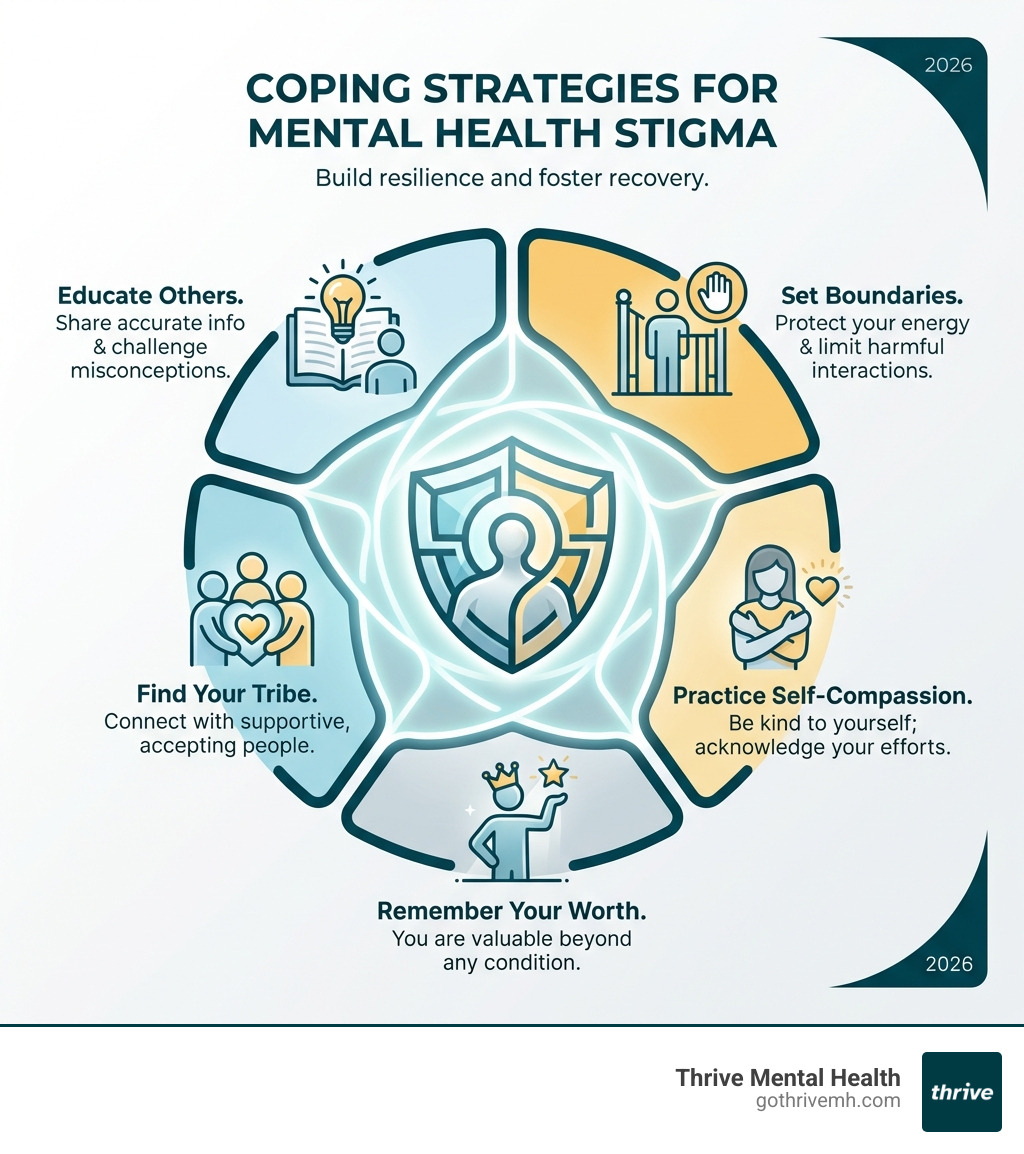
Here are some strategies to cope with stigma:
- Educate Others: Sometimes, stigma stems from a lack of understanding. Sharing accurate information about mental health can challenge misconceptions.
- Set Boundaries: You have the right to protect your emotional well-being. Limit interactions with people who are unsupportive or perpetuate harmful stereotypes.
- Find Your Tribe: Surround yourself with people who accept and understand you. This includes your personal support network and peer groups.
- Practice Self-Compassion: Be kind to yourself. You are doing your best, and recovery is a process. Don’t let internalized stigma diminish your self-worth.
- Remember Your Worth: Your mental health condition does not define you. Focus on your strengths, talents, and contributions.
Taking the Driver’s Seat: How to Own Your Recovery
Mental health recovery is fundamentally an active process, not a passive one. While professional guidance and supportive communities are indispensable, you are the ultimate expert on your own experience. Taking the driver’s seat means embracing self-determination—making your own decisions, actively using resources, and shaping your care to fit your unique needs and goals. This approach, where you are an equal partner in your care, is known as shared decision-making, and it has been shown to improve outcomes.
Taking Ownership of Your Mental Health Recovery Journey
Owning your journey means becoming your own best advocate. This involves:
- Self-Advocacy in Treatment: Don’t be afraid to ask questions, express your concerns, and communicate your preferences to your care team. Your input is invaluable.
- Expressing Your Goals: Clearly articulate what a meaningful life looks like for you. Do you want to return to school, find a new job, reconnect with family, or pursue a hobby? Share these aspirations with your providers so they can integrate them into your treatment plan.
- Creating a Psychiatric Advance Directive: This legal document allows you to state your treatment preferences in advance, ensuring your wishes are respected even during a crisis. It’s a powerful way to retain control over your care.
- Understanding Your Rights as a Patient: Familiarize yourself with patient rights in Florida to ensure you receive respectful, ethical, and effective care.
Finding Care That Puts You First
At Thrive Mental Health, we believe that truly effective care is person-centered. This means:
- Person-Centered Approach: Your treatment plan should be individualized, culturally sensitive, and holistic, addressing your unique history, aspirations, and ‘life-context’—not just your symptoms.
- Strengths-Based Care: We focus on your inherent strengths and resources, building upon what you do well rather than solely addressing deficits. This approach fosters empowerment and self-efficacy.
- Holistic and Multidisciplinary Plans: Recovery encompasses mind, body, and spirit. Our programs integrate various therapeutic modalities, support services, and wellness practices to treat the whole person.
- Finding Providers Who Listen: A strong therapeutic alliance is crucial. Look for providers who actively listen, respect your autonomy, and collaborate with you on your recovery goals.
Our virtual IOP/PHP programs are built on this model, offering expert-led treatment that is accessible to all residents of Florida and custom to your individual needs, supporting you in taking the driver’s seat of your mental health recovery. We also work with major insurance providers, including Cigna, Optum, and Florida Blue, to ensure our evidence-based care is accessible throughout the Sunshine State.
Frequently Asked Questions about Mental Health Recovery
What is the difference between being “cured” and “in recovery”?
Being “cured” implies that a mental health condition is completely gone, never to return. For many chronic mental health conditions, this is not a realistic expectation. Being “in recovery,” on the other hand, means you are actively managing your symptoms, developing resilience, reclaiming your sense of self, and living a full, meaningful life, even if the condition still exists or symptoms occasionally reappear. It’s about learning to thrive despite challenges.
How long does mental health recovery take?
There is no set timeline for mental health recovery. It’s a highly personal and often lifelong journey. Research suggests that for about 50% of people, 15 to 20 therapy sessions are required for major improvement. However, this varies widely based on the individual, the condition, and the type of treatment. Intensive programs, like Thrive Mental Health’s IOP and PHP programs available to all Florida residents, can accelerate progress by providing more frequent and comprehensive support. The focus should always be on consistent progress and sustainable well-being, rather than rushing the process.
Can I recover without professional help?
While self-help strategies, personal support networks, and peer groups are incredibly valuable and necessary components of mental health recovery, professional guidance is crucial for most individuals, especially those with moderate to severe conditions. A qualified therapist, psychiatrist, or structured program provides evidence-based tools, accurate diagnosis, medication management if needed, and a safe, confidential space to process complex emotions and develop effective coping skills. These elements are difficult to replicate effectively on your own.
Your Next Step Starts Now
Mental health recovery is not a distant dream; it’s an achievable reality built on hope, action, and support. The journey is yours to define, and taking the first step is the most powerful move you can make toward a more fulfilling life. At Thrive Mental Health, we are here to walk alongside you.
Ready for support in Florida? Thrive offers virtual and hybrid IOP/PHP programs with evening options, accessible across the state. Verify your insurance in 2 minutes (no obligation) → Start benefits check or call 561-203-6085. If you’re in crisis, call/text 988.