
Hope Is Real: Your Guide to Suicide Prevention

Why Hope Is the Strongest Weapon
IN CRISIS? CALL OR TEXT 988 NOW.
If you are experiencing a mental health crisis or are worried about a loved one, connect with a trained crisis counselor 24/7. It’s free, confidential, and available now. Call or text 988 or visit 988lifeline.org.
Suicide prevention is about one clear truth: hope is real, and suicide is preventable. Every year, more than 49,000 people in the United States die by suicide—one person every 11 minutes. In Florida, this public health crisis is just as urgent, with thousands of lives lost to suicide annually. But here’s what matters most: the majority of these deaths can be prevented with the right support, at the right time.
Quick Answer: What Is Suicide Prevention?
Suicide prevention is a public health approach that combines:
- Recognition – Learning warning signs and risk factors
- Intervention – Asking directly, listening, and removing lethal means
- Connection – Linking people to professional care and social support
- Community action – Creating safer environments and reducing stigma
- Professional treatment – Accessing therapy, crisis services, and intensive programs like IOP or PHP
Why it matters: About half of people who die by suicide had no known mental health diagnosis. That means anyone can be at risk, and everyone has a role to play in prevention.
Suicide is not just a personal crisis—it’s a public health emergency. It’s the second leading cause of death for people aged 10 to 34. It devastates families, destabilizes communities, and leaves lasting trauma. But unlike many health crises, this one is largely preventable through education, intervention, and accessible care.
The power of hope is not abstract. It’s measurable. Research shows that clients in structured mental health programs see a 69% decrease in suicidal ideation from intake to discharge. When people receive evidence-based support—like therapy, safety planning, and connection—they recover. They rebuild. They survive.
I’m Nate Raine, CEO of Thrive Mental Health, and I’ve spent over a decade working at the intersection of behavioral health, data science, and care delivery. Throughout my career, I’ve seen how strategic suicide prevention efforts—rooted in clinical excellence and compassionate support—can transform outcomes for individuals and communities.
This guide will walk you through the facts, the warning signs, and the proven strategies that save lives. You’ll learn how to recognize risk, how to have difficult conversations, and where to find help—whether for yourself or someone you care about.
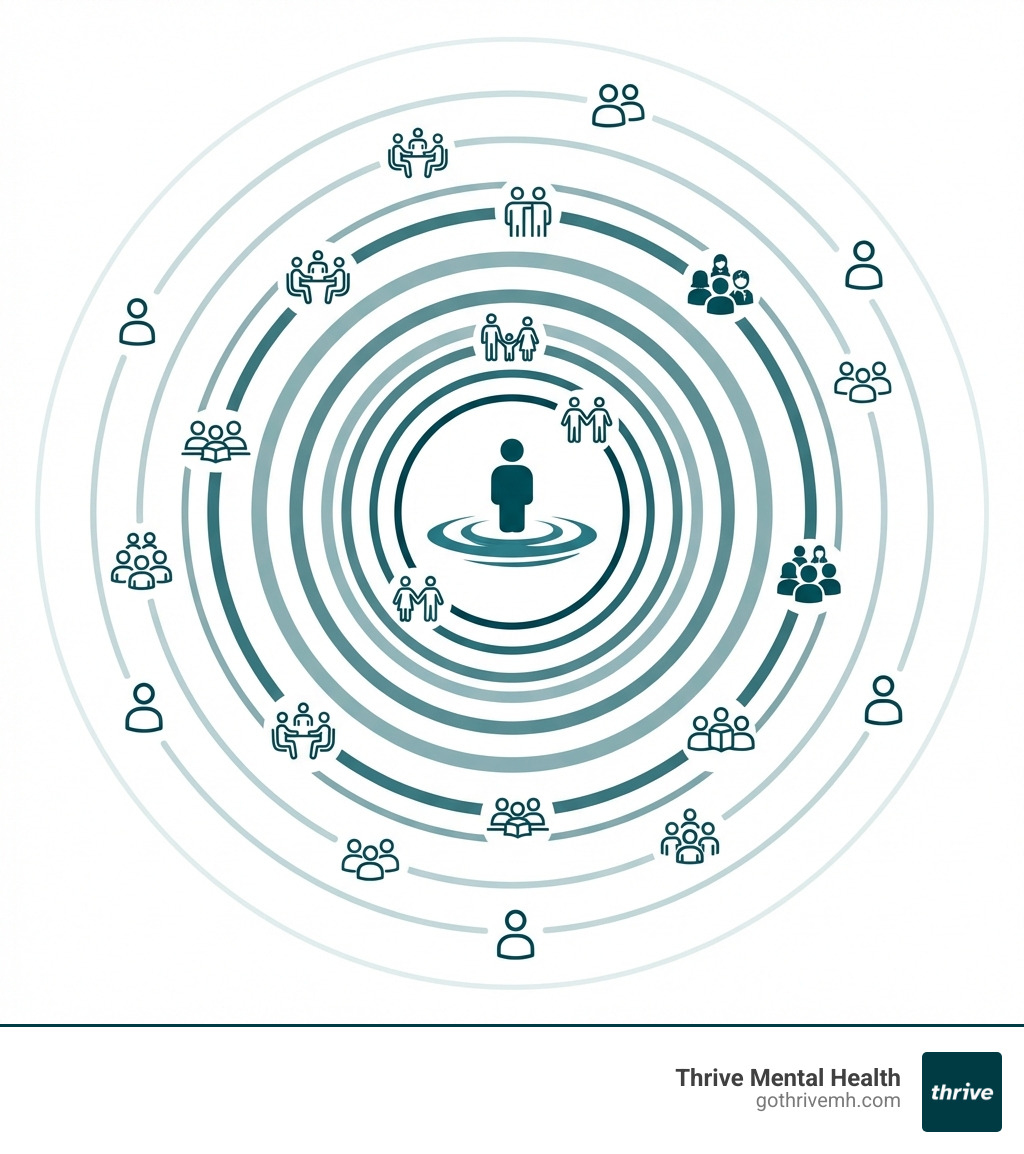
This infographic illustrates how one suicide impacts an average of 135 people—family members, friends, coworkers, and community members—creating waves of grief, trauma, and increased risk. It highlights the critical importance of prevention: stopping one death can protect hundreds of lives.
Suicide prevention further reading:
The Uncomfortable Truth: Suicide by the Numbers [2024 Stats]
The statistics surrounding suicide are stark, reminding us of the urgent need for comprehensive suicide prevention efforts. In Florida and across the United States, suicide remains a leading cause of death, affecting individuals across all age groups and demographics.

What Are the Current Suicide Statistics in the US and Florida?
According to the Centers for Disease Control and Prevention (CDC) and the Florida Department of Health:
- In 2022, over 49,000 people died by suicide in the United States, equating to one death every 11 minutes. In Florida, there were over 3,400 deaths by suicide in the same year.
- An estimated 1.7 million people attempted suicide in 2021 in the US.
- Suicide is the second leading cause of death for people aged 10 to 34. This statistic alone should punch us in the face, highlighting a crisis among our youth in Florida and nationwide.
- Surprisingly, the highest rate of suicide occurs in persons 75 years of age or older, a demographic often overlooked in prevention discussions.
- Men are disproportionately affected, being more than three times more likely than women to die by suicide.
- Firearms are the most common method of suicide, used in about half of all suicides. This points to the critical role of lethal means restriction in prevention.
- Interestingly, about half, or 54 percent, of people who died by suicide did not have a known mental health condition, indicating that other factors—such as relationship problems or recent crises—are significant contributors.
The complexity of suicide means that while mental health conditions play a role, many factors contribute to suicide among people with and without known mental health conditions. For more information on how various mental disorders can impact daily life, you can explore our resources on the impact of mental disorders on daily life.
Who Is Most at Risk? Understanding Vulnerable Populations
While suicide prevention is a universal concern, certain demographic groups in Florida and across the country experience unique risks and needs. Understanding these specific vulnerabilities allows us to tailor prevention efforts more effectively.
- Youth: Suicide is the second leading cause of death for individuals aged 10 to 34. Over 30% of adolescents seriously consider suicide each year. Factors like bullying, academic pressure, social media influence, and undiagnosed mental health conditions contribute to this alarming trend. Early intervention and support in schools and communities are vital.
- Veterans: Military veterans often face significant challenges, including post-traumatic stress disorder (PTSD), traumatic brain injury, and the struggle to reintegrate into civilian life. These factors can lift their risk. Programs like the Veterans Crisis Line and specialized mental health support are crucial. You can learn more about understanding PTSD and its profound impact.
- Indigenous Peoples: In both the US and Canada, Indigenous communities often face higher rates of suicide due to systemic racism, historical trauma, social inequities, and limited access to culturally appropriate mental health services. Life promotion initiatives that lead with the “language of life” and foster meaning, purpose, belonging, and hope are critical.
- LGBTQ+ Individuals: LGBTQ youth are four times more likely to attempt suicide compared to their heterosexual peers. Discrimination, lack of acceptance, family rejection, and bullying contribute to this heightened risk. Creating safe, inclusive environments and providing affirming mental health resources are essential for this community. Find more support and information through LGBTQIA+ resources.
- Men: As statistics show, men are significantly more likely to die by suicide. Societal expectations around masculinity, which often discourage expressing emotions or seeking help, can lead to bottled-up distress. Prevention efforts for men often focus on promoting healthy connections, reducing stigma around mental health, and encouraging help-seeking behaviors.
- Older Adults: With the highest rate of suicide in persons 75 years of age or older, this group faces unique challenges like social isolation, chronic illness, loss of loved ones, and reduced independence. Targeted interventions that address loneliness and provide access to mental and physical healthcare are important.
Warning Signs vs. Risk Factors: What’s the Difference?
It’s crucial to distinguish between warning signs and risk factors in suicide prevention. Risk factors are underlying vulnerabilities that increase the likelihood of suicide over time, while warning signs are immediate indicators that someone may be in acute danger. Recognizing both is essential for timely intervention.
Table: Suicide Risk Factors vs. Warning Signs
| Category | Risk Factors (Long-Term Vulnerabilities) | Warning Signs (Immediate Indicators) |
|---|---|---|
| Individual | Previous suicide attempts, mental health conditions (depression, anxiety, bipolar disorder), substance use, chronic pain or illness, history of trauma or abuse, impulsivity. | Talking about wanting to die or kill oneself, seeking lethal means, feelings of hopelessness or being trapped, severe mood swings, increased anxiety or agitation, giving away prized possessions. |
| Relationship | Family history of suicide, relationship problems, social isolation, conflict, loss of a loved one. | Withdrawing from friends and family, saying goodbye, expressing unbearable pain, feeling like a burden to others. |
| Community | Community violence, lack of access to mental healthcare, historical trauma (e.g., for Indigenous communities), community stigma around help-seeking. | Reckless behavior, increased substance use, dramatic changes in sleep patterns, expressing no reason for living or a sense of purposelessness. |
| Societal | Widespread stigma, easy access to lethal means, economic hardship, discrimination, media sensationalizing suicide. | Sudden calm after a period of distress, writing a will, tying up loose ends. |
For a deeper dive into how to identify subtle shifts in mental well-being, our guide on understanding early warning signs and symptoms can provide valuable insights.
Critical Warning Signs to Never Ignore: Your Life-Saving Checklist
When someone exhibits these signs, they may be at immediate risk and require urgent attention. Don’t wait—act now.
- Talking about wanting to die or kill oneself: This is not a cry for attention; it’s a direct plea for help.
- Actively seeking lethal means: Looking for ways to end their life, such as searching online for methods or acquiring weapons or pills.
- Expressing feelings of hopelessness or being trapped: Believing there’s no way out of their situation.
- Feeling like a burden to others: Convinced that their existence is a weight on loved ones.
- Withdrawing from friends, family, and activities: Pulling away from social connections and things they once enjoyed.
- Increased substance use: Using alcohol or drugs more frequently or heavily to cope with pain.
- Extreme mood swings: Rapid and dramatic shifts in emotional state.
- Saying goodbye or giving away prized possessions: Acting as if they won’t be around.
- Sudden calm after a period of severe distress: This can indicate a decision has been made.
If you observe any of these warning signs, it’s imperative to take action. Every moment counts.
Your Action Plan for Suicide Prevention: From Awareness to Intervention
Effective suicide prevention demands a multi-layered approach, moving beyond individual crisis response to encompass community-wide strategies and systemic change. We believe in a comprehensive public health model that empowers individuals, strengthens communities, and ensures access to quality mental health care.

The Role of Mental Health Care and Social Support in Suicide Prevention
Mental health care forms the bedrock of suicide prevention. Access to effective, evidence-based treatments like therapy and medication management can significantly reduce suicidal ideation and behaviors. However, professional care alone is not enough. Strong social support networks—from family and friends to community groups—provide a crucial buffer against isolation and despair.
- Comprehensive Public Health Approach: This means addressing suicide prevention at all levels: individual, relationship, community, and societal. It involves using data to drive decision-making, implementing evidence-based strategies, and fostering multi-sectoral partnerships. The goal is to reduce risk factors while increasing protective factors and promoting resilience. We are committed to these principles, which align with the 2024 National Strategy for Suicide Prevention.
- Importance of Social Support: Data shows that clients who report higher peer and family support are less likely to experience active suicidal ideation and are less likely to have attempted suicide. Fostering strong social connections, encouraging honest conversations, and maintaining social bonds remind individuals they are not alone.
- Reducing Stigma: The stigma surrounding mental health and suicide is a major barrier to help-seeking. We must normalize conversations about mental well-being, treating mental illness with the same seriousness as physical illness. This includes challenging misconceptions and fostering environments where people feel safe to express their struggles without fear of judgment.
- Promoting Resilience: Resilience is the ability to bounce back from adversity. Suicide prevention efforts should actively promote life and resilience by teaching coping and problem-solving skills, supporting social-emotional learning, and engaging community members in shared activities. Hope, as the Mental Health Commission of Canada states, “isn’t fragile. It’s fierce. Stubbornly, it pushes up through cracks.”
How to Talk About Suicide Without Making It Worse
Talking about suicide can feel daunting, but avoiding the conversation can be far more dangerous. The fear that asking about suicide might plant the idea is a myth; instead, it can be a life-saving act of connection and care. Here’s how to approach it effectively:
- Ask Directly: Don’t beat around the bush. If you’re concerned, ask clearly: “Are you thinking about suicide?” or “Are you having thoughts of hurting yourself?” This shows you’re taking their pain seriously.
- Be Present and Listen: Create a safe space for them to talk without judgment. Listen actively, validate their feelings (“That sounds incredibly difficult,” “I hear how much pain you’re in”), and avoid minimizing their experience. Let them know you care and are concerned.
- Keep Them Safe: If they admit to suicidal thoughts, ask if they have a plan, a timeframe, and access to lethal means. If they do, take immediate steps to reduce access to those means. This is a critical part of suicide prevention. For instance, if firearms are present, work with them to temporarily remove them from the home.
- Connect Them to Help: Encourage them to seek professional help. Offer to help them find a therapist, make an appointment, or even accompany them. Provide them with immediate resources like the 988 Suicide & Crisis Lifeline.
- Follow Up: Your support shouldn’t end after one conversation or referral. Check in with them regularly via calls, texts, or visits. Ongoing support helps them feel less isolated and reinforces that you care.
You don’t have to be a mental health professional to offer support, but you do need to know when to bring in the experts. For guidance on navigating crisis situations, our resources on crisis intervention for suicidality can be invaluable.
Community and Societal Strategies for Suicide Prevention
Effective suicide prevention isn’t solely about individual intervention; it requires a robust network of community and societal strategies. These efforts create environments where individuals are less likely to reach a crisis point and more likely to find support when they do.
- Strengthening Economic Supports: Economic hardship, such as unemployment or housing instability, is a significant risk factor. Strategies include improving household financial security, providing unemployment insurance, and stabilizing housing through programs like Housing First. These foundational supports can dramatically reduce stress and provide a sense of stability.
- Creating Protective Environments: This involves making schools, workplaces, and other community spaces safer. Examples include implementing Counseling on Access to Lethal Means (CALM) programs, the Gun Shop Project (promoting safe firearm storage), and Creating Suicide Safety in Schools initiatives. Healthy organizational policies and culture that prioritize mental well-being also play a crucial role.
- Improving Access to Care: Ensuring that mental health care is accessible, affordable, and high-quality is paramount. This means advocating for mental health coverage in insurance policies, increasing the availability of providers in underserved areas, and providing rapid and remote access to help. In a state as diverse as Florida, this is especially critical to reach all communities. Programs like the National Health Service Corps aim to address provider shortages.
- Promoting Healthy Connections: Fostering a sense of belonging and reducing social isolation can be life-saving. Initiatives like Sources of Strength, Wingman-Connect, and Men’s Sheds engage community members in shared activities, promote healthy peer norms, and build supportive networks.
- Teaching Coping and Problem-Solving Skills: Equipping individuals with the tools to manage stress and steer challenges is a proactive suicide prevention strategy. This includes social-emotional learning programs in schools, parenting skills workshops to improve family relationships, and resilience education programs. Examples include the Youth Aware of Mental Health Program (YAM) and Signs of Suicide (SOS) programs.
- Safe Media Reporting Guidelines: The way media reports on suicide can have a profound impact. Following safe reporting guidelines encourages help-seeking behavior and avoids inadvertently contributing to contagion. Organizations like the Mental Health Commission of Canada provide resources like “Mindset: Reporting on Mental Health” to guide responsible reporting.
These strategies, often informed by evidence-based approaches, demonstrate that suicide prevention is a collective responsibility. Our commitment to evidence-based suicide prevention ensures that our programs align with these proven methods.
Finding Help: Resources and Professional Support That Work
When facing suicidal thoughts or supporting someone who is, knowing where to turn is critical. Immediate access to compassionate, qualified help can be the difference between life and death. We want to ensure you have these vital connections at your fingertips.
National and Local Helplines: Immediate Support, 24/7
These resources are available around the clock, providing confidential and free support:
- 988 Suicide & Crisis Lifeline: This is your direct link to help. By calling or texting 988, or chatting online at 988lifeline.org, you can connect with a trained crisis counselor 24/7/365. It’s confidential, free, and available throughout the United States.
- Crisis Text Line: Text HOME to 741741 from anywhere in the US, anytime, about any type of crisis.
- 211: In Florida, dialing 2-1-1 connects you to a local network of community services, including mental health support and crisis intervention.
- The Trevor Project: For LGBTQ youth (ages 13-24) in crisis. Call 1-866-488-7386, text START to 678-678, or chat online at TheTrevorProject.org.
- Veterans Crisis Line: If you’re a veteran in crisis, you can connect with responders by dialing 988 then pressing 1, texting 838255, or chatting online via the Veterans Crisis Line.
These helplines are a crucial first step, offering immediate emotional support and guidance. They can help de-escalate a crisis and connect individuals to ongoing care.
When to Seek a Higher Level of Care
While weekly therapy is beneficial for many, sometimes a more intensive level of support is needed, especially when dealing with persistent suicidal thoughts or a history of attempts.
Limitations of Weekly Therapy: When You Need More
For individuals struggling with acute mental health challenges, including frequent or intense suicidal ideation, weekly outpatient therapy may not provide the necessary structure, frequency, or intensity of support. It can be challenging to manage severe symptoms or steer complex crises with only one hour of professional contact per week.
Signs You Need More Support: Don’t Wait
Consider a higher level of care if you or a loved one are experiencing:
- Frequent suicidal thoughts that are difficult to control.
- Recent suicide attempts or strong urges to self-harm.
- Significant impairment in daily functioning (e.g., unable to work, attend school, or maintain relationships).
- A mental health condition that isn’t improving with current treatment.
- Feeling overwhelmed, isolated, or unsafe.
What Are IOP and PHP Programs? Your Bridge to Stability
Intensive Outpatient Programs (IOPs) and Partial Hospitalization Programs (PHPs) offer structured, evidence-based treatment that provides more support than weekly therapy but less than inpatient hospitalization. These programs are designed for individuals who need comprehensive care but can safely live at home.
- Intensive Outpatient Programs (IOPs): Typically involve several hours of therapy per day, multiple days a week. They focus on group therapy, individual counseling, and skill-building (e.g., DBT, CBT) to help manage symptoms and develop coping strategies. Learn more about what’s an IOP and how it can help.
- Partial Hospitalization Programs (PHPs): Offer a higher level of care than IOPs, often running for most of the day, five days a week. They provide a hospital-like structure without overnight stays, including intensive therapy, medication management, and psychiatric support. Find the differences between IOP vs PHP mental health programs.
How Structured Programs Reduce Suicidal Ideation: Real Results
Structured programs like IOPs and PHPs are incredibly effective in suicide prevention. Our data at Thrive Mental Health shows that clients who complete treatment see a 69% decrease in suicidal ideation from intake to discharge on average, with those effects enduring for at least a year. We also observe significant reductions in self-harm, anxiety, inpatient admissions, and emergency room visits. This success is due to:
- Comprehensive Care: Integrating individual therapy, group therapy, family therapy, and psychiatric services.
- Skill-Building: Teaching concrete coping mechanisms and problem-solving strategies.
- Strong Support Networks: Fostering increased family and peer support during and after treatment.
- Safety Planning: Developing personalized plans to manage crises and prevent future attempts.
Insurance Coverage for Intensive Programs in Florida
We understand that access to care is often linked to insurance coverage. At Thrive Mental Health, we are dedicated to making these life-saving programs accessible across our service areas in Florida, including Tampa Bay, St. Petersburg, Miami, Orlando, Boca Raton, West Palm Beach, Jacksonville, Fort Lauderdale, Naples, and Sarasota.
Many major insurance providers, including Florida Blue, Aetna, UnitedHealthcare, Cigna, and Optum, cover a significant portion of the costs for IOP and PHP programs. We work closely with families to verify benefits and steer the insurance process, ensuring that financial barriers don’t prevent access to necessary care. Our virtual IOP programs are designed for flexibility and can often be covered by insurance. For more information on our specific services, especially for managing depression, please visit our page on IOP for depression.
Frequently Asked Questions about Suicide Prevention
What should you NOT say to a suicidal person?
Avoid saying things like “You have so much to live for,” “It’s a selfish choice,” or “Just snap out of it.” These phrases can invalidate their pain and make them feel misunderstood or judged, pushing them further away. Instead, focus on listening, validating their feelings (“That sounds incredibly difficult”), and expressing your concern.
Can you prevent suicide completely?
While not every single suicide can be prevented, comprehensive and early intervention significantly reduces suicide rates. Suicide prevention efforts focus on reducing risk factors (like access to lethal means and untreated depression) and increasing protective factors (like social connection and coping skills), which saves lives. It’s about proactive steps, not a guarantee, but every action makes a difference.
Does talking about suicide make it more likely to happen?
No. This is a dangerous myth. Asking someone directly and compassionately if they are thinking about suicide can be a lifeline. It shows you care, opens the door for them to talk about their pain, and is the first step toward getting them help. Silence, on the other hand, can reinforce their isolation and desperation.
Your Next Step: Choose Support, Choose Life
Suicide prevention is a complex issue, but the message is simple: hope is real and help is effective. Recognizing the signs, knowing how to respond, and connecting with professional support can save a life. Whether for yourself or a loved one, taking the step to get help is a sign of incredible strength. Thrive Mental Health offers structured, evidence-based programs like Intensive Outpatient (IOP) and PHP across Florida, providing more support than weekly therapy with flexible options designed for real life.
Ready for support? Thrive offers virtual and hybrid IOP/PHP programs with evening options. Verify your insurance in 2 minutes (no obligation) → Start benefits check or call 561-203-6085. If you’re in crisis, call/text 988.