
3 Quick Ways to Find Intensive Outpatient Therapy Options in WPB

3 Quick Paths: More therapy, no hospital WPB.
Why You Might Need More Than Weekly Therapy in Florida
I need more than weekly therapy but don’t want to go to a hospital. What are my options in Florida? If this question feels painfully familiar, you’re not alone. Thousands of driven professionals and college-aged adults in Florida hit a wall with traditional once-a-week therapy—symptoms worsen, progress stalls, and the gap between “not enough support” and “full hospitalization” feels impossibly wide.
Here’s the quick answer:
Your middle-ground options in Florida:
- Intensive Outpatient Programs (IOP) – 9–19 hours/week, flexible scheduling, you keep your job/school routine
- Partial Hospitalization Programs (PHP) – 20+ hours/week, structured day treatment, faster crisis stabilization
- Hybrid or Virtual Programs – evidence-based care delivered remotely with in-person options when needed
These programs treat depression, anxiety, PTSD, burnout, substance use, and dual diagnoses—without requiring you to check into a hospital or put your life on hold.
I’m Nate Raine, CEO of Thrive Mental Health. Over the past decade, I’ve led behavioral health innovation across five states, building scalable IOP and PHP programs for people who need more than weekly therapy but don’t want to go to a hospital. We provide real solutions that fit real lives. At Thrive, we’ve helped thousands of Floridians access flexible, outcome-focused care that bridges this exact gap.
This guide walks you through the three fastest ways to find the right program in Florida, decode the differences between IOP and PHP, and solve the insurance puzzle—so you can stop feeling stuck and start making measurable progress.
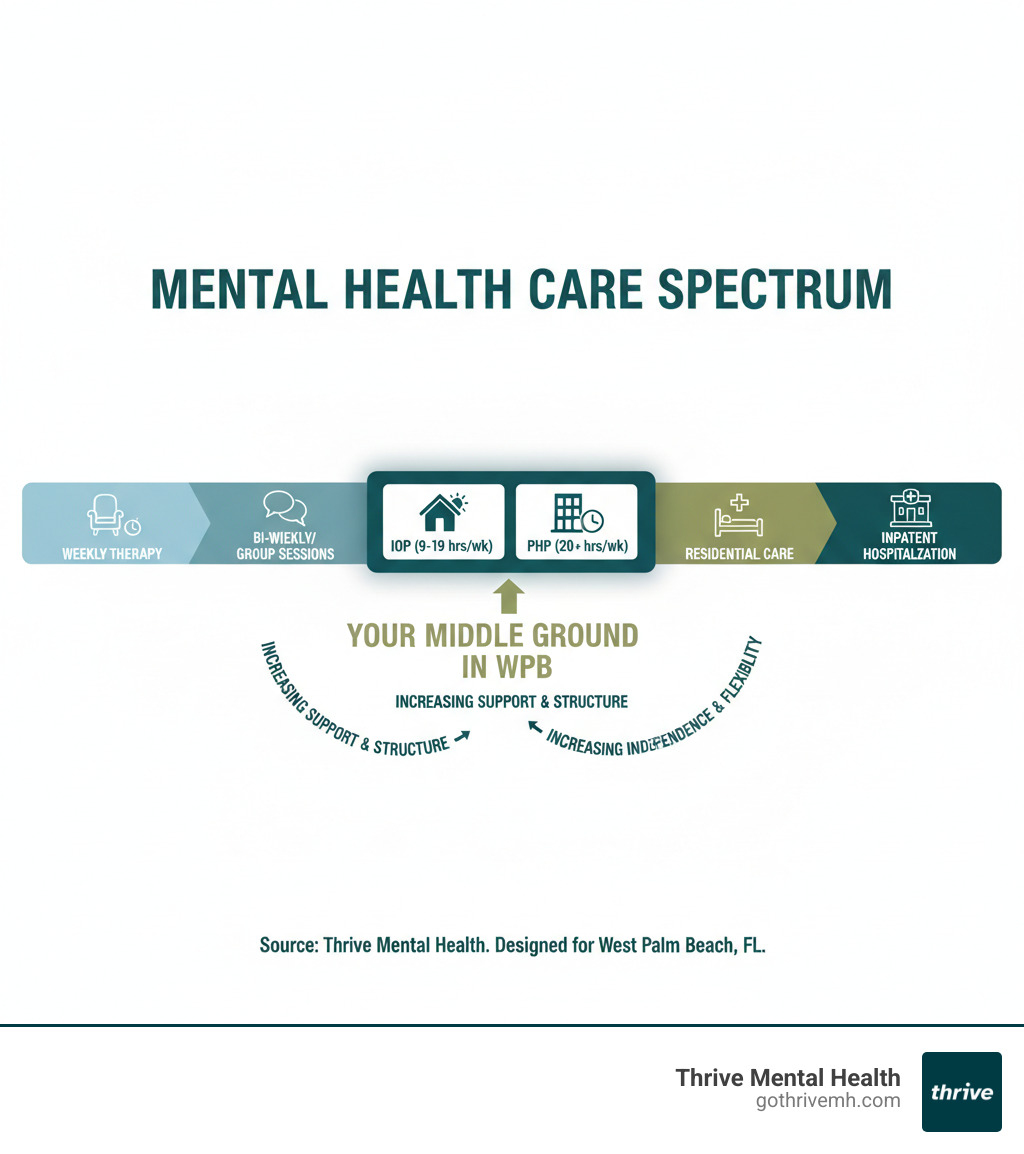
I need more than weekly therapy but don’t want to go to a hospital. What are my options in Florida? terms to learn:
1. Decode Your Options: Intensive Outpatient (IOP) vs. Partial Hospitalization (PHP)
I need more than weekly therapy but don’t want to go to a hospital. What are my options in Florida? If you’re asking this, you’ve already realized that once-a-week therapy isn’t cutting it—but the idea of checking into a hospital feels like too much, too disruptive, or just plain scary. You’re stuck in the middle, and it’s frustrating.
Here’s the good news: you don’t have to choose between “not enough” and “way too much.” Intensive Outpatient Programs (IOPs) and Partial Hospitalization Programs (PHPs) exist specifically for this gap. They give you structured, comprehensive mental health support without requiring you to live at a facility or put your entire life on pause.
Let’s break down exactly what each option means—and how to know which one fits your situation.
What is an Intensive Outpatient Program (IOP)?
An Intensive Outpatient Program (IOP) is designed for people who need serious support but can still manage the basics of daily life—work, school, family responsibilities. It’s a step up from traditional weekly therapy, but flexible enough that you don’t have to disappear from your routine.
In an IOP, you’ll typically spend 9 to 19 hours per week in treatment, spread across 3 to 5 days. Most of your time will be in group therapy, where you connect with others facing similar struggles, learn from shared experiences, and practice real coping skills in a supportive environment. You’ll also have individual therapy sessions for personalized guidance, and many programs include medication management if that’s part of your treatment plan.
IOPs are ideal if your symptoms are getting in the way of daily functioning—maybe you’re struggling to focus at work, your relationships are suffering, or you’re having frequent panic attacks—but you don’t need 24/7 medical supervision. You can still show up to your job, sleep in your own bed, and maintain your independence while getting the intensive care you need.
Many of our clients at Thrive find that virtual IOPs are especially flexible. You can attend sessions from home, fit treatment around work meetings, and still make real progress. Research shows that intensive outpatient addiction treatment programs are highly effective—and the same model works just as well for anxiety, depression, PTSD, and other primary mental health conditions.
Want to see what a typical IOP looks like? Learn more about our IOP services here.
What is a Partial Hospitalization Program (PHP)?
A Partial Hospitalization Program (PHP), sometimes called “day treatment,” offers a higher level of care than an IOP. It’s for people who need more intensive, structured support—often as a step-down from an inpatient stay, or when symptoms are severe enough that daily intervention is critical, but you’re medically stable and don’t need 24-hour supervision.
In a PHP, you’ll typically engage in treatment for 20 or more hours per week, usually 5 days a week, for several hours each day. This intensive schedule provides a highly structured environment focused on crisis stabilization and comprehensive therapeutic intervention. You spend your days in treatment, then return home in the evenings, allowing you to maintain connections with your home environment and practice newly learned skills in real-world settings.
PHPs are particularly beneficial if you’re transitioning out of inpatient care and need robust support as you reintegrate into daily life. They are also suitable if your symptoms are significantly impacting your ability to function—maybe you’re having suicidal thoughts, your depression is so severe you can’t get out of bed, or you’re managing co-occurring disorders like substance use and mental health conditions. Research shows that PHPs can reduce symptoms of substance use disorders and mental health conditions at less cost than inpatient or residential settings.
At Thrive Mental Health, our PHPs provide that intensive, structured support while empowering you to maintain your autonomy. Explore the specifics of our PHP offerings here.
To help you visualize the differences, here’s a quick comparison:
| Feature | Intensive Outpatient Program (IOP) | Partial Hospitalization Program (PHP) |
|---|---|---|
| Hours per Week | 9–19 hours | 20+ hours |
| Days per Week | 3–5 days | 5 days (typically) |
| Typical Duration | 6–12 weeks | 2–4 weeks (often as step-down from inpatient) |
| Level of Care | Moderate intensity; focus on building skills while maintaining daily responsibilities | High intensity; crisis stabilization and acute symptom management |
| Ideal Candidate | Symptoms interfere with daily life but you can maintain work/school; need more than weekly therapy | Severe symptoms requiring daily intervention; stepping down from inpatient; need structured environment but not 24/7 supervision |
Both programs give you the middle ground you’re looking for. If you’re asking, “I need more than weekly therapy but don’t want to go to a hospital. What are my options in Florida?” then IOP and PHP are exactly those options. The right choice depends on how severe your symptoms are right now, how much structure you need, and what level of flexibility works with your life.
Introduction: Stuck Between Weekly Therapy and a Hospital Stay in Florida?

I need more than weekly therapy but don’t want to go to a hospital. What are my options in Florida? If this question feels painfully familiar, you’re not alone. Thousands of driven professionals and college-aged adults in Florida hit a wall with traditional once-a-week therapy—symptoms worsen, progress stalls, and the gap between “not enough support” and “full hospitalization” feels impossibly wide.
Here’s the quick answer:
Your middle-ground options in Florida:
- Intensive Outpatient Programs (IOP) – 9–19 hours/week, flexible scheduling, you keep your job/school routine
- Partial Hospitalization Programs (PHP) – 20+ hours/week, structured day treatment, faster crisis stabilization
- Hybrid or Virtual Programs – evidence-based care delivered remotely with in-person options when needed
These programs treat depression, anxiety, PTSD, burnout, substance use, and dual diagnoses—without requiring you to check into a hospital or put your life on hold.
I’m Nate Raine, CEO of Thrive Mental Health. Over the past decade, I’ve led behavioral health innovation across five states, building scalable IOP and PHP programs for people who need more than weekly therapy but don’t want to go to a hospital. We provide real solutions that fit real lives. At Thrive, we’ve helped thousands of Floridians access flexible, outcome-focused care that bridges this exact gap.
This guide walks you through the three fastest ways to find the right program in Florida, decode the differences between IOP and PHP, and solve the insurance puzzle—so you can stop feeling stuck and start making measurable progress.
I need more than weekly therapy but don’t want to go to a hospital. What are my options in Florida? terms to learn:
1. Decode Your Options: Intensive Outpatient (IOP) vs. Partial Hospitalization (PHP)
When you’re struggling with mental health challenges, the idea of traditional weekly therapy can feel like putting a small bandage on a gaping wound. But the thought of a hospital stay can be equally daunting, bringing fears of disruption, stigma, and loss of independence. This is where Intensive Outpatient Programs (IOPs) and Partial Hospitalization Programs (PHPs) come into play. They offer that crucial middle ground, providing structured, comprehensive support without requiring you to live at a facility. We know this spectrum of care can be confusing, so let’s break down these vital options.
What is an Intensive Outpatient Program (IOP)?
An Intensive Outpatient Program (IOP) is designed for individuals who need more support than weekly therapy but can still manage their daily responsibilities like work, school, or family life. It’s a structured level of care that provides a significant step up from traditional outpatient sessions.
In an IOP, you typically participate in therapy sessions for 9 to 19 hours per week, spread across 3 to 5 days. This allows for intensive engagement with therapeutic modalities while maintaining a degree of flexibility. The core of an IOP often revolves around group therapy, where you can connect with peers facing similar struggles, learn from shared experiences, and practice new coping skills in a supportive environment. Individual therapy sessions are also a cornerstone, offering personalized guidance and deeper exploration of your challenges. Additionally, medication management may be integrated into the program, ensuring a holistic approach to your well-being.
IOPs are ideal if you’re experiencing persistent symptoms that interfere with your daily functioning, but you don’t require 24/7 medical supervision. They provide the tools and strategies you need to steer life’s complexities, build resilience, and establish a strong foundation for lasting recovery. Many of our clients find that IOPs, especially virtual programs, are perfectly suited to help them maintain their professional and academic commitments while receiving critical mental health support. Intensive outpatient addiction treatment programs are effective for those struggling with substance use, and the model extends just as effectively to primary mental health conditions.
You can learn more about our specific IOP services and what a typical program looks like here: More info about IOP services.
What is a Partial Hospitalization Program (PHP)?
A Partial Hospitalization Program (PHP), sometimes referred to as “day treatment,” offers a higher level of care than an IOP, bridging the gap between intensive outpatient services and inpatient hospitalization. PHPs are for individuals who need more intensive, structured support, often as a step-down from an inpatient stay or when symptoms are severe enough to warrant daily intervention but not 24-hour supervision.
In a PHP, you typically engage in treatment for 20 or more hours per week, usually 5 days a week, for several hours each day. This intensive schedule provides a highly structured environment focused on crisis stabilization and comprehensive therapeutic intervention. While you spend your days in treatment, you return home in the evenings, allowing you to maintain connections with your home environment and practice newly learned skills in a real-world setting.
PHPs are particularly beneficial for those transitioning out of inpatient care, where they can continue to receive robust support as they reintegrate into daily life. They are also suitable for individuals whose symptoms are significantly impacting their ability to function, but who are medically stable and do not pose an immediate danger to themselves or others. This level of care is about providing acute medical and mental health services in a compressed timeframe, making it an excellent option for more severe conditions or co-occurring disorders. Research shows that PHPs can reduce symptoms of substance use disorders and mental health conditions at less cost than inpatient or residential settings.
At Thrive Mental Health, our PHPs are designed to provide that intensive, structured support while empowering you to maintain your autonomy. You can explore the specifics of our PHP offerings here: More info about PHP services.
To help you visualize the differences, here’s a quick comparison:
| Feature | Intensive Outpatient Program (IOP) | PHP (Partial Hospitalization Program) |
|---|---|---|
| Hours Per Week | 9-19 hours | 20+ hours |
| Days Per Week | 3-5 days | 5 days |
| Typical Duration | 6-12 weeks, but varies by individual needs | 1-3 weeks, but varies by individual needs |
| Level of Care | Intermediate; more structured than weekly therapy, less intensive than PHP | High-intensity outpatient; more structured than IOP, less intensive than inpatient |
| Ideal Candidate | Needs significant support but can maintain daily responsibilities; stepping down from PHP or stepping up from weekly therapy | Needs intensive daily support for stabilization or transition from inpatient; medically stable but symptoms significantly impact functioning |
2. How to Find the Right IOP or PHP in Florida
When you’re looking for mental health care in Florida, it can feel overwhelming, especially when you’re looking for something specific like an IOP or PHP. The good news is that Florida offers a growing array of options designed to meet this exact need. We understand the importance of finding a program that aligns with your lifestyle, personal values, and clinical requirements.

When considering your options in Florida, you’ll encounter both in-person and virtual programs. Virtual options, like those offered by Thrive Mental Health, have revolutionized access to care, providing the flexibility that busy professionals and students often require. This means you can receive top-tier, evidence-based treatment from the comfort and privacy of your home, without the added stress of commuting or disrupting your schedule. We deliver virtual and in-person Intensive Outpatient (IOP) and Partial Hospitalization (PHP) programs for adults and young professionals across Florida, ensuring that expert-led care is accessible anywhere, anytime.
Accreditation is a critical factor to look for when evaluating programs. Facilities accredited by bodies like the Joint Commission or CARF demonstrate a commitment to high standards of quality and safety in patient care. This ensures you’re receiving treatment from licensed professionals who adhere to ethical guidelines and best practices.
What Conditions Do These Florida Programs Treat?
IOPs and PHPs in Florida are equipped to treat a wide range of mental health conditions, providing comprehensive care customized to individual needs. Our programs at Thrive Mental Health are designed to address:
- Depression: Often described as more than just sadness, depression is the leading cause of disability worldwide, affecting over 300 million people, according to the WHO. These programs provide vital support to manage symptoms and work towards remission.
- Anxiety Disorders: From generalized anxiety to panic disorders and social anxiety, these programs offer strategies and therapies to help manage overwhelming worry and fear. For those seeking specialized support, we offer remote therapy for anxiety.
- Bipolar Disorder: Providing structured support for mood stabilization and coping mechanisms for managing the highs and lows.
- PTSD & Trauma: Utilizing trauma-informed care and specialized therapies like EMDR (Eye Movement Desensitization and Reprocessing) to help process traumatic experiences. EMDR as add-on treatment for psychiatric and traumatic symptoms in patients with substance use disorder can be particularly effective.
- Dual Diagnosis (Co-occurring Disorders): For individuals struggling with both a mental health condition and a substance use disorder. Integrated treatment is crucial for effective recovery, as Substance use disorder treatment for people with co-occurring disorders is often more successful when both conditions are addressed simultaneously. In Florida, approximately 20.4 million American adults had a co-occurring disorder in the past year, highlighting the need for integrated care.
- Substance Use Disorders: Providing structured therapy and support for recovery from alcohol and drug addiction. Many programs offer various therapeutic modalities such as Cognitive Behavioral Therapy (CBT), Dialectical Behavior Therapy (DBT), and Motivational Interviewing (MI). Dialectical behavior therapy can help reduce self-harming behaviors and manage intense emotions, while Motivational interviewing encourages internal motivation for change.
- Burnout: Especially relevant for young professionals, these programs offer tools to manage stress, restore work-life balance, and prevent mental health crises stemming from overwhelming pressure.
How to Choose the Right Program for You in Florida
Choosing the right IOP or PHP in Florida is a deeply personal decision that can significantly impact your recovery journey. Here’s how we recommend approaching it:
- Assess Your Needs: Start by honestly evaluating your current symptoms, the level of disruption they cause in your life, and how much structure you feel you need. Are you looking for a step-up from weekly therapy, or a step-down from an inpatient stay? This will help determine if an IOP or PHP is more appropriate.
- Check for Evidence-Based Therapies: Look for programs that use proven therapeutic modalities. These often include:
- Cognitive Behavioral Therapy (CBT): Helps you identify and change negative thought patterns and behaviors.
- Dialectical Behavior Therapy (DBT): Focuses on emotional regulation, distress tolerance, interpersonal effectiveness, and mindfulness. Does an adapted Dialectical Behaviour Therapy skills training programme result in positive outcomes for participants with a dual diagnosis? research supports its efficacy.
- Group Therapy: Provides a supportive community where you can share experiences and learn from others. Group therapy is a cornerstone of many programs.
- Individual Therapy: Offers one-on-one time with a therapist for personalized support.
- Medication Management: For those who may benefit from psychiatric medication alongside therapy.
- Ask About Support Services: Beyond core therapy, what else does the program offer? This could include family support and education, aftercare planning, and connections to community resources like Clubhouses – Mental Health America of the Palm Beaches which follow the Clubhouse International model and its 37 standards.
- Read Reviews and Check Accreditations: Online reviews can offer insights into patient experiences, and accreditations (like from the Joint Commission or CARF) indicate a commitment to quality.
- Schedule a Consultation: Most reputable programs offer a free, no-obligation assessment or consultation. This is your chance to ask questions, understand their approach, and ensure it feels like the right fit.
3. Solve the Cost & Insurance Puzzle [For Good]
One of the biggest problems to accessing mental health care is often the perceived cost. Many people assume that intensive programs like IOPs and PHPs are prohibitively expensive, especially if they need more than weekly therapy but don’t want to go to a hospital. However, understanding your insurance benefits and exploring available financial options can make these crucial treatments accessible.

Does Insurance Cover IOP and PHP in Florida?
The good news is that mental health and substance abuse treatment are considered essential health benefits (EHBs) under the Affordable Care Act (ACA). This means that most health insurance plans, including those offered through the Marketplace, are required to provide some level of coverage for these services. This includes IOP and PHP.
In Florida, we see many major insurance providers offering coverage for mental health treatment. At Thrive Mental Health, we work with a wide range of plans to make our programs accessible. Common insurance providers that typically cover IOP and PHP include:
- Florida Blue (Blue Cross Blue Shield)
- Cigna
- Aetna
- Optum (UnitedHealthcare)
- Carelon Behavioral Health
- Humana
- Magellan
- MultiPlan
- TRICARE
- ComPsych
- Ambetter
However, “coverage” doesn’t always mean 100% free. You’ll likely have co-pays, deductibles, or co-insurance responsibilities. It’s crucial to verify your specific plan’s benefits. We recommend contacting your insurance provider directly or allowing us to do a no-obligation benefits check for you. This will clarify your out-of-pocket costs and ensure there are no surprises. Mental health & substance abuse coverage parity laws also mandate that insurers cover mental health care at the same level as physical health care.
Additionally, if your condition is severe enough to warrant time off work for treatment, the Family and Medical Leave Act (FMLA) may provide job protection. You can look online for more information on FMLAs to understand if you qualify.
What if I Don’t Have Insurance?
If you don’t have health insurance, or your plan doesn’t offer adequate coverage, don’t despair. Your mental health is a critical investment, and there are still options available to ensure you receive the care you need.
- Sliding Scale Fees: Many providers, especially community mental health centers and some private practices, offer services on a sliding scale, meaning the cost is adjusted based on your income and ability to pay.
- State-Funded Programs: Florida allocates significant resources to mental health and substance abuse programs. In fact, Florida’s budget approved its largest mental health funding ever, allocating $2.5 billion for mental health and substance abuse programs recently. These funds often support public and non-profit treatment centers that may offer reduced-cost or free services to eligible residents.
- Payment Plans: Many private facilities, including Thrive Mental Health, are willing to work with you to create manageable payment plans. This allows you to pay for treatment in installments rather than a lump sum.
- Private Financing/Loans: Some organizations specialize in healthcare financing, offering loans specifically for treatment costs.
- Prioritizing Health Investment: While it might seem like a significant expense, investing in your mental health can prevent more severe and costly issues down the line. For instance, each involuntary Baker Act discharge in Florida costs between $6,000 and $8,000, and Emergency Department visits for mental disorders in Florida are high, with 553.4 per 100,000 people in 2022. Early intervention through IOP or PHP can often avert these more intensive and expensive crises.
We encourage you to openly discuss your financial concerns with us during your initial consultation. Our team is dedicated to helping you find a viable path to treatment.
Frequently Asked Questions about Finding More Than Weekly Therapy in Florida
How do I know if I need an IOP or PHP instead of just more weekly therapy?
This is often the first question people ask when they realize their current treatment isn’t cutting it anymore. The answer usually becomes clear when you look at how your symptoms are showing up in your daily life.
If you’re finding that weekly therapy sessions aren’t providing enough support to manage what you’re going through, that’s a significant sign. Maybe you’re having more frequent crises between appointments, or you’re struggling to apply the coping skills you’ve learned when you need them most. Perhaps your symptoms are intensifying—depression feels heavier, anxiety is more overwhelming, or you’re using substances more frequently despite your best intentions.
Another key indicator is functional impairment. Are your symptoms making it hard to show up at work or school? Are your relationships suffering because you can’t manage your emotions or behaviors? Do you feel like you’re barely keeping your head above water, even with regular therapy? These are all signs that you need more intensive, structured support.
When we conduct initial assessments at Thrive Mental Health, we look at symptom severity, frequency of crises, your ability to function in daily life, and whether you’re making meaningful progress with your current level of care. If weekly therapy feels like you’re trying to bail out a sinking boat with a teaspoon, it’s time to consider stepping up to an IOP or PHP.
The good news? This isn’t a failure—it’s recognizing what you need and taking action to get it.
Can I keep my job while attending an IOP in Florida?
Absolutely, yes. This is one of the most common concerns we hear, especially from young professionals and working adults, and it’s a completely valid one. The beauty of IOPs is that they’re specifically designed to fit around your life, not the other way around.
Most IOPs, particularly virtual programs like ours at Thrive Mental Health, offer flexible scheduling options. Many programs run in the evenings after typical work hours, or offer part-time schedules that allow you to attend sessions before or after your workday. Our virtual IOP programs are especially accommodating—you can log in from home, eliminating commute time and making it easier to balance your professional responsibilities.
We’ve worked with countless professionals who’ve successfully completed IOP while maintaining their careers. Some adjust their work schedules slightly, others use lunch breaks or work from home on treatment days. Many employers are also more understanding than you might expect, especially when you frame it as proactive health management.
If your condition is severe enough that you need to take time off, the Family and Medical Leave Act (FMLA) may provide job protection while you focus on treatment. This can give you peace of mind that your position will be waiting when you’re ready to return.
The key is finding a program that understands the demands on your time and is willing to work with you to create a schedule that supports both your recovery and your livelihood.
What’s the first step to getting into a program?
Taking that first step can feel daunting, but we’ve made it as simple and low-pressure as possible. The typical first step is scheduling a confidential assessment with an admissions coordinator—and at Thrive Mental Health, this comes with absolutely no obligation.
During this initial conversation, we’ll discuss what you’re experiencing, how it’s impacting your life, and what you’re hoping to achieve through treatment. This isn’t a high-pressure sales pitch—it’s a genuine, human conversation about where you are and what might help. We’ll ask about your symptoms, your support system, your daily responsibilities, and any previous treatment experiences.
This assessment serves several important purposes. First, it helps us determine if IOP or PHP is the right level of care for you. Sometimes people need more intensive support, sometimes less—and we’ll be honest about what we think will serve you best. Second, it gives you a chance to ask all your questions: What does a typical day look like? How do sessions work? What therapeutic approaches do you use?
We’ll also verify your insurance benefits during this conversation. Many people are pleasantly surprised to learn their plan covers more than they expected. If you don’t have insurance or your coverage is limited, we’ll discuss payment options and help you find a path forward.
You can start this process by calling us at 561-203-6085 or using our online benefits check tool—it takes about two minutes and gives you immediate information about your coverage.
I need more than weekly therapy but don’t want to go to a hospital. What are my options in Florida? is a question we answer every day. You’re not alone in feeling this way, and taking this first step toward getting answers is already progress.
Your Path Forward Starts Here
When you’re asking, “I need more than weekly therapy but don’t want to go to a hospital. What are my options in Florida?” you’re already taking a powerful step toward healing. We understand the unique challenges faced by driven adults and young professionals who need comprehensive mental health support that fits into their demanding lives. Thrive Mental Health delivers virtual and in-person Intensive Outpatient (IOP) and Partial Hospitalization (PHP) programs designed for measurable results, flexible scheduling, and expert-led care. Our mission is to make evidence-based treatment accessible, providing you with the tools to thrive without putting your life on hold.

Ready for support? Thrive offers virtual and hybrid IOP/PHP programs with evening options. Verify your insurance in 2 minutes (no obligation) → Start benefits check or call 561-203-6085. If you’re in crisis, call or text 988.