
7 Tips and Tricks to Find a Local Trauma Therapist

7 Proven Steps: Find Trauma Therapist in My City
Why Finding a Trauma Specialist Is the First Step to Real Recovery
Crisis Disclaimer: If you’re in crisis or having thoughts of suicide, call or text 988 to reach the Suicide & Crisis Lifeline. You are not alone.
If you’re thinking, “I need to find a therapist in my city who specializes in trauma,” you’re not alone. About 3.6% of U.S. adults live with PTSD, and millions more carry the weight of unresolved trauma. The good news? Finding the right trauma therapist can change everything—and faster than you might think.
Here’s what you need to do right now:
- Look for evidence-based trauma specialists (not just “trauma-informed” therapists).
- Search trusted directories and filter by trauma specialization and your insurance.
- Verify their credentials—look for EMDR, CPT, PE, or TF-CBT training.
- Ask the right questions in a free consultation.
- Know when you need more than weekly therapy (IOP/PHP programs).
- Check insurance coverage with Cigna, Aetna, Florida Blue, Optum, and more.
- Act now—trauma doesn’t get better on its own.
Trauma therapy works. Research shows that modalities like EMDR and Cognitive Processing Therapy can significantly reduce or eliminate PTSD symptoms. But it only works if you find a therapist who actually specializes in trauma—not just someone who is “trauma-informed.”
I’m Nate Raine, CEO of Thrive Mental Health. I’ve spent over a decade connecting people to evidence-based care in Florida. I know how overwhelming it is to find a trauma therapist, and this guide provides a clear, step-by-step plan to help you start healing now.
Do You Need a Trauma Therapist? Spot the Red Flags
Trauma manifests in many ways, often without a formal PTSD diagnosis. If you experience these symptoms after a distressing event, a trauma specialist can help.
Here are common signs you could benefit from trauma therapy:
- Always “on edge” or hypervigilant: Constantly scanning for danger, easily startled, or feeling a persistent sense of unease.
- Avoiding people, places, or reminders: Going out of your way to steer clear of anything that triggers memories of the event.
- Flashbacks, nightmares, or intrusive thoughts: Unwanted memories or images of the event that feel as if they’re happening again.
- Emotional numbness or mood swings: Feeling detached from your emotions or swinging between intense feelings like anger, sadness, or anxiety.
- Strained relationships: Difficulty connecting with others, leading to isolation, trust issues, or frequent conflicts.
- Unexplained physical symptoms: Chronic headaches, fatigue, or pain with no clear medical cause.
- Overwhelming guilt or shame: Blaming yourself for what happened or feeling a deep sense of unworthiness.
Fact: About 1 in 11 people will be diagnosed with PTSD in their lifetime. Women are more likely to be affected than men. If this sounds like you, trauma therapy can help you heal faster than you might think. We believe in your ability to recover and can connect you with the right support to open up that potential.
7-Step Guide: I Need to Find a Therapist in My City Who Specializes in Trauma

When you realize, “I need to find a therapist in my city who specializes in trauma,” the process can feel overwhelming. This step-by-step guide will help you find the right professional to guide your healing.
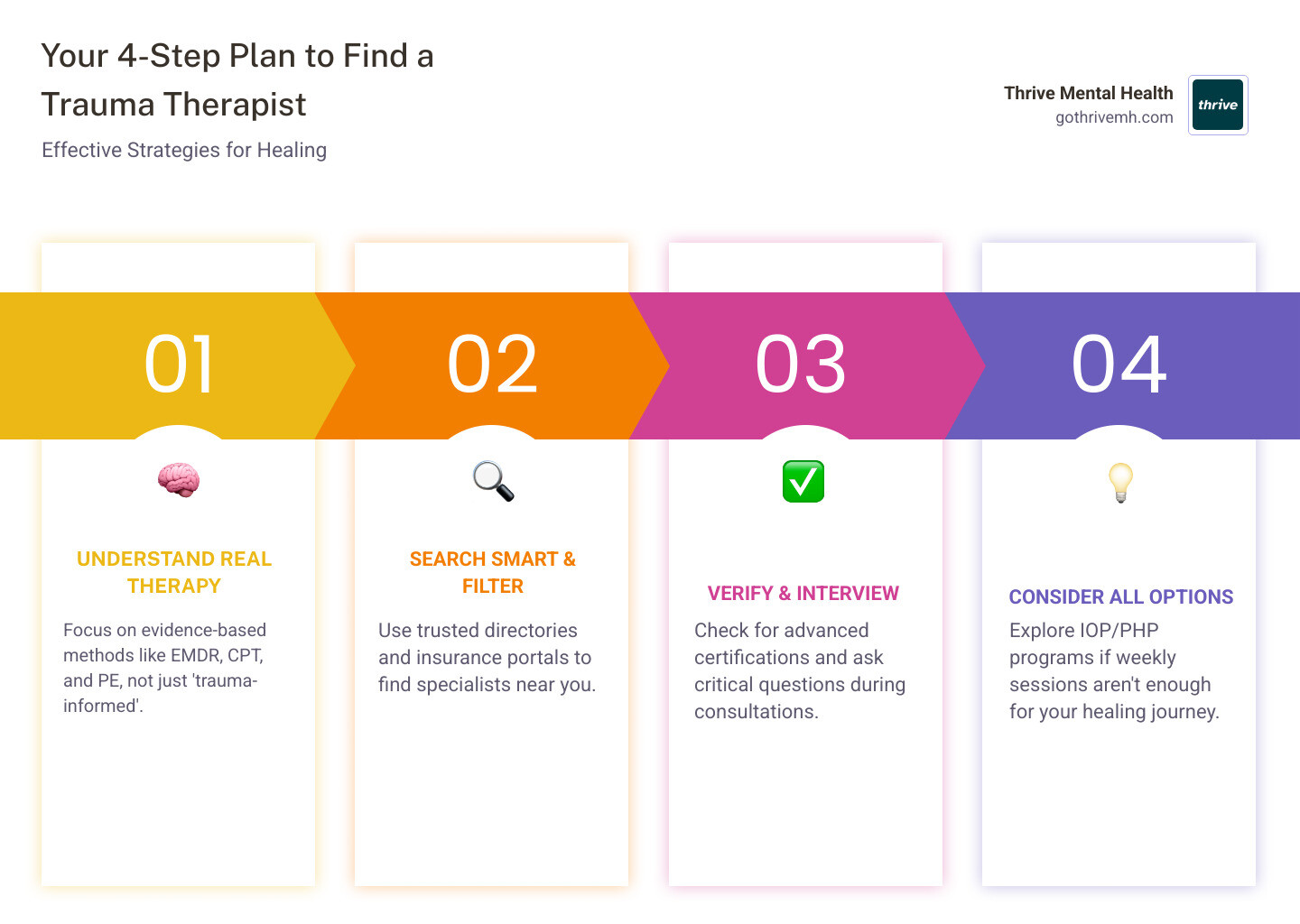
Step 1: Know What Real Trauma Therapy Looks Like
“Trauma-informed” is not the same as “trauma-specialized.” A trauma-informed therapist understands the impact of trauma, but a trauma specialist has advanced training in evidence-based therapies designed to process and heal it.
Look for these research-backed modalities:
- Eye Movement Desensitization and Reprocessing (EMDR): Uses bilateral stimulation (like eye movements) to help the brain process and re-store traumatic memories, reducing their emotional charge. It’s highly effective for PTSD, anxiety, and depression. The EMDR International Association has a directory of certified providers.
- Cognitive Processing Therapy (CPT): Focuses on identifying and challenging unhelpful thoughts and beliefs related to the trauma. The CPT Provider Roster can help you find trained therapists.
- Prolonged Exposure (PE): Involves gradually and safely confronting trauma-related memories and situations to reduce fear and anxiety. The University of Pennsylvania’s Center for the Treatment and Study of Anxiety offers lists of PE-trained therapists.
- Trauma-Focused Cognitive Behavioral Therapy (TF-CBT): Combines CBT with trauma-sensitive interventions, often used with children and adolescents.
- Somatic Experiencing (SE): Helps release trauma stored in the body by focusing on physical sensations.
These methods work because they actively help your brain and body process trauma, not just talk about it. Avoid therapists who only offer generalized talk therapy for trauma. Learn about Thrive’s trauma therapy options that integrate these powerful, evidence-based treatments.
Step 2: Choose the Right Professional for Trauma Recovery
Understanding the different types of mental health professionals is key. While all are licensed, their training and scope of practice vary.
| Professional Type | Education & Training | Prescription Ability | Trauma Focus |
|---|---|---|---|
| Psychologist (PhD, PsyD) | Doctorate in psychology. | No (in most states). | Specializes in psychotherapy and psychological testing. Many have advanced training in trauma modalities like CPT or PE. |
| Psychiatrist (MD, DO) | Medical doctor. | Yes. | Specializes in diagnosing mental health conditions and prescribing medication. Some also provide therapy. |
| Licensed Counselor (LPC, LMHC) | Master’s degree in counseling. | No. | Provides individual and group therapy. Look for those with specific certifications in trauma therapies like EMDR or TF-CBT. |
| Clinical Social Worker (LCSW) | Master’s degree in social work. | No. | Offers therapy with a focus on the individual within their environment. Many are trained in trauma-focused approaches. |
Step 3: Where to Find a Trauma Therapist in Your City
Now that you know what to look for, here’s how to find a specialist in Florida.
- Use trusted therapist directories: Reputable online directories allow you to filter by location, specialty (e.g., “trauma,” “PTSD,” “EMDR”), and insurance.
- Check your insurance provider’s portal: Log in to your insurance website (like Cigna or Aetna) and use their “Find a Provider” tool. This is the best way to find in-network therapists and minimize costs.
- Search online: Use specific search terms like “trauma therapist Orlando FL” or “EMDR therapy Tampa FL” to find local options.
- Consider university clinics: Many universities with psychology programs offer high-quality, lower-cost therapy from supervised graduate students.
- Explore Veteran-specific resources: The VA offers excellent PTSD treatment programs. Use the VA PTSD Program Locator or find a local Vet Center.
We are committed to making expert trauma care accessible. Find a Thrive therapist near you through our virtual programs, available throughout Florida.
Step 4: Check Their Credentials—Don’t Settle for Less
Verifying a therapist’s expertise is crucial. Here’s what to look for:
- Advanced Trauma Certifications: Look for credentials like EMDR Certified, CPT Provider, or TF-CBT Specialist. These indicate training beyond a general degree.
- Experience with Trauma/PTSD: Their professional bio should clearly state their experience with trauma. Look for those who specialize in your specific type of trauma (e.g., combat, sexual assault).
- “Verified” Badges: Many directories verify a therapist’s license, offering an extra layer of assurance.
- Read Their Bio: Does their approach resonate with you? Look for language that shows a deep understanding of trauma recovery.
Step 5: Ask These Questions Before You Book
Most therapists offer a free 15-minute consultation. Use this time to see if they’re the right fit. This is where you move from needing a therapist to finding your therapist.
Key questions to ask:
- What is your approach to treating trauma? Listen for specific, evidence-based methods like EMDR, CPT, or PE.
- How much experience do you have with my specific issue? Be direct about your needs.
- What does a typical session look like? Understand their process and what to expect.
- How do you measure progress? A good therapist will have a way to track your improvement.
- What are your fees and do you accept my insurance? Clarify costs upfront, including co-pays and whether they are in-network.
Pay attention to how you feel during the call. A strong sense of trust and connection is a key predictor of successful therapy. See Thrive’s insurance and payment options to understand how we make care accessible: Verify your benefits.
Step 6: When Weekly Therapy Isn’t Enough—Know Your Options
Sometimes, weekly therapy isn’t enough, especially if trauma symptoms are severely impacting your daily life. If you feel stuck or your symptoms are overwhelming, you may need a higher level of care.
Intensive Outpatient Programs (IOP) and Partial Hospitalization Programs (PHP) offer more structured support without requiring an overnight stay.
- IOP: Typically involves several hours of therapy per day, a few days a week, combining individual and group sessions.
- PHP: A more intensive option, with therapy for most of the day, several days a week.
These programs are highly effective for stabilizing acute symptoms and building coping skills in a supportive environment. At Thrive Mental Health, we offer virtual and hybrid IOP/PHP programs with flexible evening options throughout Florida.
Explore Thrive’s IOP and PHP programs to see if this level of care is right for you.
Step 7: How to Support a Loved One in Trauma Therapy
If someone you care about is seeking help for trauma, your support is invaluable. Here’s how to help effectively:
- Listen, Don’t Fix: Offer a non-judgmental ear. They need to feel heard, not be given solutions.
- Validate Their Feelings: Simple phrases like, “That sounds incredibly difficult,” can be very powerful.
- Offer Practical Help: Small gestures like offering a ride to an appointment can make a big difference.
- Respect Their Privacy: Don’t push for details about their therapy. Healing is a personal journey with its own pace.
- Set Your Own Boundaries: Supporting someone with trauma can be draining. Take care of your own mental health so you can continue to be a source of support.
How Much Does Trauma Therapy Cost? [And How to Pay Less]

One of the biggest problems in finding a trauma therapist is often the cost. Understanding your options can make specialized care more accessible.
- Average Session Cost: A single therapy session can range from $100 to $250+, depending on the therapist’s specialty and your location (e.g., Miami, FL vs. Gainesville, FL).
- In-Network vs. Out-of-Network:
- In-Network: The most affordable option. You pay a co-pay or co-insurance, and your insurance covers the rest.
- Out-of-Network: You pay the full fee upfront and submit a claim to your insurance for partial reimbursement, if your plan allows.
- HSA/FSA: Use your Health Savings Account or Flexible Spending Account to pay for therapy with pre-tax dollars. Most providers, including Thrive, accept these.
- Superbills: If you see an out-of-network therapist, ask for a “superbill” (a detailed receipt) to submit to your insurance for reimbursement.
- Insurance Coverage: Most major plans like Cigna, Aetna, Florida Blue, and Optum cover mental health services, including trauma therapy, IOP, and PHP. Always call your insurance provider to verify your specific benefits.
Affordable Trauma Therapy—Don’t Let Cost Stop You
Cost should not be a barrier to getting help. Here are ways to find affordable care:
- Sliding-Scale Fees: Many therapists adjust their rates based on income. Always ask if this is an option.
- University Training Clinics: Universities with psychology programs often have clinics that offer low-cost therapy from supervised graduate students.
- Community Mental Health Centers: These government-funded centers provide free or low-cost services to local residents.
- Non-Profits: Search for non-profit organizations in your area that offer mental health support.
- State Resources: Your state’s health department can direct you to publicly funded clinics. Find your state’s resources here.
- Online Therapy: Virtual therapy can be more affordable, especially with insurance. Some plans may even offer $0 co-pays for telehealth.
We believe quality care should be accessible. Check Thrive’s insurance and payment options to see how we work with various plans to make our programs affordable: Verify your benefits.
FAQs: Finding a Trauma Therapist Near You
What’s the best therapy for PTSD?
There’s no single “best” therapy for everyone, as healing is individual. However, the most effective and evidence-based therapies for PTSD include Eye Movement Desensitization and Reprocessing (EMDR), Cognitive Processing Therapy (CPT), Prolonged Exposure (PE), and Trauma-Focused Cognitive Behavioral Therapy (TF-CBT). The right fit depends on your specific trauma, symptoms, and personal preferences.
How long does trauma therapy take?
The duration of trauma therapy varies widely. For some, short-term treatment (e.g., 12-15 sessions) using specific modalities can be highly effective. For complex trauma or multiple traumatic events, therapy may take longer. Progress depends on individual needs, the therapist’s expertise, and the chosen therapeutic method.
Is online trauma therapy effective?
Yes, absolutely. Research consistently shows that online therapy (telehealth) can be just as effective as in-person therapy for treating trauma and PTSD. Many find it more convenient, private, and accessible, especially for those in Florida who might not have a specialist nearby or prefer the comfort of their own home.
Does insurance cover trauma therapy?
Most major insurance plans, including Cigna, Aetna, Florida Blue, and Optum, cover trauma therapy, as well as Intensive Outpatient Programs (IOP) and Partial Hospitalization Programs (PHP). However, coverage details vary significantly by plan. It’s crucial to always verify your specific benefits with your insurance provider before starting treatment.
Can I get trauma therapy in the evening or virtually?
Yes. We understand that life is busy. Thrive Mental Health offers virtual and hybrid IOP/PHP programs with evening options at our locations throughout Florida. This flexibility allows you to access high-quality trauma care without disrupting your work or family commitments.
Conclusion: Don’t Wait—Start Healing Now
When you say, “I need to find a therapist in my city who specializes in trauma,” you’re voicing a real need for fast, effective care. You now have a proven, step-by-step plan to steer this journey. From spotting trauma signs and vetting real specialists to using insurance and knowing when to step up to IOP/PHP, you’re equipped to act today.
Trauma doesn’t heal on its own—but with the right specialist and evidence-based treatment, recovery is closer than you think. Whether you’re in Tampa, Miami, Orlando, or Jacksonville, the path forward is clear.
Ready for support? Thrive offers virtual and hybrid IOP/PHP programs with evening options. Verify your insurance in 2 minutes (no obligation) → Start benefits check or call 561-203-6085. If you’re in crisis, call/text 988.