
3 Quick Ways to Find Trauma Memory Specialists in Sacramento

I think I have memory loss from trauma. 3 Fast Help.
I Think I Have Memory Loss From Trauma — What Specialists in Florida Can Help? [2025 Costs, Insurance, Fastest Fixes]
If youre in crisis or having thoughts of self-harm, call or text 988 right now. You are not alone.
I think I have memory loss from trauma. What specialists in Florida can help? Here’s the fastest route to answers, treatment, and insurance-covered care.
If youre dealing with blanks, fog, or lost time after trauma, move now. The right specialist can pinpoint whats happening, rule out TBI, and start evidence-based treatment. Early action often means faster progress and lower cost.
| Specialist Type | How They Help | Where to Find Them |
|---|---|---|
| Trauma-Informed Psychologists | Diagnose trauma-related memory issues, provide evidence-based therapy | Thrive Mental Health, Psychology Today directory |
| Licensed Therapists (LMFT, LCSW) | EMDR, CBT, DBT, and trauma-focused therapy | Thrive’s virtual programs, local private practices |
| Neuropsychologists | Cognitive assessments for TBI and trauma-related memory loss | Specialized clinics, university health systems |
| Virtual IOP/PHP Programs | Intensive trauma recovery with flexible scheduling | Thrive Mental Health |
About 70% of adults experience trauma; memory gaps are common when the hippocampus gets overloaded. The good news: trauma-related memory loss is treatable. EMDR and trauma-focused CBT help your brain reprocess stuck memories so they stop running your life.
What youll get here:
- Florida specialists who treat trauma-related memory loss
- How to use insurance (Aetna, Cigna, Optum, UnitedHealthcare, Florida Blue) to pay less
- Proven therapies (EMDR, CBT) and when to consider IOP/PHP for faster results
- Exact next steps you can take today in under 10 minutes
I’m Nate Raine, CEO of Thrive Mental Health. Our trauma-focused IOP/PHP programs support people asking, I think I have memory loss from trauma. What specialists in Florida can help? and get them into care quickly.
Quick look at I think I have memory loss from trauma. What specialists in Florida can help?:
- Why Betrayal Trauma Feels Like PTSD (And What You Can Do About It)
- betrayal trauma recovery stages
- bilateral stimulation exercises for trauma
Summary: If you think you have memory loss from trauma, start with a trauma-informed psychologist or EMDR therapist, rule out TBI with a neuropsychologist, and use insurance to access virtual IOP/PHP if weekly therapy isnt enough. The sooner you act, the sooner your memory and focus can recover.
Step 1: Know Which Florida Specialists Treat Trauma-Related Memory Loss
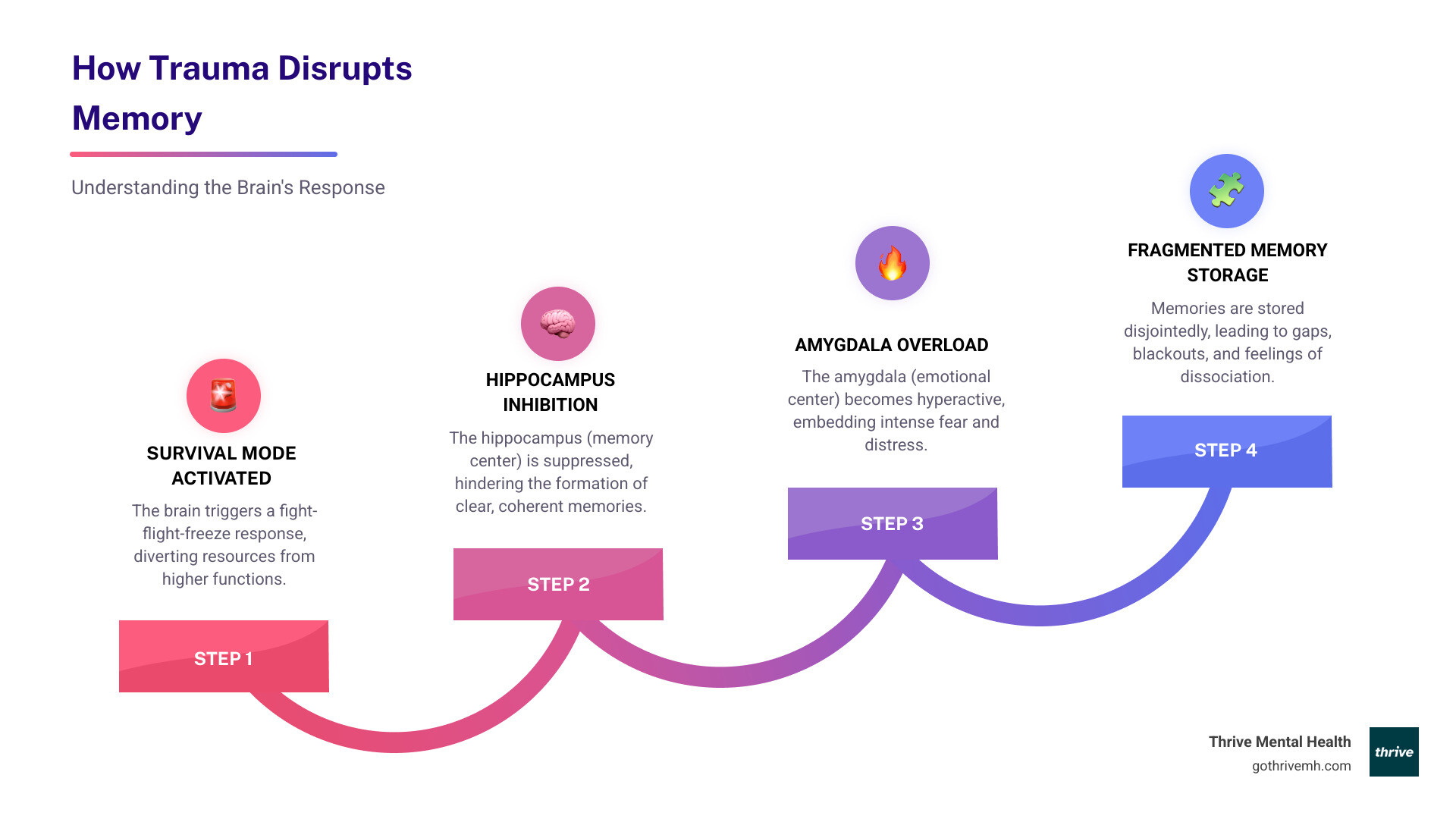
When trauma hits, your brain scrambles to protect you. The hippocampus (memory center) can shut down, leaving gaps or fog, while the amygdala (fear alarm) stays on high alert. This isn’t a weakness; it’s a survival mechanism. But when it persists, it traps you in a cycle of confusion and distress. The good news is that trauma-related memory loss is treatable. With the right help, your brain can reprocess these experiences and restore your sense of self. For a deeper look at the science, check out Can Trauma Cause Memory Loss?

How do you know if trauma is causing your memory loss?
Trauma-related memory loss is often subtle. If you experience the following, it’s time to seek professional help:
- Memory blackouts: No recollection of the traumatic event or the time surrounding it.
- Trouble recalling details: The specifics of what happened are blurry or feel like a puzzle with missing pieces.
- Dissociation: Feeling “checked out,” disconnected, numb, or like you’re watching your life from the outside.
- Intrusive memories: Flashbacks or nightmares that coexist with memory gaps.
- Trouble focusing: Your brain prioritizes scanning for danger over absorbing new information.
- Emotional numbness: Feelings seem distant or unreal, as if they happened to someone else.
- Physical symptoms: Chronic anxiety, jumpiness, fatigue, or muscle tension.
Which Florida specialists can help with trauma memory loss?
Finding the right specialist is key. Florida has a strong network of professionals who understand how to help the brain heal from trauma.
- Trauma-informed psychologists specialize in diagnosing and treating the psychological fallout of trauma. Thrive Mental Health offers virtual access to these specialists across Florida.
- Licensed therapists (LMFTs, LCSWs) are trained in trauma-focused modalities like EMDR and CBT. They help your brain reprocess memories and build coping skills. Learn more about Thrive’s Virtual Therapy Programs.
- Neuropsychologists are essential for ruling out other causes of memory loss, like a traumatic brain injury (TBI). They conduct comprehensive cognitive assessments. These services are often available through university health systems.
- Thrive’s trauma recovery team provides intensive care through our virtual Intensive Outpatient (IOP) and Partial Hospitalization (PHP) programs. If weekly therapy isn’t enough, our programs offer structured, expert-led treatment covered by most major insurance. Explore our Virtual IOP for Trauma.
Professional assessment is the foundation of effective treatment. A qualified specialist will create a personalized plan based on what your brain and body need to heal.
Step 2: Find Experts in Proven Trauma Therapies (EMDR, CBT, More)
To heal from trauma-related memory loss, you need therapies that help your brain reprocess stuck memories and calm your nervous system. Several evidence-based treatments are highly effective. For a deeper understanding, see our guide on Evidence-Based Trauma Treatment.

What is EMDR Therapy and how does it help trauma memory loss?
Eye Movement Desensitization and Reprocessing (EMDR) is a powerful therapy for trauma-related memory issues. It uses bilateral stimulation (like guided eye movements or taps) while you recall distressing events. This helps your brain reprocess the memory, shifting it from a place of raw emotion to one of rational understanding. The memory loses its emotional punch, which is why major health organizations like the American Psychiatric Association and the World Health Organization endorse EMDR for PTSD. It’s especially effective for reprocessing fragmented memories and reducing the fear and panic associated with them. Learn more in our EMDR Complete Guide.
What about CBT, DBT, and Sensorimotor Psychotherapy?
While EMDR is powerful, other therapies offer crucial support for trauma recovery:
- Cognitive-Behavioral Therapy (CBT): Helps you identify and reshape negative thought patterns related to trauma, such as self-blame or a constant sense of danger. You’ll learn practical coping skills to manage triggers.
- Dialectical Behavior Therapy (DBT): Teaches skills for managing overwhelming emotions and self-destructive behaviors. It focuses on mindfulness, distress tolerance, and emotional regulation.
- Sensorimotor Psychotherapy: Addresses the physical side of trauma. It uses body-based techniques to release tension and reconnect your mind and body, which is vital when trauma is held physically.
Often, a combination of these therapies provides the most comprehensive care. To find the right fit, explore our comparison: CBT vs DBT vs EMDR.
Here’s how these therapies stack up:
| Therapy Type | Focus | Process | Best For |
|---|---|---|---|
| EMDR | Reprocessing traumatic memories | Bilateral stimulation (eye movements, taps) to help the brain reprocess “stuck” memories, reducing emotional intensity. | Direct processing of specific traumatic events, flashbacks, nightmares, reducing emotional charge of memories. |
| CBT | Challenging negative thoughts and behaviors | Identifying and changing dysfunctional thought patterns and behaviors related to trauma, developing coping skills. | Managing anxiety, depression, guilt, shame, and distorted beliefs stemming from trauma; developing practical coping strategies. |
| DBT | Emotional regulation, distress tolerance | Skills training in mindfulness, distress tolerance, emotional regulation, and interpersonal effectiveness to manage intense feelings. | Individuals with severe emotional dysregulation, self-destructive behaviors, and relationship difficulties often associated with complex trauma. |
| Sensorimotor Psychotherapy | Body-based processing of trauma | Focusing on physical sensations and movements to release trauma stored in the body, enhancing body-mind connection. | Releasing chronic physical tension, addressing somatic symptoms of trauma (e.g., agitation, jumpiness), when trauma is deeply held in the body and less accessible through talk. |
Step 3: Find and Vet Florida Trauma Therapists [Online & Local]
Finding the right trauma specialist in Florida doesn’t have to be complicated. The key is knowing where to look and what to ask. Therapy works best when you feel safe and connected, so finding the right fit is crucial. For more tips, read our guide: Finding the Best Mental Health Therapist Near You.

How do I find a qualified trauma memory specialist in Florida?
- Use trusted online directories like Psychology Today to filter by specialty (“trauma,” “PTSD,” “dissociation”), insurance, and location.
- Check for certifications in EMDR, Trauma-Focused CBT (TF-CBT), or Sensorimotor Psychotherapy. This signals specialized training.
- Ask about their experience with trauma-related memory loss and dissociation. A qualified therapist will answer clearly.
- Confirm insurance coverage. Most major plans (Aetna, Cigna, UnitedHealthcare, Optum) cover trauma treatment. At Thrive, we verify your benefits in about 2 minutes.
- Consider a higher level of care. If weekly therapy isn’t enough, Thrive’s virtual IOP/PHP programs offer structured, intensive trauma treatment you can access from anywhere in Florida.
What should I expect in my first trauma therapy session?
Your first session is about building safety and trust, not diving into your trauma. Your therapist will get to know you, explain the process, and teach you grounding techniques to manage distress. You control the pace. A good therapist never pressures you to share before you’re ready. Virtual therapy can make this process feel even safer, allowing you to start treatment from the comfort of home. Learn more about the benefits in our article: Virtual Therapy: A Convenient and Effective Approach to Counseling.
Action Plan: “I Think I Have Memory Loss From Trauma—What Should I Do Next?”
If you’re asking, I think I have memory loss from trauma. What specialists in Florida can help?, you’ve already taken the first step. Trauma-related memory loss is real and treatable. Florida has specialists—both in-person and virtual—ready to help. Early action means faster recovery. Our Virtual IOP for Trauma programs provide intensive care without putting your life on hold.

Checklist: Get Help for Trauma-Related Memory Loss in Florida
Here’s your step-by-step action plan:
- Write down your symptoms. Note any memory blackouts, disconnection, or trouble focusing. This helps validate your experience and prepares you to speak with a specialist.
- Research trauma-trained specialists. Look for psychologists, therapists, or neuropsychologists who list trauma, PTSD, or dissociation as specialties and have credentials in EMDR or trauma-focused CBT.
- Prioritize proven therapies. Focus on providers offering EMDR, CBT, or Sensorimotor Psychotherapy, as these have the best track records for healing trauma memory issues.
- Shortlist your options. Use online directories for local therapists or consider Thrive’s virtual IOP/PHP programs if you need more than weekly sessions. Our programs are accessible from anywhere in Florida.
- Schedule a consultation. Use a free initial call to check for fit, ask about their experience with trauma memory loss, and confirm your insurance coverage. At Thrive, we verify benefits in 2 minutes with no obligation.
FAQs: Trauma, Memory Loss, and Getting Help in Florida
Is trauma-related memory loss permanent?
Usually not. With EMDR and trauma-focused therapy, many people see memory clarity and symptom relief in weeks to months.
How do I know if its trauma vs. concussion or a medical issue?
Get a neuropsychological evaluation to screen for TBI and cognitive issues, and loop in your primary care doctor for labs and medication review. This speeds the right treatment plan.
Can I get treatment online in California, Florida, Indiana, Arizona, and South Carolina?
Yes. Thrives virtual IOP/PHP delivers EMDR-informed, trauma-focused care with daytime and evening options across CA, FL, IN, AZ, and SC.
How much does it cost? Is it covered by insurance?
Most plans cover trauma therapy and IOP/PHP, including Aetna, Cigna, Optum, UnitedHealthcare, and Florida Blue. We verify benefits in about 2 minutes with no obligation.
What if Im in crisis or having thoughts of self-harm?
Call or text 988 right now for free, confidential support 24/7. You are not alone.
Get Trauma Memory Loss HelpFast, Flexible, Covered by Insurance
If you’re asking, I think I have memory loss from trauma. What specialists in Florida can help?, you need support that fits your life. Thrive Mental Health offers virtual and hybrid IOP/PHP trauma programs across California, Florida, Indiana, Arizona, and South Carolina. Our programs are for those who need more than weekly therapy, with flexible scheduling and evening options available.
We bring expert, trauma-focused care directly to you, whether you’re in Miami, Orlando, Tampa, or elsewhere in Florida. Our programs use proven therapies like EMDR and CBT and are covered by most major insurance plans, including Aetna, Cigna, UnitedHealthcare, Optum, Florida Blue, and more.
Ready for support? Thrive offers virtual and hybrid IOP/PHP programs with evening options. Verify your insurance in 2 minutes (no obligation) Start benefits check or call 561-203-6085. If youre in crisis, call/text 988.