
5 Things to Do Right Now to Find Adult Autism Support in Indiana

I’m looking for adult autism support services in Indiana.
Why Finding the Right Support Can Change Everything
I’m looking for adult autism support services in Florida can feel like an overwhelming search—but you’re not alone, and help is closer than you think. Here’s what you need to know right now:
Quick Answer: Where to Start
- Florida Center for Autism and Related Disabilities (CARD) – Your statewide hub for evidence-based information, training, and provider directories
- The Arc of Florida – Advocacy, employment resources, SSI/SSDI guidance, and future planning support
- Autism Society of Florida – Regional directories for mental health therapy, speech therapy, occupational therapy, and adult services
- Independent Living Centers – Skills training, peer counseling, housing support, and advocacy across 67 Florida counties
- Medicaid Waivers & State Programs – Funding for job training, residential support, and therapeutic services
Many adults in Florida find they’re autistic later in life—or they’ve known for years but never found the right support system. Maybe weekly therapy hasn’t been enough. Maybe you’re struggling with anxiety, depression, or burnout alongside autism. Or maybe you just need help navigating housing, employment, or social connection.
The good news? Florida has a network of specialized organizations, therapists, vocational programs, and peer support groups designed specifically for autistic adults. The challenge is knowing where to look and how to piece it all together.
I’m Nate Raine, CEO of Thrive Mental Health, and I’ve spent over a decade leading behavioral health and digital change initiatives that connect people to evidence-based care. At Thrive, we help adults across Florida access flexible, outcome-focused programs for co-occurring conditions like anxiety and depression—and we know how critical it is to find adult autism support services in Florida that actually fit your life.
This guide gives you five concrete steps to take control of your support journey—starting today.
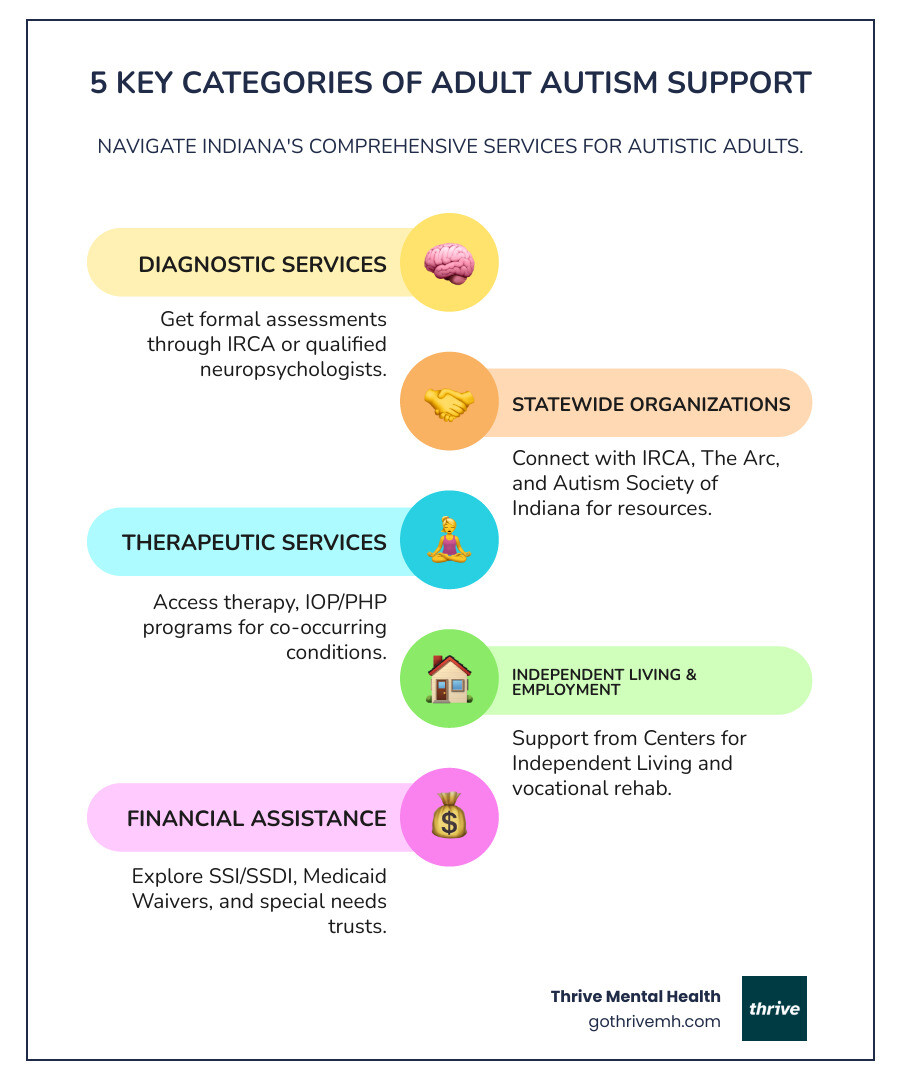
Related Resources from Thrive Mental Health:
- Virtual IOP for Adults in Florida
- What are the best treatment centers for adults with co-occurring autism and depression?
1. Get a Formal Diagnosis: Your First Step to Opening up Support
For many adults, the journey to finding support begins with understanding themselves better—and that often means seeking a formal diagnosis. While self-identification is incredibly valid, a professional diagnosis of autism spectrum disorder (ASD) can be a critical gateway to accessing the specific adult autism support services in Florida you need. It’s not just about a label; it’s about gaining clarity, validating your experiences, and open uping resources that are often contingent on a formal assessment.

A diagnosis provides a framework for understanding your unique strengths and challenges. It can help you and those around you (family, employers, healthcare providers) better comprehend your needs and how to best support you. For many, it brings a profound sense of relief and self-understanding, allowing them to create a more effective support plan for their future.
Navigating the Process of Obtaining a Diagnosis or Assessment in Florida:
The process for adults typically involves a comprehensive neuropsychological evaluation. This is a multi-faceted assessment conducted by qualified psychologists or neuropsychologists who specialize in adult neurodevelopmental conditions. They will review your developmental history, current functioning, and may use various standardized tests and interviews to arrive at a diagnosis.
The Florida Center for Autism and Related Disabilities (CARD) is an invaluable starting point for this step. As a statewide network of centers on autism spectrum disorders, CARD is committed to supporting individuals across the autism spectrum and their families. Their website provides crucial information on how and where to obtain a diagnosis or assessment in Florida. This resource can guide you to professionals and clinics that offer diagnostic services for adults in Florida, including our locations in Miami, Orlando, Tampa, Jacksonville, and Fort Lauderdale.
When seeking a professional for diagnosis, look for individuals with expertise in adult autism. Many diagnostic centers traditionally focus on children, so verifying their experience with adult presentations of ASD is key. You’ll want to find a clinician who understands the nuances of how autism can manifest differently in adulthood, especially when masked or co-occurring with other conditions.
It’s also important to consider that co-occurring mental health conditions are increasingly common in individuals diagnosed with ASD. Conditions like anxiety, depression, and ADHD often accompany autism. A comprehensive assessment should ideally screen for these as well, as they can significantly impact an individual’s well-being and require integrated support. For example, our programs at Thrive Mental Health are designed for adults who may be navigating both autism and co-occurring mental health challenges, providing a holistic approach to care.
Once you receive a diagnosis, CARD also offers “After the Diagnosis” resources specifically designed for adolescents and adults, which can help you steer the next steps and understand your options. This initial step of diagnosis is foundational, as it opens the door to a more targeted and effective search for adult autism support services in Florida. For more general information on seeking therapeutic support, you can review Information on seeking therapy from the APA.
2. Tap Into Florida’s Core Autism Organizations
Once you have a clearer understanding of your diagnostic needs, the next crucial step is to connect with Florida’s established autism organizations. These statewide resource hubs act as central points of information, helping you avoid information overload and connecting you with experts and custom services. They are often the best places to learn about available programs, advocacy efforts, and community connections specific to our state.
Here are the key organizations that provide support for adults with autism in Florida:
-
Florida Center for Autism and Related Disabilities (CARD): As mentioned, CARD is a network of centers across Florida, committed to supporting individuals across the autism spectrum and their families. They are a primary source for accurate, evidence-based information, training, and resources. CARD offers valuable insights into navigating state services, visual supports, and training opportunities. Their multidisciplinary staff ensures comprehensive support, addressing needs from diagnosis through adulthood and even co-occurring mental health conditions. They also provide free family support webinars and workshops by nationally recognized professionals on topics like executive functioning and communication. You can find more information on their website: Florida Center for Autism and Related Disabilities (CARD).
-
The Arc of Florida: The Arc is a powerful advocate for individuals with intellectual and developmental disabilities (I/DD), including autism. They offer extensive resources for adults, covering vital areas such as Supplemental Security Income (SSI), Medicaid Waivers, employment, recreation, and future planning. The Arc’s focus on advocacy ensures that the voices of individuals with I/DD are heard, working towards a more inclusive world. They also manage a pooled special needs trust, a crucial tool for financial planning for individuals with disabilities. Their website is a treasure trove of information for adults and their families: The Arc of Florida.
-
Autism Society of Florida (ASF): The Autism Society of Florida provides essential services and therapies across different regions of Florida. They act as a vital connector, offering directories for various types of support, including mental health therapy, speech therapy, occupational therapy, and adult services. ASF’s regional focus makes it easier to find localized resources, whether you’re in Miami, Orlando, Tampa, Jacksonville, or Fort Lauderdale. This organization is a great resource for pinpointing specific therapeutic and support services in your immediate area: Autism Society of Florida.
-
Florida Self-Advocates Network’d (FL SAND): Empowering individuals with intellectual and developmental disabilities to speak up for themselves and others is the core mission of the Florida Self-Advocates Network’d. FL SAND fosters peer support and advocacy, helping autistic adults connect with others who share similar experiences. They organize events, forums, and have local chapters that allow individuals to build community, share insights, and advocate for their rights. Joining a chapter can provide invaluable social connection and a platform for collective action: Florida Self-Advocates Network’d (FL SAND).
These organizations form the backbone of adult autism support services in Florida. By engaging with them, you’ll gain access to a wealth of knowledge, a network of support, and a clearer pathway to the specific services that will best meet your needs.
3. “I’m looking for adult autism support services in Florida”: How to Pinpoint the Exact Help You Need
Once you’ve connected with foundational organizations and perhaps received a diagnosis, the next step is to create a personalized support plan. This involves identifying specific areas of your life where you need assistance and then pinpointing the exact services that can help you thrive. Moving beyond a diagnosis, this phase is about taking action and building a life that truly works for you.

We understand that every individual’s needs are unique. What one person needs for independent living, another might need for employment, and yet another for mental health. This section will break down the types of support available in Florida across these crucial life domains.
Mental Health and Therapeutic Services
Navigating the complexities of life with autism often means also managing mental health challenges. Co-occurring conditions like anxiety, depression, and ADHD are very common among autistic adults. In fact, strategies for when “Mental Health and ASD Co-Occur: Realities, Strategies and Challenges” are a focus for resources like those provided by CARD. Accessing appropriate mental health and therapeutic services is paramount for overall well-being.
-
Therapy Types: Various therapeutic approaches can be beneficial.
- Cognitive Behavioral Therapy (CBT) helps individuals identify and change negative thought patterns and behaviors.
- Dialectical Behavior Therapy (DBT) focuses on emotional regulation, mindfulness, distress tolerance, and interpersonal effectiveness.
- Neurodiversity-affirming therapists are increasingly sought after. These professionals understand and respect autism as a natural variation of the human brain, rather than solely a disorder to be “cured.” They focus on strengths and adaptive strategies, helping individuals thrive within their autistic identity.
- Other therapies, such as Acceptance and Commitment Therapy (ACT) and motivational interviewing, can also be custom to the needs of autistic adults.
-
Intensive Outpatient Programs (IOP) and Partial Hospitalization Programs (PHP): For adults experiencing significant co-occurring mental health challenges like severe anxiety, depression, or burnout, weekly therapy might not be enough. This is where more intensive programs come into play. At Thrive Mental Health, we deliver virtual and in-person IOP and PHP programs for adults and young professionals across Florida, including Miami, Orlando, Tampa, Jacksonville, and Fort Lauderdale. Our programs combine clinical expertise, flexible scheduling, and measurable results, designed for people who need more than once-a-week therapy but less than inpatient care. We make evidence-based treatment accessible, helping adults with autism and co-occurring conditions develop coping skills, improve emotional regulation, and build a stronger support system.
Housing and Independent Living Resources
Finding suitable housing and developing independent living skills are critical for many autistic adults. The goal is to empower individuals to live as autonomously as possible, with appropriate support custom to their needs.
- Independent Living Skills: This can include everything from managing finances, cooking, and household chores to navigating transportation and healthcare appointments. Training in these areas can significantly improve independence.
- Supported Living Programs: These programs offer varying levels of support, from drop-in assistance to 24/7 supervision, allowing individuals to live in their own apartments or shared homes while receiving help with daily tasks and community integration. Various providers in Florida offer Supported Living programs for individuals with intellectual and developmental disabilities, including in-home assistance and healthcare coordination.
- Group Homes: For some, a supervised group home environment provides a structured setting with built-in support and social opportunities.
- Florida Centers for Independent Living (CILs): These are consumer-controlled, community-based, cross-disability organizations that promote the philosophy of independent living. Florida has a network of CILs serving counties across the state. They offer core services such as:
- Information and Referral: Connecting you to local resources.
- Independent Living Skills Training: Practical instruction on daily living.
- Peer Counseling: Support from individuals with similar lived experiences.
- Advocacy: Helping you understand and assert your rights.
- A fifth focus area is on transition programs, helping individuals move from institutions to the community or from school to adult life. You can learn more about them here: Florida Centers for Independent Living.
- Federal Housing Support: Various federal programs can also assist with housing. The Section 811 Supportive Housing for Persons with Disabilities program provides rental assistance for low-income persons with disabilities. Additionally, Housing Choice Vouchers (Section 8) can enable very low-income families and individuals with disabilities to afford decent housing in the private market. For a comprehensive overview of these and other options, you can explore Federal housing support programs and other resources from HUD.
Employment and Vocational Training
Meaningful employment contributes significantly to an adult’s sense of purpose, financial independence, and social integration. Several services in Florida are dedicated to helping autistic adults find and maintain jobs that align with their skills and interests.
- Vocational Rehabilitation (VR): Florida’s Vocational Rehabilitation (VR) program provides a range of services to help individuals with disabilities prepare for, obtain, and retain employment. This can include vocational counseling, assessment, job coaching, resume development, interview preparation, and assistive technology.
- Job Coaching: A job coach provides individualized support, helping with job search strategies, workplace communication, social skills in a professional setting, and navigating job-specific tasks.
- The Arc of Florida’s Employment Resources: The Arc provides information and advocacy related to employment for individuals with I/DD, including guidance on how Medicaid Waivers can support job training and employment services.
- Specialized Vocational Training: Specialized programs, some of which are supported by organizations like The Arc of Florida, provide vocational training for jobs in high-demand sectors like hospitality, healthcare support, and logistics. These institutes offer practical, hands-on training that can lead to meaningful careers.
4. Navigate Financial Assistance and State Waivers
Understanding and accessing financial assistance and governmental programs can significantly reduce the burden of support costs and improve an autistic adult’s independence and quality of life. Navigating these systems can feel complex, but with the right guidance, you can open up crucial funding.
- Supplemental Security Income (SSI): This federal program provides monthly financial assistance to adults and children with disabilities who have limited income and resources. It can provide a vital safety net for living expenses.
- Social Security Disability Insurance (SSDI): SSDI is a federal insurance program that pays benefits to you and certain members of your family if you are “insured”—meaning you worked long enough and paid Social Security taxes. It’s designed for those who have a qualifying disability that prevents them from working.
- Medicaid: Florida’s Medicaid program provides health care coverage for adults with intellectual and developmental disabilities. This is crucial for covering medical appointments, therapies, and other health-related services.
- Medicaid Waivers: These are particularly significant for adult autism support services in Florida. Florida’s Medicaid Home and Community-Based Services (HCBS) Waivers allow the state to provide services to individuals in their homes and communities rather than in institutions. For adults with autism, these waivers (such as the iBudget Florida waiver) can cover a wide range of services, including:
- Job training and employment supports
- Day programs
- Residential supports (up to 24 hours)
- Behavioral therapies
- Respite care for caregivers
- Therapeutic services like speech, occupational, and physical therapy.
The Arc of Florida is an excellent resource for understanding and navigating Medicaid Waivers. You can find more comprehensive details on Medicaid Home & Community Based Services.
- The Arc of Florida Pooled Trust and Special Needs Trusts: For families looking to plan for the long-term financial security of an autistic loved one without jeopardizing their eligibility for public benefits like SSI and Medicaid, special needs trusts are invaluable. The Arc of Florida manages a pooled special needs trust that allows individuals to hold assets for their benefit. This ensures that funds are available for supplemental needs (things not covered by public benefits) while maintaining eligibility for essential government assistance. Learn more about The Arc of Florida Pooled Trust.
- Insurance Coverage: Many private insurance plans, including those from carriers like Cigna, Optum, Aetna, and Anthem Blue Cross Blue Shield, may cover mental health and therapeutic services in Florida. It’s always crucial to verify your specific benefits. At Thrive Mental Health, we encourage individuals to verify their insurance to understand coverage for our IOP/PHP programs.
Navigating these financial and governmental assistance programs requires patience and persistence, but the support they offer can be life-changing. We are here to help you understand how our programs can integrate with these funding options.
5. Build Your Community: Find Peer and Family Support
One of the most powerful forms of support comes from connection—with peers who understand your experiences and with families and caregivers who can share insights and resources. Building your community is essential for combating isolation and fostering a sense of belonging.
- Florida Self-Advocates Network’d (FL SAND): As previously mentioned, FL SAND is a fantastic resource for autistic adults to connect with peers. Their advocacy chapters and monthly issues forums provide a platform for shared experiences, collective learning, and advocating for change. Finding your tribe through FL SAND can be incredibly empowering, fostering leadership and self-determination.
- Social and Recreational Groups: Beyond formal advocacy, informal social and recreational opportunities are vital. Organizations like Special Olympics Florida and Best Buddies Florida offer inclusive programs that promote friendship, skill development, and community participation. Local YMCAs, community centers, parks departments, and churches in Florida (including our service areas like Miami, Orlando, Tampa, Jacksonville, and Fort Lauderdale) often offer programs for the whole community, including people with disabilities. These avenues provide opportunities for meaningful social interaction and reducing feelings of isolation.
- CARD Family Support Webinars: The Florida Center for Autism and Related Disabilities (CARD) offers free family support webinars. These are invaluable for families and caregivers of autistic adults, providing education, strategies, and a sense of shared experience. These webinars cover a range of topics that families need help with, from understanding autism to navigating services and promoting well-being across the lifespan.
- Advocacy and Awareness Events: Participating in events like the Empower Walk & 5K Run, promoted by organizations like Autism Speaks, offers another way to connect with the broader autism community. These events not only raise awareness but also provide a space for individuals, families, and supporters to come together, celebrate, and advocate for inclusion. You can learn more about community events and advocacy opportunities, including the Join the Empower Walk & 5K Run.
Connecting with others who understand your journey, whether it’s through peer support groups, recreational activities, or family-focused educational resources, enriches your life and strengthens your support network. It reinforces the message that you are not alone in your search for adult autism support services in Florida.
Frequently Asked Questions about Adult Autism Support in Florida
What is the first step if I suspect I’m an autistic adult in Florida?
Your first step should be to seek a formal diagnostic assessment from a qualified psychologist or neuropsychologist specializing in adult autism. The Florida Center for Autism and Related Disabilities (CARD) and the Autism Society of Florida are excellent starting points for finding provider lists and understanding the diagnostic process.
What’s the best resource if I’m looking for adult autism support services in Florida for the first time?
The Florida Center for Autism and Related Disabilities (CARD) network is the state’s primary hub. It provides accurate, evidence-based information, training, and roadmaps to state services, making it the ideal first stop to understand the landscape of support available for autistic adults.
How do I pay for care if I’m looking for adult autism support services in Florida?
Funding can come from multiple sources. Florida’s Medicaid Waivers (e.g., the iBudget Florida waiver) cover many services. Federal benefits like SSI/SSDI provide income. Some services, including our IOP/PHP programs at Thrive Mental Health, may be covered by private insurance plans from carriers like Cigna, Optum, or Aetna. Always verify your specific benefits.
Conclusion: Your Path to Thriving Starts Now
We know that searching for adult autism support services in Florida can feel daunting, but remember, you are not navigating this journey alone. By taking these five concrete steps, you can systematically build a robust network of support custom to your unique needs:
- Get a Formal Diagnosis: Open up understanding and access to specialized services.
- Tap Into Florida’s Core Autism Organizations: Connect with statewide hubs for information and advocacy.
- Pinpoint the Exact Help You Need: Address specific challenges in mental health, housing, and employment.
- Navigate Financial Assistance and State Waivers: Secure funding to support your journey.
- Build Your Community: Find invaluable peer and family connections.
This guide empowers you to take control of your support journey, whether you’re seeking therapeutic interventions for co-occurring mental health conditions, assistance with independent living, vocational training, or simply a community that understands you. A rich network of support exists here in Florida, ready to help you thrive.
At Thrive Mental Health, we are committed to making evidence-based treatment accessible. If you’re an adult in Florida struggling with co-occurring anxiety, depression, or other mental health challenges alongside autism, our virtual and in-person Intensive Outpatient (IOP) and Partial Hospitalization (PHP) programs offer flexible, outcome-focused support. We have centers and virtual programs serving Miami, Orlando, Tampa, Jacksonville, and Fort Lauderdale, with evening options available to fit your schedule. We believe that everyone deserves the opportunity to live a fulfilling life. For more information on comprehensive adult autism support services, please visit our page: Find comprehensive adult autism support services.
Ready for support? Thrive offers virtual and hybrid IOP/PHP programs with evening options. Verify your insurance in 2 minutes (no obligation) → Start benefits check or call 561-203-6085. If you’re in crisis, call/text 988.