
A Massive List of Indy Adult Autism & Depression Services

Why Adults with Autism in Florida Need Specialized Depression Support
I’m looking for adult autism support services in Florida that can also help with co-occurring depression. You’re not alone. Research shows adults on the autism spectrum experience depression at significantly higher rates, yet finding providers who understand both conditions can feel impossible.
Quick Answer: Top Florida Resources for Adult Autism + Depression
- Specialized Therapy: Use the Psychology Today directory to find neurodiversity-affirming therapists (search “autism + depression + Florida”).
- State Support: The Florida Agency for Persons with Disabilities (APD) offers Medicaid waivers and community supports.
- Mental Health Centers: Look for centers that explicitly offer treatment for co-occurring conditions.
- Crisis Support: Call or text 988 for immediate help or contact the NAMI Florida HelpLine at 1-800-950-6264.
- Intensive Care: Consider virtual and hybrid IOP/PHP programs for adults who need more than weekly therapy.
The challenge isn’t just finding any therapist—it’s finding one who won’t try to “fix” your autism while treating your depression. The two conditions often feed each other: the chronic stress of navigating a neurotypical world can trigger depression, which in turn makes autism-related challenges harder to manage.
While Florida has more autism-informed mental health services now, the landscape can be confusing. Some providers focus on children or use outdated approaches. The best support comes from professionals who understand how both conditions interact and respect your neurodivergence.
I’m Nate Raine, CEO of Thrive Mental Health. I’ve spent over a decade in behavioral health, focusing on helping adults with complex co-occurring conditions. This guide breaks down where to find affirming, effective support in Florida—from individual therapists to intensive programs—so you can stop searching and start healing.
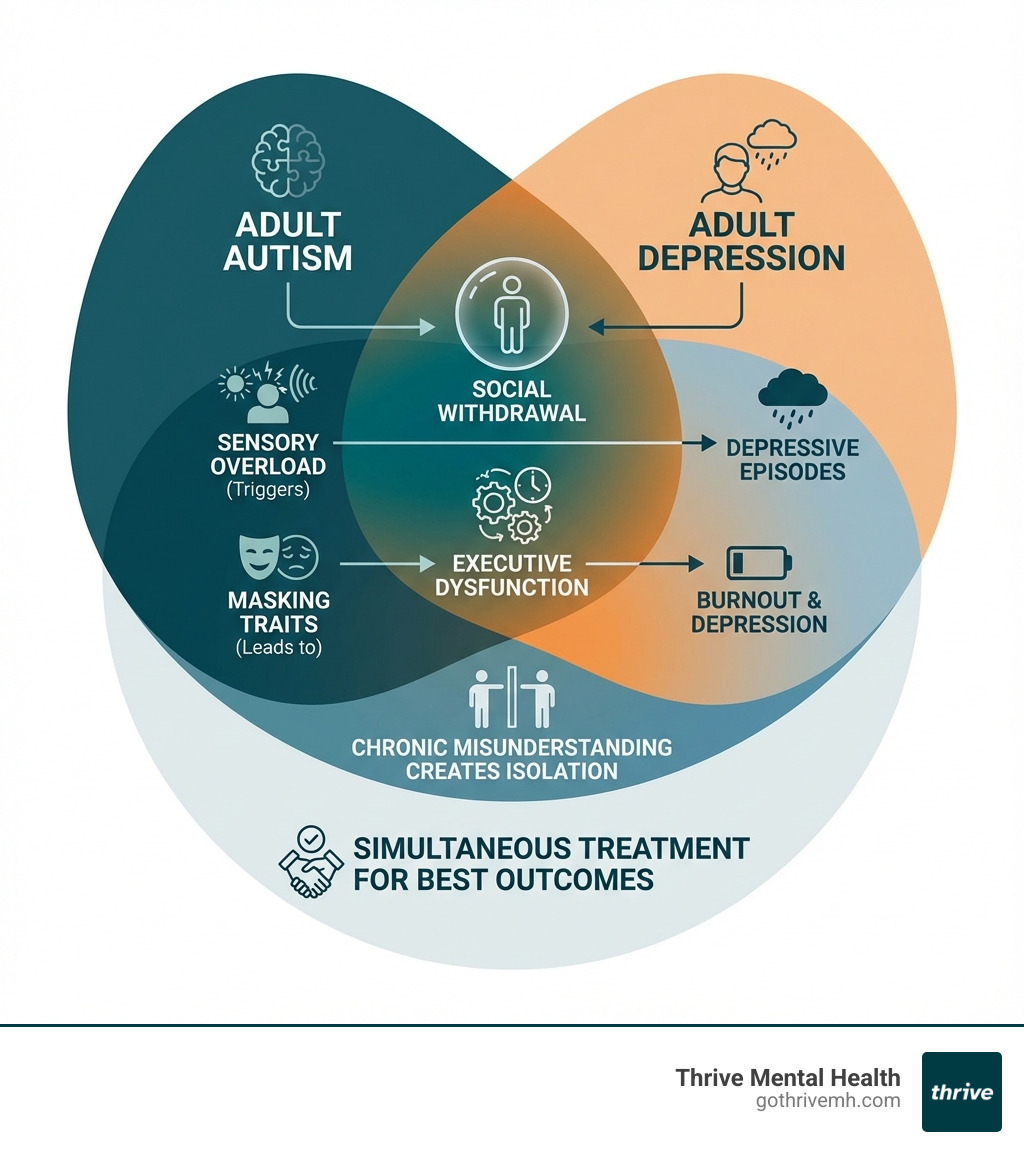
The Hidden Link: Why Autism and Depression Often Go Hand-in-Hand
When you’re looking for adult autism support services in Florida that can also help with co-occurring depression, it’s crucial to understand why these conditions are so intertwined. Adults on the autism spectrum face unique challenges that make them more vulnerable to depression. Many are diagnosed later in life after years of feeling misunderstood.
Understanding the Signs of Adult Autism
The signs of adult autism can be subtle and often differ from those in children. Common indicators include:
- Social Difficulties: Struggling to understand social cues, maintain conversations, or form friendships.
- Intense, Specific Interests: A deep focus on specific topics, which can be a strength but may also lead to isolation.
- Need for Routine: A strong preference for predictability, with disruption causing significant stress.
- Sensory Overload: Heightened sensitivity to sounds, lights, textures, or smells that can be overwhelming.
- Stimming and Repetitive Behaviors: Repetitive movements or behaviors (like hand-flapping, rocking, or pacing) that help regulate emotions and sensory input.
- Masking & Burnout: The exhausting effort to hide autistic traits to fit in, leading to a state of intense physical and mental exhaustion.
- Executive Dysfunction: Difficulty with planning, organizing, task initiation, and time management.
- Misdiagnosis in Childhood: Many adults were labeled with anxiety, ADHD, or “behavior problems” instead of autism, which can delay appropriate support.
You can learn more about how these symptoms present in our guide on Understanding Functioning Autism Symptoms in Adults.
How Autism Contributes to Depression
The constant stress of being autistic in a neurotypical world is a primary driver of co-occurring depression. This “autistic burnout” and sense of being misunderstood can easily lead to depressive symptoms.
Key contributors to depression include:
- Chronic Stress of Masking: The mental toll of hiding your authentic self day after day.
- Feeling Misunderstood: Persistent feelings of isolation from family, friends, and colleagues.
- Bullying and Social Rejection: A history of bullying, microaggressions, or exclusion that damages self-esteem.
- Navigational Difficulties: The frustration and anxiety of navigating a world not designed for autistic needs.
- Employment Challenges: Significant barriers in getting and keeping a job, leading to financial stress and loss of purpose.
- Sensory and Executive Overload: Constant overwhelm from sensory input and everyday tasks that can make life feel unmanageable.
These factors create fertile ground for depression. Symptoms like sadness, hopelessness, and loss of interest can then worsen the existing challenges of autism. You can learn more about these symptoms on our Depression Symptoms page. Finding integrated therapy is key, a topic we explore in our article on Autism and Depression Treatment.
Your Florida Roadmap: Types of Adult Autism and Depression Support
If you’re in Florida and thinking, I’m looking for adult autism support services in Florida that can also help with co-occurring depression, the state offers a range of options, from individual therapists to comprehensive centers.

For those needing more care than weekly therapy, Intensive Outpatient Programs (IOP) and Partial Hospitalization Programs (PHP) offer structured treatment for co-occurring conditions. Virtual options, like those at Thrive Mental Health, provide a flexible and comprehensive approach. Our Virtual IOP Florida Complete Guide has more details.
Individual Therapists vs. Specialized Centers
Choosing between an individual therapist and a specialized center depends on your needs.
| Feature | Individual Therapists | Specialized Centers |
|---|---|---|
| Pros | – Highly personalized care – Flexible scheduling – Strong therapeutic alliance – Often easier to find locally |
– Integrated team approach (therapy, psychiatry, groups) – Multiple services under one roof – Expertise in complex co-occurring conditions – Often offer IOP/PHP levels of care |
| Cons | – May lack expertise in both autism and depression – Siloed care (you find other services yourself) – Limited scope for complex needs |
– Can be less flexible in scheduling – May have specific program requirements – May require more time commitment |
While individual therapists offer a deep one-on-one relationship, specialized centers provide a more integrated, holistic approach for complex co-occurring conditions. These centers often have a multi-disciplinary team that can address behavioral, therapeutic, and psychiatric needs simultaneously.
State and Community Resources in Florida
Florida residents can access several key resources for support:
- Florida Agency for Persons with Disabilities (APD): This state agency connects individuals and families to resources, including Home and Community-Based Medicaid Waivers. These waivers help individuals with disabilities access community living benefits and support. You can find more information on the APD website.
- NAMI Florida: The National Alliance on Mental Illness offers support, education, and advocacy. Their HelpLine (1-800-950-NAMI) and local affiliate can connect you to support groups and educational programs. Learn more at Find support from NAMI.
- Support Groups: Peer support groups for autism, depression, or both can reduce isolation and provide a sense of community.
For a broader overview of mental health resources, explore our Florida Mental Health Resources page.
How to Find Adult Autism Support Services in Florida for Co-Occurring Depression
Finding the right support requires vetting a provider’s expertise, approach, and philosophy. The goal is to find someone who understands the nuances of adult autism and its interaction with depression. Explore our general guide on Adult Autism Support Services for more background.
Step 1: How to Find Qualified Professionals in Florida
Start your search for qualified professionals with these strategies:
- Online Directories: Use Psychology Today to filter by location (Florida), specialty (Autism, Depression), and insurance.
- Neuropsychologists: For a formal diagnosis, a neuropsychologist can provide a comprehensive assessment.
- Doctor Referrals: Ask your primary care doctor for trusted mental health referrals. Be specific about your needs.
- University Medical Centers: Institutions like the University of Florida Health may have specialized departments for assessments and treatment.
Our guide on Florida Therapy Near Me can help you steer this initial search.
What to look for in a neurodiversity-affirming provider.
A neurodiversity-affirming approach accepts autism as a unique neurological function, not a deficit. It focuses on developing coping strategies and building self-awareness. Ensure your provider:
- Avoids “Cure” Language: Views autism as a difference, not a disease to be fixed.
- Focuses on Strengths: Helps you leverage your unique talents.
- Has Experience With Adults: Works regularly with autistic adults, not just children.
- Understands Masking: Recognizes the toll of masking and supports your authentic self.
- Is Person-Centered: Your goals should drive the treatment plan.
- Validates Your Experience: Acknowledges the challenges of living in a neurotypical world.
- Knows Co-Occurring Conditions: Understands how to treat autism and depression simultaneously.
What are the first steps to take when seeking support?
Taking the first step is empowering. Here’s a simple roadmap:
- Self-Assessment: Clarify your symptoms, challenges, and goals for therapy.
- Research Options: Use the resources mentioned (Psychology Today, NAMI, Florida APD) to create a shortlist of providers.
- Prepare Questions: Ask potential providers about their experience with autistic adults and co-occurring depression, their therapeutic approach, their philosophy on neurodiversity, and their fees/insurance (e.g., Aetna, Cigna, Anthem/Blue Cross Blue Shield, United Healthcare, Florida Medicaid, Medicare).
- Schedule a Consultation: Use a free initial call to assess if they are a good fit.
- Prioritize Comfort: Don’t be afraid to speak with a few professionals to find someone you connect with.
For more guidance, explore our article on Finding Clarity Autism Counseling and Coping Mechanisms.
Decoding the Therapy Jargon: Treatments That Actually Work
Several evidence-based treatments are effective for co-occurring autism and depression. Our Florida Behavioral Therapy Complete Guide offers a comprehensive overview.

Therapeutic Approaches for Co-Occurring Conditions
Treating co-occurring autism and depression requires adapting therapies to the needs of autistic individuals.
- Cognitive Behavioral Therapy (CBT): Helps change negative thought patterns. For autistic adults, CBT is often adapted with more visual aids and concrete examples to account for differences in processing.
- Dialectical Behavior Therapy (DBT): Focuses on emotional regulation, distress tolerance, and mindfulness. DBT is highly effective for managing the intense emotions that can result from sensory overload or social stress.
- Acceptance and Commitment Therapy (ACT): Encourages accepting difficult feelings while committing to value-driven actions. ACT empowers autistic adults to accept their neurodivergence and build a meaningful life.
- A Note on ABA: While Applied Behavior Analysis (ABA) is common for children, its use with adults is controversial. Many autistic adults find it aims to “normalize” behavior rather than affirm neurodiversity. Any therapy should be client-led and affirming.
These therapies, when delivered by a neurodiversity-affirming therapist, provide tools for managing both conditions. For more insights, see our page on Treatment for Major Depression and Anxiety.
The Role of Medication and Other Supports
Therapy is the cornerstone, but other supports can be vital:
- Medication Management: A psychiatrist can prescribe medications like antidepressants (SSRIs) or anti-anxiety medications to manage severe symptoms.
- Occupational Therapy: Helps with sensory integration, executive dysfunction, and daily living skills.
- Speech Therapy: Can improve social communication and reduce frustration.
- Coordinated Care in IOP/PHP: In structured programs like Thrive’s IOP and PHP, therapy, psychiatry, and skills groups are coordinated so your autism and depression are treated together rather than in silos.
Explore a full range of options in our resource, Comprehensive Autism Therapy From Personalized Treatments to Online Support Programs.
How Family and Friends Can Provide Real Support
If you’re a family member or friend of an adult with autism and co-occurring depression, your support is invaluable. You can play a critical role in their well-being by learning to provide effective, empathetic support. Our Florida Family Therapy Ultimate Guide offers more perspectives.
Do’s and Don’ts for Supporters
- Do: Listen without judgment. Create a safe space for them to share their feelings without trying to “fix” them.
- Do: Offer specific, practical help. Instead of a vague “Let me know if you need anything,” try, “Can I help you research therapists today?”
- Do: Respect their autonomy. Support their choices about treatment, even if you would choose differently.
- Do: Educate yourself. Learn about adult autism and depression to better understand their experience.
- Do: Create sensory-friendly spaces. Reduce harsh lighting, loud noise, and sudden disruptions when possible.
- Don’t: Use dismissive language. Avoid phrases like “just cheer up” or “snap out of it.”
- Don’t: Force social situations. Respect their social energy limits and need for alone time to prevent burnout.
- Don’t: Take behaviors personally. Many behaviors are symptoms of their internal struggles, not a reflection on you.
Frequently Asked Questions about Adult Autism & Depression Support in Florida
Can I get support for autism and depression online in Florida?
Yes, absolutely. Many providers and programs now offer virtual therapy, counseling, and even Intensive Outpatient Programs (IOP) online. This significantly increases access for those who may have transportation challenges, social energy limitations, or prefer the comfort of their own home for sessions. Virtual options allow you to connect with specialized therapists who understand both autism and depression, regardless of your exact location in Florida. Our Florida Virtual Therapy guide provides more details on these flexible and effective options.
How much do adult autism services cost in Florida?
Costs for adult autism and depression services in Florida can vary widely based on the type of provider, the specific services offered, and your insurance coverage. Individual therapy can range from $100-$250+ per session. Comprehensive programs like IOPs or PHPs will have different fee structures. Many clinics and programs, including ours at Thrive Mental Health, accept major insurance plans such as Aetna, Anthem/Blue Cross Blue Shield, Cigna, Magellan, Wellcare/Allwell, Ambetter, United Healthcare, Florida Medicaid, and Medicare. Verifying your insurance benefits directly with the provider is always the best way to understand your out-of-pocket costs.
What’s the difference between “autism-friendly” and “neurodiversity-affirming”?
The terms “autism-friendly” and “neurodiversity-affirming” represent different levels of understanding and approach. “Autism-friendly” often means making surface-level accommodations, such as dimming lights, reducing noise, or providing quiet spaces. While helpful, it still often frames autism as something that needs to be accommodated to fit into a neurotypical world. “Neurodiversity-affirming,” on the other hand, is a deeper philosophy. It views autism as a natural and valid variation of the human brain, not a deficit to be fixed or cured. Neurodiversity-affirming care focuses on building skills, fostering self-acceptance, and advocating for systemic changes, rather than trying to change who you are. It accepts your neurodivergence as part of your identity and helps you thrive authentically.
Your Path Forward Starts Now
Finding the right support for co-occurring adult autism and depression in Florida is a crucial step toward a better quality of life. This guide provides the map, but you have to take the first step. Integrated, affirming care is available, and you don’t have to steer this alone. For those needing more than weekly therapy, Thrive Mental Health offers flexible virtual IOP programs designed for complex co-occurring conditions. Take control of your mental health journey by exploring your options for remote mental health support.
Ready for support? Thrive offers virtual and hybrid IOP/PHP programs with evening options. Verify your insurance in 2 minutes (no obligation) -> Start benefits check or call 561-203-6085. If you’re in crisis, call/text 988. You are not alone.