
Choosing Your Path: A Deep Dive into PHP and IOP

Understanding Your Mental Health Treatment Options
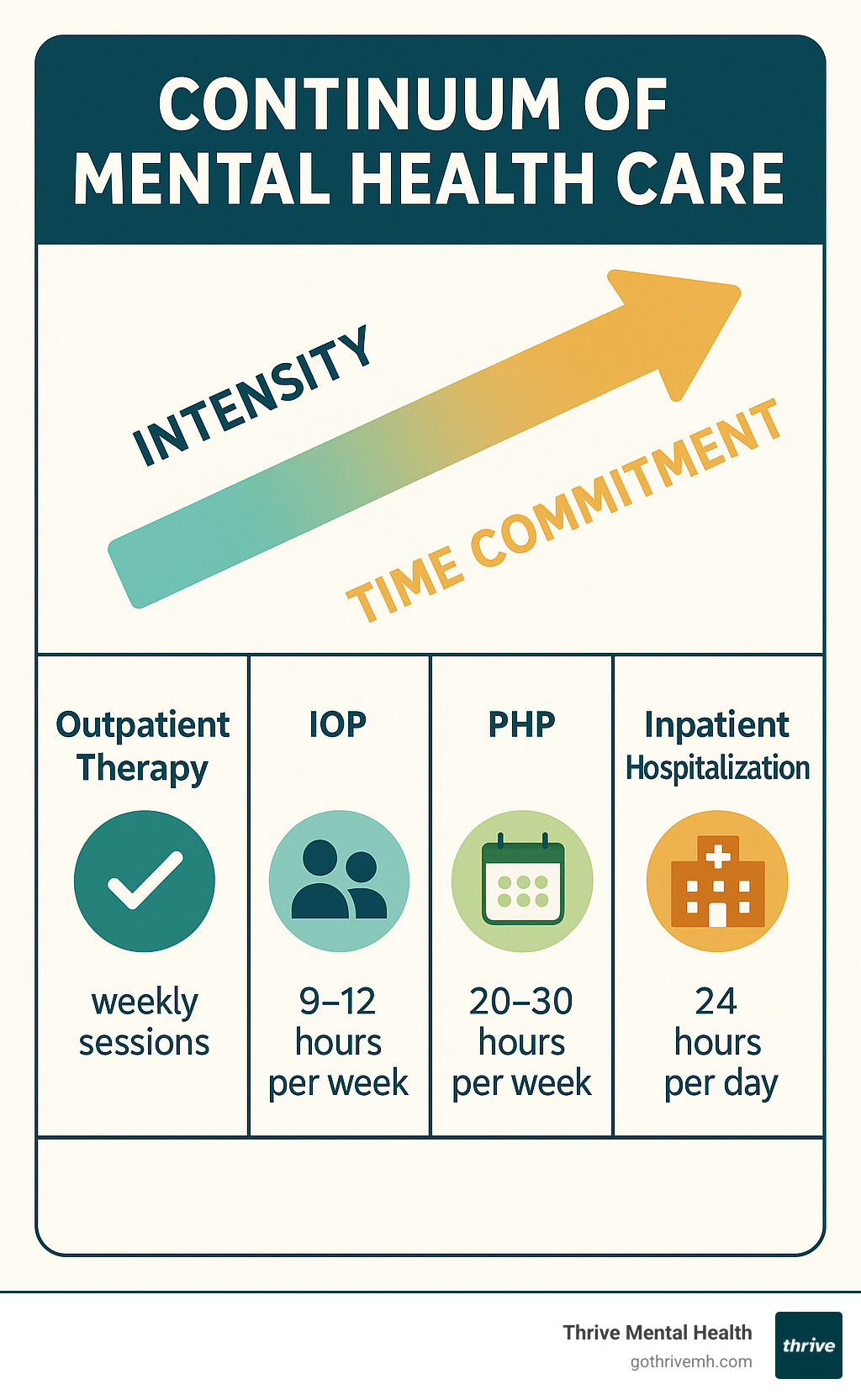
When considering iop vs php programs, the key difference lies in treatment intensity and time commitment. PHP (Partial Hospitalization Program) requires 20-30 hours per week of structured treatment, while IOP (Intensive Outpatient Program) involves 9-12 hours weekly with greater flexibility for work and daily responsibilities.
Quick Comparison:
- PHP: 5-6 days/week, 4-6 hours daily, higher medical supervision, more expensive
- IOP: 3-5 days/week, 2-4 hours daily, flexible scheduling, lower cost
- PHP Best For: Acute symptoms, transitioning from inpatient care, need daily medical oversight
- IOP Best For: Moderate symptoms, stable home environment, balancing work/school
Choosing between these outpatient mental health programs can feel overwhelming, especially when you’re already managing anxiety, depression, or other mental health challenges. Both programs offer structured support beyond weekly therapy sessions, but they serve different needs and life circumstances.
The research shows that PHPs typically serve as a bridge between inpatient hospitalization and outpatient care, providing intensive daily treatment while allowing you to return home each evening. IOPs offer a middle ground – more support than traditional therapy but with the flexibility to maintain your professional and personal commitments.
As CEO of Thrive Mental Health, I’ve guided countless individuals across Florida through the iop vs php decision-making process, helping them find the right balance between intensive care and life flexibility. My experience in behavioral health has shown me that the best treatment program is the one that fits your specific needs, schedule, and recovery goals.
Iop vs php glossary:
Defining the Programs: What Are PHP and IOP?
Understanding the iop vs php landscape starts with knowing what these programs actually offer. Both are forms of outpatient care that provide intensive support without requiring you to stay overnight at a facility. Think of them as stepping stones – they bridge the gap between weekly therapy sessions and full inpatient hospitalization.
These programs recognize that sometimes life gets complicated. Maybe your depression has worsened, your anxiety is affecting your work, or you’re struggling with substance use. When weekly therapy isn’t enough but you don’t need 24/7 care, PHP and IOP programs step in to provide that crucial middle ground.

What is a Partial Hospitalization Program (PHP)?
A Partial Hospitalization Program is essentially day treatment on steroids. You’ll spend 20-30 hours per week at the treatment facility – think of it as having a full-time job, except your job is focusing on your mental health recovery.
PHP offers high intensity care with structured support throughout most of your day. You’ll participate in individual therapy, group sessions, medication management, and various therapeutic activities. The beauty is that you still go home each evening to sleep in your own bed.
This level of care shines when you need medical supervision and intensive support but have a stable living situation. Many people use PHP as a stepping stone when transitioning down from inpatient care – it maintains that intensive focus while gradually reintroducing independence.
PHP works particularly well for those dealing with acute symptoms, medication adjustments, or complex mental health conditions that need close monitoring. The structured environment helps stabilize symptoms quickly while building essential coping skills.
For a deeper understanding of how PHP can support your recovery journey, check out our comprehensive Guide to Partial Hospitalization Programs.
What is an Intensive Outpatient Program (IOP)?
Intensive Outpatient Programs are all about flexibility without sacrificing quality care. You’ll attend treatment 9-12 hours per week, typically spread across 3-5 days. This schedule allows you to maintain work, school, or family responsibilities while still receiving significant therapeutic support.
IOP excels at helping you practice skill integration in real-time. You learn coping strategies in group therapy on Tuesday, then apply them at work on Wednesday. This immediate application helps solidify new habits and thought patterns.
The program focuses heavily on work-life balance – recognizing that recovery happens within the context of your actual life, not separate from it. Many IOP sessions happen in the evenings or weekends, making it easier to maintain your daily routine.
IOP serves as an excellent stepping up option when weekly therapy isn’t providing enough support, or as a step down from PHP when you’re ready for more independence. It’s particularly effective for people with moderate symptoms who have a supportive home environment.
This approach works especially well for busy professionals and students who need intensive support but can’t commit to full-day treatment. Learn more about how this flexible approach might work for you at More on Intensive Outpatient Programs (IOPs).
The Core Differences: A Detailed IOP vs PHP Comparison
When you’re weighing your options in the iop vs php decision, it helps to understand that these programs exist on different points of the treatment spectrum. Think of it like choosing between a full-time commitment to healing versus a part-time approach that lets you keep one foot in your regular life.

The beauty of structured outpatient treatment lies in its ability to provide intensive support while still allowing you to sleep in your own bed each night. Both programs offer this benefit, but they do so in distinctly different ways. For a deeper understanding of how structured programs can transform your mental health journey, The Value of Structured Outpatient Treatment offers valuable insights.
Intensity and Time Commitment in the IOP vs PHP Debate
The most obvious difference when comparing iop vs php programs is how much of your week they’ll occupy. It’s honestly one of the first questions most people ask – and for good reason.
A PHP schedule is like having a full-time job dedicated to your mental health. You’ll typically spend 20-30 hours per week in treatment, usually across 5-6 days. That means showing up for about six hours each day, Monday through Friday (and sometimes Saturday too). It’s intensive by design – think of it as immersive healing.
The trade-off? PHPs are generally shorter in duration, typically lasting 4-6 weeks. It’s like a mental health bootcamp – intense but relatively brief.
IOP schedules take a different approach entirely. You’re looking at 9-12 hours per week, spread across 3-5 days. This might mean three evenings a week for three hours each, or perhaps morning sessions before work. The flexibility is the whole point.
IOPs tend to run longer – often 8-12 weeks – giving you time to practice new skills in your real-world environment while still having that safety net of regular support. Many of our Florida clients appreciate that our programs, including our virtual options, can work around their existing commitments.
To explore how these programs can fit into your specific situation, check out Understanding the Benefits of an Outpatient Program.
Structure, Support, and Therapeutic Focus
The iop vs php comparison gets more interesting when you look beyond just time commitment to the actual structure and focus of each program.
PHP structure operates more like a therapeutic day program. You’ll have medical monitoring throughout your treatment, with medication management and psychiatric support readily available. There’s always someone keeping an eye on how you’re doing – not in an intrusive way, but in a “we’ve got your back” kind of way.
The environment is designed for rapid stabilization. If you’re coming from inpatient care or dealing with acute symptoms, this level of support can be exactly what you need to get back on solid ground.
IOP structure feels more like… well, like life with extra support. The focus shifts heavily toward group therapy as the main therapeutic tool. You’ll build connections with peer support networks and dive deep into relapse prevention strategies.
The goal isn’t just to stabilize – it’s to help you integrate new coping skills into your actual daily routine. You’re practicing what you learn in therapy while still living your regular life, which can make the skills stick better.
For those interested in maintaining the intensity of PHP care with more flexibility, our Virtual Partial Hospitalization Program options might offer the perfect middle ground.
Common Therapeutic Modalities
Both programs use the same evidence-based therapies – the difference is in how intensively and frequently you’ll engage with them.
You’ll encounter Cognitive Behavioral Therapy (CBT) in both settings, helping you identify and reshape unhelpful thought patterns. Dialectical Behavior Therapy (DBT) teaches emotional regulation and distress tolerance skills that work in real-world situations.
Individual therapy sessions provide personalized attention, while group therapy becomes a cornerstone of healing in both programs. There’s something powerful about connecting with others who truly understand what you’re going through.
Family counseling helps repair and strengthen your support system at home, and experiential therapy adds creative, hands-on approaches to traditional talk therapy.
In PHP, you might have individual sessions multiple times per week alongside daily group work. In IOP, you might see your individual therapist once weekly while attending group sessions two or three times.
The flexibility of modern treatment means you can access these therapies in ways that work for your life. Our Virtual Intensive Outpatient Programs bring these evidence-based treatments right to your home, making it easier to maintain consistency in your care.
Weighing the Pros and Cons of Each Program
When you’re trying to decide between iop vs php, it helps to take an honest look at what each program can offer you – and what challenges you might face along the way. Neither option is perfect for everyone, and that’s completely normal. What matters most is finding the right fit for your specific situation and recovery goals.
Let’s break down the real advantages and potential drawbacks of each program, so you can make an informed decision about your mental health journey.
PHP (Partial Hospitalization Program) offers some significant benefits that can make a real difference in your recovery. The comprehensive, structured support means you’re getting intensive care that’s just one step down from inpatient treatment. This high level of structure can lead to rapid stabilization when you’re dealing with acute symptoms or transitioning from a hospital stay. You’ll have access to medical monitoring and psychiatric support throughout your treatment, which can be incredibly reassuring during vulnerable times.
However, PHP does come with challenges. The high time commitment – typically 20-30 hours per week – can feel overwhelming, especially when you’re already struggling with mental health symptoms. This intensive schedule often means you can’t work full-time or maintain your usual responsibilities, which can create financial stress or career concerns. Additionally, PHP tends to be more expensive than other outpatient options, though many insurance plans do provide coverage.
IOP (Intensive Outpatient Program) brings its own set of advantages that appeal to many people. The biggest draw is flexibility – you can often schedule sessions around work, school, or family commitments. This makes IOP a lower-cost option compared to PHP, both in terms of direct costs and the ability to maintain your income. The program also gives you valuable real-world practice, allowing you to apply the skills you’re learning in therapy to your daily life immediately.
On the flip side, IOP requires more self-motivation and discipline. With less supervision than PHP, you’ll need to be more accountable for your own progress and recovery. Some people find that the reduced level of support isn’t quite enough during particularly challenging periods. If you’re dealing with severe symptoms or don’t have a stable home environment, IOP might not provide the intensive care you need.
Research shows that both programs can be highly effective for substance use disorders and mental health conditions. A study on IOP effectiveness for substance use disorders found significant positive outcomes when patients were properly matched to the appropriate level of care.
The key to success with either program often comes down to timing and personal readiness. PHP works best when you need that intensive, immersive support to get stabilized quickly. IOP shines when you’re ready to practice your new skills while maintaining your daily responsibilities.
At Thrive Mental Health, we’ve seen people across Florida thrive in both programs. Our goal is to connect you with the right level of care, whether you’re seeking treatment in-person at one of our locations or through our accessible virtual programs. What matters most isn’t which program sounds better on paper – it’s which one matches where you are right now in your recovery journey and what kind of support structure will help you build lasting wellness.