
Is a PHP Program Right for Your Anxiety? What You Need to Know

When Weekly Therapy Isn’t Enough—What’s Your Next Move?
A PHP program for anxiety might be the answer if you’re struggling with severe symptoms that weekly therapy can’t touch. Here’s what you need to know:
Quick Answer: What is a PHP Program for Anxiety?
- Full Name: Partial Hospitalization Program
- Time Commitment: 20-30 hours per week (typically 5-7 days)
- Where You Stay: Live at home, attend treatment during the day
- Who It’s For: People with severe anxiety who need more than outpatient care but don’t require 24/7 hospitalization
- What You Get: Daily therapy, medication management, group support, and skills training
- Insurance: Most major plans cover PHP programs
Your anxiety is getting worse. You’ve tried weekly therapy, but one hour every seven days isn’t cutting it. You’re barely functioning at work, avoiding social situations, or struggling to leave your house. You know you need more help—but you’re not sure what “more” looks like.
That’s where a Partial Hospitalization Program (PHP) comes in. It’s the middle ground between traditional outpatient therapy and full inpatient hospitalization. You get intensive, structured treatment during the day—multiple therapy sessions, medication support, and real coping skills—then go home each evening.
PHPs bridge a critical gap in mental health care. They offer 20+ hours of weekly treatment with daily psychiatric oversight, compared to just 1-2 hours in standard therapy. Research shows they’re both clinically effective and cost-efficient for people with significant anxiety disorders who need more structure but can still live safely at home.
Who benefits most? People with Generalized Anxiety Disorder (GAD), Panic Disorder, Social Anxiety, OCD, or PTSD—especially when symptoms are severe enough to disrupt daily life but don’t require round-the-clock medical supervision.
I’m Nate Raine, CEO of Thrive Mental Health, and I’ve spent over a decade building mental health programs that combine evidence-based care with real-world accessibility. At Thrive, we’ve designed PHP programs for anxiety that deliver measurable outcomes through structured, personalized treatment, with dedicated programs available across Florida.
Why Choose a PHP Program for Anxiety? [Compare Your Options]
More than one in five people in the United States are dealing with a mental health condition. Understanding the full spectrum of available care is crucial, as mental health support is not one-size-fits-all. A Partial Hospitalization Program (PHP) for anxiety offers a unique blend of intensive support and personal independence, making it a critical option on the mental health continuum of care.
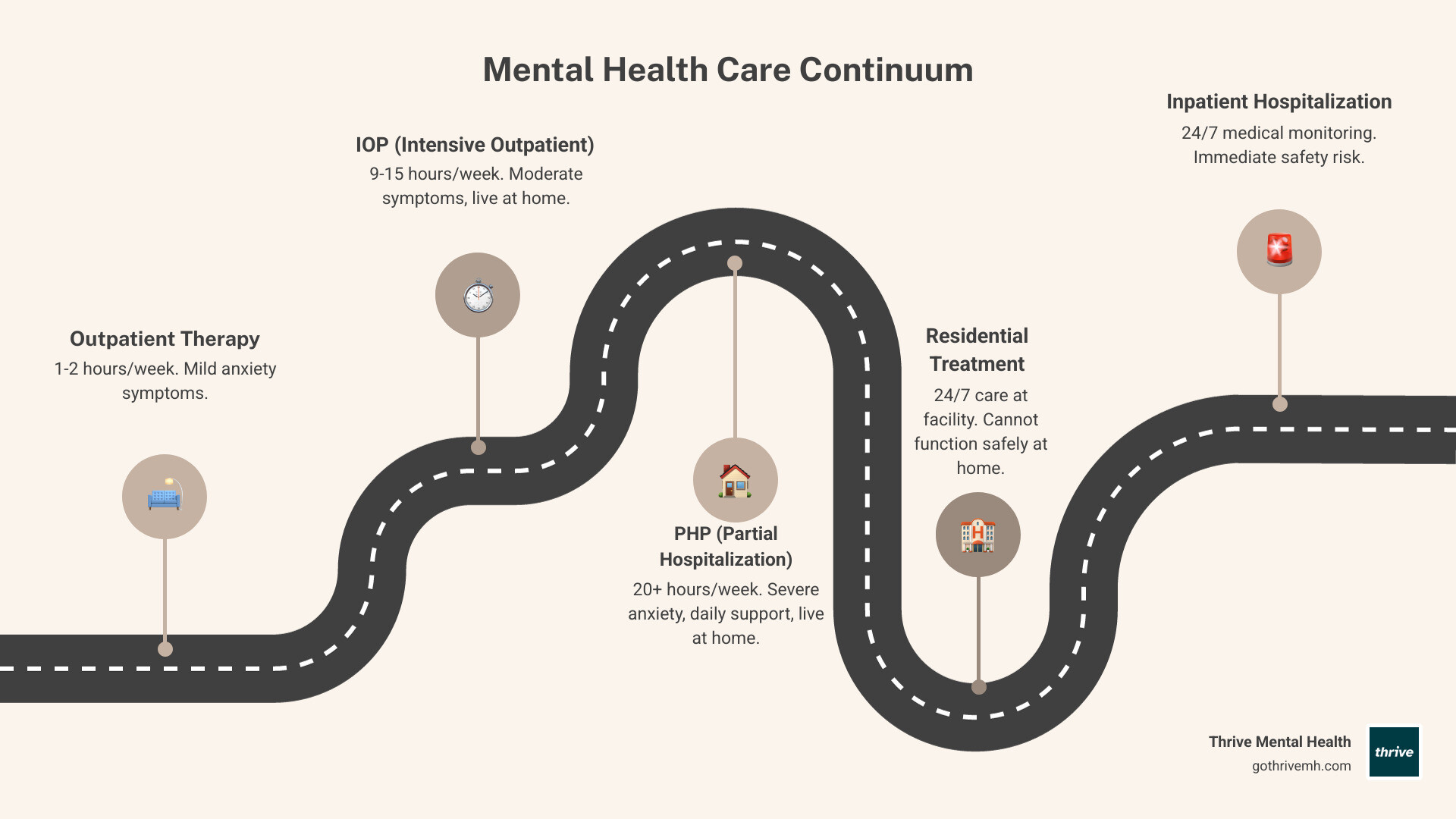
To truly appreciate the value of a PHP program for anxiety, it helps to see how it fits into the broader landscape of mental health treatment. Imagine a ladder of support, where each rung represents a different level of care intensity.
| Treatment Option | Weekly Time Commitment | Supervision Level | Living Situation | Ideal Candidate |
|---|---|---|---|---|
| Outpatient Therapy | 1–2 hours | Minimal | Live at home | Mild symptoms, good coping skills, stable environment |
| IOP (Intensive Outpatient Program) | 9–15 hours | Moderate | Live at home | Moderate symptoms, needs more structure than weekly therapy, can function independently outside of sessions |
| PHP (Partial Hospitalization Program) | 20+ hours (often 25-30) | High (daily psychiatric oversight) | Live at home | Severe symptoms, needs daily support and structure, struggling significantly with daily functioning, but does not require 24/7 medical supervision |
| Residential Treatment | 24/7 | Constant | Live at facility | Needs continuous supervision and support, cannot maintain safety at home, severe symptoms, often longer-term |
| Inpatient Treatment | 24/7 | Acute medical/psychiatric | Live at hospital | Acute crisis, immediate safety risk (suicidal ideation, severe self-harm), requires medical stabilization |
As you can see, a PHP program for anxiety is designed for individuals who need significant, structured support to manage their symptoms and regain stability, but who are still able to return home at the end of the day. This balance allows you to practice new coping skills in your real-world environment, which is vital for long-term recovery.
We understand that choosing the right level of care can feel overwhelming. That’s why we’re here to guide you. At Thrive Mental Health, our IOP and PHP programs are built to provide that essential bridge between less intensive outpatient services and more restrictive inpatient care. A PHP program for anxiety gives you more support than an Intensive Outpatient Program (IOP), but with less disruption to your life than inpatient hospitalization.
In fact, extensive research supports the effectiveness of these programs. A 2015 literature review (and a similar review of PHPs) found that both IOPs and PHPs can effectively treat mental health issues, with PHPs being a cost-effective option for many patients needing intensive care, particularly in improving social functioning. This means you’re investing in a proven path to lasting relief.
What Makes PHP Different from IOP?
While both PHPs and IOPs offer structured, multi-hour treatment, they serve slightly different needs. Think of it as choosing the right gear for a challenging hike – both are necessary, but one might be better suited for a steeper climb.
- Time Commitment: This is often the most significant difference. A PHP program for anxiety typically demands 20 to 30 hours of treatment per week, usually across 5 to 7 days. Our IOPs, while still intensive, require less, generally around 9 to 15 hours per week.
- Supervision and Medical Oversight: PHPs provide a higher level of medical and psychiatric supervision. You’ll have daily access to a multidisciplinary team, including psychiatrists and nurses, who can address immediate medical or psychiatric needs and make necessary medication adjustments. IOPs also include medication management, but with less frequent direct oversight.
- Flexibility: IOPs are designed with more flexibility, allowing you to maintain work, school, or other daily responsibilities more easily. PHPs, by their nature, are more structured and immersive, often requiring a temporary pause or significant adjustment to your daily routine.
- Cost: Due to the higher intensity and medical oversight, a PHP program for anxiety is typically more expensive than an IOP. However, remember that most major insurance plans often cover both, making these vital programs accessible. We can help you compare Thrive’s PHP and IOP options to find the best fit for your needs and budget.
When Is Higher Level Care Needed?
While PHP programs for anxiety offer intensive support, there are situations where an even higher level of care, like residential treatment or inpatient hospitalization, becomes necessary. This is usually when safety is an immediate and critical concern.
You might need inpatient or residential care if:
- You are experiencing an immediate safety risk, such as active suicidal thoughts with a plan, or severe self-harm behaviors that cannot be managed safely at home.
- You require 24/7 medical monitoring due to severe mental health symptoms or co-occurring physical health issues that complicate treatment.
- You are unable to function safely at home, even with the structured support of a PHP, due to severe disorganization, psychosis, or an inability to care for yourself.
These higher levels of care prioritize stabilization and safety in a controlled environment. Once stable, individuals often transition to a PHP program for anxiety as a step-down, allowing them to continue their recovery journey with intensive support while gradually reintegrating into their home environment.
If you’re in crisis, call/text 988 right now. You are not alone.
What Happens in a PHP Program for Anxiety? [Inside Look]
When you step into a PHP program for anxiety at Thrive Mental Health, you’re entering a supportive, structured environment designed for deep healing. Our programs are not sterile clinical settings; instead, they foster warmth, connection, and personal growth. You’ll find yourself surrounded by a multidisciplinary team of compassionate mental health professionals—psychiatrists, licensed therapists, registered nurses, and case managers—all dedicated to your recovery.

Our approach is built on individualized care. Upon admission, we conduct thorough evaluations to understand the unique nature and severity of your anxiety, allowing us to tailor a treatment plan specifically for you. This personalized plan ensures that every aspect of your PHP experience is geared towards addressing your specific needs and helping you build resilience.
A key benefit of a PHP program for anxiety is the opportunity for real-world skill practice. While you’re immersed in therapy during the day, returning home in the evening allows you to immediately apply the coping mechanisms and strategies you’ve learned to your daily life. This direct application, coupled with ongoing professional guidance, is incredibly powerful for solidifying new behaviors and thought patterns.
A Day in the Life: PHP for Anxiety
What does intensive treatment actually look like? A typical day or week in a PHP program for anxiety is carefully structured to maximize therapeutic benefit. While schedules can vary, here’s a glimpse of what you can expect:
- Morning Check-in: We start the day with a group check-in, allowing you to set intentions, share any immediate concerns, and connect with your peers and treatment team.
- Group Therapy Sessions: A cornerstone of our PHP programs, group therapy provides a safe space to share experiences, gain insights from others facing similar challenges, and practice new social skills. Topics often include anxiety management, emotional regulation, communication skills, and relapse prevention.
- Individual Counseling: You’ll have regular one-on-one sessions with a licensed therapist. These sessions dive deeper into your specific anxiety triggers, thought patterns, and personal goals, often utilizing cognitive-behavioral techniques.
- Skills Workshops: These interactive sessions focus on practical tools and techniques. You’ll learn and practice evidence-based coping mechanisms like mindfulness, deep breathing exercises, and distress tolerance skills.
- Lunch Break: A communal lunch break offers a chance for informal connection and a moment of rest.
- Experiential Therapies: Depending on the program, you might engage in therapies like art therapy, movement therapy, or yoga, which can offer alternative ways to process emotions and reduce stress.
- Medication Management: For many, medication can be a crucial part of anxiety treatment. Our psychiatrists provide ongoing medication evaluation and monitoring, making adjustments as needed to ensure optimal results.
- End-of-Day Wrap-up: We conclude with a group wrap-up, reflecting on the day’s learnings and preparing you to apply your skills in your home environment.
This comprehensive daily schedule ensures you receive multiple layers of support and intervention, empowering you to manage your anxiety symptoms effectively. You can learn more about what to expect in a Thrive PHP for anxiety.
Proven Therapies for Anxiety in PHP
At Thrive Mental Health, our PHP programs for anxiety are built on a foundation of evidence-based therapeutic approaches. We know that effective treatment requires tools that are proven to work.
- Cognitive Behavioral Therapy (CBT): This is a cornerstone of anxiety treatment. CBT helps you identify and challenge negative thought patterns and behaviors that fuel your anxiety, replacing them with healthier, more adaptive ones. It teaches you to recognize your anxiety triggers and develop effective coping strategies.
- Dialectical Behavior Therapy (DBT): Often used for intense emotional dysregulation, DBT skills are incredibly valuable for anxiety. You’ll learn mindfulness, distress tolerance, emotion regulation, and interpersonal effectiveness to manage overwhelming feelings and steer challenging situations.
- Exposure Therapy: For specific phobias, social anxiety, or panic disorder, exposure therapy helps you gradually confront anxiety-provoking situations or thoughts in a safe and controlled environment. This process helps to habituate you to your fears, reducing their power over time.
- Mindfulness Training: Learning to be present and aware without judgment can significantly reduce anxiety. Mindfulness techniques, such as meditation and guided imagery, help you observe anxious thoughts and sensations without getting swept away by them.
- Family Therapy: Anxiety doesn’t just affect the individual; it impacts the whole family. Family therapy sessions are often encouraged to educate loved ones, improve communication, and build a stronger support system outside of treatment.
- Psychoeducation: Understanding anxiety—what it is, how it works, and why it affects you—is empowering. Psychoeducation provides valuable knowledge about anxiety disorders, treatment options, and relapse prevention strategies.
These therapies, combined with individual and group counseling, provide a holistic and powerful approach to managing and overcoming anxiety. Our virtual options for therapy also allow us to extend this comprehensive care to more individuals, ensuring accessibility for residents throughout Florida. You can explore our virtual therapy options.
Is a PHP Program for Anxiety Right for You? [Eligibility, Cost, Next Steps]
Deciding on the right mental health treatment can feel like a huge step, but it’s a powerful one towards reclaiming your life. A PHP program for anxiety is a significant commitment, and we want to ensure it’s the right fit for your unique needs.

You may need a PHP program for anxiety if:
- Your anxiety is getting worse despite consistent outpatient therapy, and your symptoms are intensifying.
- Daily life is overwhelming, making it difficult to work, maintain relationships, or manage basic self-care.
- Outpatient therapy isn’t enough to provide the level of support and structure you need to make progress.
- You’re stepping down from a higher level of care, such as inpatient or residential treatment, and need continued intensive support to transition back home.
- You need more structure and support, but you don’t require 24/7 supervision or the full intensity of an inpatient stay.
These are common signs that a more intensive, structured program could be beneficial. It’s about finding the appropriate level of care to meet your current challenges.
Who Qualifies for PHP?
To ensure that a PHP program for anxiety is the most appropriate and effective treatment for you, there are typically a few eligibility criteria we consider:
- Diagnosed Anxiety Disorder: You should have a formal diagnosis of an anxiety disorder (e.g., Generalized Anxiety Disorder, Panic Disorder, Social Anxiety Disorder, Obsessive-Compulsive Disorder, PTSD) or a co-occurring condition like depression that warrants intensive treatment.
- Medically Stable: While you’re struggling with mental health, you need to be medically stable and not require acute medical hospitalization for physical health issues.
- Motivated for Treatment: A PHP requires active participation and a willingness to engage in therapy and learn new coping skills. Your motivation is a powerful asset in your recovery journey.
- Not an Immediate Danger to Self or Others: While you may have experienced suicidal thoughts or self-harm in the past, you should not be in immediate, active crisis that requires 24/7 inpatient supervision.
- Physician or Therapist Referral: Many PHPs, including ours, require a referral from a physician or therapist. This ensures that a healthcare professional has assessed your symptoms and determined that a PHP is the appropriate level of care.
We conduct initial assessment interviews to understand your condition better and determine eligibility. Our goal is always to place you in the treatment setting where you will thrive. You can start by checking your eligibility now with our quick online assessment.
How Much Does a PHP Program for Anxiety Cost? [Insurance Guide]
We believe that access to high-quality mental health care shouldn’t be a luxury. The cost of a PHP program for anxiety is a significant consideration for many, but we work hard to make treatment accessible and transparent.
- Insurance Coverage: Most major insurance providers recognize the value of PHPs. We proudly accept many plans, including Cigna, Aetna, Florida Blue, Optum, and more. With insurance coverage often available for such programs under Medicare and private policies, patients can access necessary care without overwhelming out-of-pocket costs.
- In-Network and Out-of-Network Options: We can help you understand your benefits, whether we are in-network with your provider or if you have out-of-network benefits that can be used.
- Deductibles, Co-pays, Out-of-Pocket Costs: Our administrative and financial counselors are experts at navigating insurance policies. They will explain any deductibles, co-pays, or out-of-pocket maximums you may incur, helping you understand your financial responsibility upfront.
- Coverage in Florida: Thrive Mental Health offers PHP programs for anxiety across Florida. We can verify your specific coverage for our Florida-based programs.
Understanding your benefits beforehand prevents financial surprises and allows you to focus on your recovery. Many programs assist with navigating insurance company policies, making it easier for patients to access necessary care without financial strain. For a quick and easy way to understand your coverage, you can verify your insurance in 2 minutes through our secure online tool.
How Long Does PHP Last? What Happens After?
The duration of a PHP program for anxiety is highly individualized, reflecting your unique progress and needs. There’s no one-size-fits-all answer, but generally:
- Typical Duration: Most PHPs last for several weeks to a few months. While some programs are generally short-term, a course of treatment typically not exceeding 6-8 weeks, clinical needs may lead to shorter or longer episodes. The average attendance for patients in a PHP is 5-7 days per week with 4-6 hours of treatment per day.
- Progress Reviewed Weekly: Your treatment team will regularly assess your progress, symptoms, and coping skills. This ongoing evaluation helps us determine the most effective length of stay for you.
- Step-down to IOP or Outpatient Therapy: Recovery is a journey, not a destination. Upon successful completion of your PHP, the next step is typically a “step-down” to a less intensive level of care. This might be an Intensive Outpatient Program (IOP) or traditional outpatient therapy. This transition is crucial, providing continued support as you gradually regain independence.
- Aftercare and Relapse Prevention Planning: Before you complete your PHP program for anxiety, we work with you to develop a comprehensive aftercare plan. This plan includes recommendations for ongoing therapy, support groups, medication management, and strategies for relapse prevention. Our goal is to equip you with the tools and resources to maintain your progress long after you leave our direct care. You can find out more about Thrive’s aftercare support to ensure continued healing.
FAQs: PHP Program for Anxiety [Quick Answers]
What anxiety disorders does PHP treat?
PHP programs for anxiety are highly effective for a range of conditions, including Generalized Anxiety Disorder (GAD), Panic Disorder, Social Anxiety Disorder, Obsessive-Compulsive Disorder (OCD), Post-Traumatic Stress Disorder (PTSD), and co-occurring depression. They offer structured support for individuals experiencing severe anxiety symptoms.
Can I work or go to school during PHP?
A PHP program for anxiety is an intensive commitment, typically involving 20-30 hours per week of treatment. While some individuals with highly flexible jobs or academic schedules might manage, most people find it necessary to take a temporary break or significantly reduce their work/school load. Virtual or evening program options, where available, might offer more flexibility.
Is family involved in PHP?
Yes, family involvement is strongly encouraged and often a vital component of a PHP program for anxiety. We offer family therapy sessions and educational meetings to help loved ones understand anxiety, learn how to best support you, and improve communication within the family system. This creates a stronger support network for your recovery.
How do I get started with a PHP program?
Getting started is simple. You can contact Thrive Mental Health directly. We will help you verify your insurance and schedule a free, confidential assessment to determine if a PHP program for anxiety is the right fit for your needs.
What if I’m in crisis right now?
If you are experiencing an immediate mental health crisis, please do not wait. Call or text 988 right now for immediate help. Thrive Mental Health is not a crisis center and cannot provide emergency services.
Don’t Wait—Get Relief from Anxiety Now
Summary:
A PHP program for anxiety offers a powerful solution for those struggling with severe symptoms that require more than weekly therapy but less than inpatient hospitalization. It provides daily, expert-led support through evidence-based therapies, medication management, and skill-building workshops, all while allowing you to return home each evening. This intensive level of care is covered by most major insurance plans and is available at our Thrive Mental Health locations across Florida.
Read how PHP helped Sarah overcome panic disorder after years of failed treatments → Success Stories
Ready for support? Thrive offers virtual and hybrid IOP/PHP programs with evening options. Verify your insurance in 2 minutes (no obligation) → Start benefits check or call 561-203-6085. If you’re in crisis, call/text 988.