
Fact or Fiction: The Evidence for EMDR Therapy

Is EMDR Evidence Based? The Truth About This Trauma Therapy
If you’re asking, is EMDR evidence based? The answer is a clear and simple yes. EMDR (Eye Movement Desensitization and Reprocessing) is a highly effective, science-backed therapy for post-traumatic stress disorder (PTSD).
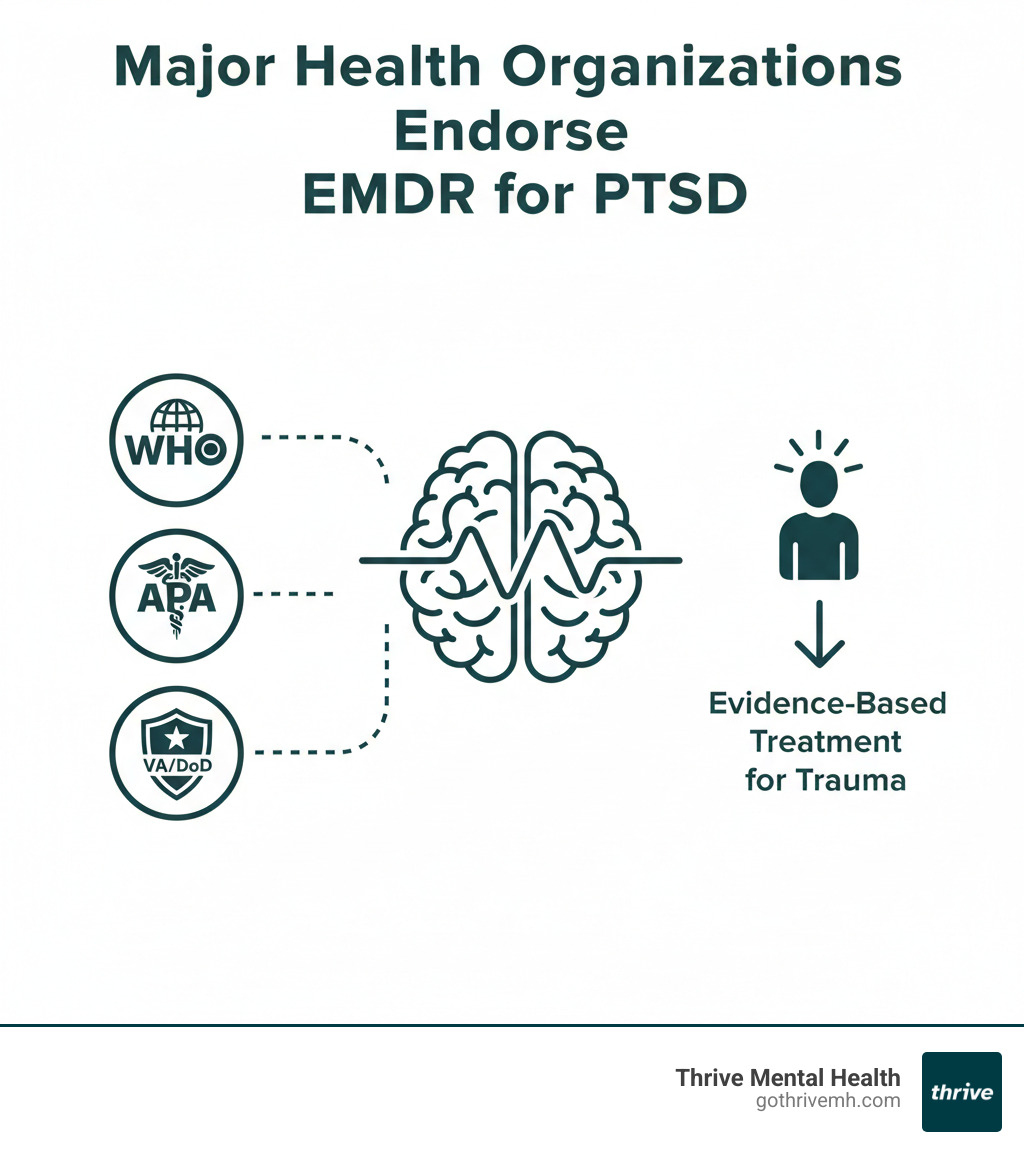
It’s recognized as a first-line treatment by major global health authorities, including the World Health Organization (WHO), the American Psychological Association (APA), and the U.S. Departments of Veterans Affairs and Defense (VA/DoD). Backed by over 30 randomized controlled trials, EMDR is proven to significantly reduce symptoms of PTSD and depression, helping people heal faster than many other methods.
Trauma can leave deep marks on your life. EMDR is a powerful tool that helps your brain reprocess distressing memories so you can move forward without the weight of the past. This guide cuts through the noise to give you the facts about the science behind EMDR.
As Nate Raine, CEO of Thrive Mental Health, I’ve seen how critical it is for clients in Florida to know that a treatment like EMDR is evidence-based. Our focus has always been on innovations that deliver measurable, life-changing clinical outcomes.
Related content about is emdr evidence based:
- Why EMDR Works: The Role of Eye Movements and Brain Connectivity
- bilateral stimulation
- desensitization
EMDR for PTSD: Is It Backed by Real Evidence? [Shocking Stats]
Let’s cut to the chase: if you’re wondering is emdr evidence based, the answer is a resounding yes. We’re not talking about a few promising studies; we’re talking about decades of rigorous clinical trials and real-world results that consistently show EMDR works for PTSD—often faster than you might expect.
Systematic analyses show EMDR’s effectiveness for adults with PTSD matches other top-tier trauma therapies. The state of the science on EMDR therapy continues to strengthen, with dozens of clinical trials backing up what therapists and patients have experienced firsthand: people who’ve been stuck in the grip of trauma are finding relief.
What Do Official Guidelines Say?
When major health organizations worldwide recommend a treatment, it’s because the evidence is overwhelming.
- The World Health Organization (WHO) recommends EMDR for adults, teens, and children with PTSD.
- The U.S. Department of Veterans Affairs (VA) and Department of Defense (DoD) give EMDR their highest “strong” evidence rating for treating PTSD in service members.
- The American Psychological Association (APA) includes EMDR as a recommended treatment for PTSD in adults.
- The International Society for Traumatic Stress Studies (ISTSS) issued a “strong recommendation” for EMDR as an effective treatment for post-traumatic stress.
This is a global consensus from the bodies that set the standards for mental health care.
What’s the Evidence for EMDR’s Effectiveness?
Systematic reviews and meta-analyses—the gold standard of medical evidence—consistently find EMDR to be highly effective. A 2020 review confirmed that the growing number of randomized controlled trials led to “a more confident recommendation of… EMDR as the first-line treatments” for PTSD. This means it’s a therapy you should try first, not as a last resort.
Key EMDR Effectiveness Stats for PTSD
- High Remission Rates: Studies show PTSD remission rates from 36% to over 90% after EMDR treatment.
- Rapid Results: Noticeable improvement in PTSD symptoms is common after just 1-3 months of weekly sessions.
- Cost-Effective: The UK’s National Health Service found EMDR to be the most cost-effective of 11 different interventions for adult PTSD.
- Broad Impact: Research shows EMDR also reduces symptoms of anxiety, depression, and even psychosis co-occurring with trauma. One study found 60% of participants with psychosis no longer met PTSD criteria after just eight EMDR sessions.
These aren’t just statistics. Every percentage point represents someone sleeping through the night again or reconnecting with their family. That’s what the evidence really means.
At Thrive Mental Health, our trauma treatment programs are built on evidence-based approaches like EMDR. We combine it with our intensive outpatient (IOP) and partial hospitalization (PHP) programs to give you the support you need, whether you’re joining us virtually from anywhere in Florida. Most major insurance plans—including Cigna, Aetna, Optum, and Florida Blue—cover EMDR therapy for PTSD. Verify your insurance in 2 minutes to see your coverage.
If you’ve been wondering whether EMDR is worth trying, the evidence speaks for itself. Is EMDR evidence based? Absolutely—and the research keeps getting stronger.
EMDR vs. Traditional Talk Therapy: Why Speed (and Experience) Matter
When healing from trauma, you’ve likely encountered different therapies. How does EMDR stack up against traditional talk therapy like Cognitive Behavioral Therapy (CBT)? While both aim to help, they take different paths. At Thrive Mental Health, we know finding effective, fast relief is critical, which is why we focus on treatments that deliver measurable results for our clients in Florida.

How Does EMDR Work Differently?
The biggest difference is that EMDR doesn’t require you to talk about your trauma in exhaustive detail, which can feel re-traumatizing. Instead, EMDR uses bilateral stimulation (BLS)—like following a therapist’s hand with your eyes or using alternating sounds or taps. While you focus on the BLS and gently bring the memory to mind, your brain does the heavy lifting of reprocessing it.
This unique process often leads to faster results and less emotional overwhelm. Many clients report significant relief after just a few sessions, as the therapy helps “unstick” painful memories and reduce their emotional punch.
EMDR vs. Talk Therapy: Session Length, Techniques, and Results
| Feature | EMDR Therapy | Traditional Talk Therapy (e.g., CBT) |
|---|---|---|
| Focus | Reprocessing traumatic memories through bilateral stimulation to reduce their emotional intensity. | Exploring thoughts, feelings, and behaviors related to trauma through verbal dialogue. |
| Techniques | Bilateral stimulation (eye movements, sounds, taps) while focusing on distressing memories. | Verbal discussion, cognitive restructuring, and behavioral experiments. |
| Trauma Retelling | Does not require detailed descriptions of the event. | Often involves verbal recounting of traumatic events. |
| Treatment Length | Often shorter; noticeable improvements after a few sessions (3-12+ sessions typical). | Can be longer-term, often requiring more sessions for similar outcomes. |
| Key Benefit | Faster reduction in PTSD symptoms, less need for verbal detail. | Deep insight into thought patterns and development of coping strategies. |
Who Should Consider EMDR?
EMDR is a powerful tool for anyone who has experienced distressing events, from a single incident to complex trauma. It can be highly effective for PTSD, anxiety, depression, and other disorders stemming from past trauma. We often find EMDR is a great fit for clients who:
- Have specific traumatic memories causing flashbacks or nightmares.
- Prefer a structured therapy that doesn’t require reliving every detail verbally.
- Have tried other therapies without finding the relief they need.
- Experience trauma as physical symptoms or a feeling of being disconnected.
Our experienced providers at Thrive Mental Health can help you determine if EMDR is the right choice for you. We offer comprehensive Trauma-Focused Therapy programs in Florida that often include EMDR to provide the most effective care.
The Controversy: Are the Eye Movements in EMDR Just Hype?

While the evidence clearly shows that is emdr evidence based for treating PTSD, a debate has existed in the mental health community about why it works. Critics have questioned whether the bilateral stimulation (BLS)—the signature eye movements, sounds, or taps—is truly necessary.
The debate isn’t about if EMDR works; the research on that is solid. It’s about the mechanism. Some skeptics argued the eye movements were just “window dressing” and that the healing came from standard therapeutic elements like exposure. This controversy is worth addressing because understanding how treatments work helps us deliver better care.
What Does the Science Say About Bilateral Stimulation?
The leading explanation for why BLS works is the working memory taxation theory. When you hold a traumatic memory in your mind while also tracking eye movements, you’re multitasking. This “taxes” your working memory, making the memory less vivid and less emotionally intense. Your brain then re-saves the memory with a reduced emotional charge, creating a “distancing effect” that allows you to see the event more objectively.
This process helps “unstick” traumatic memories that are frozen in maladaptive neural networks, allowing your brain to process them naturally, similar to how REM sleep processes daily experiences. For a deeper dive, a scientific review of EMDR’s mechanisms of action explores the neurobiological findings.
Criticisms and Counterpoints
Since its emergence, EMDR has faced skepticism. Early critics questioned if it was just exposure therapy in disguise. Science demands scrutiny, and “dismantling studies” were conducted to isolate the effects of BLS.
The results of these studies have been mixed, which is why research is ongoing. However, the bottom line remains unchanged: major health organizations worldwide—including the WHO, VA, and APA—endorse EMDR as a first-line, evidence-based treatment for PTSD. These endorsements are based on dozens of rigorous clinical trials showing consistent, meaningful results.
Whether BLS is the sole “active ingredient” or one part of a powerful package, EMDR consistently helps people recover from trauma. At Thrive Mental Health, we focus on what matters: measurable results. Our licensed therapists in Florida use EMDR because it works—and the evidence backing it is rock solid.
What to Expect: Your EMDR Journey at Thrive Mental Health
Starting EMDR with Thrive Mental Health means stepping onto a structured, supportive path to healing. Our compassionate therapists in Florida will guide you through EMDR’s eight-phase protocol, ensuring you feel safe and prepared.
- History Taking: We’ll understand your history and set treatment goals.
- Preparation: You’ll learn coping skills and relaxation techniques to manage distress.
- Assessment: We’ll identify a specific target memory to work on.
- Desensitization: While focusing on the memory, your therapist will guide you through bilateral stimulation as you notice what comes to mind.
- Installation: We’ll strengthen a positive belief to replace the negative one tied to the memory.
- Body Scan: You’ll check for any lingering physical tension and process it.
- Closure: Each session ends with techniques to ensure you feel grounded and stable.
- Reevaluation: We’ll review your progress at the start of the next session.
How Long Does EMDR Take? What Are the Benefits?
One of EMDR’s biggest advantages is its efficiency. Many people see noticeable improvement in PTSD symptoms within 1-3 months of weekly 50-90 minute sessions. For a single traumatic event, relief can come in as few as 3-6 sessions. Complex trauma may require 8-12 sessions or more, but it’s still often faster than other methods.
Top Benefits of EMDR at Thrive
- Rapid Symptom Relief: Quicker reductions in PTSD, anxiety, and depression.
- Reduced Emotional Distress: Traumatic memories lose their intense emotional charge.
- New Positive Beliefs: Replace negative self-beliefs with empowering ones.
- Improved Daily Functioning: Better sleep, fewer flashbacks, and improved coping.
- Long-Term Healing: Leads to lasting relief and resilience.
- Less Verbalization Required: Ideal for those who find it hard to talk about their trauma.
Are There Any Risks or Side Effects?
While EMDR is safe and effective, some people may experience a temporary increase in distress, vivid dreams, or a resurgence of memories between sessions. This is a normal part of the brain’s healing process. A highly trained EMDR therapist is crucial for navigating these moments. At Thrive Mental Health, we prioritize building a strong foundation of coping skills in the preparation phase to ensure your safety and comfort.
If you’re seeking a structured path to recovery, our IOP and PHP programs offer comprehensive care that often integrates EMDR, providing the intensive support needed for safe and effective healing.
EMDR Therapy FAQs [2024]
You’ve got questions about EMDR—we’ve got straightforward answers. Here’s what people ask most when deciding if is emdr evidence based and right for them.
Is EMDR evidence based for PTSD?
Yes, absolutely. EMDR is recognized as an effective, evidence-based treatment for PTSD by the world’s leading health organizations, including the World Health Organization (WHO), the American Psychological Association (APA), and the U.S. Department of Veterans Affairs (VA), which gives it a “strong” evidence rating.
How is EMDR different from regular talk therapy?
EMDR uses bilateral stimulation (like eye movements) to help your brain reprocess traumatic memories without requiring you to talk about them in exhaustive detail. This makes the process faster and less overwhelming for many people, with a clear, structured eight-phase protocol.
Can I do EMDR virtually with Thrive?
Yes. Thrive Mental Health offers virtual EMDR therapy with licensed, experienced therapists across Florida. Virtual EMDR is just as effective as in-person sessions, offering expert trauma treatment from the comfort of your home. Learn more about Virtual Therapy at Thrive.
Does insurance cover EMDR therapy?
Yes, most major insurance plans cover EMDR therapy for PTSD. At Thrive, we work with Cigna, Aetna, Optum, Florida Blue, and many more. Because EMDR is a recognized evidence-based treatment, insurance companies typically cover it. You can verify your insurance in 2 minutes with no obligation.
The Bottom Line: EMDR Is Evidence-Based—and It Works Fast at Thrive
So, is emdr evidence based? The answer is an overwhelming yes. EMDR is not a passing trend; it’s a rigorously tested, scientifically validated therapy for PTSD and trauma, endorsed by the world’s most trusted health authorities like the WHO and VA.
What makes EMDR so powerful is its speed and effectiveness. Many people find significant relief from PTSD symptoms in just 1-3 months, offering a path to lasting change that is both rapid and profound. You don’t have to spend years in therapy to heal.
At Thrive Mental Health, we’ve built our Florida-based programs around therapies that deliver real-world results. EMDR is a cornerstone of our approach because we’ve seen how it transforms lives. If you’re ready for genuine healing, our comprehensive IOP and PHP programs integrate EMDR with other proven therapies. Prefer online care? Our Virtual Therapy at Thrive brings expert treatment to you. To understand how different approaches fit together, explore our guide on What Is Trauma-Focused Therapy?. We accept most major insurance plans, including Cigna, Aetna, and Optum, making effective trauma treatment accessible in Florida.
Ready for support? Thrive offers virtual and hybrid IOP/PHP programs for Florida residents with evening options. Verify your insurance in 2 minutes (no obligation) → Start benefits check or call 561-203-6085. If you’re in crisis, call/text 988.