
Let’s Talk: Your Guide to Talk Therapy

What You Need to Know About Talk Therapy Right Now
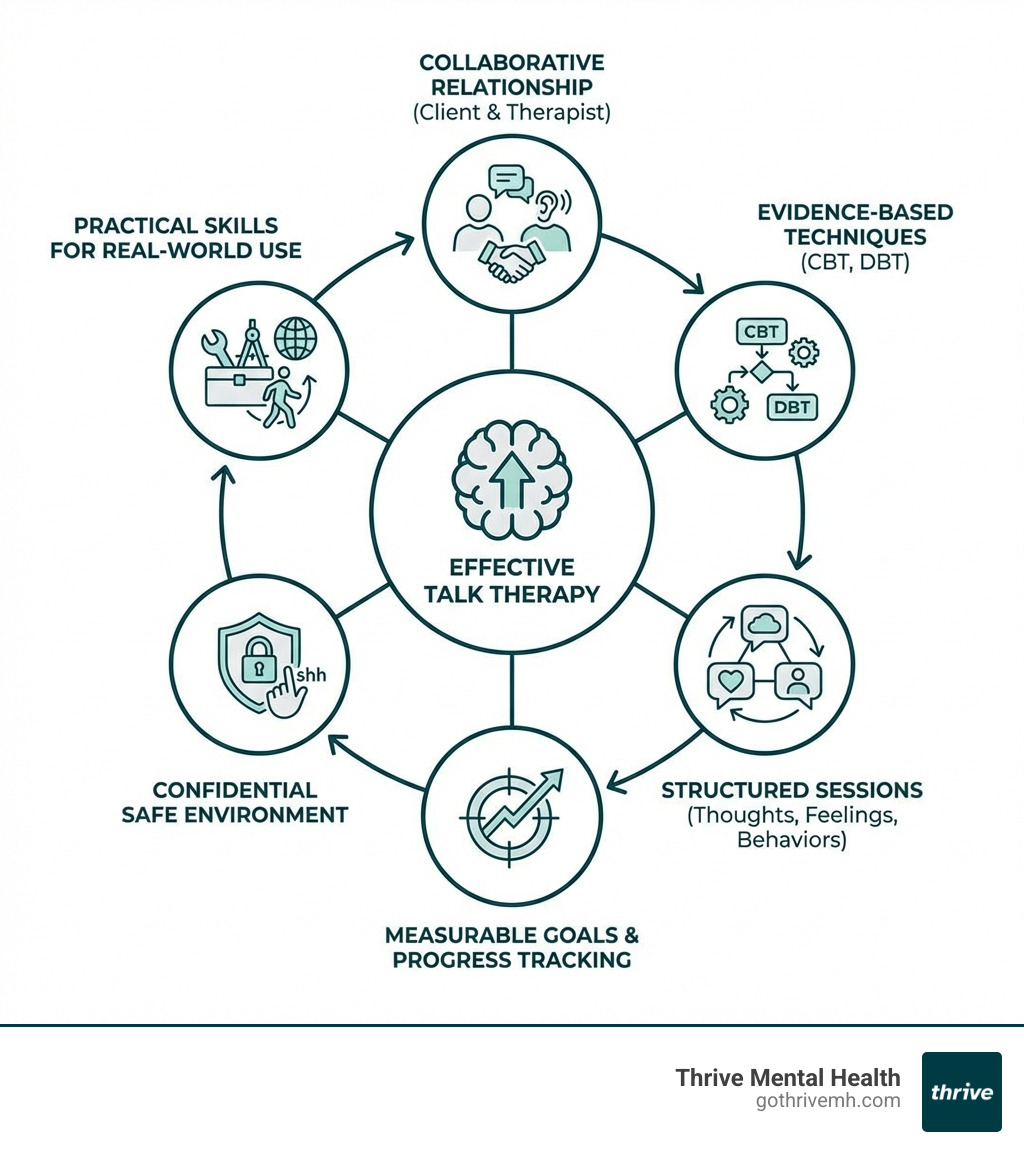
Talk therapy is a collaborative treatment where you work with a trained mental health professional to identify, understand, and change troubling thoughts, emotions, and behaviors through structured conversation. Also called psychotherapy, it’s one of the most effective treatments for a wide range of mental health conditions—from anxiety and depression to trauma and relationship problems.
What Talk Therapy Can Do for You:
- Helps you understand your emotions and why you react the way you do
- Teaches practical coping skills to manage stress, anxiety, and depression
- Changes negative thought patterns that keep you stuck
- Improves relationships by building communication and emotional skills
- Provides a safe, confidential space to process difficult experiences
- Reduces symptoms of diagnosed mental health conditions
- Builds long-term resilience so you can handle future challenges
It works. Studies consistently show that psychotherapy effectively improves symptoms across a wide range of mental illnesses, making it the first-line treatment for many conditions. Research has found that early intervention with talk therapy can reduce long-term risks for serious mental health issues, and the benefits often last long after treatment ends.
The secret to its effectiveness? The therapeutic alliance. Hundreds of studies have found that a very important part of what makes psychotherapy work is the collaborative relationship between psychologist and patient, also known as a therapeutic alliance. This isn’t passive treatment. You’re an active partner in your own healing.
I’m Nate Raine, CEO of Thrive Mental Health, and I’ve spent over a decade leading behavioral health and digital care initiatives that help people access evidence-based treatment—including talk therapy—when and where they need it most. At Thrive, we’ve seen how the right therapeutic approach, delivered with flexibility and accountability, changes lives.
Important talk therapy terms:
What Is Talk Therapy and Why Is It So Effective?
At its core, talk therapy, or psychotherapy, is a journey of self-findy and healing through guided conversation. It’s more than just talking to a friend; it’s a structured process led by a trained professional who helps you identify and change troubling emotions, thoughts, and behaviors. This collaborative dialogue creates a safe space where you can explore your inner world, understand your patterns, and ultimately gain relief from symptoms that hold you back.
Unlike other forms of mental health treatment that might focus solely on medication or crisis management, talk therapy digs into the root causes of your struggles. It empowers you with practical skills and insights that lead to lasting change. We believe in empowering you to take control of your mental well-being, rather than simply managing symptoms.
The Therapeutic Alliance: Your Key to Success
The cornerstone of effective talk therapy is what we call the “therapeutic alliance”—the trusting and collaborative relationship you build with your therapist. This isn’t just a nice-to-have; it’s a critical ingredient for success. Hundreds of studies have found that a very important part of what makes psychotherapy work is the collaborative relationship between psychologist and patient, also known as a therapeutic alliance. When you feel understood, respected, and supported, you’re more likely to open up, engage with the process, and make meaningful progress. It’s a partnership where you and your therapist work together towards your goals, fostering trust and rapport every step of the way.
Benefits of Talk Therapy: More Than Just Talking
The benefits of engaging in talk therapy extend far beyond the session room. Here’s what you can gain:
- Learning Coping Skills: You’ll acquire concrete strategies to manage stress, anxiety, depression, and other challenging emotions. These aren’t just theoretical; they’re practical tools you can use in your daily life.
- Building Resilience: Therapy helps you develop the inner strength to bounce back from adversity. You learn to steer life’s inevitable ups and downs with greater fortitude.
- Improving Relationships: By understanding your own patterns and learning healthier communication, you can foster more fulfilling connections with others.
- Managing Life Stressors: From work pressures to family conflicts or major life transitions, talk therapy provides a framework for processing and effectively responding to the stresses that affect everyone.
- Reducing Long-Term Risks: A 2018 study found that early treatments with talk therapy can reduce long-term risks for serious mental health conditions in people experiencing bereavement. This proactive approach can significantly improve your mental health trajectory.
- Personal Growth: Even without a diagnosed mental health condition, talk therapy can be a powerful tool for self-exploration, personal development, and achieving a deeper understanding of yourself.
Who Can Benefit?
Frankly, almost anyone who is willing to engage in the process can benefit from talk therapy. Whether you’re:
- Dealing with severe or long-term stress from work or family situations.
- Coping with the loss of a loved one or navigating complex relationship problems.
- Experiencing symptoms like persistent low mood, excessive worry, changes in sleep or appetite, or a lack of interest in activities you once enjoyed.
- Living with a diagnosed mental disorder that impacts your daily life.
- Simply seeking personal growth, better self-understanding, or improved coping mechanisms for everyday challenges.
Talk therapy offers a path forward. It’s about investing in your mental well-being and equipping yourself with the tools for a healthier, more fulfilling life.
The Main Types of Talk Therapy [And What They Treat]
Just as there are many paths to well-being, there are various types of talk therapy, each with its unique approach and focus. The good news? All evidence-based modalities share the common goal of helping you understand yourself better and develop healthier ways of thinking, feeling, and behaving. Your therapist will work with you to determine the best fit for your specific needs.

Cognitive Behavioral Therapy (CBT)
Cognitive Behavioral Therapy (CBT) is one of the most widely used and extensively researched forms of talk therapy. It operates on the principle that your thoughts, feelings, and behaviors are interconnected, and by changing unhelpful thought patterns, you can improve your emotional well-being and actions. In CBT, you’ll work with a therapist to identify negative or irrational thoughts and learn to challenge them, replacing them with more realistic and positive ones.
CBT is a highly structured, goal-oriented approach. It’s often considered a short-term therapy, typically ranging from 6 to 20 sessions, where you’ll learn practical skills and even have “homework” assignments to practice new behaviors and thought patterns between sessions.
What it treats: Studies of CBT have shown it to be an effective treatment for a wide variety of mental illnesses, including depression, anxiety disorders, bipolar disorder, eating disorders and schizophrenia. It’s particularly effective for anxiety, depression, PTSD, phobias, and OCD.
Thrive Mental Health offers specialized CBT services for Florida residents. Learn more about our CBT Virtual IOP services.
Dialectical Behavior Therapy (DBT)
Dialectical Behavior Therapy (DBT) is a comprehensive form of CBT that emphasizes validation and acceptance alongside change. Developed initially for individuals with Borderline Personality Disorder (BPD), DBT is highly effective for those who experience intense emotions and struggle with emotional regulation.
DBT focuses on teaching four core skill sets:
- Mindfulness: Learning to be present in the moment and observe thoughts and feelings without judgment.
- Distress Tolerance: Developing strategies to cope with intense emotions and crises without resorting to destructive behaviors.
- Emotion Regulation: Understanding and managing your emotional responses more effectively.
- Interpersonal Effectiveness: Improving communication and relationship skills to steer social situations more successfully.
What it treats: DBT is proven effective for BPD, chronic suicidal ideation, self-harm, eating disorders, substance use disorders, and other conditions involving emotional dysregulation.
Psychodynamic Therapy
Psychodynamic Therapy is a deeper, often longer-term form of talk therapy that explores how past experiences and unconscious motivations influence your current thoughts, feelings, and behaviors. The goal is to recognize and resolve negative patterns rooted in early life experiences.
In psychodynamic therapy, your therapist helps you uncover unconscious patterns and their origins, often using open-ended questions and free association. By gaining insight into these underlying dynamics, you can achieve a greater understanding of yourself and make healthier choices.
What it treats: Often used for depression, anxiety disorders, personality disorders, and individuals seeking a deeper understanding of their interpersonal patterns.
Other Evidence-Based Approaches
Beyond these widely recognized therapies, several other evidence-based approaches can be highly effective:
| Therapy Type | Core Principle | Best For | Example Technique |
|---|---|---|---|
| CBT | Thoughts, feelings, behaviors are linked; change thoughts to change feelings. | Depression, anxiety, phobias, OCD | Identifying and challenging automatic negative thoughts |
| DBT | Balance acceptance and change; emotional regulation skills. | Borderline Personality Disorder, intense emotions, self-harm | Mindfulness exercises, distress tolerance skills |
| Psychodynamic Therapy | Unconscious past influences present behavior; gain insight into patterns. | Depression, anxiety, relationship issues, self-understanding | Free association, exploring dreams, analyzing transference |
- Interpersonal Therapy (IPT): Focuses on improving your relationships and social functioning to alleviate psychological symptoms. It’s often used for depression.
- Humanistic Therapy: This broad category includes approaches like client-centered therapy and existential therapy. It emphasizes your inherent capacity for self-healing and personal growth, focusing on self-acceptance, free will, and achieving your full potential.
- Eye Movement Desensitization and Reprocessing (EMDR): A powerful therapy primarily used for Post-Traumatic Stress Disorder (PTSD) and other trauma-related conditions. EMDR helps individuals process traumatic memories by replacing negative emotional reactions with less charged or positive ones, often involving bilateral stimulation (like eye movements).
What to Expect in Sessions and How to Maximize Your Results
Starting talk therapy can feel a bit daunting, but knowing what to expect can ease any apprehension. We’re here to guide you through the process, ensuring you feel comfortable and empowered every step of the way.

Your First Talk Therapy Session
Your initial session, often called an intake, is a chance for you and your therapist to get to know each other. They’ll ask questions about your background, your current concerns, your history with mental health, and what you hope to achieve through therapy. This helps them understand your unique situation and recommend the most effective approach. It’s also your opportunity to assess if the therapist feels like a good fit for you. Don’t hesitate to ask them about their approach, experience, and what you can expect. The therapeutic alliance is key!
How to Make the Most of Your Talk Therapy Experience
Talk therapy is not a passive process; it’s a dynamic collaboration. To truly maximize your experience and get the best results:
- Be an Active Participant: Help set goals, provide feedback, and actively engage in discussions. Your insights are invaluable.
- Be Open and Honest: This is your safe space. The more candid you are about your thoughts, feelings, and behaviors, the more effectively your therapist can help.
- Do Your “Homework”: Many therapies, especially CBT and DBT, involve practicing new skills or observing patterns between sessions. This out-of-session work is crucial for integrating learnings into your daily life.
- Apply Learnings to Real Life: Consciously try to use the strategies and insights gained in therapy in your everyday interactions and challenges. This helps solidify your progress and makes the changes last.
Typical Duration and Frequency:
Most individual talk therapy sessions last around 45 to 50 minutes. Initially, sessions are often scheduled once a week to build momentum and establish the therapeutic relationship. As you develop coping strategies and show improvement, the frequency may decrease to bi-weekly or monthly sessions. The overall duration of therapy varies greatly depending on your individual needs, the complexity of your concerns, and the type of therapy. Some short-term therapies might involve just a few months, while others can extend longer.
Confidentiality in Talk Therapy
Confidentiality is a cornerstone of talk therapy and a fundamental ethical and legal obligation for all mental health professionals. We understand that sharing deeply personal information requires immense trust. Your therapist is legally and ethically bound to keep your conversations private. This means what you discuss in therapy stays in therapy.
Exceptions to Confidentiality:
While confidentiality is paramount, there are specific, legally mandated exceptions. These are in place to ensure safety and typically include situations where:
- There is an immediate threat of serious harm to yourself or others.
- There is suspected abuse or neglect of a child, elder, or a vulnerable adult.
- A court order legally requires the disclosure of information.
In such rare circumstances, your therapist is obligated to break confidentiality to ensure the safety of those involved. Your therapist will discuss these limits with you during your first session, ensuring you understand the boundaries of privacy.
If you’re in crisis, call or text 988 right now. You are not alone.
In Crisis? Call or Text 988
How to Find a Therapist and Afford Treatment [2026 Guide]
Finding the right therapist is a crucial step on your journey to mental well-being. It’s about finding someone qualified, experienced, and with whom you feel a genuine connection.
Finding a Qualified Therapist
Many types of professionals offer talk therapy, including psychologists, licensed clinical social workers (LCSW), licensed marriage and family therapists (LMFT), and licensed professional counselors. Each has distinct training and expertise.
When searching for a therapist, consider:
- Credentials: Ensure they are licensed in your state (Florida) and have relevant qualifications. Information on providers’ credentials is available from the National Alliance on Mental Illness.
- Experience: Look for therapists with experience treating your specific concerns.
- Referrals: Ask your primary care physician for recommendations, or seek referrals from trusted friends or family. Online directories are also an excellent resource.
Questions to Ask a Potential Therapist:
Before committing, we encourage you to have an initial conversation with a few potential therapists. Here are some key questions to ask:
- What is your experience with [my issue]?
- What is your therapeutic approach?
- What are your fees and do you take my insurance?
- How will we measure progress?
Online vs. In-person Therapy: Accessibility and Effectiveness
The rise of digital health care has revolutionized access to talk therapy. Today, you have the flexibility to choose between in-person sessions and online therapy, often called teletherapy. Both can be incredibly effective.
Research from 2020 found that Internet-delivered interventions are highly effective in treating generalized anxiety disorder (GAD), showing significant reductions in anxiety and worry, alongside benefits for depression and quality of life. This means you can access high-quality care from the comfort of your home or any private space, which is particularly beneficial for those in Florida who might face geographical barriers or busy schedules.
Thrive Mental Health is committed to making evidence-based treatment accessible. Learn more about our Virtual IOP services.
Paying for Care: Understanding Costs and Insurance
The cost of talk therapy can vary depending on the therapist’s credentials, location, and session length. We understand that affordability is a significant concern for many.
Insurance Coverage: Many health insurance plans in Florida, including major providers like Cigna, Optum, and Florida Blue, offer coverage for mental health services. We recommend contacting your insurance provider directly to understand your specific benefits, deductibles, and co-pays.
Thrive Mental Health works with many insurance providers. To simplify the process, you can easily check your benefits with us. Learn more about insurance for virtual IOP.
Sliding Scale Options: Some therapists offer a sliding scale, adjusting their fees based on your income. Don’t hesitate to ask about this during your initial consultation.
When You Need More Than Weekly Therapy
For individuals in Florida who need more intensive support than once-a-week talk therapy but don’t require inpatient hospitalization, Thrive Mental Health offers structured programs:
- Intensive Outpatient Programs (IOP): These programs provide several hours of therapy per day, multiple days a week, allowing you to live at home and continue with some daily responsibilities.
- Partial Hospitalization Programs (PHP): PHP offers an even higher level of care, typically providing full-day treatment, several days a week, while still allowing you to return home each evening.
These programs combine individual talk therapy, group therapy, and other therapeutic modalities to provide comprehensive and measurable results. Learn more about our Partial Hospitalization Program (PHP) services.
Frequently Asked Questions About Talk Therapy
How long does talk therapy take to work?
The timeline varies for everyone. Some people feel better after just a few sessions, while others with more complex issues may need several months or more. The key is consistency and active participation in the process.
Is what I say in therapy completely confidential?
Almost always. Therapists are legally and ethically bound to keep your sessions private. The only exceptions are if there is an immediate threat of harm to yourself or others, or in cases of reported child or elder abuse.
Can a therapist prescribe medication?
Generally, no. Therapists like psychologists, social workers, and counselors provide talk therapy. Psychiatrists are medical doctors (MDs) who can diagnose conditions and prescribe medication, often working alongside a therapist.
Get the Support You Deserve
Talk therapy is a powerful, evidence-based tool for improving your mental health, and the right support can be life-changing. The most important step is finding the right type of therapy and a therapist you trust to guide you. For those in Florida needing more than once-a-week support, Thrive Mental Health offers flexible virtual and in-person programs designed to fit your life.
Ready for support? Thrive offers virtual and hybrid IOP/PHP programs with evening options. Verify your insurance in 2 minutes (no obligation) → Start benefits check or call 561-203-6085. If you’re in crisis, call/text 988.